You are in: eMedicine Specialties >
Emergency Medicine > OPHTHALMOLOGY
Burns, Ocular
Article Last Updated: Nov 1, 2007
AUTHOR AND EDITOR INFORMATION
Section 1 of 11
Author: Cheri N Melsaether, MD, Resident Physician, Department of Emergency Medicine, Beth Israel Deaconess Medical Center
Coauthor(s):
Carlo L Rosen, MD, Assistant Professor of Medicine, Harvard Medical School; Program Director, Department of Emergency Medicine, Beth Israel Deaconess Medical Center/ Harvard Affiliated Emergency Medicine Residency program
Editors: Debra Slapper, MD, Consulting Staff, Department of Emergency Medicine, St Anthony's Hospital; Francisco Talavera, PharmD, PhD, Senior Pharmacy Editor, eMedicine; Douglas Lavenburg, MD, Clinical Professor, Department of Emergency Medicine, Christiana Care Health Systems; John Halamka, MD, Chief Information Officer, CareGroup Healthcare System, Assistant Professor of Medicine, Department of Emergency Medicine, Beth Israel Deaconess Medical Center; Assistant Professor of Medicine, Harvard Medical School; Jonathan Adler, MD, Attending Physician, Department of Emergency Medicine, Massachusetts General Hospital; Division of Emergency Medicine, Harvard Medical School
Author and Editor Disclosure
Synonyms and related keywords:
eye burns, ocular burns, sclera burns, conjunctiva burns, cornea burns, eyelid burns, conjunctival burns, scleral burns, corneal burns, chemical burns to the eye, ocular injury
Background
Burns to the sclera, conjunctiva, cornea, and eyelid are considered ocular burns. Ocular burn injuries are classified by etiologic agents as either chemical injuries (ie, acid, alkali) or radiant energy injuries (ie, thermal, ultraviolet [UV]). Chemical burns, particularly those involving the cornea, are considered a true ophthalmologic emergency.
Pathophysiology
Ocular burn severity correlates directly to exposure duration and the causative agent. In particular, chemical burn severity relates to the solution pH, contact duration, solution quantity, and solution penetrability. Burns damage tissues primarily by denaturing and coagulating cellular proteins and secondarily through vascular ischemic damage. Whether thermal or chemical, the severity of burns results from the depth and degree of epithelial damage and limbal ischemia. If the limbus is affected significantly, the cornea may develop recurrent epithelial defects, and conjunctival invasion onto the cornea may occur due to the loss of stem cells responsible for renewing corneal epithelium.
Thermal burns
Injury from radiant energy usually results from contact with hot liquids, hot gases, or molten metals. Cell death from thermal burns is limited to the superficial epithelium; however, thermal necrosis and penetration can occur.
Ultraviolet burns
Epithelial injury results in a punctate keratitis. Although the pain is often is delayed, UV corneal burns are exquisitely painful.
Alkali burns
Alkali substances are lipophilic and penetrate more rapidly than acids. Saponification of cell membrane fatty acids causes cell disruption and death. In addition, the hydroxyl ion hydrolyzes intracellular glycosaminoglycans and denatures collagen. The damaged tissues stimulate an inflammatory response, which damages the tissue further by the release of proteolytic enzymes. This is termed liquefactive necrosis. Alkali substances can pass into the anterior chamber rapidly (approximately 5-15 min) exposing the iris, ciliary body, lens, and trabecular network to further damage. Irreversible damage occurs at a pH value above 11.5.
Acid burns
Acid burns cause protein coagulation in the corneal epithelium, which limits further penetration. Thus, these burns usually are nonprogressive and superficial. Hydrofluoric acid is an exception. It is a weak acid that rapidly crosses the cell membrane as it remains nonionized. In this way, hydrofluoric acid acts like an alkali, causing liquefactive necrosis. In addition, fluoride ions are released into the cells. Fluoride ions may inhibit glycolytic enzymes and may combine with calcium and magnesium to form insoluble complexes. The extreme local pain is believed to result from calcium immobilization, which leads to nerve stimulation by shifting potassium ions. Acute fluorinosis can occur as the fluoride ions enter the systemic circulation, resulting in cardiac, respiratory, gastrointestinal, and neurologic symptoms. Severe hypocalcemia, which is resistant to large doses of calcium, can occur.
Frequency
United States
Ocular burns represent 7-18% of ocular traumas presenting to EDs. Eye injuries account for 3-4% of all occupational injuries. The vast majority (84%) are chemical burns. Thermal burns account for 16% of ocular burn cases. Approximately 15-20% of patients with facial burns exhibit ocular injury. The ratio of the frequency of acids versus alkalis as the causative agents in chemical injury varies from 1:1 to 1:4, based on several studies.
International
In one report from a developing country, 80% of ocular chemical burns were due to industrial and/or occupational exposure. Interestingly, fish bile has been shown to cause 14% of ocular chemical burns in Norway.
Mortality/Morbidity
- Ocular burns: The major concern with ocular burns is final visual acuity and cosmetic appearance.
- Thermal burns: Thermal burns can cause significant corneal and ocular adnexal injuries. Stern et al reviewed 127 patients who sustained ocular injury secondary to thermal burns.1 These researchers found that eyelid burns were the most common complication, occurring in 52 patients. Of those 52 burn victims, approximately 60% developed eyelid contractures.1 Early surgical consultation and aggressive intervention have been recommended to protect the globe. Other thermal ocular injuries include corneal burns and/or abrasions, conjunctivitis, cataracts, and corneal perforation. Fortunately, the need for enucleation is rare; only 2 of the 127 burn victims in the study by Stern et al lost their eye.1 With prompt treatment and early ophthalmologic intervention, thermal burns generally have good visual outcomes.
- Chemical burns: Chemical burns are often bilateral and frequently result in devastating vision loss. Ocular complications of severe burns include glaucoma, corneal perforation, cataracts, scarring of the cornea, conjunctival cul-de-sac, conjunctiva and eyelid complications, retinal detachment, and corneal ulcerations. Up to 1-2 years of corrective surgery are needed to correct damage from more severe burns. A study by Kuckelkorn et al reported that one third of 131 patients with ocular burns were considered disabled; approximately 15% were considered blind.2 In 1995, almost one third of corneal transplants were for eyes that sustained chemical injury. Unfortunately, the success rate for transplants for this condition is less than 50%. Some patients require 4-5 transplants before success is achieved.
Sex
Ocular burns are more common in males than in females. This likely reflects the male predominance in industrial occupations, such as construction and mining, at highest risk for ocular injury.
Age
Any age group may be at risk of ocular burns. One study indicated that the average age of patients with ocular burns is 36 years. There is a strong association of ocular burns among younger age groups within the occupational setting.
History
- Thermal burns
- Thermal injuries most often result from direct contact with a hot object (eg, curling iron, cigarette).
- Although these burns can affect a large ocular surface area, they are usually superficial.
- Patients with superficial burns often complain of symptoms similar to a corneal abrasion. Patients most commonly complain of tearing, photophobia, or a foreign body sensation.
- Burns from fire exposure may require a heightened index of suspicion because ocular burns might be overlooked in the setting of larger body burns.
- Burns to the cornea can occur with sparing of the eyelids because individuals may keep their eyes open as they try to escape a fire.
- Chemical burns
- Chemical injuries usually result from a substance being sprayed or splashed in the face.
- Alkali injuries occur more frequently than acid burns and are likely more detrimental.
- UV burns
- Patients with UV burns usually have an obvious history, although it may not be readily apparent to the patient.
- The most common form of radiation burn is due to unprotected welding. "Arc eye" presents several hours after exposure with painful, weeping eyes.
- Excessive exposure to sunlight (eg, snow blindness, tanning booths) is another common cause.
Physical
- In the initial physical examination, assess for other potential life-threatening injuries.
- Initial physical examination of the eye may be limited to pH and visual acuity.
- After copious irrigation, a full ophthalmologic examination is required. This may reveal tearing, conjunctival injection, scleral injection, scleral blanching, corneal defects, corneal opacification, uveitis, glaucoma, or globe perforation.
- Decreased visual acuity may be noted.
- Fluorescein evaluation is needed to determine the extent of the injury.
- With UV injuries, a punctate keratitis may be noted.
Causes
- Thermal burns
- Thermal injuries can be caused by hot substances (eg, curling irons, hot curlers, cigarettes, hot liquids).
- Hot liquids have been known to splash into the eye from substances that explode after removal from a microwave.
- Fire can cause burns to the face and eyes.
- Chemical burns: Multiple chemicals used in the home and work environment can lead to injury.
- Acidic chemicals
- Common acids causing ocular burns include sulfuric acid, sulfurous acid, hydrochloric acid, nitric acid, acetic acid, chromic acid, and hydrofluoric acid.
- Automobile battery explosion, which causes a sulfuric acid burn, is perhaps the most common acidic burn of the eye.
- Hydrofluoric acid may be found at home in rust removers, aluminum brighteners, and heavy-duty cleaners. Certain industries use hydrofluoric acid in brick cleaning, glass etching, electropolishing, and leather tanning. Hydrofluoric acid also is used to control fermentation in breweries.
- Ocular hydrofluoric toxicity can occur from liquid or gaseous exposure.
- Alkali chemicals
- Common alkali substances contain ammonium hydroxide, potassium hydroxide, sodium hydroxide, calcium hydroxide, and magnesium hydroxide. Substances that contain such compounds and can be found in a home include lye, cement, lime, and ammonia.
- Air bags aerosolize sodium hydroxide on inflation and may cause an alkali keratitis. Additionally, sparklers and flares contain magnesium hydroxide and phosphorus.
- UV burns
- Bright sun, particularly when reflected from snow or cement, may cause UV keratitis.
- Skiers at high altitudes are particularly susceptible to this injury.
- Welders who view the arc without protective goggles are at risk.
- Chemical warfare: Certain agents, such as mustard gas, result in chronic and delayed-onset keratitis.
Corneal Ulceration and Ulcerative Keratitis
Ultraviolet Keratitis
Lab Studies
- Ocular pH measurement is essential in the evaluation of a chemical burn. No additional laboratory studies are warranted in cases of isolated ocular injury. Additional studies should be considered if warranted by coexisting injuries.
Prehospital Care
- Irrigation
- With chemical injury, immediate initiation of copious irrigation has the greatest impact on prognosis. Irrigation also helps to clear any residual particulate matter from the eye.
- In ideal situations, the affected eye should be irrigated as soon as possible in an eyewash or shower station with sterile saline solution. Sterile physiologically balanced solutions reduce the chances of further damage to the eye. If sterile saline is not available, cold tap water allows for dilution of the agent.
- The patient must try to open the eyelids as wide as possible to obtain the best irrigation. Topical anesthetic prior to irrigation or insertion of a lid speculum facilitates cooperation. A wire lid speculum can also be used to assist in eyelid retraction.
Emergency Department Care
When a patient presents to the ED with an ocular burn, assessing the potential for coexisting life-threatening injuries is important. These may need to be addressed prior to or simultaneously with treatment of the eye. In particular, a fire victim sustaining ocular thermal burns must first have the airway and breathing evaluated. Alkali injuries to the face also may cause tracheal or esophageal burns.
- All ocular burns require topical antibiotics, pain relief, and tetanus immunization.
- Thermal burns: The treatment of isolated thermal corneal burns usually can be considered virtually identical to the treatment of corneal abrasions. In addition to a discussion of appropriate follow-up care, ED treatment includes the following:
- Remove the offending agents, which may require lid eversion to remove debris. Irrigation also aids in debris removal as well as to cool the surface.
- Treat intraocular inflammation.
- Patch the eye to establish a conducive environment for reepithelialization.
- When the lids are burned, cool saline compresses are needed, and adequate lubrications for the globe are important. The burned eyelashes and eschar may need to be removed.
- Chemical burns
- The most important treatment of chemical burns is extensive immediate irrigation. Sterile higher osmotic solutions such as amphoteric solution (Diphoterine) or buffered solutions (BSS or lactated Ringer) are ideal. If not available, sterile isotonic saline is an appropriate irrigant. Hypotonic solutions, such as water, result in deeper penetration of corrosive material into the corneal structures due to the cornea's higher osmotic gradient (420 mOs/L).
- The duration and amount of irrigation is determined by the eye pH. Continue irrigation until the pH remains at normal level for 30 minutes. Use of a Morgan lens or other eye irrigation system can minimize interference from blepharospasm, which can often be severe. If these are unavailable, the lid can be retracted manually with a Desmarres retractor, lid speculum, or bent paperclip. The end of intravenous tubing can direct the stream of sterile fluid across the eye. In addition, use a cotton swab to remove any particulate matter that may be retained in the fornices. Soak the swab in ethylenediaminetetraacetic acid (EDTA) 1% if the causative agent contained calcium oxide.
- Following irrigation, a thorough ophthalmologic examination is mandatory. If the injury is minor, the patient may be discharged with topical ophthalmic antibiotics, oral analgesics, and an eye patch. Follow-up evaluation should occur within 24 hours.
- More severe burns, particularly alkali burns, require hospitalization. The patient requires topical ophthalmic antibiotics, pain medication, cycloplegics, and mydriatics. If secondary glaucoma develops, the patient requires ocular pressure–lowering medication.
Consultations
- Patients with minor thermal and UV burns can be discharged from the ED to follow-up care with an ophthalmologist within 24 hours.
- The emergency physician should consider at least a telephone consultation for any patient with significant chemical eye exposure.
- Any serious thermal burn, any alkali chemical globe exposure, or any vision-threatening injury most likely warrants emergent ophthalmologic consultation.
The goal of therapy is to reduce inflammation, pain, and risk of infection. If secondary glaucoma develops, administer ocular pressure–lowering medications.
In addition to the medications described below, ascorbic acid may promote collagen production. Following alkali burns, the level of ascorbic acid decreases. Some researchers have demonstrated that the topical administration of 10% ascorbic acid may reduce corneal perforation. However, this treatment is being used only experimentally.
In the treatment of hydrofluoric acid burns, optimum care has not been established. Some studies have used 1% calcium gluconate as an irrigant or as eyedrops to treat these burns. Magnesium compounds also have been used anecdotally for hydrofluoric acid burns; however, little research supports their effectiveness. Irrigation with magnesium chloride has been found to be nontoxic to the eye. Benefits of this treatment have been reported anecdotally even 24 hours from injury when other treatments had been unsuccessful. Some authors recommend drops every 2-3 hours because irrigation may be irritating and may lead to corneal ulceration. Do not undertake subconjunctival injection.
Additionally, subconjunctival injections of calcium gluconate and calcium chloride have not been found to be beneficial.
Some chemical and thermal burns may require nonpreserved lubricants. Adequate lubrication helps to prevent the formation of symblepharon (ie, adhesions of the eyelid to the eyeball). Some authors recommend the use of topical steroids in some patients, particularly those with alkali and hydrofluoric acid burns. The advocates believe steroids may limit intraocular inflammation and decrease the formation of fibroblasts on the cornea. Others argue the risks of potential infection and ulceration outweigh the possible benefits.
Consider each patient on an individual basis with a consulting ophthalmologist.
Drug Category: Cycloplegic mydriatics
Aid in the prevention of ciliary spasm. Additionally, these agents are believed to stabilize the permeability of blood vessels, thus reducing inflammation. Homatropine 5% often is recommended because of its medium duration of 12-24 h, a time within which the patient should have a follow-up examination by an ophthalmologist. Longer acting cycloplegics, such as scopolamine and atropine, are used less commonly.
| Drug Name | Homatropine (Isopto-homatropine) |
| Description | Blocks responses of sphincter muscle, iris, and muscle of ciliary body to cholinergic stimulation, producing pupillary dilation (mydriasis) and paralysis of accommodation (cycloplegia). Induces mydriasis in 10-30 min and cycloplegia in 30-90 min. These effects last up to 48 h. |
| Adult Dose | Solution (2%): 1-2 gtt; repeat q15-20min prn Solution (5%): 1 gtt; repeat q15-20min prn For prolonged cycloplegia: 1-2 gtt at intervals of up to q3-4h |
| Pediatric Dose | Administer as in adults, but only use 2% solution |
| Contraindications | Documented hypersensitivity; narrow-angle glaucoma |
| Interactions | None reported |
| Pregnancy | C - Fetal risk revealed in studies in animals but not established or not studied in humans; may use if benefits outweigh risk to fetus
|
| Precautions | Caution in elderly patients in whom increased intraocular pressure may be present; toxic anticholinergic systemic adverse effects can occur but are rare when used sparingly; adverse effects are more common in children, especially infants; compressing lacrimal sac by digital pressure for 1-3 min following instillation minimizes systemic absorption |
| Drug Name | Atropine (Isopto-atropine) |
| Description | Acts at parasympathetic sites in smooth muscle to block response of sphincter muscle of iris and muscle of ciliary body to acetylcholine; effects produce mydriasis and cycloplegia. |
| Adult Dose | Solution (1%): 1-2 gtt qid; compress lacrimal sac by digital pressure for 1-3 min after instillation Ointment: Apply 0.5-inch ribbon in conjunctival sac tid; compress lacrimal sac by digital pressure for 1-3 min after instillation |
| Pediatric Dose | Solution (0.5%): 1-2 gtt into eye(s) bid/tid Ointment: Not established |
| Contraindications | Documented hypersensitivity; thyrotoxicosis; narrow-angle glaucoma; tachycardia |
| Interactions | Coadministration with other anticholinergics has additive effects |
| Pregnancy | C - Fetal risk revealed in studies in animals but not established or not studied in humans; may use if benefits outweigh risk to fetus
|
| Precautions | Avoid use in Down syndrome and in children with brain damage (patients may demonstrate hyperreactive response to topical atropine) |
| Drug Name | Scopolamine (Isopto-hyoscine) |
| Description | Blocks action of acetylcholine at parasympathetic sites in smooth muscle, producing pupillary dilation (mydriasis) and paralysis of accommodation (cycloplegia). |
| Adult Dose | 1-2 gtt qid |
| Pediatric Dose | Not established |
| Contraindications | Documented hypersensitivity; primary glaucoma or initial stages of disease |
| Interactions | None reported |
| Pregnancy | C - Fetal risk revealed in studies in animals but not established or not studied in humans; may use if benefits outweigh risk to fetus
|
| Precautions | Avoid excessive systemic absorption by compressing lacrimal sac, using digital pressure for 1-3 min after instillation; may produce drowsiness, blurred vision, or sensitivity to light (due to dilated pupils); observe caution while driving or performing other tasks requiring alertness, coordination, or physical dexterity |
Drug Category: Antibiotics (ophthalmic)
Patients with burns to the cornea, conjunctiva, and sclera usually are administered prophylactic, broad-spectrum, topical ophthalmic antibiotic drops or ointment (eg, tobramycin, gentamicin, ciprofloxacin, norfloxacin, bacitracin). Neomycin and sulfa drugs are used less frequently because of a high incidence of sensitivity. Patients with burns to the skin (eg, eyelids) rarely are administered prophylactic antibiotics.
| Drug Name | Tobramycin (Tobrex, AKTob) |
| Description | Interferes with bacterial protein synthesis by binding to 30S and 50S ribosomal subunits, resulting in defective bacterial cell membrane. Available as solution and as ointment. |
| Adult Dose | Solution: 1-2 gtt q4h during waking hours; less frequently at night Severe infections: 2 gtt q30-60min initially; followed by less frequent intervals of administration Ointment: Apply 0.5-inch ribbon in conjunctival sac bid/tid Severe infections: Apply q3-4h |
| Pediatric Dose | <2 years: Not established >2 years: Administer as in adults |
| Contraindications | Documented hypersensitivity |
| Interactions | Effects are decreased when used concurrently with gentamicin |
| Pregnancy | C - Fetal risk revealed in studies in animals but not established or not studied in humans; may use if benefits outweigh risk to fetus
|
| Precautions | Do not use in deep-seated ocular infections or in those that may become systemic; prolonged use of antibiotics may result in bacterial or fungal overgrowth of nonsusceptible organisms |
| Drug Name | Gentamicin (Genoptic) |
| Description | Aminoglycoside antibiotic used for gram-negative bacterial coverage. Commonly used in combination with an agent against gram-positive organisms. |
| Adult Dose | Ointment: Apply 0.5-inch (0.04-cm) ribbon in conjunctival sac bid/tid Solution: 1-2 gtt q2-4h Severe infections: 2 gtt qh |
| Pediatric Dose | Apply as in adults |
| Contraindications | Documented hypersensitivity; mycobacterial, viral, and fungal infections of eye; avoid using with steroid combinations after uncomplicated removal of foreign body from cornea |
| Interactions | None reported |
| Pregnancy | C - Fetal risk revealed in studies in animals but not established or not studied in humans; may use if benefits outweigh risk to fetus
|
| Precautions | Do not use to treat ocular infections that may become systemic; prolonged or repeated antibiotic therapy may result in bacterial or fungal overgrowth of nonsusceptible organisms and may lead to secondary infections |
| Drug Name | Ciprofloxacin (Ciloxan) |
| Description | Bactericidal antibiotic that inhibits bacterial DNA synthesis and consequently growth by inhibiting DNA-gyrase in susceptible organisms. Indicated for pseudomonal infections and those due to multidrug-resistant gram-negative organisms. |
| Adult Dose | 1-2 gtt q2h while awake for 2 d; followed by 1-2 gtt q4h while awake for another 5 d |
| Pediatric Dose | Not established |
| Contraindications | Documented hypersensitivity; viral, mycobacterial, and fungal eye infections; avoid coadministration with steroid combinations after uncomplicated removal of a foreign body from cornea |
| Interactions | None reported |
| Pregnancy | C - Fetal risk revealed in studies in animals but not established or not studied in humans; may use if benefits outweigh risk to fetus
|
| Precautions | A white crystalline precipitate located in superficial portion of corneal defect may occur (onset starts in 1-7 d); precipitate usually is cleared within 2 wk and does not adversely affect clinical course or outcome; do not use in ocular infections that may become systemic; superinfections may occur with prolonged or repeated antibiotic therapy |
Drug Category: Analgesics
Some ophthalmologists are advocating application of diclofenac drops. This therapy may prove to be an effective alternative to patching in patients with insults to the cornea, permitting the patient to maintain binocular vision during treatment.
| Drug Name | Diclofenac (Voltaren) |
| Description | Has analgesic properties. Inhibits prostaglandin synthesis by decreasing activity of enzyme cyclooxygenase, which in turn results in decreased formation of prostaglandin precursors. Also facilitates outflow of aqueous humor and decreases vascular permeability. |
| Adult Dose | 1 gtt qid for up to 2 wk |
| Pediatric Dose | <12 years: Not established >12 years: Administer as in adults |
| Contraindications | Documented hypersensitivity |
| Interactions | None reported |
| Pregnancy | B - Fetal risk not confirmed in studies in humans but has been shown in some studies in animals
|
| Precautions | Corneal thinning may occur |
Drug Category: Toxoids
Used to induce active immunity.
| Drug Name | Tetanus toxoid |
| Description | Used to induce active immunity against tetanus in selected patients. Immunizing agents of choice for most adults and children >7 y are tetanus and diphtheria toxoids. Necessary to administer booster doses to maintain tetanus immunity throughout life. Pregnant patients should receive only tetanus toxoid, not a diphtheria antigen-containing product. In children and adults, may administer into deltoid or midlateral thigh muscles. In infants, preferred site of administration is mid thigh laterally. |
| Adult Dose | Primary immunization: 0.5 mL IM; administer 2 injections 4-8 wk apart and a third dose 6-12 mo after second injection Booster dose: 0.5 mL q10y |
| Pediatric Dose | Administer as in adults |
| Contraindications | Documented hypersensitivity; history of any type of neurologic symptoms or signs following administration; FDA recommends that elective tetanus immunization be deferred during any outbreak of poliomyelitis because tetanus toxoid injections are an important cause of provocative poliomyelitis |
| Interactions | Patients receiving immunosuppressants, including corticosteroids or radiation therapy, may remain susceptible despite immunization due to poor immune response; cimetidine may enhance or augment delayed-hypersensitivity responses to skin-test antigens; avoid concurrent use of medication with systemic chloramphenicol since it may impair amnestic response to tetanus toxoid; concurrent use of tetanus immune globulin may delay development of active immunity by several days (interaction is nevertheless clinically insignificant and does not preclude concurrent use) |
| Pregnancy | C - Fetal risk revealed in studies in animals but not established or not studied in humans; may use if benefits outweigh risk to fetus
|
| Precautions | Do not use to treat actual tetanus infections or for immediate prophylaxis of unimmunized individuals (use instead tetanus antitoxin, preferably human tetanus immune globulin); diminished antibody response to active immunization may be observed in patients receiving immunosuppressive therapy; better to defer primary diphtheria immunization until immunosuppressive therapy discontinued; routine immunization of symptomatic and asymptomatic HIV-infected persons is recommended |
Further Inpatient Care
- Inpatient treatment in a burn center is required for patients with more severe burns and/or alkali burns.
- Active surgical intervention to remove necrotic tissue can optimize the outcome by reducing continued inflammation.
Further Outpatient Care
- Follow-up care should occur within 24 hours after patient discharge. Topical antibiotics and possibly cycloplegics usually are required when the patient is discharged.
Transfer
- Transfer may be required for specialized ophthalmologic care; however, the emergency physician must evaluate the patient's stability for transfer. In some situations, life-threatening conditions (eg, airway burns) may prevent a transfer.
- For patients with thermal burns, transfer to a burn center is indicated in the presence of significant facial involvement or inhalation injury.
Complications
- Visual impairment
- Scarring
Prognosis
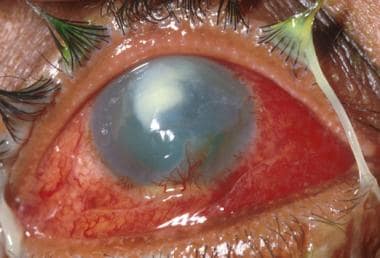
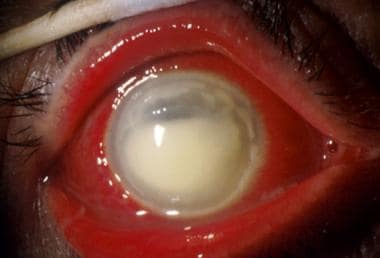
- The prognosis depends on the depth of the injury. Corneal burns are classified into 4 grades, as follows:
- Grade 1: Only corneal epithelial loss is present. No conjunctival ischemia is found. The prognosis is very good.
- Grade 2: Some corneal edema and haze are present. The conjunctival ischemia affects less than one third of the limbus. Some permanent scarring may occur.
- Grade 3: Cornea has significant haziness. Limbal ischemia is less than one half of the limbus. Prognosis is variable, and vision usually is impaired.
- Grade 4: Cornea is opaque, and the limbal ischemia is greater than one half of the limbus. Globe perforation is possible. The prognosis is poor.
Patient Education
- Chemical burns
- An estimated 90% of chemical eye injuries are avoidable. Emphasize the importance of wearing safety glasses when working with hazardous materials or in hazardous situations.
- Children sustain chemical burns most often when they are unsupervised. Keeping all hazardous home products in an area that is difficult for a child to access is critical.
- Ultraviolet burns
- Inform welders of the importance of keeping on safety goggles while working.
- People who spend significant amounts of time outdoors must be aware of the danger of UV keratitis, particularly at high altitudes.
- For excellent patient education resources, visit eMedicine's Eye and Vision Center and Burns Center. Also, see eMedicine's patient education articles Eye Injuries, Chemical Eye Burns, Thermal (Heat or Fire) Burns, and How to Instill Your Eyedrops.
Medical/Legal Pitfalls
- Evaluate all patients with alkali injuries to the face for tracheal and esophageal burns, since these may be life-threatening injuries.
- Evaluating airway and breathing in patients who have sustained ocular thermal burns during a fire is essential.
- Hydrofluoric acid burns can cause significant hypocalcemia. Consider checking the calcium level for burns that are not limited to the eye.
- Lid eversion is necessary to evaluate for the presence of retained solid substances.
- Patients should not be discharged with ophthalmologic topical anesthetics, as this can cause corneal endothelial toxicity, corneal ulceration, and scarring.
- Only administer steroid preparations if recommended by an ophthalmologist because these medications can slow healing and predispose the eye to infection. Acute rise in intraocular pressure is less of a risk in short-term use.
The authors and editors of eMedicine gratefully acknowledge the contributions of previous authors, Anna I Cheh, MD, Wende R Reenstra, MD, PhD, and Loice Swisher, MD, to the development and writing of this article.
- Stern JD, Goldfarb IW, Slater H. Ophthalmological complications as a manifestation of burn injury. Burns. Mar 1996;22(2):135-6. [Medline].
- Kuckelkorn R, Schrage N, Keller G, Redbrake C. Emergency treatment of chemical and thermal eye burns. Acta Ophthalmol Scand. Feb 2002;80(1):4-10. [Medline].
- Bentur Y, Tannenbaum S, Yaffe Y, Halpert M. The role of calcium gluconate in the treatment of hydrofluoric acid eye burn. Ann Emerg Med. Sep 1993;22(9):1488-90. [Medline].
- Blais BR. Treating chemical eye injuries. Occup Health Saf. Sep 1996;65(9):23-6. [Medline].
- Bouchard CS, Morno K, Perkins J, et al. Ocular complications of thermal injury: a 3-year retrospective. J Trauma. Jan 2001;50(1):79-82. [Medline].
- Corazza M, Trincone S, Virgili A. Effects of airbag deployment: lesions, epidemiology, and management. Am J Clin Dermatol. 2004;5(5):295-300. [Medline].
- Das S, Chohan A, Snibson GR, Taylor HR. Capsicum spray injury of the eye. Int Ophthalmol. Aug-Oct 2005;26(4-5):171-3. [Medline].
- Gangadhar DV, Kenyon KR, Wagoner MD. The surgical management of chemical ocular injuries: present and future strategies. Int Ophthalmol Clin. Winter 1995;35(1):63-9. [Medline].
- Gerard M, Merle H, Ayeboua L, Richer R. [Prospective study of eye burns at the Fort de France University Hospital]. J Fr Ophtalmol. Oct 1999;22(8):834-47. [Medline].
- Guy PR, Taggart I, Adeniran A, Burd DA. Corneal burns with eyelid sparing and their treatment. Burns. Dec 1994;20(6):561-3. [Medline].
- Hammerton ME. Management of ocular burns. Aust Fam Physician. Jun 1995;24(6):1006-10. [Medline].
- Ikeda N, Hayasaka S, Hayasaka Y, Watanabe K. Alkali burns of the eye: effect of immediate copious irrigation with tap water on their severity. Ophthalmologica. 2006;220(4):225-8. [Medline].
- Javadi MA, Yazdani S, Sajjadi H, et al. Chronic and delayed-onset mustard gas keratitis: report of 48 patients andreview of literature. Ophthalmology. Apr 2005;112(4):617-25. [Medline].
- Khaw PT, Shah P, Elkington AR. Injury to the eye. BMJ. Jan 3 2004;328(7430):36-8. [Medline].
- Kirkpatrick JJ, Enion DS, Burd DA. Hydrofluoric acid burns: a review. Burns. Nov 1995;21(7):483-93. [Medline].
- Lubeck D, Greene JS. Corneal injuries. Emerg Med Clin North Am. Feb 1988;6(1):73-94. [Medline].
- Onofrey BE. Management of corneal burns. Optom Clin. 1995;4(3):31-40. [Medline].
- Peate WF. Work-related eye injuries and illnesses. Am Fam Physician. April 1, 2007;75(7):1017-22. [Medline].
- Prabhasawat P, Tesavibul N, Prakairungthong N, Booranapong W. Efficacy of amniotic membrane patching for acute chemical and thermal ocular burns. J Med Assoc Thai. Feb. 2007;90(2):319-26. [Medline].
- Ryan CM, Schoenfeld DA, Thorpe WP, et al. Objective estimates of the probability of death from burn injuries. N Engl J Med. Feb 5 1998;338(6):362-6. [Medline].
- Saini JS, Sharma A. Ocular chemical burns--clinical and demographic profile. Burns. Feb 1993;19(1):67-9. [Medline].
- Shukla PC. Ocular burn from microwaved egg. Pediatr Emerg Care. Aug 1994;10(4):229-31. [Medline].
- Still JM Jr, Law EJ, Belcher KE, et al. Experience with burns of the eyes and lids in a regional burn unit. J Burn Care Rehabil. May-Jun 1995;16(3 Pt 1):248-52. [Medline].
- Tejwani S, Kolari RS, Sangwan VS, Rao GN. Role of amniotic membrane graft for ocular chemical and thermal injuries. Cornea. Jan. 2007;26(1):21-6. [Medline].
- White JE, McClafferty K, Orton RB, et al. Ocular alkali burn associated with automobile air-bag activation. CMAJ. Oct 1 1995;153(7):933-4. [Medline].
- Xiang H, Stallones L, Chen G, Smith GA. Work-related eye injuries treated in hospital emergency departments in theUS. Am J Ind Med. Jul 2005;48(1):57-62. [Medline].
Burns, Ocular excerpt Article Last Updated: Nov 1, 2007
|