Practice Essentials
Carbamazepine is an antiepileptic drug widely used for treatment of simple partial seizures and complex partial seizures, trigeminal neuralgia, and bipolar disorder. [1] Carbamazepine is also used as a treatment for postherpetic neuralgia and phantom limb pain. Some of the available dosage forms for carbamazepine include 100-mg and 200-mg tablets and a 100 mg/5 mL oral suspension.
Carbamazepine (5H-dibenzazepine-5-carboxamide) is an iminostilbene derivative with a tricyclic structure. It selectively inhibits high-frequency epileptic foci while normal neuronal activity remains undisturbed. Carbamazepine is absorbed erratically after oral administration because of its lipophilic nature. It has a large volume of distribution; peak plasma levels occur 4-8 hours postingestion but may take up to 24 hours to peak. Controlled-release formulation could result in peak levels as late as 4 days after administration. The primary site of metabolism is the liver; its metabolite also is active, which may increase duration of the symptoms of toxicity.
Autoinduction of microsomal enzyme results in a shorter carbamazepine half-life (10-20 h) in patients who use the drug long-term compared with those with a short-term exposure (31-35 h). The autoinduction process takes about 4 weeks.
Carbamazepine stimulates the synthesis of many monooxygenase and conjugating enzymes, which leads to the metabolism of many medications. [2] In terms of drug interactions, carbamazepine induces the metabolism of other anticonvulsant drugs such as phenytoin, clonazepam, primidone, valproic acid, and ethosuximide. This may lead to subtherapeutic levels of these drugs, especially phenytoin.
In addition, carbamazepine reduces the duration and action of many therapeutic agents, including anticoagulants, cytotoxic drugs, analgesics, antiretrovirals, glucocorticoids, statins, antihypertensives, oral contraceptives, psychoactive drugs, and immunosuppressants. This can lead to patients on these drugs and carbamazepine being undertreated. If carbamazepine is stopped while these drugs are continued, then the level of these drugs may rise, leading to toxicity. In addition, induction of enzymes can affect enzymes in endogenous metabolic pathways, which can subsequently affect bone, gonadal steroid, and lipid metabolism. This may lead to osteoporosis, sexual dysfunction, and vascular diseases. [2]
Inhibitors of hepatic microsomal enzymes, such as erythromycin, clarithromycin, and cimetidine, increase carbamazepine levels and may cause toxicity. Carbamazepine may increase the toxicity of adenosine and may increase the risk of heart block. Lower initial doses of adenosine should be used in patients who are taking carbamazepine.
Carbamazepine can interfere with the action of low-dose oral contraceptives and may lead to breakthrough vaginal bleeding, ovulation, and even pregnancy in women who are taking both medications. [3]
Armodafinil is a stimulant whose indications include obstructive sleep apnea, narcolepsy, and shift work sleep disorder, and like carbamazepine, it is an inducer of and substrate for cytochrome P450 (CYP3A4). A drug interaction study of the two agents found that systemic exposure to both carbamazepine and armodafinil was reduced after pretreatment with the other drug; A dose adjustment may be required when coadministering these compounds. [4]
On an interesting note, carbamazepine has been detected in the environment. European studies have identified carbamazepine as one of the top pharmaceutical contaminants in groundwater. [5] Discharged into the aquatic environment with municipal sewage, carbamazepine can cause toxicity in fish, including juvenile rainbow trout. [6, 7]
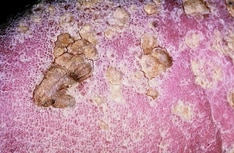
In 2004, HLA-B*1502 was found to be strongly associated with carbamazepine-induced Stevens-Johnson syndrome in people of Han-Chinese ethnicity, increasing the risk by about 100-fold. Subsequently, this risk was identified in other Asian peoples. As a result, screening for HLA-B*1502 before prescribing carbamazepine is routinely performed in the South-East Asian population. [8, 9]
Patients with carbamazepine toxicity may present with neurologic, ocular, cardiovascular, and cutaneous signs and symptoms (see Presentation). In addition to measurement of the serum carbamazepine level, the workup should include testing to detect organ system complications and rule out alternative diagnoses (see Workup). Treatment focuses on decontamination and supportive care (see Treatment and Medication).
Education and communication between the primary care physician and the patient is important for prevention of carbamazepine overdose.

Pathophysiology
Carbamazepine reduces the propagation of abnormal impulses in the brain by blocking sodium channels, thereby inhibiting the generation of repetitive action potentials in the epileptic focus. Carbamazepine is absorbed slowly and distributed erratically following oral administration. It enters the brain rapidly because of its high lipid solubility.
Continuous electroencephalographic (EEG) recordings in a case of carbamazepine toxicity with unconsciousness, absent brainstem reflexes, and stimulus-sensitive multifocal myoclonus revealed a burst-suppression pattern, with bursts containing only generalized spikes accompanying myoclonic activity. [10] After treatment, with declining serum carbamazepine levels, EEG became more continuous and rhythmic without epileptiform discharges.
Carbamazepine is metabolized primarily in the liver by oxidative enzymes, then is conjugated with glucuronic acid, and finally is excreted in the urine. Its metabolite, carbamazepine-10,11-epoxide, is active and may achieve up to 50% concentration of the parent compound.
The elimination of carbamazepine increases over the first few weeks because of autoinduction. Carbamazepine also enhances the metabolism of phenytoin, causing its levels to fall. Erythromycin, isoniazid, and propoxyphene (withdrawn from the US market) inhibit the hepatic metabolism of carbamazepine; therefore, the dose of carbamazepine may need to be adjusted in patients taking multiple medications.
Carbamazepine induces the hepatic cytochrome P-450 system and its half-life decreases with long-term administration. The enhanced cytochrome P-450 system increases metabolism of other antiepileptic drugs.
Etiology
Carbamazepine toxicity may result from acute overdose or long-term therapy. Therapeutic levels are 4-12 mg/L, but individual variation exists. Patients on multiple anticonvulsants may not tolerate high levels and can be maintained at 4-8 mg/L, while others can achieve levels of 8-12 mg/L without adverse effects. Ataxia and nystagmus may occur at levels greater than 10 mg/L. Cardiovascular effects are usually seen at levels greater than 12 mg/L; interference with action potentials in Purkinje fibers and the His bundle may lead to atrioventricular blocks and arrhythmias. [11]
Severe toxicity occurs at levels of 40 mg/L. If carbamazepine is combined with other agents such as benzodiazepines or antidepressants, severe toxicity can occur at 30mg/L. Alcohol heightens the toxic effects as well and can cause death when treatment with activated charcoal is not sufficient. [12]
Other drug-drug interactions are known to occur. Vander et al reported a case of carbamazepine toxicity that occurred after administration of oxybutynin and an increase in the dose of dantrolene. [13] The combination of these drugs elevated the level of carbamazepine, leading to toxicity.
Epidemiology
According to the American Association of Poison Control Centers' National Poison Data System, 939 carbamazepine single exposures were reported in 2023. Of those, 660 were treated in a health care facility. [14]
In addition, 1847 single exposures to oxcarbazepine were reported in 2023. Oxcarbazepine is structural derivative of carbamazepine. It is metabolized to 10-monohydrate derivate (MHD), which is the pharmacologically effective compound. Of those cases, 986 were treated in a health care facility. [14]
Of cases reported in 2023, 81% of carbamazepine exposures (758 cases) and 42% of oxcarbazepine exposures 783 cases) involved patients age 20 years and older. Only 9% (83 cases) of carbamazepine exposures and 18% (325 cases) of oxcarbazepine exposures occurred in children younger than 6 years. [14] Pediatric patients with carbamazepine ingestion are at higher risk for dystonic reactions, coma, and apnea if serum levels exceed 28 mg/L. However, children eliminate the drug more rapidly than adults.
Increased risk for carbamazepine-induced Stevens-Johnson syndrome and toxic epidermal necrolysis has been linked to carriage of HLA-B*1502, which is common in Han-Chinese, Thai, and Malaysian populations. [8] High prevalence of the HLA-B*1502 phenotype has also been found among populations in India. [15] In a study of cutaneous adverse drug reactions in northern India, HLA-B*5701 and HLA-DRB1*0701, but not HLA-B*1502, were associated with carbamazepine-induced Stevens-Johnson syndrome and toxic epidermal necrolysis. [16] The US Food and Drug Administration has recommended screening for the HLA-B*1502 allele before starting carbamazepine therapy in patients of Asian ancestry. [8]
Prognosis
Patients may experience altered levels of consciousness for several days following acute carbamazepine overdose. Their clinical status should improve as the plasma levels of the drug fall. Complications of carbamazepine toxicity may include the following:
-
Coma
-
Elevated liver function test results
-
Pulmonary edema
-
Pancytopenia
-
Anuria
Montgomery et al reported that severity of symptoms at the time of initial contact with the poison control center correlates with outcome severity for children and adults. However, the amount of time between ingestion and poison control center contact did not alter the correlation between initial severity of symptoms and final outcome severity. Carbamazepine levels greater than 85 mg/L were associated with severe toxicity. [17]
The American Association of Poison Control Centers reported that of the 939 single exposures to carbamazepine in 2023, there was no significant outcome in 141 cases, major outcomes in 48 cases, and no deaths; of the 1847 single exposures to oxcarbazepine, there was no significant outcome in 343 cases, major outcomes in 43 cases, and no deaths. [14] A review of oxcarbazepine exposures reported to National Poison Data System from 2000 to 2012 found that less than 1% of cases resulted in severe outcomes. Of the 18,867 total cases, 68% of those with major outcomes, and all five deaths, were due to intentional exposure (ie, suicide attempt). [18]
van Optstal et al reported a case in which a patient ingested more than 100 tablets of oxcarbazepine. The serum level of the parent compound was 10-fold higher than the therapeutic dosage of 31.6 mg/L. However, the concentration of the pharmacologically active metabolite 10-monohydroxy derivate (MHD) was only 2-fold higher. MHD levels peaked 7 hours after intake. The patient survived without an adverse outcome. The authors concluded that since oxcarbazepine is a prodrug, formation of the active MHD metabolite is a rate-limiting process contributing to low overall toxicity of this drug. [19]
Patient Education
Carefully explain the proper method of taking anticonvulsants to avoid adverse reactions. Educate parents and caregivers to keep all medications and poisons in a locked cabinet or on high shelves to prevent pediatric accidental ingestions.
Instruct patients and parents to ensure that suspensions of carbamazepine should be shaken vigorously before administration. Otherwise, the drug settles in its container and early doses will contain less carbamazepine and subsequent underdosing will occur; later doses may contain more drug and lead to toxicity.
For patient education information, see Carbamazepine - Uses, Side Effects, and More.