Continually Updated Clinical Reference
 
 
  All Sources     eMedicine     Medscape     Drug Reference     MEDLINE
 
eMedicine - Urticaria : Article by

Quick Find
Authors & Editors
Introduction
Clinical
Differentials
Workup
Treatment
Medication
Follow-up
Miscellaneous
Multimedia
References

Related Articles
Angioedema

Contact Dermatitis

Juvenile Rheumatoid Arthritis

Pityriasis Rosea

Serum Sickness

Vasculitis and Thrombophlebitis


Patient Education
Allergy Center

Skin, Hair, and Nails Center

Hives and Angioedema Overview

Hives and Angioedema Causes

Hives and Angioedema Symptoms

Hives and Angioedema Treatment


Author: Shih-Wen Huang, MD, Medical Director of Allergy Service, Professor, Department of Pediatrics, Division of Immunology and Infectious Diseases, University of Florida College of Medicine

Shih-Wen Huang is a member of the following medical societies: American Academy of Allergy Asthma and Immunology

Editors: Kevin P Connelly, DO, Clinical Assistant Professor, Department of Pediatrics, Division of General Pediatrics and Emergency Care, Virginia Commonwealth University; Medical Director, Paws for Health Pet Visitation Program; Mary L Windle, PharmD, Adjunct Assistant Professor, University of Nebraska Medical Center College of Pharmacy, Pharmacy Editor, eMedicine.com, Inc; Robert A Schwartz, MD, MPH, Professor and Head of Dermatology, Professor of Medicine, Professor of Pediatrics, Professor of Pathology, Professor of Preventive Medicine and Community Health, UMDNJ-New Jersey Medical School; Merrily P M Poth, MD, Professor, Department of Pediatrics and Neuroscience, Uniformed Services University of the Health Sciences; Harumi Jyonouchi, MD, Associate Professor, Department of Pediatrics, Division of Pulmonary Allergy/Immunology and Infectious Diseases, UMDNJ-New Jersey Medical School

Author and Editor Disclosure

Synonyms and related keywords: urticaria, hives,  anaphylactoid reaction, angioedema, pruritus, chronic urticaria, acute urticaria, papular urticaria, physical urticaria, histamine, transient urticaria, arthralgia, Henoch-Schönlein purpura, thyroid autoimmunity, celiac disease, hypothyroidism, hyperthyroidism, Hashimoto thyroiditis, collagen vascular diseases, rheumatoid arthritis, systemic lupus erythematosus, SLE, dermatomyositis, Behçet disease, inflammatory bowel disease, dental abscess, sinusitis, aphthous stomatitis, cholinergic urticaria, hereditary angioedema, edema


Background

Urticaria is a vascular reaction of the skin marked by the transient appearance of smooth, slightly elevated patches (wheals) that are erythematous and are often attended by severe pruritus. The eruption rarely lasts longer than 2 days but may be recurrent. Chronic urticaria is defined as urticaria with recurrent episodes lasting longer than 6 weeks.
 
Acute urticaria is more common and affects 4.5-15% of children in the United Kingdom, whereas chronic urticaria is thought to affect 0.1-3% of children in the United Kingdom. Acute urticaria differs from chronic urticaria in that a cause is more frequently established (eg, acute infection, allergen ingestion). In either case, the presence of urticaria may significantly impair quality of life. Children commonly miss significant periods of school because of a lay perception that the condition is infectious or allergic and a fear that the child is unwell. Approximately 50-80% of children with chronic urticaria also have accompanying angioedema. See Angioedema.

Although urticaria results from transient extravasation of plasma into the dermis, angioedema is the subcutaneous extension of urticaria that results in deep swelling within subcutaneous sites. Papular urticaria in children is characterized by 10- to 20-mm wheals surrounding 2- to 4-mm red papules. Physical urticaria typically involves 10- to 20-mm red blotchy macules with a 0.1-mm wheal in the center.

The development of urticaria can be an isolated event without systemic reaction or it can be a prelude to the development of an anaphylactic reaction.

Pathophysiology

Histamine is the primary chemical mediator of transient urticaria. The mast cell is central in all forms of transient urticaria. Histamine may be directly released from cutaneous mast cells in response to certain allergens or medications. Specific immunoglobin E (IgE) antibodies bind to mast cell surfaces that recognize certain antigens (eg, penicillin, certain foods, insect venom), causing the release of histamine after binding with antigen. In infection, complement fragments (eg, C3a) may activate mast cells to release histamine. Eicosanoids may also induce mast cell mediator release, and other cytokines have been implicated in urticaria. Papular urticaria represents a delayed hypersensitivity reaction in which basophil infiltrates can be found around dermal blood vessels. In physical urticaria, neuropeptide and complement products, in addition to histamine, are suspected to cause skin lesions.

In children, physical factors such as pressure or cold exposure are the most commonly diagnosed precipitating factors for chronic urticaria; other factors account for less than 1% of cases. Interestingly, a later study reported that 30% or more of children with chronic urticaria have an autoimmune etiology with positive autologous serum skin test (ASST) findings. Also, approximately 4% of children with chronic urticaria have positive antithyroid antibodies, although most patients with positive antithyroid antibodies remain euthyroid.

The etiological classification of chronic urticaria below may help shorten the course of work-up in those patients.

Etiological Classification of Chronic Urticaria

EtiologyMechanismsExamples
Idiopathic (40-50% of cases)Unknown

...

AutoimmuneImmunoglobulin G (IgG) autoantibody to high-affinity immunoglobulin E (IgE) receptor or to IgE antibodyPossibly associated with autoimmune thyroiditis
Physical stimuliDirect mast cell mediator releaseExercise, heat, cold, pressure, water exposure, sun exposure, delayed pressure, dermatographia
Drug inducedReduced kinin metabolism; elevated leukotriene levelAngiotensin-converting enzyme (ACE) inhibitor, nonsteroidal anti-inflammatory drugs (NSAIDs)
InfectionComplement activation and immune complex formationParasites, Epstein-Barr virus, hepatitis B and C, viral exanthem
AllergicIgE-mediated allergic contactLatex, animals, grass, food
Non-IgE mediated mast cell degranulationNon–receptor mediatedOpiates, adrenocorticotropic hormone (ACTH)
VasculitisSmall vessel vasculitis; deposition of immunoglobulin or complementUrticarial vasculitis
Food constituent (rare)UnknownSalicylates

A diagnostic skin biopsy should be considered, especially in patients who present with features such as fever, painful lesions, arthralgia, elevated erythroid segmentation rate, or lesions that last 24 hours or longer or lesions that resolve with residual petechiae or purpura. Biopsy findings may reveal a leukoclastic angiitis rather than the non-necrotizing vasculopathy that is typical in chronic urticaria. Henoch-Schönlein purpura is the most common cause of acute urticarial vasculitis in children. The pathology may show immunoglobulin A (IgA) deposits in the vessels.

An association between childhood chronic urticaria and thyroid autoimmunity has been postulated. Whether the association is causal is unclear because most children present with hyperthyroid symptoms or hypothyroid symptoms before or after the onset of chronic urticaria and because the urticarial symptoms do not always improve with thyroxin-replacement therapy. Nonetheless, ongoing thyroid function monitoring is encouraged in children with chronic urticaria and thyroid autoimmunity.

An association has been reported between chronic urticaria and celiac disease, which may improve if a gluten-free diet is followed.

Frequency

United States

Urticaria is common in infancy and childhood, although the exact frequency is unknown. Urticaria affects 15-25% of the US population

  • Several large studies indicate that 3% of preschool-aged children and 2% of older children are affected.
  • Chronic idiopathic urticaria, in which lesions of an unknown etiology last longer than 6 weeks, is estimated to occur in as much as 3% of the population.

Mortality/Morbidity

  • Patients may experience recurrence of rash.
  • Urticaria can be an isolated event. Without recurrence, the prognosis is good.
  • Urticaria may be a clinical feature of anaphylaxis. In that case, the mortality rate is significant.

Race

Urticaria has no known racial predilection.

Sex

  • In children, both sexes are affected with equal frequency.
  • Chronic urticaria tends to occur in females, especially adults.

Age

Several large studies indicate that 3% of preschool-aged children and 2% of older children are affected. Acute urticaria usually occurs in children, whereas chronic idiopathic urticaria is more common in adults.


History

Some effort should be made to determine whether the lesions have an IgE (allergic) or non-IgE (nonallergic) basis. In addition, the urticaria should be classified as acute (<6 wk duration) or chronic (>6 wk duration).

  • Common nonallergic, acute, or transient urticaria often follows infection with streptococci; infectious mononucleosis; hepatitis A, B, and C; adenovirus; enterovirus; or parasites.
  • In nonallergic chronic urticaria, carefully obtain the history of any chronic medical conditions to assess the presence of systemic diseases such as parasitic disorders, hepatic disorders (history of blood transfusion), endocrine disorders (especially hypothyroidism [Hashimoto thyroiditis] with the presence of autoantibodies to thyroid tissue [antithyroglobulin antibody or antiperoxidase antibody]), collagen vascular diseases or rheumatological disorders (eg, rheumatoid arthritis, systemic lupus erythematosus [SLE], dermatomyositis, Behçet disease), or inflammatory bowel diseases.
  • Any recent, chronic, or recurrent viral infections should be determined, especially those due to herpes simplex virus or Epstein-Barr virus. Also, look for focal but persistent bacterial infection (eg, dental abscess, sinusitis) or miscellaneous conditions such as aphthous stomatitis or occult malignancy.
  • Acute allergic urticaria can be caused by a sting from creatures such as bees, wasps, and scorpions or can be caused by bites from insects and spiders. Jellyfish venom may also cause urticaria.
  • The ingestion of various medications (especially antibiotics) or foods (eg, tree nuts, peanuts, eggs, shellfish, strawberries, tomatoes) 2 hours before the onset of a rash is a probable allergic cause. Therefore, determine whether the rash is associated with any foods (new or old) or medicines. Ask specifically for the ingestion of any aspirin or nonsteroidal anti-inflammatory drugs (NSAIDs) in over-the-counter medications.
  • Urticaria may be the first manifestation of latex allergy at the site of skin contact in individuals who are allergic to latex protein. Two high-risk populations for latex allergy are children with a history of multiple surgeries (especially those with spina bifida or those who have had multiple surgeries in the past) and children exposed to frequent latex tubing or gloves in the past, such as those undergoing chronic renal dialysis.
  • Less than 5% of patients have documented IgE-mediated allergic urticaria compared with about 15% of children who may have physical urticaria. Most patients fall into an idiopathic group.
  • Physical urticaria is not associated with underlying medical conditions but is related to physical triggers. Triggers include exposure to heat, cold, sunlight, water, pressure, or vibration. Cold urticaria has recently been associated with anaphylaxis. History of swimming in cold water, touching of cold objects, or exposure to cold weather should be obtained in those cases.
  • Cholinergic urticaria often follows exercise or strenuous work.
  • Papular urticaria is usually the result of an encounter with fleas or mites and is most often observed in toddlers.
  • Stress or psychogenic urticaria has been casually coined or speculated in clinical settings to explain patients who have non–IgE-mediated urticaria, but no prospective study has been performed to confirm a cause-and-effect relationship.
  • Hereditary angioedema is an autosomal dominant condition related to a deficiency of C1 inhibitor that is associated with repeated episodes of swelling of the face, larynx, extremities, and abdominal pain. Onset usually follows trauma, surgery, dental manipulation, or accidents. This condition can be differentiated from angioedema in that urticaria does not occur, the lesions are not pruritic, and the lesions are nonresponsive to antihistamines and epinephrine. An acquired form of this disorder may also be observed, sometimes in association with an underlying lymphoma.
  • Finally, determine whether any features suggest anaphylaxis (eg, hypotension, respiratory problems, gastrointestinal discomfort).
  • Recently, a study indicated that children with chronic urticaria have a significantly higher prevalence of celiac disease than control children.1 Furthermore, the study showed that a gluten-free diet in those patients resulted in remission of chronic urticaria. Thus, celiac disease may cause chronic urticaria in these patients.
  • Chronic urticaria has been reported in children who had a familial cold autoinflammatory syndrome.2 Many were confirmed by presence of a novel CIAS1 mutation and were refractory to symptomatic treatment. Many patients responded to the treatment of the IL-1-receptor antagonist. Obviously, this is a very rare syndrome, and inflammatory conditions can be effectively controlled by attenuating the actions of IL-1ß.

Physical

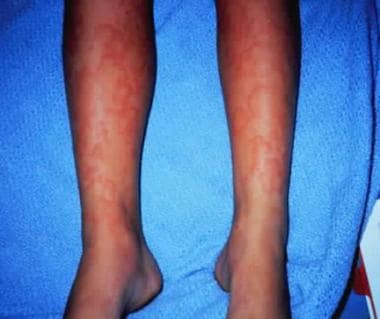
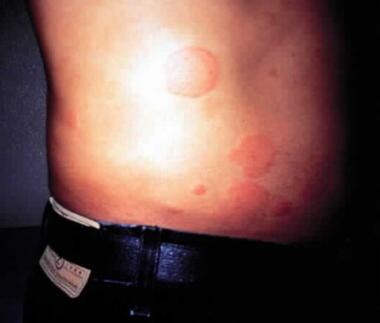
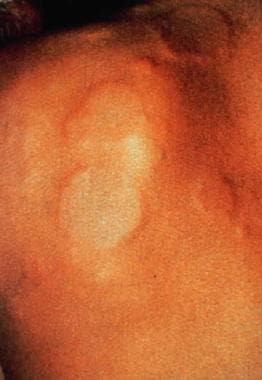
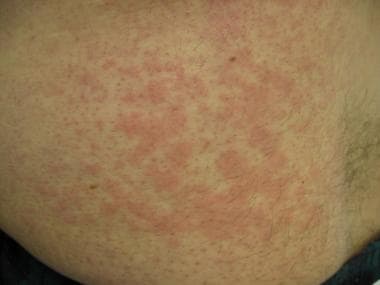
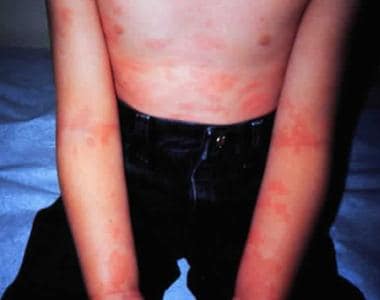
  • The onset of eruption is usually sudden, and the eruption is usually pruritic and characterized by red, raised, 2- to 15-mm, flat-topped wheals scattered over the body (see Media file 1). Edema can be observed by slightly stretching the skin to demonstrate whitish centers. Occasionally, large annular urticarial lesions as large as 30 cm in diameter with polycystic borders are observed.
  • Determine the presence of dermographism by scratching the skin with the end of a tongue blade or key and observe for 5-15 minutes for whealing and edema (see Media file 5).
  • Wheals commonly last 20 minutes to 3 hours, disappear, and then reappear in other skin areas. An entire episode of urticaria often lasts 24-48 hours; rarely, it lasts 3 weeks.
  • Angioedema appears as swellings of the tissues, with indistinct borders around the eyelids and lips. Swellings may also appear on the face, trunk, genitalia, and extremities. The face, hands, and feet are involved in 85% of patients. As many as 50% of children who have urticaria exhibit angioedema with swelling of the hands and feet. Hereditary angioedema (C1 inhibitor deficiency) accounts for only 0.4% of cases of angioedema but is associated with a high mortality rate.
  • In patients with mastocytosis, brownish pigmentation can be observed after wheals recede.
  • Urticaria may be part of an anaphylactic reaction. Check for hypotension, stridor or wheezing, swallowing problems, abdominal pain, and joint involvement (swelling or pain).

Causes

  • IgE-mediated mast cell activation may be caused by the following:
    • Drugs such as penicillins, cephalosporins, sulfa drugs, salicylates, NSAIDs, barbiturates, amphetamines, atropine, hydralazine, insulin, blood, and blood products
    • Foods such as tree nuts, peanuts, eggs, shellfish, and tomatoes (The involvement of food additives or preservatives is controversial.)
    • Insect venom
    • Latex protein exposure
  • Non–IgE-mediated mast cell activation may be caused by the following:
    • Drugs such as morphine and other opiates, meperidine, polymyxin B, and acetylsalicylic acid can cause release of mediators by other mechanisms.
    • Certain foods or beverages, such as aged cheeses or red wine, can contain histidine, which is similar to histamine. However, the evidence in the medical literature that they cause urticaria is rare.
    • Radiocontrast media can directly induce mast cell mediator release.
  • Medical conditions implicated by unknown pathogenesis include the following:
    • Infectious agents such as group A beta-hemolytic streptococci; Epstein-Barr virus; hepatitis A, B, and C; adenovirus; and herpes simplex virus have been implicated. Other infectious processes such as chronic sinusitis, cutaneous fungal infections, and chronic gastroenteritis by enterovirus, Helicobacter pylori, or other parasites have also been implicated.
    • Hormonal causes via endocrine tumors or ovarian pathology are rare. Thyroid dysfunction (hypothyroidism and hyperthyroidism) is more common. Patients with chronic urticaria can have positive anti-thyroid antibodies in euthyroid condition.
    • Physical causes (physical urticaria) can be numerous and include cold, pressure, vibration, sunlight, water, dermographism, and exercise.
      • Cholinergic urticaria is a subset of physical urticaria. It can be triggered by heat, exercise, or emotional stress and is thought to be mediated by acetylcholine.
      • Neuropeptides and neurokinins are thought to mediate development of urticaria in stress or physical urticaria.
  • The mechanisms of any of the above disorders may involve release of either cytokine or complement fragments.
    • Autoantibody against α chain of FcεR1α has been found in some patients with chronic urticaria (both in adults and in children).
    • C1 esterase inhibitor deficiency plays a role in hereditary angioedema.
    • In most cases (≤75-80%) of chronic urticaria, no specific cause is identified; these cases are labeled chronic idiopathic urticaria.


Angioedema
Contact Dermatitis
Juvenile Rheumatoid Arthritis
Pityriasis Rosea
Serum Sickness
Vasculitis and Thrombophlebitis

Other Problems to be Considered

Cellulitis and erysipelas
Erythema multiforme
Flushing
Guttate psoriasis
Idiopathic scrotal edema of children
Mastocytosis
Melkersson-Rosenthal syndrome
Reactive erythemas
Leukocytoclastic vasculitis: Persistent wheals that remain in the same anatomic place may represent an urticarial leukocytoclastic vasculitis.
Mastocytosis of skin in childhood


Lab Studies

In patients with acute urticaria, laboratory testing is not usually needed unless a particular medical condition is suspected.

  • Skin test or radioallergosorbent test (RAST) for IgE antibody: Perform these tests if the history is suggestive of a rash caused by foods, drugs, insect venom, or latex. This test may be needed to rule out an atopic component and label the urticaria as idiopathic.
  • Bacterial culture with sensitivity: Obtain if the patient has a history of fever and sore throat.
  • Thyroid profile, including antithyroid microsomal antibodies and antithyroglobulin antibody: Obtain if the patient has a strong family history of thyroid disorder or symptoms of hypothyroidism (more frequent in females). However, patients are often euthyroid.
  • C1 esterase inhibitor, C3, and C4 levels: Obtain if the patient has a family history of angioedema or if the child had concomitant history of swallowing or breathing problems with urticaria.
  • Stool for ova and parasites: Obtain if the patient reports ingestion of poorly cooked meats or travel in unsanitary areas.
  • Antinuclear antibody and urinalysis with microscopic examination: Perform these tests if the patient may have arthritis, photosensitivity, or other signs or symptoms of collagen vascular disease. Testing for autoantibody against FcεR1α  is now available in a few commercial laboratories.
  • CBC count with differential, C-reactive protein, and erythrocyte sedimentation rate: Obtain if the patient's history indicates underlying vasculitis or inflammatory diseases.
  • Cold agglutinins and cryoproteins in patients with cold urticaria: The presence of a cryoglobulin suggests chronic hepatitis or malignancy.

Other Tests

  • Physical urticaria can be confirmed with physical challenge tests. These involve the application of the suspected stimuli (heat, pressure, light, vibration, scratching, cold [ice cube]) to the skin. Exercise testing can also be performed. Ice cube test findings are typically negative in patients with familial cold autoinflammatory syndrome.
  • Suspected food allergies can be confirmed or disproved with the use of food diaries. A food or symptom diary for a fixed duration (eg, 2-4 wk) may be helpful. Note all activities in which the patient was involved for 6-8 hours prior to the onset of urticaria. Cases have been reported in which a food or activity (such as jogging) by itself results in no symptoms but together (eg, eating a shrimp cocktail and then jogging) may result in urticaria with or without progression to anaphylaxis.

Histologic Findings

Skin biopsy is not usually performed unless the diagnosis is in doubt. Urticaria is associated with dermal edema without epidermal injury. Erythema multiforme, a differential diagnosis, is associated with dermal perivascular mononuclear cell infiltrate and areas of epidermal necrosis.


Medical Care

  • Allergen avoidance is an important strategy if the allergen can be identified.
  • Because drug-induced urticaria accounts for most acute urticaria in children, drug use should be specifically reviewed in the history. Certain classes of drugs may release histamine directory from mast cells without any allergic interaction (eg, opiates, acetylsalicylic acid).
  • Removing offending ectoparasites can prevent papular urticaria.
  • If the allergen cannot be identified or avoided, most cases of urticaria respond to medications (see Medication).

Diet

If urticaria is caused by ingestion of a particular food, avoidance can prevent future reactions.

Activity

  • If the patient has physical urticaria, activity should be carefully monitored, depending on the trigger (eg, cold or hot temperatures, exposure to sun or water, pressure or vibration).
  • Individuals with cold urticaria must be particularly cautious and not immerse themselves suddenly in cold water. Patients should avoid swimming in lakes, streams, or oceans.


The main use of medications is to control the effects of the mediators that have been released by the mast cells. Therefore, antihistamines and, more recently, leukotriene antagonists have been successfully used. Clinical trials are in progress to determine whether antileukotriene medications can provide a synergistic response with antihistamines. Patients in whom urticaria is a precursor to anaphylaxis should carry epinephrine whenever they are at risk.

Mediator release can be affected by anti-inflammatory therapy, specifically corticosteroids. Although antihistamines are the mainstay of therapy, a short course of systemic corticosteroids can be very effective in establishing control while the etiology is being investigated. However, long-term therapy should be avoided because of the systemic side effects. Other immunomodulating therapies have been used in cases of urticaria suspected to have an autoimmune process. These therapies include intravenous gammaglobulin, plasmapheresis, and cyclosporine.

In adults, colchicine and dapsone have also been used in patients with refractory chronic urticaria and urticarial vasculitis. Patients with chronic urticaria who have a positive autoantibody against FceR1α or IgE antibody are reported to have had good responses to cyclosporine.

Recently, use of combined therapies to manage chronic urticaria have been reported. For example, one case was successfully managed with combination of antifibrinolytic agent (epsilon-aminocaproic acid) and montelukast plus the H2 antihistamine ranitidine.3 Two more reports indicated the efficacy of montelukast, and one additional study reported the efficacy of a combination of montelukast and a long-acting H1 antihistamine.4, 5, 6

Also, one report indicated that theophylline, a nonspecific phosphodiesterase inhibitor, could provide additional benefit if coadministered with a conventional H1 antihistamine.7 Unfortunately for pediatric patients, more clinical trial may be needed.

Drug Category: Leukotriene receptor antagonists

In recent years, leukotriene receptor antagonists (eg, montelukast) have been added to antihistamines to control urticaria.

Drug NameMontelukast (Singulair)
DescriptionPotent and selective antagonist of leukotriene D4 (LTD4) at the cysteinyl leukotriene receptor, CysLT1. Prevents or reverses some of the pathologic features associated with the inflammatory process mediated by leukotrienes C4, D4, and E4. Available as tab, chewable tab, or PO granules. Granules may be administered directly in the mouth or dissolved in 1 tsp of cold or room-temperature baby formula, breast milk, or food (stable with applesauce, carrots, rice, or ice cream).
Adult Dose10 mg PO qhs
Pediatric Dose<2 years: Not established
2-5 years: 4 mg PO qhs
6-14 years: 5 mg PO qhs
>14 years: Administer as in adults
ContraindicationsDocumented hypersensitivity
InteractionsPotent CYP450 inducers (eg, phenobarbital, rifampin) may reduce montelukast AUC
PregnancyB - Fetal risk not confirmed in studies in humans but has been shown in some studies in animals
PrecautionsAdults may develop symptoms of upper respiratory infection; common adverse effects in children include headache, otitis media, or pharyngitis

Drug Category: Antihistamines

These agents are used to treat urticaria and pruritus. Classic H1-blocker antihistamines block the histamine-mediated increase in vascular permeability. Some second-generation antihistamines may also reduce the release of vasoactive amines.

Drug NameHydroxyzine (Atarax)
DescriptionUsed for control of pruritus. Acts by competitive inhibition of histamine at the H1 receptor, which mediates the wheal-and-flare reactions.
Adult Dose25 mg PO tid/qid
Pediatric Dose2-4 mg/kg/d PO divided tid/qid
ContraindicationsDocumented hypersensitivity
InteractionsCNS depression may increase with alcohol or other CNS depressants
PregnancyC - Fetal risk revealed in studies in animals but not established or not studied in humans; may use if benefits outweigh risk to fetus
PrecautionsMay exacerbate angle-closure glaucoma, peptic ulcer, urinary tract obstruction, or hyperthyroidism; associated with clinical exacerbations of porphyria (may not be safe in patients with porphyria); ECG abnormalities (alterations in T waves) may occur; may cause drowsiness

Drug NameDiphenhydramine (Benadryl)
DescriptionUsed to control pruritus. Acts by competitive inhibition of histamine at the H1 receptor, which mediates the wheal-and-flare reactions.
Adult Dose25-50 mg PO q6-8h; not to exceed 400 mg/d
Pediatric Dose5 mg/kg/d PO divided tid/qid
ContraindicationsDocumented hypersensitivity
InteractionsPotentiates effect of CNS depressants; because of alcohol content, do not administer syr to patients taking medications that can cause disulfiramlike reactions
PregnancyB - Fetal risk not confirmed in studies in humans but has been shown in some studies in animals
PrecautionsMay exacerbate angle-closure glaucoma, hyperthyroidism, peptic ulcer, or urinary tract obstruction; xerostomia, dizziness, or drowsiness may occur

Drug NameCetirizine (Zyrtec)
DescriptionNonsedating long-acting antihistamine. Acts by competitive inhibition of histamine at the H1 receptor.
Adult Dose5-10 mg PO qd or divided bid
Pediatric Dose<2 years: Not established
2-5 years: 2.5 mg PO qd; may increase dose; not to exceed 5 mg PO qd or divided bid
>6 years: Administer as in adults
ContraindicationsDocumented hypersensitivity
InteractionsMay increase toxicity of CNS depressants; theophylline may decrease metabolism
PregnancyB - Fetal risk not confirmed in studies in humans but has been shown in some studies in animals
PrecautionsCaution in hepatic or renal dysfunction (decrease dose); doses >10 mg/d are more likely to cause drowsiness

Drug NameLevocetirizine (Xyzal)
DescriptionHistamine1-receptor antagonist. Active enantiomer of cetirizine. Peak plasma levels reached within 1 h, and half-life is about 8 h. Available as a 5-mg breakable (scored) tab. Indicated for uncomplicated skin manifestations of chronic idiopathic urticaria.
Adult Dose5 mg PO qd in evening
CrCl 50-80 mL/min: 2.5 mg (half tab) PO qd in evening
CrCl 30-49 mL/min: 2.5 mg PO qod
CrCl 10-29 mL/min: 2.5 mg PO 2 times/wk
Pediatric Dose<6 years: Not established
6-11 years: 2.5 mg (half tab) PO qd in evening
>12 years: Administer as in adults
ContraindicationsDocumented hypersensitivity; CrCl <10 mL/min or hemodialysis; children aged 6-11 y with renal impairment
InteractionsCoadministration with CNS depressants (eg, alcohol, sedative-hypnotics) may increase somnolence; ritonavir increased plasma AUC of measurable cetirizine by 42% and half-life by 53%
PregnancyB - Fetal risk not confirmed in studies in humans but has been shown in some studies in animals
PrecautionsCommon adverse effects include somnolence, nasopharyngitis, fatigue, xerostomia, and pharyngitis in adults and children >12 y; pyrexia, somnolence, cough, and epistaxis commonly observed in children 6-12 y; caution with activities requiring mental alertness

Drug Category: Sympathomimetic agents

These agents cause vasoconstriction and reduction in vascular dilation, which contributes to urticaria formation.

Drug NameEpinephrine (EpiPen)
DescriptionAdministered in severe or generalized urticaria as part of anaphylactic reaction. Available in an auto-injector form (EpiPen). EpiPen 1:1000 (ie, 1 mg/mL delivers 0.3 mg) is used for those who weigh >30 kg; EpiPen Jr 1:2000 (ie, 1 mg/2 mL delivers 0.15 mg) intended for children who weigh <30 kg.
DOC for the treatment of anaphylactoid reactions. The alpha agonist effects of this medication increase peripheral vascular resistance and reverse peripheral vasodilatation, vascular permeability, and systemic hypotension. Conversely, the beta agonist effects of epinephrine produce bronchodilatation, cause positive inotropic and chronotropic cardiac activity, and result in an increased production of intracellular cAMP.
Adult Dose0.01 mg/kg (ie, 0.01 mL/kg) IM/SC of 1:1000 solution; not to exceed 0.5 mg/dose (ie, 0.5 mL/dose); may repeat dose in 20 min prn; not to exceed a cumulative dose of 1 mg (ie, 1 mL)
Pediatric Dose0.01 mg/kg/dose SC; may repeat dose in 20 min prn; not to exceed a cumulative dose of 0.5 mg (ie, 0.5 mL)
ContraindicationsDocumented hypersensitivity; life-threatening cardiac arrhythmias; angle-closure glaucoma
InteractionsIncreases toxicity of beta- and alpha-blocking agents and of halogenated inhalational anesthetics
PregnancyC - Fetal risk revealed in studies in animals but not established or not studied in humans; may use if benefits outweigh risk to fetus
PrecautionsAdverse effects include palpitations, jitteriness, or blood pressure elevation

Drug Category: Corticosteroids, systemic

These anti-inflammatory agents help decrease vascular dilation and tissue inflammation. They should be used only if the patient has progressive generalized urticaria that cannot be reversed with other drugs.

Drug NamePrednisone (Deltasone, Meticorten, Orasone, Sterapred)
DescriptionUse for short-term anti-inflammatory effect.
Decreases inflammation by suppressing migration of polymorphonuclear leukocytes and by reversing increased capillary permeability.
Adult Dose5-60 mg/d PO qd or divided bid/qid
Pediatric DoseUp to 1 mg/kg/d PO qd or divided bid/qid for 5 d
For persistent symptoms, administer for 2-3 wk while gradually tapering the dose downward
ContraindicationsDocumented hypersensitivity; viral, fungal, or tubercular skin lesions; history of gastrointestinal ulcer or bleeding
InteractionsCoadministration with digoxin may increase digitalis toxicity secondary to hypokalemia; coadministration with diuretics may cause hypokalemia; phenobarbital, phenytoin, and rifampin may increase the metabolism of glucocorticoids (may need to increase prednisone dose)
PregnancyB - Fetal risk not confirmed in studies in humans but has been shown in some studies in animals
PrecautionsAdverse effects of long-term use in children include of weight gain, stunting of growth, hypertension, hair growth, and acne; children who receive long-term corticosteroids should have frequent physical examinations, including growth rate analysis; caution with hyperthyroidism, nonspecific ulcerative colitis, peptic ulcer, diabetes mellitus, or myasthenia gravis


Further Outpatient Care

  • Patients should be discouraged from scratching or irritating skin when active lesions are present.
  • Pressure urticaria may worsen the intensity of the rash. Therefore, avoiding tight-fitting clothes may be helpful.

In/Out Patient Meds

  • Antihistamines with or without antileukotrienes
  • Epinephrine if history of anaphylactic reaction
  • Anti-inflammatory drugs (steroids) if urticaria does not respond to the above medicines

Deterrence/Prevention

  • Allergen avoidance is an important strategy if the allergen can be identified. Patients should avoid offending foods and drugs.
  • Removing offending ectoparasites can prevent papular urticaria.
  • Insect repellent may lessen the chance of bites or stings from offending insects.
  • Recognition of the precipitating events for physical urticaria can allow avoidance strategies.
  • Desensitization strategies are not recommended except for stinging insect venoms.
  • Although the need for cold cardiopulmonary bypass surgery in patients with cold-induced urticaria is uncommon, one study reported success using an anti-inflammatory regimen prior to surgery and during recovery to prevent a systemic reaction of urticaria.8

Complications

  • Anaphylaxis: Determining whether urticaria is part of an anaphylactic reaction is important. If an anaphylactic reaction occurs, the patient needs prompt treatment and careful monitoring.

Prognosis

  • Although the cause can be difficult to determine, in most instances, lesions are expected to resolve in one month.
  • An extensive allergy workup is usually not indicated for children who have had urticaria for fewer than 6 weeks.
  • Evaluation of chronic urticaria should be guided by history.
  • Papular urticaria should resolve after 6-12 months.
  • Physical urticaria is more persistent and lasts 2-4 years in most children. Some may experience it into adult life.

Patient Education


Medical/Legal Pitfalls

  • Determining whether urticaria is part of an anaphylactic reaction is always important because it can be life threatening.


Media file 1:  Urticaria developed after bites from an imported fire ant.
Click to see larger pictureClick to see detailView Full Size Image
Media type:  Photo

Media file 2:  Urticaria associated with acute group A beta-hemolytic streptococci infection.
Click to see larger pictureClick to see detailView Full Size Image
Media type:  Photo

Media file 3:  Urticaria associated with a drug reaction.
Click to see larger pictureClick to see detailView Full Size Image
Media type:  Photo

Media file 4:  Local urticaria on a patient with latex allergy who was touched with a latex glove.
Click to see larger pictureClick to see detailView Full Size Image
Media type:  Photo

Media file 5:  Pressure urticaria (dermatographia) developed after strokes.
Click to see larger pictureClick to see detailView Full Size Image
Media type:  Photo


  1. Gabrielli M, Candelli M, Cremonini F, et al. Idiopathic chronic urticaria and celiac disease. Dig Dis Sci. Sep 2005;50(9):1702-4. [Medline].
  2. O'Connell SM, O'Regan GM, Bolger T, Hoffman HM, Cant A, Irvine AD. Response to IL-1-receptor antagonist in a child with familial cold autoinflammatory syndrome. Pediatr Dermatol. Jan-Feb 2007;24(1):85-9. [Medline].
  3. Vita D, Passalacqua G, Caminiti L, Barberio G, Pajno GB. Successful combined therapy for refractory chronic urticaria in a 10-year-old boy. Allergy. Sep 2004;59(9):1021-2. [Medline][Full Text].
  4. Sanada S, Tanaka T, Kameyoshi Y, Hide M. The effectiveness of montelukast for the treatment of anti-histamine-resistant chronic urticaria. Arch Dermatol Res. Jul 26 2005;1-5. [Medline].
  5. Nettis E, Colanardi MC, Paradiso MT, Ferrannini A. Desloratadine in combination with montelukast in the treatment of chronic urticaria: a randomized, double-blind, placebo-controlled study. Clin Exp Allergy. Sep 2004;34(9):1401-7. [Medline].
  6. Di Lorenzo G, Pacor ML, Mansueto P, et al. Randomized placebo-controlled trial comparing desloratadine and montelukast in monotherapy and desloratadine plus montelukast in combined therapy for chronic idiopathic urticaria. J Allergy Clin Immunol. Sep 2004;114(3):619-25. [Medline].
  7. Kalogeromitros D, Kempuraj D, Katsarou-Katsari A, et al. Theophylline as add-on therapy in patients with delayed pressure urticaria: a prospective self-controlled study. Int J Immunopathol Pharmacol. Jul-Sep 2005;18(3):595-602. [Medline].
  8. Lancey RA, Schaefer OP, McCormick MJ. Coronary artery bypass grafting and aortic valve replacement with cold cardioplegia in a patient with cold-induced urticaria. Ann Allergy Asthma Immunol. Feb 2004;92(2):273-5. [Medline].
  9. Agostoni A, Aygoren-Pursun E, Binkley KE, et al. Hereditary and acquired angioedema: Problems and progress: Proceedings of the third C1 esterase inhibitor deficiency workshop and beyond. J Allergy Clin Immunol. Sep 2004;114(3 Suppl):S51-S131. [Medline].
  10. Alangari AA, Twarog FJ, Shih MC, Schneider LC. Clinical features and anaphylaxis in children with cold urticaria. Pediatrics. Apr 2004;113(4):e313-7. [Medline][Full Text].
  11. Aoki T, Kojima M, Horiko T. Acute urticaria: history and natural course of 50 cases. J Dermatol. Feb 1994;21(2):73-7. [Medline].
  12. Baptist AP, Baldwin JL. Aquagenic urticaria with extracutaneous manifestations. Allergy Asthma Proc. May-Jun 2005;26(3):217-20. [Medline].
  13. Baxi S, Dinakar C. Urticaria and angioedema. Immunol Allergy Clin North Am. May 2005;25(2):353-67, vii. [Medline].
  14. Bowen T, Cicardi M, Farkas H, et al. Canadian 2003 international consensus algorithm for the diagnosis, therapy, and management of hereditary angioedema. J Allergy Clin Immunol. Sep 2004;114(3):629-37. [Medline].
  15. Buss YL, Sticherling M. Cold urticaria; disease course and outcome--an investigation of 85 patients before and after therapy. Br J Dermatol. Aug 2005;153(2):440-1. [Medline].
  16. Caminiti L, Passalacqua G, Magazzu et al. Chronic urticaria and associated coeliac disease in children: a case-control study. Pediatr Allergy Immunol. Aug 2005;16(5):428-32. [Medline].
  17. Caminiti L, Passalacqua G, Magazzu G, et al. Chronic urticaria and associated coeliac disease in children: a case-control study. Pediatr Allergy Immunol. Aug 2005;16(5):428-32. [Medline].
  18. Cassano N, D'Argento V, Filotico R. Low-dose dapsone in chronic idiopathic urticaria: preliminary results of an open study. Acta Derm Venereol. 2005;85(3):254-5. [Medline].
  19. De Swerdt A, Van Den Keybus C, Kasran A, et al. Detection of basophil-activating IgG autoantibodies in chronic idiopathic urticaria by induction of CD63. J Allergy Clin Immunol. Sep 2005;116(3):662-7. [Medline].
  20. Diaz Jara M, Perez Montero A, Gracia Bara MT, et al. Allergic reactions due to ibuprofen in children. Pediatr Dermatol. Jan-Feb 2001;18(1):66-7. [Medline].
  21. Dibbern DA. Urticaria: selected highlights and recent advances. Med Clin North Am. Jan 2006;90(1):187-209. [Medline].
  22. Dibbern DA, Dreskin SC. Urticaria and angioedema: an overview. Immunol Allergy Clin North Am. May 2004;24(2):141-62, v. [Medline].
  23. Dreskin SC, Andrews KY. The thyroid and urticaria. Curr Opin Allergy Clin Immunol. Oct 2005;5(5):408-412. [Medline].
  24. Du Toit G, Prescott R, Lawrence P, et al. Autoantibodies to the high-affinity IgE receptor in children with chronic urticaria. Ann Allergy Asthma Immunol. Feb 2006;96(2):341-4. [Medline].
  25. Dunst KM, Huemer GM, Zelger BG, Zelger B. A new variant of mastocytosis: report of three cases clinicopathologically mimicking histiocytic and vasculitic disorders. Br J Dermatol. Sep 2005;153(3):642-6. [Medline].
  26. Ghosh S, Kanwar AJ, Kaur S. Urticaria in children. Pediatr Dermatol. Jun 1993;10(2):107-10. [Medline].
  27. Grattan CE. The urticaria spectrum: recognition of clinical patterns can help management. Clin Exp Dermatol. May 2004;29(3):217-21. [Medline].
  28. Greaves MW. Chronic urticaria in childhood. Allergy. Apr 2000;55(4):309-20. [Medline].
  29. Huang JL, Chen CC, Kuo ML, Hsieh KH. Exposure to a high concentration of mite allergen in early infancy is a risk factor for developing atopic dermatitis: a 3-year follow-up study. Pediatr Allergy Immunol. Feb 2001;12(1):11-6. [Medline].
  30. Kalogeromitros D, Kempuraj D, Katsarou-Katsari A, et al. Theophylline as 'add-on' therapy to cetirizine in patients with chronic idiopathic urticaria. A randomized, double-blind, placebo-controlled pilot study. Int Arch Allergy Immunol. 2006;139(3):258-64. [Medline].
  31. Kaplan AP. Clinical practice. Chronic urticaria and angioedema. N Engl J Med. Jan 17 2002;346(3):175-9. [Medline].
  32. Kaplan AP, Greaves MW. Angioedema. J Am Acad Dermatol. Sep 2005;53(3):373-88; quiz 389-92. [Medline].
  33. Levy Y, Segal N, Weintrob N, Danon YL. Chronic urticaria: association with thyroid autoimmunity. Arch Dis Child. Jun 2003;88(6):517-9. [Medline].
  34. Lin RY. Urticarial vasculitis. Br J Dermatol. Dec 1996;135(6):1016. [Medline].
  35. Lin RY, Cannon AG, Teitel AD. Pattern of hospitalizations for angioedema in New York between 1990 and 2003. Ann Allergy Asthma Immunol. Aug 2005;95(2):159-66. [Medline].
  36. Lin RY, Curry A, Pesola GR, et al. Improved outcomes in patients with acute allergic syndromes who are treated with combined H1 and H2 antagonists. Ann Emerg Med. Nov 2000;36(5):462-8. [Medline].
  37. Lin RY, Schwartz RA. Cold urticaria and HIV infection. Br J Dermatol. Oct 1993;129(4):465-7. [Medline].
  38. Martin-Munoz F, Moreno-Ancillo A, Dominguez-Noche C, et al. Evaluation of drug-related hypersensitivity reactions in children. J Investig Allergol Clin Immunol. May-Jun 1999;9(3):172-7. [Medline].
  39. Matsuyama T, Ozawa A, Kusakabe Y, et al. Which anti-histamines dermatological specialists select in their therapies for common skin diseases? A practical analysis from multiple clinics. Tokai J Exp Clin Med. Jul 2005;30(2):89-95. [Medline].
  40. Mauleon-Fernandez C, Saez-de-Ocariz M, Rodriguez-Jurado R, et al. Nodular scabies mimicking urticaria pigmentosa in an infant. Clin Exp Dermatol. Sep 2005;30(5):595-6. [Medline].
  41. O'Donnell BF, Francis DM, Swana GT, et al. Thyroid autoimmunity in chronic urticaria. Br J Dermatol. Aug 2005;153(2):331-5. [Medline].
  42. Ozturk S, Karaayvaz M, Caliskaner Z, Gulec M. Not all food additive related reactions originate from commercial foods: chronic urticaria due to home-made canned tomato. J Investig Allergol Clin Immunol. 2005;15(2):153-5. [Medline].
  43. Patja A, Makinen-Kiljunen S, Davidkin I, et al. Allergic reactions to measles-mumps-rubella vaccination. Pediatrics. Feb 2001;107(2):E27. [Medline][Full Text].
  44. Powell RJ, Du Toit GL, Siddique N, et al. BSACI guidelines for the management of chronic urticaria and angio-oedema. Clin Exp Allergy. May 2007;37(5):631-50. [Medline].
  45. Rose RF, Bhushan M, King CM, Rhodes LE. Solar angioedema: an uncommonly recognized condition?. Photodermatol Photoimmunol Photomed. Oct 2005;21(5):226-8. [Medline].
  46. Sanada S, Tanaka T, Kameyoshi Y, Hide M. The effectiveness of montelukast for the treatment of anti-histamine-resistant chronic urticaria. Arch Dermatol Res. Sep 2005;297(3):134-8. [Medline].
  47. Sheikh J. Autoantibodies to the high-affinity IgE receptor in chronic urticaria: how important are they?. Curr Opin Allergy Clin Immunol. Oct 2005;5(5):403-407. [Medline].
  48. Simons FE, Simons KJ. Levocetirizine: pharmacokinetics and pharmacodynamics in children age 6 to 11 years. J Allergy Clin Immunol. Aug 2005;116(2):355-61. [Medline].
  49. Spergel JM, Beausoleil JL, Pawlowski NA. Resolution of childhood peanut allergy. Ann Allergy Asthma Immunol. Dec 2000;85(6 Pt 1):473-6. [Medline].
  50. Taketomo CK, Hodding JH, Kraus DM. Epinephrine. In: Pediatric Dosage Handbook. 6th ed. Cleveland, Ohio: Lexi-Comp; 2000:346-9.
  51. Viola M, Quaratino D, Gaeta F, et al. Allergic reactions to antibiotics, mainly betalactams: facts and controversies. Allerg Immunol (Paris). Jun 2005;37(6):223-9. [Medline].
  52. Weston WL, Badgett JT. Urticaria. Pediatr Rev. Jul 1998;19(7):240-4. [Medline].

Urticaria excerpt

Article Last Updated: Sep 21, 2007