Continually Updated Clinical Reference
 
 
  All Sources     eMedicine     Medscape     Drug Reference     MEDLINE
 
eMedicine - Drug-Induced Bullous Disorders : Article by

Quick Find
Authors & Editors
Introduction
Clinical
Differentials
Workup
Treatment
Follow-up
Miscellaneous
Multimedia
References

Related Articles
Atopic Dermatitis

Bullous Disease of Diabetes

Bullous Disease of Dialysis

Bullous Pemphigoid

Candidiasis, Cutaneous

Cicatricial Pemphigoid

Contact Dermatitis, Allergic

Contact Dermatitis, Irritant

Dermatitis Herpetiformis

Epidermolysis Bullosa

Epidermolysis Bullosa Acquisita

Erythema Multiforme

Id Reaction (Autoeczematization)

Impetigo

Lichen Planus

Linear IgA Dermatosis

Lupus Erythematosus, Bullous

Nummular Dermatitis

Pemphigus Foliaceus

Pemphigus Vulgaris

Pemphigus, Paraneoplastic

Porphyria Cutanea Tarda

Psoriasis, Pustular

Reactive Arthritis

Staphylococcal Scalded Skin Syndrome

Stevens-Johnson Syndrome and Toxic Epidermal Necrolysis

Subcorneal Pustular Dermatosis


Patient Education
Allergy Center

Skin, Hair, and Nails Center

Drug Allergy Overview

Drug Allergy Causes

Drug Allergy Symptoms

Drug Allergy Treatment

Life-Threatening Skin Rashes Overview

Skin Rashes in Children Introduction


Author: David F Butler, MD, Professor of Dermatology, Texas A&M University College of Medicine; Director, Division of Dermatology, Scott and White Clinic; Director Dermatology Residency Training Program, Scott and White Clinic

David F Butler is a member of the following medical societies: Alpha Omega Alpha, American Academy of Dermatology, American Medical Association, American Society for Dermatologic Surgery, American Society for MOHS Surgery, Association of Military Dermatologists, and Phi Beta Kappa

Editors: Ponciano D Cruz Jr, MD, Vice-Chair, JB Shelmire Professor, Department of Dermatology, University of Texas Southwestern Medical Center; Michael J Wells, MD, Associate Professor, Department of Dermatology, Texas Tech University Health Sciences Center; Lester F Libow, MD, Dermatopathologist, South Texas Dermatopathology Laboratory; Catherine Quirk, MD, Clinical Assistant Professor, Department of Dermatology, Brown University; William D James, MD, Paul R Gross Professor of Dermatology, University of Pennsylvania School of Medicine; Vice-Chair, Program Director, Department of Dermatology, University of Pennsylvania Health System

Author and Editor Disclosure

Synonyms and related keywords: blistering drug eruptions, vesiculobullous drug-induced disorders, drug-induced hypersensitivity reactions, drug-induced anaphylaxis, adverse cutaneous drug reactions, toxic epidermal necrolysis, Stevens-Johnson Syndrome

Background

Bullous or blistering drug eruptions and drug-induced anaphylaxis and hypersensitivity syndromes are among the most serious types of adverse drug reactions. Based on the various mechanisms, bullous drug eruptions may be classified into the following categories:

  • Spongiotic or eczematous
  • Acute generalized exanthematous pustulosis
  • Fixed drug eruption
  • Erythema multiforme, Stevens-Johnson syndrome, or toxic epidermal necrolysis
  • Drug-induced pemphigus
  • Drug-induced pemphigoid
  • Drug-induced linear immunoglobulin A (IgA) dermatosis
  • Pseudo-porphyria cutanea tarda

Pathophysiology

As with other bullous disorders, drug-induced blistering reactions occur via a variety of pathophysiological mechanisms and at various levels within the epidermis/dermoepidermal junction. Examples of these mechanisms include the following: exocytosis/spongiosis, formation of subcorneal spongiform pustules, cytolysis and keratinocytic necrosis, antiepidermal antibody formation, deposition of immunoglobulin at the basement membrane zone, and photo-induced collagen alterations that lead to a mechanobullous disorder. Most bullous drug reactions are the result of an immunologically mediated inflammatory response, although pseudo-porphyria cutanea tarda (pseudo-PCT) is not associated with significant inflammation. Recent studies have reported the preferential activation of drug-specific CD8+ T cells in the pathophysiology of some bullous drug eruptions.

Frequency

United States

Overall incidence of adverse cutaneous reactions to drugs has been estimated at 0.1-2.2% of treatment courses; however, semisynthetic penicillins and sulfamethoxazole/trimethoprim may have a considerably higher incidence at 3-5% of treatment courses. Patients infected with HIV may be at greater risk for adverse cutaneous drug reactions. Stevens-Johnson syndrome (SJS) and toxic epidermal necrolysis (TEN) have an incidence ranging from 1.8-9 cases per million and are more frequent in those younger than 20 years and older than 65 years.

International

The United Kingdom, France, Germany, and Italy have reported similar incidences of drug reactions and TEN as the United States. However, one survey in the United Kingdom found that only 2-10% of serious reactions are reported.

Mortality/Morbidity

Most bullous drug eruptions resolve without significant sequelae once the offending drug is removed. However, the morbidity of these reactions is proportional to the extent of skin surface area and mucous membrane involvement. Of patients who develop TEN, 25-30% die. Elderly patients have a higher mortality rate with TEN. Sepsis is the most common cause of death in TEN. SJS and TEN may result in a residual cutaneous pigmentary disorder and possible scarring of the ocular mucosa in those who survive.

Race

Bullous drug reactions have no racial predilections.

Sex

In general, adverse drug reactions occur more commonly in women, although erythema multiforme (EM) has been reported to occur more frequently in men.

Age

Elderly patients who take multiple medications are at higher risk for the development of adverse drug reactions. Young men seem to be at higher risk for EM.


History

Symptomatology of cutaneous reactions varies depending upon type and extent of skin involvement.

  • Eczematous or spongiotic drug reactions may be the result of previous contact sensitization to the drug or may occur de novo.
    • Incidence of contact eczematous reactions to topical medications may be as high as 12.1%. Systemic contact eczematous reactions, which result from systemic exposure (eg, oral, parenteral, rectal, intravenous, inhalation) to a previous contact sensitized drug, are less common.
    • Eczematous drug reactions begin with diffuse pruritus but may also cause headache, malaise, fever, nausea, vomiting, and diarrhea.
  • Acute generalized exanthematous pustulosis (AGEP) (toxic pustuloderma) is a result of a systemic medication in 90% of cases.
    • Onset is abrupt, usually 1-5 days after starting the medication.
    • Patients report a diffuse pruritic or burning painful eruption associated with fever, malaise, and sometimes prostration. Seventeen percent of patients have a history of psoriasis.
  • Fixed drug eruptions (FDEs) are a common cause of all drug eruptions, and their frequency is second only to urticaria/angioedema.
    • Careful patient assessment usually reveals that an FDE develops 6-48 hours after administration of the causative drug.
    • Symptoms of pruritus and burning accompanied by fever are not uncommon. In those patients with multiple episodes of FDE, reports of increasing hyperpigmentation at the site of a previous lesion are common.
  • Nosology of EM is controversial and somewhat confusing. Historically, EM has been divided into 3 groups: EM minor, EM major or SJS, and TEN. Considerable overlap may exist between these 3 subgroups, and some authorities believe that TEN should be considered a distinct entity. An infectious agent, such as herpes simplex or mycoplasma, usually causes less severe cases of EM; drugs cause only 10% of cases. However, drugs cause most of the more severe and diffuse forms of EM.
    • EM minor may begin with prodromal symptoms suggestive of an upper respiratory infection (eg, coryza, cough, pharyngitis), but within 7-10 days skin lesions begin to develop acrally and symmetrically on the hands, feet, and distal extremities. EM minor may have involvement of the oral mucosa, but involvement of 2 or more mucosal surfaces usually indicates SJS or TEN.
    • EM major (SJS) affects young adult males more frequently. Prodromal symptoms of high fever, asthenia, muscular pains, diarrhea, vomiting, arthralgias, and pharyngitis precede mucosal involvement of 2 or more mucosal sites by several days. Skin involvement rapidly ensues. TEN has similar symptomatology but also demonstrates diffuse skin tenderness that resembles severe sunburn.
  • Drug-induced pemphigus can develop days, weeks, or months after taking the offending agent.
    • Ruptured bullae leave painful erosions. Itching is not a common symptom. The oral mucosa is frequently involved; hoarseness, dysphagia, and unpleasant mouth odor follow.
    • Drugs may serve as either a cause or a trigger for pemphigus. In those patients in whom drugs serve as a trigger, other autoimmune disorders such as lupus, bullous pemphigoid, and myasthenia gravis may already be present. Therefore, the development of drug-induced pemphigus seems to be determined in part by genetic predisposition.
  • Drug-induced pemphigoid may follow oral or topical administration of drugs.
    • Itching is a common symptom. Involvement of the epiglottis may lead to acute airway obstruction.
    • Patients with drug-induced pemphigoid are commonly younger than patients with idiopathic pemphigoid. Cicatricial pemphigoid is more common in patients of late middle age.
  • Drug-induced linear IgA dermatosis (LAD) comprises a small portion of all cases of LAD.
    • The clinical presentation of drug-induced LAD is indiscernible from other causes of LAD, except that mucosal involvement may be less likely in drug-induced LAD.
    • Drug-induced LAD usually develops 1-2 weeks after taking the offending agent, although reactions may develop much sooner.
    • Patients who develop LAD usually are seriously ill. Symptoms of severe burning and pruritus are common.
  • Porphyria cutanea tarda (PCT) may be precipitated or exacerbated by estrogens, iron overload, environmental hepatotoxins, and several drugs, but patients who have drug-induced pseudoporphyria have no underlying abnormality of heme biosynthesis. The symptoms of photosensitivity, skin fragility, and blistering of the hands and forearms are the same in both conditions.

Physical

The physical findings of bullous drug eruptions vary greatly depending on the type of reaction.

  • On physical examination, the features of an eczematous drug eruption are similar to that of a diffuse contact dermatitis.
    • These features include diffuse patches of erythema, microvesiculation, vesicles, crusts, and oozing.
    • Other more specific features may include dyshidrotic hand dermatitis, EM-like lesions, purpura, urticarial lesions, and vasculitislike lesions.
    • Recrudescence of a positive patch test reaction may occur after systemic exposure to the offending medication. A diffuse eczematous eruption may mimic severe atopic dermatitis.
  • Acute generalized exanthematous pustulosis
    • AGEP manifests as a diffuse scarlatiniform rash that rapidly develops numerous (>100) small pustules.
    • Pustules measure between 1-5 mm in size (see Image 1).
    • Nikolsky sign may be positive.
    • Some pustules may coalesce into bullae.
    • Facial swelling, purpura, and targetoid lesions may occur.
    • Oral mucosa may be involved in about 20% of cases. Once the offending drug is discontinued, the eruption rapidly dries up and desquamates within 2 weeks.
  • Fixed drug eruption
    • FDEs start as a few sharply demarcated erythematous macules that rapidly become erythematous plaques occurring more commonly on the lips, genitalia, and trunk.
    • Lesions heal with hyperpigmentation and occur in the same site with readministration of the responsible drug (see Image 2).
    • In 30% of cases, macules may become vesicles and bullae, which may lead to a more severe reaction known as generalized bullous FDE resembling SJS-TEN. In patients with generalized bullous FDE, physical examination reveals clearly demarcated erythematous and edematous patches surrounded by bullae that contain clear fluid.
  • The characteristic physical finding of EM is the target or iris lesion (see Image 3).
    • These lesions begin as sharply marginated erythematous annular macules or patches that become slightly raised.
    • A concentric color change takes place; the center of the lesion becomes darker, dusky, or more violaceous, and the periphery develops a ring of erythema. The classic iris lesion has 3 zones, a central dusky area with purpura and an edematous pale ring surrounded by an erythematous ring. The central dusky macule may actually form a tense vesicle or bulla.
    • These typical iris or target lesions are more commonly observed in EM minor caused by infections and occur acrally and progress in a centripetal fashion.
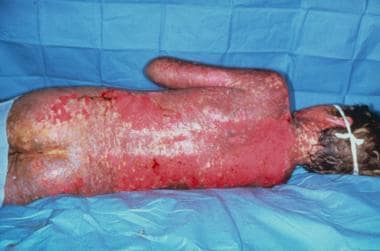
    • Larger, confluent, irregularly shaped, coalescing lesions with involvement of the trunk and 2 or more mucosal sites are common with SJS (see Images 4-5). The mouth and lips are the most commonly affected mucosal site in SJS, but other sites such as the pharynx, larynx, esophagus, bronchi, and genital mucosa may be involved.
    • TEN demonstrates diffuse sunburnlike erythema that often begins on the face and spreads downward. The hairy scalp is spared. Maximal extension occurs within 2-3 days. A characteristic feature of TEN is the sheetlike separation of the epidermis in the involved areas. Flaccid bullae may form. Nikolsky sign is positive. Two or more mucosal sites are involved in 85-95% of patients with TEN.
  • Drug-induced pemphigus may be clinically indistinguishable from idiopathic pemphigus vulgaris or pemphigus foliaceus (see Image 6).
    • Lesions are superficial flaccid bullae ranging in size from 1-10 cm.
    • They may initially occur in the mouth.
    • Nikolsky sign is positive when pressure is applied lateral to the bulla.
    • Lesions rupture easily, leaving denuded and weeping areas, which secondarily become crusted.
  • Tense bullae on normal skin or on an erythematous base is the typical finding in drug-induced pemphigoid (see Image 7).
    • Denuded areas, which are left after bullae rupture, heal spontaneously.
    • Erythematous patches, urticarial plaques, and targetoid lesions may also be observed. Lesions may be found on the face, trunk, limbs, palms, soles, and mucous membranes.
    • Nikolsky sign may be positive, unlike in idiopathic pemphigoid.
    • Cicatricial pemphigoid is distinguished from other forms of pemphigoid by the presence of scarring. Cicatricial pemphigoid occurs on the mucous membranes of the eyes, pharynx, genitalia, or anus. Adhesions, strictures, and the loss of function may result from the scarring process.
  • Physical examination of a drug-induced LAD lesion may reveal one of several pictures.
    • The most common presentations include urticated plaques, papulovesicles resembling dermatitis herpetiformis, targetoid lesions as in EM, and bullae resembling those found in bullous pemphigoid (see Image 8).
    • Bullous eruptions can become hemorrhagic.
    • Lesions are most commonly located on the trunk and limbs.
    • Cases of palmar lesions, although uncommon, have been reported.
  • Pseudoporphyria demonstrates tense blisters, erosions, and milia especially on the dorsum of the hands and forearms (see Image 9). Features of hypertrichosis, dyspigmentation, and skin sclerosis are not observed in pseudoporphyria as they are in true porphyria.

Causes

  • Contact sensitization to certain topical medications may result in a predisposition to a systemic eczematous reaction to the same or a chemically related medication.
    • Contact sensitivity to penicillin may cause a diffuse eczematous reaction to systemically administered penicillin or even the small amounts of penicillin in cow's milk taken orally.
    • Contact sensitivity to topical sulfonamides may cause a reaction to systemically administered sulfamethoxazole or sulfonylureas (ie, tolbutamide, carbutamide) but not to dapsone or sulfapyridine.
    • Contact sensitivity to ethylenediamine found as a preservative in some topical medications may predispose an individual to a reaction to systemically administered aminophylline, theophylline, tripelennamine, antazoline, methapyrilene, hydroxyzine, and pyrilamine.
    • Contact sensitivity to tetramethylthiuram disulfide predisposes a person to a reaction to the antialcohol treatment Antabuse (tetraethylthiuram disulfide).
    • Patients sensitized to paraphenylenediamine may react to azo dyes taken orally or the group of para drugs.
    • Other drugs that may cause an eczematous eruption but are not preceded by contact sensitivity are the following: carbamazepine, gold, griseofulvin, phenytoin, piroxicam, thiazide diuretics, and vitamin K.
  • The drugs most commonly implicated in causing AGEP are the antibiotics, especially beta-lactams, macrolides, and co-trimoxazole. Furosemide and nonsteroidal anti-inflammatory agents have also been reported to be associated with the development of AGEP.
    • Diltiazem has been reported to cause AGEP several times.
    • Other causes include the following: carbamazepine, hydroxychloroquine, clindamycin, ticlopidine, terbinafine, high-dose chemotherapy, chromium picolinate, chloramphenicol, sulfapyridine, metronidazole, lacquer chicken, protease inhibitors, progesterones, mercury, nystatin, amoxapine, paracetamol, chloroquine and proguanil, nifuroxazide, lansoprazole, minocycline, dexamethasone injection, propicillin, aspirin, doxycycline, furosemide, and buphenine.
  • Many drugs are capable of causing FDEs. Some of the more common etiologic agents of FDEs include aspirin, barbiturates, co-trimoxazole, phenolphthalein, feprazone, sulfonamides, and tetracycline.
    • Causative agents in generalized bullous FDEs include aminophenazone, antipyrine, barbiturates, co-trimoxazole, diazepam, mefenamic acid, paracetamol, phenazones, phenylbutazone, piroxicam, sulfadiazine, and sulfathiazole.
    • Knowledge of the potential drugs involved in a FDE is especially important because certain drugs have a predilection to cause FDEs at certain sites. Aspirin has a predilection for the trunk and limbs, tetracyclines for the genitalia, and phenylbutazone for the lips.
  • No reproducible tests for the etiology of EM exist. Association with infectious agents, such as herpes simplex and mycoplasma, has been well described. Precipitation of SJS or TEN has most commonly been associated with certain medications. The most commonly associated medications are the following: antibiotics (eg, sulfonamides, trimethoprim-sulfamethoxazole, penicillins, cephalosporins, chloramphenicol, clindamycin, griseofulvin, rifampin, streptomycin, tetracycline, clarithromycin, ciprofloxacin), nonsteroidal anti-inflammatory agents (eg, ibuprofen, acetylsalicylic acid, ketotifen, naproxen, piroxicam, sulindac), antihypertensives, anticonvulsants (eg, phenobarbital, carbamazepine, phenytoin), and allopurinol. More recently, COX-2 inhibitors have been reported to be associated with SJS.
  • Topical mechlorethamine reportedly caused a subepidermal bullous reaction in a patient with mycosis fungoides.
  • Methotrexate has been reported to be associated with bullous acral erythema in a child.
  • The thiol group of drugs is the most common agent implicated in drug-induced pemphigus. Drugs known to cause pemphigus include amoxicillin, ampicillin, captopril, cephalosporins, penicillamine, penicillin, pyritinol, and rifampin. Thiol drugs are more likely to cause pemphigus whereas nonthiol drugs are more likely to trigger pemphigus. For this reason, spontaneous recovery is lower in non–thiol-induced pemphigus where other factors may be predisposing a patient to develop pemphigus.
  • Sulfur-containing drugs commonly cause drug-induced pemphigoid, with furosemide being the most common cause. Other agents commonly known to cause drug-induced pemphigoid include amoxicillin, ampicillin, phenacetin, penicillin, penicillamine, psoralen-ultraviolet-A light, and beta-blockers. Cicatricial pemphigoid has occurred after the use of drugs including practolol, topical echothiophate, D-penicillamine, clonidine, topical pilocarpine, topical demecarium, indomethacin, topical glaucoma, and sulfadoxine.
  • Vancomycin is the most common cause of drug-induced LAD. Other drugs known to cause LAD include diclofenac, somatostatin, lithium, phenytoin, captopril, amiodarone, and cefamandole.
  • True PCT may be precipitated by barbiturates, estrogens, griseofulvin, rifampicin, and sulfonamides. The drugs that are known to induce pseudoporphyria include furosemide, nabumetone, nalidixic acid, naproxen, oxaprozin, and tetracycline.


Atopic Dermatitis
Bullous Disease of Diabetes
Bullous Disease of Dialysis
Bullous Pemphigoid
Candidiasis, Cutaneous
Cicatricial Pemphigoid
Contact Dermatitis, Allergic
Contact Dermatitis, Irritant
Dermatitis Herpetiformis
Epidermolysis Bullosa
Epidermolysis Bullosa Acquisita
Erythema Multiforme
Id Reaction (Autoeczematization)
Impetigo
Lichen Planus
Linear IgA Dermatosis
Lupus Erythematosus, Bullous
Nummular Dermatitis
Pemphigus Foliaceus
Pemphigus Vulgaris
Pemphigus, Paraneoplastic
Porphyria Cutanea Tarda
Psoriasis, Pustular
Reactive Arthritis
Staphylococcal Scalded Skin Syndrome
Stevens-Johnson Syndrome and Toxic Epidermal Necrolysis
Subcorneal Pustular Dermatosis

Other Problems to be Considered

Eczematous drug eruption - Allergic or irritant contact dermatitis, intradermal reactions, photoallergic reactions, nummular dermatitis, atopic dermatitis

AGEP - Impetigo, staphylococcal scalded skin syndrome, pustular psoriasis, Reiter disease, subcorneal pustular dermatosis, pemphigus foliaceus, candidiasis, pustular dermatophyte infection

FDE - Erythema chronicum migrans, SJS-TEN, bullous disease of diabetes mellitus, bullous disease of dialysis, bullous reactions with drug overdose/coma and bullous phototoxic contact reactions to plants, postinflammatory hyperpigmentation, factitial dermatitis

EM - Paraneoplastic pemphigus, other autoimmune blistering diseases, lupus erythematosus, bullous lichen planus, urticaria, FDE

Drug-induced pemphigus - Pemphigus vulgaris, pemphigus foliaceus, pemphigus vegetans, bullous pemphigoid, dermatitis herpetiformis, PCT, TEN, EM, bullous contact dermatitis

Drug-induced pemphigoid - Reflex sympathetic dystrophy, linear IgA bullous dermatosis, bullous disease of diabetes mellitus, EM, bullous systemic lupus erythematosus, dermatitis herpetiformis, burn, epidermolysis bullosa, leukocytoclastic vasculitis, chronic actinic dermatitis, and cicatricial pemphigoid

Drug-induced LAD - Non–drug-induced LAD, dermatitis herpetiformis, bullous pemphigoid, cicatricial pemphigoid, EM

Pseudoporphyria - True PCT, bullous pemphigoid, epidermolysis bullosa acquisita, photoallergic dermatitis, allergic contact dermatitis


Lab Studies

  • Laboratory studies during an eczematous drug eruption may disclose eosinophilia, leukocytosis, and elevated sedimentation rate.
  • In AGEP, laboratory studies demonstrate neutrophilia in 90% of cases and eosinophilia in 30% of cases. Liver function is usually normal.
  • Laboratory studies in FDE may show leukocytosis, hypereosinophilia, and hypergammaglobulinemia. However, clinical and histologic features are the mainstay of diagnosis.
  • Apart from leukocytosis, laboratory studies may not be helpful in the evaluation of patients with EM. Patients with widespread lesions may develop electrolyte abnormalities and hypoalbuminemia. Immunofluorescence study results are negative.
  • Antinuclear antibodies may be found in patients with thiol drug-induced pemphigus.
  • Blood eosinophilia and increased amounts of soluble interleukin-2 receptors may be present in patients with drug-induced pemphigoid. The sera and blister fluids in drug-induced pemphigoid may show increased amounts of eosinophilic cationic protein and neutrophil-derived myeloperoxidase.
  • Laboratory studies are not particularly helpful in diagnosing drug-induced LAD.
  • In pseudoporphyria, laboratory studies do not demonstrate any abnormality in heme biosynthesis or hepatic abnormalities.

Other Tests

  • Results of patch testing suspected drugs that cause eczematous drug reactions may be positive.
  • Patch testing of the offending drug in AGEP may result in a pustular patch test reaction.
  • Patch testing and oral provocation testing may be used to implicate a specific drug in a FDE.
  • Apart from skin biopsy, other tests are not helpful in evaluating EM. First-degree relatives of patients with TEN have lymphocytes that are more susceptible to the toxic effect of the culprit drug than controls.
  • Results of direct and indirect immunofluorescence studies in drug-induced pemphigus are identical to studies in idiopathic pemphigus. Deposition of immunoglobulin G (IgG) and C3 is observed intercellularly on direct immunofluorescence. On indirect immunofluorescence, pemphigus antibodies are found in the patient's serum.
  • Linear deposits of IgG and C3 may be visualized along the basement membrane zone with direct immunofluorescence in patients with drug-induced pemphigoid. Indirect immunofluorescence studies are positive for circulating antibodies against the basement membrane zone. However, circulating antibodies are less commonly found in cicatricial pemphigoid.
  • Direct immunofluorescence studies reveal the presence of IgA at the basement membrane zone in LAD. Results of indirect immunofluorescence studies using monkey esophagus or saline split human skin are usually negative for IgA at the basement membrane zone.
  • Pseudoporphyria demonstrates normal urine and serum porphyrins.

Histologic Findings

Eczematous drug eruptions

Frequently seen histologic findings include the following: hyperkeratosis, parakeratosis, exocytosis of lymphocytes, spongiosis, and a superficial perivascular lymphocytic infiltrate. Occasional histologic findings include the following: eosinophilic spongiosis, vesicle or bulla formation, papillary dermal edema, and extravasation of erythrocytes. Rarely, features suggestive of mycosis fungoides may be observed.

Acute generalized exanthematous pustulosis

Subcorneal or spongiform pustules and a mild superficial perivascular and interstitial infiltrate composed of lymphocytes, neutrophils, and eosinophils may be observed. Papillary dermal edema, extravasation of erythrocytes, and acantholytic keratinocytes may also be observed.

Fixed drug eruption

Histologic examination of FDE reveals an interface or spongiotic dermatitis pattern. In the acute phase, the epidermis is characterized by dyskeratotic cells, exocytosis, edema, nuclear pyknosis, and hydropic degeneration of basal cells. An acute infiltrate consisting of lymphocytes, histiocytes, neutrophils, and eosinophils may be found around superficial and deep blood vessels. The quiescent lesion contains macrophages replete with melanin in the upper dermis. Papillary dermal fibrosis may develop consequent to prior episodes of FDE at the same site.

Erythema multiforme

An interface dermatitis with individual cell necrosis (necrotic keratinocytes) beneath a normal basket weave stratum corneum is characteristic of EM. Other findings may include spongiosis, intrabasilar blister formation, a superficial perivascular lymphohistiocytic infiltrate with variable numbers of eosinophils and neutrophils, and papillary dermal edema. TEN shows massive and confluent necrosis of the basal cells (and possibly the entire epidermis), and the dermal infiltrate is scanty.

Drug-induced pemphigus

The hallmark of pemphigus is acantholysis, or the loss of cohesion between epidermal cells. This gives rise to an intraepidermal bulla, which may be located above the basal cell layer (low acantholysis) or subcorneally (high acantholysis). Bullae may lack inflammatory cells or may contain abundant neutrophils. A lymphocytic infiltrate may be found in the dermis in addition to numerous plasma cells and eosinophils.

Drug-induced pemphigoid

The histologic hallmark of drug-induced pemphigoid is a subepidermal blister. Neutrophils, eosinophils, and fibrin may be present in the blister cavity. The dermis is characterized by a superficial infiltrate containing neutrophils, lymphocytes, eosinophils, and occasionally plasma cells. In cicatricial pemphigoid lesions, eosinophils are sparse, whereas a dense lymphocytic inflammatory infiltrate exists in the dermis. Variable dermal fibrosis may be observed based upon chronicity of the lesions and prior involvement at the same site.

Linear IgA dermatosis

A subepidermal blister containing neutrophils and eosinophils with a dermal perivascular infiltrate may be present. IgA antibodies, sometimes accompanied by C3, localize to the dermal side of the basement membrane.

Pseudoporphyria

Pseudo-PCT demonstrates the same histologic features of PCT. These features include the following: subepidermal blister, cell-poor infiltrate, festooning of dermal papillae, and thickened vessel walls, which are periodic acid-Schiff positive.


Medical Care

Withdrawal of the offending medication is the most important aspect of treatment of bullous drug reactions. Most reactions are self-limited. Conservative treatment of these disorders involves using wet compresses of Burrow solution and the application of moderate- to high-potency topical corticosteroids. More severe reactions may require the use of systemic corticosteroids.

The use of corticosteroids in the treatment of SJS and TEN is controversial. Patients with SJS and TEN are usually managed as inpatients in the intensive care or burn units. Fluid hydration, electrolyte balance, and nutritional support are the cornerstones of therapy. Rigorously guard against infection. Intravenous gamma globulin (IVIG) has been successfully used to treat a small group of patients with TEN. The IVIG reduces apoptosis by blocking CD95 on T cells. In TEN, early withdrawal of precipitating drugs may reduce mortality if the drug has a short half-life.

Consultations

Limited forms of EM can be managed on an outpatient basis; however, careful consideration should be given to patients with SJS and TEN regarding an early referral to an intensive care unit or preferably a burn unit. Eye involvement that can occur in EM, SJS, and TEN requires an ophthalmologic evaluation.


Deterrence/Prevention

  • Avoid use of the offending drug.

Prognosis

  • Eczematous or spongiotic drug reactions usually have a good prognosis and resolve without significant sequelae.
  • AGEP has a good prognosis and resolves without sequelae once the causative agent is removed.
  • Bullous generalized FDEs have a favorable prognosis.
  • EM most often has a good prognosis, but SJS and TEN can be lethal depending on the extent of skin involvement and the age of the patient.
  • Pemphigus has a mortality rate approaching 10%. However, drug-induced pemphigus usually resolves with removal of the offending agent. In some patients, lesions may progress or persist. In these cases, the drug likely is serving as a trigger rather than a cause in patients who are already prone to develop pemphigus.
  • Drug-induced pemphigoid has an excellent prognosis with discontinuation of the drug. However, some cases may involve persistent lesions. Cicatricial pemphigoid, in comparison to idiopathic bullous pemphigoid, shows a small tendency for remission. In severe cases of ocular cicatricial pemphigoid, scarring and blindness in both eyes has been reported.
  • Drug-induced LAD has a good prognosis.
  • Drug-induced PCT has a good prognosis.

Patient Education


Medical/Legal Pitfalls

  • Drug reactions account for a large number of malpractice claims against dermatologists. The drugs most responsible for these claims are corticosteroids, isotretinoin, methotrexate, antibiotics, and chemotherapeutic agents.
  • Failure to accurately disclose the risks and potentially serious adverse effects of the prescribed drug is often the basis of the malpractice claim.
  • Failure to recognize the nature or cause of the reaction and failure to discontinue the medication in a timely fashion may also be the source of such claims.


Media file 1:  Small pustules on erythematous patch (acute generalized exanthematous pustulosis).
Click to see larger pictureClick to see detailView Full Size Image
Media type:  Photo

Media file 2:  Annular hyperpigmented patch (fixed drug eruption).
Click to see larger pictureClick to see detailView Full Size Image
Media type:  Photo

Media file 3:  Target or iris lesions on palm (erythema multiforme).
Click to see larger pictureClick to see detailView Full Size Image
Media type:  Photo

Media file 4:  Coalescing eroded patches (Stevens-Johnson syndrome).
Click to see larger pictureClick to see detailView Full Size Image
Media type:  Photo

Media file 5:  Stevens-Johnson syndrome.
Click to see larger pictureClick to see detailView Full Size Image
Media type:  Photo

Media file 6:  Crusted erosions on scalp (drug-induced pemphigus).
Click to see larger pictureClick to see detailView Full Size Image
Media type:  Photo

Media file 7:  Small vesicle at edge of urticarial plaque (drug-induced pemphigoid).
Click to see larger pictureClick to see detailView Full Size Image
Media type:  Photo

Media file 8:  Tense vesicles in annular array (linear immunoglobulin A dermatosis).
Click to see larger pictureClick to see detailView Full Size Image
Media type:  Photo

Media file 9:  Erosions, scars, milia and vesicle (pseudoporphyria).
Click to see larger pictureClick to see detailView Full Size Image
Media type:  Photo


  • Alanko K, Stubb S, Kauppinen K. Cutaneous drug reactions: clinical types and causative agents. A five- year survey of in-patients (1981-1985). Acta Derm Venereol. 1989;69(3):223-6. [Medline].
  • Alcalay J, David M, Ingber A, et al. Bullous pemphigoid mimicking bullous erythema multiforme: an untoward side effect of penicillins. J Am Acad Dermatol. Feb 1988;18(2 Pt 1):345-9. [Medline].
  • Angelini G, Vena GA, Grandolfo M, Mastrolonardo M. Iatrogenic contact dermatitis and eczematous reactions. Clin Dermatol. Oct-Dec 1993;11(4):467-77. [Medline].
  • Arndt KA, Jick H. Rates of cutaneous reactions to drugs. A report from the Boston Collaborative Drug Surveillance Program. JAMA. Mar 1 1976;235(9):918-23. [Medline].
  • Avakian R, Flowers FP, Araujo OE, Ramos-Caro FA. Toxic epidermal necrolysis: a review. J Am Acad Dermatol. Jul 1991;25(1 Pt 1):69-79. [Medline].
  • Baird BJ, De Villez RL. Widespread bullous fixed drug eruption mimicking toxic epidermal necrolysis. Int J Dermatol. Apr 1988;27(3):170-4. [Medline].
  • Bean SF. Cicatricial pemphigoid. Immunofluorescent studies. Arch Dermatol. Oct 1974;110(4):552-5. [Medline].
  • Bem JL, Mann RD, Rawlins MD. Review of yellow cards--1986 and 1987. Br Med J (Clin Res Ed). May 7 1988;296(6632):1319. [Medline].
  • Bigby M, Jick S, Jick H, Arndt K. Drug-induced cutaneous reactions. A report from the Boston Collaborative Drug Surveillance Program on 15,438 consecutive inpatients, 1975 to 1982. JAMA. Dec 26 1986;256(24):3358-63. [Medline].
  • Brenner S, Wolf R, Ruocco V. Drug-induced pemphigus. I. A survey. Clin Dermatol. Oct-Dec 1993;11(4):501-5. [Medline].
  • Brenner S, Hodak E, Dascalu D, et al. A possible case of drug-induced familial pemphigus. Acta Derm Venereol. 1990;70(4):357-8. [Medline].
  • Carpenter S, Berg D, Sidhu-Malik N, et al. Vancomycin-associated linear IgA dermatosis. A report of three cases. J Am Acad Dermatol. Jan 1992;26(1):45-8. [Medline].
  • Collier PM, Wojnarowska F. Drug-induced linear immunoglobulin A disease. Clin Dermatol. Oct-Dec 1993;11(4):529-33. [Medline].
  • Dyson SW, Lin C, Jaworsky C. Enoxaparin sodium-induced bullous pemphigoid-like eruption: a report of 2 cases. J Am Acad Dermatol. Jul 2004;51(1):141-2. [Medline].
  • Fabbri P, Panconesi E. Erythema multiforme ("minus" and "maius") and drug intake. Clin Dermatol. Oct-Dec 1993;11(4):479-89. [Medline].
  • Fellner MJ. Drug-induced bullous pemphigoid. Clin Dermatol. Oct-Dec 1993;11(4):515-20. [Medline].
  • Freed J, Wells M, Stetson C, Dongwoo L. Bullous reaction to topical methchlorethamine in mycosis fungoides. J Drugs Dermatol. Jan 2006;5(1):66-7. [Medline].
  • Gabrielsen TO, Staerfelt F, Thune PO. Drug-induced bullous dermatosis with linear IgA deposits along the basement membrane. Acta Derm Venereol. 1981;61(5):439-41. [Medline].
  • Garcia-Doval I, LeCleach L, Bocquet H, et al. Toxic epidermal necrolysis and Stevens-Johnson syndrome: does early withdrawal of causative drugs decrease the risk of death?. Arch Dermatol. Mar 2000;136(3):323-7. [Medline].
  • Hardy KM, Perry HO, Pingree GC, Kirby TJ Jr. Benign mucous membrane pemphigoid. Arch Dermatol. Nov 1971;104(5):467-75. [Medline].
  • Hofmann M, Audring H, Sterry W, Trefzer U. Interleukin-2 associated bullous drug dermatosis. Dermatology. 2005;210(1):74-75. [Medline].
  • Huff JC, Weston WL, Tonnesen MG. Erythema multiforme: a critical review of characteristics, diagnostic criteria, and causes. J Am Acad Dermatol. Jun 1983;8(6):763-75. [Medline].
  • Jongen-Lavrencic M, Schneeberger PM, van der Hoeven JG. Ciprofloxacin-induced toxic epidermal necrolysis in a patient with systemic lupus erythematosus. Infection. Dec 2003;31(6):428-9. [Medline].
  • Kauppinen K, Stubb S. Drug eruptions: causative agents and clinical types. A series of in- patients during a 10-year period. Acta Derm Venereol. 1984;64(4):320-4. [Medline].
  • Kauppinen K. Cutaneous reactions to drugs with special reference to severe bullous mucocutaneous eruptions and sulphonamides. Acta Derm Venereol Suppl (Stockh). 1972;68:1-89. [Medline].
  • Khaldi N, Miras A, Gromb S. Toxic epidermal necrolysis and clarithromycin. Can J Clin Pharmacol. 2005;12(3):e264-8. [Medline].
  • Korman NJ, Eyre RW, Zone J, Stanley JR. Drug-induced pemphigus: autoantibodies directed against the pemphigus antigen complexes are present in penicillamine and captopril-induced pemphigus. J Invest Dermatol. Feb 1991;96(2):273-6. [Medline].
  • Kuechle MK, Stegemeir E, Maynard B, et al. Drug-induced linear IgA bullous dermatosis: report of six cases and review of the literature. J Am Acad Dermatol. Feb 1994;30(2 Pt 1):187-92. [Medline].
  • Landau M, Brenner S. Histopathologic findings in drug-induced pemphigus. Am J Dermatopathol. Aug 1997;19(4):411-4. [Medline].
  • Layton D, Marshall V, Boshier A, et al. Serious skin reactions and selective COX-2 inhibitors: a case series from prescription-event monitoring in England. Drug Saf. 2006;29(8):687-96. [Medline].
  • Leivo T, Heikkila H. Naproxen-induced generalized bullous fixed drug eruption. Br J Dermatol. 2004;151(1):232. [Medline].
  • Lisi P, Stingeni L. Fixed drug eruption: bullous form. Clin Dermatol. Oct-Dec 1993;11(4):461-6. [Medline].
  • Masu S, Seiji M. Pigmentary incontinence in fixed drug eruptions. Histologic and electron microscopic findings. J Am Acad Dermatol. Apr 1983;8(4):525-32. [Medline].
  • Noce R, Paredes BE, Pichler WJ. Acute generalized exanthematic pustulosis (AGEP) in a patient treated with furosemide. Am J Med Sci. Nov 2000;320(5):331-3. [Medline].
  • Nolan L, O''Malley K. Adverse drug reactions in the elderly. Br J Hosp Med. May 1989;41(5):446, 448, 452-7. [Medline].
  • Perry A, Sparling JD, Pennington M. Bullous pemphigoid following therapy with an oral beta-blocker. J Drugs Dermatol. Nov-Dec 2005;4(6):746-8. [Medline].
  • Pinto GM, Lamarao P, Vale T. Captopril-induced pemphigus vegetans with Charcot-Leyden crystals. J Am Acad Dermatol. Aug 1992;27(2 Pt 2):281-4. [Medline].
  • Roujeau JC, Stern RS. Severe adverse cutaneous reactions to drugs. N Engl J Med. Nov 10 1994;331(19):1272-85. [Medline].
  • Roujeau JC, Bioulac-Sage P, Bourseau C, et al. Acute generalized exanthematous pustulosis. Analysis of 63 cases. Arch Dermatol. Sep 1991;127(9):1333-8. [Medline].
  • Ruocco V, Sacerdoti G. Pemphigus and bullous pemphigoid due to drugs. Int J Dermatol. May 1991;30(5):307-12. [Medline].
  • Ruocco V, De Angelis E, Lombardi ML. Drug-induced pemphigus. II. Pathomechanisms and experimental investigations. Clin Dermatol. Oct-Dec 1993;11(4):507-13. [Medline].
  • Ruocco V, Pisani M. Induced pemphigus. Arch Dermatol Res. 1982;274(1-2):123-40. [Medline].
  • Ruocco V, Sacerdoti G. Pemphigus and bullous pemphigoid due to drugs. Int J Dermatol. May 1991;30(5):307-12. [Medline].
  • Sehgal VN, Gangwani OP. Fixed drug eruption. Current concepts. Int J Dermatol. Mar 1987;26(2):67-74. [Medline].
  • Thankappan TP, Zachariah J. Drug-specific clinical pattern in fixed drug eruptions. Int J Dermatol. Dec 1991;30(12):867-70. [Medline].
  • Van Joost T, Van''t Veen AJ. Drug-induced cicatricial pemphigoid and acquired epidermolysis bullosa. Clin Dermatol. Oct-Dec 1993;11(4):521-7. [Medline].
  • Viard I, Wehrli P, Bullani R, et al. Inhibition of toxic epidermal necrolysis by blockade of CD95 with human intravenous immunoglobulin. Science. Oct 16 1998;282(5388):490-3. [Medline].
  • Walman MA, Black DR, Callen JP. Vancomycin-induced linear IgA bullous disease presenting as toxic epidermal necrolysis. Clin Exp Dermatol. 2004;29(6):633-6. [Medline].
  • Werchniak AE, Chaffee S, Dinulos JG. Methotrexate-induced bullous acral erythema in a child. J Am Acad Dermatol. May 2005;52(5 Suppl 1):S93-5. [Medline].
  • Whitworth JM, Thomas I, Peltz SA, et al. Vancomycin-induced linear IgA bullous dermatosis (LABD). J Am Acad Dermatol. May 1996;34(5 Pt 2):890-1. [Medline].
  • Wolf R, Tamir A, Brenner S. Drug-induced versus drug-triggered pemphigus. Dermatologica. 1991;182(4):207-10. [Medline].
  • Yamaguchi K, Majima M, Katori M. Preferential consumption of coagulation factors I, V, and VIII in rat endotoxemia. Shock. Nov 2000;14(5):535-43. [Medline].

Drug-Induced Bullous Disorders excerpt

Article Last Updated: Nov 1, 2006