Continually Updated Clinical Reference
 
 
  All Sources     eMedicine     Medscape     Drug Reference     MEDLINE
 
eMedicine - Erythroplasia of Queyrat (Bowen Disease of the Glans Penis) : Article by

Quick Find
Authors & Editors
Introduction
Clinical
Differentials
Workup
Treatment
Medication
Follow-up
Miscellaneous
Multimedia
References

Related Articles
Balanitis Circumscripta Plasmacellularis

Balanitis Xerotica Obliterans

Balanoposthitis

Candidiasis, Mucosal

Contact Dermatitis, Allergic

Contact Dermatitis, Irritant

Drug-Induced Bullous Disorders

Psoriasis, Plaque

Squamous Cell Carcinoma


Patient Education
Men's Health Center

Cancer and Tumors Center

Cancer: What You Need to Know


Author: Joseph L Wilde, MD, Mohs Micrographic Surgery, Chief, Department of Dermatology, Brooke Army Medical Center

Joseph L Wilde is a member of the following medical societies: American College of Mohs Micrographic Surgery and Cutaneous Oncology

Editors: Mark W Cobb, MD, Consulting Staff, WNC Dermatological Associates; Richard P Vinson, MD, Assistant Clinical Professor, Department of Dermatology, Texas Tech University School of Medicine; Consulting Staff, Mountain View Dermatology, PA; Mary Farley, MD, Dermatologic Surgeon/Mohs Surgeon, Department of Dermatology, The Skin Surgery Center; Joel M Gelfand, MD, MSCE, Medical Director, Clinical Studies Unit, Assistant Professor, Department of Dermatology, Associate Scholar, Center for Clinical Epidemiology and Biostatistics, University of Pennsylvania; Dirk M Elston, MD, Director, Department of Dermatology, Geisinger Medical Center

Author and Editor Disclosure

Synonyms and related keywords: carcinoma in situ of the penis, Bowen disease, penile carcinoma, penile neoplasia, EQ, erythroplasia of the glans penis, uncircumcised men, erythematous plaques, penile Bowen disease, papillomavirus-induced carcinoma in situ

Background

Erythroplasia of Queyrat (EQ) originally was described by Tarnovsky in 1891 and subsequently was appreciated as a penile disease by Fournier and Darier in 1893. More intensive studies by Queyrat in 1911 allowed this condition to be accepted as a distinct entity. He described erythroplasia of the glans penis and concluded that the disease represented a precancerous process.

Pathophysiology

EQ arises from the squamous epithelial cells of the glans penis or inner lining of the prepuce. It is seen almost exclusively in uncircumcised men and represents an in situ form of squamous cell carcinoma. Progression to invasive carcinoma may occur after a variable period of time.

Frequency

United States

EQ is a rare disorder in the United States. The exact prevalence is not well documented in the medical literature.

Mortality/Morbidity

EQ is treatable if underlying invasive carcinoma does not exist; however, as many as 10% of patients with EQ may have invasive squamous cell carcinoma in the primary lesion. Extension of cancerous cells into the submucosa is associated with a 20% incidence of regional lymph node metastases.

Sex

EQ occurs only in men.

Age

Median age of onset is 51 years. EQ has been described in men aged 20-80 years.1


History

Characteristic lesions of EQ are solitary or multiple erythematous plaques. The texture can be smooth, velvety, scaly, or verrucous. The condition almost always involves the glans penis or adjacent mucosal surfaces or both. EQ lesions may be regarded as synonymous with penile Bowen disease or as representative of one end of a spectrum of in situ penile carcinoma. Both may represent forms of papillomavirus-induced carcinoma in situ.

  • Presenting symptoms can vary and may include the following:
    • Redness
    • Crusting
    • Scaling
    • Ulceration
    • Bleeding
    • Pain
    • Itching
    • Dysuria
    • Penile discharge
    • Difficulty retracting the foreskin

Physical

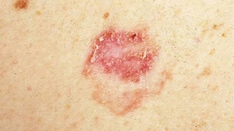
Solitary or multiple cutaneous lesions may be present. Typically, minimally raised, erythematous plaques with variable texture are seen. The plaques may be smooth, velvety, scaly, crusty, or verrucous. Ulceration or distinct papillomatous papules within a plaque may indicate progression to invasive squamous cell carcinoma.

Causes

EQ most often occurs in uncircumcised men. Multiple factors have been implicated as causative agents in this process.

  • Chronic irritation, inflammation, and infection appear to be the common links. A recent case report described a patient with coexistent Zoon balanitis.2
  • Urine, smegma, or poor hygiene can cause chronic irritation of the area.
  • Other physical factors, such as heat, friction, and trauma, also have been implicated.
  • Chronic infections, such as herpes simplex and human papillomavirus,3 are other considerations.
  • Immunosuppression from allogenic organ transplantation may contribute to increased overall incidence and invasive disease in affected patients.
  • Consider a broad differential diagnosis with cutaneous penile lesions. All types of inflammatory, infectious, and neoplastic processes can occur in this area. A systematic approach is crucial.


Balanitis Circumscripta Plasmacellularis
Balanitis Xerotica Obliterans
Balanoposthitis
Candidiasis, Mucosal
Contact Dermatitis, Allergic
Contact Dermatitis, Irritant
Drug-Induced Bullous Disorders
Psoriasis, Plaque
Squamous Cell Carcinoma

Other Problems to be Considered

The following mnemonic (FAINT) may be helpful:

Fixed drug eruption or other drug-induced dermatoses
Allergic/irritant contact dermatitis
Infection
Neoplasia
Trauma
 
Other problems to consider include psoriatic/systemic disorders and balanitis (specific types).2


Lab Studies

Diagnosis of EQ must be made via skin biopsy of the affected area. Pay special attention to areas of ulceration or distinct papillomatous lesions, and palpate inguinal nodes. The following diagnostic procedures may be useful in excluding other infectious processes:

  • Bacterial/viral/fungal culture
  • Tzanck preparation
  • Potassium hydroxide examination
  • Gram stain

Histologic Findings

The epidermis shows acanthosis and loss of normal architecture. It is replaced by atypical hyperplastic keratinocytes characterized by disorientation, dyskeratosis, and mitotic figures. The rete ridges appear elongated and thickened with intervening dermal papillae reduced to thin strands.


Medical Care

Selected cases of EQ have been treated successfully using 5-fluorouracil.1 Interestingly, another report showed temporary resolution using oral isotretinoin, but the lesion recurred after discontinuation of the medication.4

Case reports have shown imiquimod (Aldara) to have potential efficacy in the treatment of EQ.3, 5, 6 Larger placebo-controlled studies are needed to confirm this initial data. Finally, photodynamic therapy is also a promising modality.7

Surgical Care

Mohs micrographic surgery has proven to be the surgical treatment of choice in EQ.8 Other modalities reported to treat EQ successfully include the following:

  • Cryotherapy
  • Electrodesiccation and curettage
  • Carbon dioxide laser ablation9


Drug Category: Antineoplastic agents

Several case reports describe limited success in treating selected superficial lesions of EQ with topical 5% 5-fluorouracil cream.

Drug NameFluorouracil (Efudex)
DescriptionDisrupts DNA synthesis by stopping the methylation of deoxyuridylic acid and inhibiting thymidylate synthetase, thereby halting cell proliferation.
Adult DoseApply cream to affected areas bid for minimum of 4 wk; longer treatment schedules may be required depending on depth and diameter of individual lesions
Pediatric DoseNot established
ContraindicationsDocumented hypersensitivity; potentially serious infections
InteractionsNone reported
PregnancyX - Contraindicated; benefit does not outweigh risk
PrecautionsAvoid exposing treated area to UV radiation; incidence of inflammatory reactions may occur with occlusive dressings; porous gauze dressing may be applied for cosmetic reasons without increase in reaction; patients should expect inflammatory reaction with crusting

Drug Category: Immune response modifiers

Several case reports and series describe successful treatment of non-invasive EQ with topical imiquimod 5% cream.

Drug NameImiquimod (Aldara)
DescriptionImmune response modifier that induces local activity of cytokines to include interferon alpha. Specific mechanism of action unknown.
Adult DoseVarious topical dosing regimens have been used in reported cases; duration of treatment should be long enough to induce some degree of local response clinically, as indicated by erythema, crusting, or superficial erosion
Reported cases achieved local response after 3-12 wk of treatment dosed qod or 3 times per wk; rest period of 3-7 d may be needed mid cycle to allow healing of erosions or decrease local pain/pruritus
Optimum dosing schedule and length of treatment have not yet been determined by large-scale studies
Pediatric DoseNot established
ContraindicationsDocumented hypersensitivity
InteractionsNone reported
PregnancyC - Fetal risk revealed in studies in animals but not established or not studied in humans; may use if benefits outweigh risk to fetus
PrecautionsGenital use: Not recommended for treatment of rectal, cervical, intravaginal, urethral, and intra-anal human papilloma infection; following surgery or drug treatment, do not use topical imiquimod until genital/perianal tissue is healed
Actinic keratosis: Avoid exposure to sunlight or artificial tanning; regular use of sunscreen is encouraged; avoid contact with lips, eyes, or nostrils; common adverse effects include erythema, edema, vesicles, erosion or ulceration, weeping, exudate, flaking, scaling, dryness, and scabbing or crusting
Basal cell carcinoma: Medical follow-up is essential to assure cancer has responded adequately to treatment; may cause redness, swelling, and sore development at application site; may cause itching or burning


Further Outpatient Care

Close follow-up monitoring is required for patients treated medically or surgically for EQ. Local recurrence rates range from 3-10%.

Deterrence/Prevention

Uncircumcised men are at greatest risk of developing EQ; however, adult circumcision has not proven to decrease the risk. Concomitant chronic inflammatory dermatoses of the penis also can increase the potential for developing EQ.

All transplantation patients or any patients on immunosuppressive medications should undergo a thorough cutaneous examination to include genital skin as part of the initial workup and any subsequent visits.

Effective treatment and minimization of the inflammation from any infectious or inflammatory process is important.

Prognosis

Early diagnosis and treatment provide patients with an excellent chance of cure. Most studies show the cure rate to be greater than 90%.

Patient Education

Instruct patients concerning personal hygiene and the importance of cleansing beneath the foreskin to minimize the irritant effects of urine and smegma. Additionally, emphasize the importance of preventing sexually transmitted diseases such as genital herpes, human papillomavirus, and bacterial infections.

For excellent patient education resources, visit eMedicine's Men's Health Center and Cancer and Tumors Center. Also, see eMedicine's patient education article Cancer: What You Need to Know.


Medical/Legal Pitfalls

Failure to carefully evaluate any patient, especially uncircumcised patients, presenting with a subacute or chronic balanitis. The threshold for performing skin biopsy of any lesion should be very low.10 In addition, failure to diagnose EQ expediently can easily result in disease that progresses to frank squamous cell carcinoma of the penis.


Media file 1:  Erythroplasia of Queyrat. Courtesy of Hon Pak, MD.
Click to see larger pictureClick to see detailView Full Size Image
Media type:  Image


  1. Goette DK. Review of erythroplasia of Queyrat and its treatment. Urology. Oct 1976;8(4):311-5. [Medline].
  2. Davis-Daneshfar A, Trüeb RM. Bowen's disease of the glans penis (erythroplasia of Queyrat) in plasma cell balanitis. Cutis. Jun 2000;65(6):395-8. [Medline].
  3. Arlette JP. Treatment of Bowen's disease and erythroplasia of Queyrat. Br J Dermatol. Nov 2003;149 Suppl 66:43-9. [Medline].
  4. Harrington KJ, Price PM, Fry L, Witherow RO. Erythroplasia of Queyrat treated with isotretinoin. Lancet. Oct 16 1993;342(8877):994-5. [Medline].
  5. Orengo I, Rosen T, Guill CK. Treatment of squamous cell carcinoma in situ of the penis with 5% imiquimod cream: a case report. J Am Acad Dermatol. Oct 2002;47(4 Suppl):S225-8. [Medline].
  6. Micali G, Nasca MR, De Pasquale R. Erythroplasia of Queyrat treated with imiquimod 5% cream. J Am Acad Dermatol. Nov 2006;55(5):901-3. [Medline].
  7. Lee MR, Ryman W. Erythroplasia of Queyrat treated with topical methyl aminolevulinate photodynamic therapy. Australas J Dermatol. Aug 2005;46(3):196-8. [Medline].
  8. Brown MD, Zachary CB, Grekin RC, Swanson NA. Genital tumors: their management by micrographic surgery. J Am Acad Dermatol. Jan 1988;18(1 Pt 1):115-22. [Medline].
  9. Conejo-Mir JS, Muñoz MA, Linares M, Rodríguez L, Serrano A. Carbon dioxide laser treatment of erythroplasia of Queyrat: a revisited treatment to this condition. J Eur Acad Dermatol Venereol. Sep 2005;19(5):643-4. [Medline].
  10. Gerber GS. Carcinoma in situ of the penis. J Urol. Apr 1994;151(4):829-33. [Medline].
  11. Graham JH, Helwig EB. Erythroplasia of Queyrat. A clinicopathologic and histochemical study. Cancer. Dec 1973;32(6):1396-414. [Medline].

Erythroplasia of Queyrat (Bowen Disease of the Glans Penis) excerpt

Article Last Updated: Jan 15, 2008