Continually Updated Clinical Reference
 
 
  All Sources     eMedicine     Medscape     Drug Reference     MEDLINE
 
eMedicine - Infantile Hemangioma : Article by

Quick Find
Authors & Editors
Introduction
Clinical
Differentials
Workup
Treatment
Medication
Follow-up
Multimedia
References


Patient Education
Click here for patient education.


Author: Richard J Antaya, MD, Director of Pediatric Dermatology, Associate Professor, Departments of Dermatology and Pediatrics, Yale University

Richard J Antaya is a member of the following medical societies: American Academy of Dermatology, American Academy of Pediatrics, and Society for Pediatric Dermatology

Editors: Jean Paul Ortonne, MD, Chair, Department of Dermatology, Professor, Hospital L'Archet, Nice University, France; Michael J Wells, MD, Associate Professor, Department of Dermatology, Texas Tech University Health Sciences Center; Van Perry, MD, Assistant Professor, Department of Medicine, Division of Dermatology, University of Texas Health Science Center; Joel M Gelfand, MD, MSCE, Medical Director, Clinical Studies Unit, Assistant Professor, Department of Dermatology, Associate Scholar, Center for Clinical Epidemiology and Biostatistics, University of Pennsylvania; William D James, MD, Paul R Gross Professor of Dermatology, University of Pennsylvania School of Medicine; Vice-Chair, Program Director, Department of Dermatology, University of Pennsylvania Health System

Author and Editor Disclosure

Synonyms and related keywords: hemangioma of infancy, hemangioma, superficial hemangioma, deep hemangioma, compound hemangioma, strawberry mark, angioma, cavernous hemangioma

Background

Infantile hemangiomas are benign vascular neoplasms that have a characteristic clinical course marked by early proliferation and followed by spontaneous involution. During the proliferative phase in the neonatal period or early infancy, a rapidly dividing endothelial cell proliferation is responsible for the enlargement of these lesions. Finally, an involutional phase occurs, whereby most hemangiomas are clinically resolved by age 9 years. Hemangiomas are the most common tumors of infancy, and most are medically insignificant. Occasionally, hemangiomas may impinge on vital structures, ulcerate, bleed, or cause high-output cardiac failure or significant structural abnormalities. Rarely, a cutaneous hemangioma is associated with one or more underlying congenital anomalies.

Pathophysiology

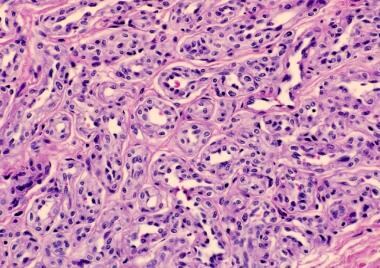
Hemangiomas are composed of proliferating, plump endothelial cells. Early in proliferation, the cells are in disarray, but, with time, they form vascular spaces and channels replete with blood cells (see Image 1). These benign-appearing endothelial cells produce limited basement membrane structures. Hemangiomas assume a lobular architecture as proliferation slows and ends. Mast cells appear to affect this process and are implicated in the promotion of feeding arterioles and veins that supply each lobule. They also have been found in high concentrations during involution.

Takahashi hypothesized that during the third trimester of fetal development immature endothelial cells coexist with immature pericytes, which maintain their proliferative capacity for a limited period during postnatal life. Angiogenic peptides, such as beta-fibroblast growth factor, vascular endothelial growth factor, and proliferating cell nuclear antigen, induce proliferation of these immature cells, resulting in the development of the hemangioma. As the endothelial cells differentiate, an influx of mast cells, various myeloid cells (Ritter, 2006), and tissue inhibitors of metalloproteinases (TIMPs) occurs. TIMPs, along with interferon and transforming growth factor produced by the mast cells, terminate the endothelial cell proliferation and passively induce involution by senescence of endothelial cells.

Frequency

United States

Hemangiomas occur in 10-12% of white infants, 1.4% of black infants, and 0.8% of Asian infants. The incidence of hemangiomas is approximately 22-30% of preterm infants with birthweight less than 1 kg; for preterm infants with birthweight greater than 1.5 kg, the incidence is the same as for term infants. The incidence is also increased in infants born to mothers who have undergone prenatal chorionic villus sampling.

Mortality/Morbidity

Most infantile hemangiomas are benign and do not cause any morbidity or mortality. Occasionally, they may impinge on vital structures and interfere with breathing, vision, eating, or hearing. Ulceration of certain areas (eg, diaper area, neck, mucosal surfaces) is not uncommon. Excessive bleeding is infrequent and rarely, if ever, life threatening. In the past, hemangiomas were confused with other vascular neoplasms, particularly kaposiform hemangioendothelioma and tufted angiomas, which can incite a consumptive coagulopathy that may be life threatening. This is referred to as Kasabach-Merritt phenomenon (KMP). It is now generally accepted that infantile hemangiomas are rarely, if ever, responsible for KMP.

Large cutaneous or visceral hemangiomas (particularly liver) can result in high-output cardiac failure due to increased vascular flow. Permanent significant structural abnormalities may result, particularly when facial structures are involved. The highest risk appears to be with involvement of the nasal tip, lips, and ears. Segmental hemangiomas, which cover a particular section or area of skin, may be markers for underlying malformations or developmental anomalies of the heart, blood vessels, or nervous system, rarely resulting in increased morbidity or mortality.

Race

Hemangiomas occur most commonly in white infants, with an incidence rate 10-12 times that of black and Asian infants.

Sex

Females are affected more often than males by a ratio of 3:1. This disparity is higher (9:1) in those infants with large cervicofacial segmental hemangiomas associated with PHACES (posterior fossa abnormalities [Arnold-Chiari and Dandy-Walker malformations], hemangiomas [cervicofacial and/or laryngeal], arterial anomalies [carotid and vertebral], cardiac anomalies [especially coarctation of the aorta], eye abnormalities, and sternal or abdominal clefting) syndrome.

Age

Thirty percent of hemangiomas are present at birth, and 70% of them initially appear in the first several weeks of life.


History

Hemangiomas exhibit a characteristic evolution, with early rapid growth (proliferation) followed by slow involution. The earliest sign of a hemangioma is blanching of the involved skin. This may be followed by fine telangiectasias and then a red or crimson macule. Rarely, a shallow ulceration may be the first sign of an incipient hemangioma.

Rapid growth during the neonatal period (birth to 4 wk) is the historical hallmark of hemangiomas. This rate is characteristically beyond the growth rate of the infant, thereby differentiating this neoplasm from vascular malformations that grow commensurate with the infant. As proliferation ensues, the hemangioma becomes elevated and may be dome-shaped, lobulated, plaquelike, tumoral, or any combination of these morphologies. The proliferation phase occurs during the first year, with the most growth occurring during the first 6 months of life. Proliferation slows between the middle and end of the first year of life. During this time, the hemangioma may remain quiescent or may begin to involute.

The involutional phase may be rapid or prolonged. No specific characteristics appear to influence the rate or completeness of involution. The exception is a separate type of hemangioma referred to as a rapidly involuting congenital hemangioma (RICH), which proliferates in utero and is fully developed at birth. RICHs tend to completely involute during the second year of life. Congenital hemangiomas are not considered to be a variant of the infantile hemangioma. Fifty percent of infantile hemangiomas complete involution by age 5 years and 70% by age 7 years; the remainder may take an additional 3-5 years to complete the process. Of lesions that have involuted by age 6 years, 38% will have residual evidence with scar formation, telangiectasia, or redundant or anetodermic skin. Hemangiomas that take longer to involute have a higher incidence of permanent cutaneous residua. Eighty percent of lesions that complete involution after age 6 years may exhibit cutaneous residua.

Physical

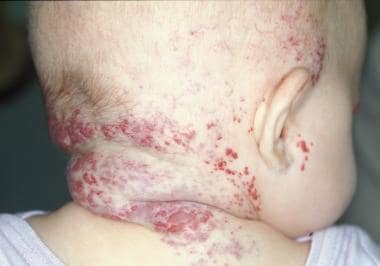
Eighty percent of infantile hemangiomas are focal and solitary. Sixty percent of cutaneous hemangiomas occur on the head and neck, 25% on the trunk, and 15% on the extremities (see Image 2). Hemangiomas also can occur in extracutaneous sites, including the liver, gastrointestinal tract, larynx, central nervous system, pancreas, gall bladder, thymus, spleen, lymph nodes, lung, urinary bladder, and adrenal glands.

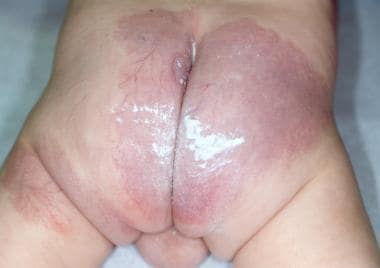
Features of early proliferating hemangiomas (birth to 6 wk) include blanching of the involved skin, followed by fine telangiectasias, and then a red or crimson macule or papule that often is surrounded by a faint halo of vascular blanching. Occasionally, a hemangioma is heralded by a shallow ulceration, especially lip and buttock lesions (see Image 3).

As hemangiomas proliferate (birth to 12 mo), depending on their size and depth, their morphology and texture may be dome-shaped, bosselated, plaquelike, tumoral, or any combination of these morphologies.

If the hemangioma is located in the subcutaneous tissue, the overlying skin may be completely normal. Color varies with the depth from the surface and can be bright red or crimson (superficial dermis), purple, blue, or flesh-colored with predominant involvement of the deeper tissues. Telangiectases and large superficial veins radiating from the hemangioma often are associated. The consistency is firm, rubbery, and tense and expands with increased intravascular pressure (eg, with crying when on the head and neck). Tenderness to palpation is a variable generally uncommon feature.

Most hemangiomas reach a maximum size of 0.5-5 cm, but they can range from the size of a pinhead to greater than 20 cm in diameter. Most hemangiomas remain well circumscribed, but, rarely, they may be segmental, nearly flat and mostly telangiectatic in nature, or geographic, particularly with extensive facial lesions (see Image 4). This telangiectatic variant may be confused with a capillary malformation; however, the rapid growth characteristics assist in differentiation.

During involution, the hemangioma shrinks centrifugally from the center of the lesion. This is less notable with deeper lesions. The superficial lesions become less red, taking on a duskier maroon to purple color, and finally regaining normal flesh tones (often referred to as "graying"). With involution, the hemangiomas become softer and more compressible with decreased tenderness, and they exhibit less expansion during increased intravascular pressure (eg, crying). During the late involution phase (quiescent residual lesions), the skin may return to normal with no evidence of a previous pathologic process. Approximately 50-60% of all hemangiomas resolve incompletely, leaving permanent changes in the skin. These changes include telangiectases, superficial dilated veins, stippled scarring, anetoderma or epidermal atrophy (particularly with superficial lesions), hypopigmentation, and/or redundant skin with fibro-fatty residua (especially with subcutaneous lesions).

Causes

Evidence to support a hereditary/genetic component in the development of most infantile hemangiomas is minimal; most appear to be sporadic. However, at least one report described a kindred in which infantile hemangiomas may be the result of an autosomal dominant trait. These infantile hemangiomas were seen in association with an increased incidence of vascular malformations (mostly capillary malformations) in various members of the same family.

Infants born to mothers who have undergone chorionic villus sampling may be at an increased risk of developing hemangiomas. See Pathophysiology.

Proliferating infantile hemangiomas express specific positive angiogenic molecules such as basic fibroblast growth factor and vascular endothelial growth factor, but not the endogenous inhibitor of angiogenesis interferon-beta, suggesting that the proliferation of cutaneous hemangiomas is associated with an imbalance between positive and negative angiogenic factors expressed by the hemangioma and/or surrounding normal tissues.

A distinct group of tissue-specific markers, most notably GLUT-1, uniquely coexpressed by hemangiomas and placental microvessels suggests a unique relationship between hemangiomas and placental microvessels. Two theories postulated to explain this observation include (1) colonization of receptive mesenchyme by potentially abnormal angioblasts switched toward a placental endothelial phenotype and (2) embolic placental endothelial cells that have reached fetal tissues from chorionic villi through right-to-left shunts. Both theories have yet to be proved.


Other Problems to be Considered

Angiosarcoma
Arteriovenous malformation
Congenital hemangioma (noninvoluting and rapidly involuting)
Infantile fibrosarcoma
Infantile myofibromatosis
Kaposiform hemangioendothelioma
Lymphatic malformation
Teratoma
Venous malformation
Diffuse neonatal hemangiomatosis
Gorham syndrome
Rhabdomyosarcoma
Riley-Smith syndrome
Dermatofibrosarcoma protuberans


Lab Studies

  • No laboratory studies have been universally accepted for the diagnosis and treatment of infantile hemangiomas; however, recent reports in the literature have investigated the use of urinary beta-fibroblast growth factor (Zhang, 2006) and serum vascular endothelial growth factor (VEGF) as markers of hemangioma proliferation (Zhang, 2005) and differentiation.

Imaging Studies

  • MRI with and without intravenous gadolinium is the imaging modality of choice to delineate the location and extent of both cutaneous and extracutaneous hemangiomas. MRI also helps in differentiating other high-flow vascular lesions (eg, arteriovenous malformations vs proliferating hemangiomas). Involuting hemangiomas have features that resemble low-flow lesions (eg, venous malformations).
  • Ultrasound is useful in differentiating hemangiomas from other deep dermal or subcutaneous structures, such as cysts or lymph nodes. Ultrasound is generally limited by its inability to fully evaluate the magnitude and extent of the hemangioma. Dubois et al found that an evaluation exhibiting high vessel density (>5 vessels/cm2) and high peak arterial Doppler shift (exceeding 2 kHz) was both sensitive and specific for infantile hemangiomas compared with other soft tissue masses.
  • Plain radiography is fairly limited but may be useful for evaluating hemangiomas that impinge on the airway.

Procedures

  • If the diagnosis is in question after a thorough history and physical examination, a skin biopsy can be helpful in distinguishing unusual or atypical hemangiomas from other vascular lesions. Specimens may be evaluated by routine histological examination and special stains as outlined below.

Histologic Findings

Routine histopathology varies according to the stage of the hemangioma. In early proliferation, hemangiomas are characterized by nonencapsulated masses and dense cords of mitotically active, plump endothelial cells in close association with pericytes. Few, small caliber lumina are present. Special stains reveal well-developed basement membranes around primitive vessels. Mast cells are present in varying numbers in all stages. As the hemangioma proliferates, the vascular lumina enlarge. An increase of apoptotic endothelial cells and a decrease in plump, mitotically active endothelial cells herald the involution phase. As involution progresses, the endothelial cells continue to mature and assume a flatter appearance. The vascular lumina continue to enlarge until few, mature ectatic vessels remain. Much of the proliferating endothelial cell mass is replaced with fibro-fatty tissue. Varying degrees of epidermal atrophy, scar tissue, and loss of elastic tissue can be seen in late involuting lesions.

Specimens may be evaluated for tissue-specific markers such as GLUT-1, merosin, Fc-gamma-RII, and Lewis Y antigens. These markers may aid in differentiating infantile hemangiomas (positive staining for all) from other vascular neoplasms or malformations, such as the congenital hemangiomas (eg, rapidly involuting congenital hemangioma, noninvoluting congenital hemangioma), kaposiform hemangioendothelioma, tufted angioma, or pyogenic granuloma, none of which stains positively for these antigens. These markers are coexpressed by infantile hemangiomas and placental microvessels.


Surgical Care

  • Laser surgery is beneficial in treating both proliferating and residual vessels from hemangiomas. The flash lamp-pumped pulsed dye laser has become the most widely employed laser for selective ablation of vascular tissue in childhood.
    • Pulsed dye laser surgery is effective for treating ulcerated hemangiomas and thin superficial hemangiomas, especially those on areas likely to result in significant functional or psychological impact (eg, fingers, eyes, lips, nasal tip, ears, face). Many ulcerated hemangiomas respond with decreased pain (sometimes as early as a few days after the initial treatment), rapid reepithelialization, and hastened involution. Treatments generally are performed every 3-4 weeks until complete healing results. Occasionally, particularly with deep or combined superficial and deep lesions, ulceration may worsen with pulsed dye laser treatment. The risk of scarring or residual skin changes associated with pulsed dye laser surgery of hemangiomas may be greater than without early laser treatment or with the treatment of capillary malformations (port wine stains), but the benefits of early involution should be weighed against the risks of a passive approach or alternative therapies.
    • Other lasers that appear to be efficacious in treating hemangiomas include the pulsed Nd:YAG, frequency-doubled Nd:YAG, and KTP lasers. Each of these lasers has specific benefits and limitations regarding depth of penetration, absorption of skin chromophores, and caliber of the vessel treated. Complications also vary depending on the laser, settings, and site treated.
  • Surgical excision of involuted hemangiomas is not uncommon because of the cutaneous defects resulting from them. Atrophic and hypertrophic scars, as well as anetodermic and tumoral fibro-fatty skin, may result in significant cosmetic or functional impairment. The benefits of excision during late involution include a reduced risk of hemorrhage and a potentially smaller lesion because of the natural course. In addition, because involuted hemangiomas are composed primarily of fibro-fatty tissue, complete removal of all tissue is unnecessary, while removing too much tissue could detract from proper contours.
  • Surgical excision of proliferating hemangiomas is quite hazardous because of the risk of hemorrhage and damage to vital structures associated with them (ie, head, neck); therefore, only specially trained surgeons should perform this procedure. Certain benefits to early excision include saving a life or vision and decreasing the negative psychosocial effects associated with a cosmetically disfiguring lesion during early childhood. Other benefits of early excision include the use of naturally expanded skin to aid in primary closure and the ability to employ a relatively avascular tissue plane surrounding actively growing hemangiomas. New advancements in surgical instruments that cauterize while cutting lessen the risk of hemorrhage.

Consultations

  • An ophthalmologist or a pediatric ophthalmologist should evaluate children with periorbital hemangiomas, particularly with involvement of the upper eyelid. Refraction with retinoscopy is performed to evaluate for visual disturbances, particularly astigmatism, and to prevent visual deprivation amblyopia.
  • Infants with rapidly growing hemangiomas that are impinging on vital structures of the head and neck, particularly the airway or auditory canals, should be referred to an otolaryngologist or a pediatric otolaryngologist for evaluation and treatment. Infants with large V3 dermatomal hemangiomas (beard area hemangiomas) have a higher incidence of upper airway hemangiomas, and early consultation for mild signs or symptoms (noisy breathing or stridor) may prevent possible future complications.
  • Consultation with a plastic surgeon is indicated for symptomatic involuting or proliferating lesions that are unresponsive to medical therapy and for which surgical excision is being contemplated.
  • The presence of an infantile hemangioma over the midline back may be a cutaneous sign of an underlying occult spinal dysraphism, such as a tethered cord. MRI or ultrasonography if the infant is younger than 5 months is indicated for midline hemangiomas, especially if any other signs of spinal dysraphism (eg, deviated gluteal cleft, atypical sacral dimple, tuft of hair, tail) are present. MRI is the more sensitive study, even in infancy, and should be considered when clinical suspicion is high. Consultation with a pediatric neurosurgeon should be sought for any questionable or worrisome lesions.


The goals of pharmacotherapy are to reduce morbidity and to prevent complications. Note that none of the treatments for infantile hemangioma is approved by the US Food and Drug Administration, and all therapies should be considered off-label usage.

Drug Category: Corticosteroids

Oral and intralesional corticosteroids are effective at slowing the growth and decreasing the size of proliferating hemangiomas. The mechanism of action has not been elucidated completely; however, corticosteroids appear to act by potentiating vasoconstrictive effects of epinephrine and norepinephrine on vascular smooth muscle. Evidence indicates that corticosteroids block estradiol receptors in hemangiomas in vitro. Wide variation in response rates exists, from less than 40% to greater than 90%, depending on dose, duration of treatment, and age at which corticosteroid therapy is initiated. Corticosteroid should be administered during the proliferative phase because they have a negligible effect on involuting otherwise stable lesions. The oral route generally is preferred over intralesional therapy; however, the location, size, patient age, and physician experience factor into the decision-making process.

Drug NamePrednisolone (Prelone Syrup, Pediapred Oral Solution, Delta-Cortef)
DescriptionDecreases inflammation by suppressing migration of polymorphonuclear leukocytes and reducing capillary permeability.
Pediatric Dose2-5 mg/kg/d PO initially; reassess at approximately 1-2 wk; if no response at sufficiently high dose, discontinue; if desired effect achieved, continue dose for 2-3 wk and taper slowly for 2-6 mo
ContraindicationsDocumented hypersensitivity; viral, fungal, or tubercular skin lesions; infants with concurrent infection; underlying malignancy
InteractionsDecreases effects of salicylates and toxoids (for immunizations); phenytoin, carbamazepine, barbiturates, and rifampin decrease effects of corticosteroids
PregnancyB - Usually safe but benefits must outweigh the risks.
PrecautionsCaution in hyperthyroidism, osteoporosis, cirrhosis, nonspecific ulcerative colitis, peptic ulcer, diabetes, and myasthenia gravis; adverse effects of systemic corticosteroids include behavioral disturbances, Cushing syndrome (from adrenal suppression with associated cutaneous features), growth retardation, gastroesophageal reflux, peptic irritation and possible ulceration, fluid and electrolyte disturbances, hyperglycemia, hypertension, osteoporosis, and immune suppression; most infants tolerate medications well, but close monitoring is required and parental education regarding possible adverse effects is essential

Drug Category: Interferons

Initially used as an antiviral agent in HIV patients, interferon alfa-2a was found to induce regression of Kaposi sarcoma. This led to its use in treating other vascular lesions (eg, hemangiomas). Inhibits endothelial cell migration and proliferation and specific growth factors (eg, endothelial growth factor, fibroblast growth factor). Numerous studies have demonstrated its efficacy in treating infantile hemangiomas.

Because interferon alfa-2a works by a different mechanism, it can be used in lesions that are unresponsive to steroids. In fact, unlike steroids, it does not require that administration occur during the proliferation phase to be effective. The onset of action is slower than that of corticosteroids, usually requiring several weeks; this makes it less attractive for use in acute life- or sight-threatening situations. Interferon alfa-2a should be used only if steroid therapy fails. The most significant adverse effect limiting its use in hemangiomas is potentially irreversible spastic diplegia; while most infants displayed significant recovery of spasticity of lower extremities, it appeared permanent in other infants. A meta-analysis of interferon use in children revealed all cases of neurological dysfunction occurred when interferon was used prior to the first birthday (Michaud, 2004).

Drug NameInterferon alfa-2a (Roferon-A)
DescriptionProtein product manufactured by recombinant DNA technology. Mechanism of antitumor activity is not clearly understood; however, direct antiproliferative effects against malignant cells and modulation of host immune response may play important roles. May be given topically, systemically, and intralesionally.
Pediatric Dose3 million U/m2 SC qd for 6 or more mo; if desired effect not observed after 1 mo, discontinue; if desired effect achieved, continue until proliferation phase has passed or drug is no longer indicated
ContraindicationsDocumented hypersensitivity; avoid in patients who have anaphylactic sensitivity to mouse immunoglobulin (IgG), egg protein, or neomycin; autoimmune hepatitis
InteractionsTheophylline may increase toxicity of interferon alfa by reducing clearance; cimetidine may increase antitumor effects of interferon alfa; zidovudine and vinblastine may increase toxicity of interferon alfa
PregnancyC - Safety for use during pregnancy has not been established.
PrecautionsEtiology of spastic diplegia is currently unknown but infants <1 y appear to have an increased risk; infants should receive baseline, monthly, and posttherapy neurological and developmental evaluations when receiving interferon alfa-2a; all infants experience low-grade febrile reactions, especially at onset of therapy; some infants may develop transient neutropenia, anemia, elevated LFTs, or possibly thyroid dysfunction (hypothyroidism); baseline and monthly blood counts and LFTs are recommended

Drug NameInterferon alfa-2b (Intron A)
DescriptionProtein product manufactured by recombinant DNA technology. Indications to treat adult hairy cell leukemia, malignant melanoma, condyloma acuminata, AIDS-related Kaposi sarcoma, and certain forms of chronic viral hepatitis. Has also been used to treat children with these conditions and, most recently, infants with life-threatening hemangiomas.
Pediatric DoseFor life-threatening infantile hemangiomas: 3 million U/m2 SC qd for first month, then q48-72h for 3-12mo
<0.6 m2: 100,000 IU/m2 SC qd
>0.6 m2: 3 million U/m2 SC qd for 2.5-24 mo
ContraindicationsDocumented hypersensitivity; patients who have anaphylactic sensitivity to mouse immunoglobulin (IgG), egg protein, or neomycin; autoimmune hepatitis
InteractionsPotential risk of renal failure when administered concurrently with interleukin-2; theophylline may increase interferon alfa toxicity by reducing clearance; cimetidine may increase antitumor effects of interferon alfa; zidovudine and vinblastine may increase toxicity of interferon alfa
PregnancyC - Safety for use during pregnancy has not been established.
PrecautionsToxicity is common in infants; most adverse effects are mild and transient; flulike symptoms are most common, followed by mild anemia, neutropenia, elevation of liver enzymes, and mild-to-moderate neurologic toxicity; to date, only 1 out of 60 infants reportedly developed permanent spastic diplegia when used for infantile hemangiomas; because this form of interferon is used less commonly, true incidence of spastic diplegia may be underestimated; etiology for this adverse effect is currently unknown; infants should receive baseline, monthly, and post-therapy neurological and developmental evaluations; baseline and monthly blood counts and LFTs are recommended

Drug Category: Biologic immune response modifiers

Only a few case reports and one small open-label uncontrolled trial suggest efficacy for the treatment of infantile hemangiomas. This treatment should be considered experimental until placebo-controlled trials are performed and determined safe for infants. Imiquimod cream is the only medication in this new class. It purportedly works by stimulation of toll-like receptor (TLR) 7 and increases local interferon alpha and gamma, through which it may exert antiangiogenic effects. In a mouse model, imiquimod-treated vascular tumors showed decreased tumor cell proliferation, increased tumor apoptosis, and increased expression of tissue inhibitor of matrix metalloproteinase-1, with decreased activity of matrix metalloproteinase-9, both of which are observed in the natural involution of infantile hemangiomas.

Drug NameImiquimod 5% cream (Aldara cream)
DescriptionImmune response modifier indicated for treatment of condyloma acuminata and actinic keratoses in adults. Not FDA approved for use in children.
Adult DoseApply small amount topically hs (thrice weekly), usually Monday, Wednesday, and Friday, to affected area
Pediatric DoseAdminister as in adults
ContraindicationsDocumented hypersensitivity to imiquimod or any of its excipients; avoid lesions involving eyelids or mucous membranes
InteractionsNone reported
PregnancyC - Safety for use during pregnancy has not been established.
PrecautionsLocal skin reactions (eg, erythema, erosions, excoriation, flaking, edema) are common; ulceration has complicated its use in some reports when used to treat hemangiomas, because of this, use with extreme caution in infants

Drug NameBecaplermin 0.01% gel (Regranex Gel)
DescriptionA few reports in the literature (Metz, 2004) suggest this is helpful for ulcerated infantile hemangiomas, especially those in the diaper area. Data are limited and no placebo-controlled trial has been published to date. Seven infants with refractory ulcerated infantile hemangiomas experienced healing 3-21 d after initiating therapy.
Pediatric DoseNot established; case series (Metz, 2004) reported application to ulcer qd to twice weekly
ContraindicationsDocumented hypersensitivity to drug or component of formulation; neoplasm at site of application; active infection at ulcer site
InteractionsNone reported
PregnancyC - Safety for use during pregnancy has not been established.
PrecautionsFor external use only; caution if concurrently using corticosteroids, cancer chemotherapy, other immunosuppressive agents


Further Outpatient Care

  • Rarely, infantile hemangiomas have been implicated in cases of consumptive hypothyroidism. This was initially reported with hepatic hemangiomas, however this has also been reported with bulky cutaneous infantile hemangiomas. This phenomenon appears be secondary to high activity of the type 3 iodothyronine deiodinase enzyme in hemangioma tissue, which is responsible for degradation of T4 to reverse T3 (rT3). One case reported also demonstrated increased production of a TSH-like hormone from a hepatic hemangioma. Thyroid function tests should be ordered in the appropriate clinical setting.

Complications

  • Ulceration occurs in 5-10% of infantile hemangiomas, especially the combined superficial and deep lesions. The cause of ulceration is not clear but may be a result of outstripped blood supply to the overlying skin or secondary to the action of certain cytokines.
    • Ulceration usually occurs in tense, rapidly proliferating hemangiomas and occurs more commonly in the anogenital region, upper lip, and chest, although any site may develop an ulcer. The ulcerations are extremely painful and result in scar formation upon healing, which may take months.
    • Secondary infection is a common problem, but cellulitis, abscess, and bacteremia are rare. While intermittent bleeding is common, serious hemorrhage appears to be exceedingly rare.
    • Treatment for ulcerated hemangiomas includes topical or oral antibiotics, bio-occlusive dressings, pulsed dye laser surgery, becaplermin gel (human recombinant platelet-derived growth factor), and external compression therapy (especially helpful for limb lesions). Pulsed dye laser surgery has been reported to be effective for ulcerated superficial hemangiomas and often decreases pain even before the ulcer has reepithelialized.
  • Airway obstruction is a rare complication of hemangiomas; upper lip lesions very seldom obstruct both nasal passages. This can be a problem for young infants who are obligate nose breathers. Cervical parapharyngeal or palatal hemangiomas can cause acute or subacute obstruction.
    • Insidious signs and symptoms, such as sleep apnea, cor pulmonale, or even failure to thrive can be associated with hemangiomas in the upper aerodigestive tract. Laryngeal (often referred to as subglottic) hemangiomas present early (6-8 wk) with symptoms of inspiratory or biphasic stridor, especially with feeding or crying. Cough, cyanosis, or hoarseness may be associated findings. The diagnosis is confirmed by direct laryngoscopy, MRI, soft tissue anteroposterior neck radiographs, or esophagogram.
    • Prompt pediatric otolaryngology consultation should be sought for all suspected cases. Treatment includes systemic corticosteroids or interferon alfa, as well as excisional or laser surgery. Tracheostomy is sometimes necessary until the hemangioma involutes.
    • Upper airway hemangiomas appear to be associated more commonly with superficial cutaneous hemangiomas involving the mandibular branch of the trigeminal nerve (beard area hemangiomas). They can occur without cutaneous involvement.
  • Visual obstruction should be considered whenever a hemangioma involves the eyelids or periorbital tissues. Hemangiomas can lead to visual deprivation amblyopia by 3 separate mechanisms: physical obstruction of the visual axis, astigmatism from direct pressure on the anterior segment from eyelid involvement (upper eyelid is more common than lower eyelid), and unilateral myopia. Strabismus can result either secondary to amblyopia or from paralysis of the extraocular muscles infiltrated by an orbital hemangioma. A pediatric ophthalmologist should evaluate all children with periorbital hemangiomas using refraction with retinoscopy, with upper eyelid lesions requiring the most frequent observation.
  • Diffuse neonatal hemangiomatosis is a potentially life-threatening condition characterized by numerous cutaneous hemangiomas accompanied by visceral hemangiomas. When more than 10 cutaneous hemangiomas are present, the risk of visceral lesions rises. The liver and gastrointestinal tract are affected most often, although any organ can be involved. Congestive heart failure is a cause of early mortality because of increased vascular volume. Evaluation should include an imaging study of the liver (eg, liver scan, MRI, sonogram) and stool guaiac tests to rule out intestinal bleeding from gut hemangiomas. Systemic corticosteroids and/or interferon alfa and conventional surgery are possible treatments.
  • Kasabach-Merritt phenomenon (KMP) is marked by platelet sequestration and severe thrombocytopenia associated with a rapidly proliferating vascular neoplasm. This often is accompanied by a potentially fatal, generalized bleeding disorder. KMP is heralded by rapid enlargement, edema of the surrounding tissues, and accompanying purpura. Recent evidence suggests that most cases of KMP are associated with kaposiform hemangioendothelioma or tufted angioma and not infantile hemangiomas, as previously believed. The early reports of KMP were described in lesions in which a clinical, not histological, diagnosis was made. Systemic corticosteroids are not usually effective, but vincristine has been effective in several cases of KMP caused by kaposiform hemangioendotheliomas and tufted angiomas.
  • Patients with PHACES syndrome may present with hemangiomas and one or more of the constellation of findings. Reports have also described intracranial invasion of associated infantile hemangiomas (Ersoy, 2005).
  • Segmental infantile hemangiomas involving the perineal area may be associated with other underlying congenital anomalies as delineated in the PELVIS syndrome (Girard, 2006). This acronymic syndrome describes the association of a perineal hemangioma with any of the following: external genital malformations, lipomyelomeningocele, vesicorenal abnormalities, imperforate anus, or skin tag.
  • An isolated midline lumbosacral hemangioma may be a cutaneous marker for underlying occult spinal dysraphism, and spinal imaging should be performed when clinically indicated.
  • Psychosocial problems associated with disfiguring facial hemangiomas can be significant. During infancy and early childhood, parents often have reactions of loss and grief. Parental feelings of disbelief, panic, or fear often are associated with the rapid growth of these lesions. The variability in the natural course, in regard to timing and completeness of resolution, adds to parental anxiety. Parental stress is heightened by strangers who stare, startle, or raise questions about causality, such as trauma (especially implied or suspected child abuse), infection, or cancer. Psychosocial stigmatization can be problematic for both parents and patients with disfiguring facial hemangiomas. Lesions that result in significant facial or obvious disfigurement should be addressed before the child starts school.

Prognosis

  • The prognosis for most uncomplicated infantile hemangiomas is very good, with complete involution of 50% by age 5 years, 70% by age 7 years, and 90% by age 9 years. Despite resolution of the vascular component, residual skin changes are observed in roughly 50% of cases. Of hemangiomas that have involuted by age 6 years, 38% still have residual evidence with scar formation, telangiectasia, or redundant or anetodermic skin. Hemangiomas that take longer to involute have a higher incidence of permanent cutaneous residua. Eighty percent of lesions that complete involution after age 6 years may exhibit significant cosmetic deformities. An increased incidence of permanent residua exists when the lip, nasal tip, eyelid, and ear are involved.

Patient Education

  • Educating parents about the variable natural history, prognosis, risks and benefits of potential treatments, and possible complications is essential. Emotional support should be offered for parents of children with severe or complicated hemangiomas. Birthmarks: A Guide to Hemangiomas and Vascular Malformations by Milton Waner, MD, a book for parents and caregivers of children with vascular lesions, can be quite helpful. The Vascular Birthmarks Foundation is a useful source for accurate information for patients and family members.


Media file 1:  Histopathology of a proliferating infantile hemangioma with plump endothelial cells in the dermis.
Click to see larger pictureClick to see detailView Full Size Image
Media type:  Image

Media file 2:  This proliferating superficial infantile hemangioma on the trunk required no therapy.
Click to see larger pictureClick to see detailView Full Size Image
Media type:  Photo

Media file 3:  Exquisitely painful ulcerated mixed hemangioma (superficial and deep) of the left deltoid in a 6-month-old female infant.
Click to see larger pictureClick to see detailView Full Size Image
Media type:  Photo

Media file 4:  This superficial and deep infantile hemangioma resulted in astigmatism of the left eye, requiring spectacles to correct the refractive error and to prevent amblyopia. Further growth of this hemangioma necessitated a course of oral prednisolone. The hemangioma shrunk rapidly, and the patient's astigmatism decreased such that the spectacles were unnecessary 1 month after beginning steroids.
Click to see larger pictureClick to see detailView Full Size Image
Media type:  Photo


  • Achauer BM, Chang CJ, Vander Kam VM. Management of hemangioma of infancy: review of 245 patients. Plast Reconstr Surg. Apr 1997;99(5):1301-8. [Medline].
  • Achauer BM, Chang CJ, Vander Kam VM, Boyko A. Intralesional photocoagulation of periorbital hemangiomas. Plast Reconstr Surg. Jan 1999;103(1):11-6; discussion 17-9. [Medline].
  • Amir J, Metzker A, Krikler R, Reisner SH. Strawberry hemangioma in preterm infants. Pediatr Dermatol. Sep 1986;3(4):331-2. [Medline].
  • Barlow CF, Priebe CJ, Mulliken JB, et al. Spastic diplegia as a complication of interferon Alfa-2a treatment of hemangiomas of infancy. J Pediatr. Mar 1998;132(3 Pt 1):527-30. [Medline].
  • Bielenberg DR, Bucana CD, Sanchez R, et al. Progressive growth of infantile cutaneous hemangiomas is directly correlated with hyperplasia and angiogenesis of adjacent epidermis and inversely correlated with expression of the endogenous angiogenesis inhibitor, IFN-beta. Int J Oncol. Mar 1999;14(3):401-8. [Medline].
  • Bingham HG. Predicting the course of a congenital hemangioma. Plast Reconstr Surg. Feb 1979;63(2):161-6. [Medline].
  • Blei F, Walter J, Orlow SJ, Marchuk DA. Familial segregation of hemangiomas and vascular malformations as an autosomal dominant trait. Arch Dermatol. Jun 1998;134(6):718-22. [Medline].
  • Boon LM, Enjolras O, Mulliken JB. Congenital hemangioma: evidence of accelerated involution. J Pediatr. Mar 1996;128(3):329-35. [Medline].
  • Bowers RE, Graham EA, Tomlinson KM. The natural history of the strawberry nevus. Arch Dermatol. 1960;82:667.
  • Burstein FD, Simms C, Cohen SR, et al. Intralesional laser therapy of extensive hemangiomas in 100 consecutive pediatric patients. Ann Plast Surg. Feb 2000;44(2):188-94. [Medline].
  • Burton BK, Schulz CJ, Angle B, Burd LI. An increased incidence of haemangiomas in infants born following chorionic villus sampling (CVS). Prenat Diagn. Mar 1995;15(3):209-14. [Medline].
  • David LR, Malek MM, Argenta LC. Efficacy of pulse dye laser therapy for the treatment of ulcerated haemangiomas: a review of 78 patients. Br J Plast Surg. Jun 2003;56(4):317-27. [Medline].
  • Dubois J, Hershon L, Carmant L, et al. Toxicity profile of interferon alfa-2b in children: A prospective evaluation. J Pediatr. Dec 1999;135(6):782-5. [Medline].
  • Dubois J, Patriquin HB, Garel L, et al. Soft-tissue hamangiomas in infants and children: Diagnosis using doppler sonography. Am J Roentgenol. 1998;171:247-252. [Medline].
  • Enjolras O, Wassef M, Mazoyer E, et al. Infants with Kasabach-Merritt syndrome do not have "true" hemangiomas. J Pediatr. Apr 1997;130(4):631-40. [Medline].
  • Ersoy S, Mancini AJ. Hemifacial infantile hemangioma with intracranial extension: a rare entity. Pediatr Dermatol. Jul-Aug 2005;22(4):309-13. [Medline].
  • Esterly NB. Kasabach-Merritt syndrome in infants. J Am Acad Dermatol. Apr 1983;8(4):504-13. [Medline].
  • Ezekowitz RA, Mulliken JB, Folkman J. Interferon alfa-2a therapy for life-threatening hemangiomas of infancy. N Engl J Med. May 28 1992;326(22):1456-63. [Medline].
  • Finn MC, Glowacki J, Mulliken JB. Congenital vascular lesions: clinical application of a new classification. J Pediatr Surg. Dec 1983;18(6):894-900. [Medline].
  • Frieden IJ, Reese V, Cohen D. PHACE syndrome. The association of posterior fossa brain malformations, hemangiomas, arterial anomalies, coarctation of the aorta and cardiac defects, and eye abnormalities. Arch Dermatol. Mar 1996;132(3):307-11. [Medline].
  • Frieden IJ, Eichenfield LF, Esterly NB, et al. Guidelines of care for hemangiomas of infancy. American Academy of Dermatology Guidelines/Outcomes Committee. J Am Acad Dermatol. Oct 1997;37(4):631-7. [Medline].
  • Garden JM, Bakus AD, Paller AS. Treatment of cutaneous hemangiomas by the flashlamp-pumped pulsed dye laser: prospective analysis. J Pediatr. Apr 1992;120(4 Pt 1):555-60. [Medline].
  • Girard C, Bigorre M, Guillot B, Bessis D. PELVIS Syndrome. Arch Dermatol. Jul 2006;142(7):884-8. [Medline].
  • Hazen PG, Carney JF, Engstrom CW, et al. Proliferating hemangioma of infancy: successful treatment with topical 5% imiquimod cream. Pediatr Dermatol. May-Jun 2005;22(3):254-6. [Medline].
  • Hidano A, Nakajima S. Earliest features of the strawberry mark in the newborn. Br J Dermatol. Aug 1972;87(2):138-44. [Medline].
  • Ho J, Kendrick V, Dewey D, Pacaud D. New insight into the pathophysiology of severe hypothyroidism in an infant with multiple hepatic hemangiomas. J Pediatr Endocrinol Metab. May 2005;18(5):511-4. [Medline].
  • Huang SA, Tu HM, Harney JW, et al. Severe hypothyroidism caused by type 3 iodothyronine deiodinase in infantile hemangiomas. N Engl J Med. Jul 20 2000;343(3):185-9. [Medline].
  • Jacobs AH. Strawberry hemangiomas; the natural history of the untreated lesion. Calif Med. Jan 1957;86(1):8-10. [Medline].
  • Kaplan M, Paller AS. Clinical pearl: use of self-adhesive, compressive wraps in the treatment of limb hemangiomas. J Am Acad Dermatol. Jan 1995;32(1):117-8. [Medline].
  • Kim HJ, Colombo M, Frieden IJ. Ulcerated hemangiomas: clinical characteristics and response to therapy. J Am Acad Dermatol. Jun 2001;44(6):962-72. [Medline].
  • Konrad D, Ellis G, Perlman K. Spontaneous regression of severe acquired infantile hypothyroidism associated with multiple liver hemangiomas. Pediatrics. 2003;112(6 Pt 1):1424-6. [Medline].
  • Lister WA. The natural history of strawberry naevi. Lancet. 1938;1:1429.
  • Margileth AM, Museles M. Cutaneous hemangiomas in children. Diagnosis and conservative management. JAMA. Nov 1 1965;194(5):523-6. [Medline].
  • Metz BJ, Rubenstein MC, Levy ML, Metry DW. Response of ulcerated perineal hemangiomas of infancy to becaplermin gel, a recombinant human platelet-derived growth factor. Arch Dermatol. Jul 2004;140(7):867-70. [Medline].
  • Michaud AP, Bauman NM, Burke DK, et al. Spastic diplegia and other motor disturbances in infants receiving interferon-alpha. Laryngoscope. Jul 2004;114(7):1231-6. [Medline].
  • Morelli JG, Tan OT, Yohn JJ, Weston WL. Treatment of ulcerated hemangiomas infancy. Arch Pediatr Adolesc Med. Oct 1994;148(10):1104-5. [Medline].
  • Mulliken JB, Glowacki J. Hemangiomas and vascular malformations in infants and children: a classification based on endothelial characteristics. Plast Reconstr Surg. Mar 1982;69(3):412-22. [Medline].
  • Nakayama H. Clinical and histological studies of the classification and the natural course of the strawberry mark. J Dermatol. Aug 1981;8(4):277-91. [Medline].
  • Norouzi BB, Shanberg AM. Laser treatment of large cavernous hemangiomas of the penis. J Urol. Jul 1998;160(1):60-2. [Medline].
  • North PE, Waner M, Mizeracki A. A unique microvascular phenotype shared by juvenile hemangiomas and human placenta. Arch Dermatol. May 2001;137(5):559-70. [Medline].
  • Orlow SJ, Isakoff MS, Blei F. Increased risk of symptomatic hemangiomas of the airway in association with cutaneous hemangiomas in a "beard" distribution. J Pediatr. Oct 1997;131(4):643-6. [Medline].
  • Poetke M, Philipp C, Berlien HP. Flashlamp-pumped pulsed dye laser for hemangiomas in infancy: treatment of superficial vs mixed hemangiomas. Arch Dermatol. May 2000;136(5):628-32. [Medline].
  • Pratt AG. Birthmarks in infants. AMA Arch Derm Syphilol. Mar 1953;67(3):302-5. [Medline].
  • Ricketts RR, Hatley RM, Corden BJ, et al. Interferon-alpha-2a for the treatment of complex hemangiomas of infancy and childhood. Ann Surg. Jun 1994;219(6):605-12; discussion 612-4. [Medline].
  • Ritter MR, Reinisch J, Friedlander SF, Friedlander M. Myeloid cells in infantile hemangioma. Am J Pathol. Feb 2006;168(2):621-8. [Medline].
  • Sadan N, Wolach B. Treatment of hemangiomas of infants with high doses of prednisone. J Pediatr. Jan 1996;128(1):141-6. [Medline].
  • Sarkar M, Mulliken JB, Kozakewich HP, et al. Thrombocytopenic coagulopathy (Kasabach-Merritt phenomenon) is associated with Kaposiform hemangioendothelioma and not with common infantile hemangioma. Plast Reconstr Surg. Nov 1997;100(6):1377-86. [Medline].
  • Sie KC, McGill T, Healy GB. Subglottic hemangioma: ten years'' experience with the carbon dioxide laser. Ann Otol Rhinol Laryngol. Mar 1994;103(3):167-72. [Medline].
  • Takahashi K, Mulliken JB, Kozakewich HP, et al. Cellular markers that distinguish the phases of hemangioma during infancy and childhood. J Clin Invest. Jun 1994;93(6):2357-64. [Medline].
  • Tamayo L, Ortiz DM, Orozco-Covarrubias L, et al. Therapeutic efficacy of interferon alfa-2b in infants with life-threatening giant hemangiomas. Arch Dermatol. Dec 1997;133(12):1567-71. [Medline].
  • Tanner JL, Dechert MP, Frieden IJ. Growing up with a facial hemangioma: parent and child coping and adaptation. Pediatrics. Mar 1998;101(3 Pt 1):446-52. [Medline].
  • Thomson HG, Lanigan M. The Cyrano nose: a clinical review of hemangiomas of the nasal tip. Plast Reconstr Surg. Feb 1979;63(2):155-60. [Medline].
  • Waner M, Suen JY. The natural history of hemangiomas. In: Hemangiomas and Vascular Malformations of the Head and Neck. 1999:13-45.
  • Waner M, Suen JY. Treatment of hemangiomas. In: Hemangiomas and Vascular Malformations of the Head and Neck. 1999:263-313.
  • Welsh O, Olazarán Z, Gómez M, et al. Treatment of infantile hemangiomas with short-term application of imiquimod 5% cream. J Am Acad Dermatol. Oct 2004;51(4):639-42. [Medline].
  • Zhang L, Lin X, Wang W, et al. Circulating level of vascular endothelial growth factor in differentiating hemangioma from vascular malformation patients. Plast Reconstr Surg. Jul 2005;116(1):200-4. [Medline].
  • Zhang L, Lin XX, Qi ZL, et al. [Role of urinary basic fibroblast growth factor in differentiating hemangiomas from vascular malformation]. Zhonghua Wai Ke Za Zhi. Feb 1 2006;44(3):186-8. [Medline].

Infantile Hemangioma excerpt

Article Last Updated: Mar 29, 2007