
Practice Essentials
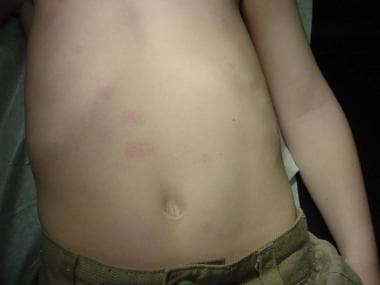
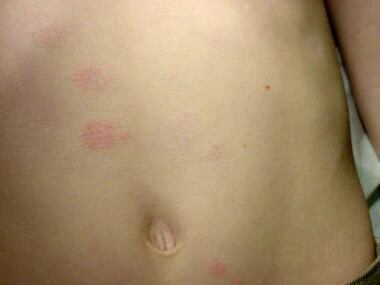
Lichen spinulosus is an uncommon dermatosis manifested by large patches of follicular papules topped by keratotic spines, as shown in the image below. In 1883, Crocker published a description of lichen spinulosus. Since then, few other similar reports were published until 1990, when Friedman presented data on 35 patients with lichen spinulosus. [1] The etiology is unknown. Some minor progress has been made in therapy for lichen spinulosus.
Causes
The cause of lichen spinulosus is unknown. Infection has been postulated, but no data support this hypothesis. Other authors have suggested that lichen spinulosus is part of atopy, but no association of lichen spinulosus with atopy was found in the Philippines. A report notes a family with lichen spinulosus in 4 generations, an observation that suggests a genetic predisposition.
Complications
Lichen spinulosus is confined to the skin and has no known associations with internal disorders or genetic syndromes. Lichen spinulosus in the setting of HIV has been linked to type VI pityriasis rubra pilaris.
Presentation
Lichen spinulosus tends to have a sudden onset and is not accompanied by other signs or symptoms. The keratotic papules group into large plaques that can spread rapidly to affect large areas of skin.
The plaques most often appear in a symmetric distribution, but some cases may present with generalized, unorganized distribution of plaques. [2]
Diagnostics
Diagnosis should be made on clinical grounds alone. At present, no laboratory tests are specific or diagnostic for lichen spinulosus.
Histologic findings of lichen spinulosus are similar to those observed in keratosis pilaris. In lichen spinulosus, dilated hair follicles are filled with a keratotic plug. An inflammatory lymphocytic infiltrate occurs around the follicle and in the dermis. Hyperkeratosis, parakeratosis, and acanthosis may be present in the follicle.
Caccetta et al proposed an algorithm for a clinical approach to the diagnosis of digitate keratoses. [3]
Treatment
Consultation with an experienced dermatologist is indicated if any doubt exists concerning the diagnosis.
Also see Medical Care and Medication.

Pathophysiology
The classic lesion of lichen spinulosus is a keratotic plug located within the dilated follicular orifice. Histologically, an inflammatory lymphohistiocytic infiltrate occurs around the follicle and in the dermis. Hyperkeratosis, parakeratosis, and acanthosis are visible in the follicle. Differentiating lichen spinulosus from keratosis pilaris by microscopy may not be possible.
In the past, lichen spinulosus was reported to be associated with the administration of arsphenamine, thallium, gold, and diphtheria toxin. More recently, authors have noted association with HIV disease [4] and Crohn disease. [5] These associations may reflect the interests of the authors. Kabashima et al reported lichen spinulosus in an alcoholic patient. [6]
Epidemiology
Frequency
Apparently, lichen spinulosus is not a common disorder. This conclusion is based on the paucity of published reports regarding lichen spinulosus. Lichen spinulosus has been reported worldwide. In 1990, Friedman described 35 patients with lichen spinulosus. He and his coworkers in the Philippines examined 7435 people attending a dermatology clinic. [1] The incidence of lichen spinulosus was approximately 5 cases per 1000 population with skin disorders. This prevalence exceeds reports from various American surveys on cutaneous diseases in children and adolescents.
Race-, sex-, and age-related information
Worldwide distribution suggests no predilection of lichen spinulosus in any ethnic group.
Case reports suggest an equal distribution of lichen spinulosus in males and females. Friedman's study in the Philippines included 14 males and 21 females.
Reports indicate that lichen spinulosus is a disease that occurs during childhood to young adulthood. Peak incidence appears to occur during adolescence. Lichen spinulosus can persist for decades. In most patients, lichen spinulosus remits spontaneously within 1-2 years. Friedman calculated that in the Philippines, the average age at onset was 16.2 years ± 10.1 years.
Prognosis
Lichen spinulosus can be ameliorated using emollient keratolytics. Case reports suggest that cure is the result of spontaneous remission over time. Most cases appear to remit within 1-2 years; however, well-documented cases exist that have lasted for decades.
Lichen spinulosus affects only the skin and is not known to be associated with abnormalities of internal organ systems. Occasionally, a patient with lichen spinulosus reports pruritus. Otherwise, the disorder mostly is of cosmetic significance. Misdiagnosis can result in inappropriate treatment.
-
Lichen spinulosus on the abdomen.
-
Close-up view.


