You are in: eMedicine Specialties >
Dermatology > CONNECTIVE TISSUE DISEASES
Lupus Erythematosus, Discoid
Article Last Updated: Jun 20, 2007
AUTHOR AND EDITOR INFORMATION
Section 1 of 11
Author: Jeffrey P Callen, MD, Professor of Medicine, Chief, Division of Dermatology, University of Louisville School of Medicine
Jeffrey P Callen is a member of the following medical societies: Alpha Omega Alpha, American Academy of Dermatology, American College of Physicians, and American College of Rheumatology
Editors: Craig A Elmets, MD, Director of Dermatology, Departments of Dermatology, Pathology, and Environmental Health Sciences; Professor, The Kirklin Clinic, University of Alabama at Birmingham; David F Butler, MD, Professor of Dermatology, Texas A&M University College of Medicine; Director, Division of Dermatology, Scott and White Clinic; Director Dermatology Residency Training Program, Scott and White Clinic; Julia R Nunley, MD, Professor, Program Director, Dermatology Residency, Department of Dermatology, Virginia Commonwealth University Medical Center; Joel M Gelfand, MD, MSCE, Medical Director, Clinical Studies Unit, Assistant Professor, Department of Dermatology, Associate Scholar, Center for Clinical Epidemiology and Biostatistics, University of Pennsylvania; William D James, MD, Paul R Gross Professor of Dermatology, University of Pennsylvania School of Medicine; Vice-Chair, Program Director, Department of Dermatology, University of Pennsylvania Health System
Author and Editor Disclosure
Synonyms and related keywords:
chronic cutaneous lupus erythematosus, discoid lupus erythematosus
Background
Discoid lupus erythematosus (DLE) is a chronic, scarring, atrophy producing, photosensitive dermatosis. DLE may occur in patients with systemic lupus erythematosus (SLE), and some patients (<5%) with DLE progress to SLE. Some patients also have the lesions of subacute cutaneous lupus erythematosus (SCLE), and some may have a malar rash. Patients with DLE rarely fulfill 4 or more of the criteria used to classify SLE (see Systemic Lupus Erythematosus). Serologic abnormalities are uncommon. Therapy with sunscreens, topical corticosteroids, and antimalarial agents is usually effective.
Pathophysiology
DLE probably occurs in genetically predisposed individuals, but the exact genetic connection has not been determined. The pathophysiology of DLE is not well understood. It has been suggested that a heat shock protein is induced in the keratinocyte following ultraviolet (UV) light exposure or stress, and this protein may act as a target for gamma (delta) T-cell–mediated epidermal cell cytotoxicity.
Frequency
United States
Worldwide, the prevalence of SLE ranges from 17-48 cases per 100,000 population. The highest prevalence of SLE occurs in persons aged 40-60 years, and is approximately 10 times higher in women than in men. Cutaneous lupus erythematosus (CLE) presumably occurs 2-3 times more frequently in women than in men. DLE is responsible for 50-85% of CLE patients.
Mortality/Morbidity
Patients with DLE rarely have clinically significant systemic disease. Lesions may produce scarring or atrophy. Scarring alopecia is particularly disturbing.
Race
DLE is slightly more common in African Americans than in whites or Asians.
Sex
Male-to-female ratio of DLE is 1:2.
Age
DLE may occur at any age but most often occurs in persons aged 20-40 years. The mean age is approximately 38 years.
History
- Patients may complain of mild pruritus or occasional pain within the lesions, but most patients are asymptomatic.
- Approximately 5% or less DLE patients have accompanying systemic involvement.
- Arthralgia or arthritis may occur.
- Patients may manifest any symptom of SLE; therefore, the history should include an assessment for symptoms of pleuritis, pericarditis, neurologic involvement, and renal involvement.
- Several cutaneous diseases have been reported, perhaps in greater frequency, in patients with DLE.
- Malignant degeneration of chronic lesions of lupus erythematosus (LE) is possible, although rare, leading to nonmelanoma skin cancer. Dark-skinned individuals may be more prone to skin cancer because of the lack of pigmentation within the chronic lesion, combined with chronic inflammation and continued sun damage.
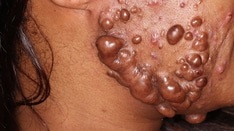
- Mucin deposition is a factor in the histopathology of LE. Some patients develop such a massive amount of mucin that lesions become raised and assume a different morphology.
- Porphyria cutanea tarda appears to be overrepresented in LE patients. Often, the porphyria is discovered when antimalarials first are administered.
- Lichen planuslike lesions may be part of an overlap between LE and lichen planus or may occur as a result of antimalarial therapy.
- Psoriasis is a common disease, although it is not clear whether it is more common in LE patients.
Physical
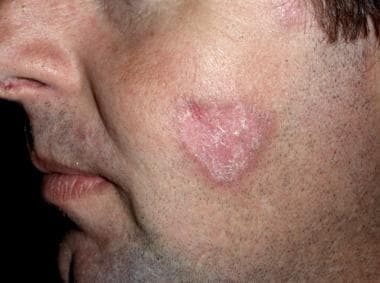
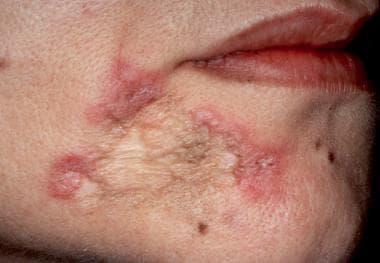
- DLE lesions frequently are characteristic. The primary lesion is an erythematous papule or plaque with slight-to-moderate scaling (Media Files 1-2). As the lesion progresses, the scale may thicken and become adherent, and pigmentary changes may develop, with hypopigmentation in the central or inactive area and hyperpigmentation at the active border.
- Lesions spread centrifugally and may merge. As lesions age, dilation of follicular openings occurs with a keratinous plug, termed follicular plugging or patulous follicles (Media File 3). Resolution of the active lesion results in atrophy and scarring.
- At any time, individual lesions may have any or all of these features. Early lesions may be difficult to distinguish from SCLE. DLE lesions often are photodistributed, but relatively unexposed skin also may be affected. The scalp is a common area of involvement, and permanent alopecia may result (Media Files 5-6).
- Patients with DLE often are divided into 2 subsets: localized and widespread. Localized DLE occurs when the head and neck only are affected, while widespread DLE occurs when other areas are affected, regardless of whether disease of the head and neck is seen (Media File 7). Patients with widespread involvement often have hematologic and serologic abnormalities, are more likely to develop SLE, and are more difficult to treat.
- Several unusual variants of chronic CLE, other than DLE, have been reported.
- Mucosal surfaces may be affected by lesions that appear identical to DLE of the skin or by lesions that may simulate lichen planus.
- Palms and soles may be affected, but this occurs in less than 2% of patients (Media File 4).
- DLE lesions may become hypertrophic or verrucous (Media File 8). This subset is manifested by wartlike lesions, most often on the extensor arms. Hypertrophic lesions of LE must be differentiated from warts, keratoacanthomas, or squamous cell carcinoma. These lesions are more difficult to treat.
- Lupus panniculitis is a form of chronic CLE that may be accompanied by typical DLE lesions or may occur in patients with SLE.
Causes
- Patients with DLE probably have genetic predisposition; however, the precise genetic factors that increase the risk of this disease are unknown. The disease usually manifests following UV light exposure, but other triggers or inciting factors also must contribute. Toll-like receptors are possibly involved in the pathogenesis.
Actinic Keratosis
Dermatomyositis
Granuloma Annulare
Granuloma Faciale
Keratoacanthoma
Lichen Planus
Lupus Erythematosus, Subacute Cutaneous
Psoriasis, Plaque
Rosacea
Sarcoidosis
Squamous Cell Carcinoma
Syphilis
Warts, Nongenital
Lab Studies
- Serologic testing
- Some patients with DLE (approximately 20%) manifest a positive antinuclear antibody (ANA) when tested with human substrates. HEp-2 cells currently are the most common substrate used in commercial labs.
- Anti-Ro (SS-A) autoantibodies are present in approximately 1-3% of patients.
- Antinative DNA (double-stranded or nDNA) or anti-Sm antibodies usually reflect SLE, and they may occur in some patients (<5%).
- Other laboratory findings
- Cytopenias may be present.
- Elevated sedimentation rate may occur in some patients.
- Rheumatoid factor may be positive.
- Complement levels may be depressed.
- Urinalysis may reflect the presence of renal involvement with proteinuria.
Other Tests
- Immunopathology
- Deposition of immunoglobulin and/or complement at the dermal-epidermal junction is a characteristic feature of LE referred to in most texts and articles. Tissue may be examined from skin lesions (lesional) or normal skin (nonlesional). Nonlesional biopsies may be from exposed or nonexposed surfaces. Testing of nonlesional, nonexposed skin is termed the lupus band test (LBT).
- The use and interpretation of these tests varies according to the biopsy site. Approximately 90% of patients with DLE manifest a positive direct immunofluorescence (DIF) test on lesional skin; however, the presence of immunoreactants in the basement membrane zone of lesional skin is not specific for lupus and can be seen in a variety of inflammatory skin diseases. Older lesions or very early lesions may be more likely to be negative on immunofluorescence microscopy. Only patients with SLE have a positive LBT, defined as the presence of multiple immunoreactants in the basement membrane zone. LBTs are neither sensitive nor specific and mostly have been replaced by advances in serologic testing.
Histologic Findings
The characteristic histopathologic alterations observed in DLE include vacuolar alteration of the basal cell layer, thickening of the basement membrane, follicular plugging, hyperkeratosis, atrophy of the epidermis, incontinence of pigment, and inflammatory cell infiltrate (usually lymphocytic) in a perivascular, periappendiceal, and subepidermal location. Often, an abundance of mucin is seen within the dermis. The histopathologic features differ depending upon the type and age of the lesion.
Medical Care
- The goals of management are to improve the patient's appearance, to control existing lesions and limit scarring, and to prevent the development of further lesions.
- Advise patients that the risk of serious systemic disease is possible, although rare. Regular repeat clinical evaluation accompanied by simple laboratory studies usually is sufficient to evaluate the possible progression from the primary cutaneous disorder to the disorder accompanied by systemic involvement.
- Therapy begins with sun-protective measures, including sunscreens, protective clothing, and behavior alteration. Cosmetic measures, such as cover-up makeup or wigs, may be suggested for appropriately selected patients. Makeup used for camouflage includes Covermark and Dermablend.
- Smoking appears to decrease the efficacy of antimalarial agents, and efforts regarding smoking cessation are advisable in patients who smoke or are exposed to secondary smoke.
- Standard medical therapy includes corticosteroids (topical or intralesional) and antimalarials. Antimalarials appear less effective in patients who smoke; however, DLE possibly is worse in these patients. Alternative therapies include auranofin, thalidomide, oral or topical retinoids, and immunosuppressive agents.
- Topical corticosteroids are selected for the type of lesion under treatment and for the site of involvement. For example, lotions or foams are preferred for the scalp, weaker agents are used on the face, and superpotent agents are used for hypertrophic lesions.
- Topical calcineurin inhibitors have also been used recently in patients with cutaneous lesions of LE. In addition, topical retinoids have been reported to be helpful. Lastly, topical imiquimod has been reported to be effective in one patient.
- Intralesional injection of corticosteroids (typically, this author uses triamcinolone acetonide 3 mg/mL) is useful as adjunctive therapy for individual lesions. Potential for atrophy relates to the amount of corticosteroid injected in any one area; therefore, dilute concentrations are preferred. In addition, the treating physician must take care to limit the total dose of the injections at any given office/clinic visit to avoid systemic toxicity from the steroids eg, if a patient is given 10 mL of triamcinolone 3 mg/mL, this means that the patient has received a total of 30 mg, and toxicity is the same as if it had been delivered orally or by intramuscular injection.
- Among immunosuppressives, methotrexate (MTX) may be considered. In this author's experience, azathioprine and, recently, mycophenolate mofetil, have been more successful than MTX, while systemic corticosteroids are rarely effective.
- Recently, efalizumab has been demonstrated in an open-label study to be effective in patients with chronic CLE and SCLE.
Surgical Care
- Excision of burned-out scarred lesions is possible; however, reactivation of inactive lesions has been reported in some patients.
- Laser therapy may be useful for lesions with prominent telangiectases. Reactivation also is a consideration with this form of therapy.
Consultations
- Rheumatologist - For joint involvement
- Nephrologist - For renal involvement
- Internist - To evaluate systemic involvement
- Ophthalmologist - To monitor therapy with hydroxychloroquine or chloroquine
Diet
- No special diet is recommended.
Activity
- Since chronic CLE is exacerbated by sunlight or other UV exposure, advise patients to take precautions, eg, to limit exposure to sunlight to early morning or late afternoon when the sun is less intense. Advise patients to avoid artificial light sources such as tanning beds.
The goals of pharmacotherapy are to reduce morbidity and to prevent complications. Hydroxychloroquine and chloroquine phosphate have shown beneficial effects in treating DLE. Alternative therapies, anecdotal reports, and small open-label trials (as reported by Callen) suggest that the following agents may be useful in some patients: dapsone, auranofin, quinacrine, thalidomide, isotretinoin, acitretin, azathioprine, mycophenolate mofetil, phenytoin, interferon, and chimeric monoclonal antibody.
Drug Category: Antimalarial agents
May have immunomodulatory properties. Hydroxychloroquine is DOC when a systemic agent is needed for DLE. Chloroquine is second-line therapy.
| Drug Name | Hydroxychloroquine (Plaquenil) |
| Description | For treatment of DLE and SLE. Inhibits chemotaxis of eosinophils, locomotion of neutrophils, and impairs complement-dependent antigen-antibody reactions. Hydroxychloroquine sulfate 200 mg is equivalent to 155 mg hydroxychloroquine base and 250 mg chloroquine phosphate. |
| Adult Dose | 200-400 mg/d PO; not to exceed 6.5 mg/kg/d; 310 mg PO qd or bid for several wk depending on response; 155-310 mg/d for prolonged maintenance therapy |
| Pediatric Dose | 6.5 mg/kg/d PO; 3-5 mg base/kg/d PO qd or divided bid; not to exceed 7 mg/kg/d |
| Contraindications | Documented hypersensitivity; psoriasis; retinal and visual field changes attributable to 4-aminoquinolones |
| Interactions | Penicillamine levels may increase; serum levels increase with cimetidine; magnesium trisilicate may decrease absorption |
| Pregnancy | C - Fetal risk revealed in studies in animals but not established or not studied in humans; may use if benefits outweigh risk to fetus
|
| Precautions | Crosses placenta and may cause ocular, CNS, or ototoxicity in the fetus; do not use if breast-feeding; limit pediatric use to established safe doses to avoid potential fatality; ocular toxicity is possible for hydroxychloroquine and chloroquine but not quinacrine; perform regular ophthalmologic examinations during therapy |
| Drug Name | Chloroquine (Aralen) |
| Description | Inhibits chemotaxis of eosinophils, locomotion of neutrophils, and impairs complement-dependent antigen-antibody reactions. |
| Adult Dose | 250-500 mg PO qd |
| Pediatric Dose | 10 mg/kg PO d 1, then 5 mg/kg 6 h later, followed by 5 mg/kg d 2 and 3 |
| Contraindications | Documented hypersensitivity; psoriasis, retinal and visual field changes attributable to 4-aminoquinolones |
| Interactions | Cimetidine may increase serum levels of chloroquine (possibly other 4-aminoquinolones); magnesium trisilicate may decrease absorption of 4-aminoquinolones |
| Pregnancy | C - Fetal risk revealed in studies in animals but not established or not studied in humans; may use if benefits outweigh risk to fetus
|
| Precautions | Caution in hepatic disease, G-6-PD deficiency, psoriasis, porphyria; not recommended for long-term use in children; perform periodic ophthalmologic examinations; test for muscle weakness |
Drug Category: Leprostatic agents
May modulate the immune system.
| Drug Name | Dapsone (Avlosulfon) |
| Description | Mechanism of action is similar to sulfonamides where competitive antagonists of PABA prevent formation of folic acid, inhibiting bacterial growth. The anti-inflammatory action may relate to suppression of neutrophil function by inhibition of the halide-myeloperoxidase system. |
| Adult Dose | 100-200 mg PO qd |
| Pediatric Dose | Not established |
| Contraindications | Documented hypersensitivity; G-6-PD deficiency |
| Interactions | May inhibit anti-inflammatory effects of clofazimine; hematologic reactions may increase with folic acid antagonists, eg, pyrimethamine (monitor for agranulocytosis during second and third mo of therapy); probenecid increases dapsone toxicity; trimethoprim with dapsone may increase toxicity of both; because of increased renal clearance, dapsone levels may significantly decrease when administered concurrently with rifampin |
| Pregnancy | C - Fetal risk revealed in studies in animals but not established or not studied in humans; may use if benefits outweigh risk to fetus
|
| Precautions | Perform weekly or biweekly blood counts (first mo), then perform WBC counts monthly (6 mo), then semiannually; discontinue if significant reduction in platelets, leukocytes, or hematopoiesis is seen; caution in methemoglobin reductase deficiency, G-6-PD deficiency, or hemoglobin M because of high risk for hemolysis and Heinz body formation; caution in patients exposed to other agents or conditions (eg, infection, diabetic ketosis) capable of producing hemolysis; peripheral neuropathy can occur (rare); phototoxicity may occur when exposed to UV light |
Drug Category: Gold compounds
Have proven effective in the treatment of inflammation with autoimmune etiology.
| Drug Name | Auranofin (Ridaura) |
| Description | Gold is taken up by macrophages, which, in turn, inhibit phagocytosis and lysosomal membrane stabilization. Alters immunoglobulins, decreasing prostaglandin synthesis and lysosomal enzyme activity. |
| Adult Dose | 6 mg/d PO qd or divided bid; after 3 mo, may increase to 9 mg/d divided tid; then, if no response, discontinue drug |
| Pediatric Dose | Initial dose: 0.1 mg/kg/d PO divided bid Maintenance dose: 0.15 mg/kg/d PO qd or divided bid |
| Contraindications | Documented hypersensitivity; renal impairment; history of blood dyscrasias, exfoliative dermatitis, congestive heart failure, necrotizing enterocolitis |
| Interactions | Penicillamine, hydroxychloroquine, and antimalarials may increase toxicity |
| Pregnancy | B - Fetal risk not confirmed in studies in humans but has been shown in some studies in animals
|
| Precautions | Discontinue therapy if platelet counts fall <100,000/µL, WBC count <4,000/µL, granulocyte count <1,500/µL |
Drug Category: Immunomodulators
Affect factors that regulate the immune system.
| Drug Name | Methotrexate (Rheumatrex, Trexall) |
| Description | Reversibly inhibits dihydrofolate reductase; limits the availability of 1-carbon fragments necessary for synthesis of purines and the conversion of deoxyuridylate to thymidylate in the synthesis of DNA and cell reproduction. Extensively used for cancer treatment, rheumatoid arthritis, psoriasis, and as a steroid-sparing agent in various autoimmune conditions. |
| Adult Dose | In autoimmune conditions: 7.5-25 mg/wk as a single dose PO/SC Folic acid supplementation is usually given concomitantly |
| Pediatric Dose | 5-15 mg/m2/wk as a single dose PO/SC |
| Contraindications | Documented hypersensitivity; alcoholism; hepatic insufficiency; documented immunodeficiency syndromes; preexisting blood dyscrasias (eg, bone marrow hypoplasia, leukopenia, thrombocytopenia, significant anemia); renal insufficiency |
| Interactions | Oral aminoglycosides may decrease absorption and blood levels of concurrent oral MTX; charcoal lowers levels; coadministration with etretinate may increase hepatotoxicity; folic acid or its derivatives contained in some vitamins may decrease response to MTX Probenecid, NSAIDs, salicylates, procarbazine, and sulfonamides (including TMP-SMZ) can increase MTX plasma levels; may decrease phenytoin plasma levels; may increase plasma levels of thiopurines |
| Pregnancy | X - Contraindicated; benefit does not outweigh risk
|
| Precautions | Monitor CBC counts monthly, and liver and renal function q1-3mo during therapy (monitor more frequently during initial dosing, dose adjustments, or when risk of elevated MTX levels, eg, dehydration); has toxic effects on hematologic, renal, GI, pulmonary, and neurologic systems; discontinue if significant drop in blood counts occurs; fatal reactions reported when administered concurrently with NSAIDs |
| Drug Name | Thalidomide (Thalomid) |
| Description | Immunomodulatory agent that may suppress excessive production of TNF-alpha and may down-regulate selected cell-surface adhesion molecules involved in leukocyte migration. If <50 kg (110 lb), start at low end of dose regimen. |
| Adult Dose | 100-300 mg PO hs aq, and >1 h pc |
| Pediatric Dose | Not established |
| Contraindications | Documented hypersensitivity |
| Interactions | May increase sedation effects of alcohol, barbiturates, chlorpromazine, and reserpine; because of teratogenic effects, women must use 2 additional methods of contraception or abstain from intercourse |
| Pregnancy | X - Contraindicated; benefit does not outweigh risk
|
| Precautions | Perform pregnancy test within 24 h prior to initiating therapy (weekly during first mo, followed by monthly tests in women with regular menstrual cycles or q2wk with irregular menstrual cycles); bradycardia may occur; use protective measures (eg, sunscreens, protective clothing) against exposure to sunlight or UV light (eg, tanning beds) |
| Drug Name | Azathioprine (Imuran) |
| Description | Antagonizes purine metabolism and inhibits synthesis of DNA, RNA, and proteins. May decrease proliferation of immune cells, which results in lower autoimmune activity. |
| Adult Dose | 1 mg/kg/d PO for 6-8 wk; increase by 0.5 mg/kg q4wk until response is seen or dose reaches 2.5 mg/kg/d |
| Pediatric Dose | Initial dose: 2-5 mg/kg/d PO/IV Maintenance dose: 1-2 mg/kg/d PO/IV |
| Contraindications | Documented hypersensitivity |
| Interactions | Toxicity increases with allopurinol; concurrent use with ACE inhibitors may induce severe leukopenia; may increase levels of MTX metabolites and decrease effects of anticoagulants, neuromuscular blockers, and cyclosporine |
| Pregnancy | D - Fetal risk shown in humans; use only if benefits outweigh risk to fetus
|
| Precautions | Increases risk of neoplasia; caution with liver disease and renal impairment; hematologic toxicities may occur |
| Drug Name | Interferon alfa-2a and alfa-2b (Roferon and Intron A) |
| Description | Protein product manufactured by recombinant DNA technology. Mechanism of antitumor activity is not clearly understood; however, direct antiproliferative effects against malignant cells and modulation of host immune response may be important factors. Has antiviral, antitumor, and immunomodulatory actions. |
| Adult Dose | 2 million U/m2 SC 3 times/wk for 30 d |
| Pediatric Dose | Not established |
| Contraindications | Documented hypersensitivity |
| Interactions | Theophylline may increase toxicity; cimetidine may increase antitumor effects; zidovudine and vinblastine may increase toxicity |
| Pregnancy | C - Fetal risk revealed in studies in animals but not established or not studied in humans; may use if benefits outweigh risk to fetus
|
| Precautions | Caution in brain metastases, severe hepatic or renal insufficiencies, seizure disorders, multiple sclerosis, or compromised CNS |
| Drug Name | Mycophenolate (CellCept) |
| Description | Inhibits inosine monophosphate dehydrogenase and suppresses de novo purine synthesis by lymphocytes, thereby inhibiting their proliferation. Inhibits antibody production. |
| Adult Dose | 1 g PO bid |
| Pediatric Dose | Not established; 15-23 mg/kg PO bid suggested |
| Contraindications | Documented hypersensitivity |
| Interactions | May elevate levels of acyclovir and ganciclovir; antacids and cholestyramine decrease absorption, reducing levels (do not administer together); probenecid may increase levels of mycophenolate; salicylates may increase toxicity of mycophenolate |
| Pregnancy | D - Fetal risk shown in humans; use only if benefits outweigh risk to fetus
|
| Precautions | Increases risk for infection; increases toxicity in patients with renal impairment; caution in active peptic ulcer disease |
Drug Category: Corticosteroids
Anti-inflammatory agents that suppress the immune system at several levels including inhibition of inflammatory cells and the production of antibodies.
| Drug Name | Triamcinolone (Aristocort) |
| Description | Can be administered intralesionally in a concentration of 3-5 mg/mL. Amounts injected should be recorded. Systemic adverse effects are uncommon with low doses. Atrophy is possible and is dose dependent. |
| Adult Dose | 3-5 mg/mL; not to exceed 2 mL at any single setting |
| Pediatric Dose | Not established |
| Contraindications | Documented hypersensitivity; fungal, viral, and bacterial skin infections |
| Interactions | Rare for intralesional, but if administered IM or in sufficient dosage, potential adverse effects may occur with coadministration with barbiturates, phenytoin, and rifampin, which decrease effects of triamcinolone |
| Pregnancy | C - Fetal risk revealed in studies in animals but not established or not studied in humans; may use if benefits outweigh risk to fetus
|
| Precautions | Adverse effects of intralesional corticosteroids include atrophy and hypopigmentation; significant systemic exposure to corticosteroids may result in multiple complications (eg, severe infections, hyperglycemia, edema, osteonecrosis, myopathy, peptic ulcer disease, hypokalemia, osteoporosis, euphoria, psychosis, myasthenia gravis, and growth suppression); abrupt discontinuation of glucocorticoids may cause adrenal crisis |
Drug Category: Retinoids
Have the ability to regulate cell proliferation and regulate immune system.
| Drug Name | Acitretin (Soriatane) |
| Description | Retinoic acid analog, similar to etretinate and isotretinoin. Etretinate is main metabolite and acitretin has demonstrated clinical effects close to those seen with etretinate. Mechanism of action is unknown. |
| Adult Dose | Initial dose: 25 or 50 mg/d PO single dose with main meal Maintenance dose: 25-50 mg/d PO after initial response; terminate therapy when lesions have resolved sufficiently |
| Pediatric Dose | Not established |
| Contraindications | Documented hypersensitivity |
| Interactions | Increases toxicity of MTX (avoid concomitant use); interferes with effects of microdosed progestin minipill; coadministration with alcohol may enhance synthesis of etretinate, which has much longer half-life than acitretin (>120 d) |
| Pregnancy | X - Contraindicated; benefit does not outweigh risk
|
| Precautions | Do not use in severe obesity; women of childbearing age must be able to comply with effective contraceptive measures, abstain from alcohol intake, and continue contraceptive measures for a minimum of 3 y following cessation of therapy; perform AST, ALT, and LDH tests prior to initiation of acitretin therapy at 1- to 2-wk intervals until stable and thereafter, at intervals as indicated clinically |
| Drug Name | Isotretinoin (Accutane) |
| Description | Synthetic 13-cis isomer of naturally occurring tretinoin (trans-retinoic acid). Both agents are structurally related to vitamin A. Decreases sebaceous gland size and sebum production. May inhibit sebaceous gland differentiation and abnormal keratinization. |
| Adult Dose | 40-60 mg/d PO for 4 mo |
| Pediatric Dose | Not established |
| Contraindications | Documented hypersensitivity |
| Interactions | Toxicity may occur with vitamin A coadministration; pseudotumor cerebri or papilledema may occur when coadministered with tetracyclines; may reduce plasma levels of carbamazepine |
| Pregnancy | X - Contraindicated; benefit does not outweigh risk
|
| Precautions | May decrease night vision; inflammatory bowel disease may occur; may be associated with development of hepatitis; occasional exaggerated healing response of acne lesions (excessive granulation with crusting) may occur; patients with diabetes may experience problems in controlling blood sugar; avoid exposure to UV light or sunlight until tolerance achieved; discontinue treatment if rectal bleeding, abdominal pain, or severe diarrhea occur |
Further Inpatient Care
- Inpatient care is rarely necessary.
Further Outpatient Care
- Follow patients with DLE at regular intervals. Response to therapy varies from several weeks to several months. At each visit, question the patient about new symptoms that may reflect systemic disease.
- At regular intervals, perhaps annually in otherwise asymptomatic patients, perform routine laboratory studies for assessment, including CBC count, renal function tests, and urinalysis. Repeat antibody testing is needed only if a change in symptomatology is noted.
Complications
- Scarring or atrophy is possible, but treatment of early lesions may be preventative.
- Serious systemic disease is rare, but when it occurs, patients may develop life-altering sequelae.
- Malignant degeneration is rare. Promptly remove new growths within burned-out lesions.
Prognosis
- The prognosis of patients with chronic CLE is favorable regarding mortality; however, many patients continue to experience pain in their lesions or may experience disfigurement from the scars or atrophy that can develop.
- Exacerbation is possible, particularly in the spring and summer.
Patient Education
Medical/Legal Pitfalls
- Failure to diagnose DLE correctly or appropriately
- Failure to recognize systemic involvement
- Failure to recognize malignant degeneration
- Failure to recognize adverse reactions from agents used to treat cutaneous lesions of lupus erythematosus.
| Media file 2:
Chronic scarred lesion of discoid lupus erythematosus. |
 | View Full Size Image | |
Media type: Photo
|
| Media file 3:
Lesions of discoid lupus erythematosus in the conchal bowl demonstrate patulous follicles with follicular plugging. |
 | View Full Size Image | |
Media type: Photo
|
| Media file 5:
Scarring alopecia of discoid lupus erythematosus. |
 | View Full Size Image | |
Media type: Photo
|
| Media file 7:
Truncal lesions of chronic cutaneous lupus erythematosus. |
 | View Full Size Image | |
Media type: Photo
|
| Media file 8:
Hypertrophic lesions of lupus erythematosus on the dorsal hands. Characteristic lesions were observed elsewhere. |
 | View Full Size Image | |
Media type: Photo
|
- Atra E, Sato EI. Treatment of the cutaneous lesions of systemic lupus erythematosus with thalidomide. Clin Exp Rheumatol. Sep-Oct 1993;11(5):487-93. [Medline].
- Callen JP. Chronic cutaneous lupus erythematosus. Clinical, laboratory, therapeutic, and prognostic examination of 62 patients. Arch Dermatol. Jun 1982;118(6):412-6. [Medline].
- Callen JP. Cutaneous lupus erythematosus: a personal approach to management. Australas J Dermatol. Feb 2006;47(1):13-27. [Medline].
- Callen JP. Management of "refractory" skin disease in patients with lupus erythematosus. Best Pract Res Clin Rheumatol. Oct 2005;19(5):767-84. [Medline].
- Callen JP. Systemic lupus erythematosus in patients with chronic cutaneous (discoid) lupus erythematosus. Clinical and laboratory findings in seventeen patients. J Am Acad Dermatol. Feb 1985;12(2 Pt 1):278-88. [Medline].
- Callen JP, Fowler JF, Kulick KB. Serologic and clinical features of patients with discoid lupus erythematosus: relationship of antibodies to single-stranded deoxyribonucleic acid and of other antinuclear antibody subsets to clinical manifestations. J Am Acad Dermatol. Nov 1985;13(5 Pt 1):748-55. [Medline].
- Callen JP, Spencer LV, Burruss JB, Holtman J. Azathioprine. An effective, corticosteroid-sparing therapy for patients with recalcitrant cutaneous lupus erythematosus or with recalcitrant cutaneous leukocytoclastic vasculitis. Arch Dermatol. Apr 1991;127(4):515-22. [Medline].
- Coelho A, Souto MI, Cardoso CR, Salgado DR, Schmal TR, Waddington Cruz M, et al. Long-term thalidomide use in refractory cutaneous lesions of lupus erythematosus: a 65 series of Brazilian patients. Lupus. 2005;14(6):434-9. [Medline].
- Duong DJ, Spigel GT, Moxley RT 3rd, Gaspari AA. American experience with low-dose thalidomide therapy for severe cutaneous lupus erythematosus. Arch Dermatol. Sep 1999;135(9):1079-87. [Medline].
- Gallego H, Crutchfield CE 3rd, Lewis EJ, Gallego HJ. Report of an association between discoid lupus erythematosus and smoking. Cutis. Apr 1999;63(4):231-4. [Medline].
- Gilliam JN, Sontheimer RD. Distinctive cutaneous subsets in the spectrum of lupus erythematosus. J Am Acad Dermatol. Apr 1981;4(4):471-5. [Medline].
- Heffernan MP, Nelson MM, Smith DI, Chung JH. 0.1% tacrolimus ointment in the treatment of discoid lupus erythematosus. Arch Dermatol. Sep 2005;141(9):1170-1. [Medline].
- Housman TS, Jorizzo JL, McCarty MA, Grummer SE, Fleischer AB Jr, Sutej PG. Low-dose thalidomide therapy for refractory cutaneous lesions of lupus erythematosus. Arch Dermatol. Jan 2003;139(1):50-4. [Medline].
- Lee LA, David KM. Cutaneous lupus erythematosus. Curr Probl Dermatol. 1989;1:165-200.
- Lehmann P, Hölzle E, Kind P, Goerz G, Plewig G. Experimental reproduction of skin lesions in lupus erythematosus by UVA and UVB radiation. J Am Acad Dermatol. Feb 1990;22(2 Pt 1):181-7. [Medline].
- Lipsker D, Boeckler P, Hauptmann G. Cigarette smoking and lupus erythematosus. Dermatology. 2006;212(3):262. [Medline].
- Martens PB, Moder KG, Ahmed I. Lupus panniculitis: clinical perspectives from a case series. J Rheumatol. Jan 1999;26(1):68-72. [Medline].
- Newton RC, Jorizzo JL, Solomon AR Jr, Sanchez RL, Daniels JC, Bell JD, et al. Mechanism-oriented assessment of isotretinoin in chronic or subacute cutaneous lupus erythematosus. Arch Dermatol. Feb 1986;122(2):170-6. [Medline].
- Parish LC, Kennedy RJ, Hurley J. Palmar lesions in lupus erythematosus. Arch Dermatol. Sep 1967;96(3):273-6. [Medline].
- Prinz JC, Meurer M, Reiter C, Rieber EP, Plewig G, Riethmüller G. Treatment of severe cutaneous lupus erythematosus with a chimeric CD4 monoclonal antibody, cM-T412. J Am Acad Dermatol. Feb 1996;34(2 Pt 1):244-52. [Medline].
- Prystowsky SD, Gilliam JN. Discoid lupus erythematosus as part of a larger disease spectrum. Correlation of clinical features with laboratory findings in lupus erythematosus. Arch Dermatol. Nov 1975;111(11):1448-52. [Medline].
- Prystowsky SD, Herndon JH Jr, Gilliam JN. Chronic cutaneous lupus erythematosus (DLE)--a clinical and laboratory investigation of 80 patients. Medicine (Baltimore). Mar 1976;55(2):183-91. [Medline].
- Rahman P, Gladman DD, Urowitz MB. Smoking interferes with efficacy of antimalarial therapy in cutaneous lupus. J Rheumatol. Sep 1998;25(9):1716-9. [Medline].
- Spann CR, Callen JP, Klein JB, Kulick KB. Clinical, serologic and immunogenetic studies in patients with chronic cutaneous (discoid) lupus erythematosus who have verrucous and/or hypertrophic skin lesions. J Rheumatol. Feb 1988;15(2):256-61. [Medline].
- Tlacuilo-Parra A, Guevara-Gutierrez E, Gutierrez-Murillo F, Soto-Ortiz A, Barba-Gomez F, Hernandez-Torres M, et al. Pimecrolimus 1% cream for the treatment of discoid lupus erythematosus. Rheumatology (Oxford). Dec 2005;44(12):1564-8. [Medline].
- Wenzel J, Brähler S, Bauer R, Bieber T, Tüting T. Efficacy and safety of methotrexate in recalcitrant cutaneous lupus erythematosus: results of a retrospective study in 43 patients. Br J Dermatol. Jul 2005;153(1):157-62. [Medline].
Lupus Erythematosus, Discoid excerpt Article Last Updated: Jun 20, 2007
|