Continually Updated Clinical Reference
 
 
  All Sources     eMedicine     Medscape     Drug Reference     MEDLINE
 
eMedicine - Pemphigus Erythematosus : Article by

Quick Find
Authors & Editors
Introduction
Clinical
Differentials
Workup
Treatment
Medication
Follow-up
Miscellaneous
References

Related Articles
Atopic Dermatitis

Lupus Erythematosus, Acute

Lupus Erythematosus, Discoid

Lupus Erythematosus, Subacute Cutaneous

Pemphigus Foliaceus

Pemphigus, Paraneoplastic

Seborrheic Dermatitis


Patient Education
Click here for patient education.


Author: Rakesh Bharti, MD, MBBS, Consultant Dermatologist and HIV Specialist, BDC Research Centre, India

Rakesh Bharti is a member of the following medical societies: International AIDS Society

Coauthor(s): Rossitza Lazova, MD, Associate Professor of Dermatology and Pathology, Director of Dermatopathology Residency and Fellowship Program, Yale University School of Medicine; Consulting Pathologist/Dermatopathologist, Veterans Affairs Medical Center, West Haven, Connecticut

Editors: Ponciano D Cruz Jr, MD, Vice-Chair, JB Shelmire Professor, Department of Dermatology, University of Texas Southwestern Medical Center; David F Butler, MD, Professor of Dermatology, Texas A&M University College of Medicine; Director, Division of Dermatology, Scott and White Clinic; Director Dermatology Residency Training Program, Scott and White Clinic; Julia R Nunley, MD, Professor, Program Director, Dermatology Residency, Department of Dermatology, Virginia Commonwealth University Medical Center; Catherine Quirk, MD, Clinical Assistant Professor, Department of Dermatology, Brown University; William D James, MD, Paul R Gross Professor of Dermatology, University of Pennsylvania School of Medicine; Vice-Chair, Program Director, Department of Dermatology, University of Pennsylvania Health System

Author and Editor Disclosure

Synonyms and related keywords: Senear-Usher syndrome, pemphigus seborrheic, lupus erythematosus, pemphigus foliaceus

Background

The various types of pemphigus include pemphigoid, pemphigus vegetans, Hailey-Hailey disease, and pemphigus foliaceus.

Pemphigus erythematosus, also known as Senear-Usher syndrome, is an overlap syndrome with features of lupus erythematosus (LE) and pemphigus foliaceus. Pemphigus is demonstrated by acantholysis and immunoglobulin deposits in the interkeratinocyte substance. The lupus component is demonstrated by circulating antinuclear antibodies (ANA) and sometimes by immunoglobulin and complement deposits at the dermoepidermal junction. The disease has a better prognosis than pemphigus foliaceus, but it can be chronic.

For a thorough description and introduction to the possible causes of pemphigus, see the article "Pemphigus: An Acronym for a Disease with Multiple Causes", published by the International Pemphigus Society.

Pathophysiology

Patients present with vesiculobullae or superficially eroded lesions, which may ooze and crust, particularly in sun-exposed areas, such as the face, the upper part of the chest, and the back. Pemphigus may be photoactivated. LE is the classic autoimmune disease that demonstrates photosensitivity. It appears that a genetic predisposition to autoimmunity combines with a sensitivity to ultraviolet light leading to an overlap of these 2 diseases in rare cases. Now these are called immunobullous disease.

Frequency

United States

The incidence in the United States is estimated to be similar to that internationally.

International

The incidence of pemphigus is 0.5-3.2 cases per 100,000 population per year. Patients with pemphigus erythematosus comprise only a small subgroup of those with pemphigus.

Mortality/Morbidity

With timely diagnosis and treatment, the disease typically has a good prognosis. Some patients may ultimately develop symptoms classified as criteria for systemic lupus erythematosus (SLE) by the American Rheumatism Association (ARA).

Race

Pemphigus erythematosus, like other variants of pemphigus erythematosus and LE, may be increased in patients who express specific human leukocyte antigen (HLA) haplotypes. Those identified to have pemphigus erythematosus are positive for human leukocyte antigen A10 (HLA-A10) or human leukocyte antigen A26 (HLA-A26) and human leukocyte antigen DRW6 (HLA-DRW6).

Sex

Reports generally find no difference in occurrence between the 2 sexes, although some studies from India suggest a male preponderance.

Age

Pemphigus erythematosus may occur at any age, but it is unusual in children.


History

  • Onset and progression are typically slow.
  • Although the distribution of the lesions should suggest induction by sunlight, the patient may be completely unaware of the photosensitive nature of the disorder.

Physical

  • Lesions typically involve the scalp, the face, the upper part of the chest, and the back.
  • Patients with pemphigus erythematosus classically present with small, flaccid bullae with scaling and crusting. Occasionally, the appearance may suggest a papulosquamous disorder.
  • Secondary infection may occur, resulting in impetiginization, in healing with pigment changes, and in scarring.
  • On the face, pemphigus erythematosus presents on the bridge of the nose and on the malar areas as in the butterfly distribution seen in LE.
  • With extensive involvement, patients may present with an exfoliative erythroderma.
  • The skin may be tender.
  • Patients with pemphigus erythematosus do not typically develop mucous membrane involvement, which can be seen in some other variants of pemphigus.
  • Electrolyte imbalance and loss of temperature control can occur with extensive skin involvement.

Causes

  • Patients with pemphigus develop an autoimmune response directed against desmosomes. In patients with pemphigus foliaceus and its variant, pemphigus erythematosus, the target antigen is desmoglein 1. Desmogleins are desmosomal proteins important in keratinocyte adhesion. The binding of autoantibodies is postulated to result in a cascade of biochemical intracellular events that eventuates in the loss of desmosome function.
  • Certain HLA haplotypes (A10 or A26, DRW6) are thought to be associated, suggesting a genetic predisposition.


Atopic Dermatitis
Lupus Erythematosus, Acute
Lupus Erythematosus, Discoid
Lupus Erythematosus, Subacute Cutaneous
Pemphigus Foliaceus
Pemphigus, Paraneoplastic
Seborrheic Dermatitis


Lab Studies

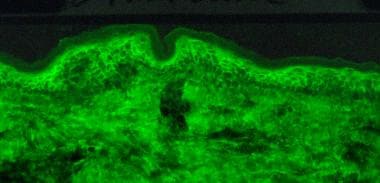
  • Direct immunofluorescence
    • Linear deposits of immunoglobulin G (IgG) and C3 are present in the intercellular space of the epidermis.
    • Granular deposits of C3 and IgG at the dermoepidermal junction are present in 80% of patients, particularly in biopsy specimens from the face or other sun-exposed areas.
  • Immunoelectron microscopy: IgG and C3 deposits are localized to the epidermal cell membranes and the upper dermis.
  • Patients with pemphigus erythematosus may have other laboratory abnormalities suggestive of SLE; these include anemia, lymphopenia, thrombocytopenia, renal abnormalities, proteinuria, or a positive rheumatoid factor.

Procedures

  • Select an early vesicle or bulla for skin biopsy. Perilesional skin is tested on immunofluorescence studies.

Histologic Findings

Intraepidermal superficial bullae are usually within the granular layer or just below it. Acantholysis may occur in the blister floor or roof. Old lesions may have follicular hyperkeratosis with acantholysis and dyskeratosis of the granular layer.


Medical Care

Topical therapy

Topical corticosteroids are useful for patients with limited diseases or as an adjunct to systemic therapy. Selection of the appropriate topical steroid strength and vehicle depends on the body site, the age of the patient, and the potential for steroid adverse effects. Use of daily sunscreen and sun protection is necessary.

Systemic therapy

Systemic steroids have been the mainstay of therapy for widespread pemphigus since their first use in 1950. Prednisone 1-2 mg/kg/d as a single morning dose or as intravenous pulses may control the disease. Appropriate monitoring and follow-up care to avoid steroid adverse effects is critical.

Dapsone is effective in some patients with pemphigus erythematosus. Patients tend to respond relatively quickly, with improvement within several weeks. It can be a steroid-sparing drug. The possible mode of action is stabilization of lysosomal membranes and inhibition of polymorphonuclear leukocyte (PMN) toxicity. The recommended dose is 100-200 mg/d. Hemolytic jaundice may result in people with G-6-PD deficiency. Other adverse effects include agranulocytosis, leading to death, headaches, malaise, hepatitis, hypersensitivity reactions, and neuropathy. Caution is required.

Azathioprine is a potent immunosuppressive agent that has been used as a steroid-sparing agent. The usual doses are 75-150 mg (2-3 mg/kg/d) combined with 40-80 mg of prednisone. After initial control of the disease is obtained, tapering to maintenance doses of azathioprine is recommended. Patients who are thiopurine methyltransferase activity deficient (11% of the population) are at an increased risk of bone marrow toxicity with this agent.

Other useful drugs

  • Tetracycline and niacinamide
  • Cyclophosphamide
  • Methotrexate
  • Parenteral gold
  • Hydroxychloroquine
  • Plasmapheresis
  • Mycophenolate mofetil
  • Extracorporeal photochemotherapy

Consultations

A dermatologist with expertise in using and in monitoring of these agents is recommended.

Diet

Patients on long-term glucocorticoids should increase their intake of calcium and vitamin D as well as bisphosphates in an effort to prevent osteoporosis.

Activity

Patients should use appropriate sun-smart behaviors and protective clothing to minimize sun exposure that may exacerbate disease activity.


The goal of pharmacotherapy is to reduce morbidity and to prevent complications.

Plasmapheresis and immunoadsorption have been shown to be effective in the treatment of pemphigus erythematosus. Plasmapheresis1, 2, 3 and, more recently, immunoadsorption,4, 5, 6 are extracorporeal treatments that act rapidly on disease activity by lowering the load of the causative autoantibodies in the patient's circulation.

In immunoadsorption, the immunoglobulins are selectively removed from the patient's plasma by adsorbing the antibodies to the matrix in a column of the immunoadsorption apparatus, after which the "cleansed" plasma is returned to the patient. Reportedly, immunoadsorption has higher efficacy and fewer adverse effects compared with plasmapheresis. In one German study,7 immunoadsorption was effective and safe in treating resistant and severe pemphigus. However, more studies are needed to support these data.

Drug Category: Corticosteroids

The mainstay of treatment of immunobullous diseases is steroids. Generally, high-dose steroids (ie, prednisolone, prednisone, methylprednisolone, dexamethasone), PO or IV, are effective in obtaining rapid disease control. However, high-dose and prolonged treatment with steroids often causes significant adverse effects. Screening and risk assessment of possible adverse effects (eg, diabetes, glaucoma, osteoporosis, blood pressure, history of GI bleeding) are required prior to and during treatment.

Concomitant calcium supplements and antacid drugs (eg, proton pump inhibitors) are recommended throughout therapy. A study8 of patients with pemphigus vulgaris showed intravenous pulse combined with low-dose oral steroid therapy to be more effective and associated with fewer severe adverse effects than oral high-dose steroid therapy.

To reduce the adverse effects of systemic steroids, French researchers compared the efficacy and adverse effect profile of topical steroids with that of systemic steroids in the treatment of moderate-to-severe bullous pemphigoid.9 Topical steroids were more effective than oral therapy and were associated with far fewer severe complications. However, a recent report warns of the development of steroid-induced skin atrophy and striae after this regimen.10

Drug NamePrednisone (Deltasone, Meticorten, Orasone, Sterapred)
DescriptionImmunosuppressant for treatment of autoimmune disorders; may decrease inflammation by reversing increased capillary permeability and suppressing PMN activity. Stabilizes lysosomal membranes and also suppresses lymphocyte and antibody production.
Adult Dose1-2 mg/kg/d PO qam; alternatively, 0.5-2 mg/kg/d; taper as condition improves; single morning dose is safer for long-term use, but divided doses have more anti-inflammatory effect
Pediatric DoseAdminister as in adults
ContraindicationsDocumented hypersensitivity; viral, fungal, tubercular skin, or connective tissue infections; peptic ulcer disease; hepatic dysfunction; GI disease
InteractionsCoadministration with estrogens may decrease clearance; concurrent use with digoxin may cause digitalis toxicity secondary to hypokalemia; phenobarbital, phenytoin, and rifampin may increase metabolism of glucocorticoids (consider increasing maintenance dose); monitor for hypokalemia with coadministration of diuretics
PregnancyB - Fetal risk not confirmed in studies in humans but has been shown in some studies in animals
PrecautionsMonitor adrenal insufficiency when tapering drug; abrupt discontinuation of glucocorticoids may cause adrenal crisis; hyperglycemia, edema, osteonecrosis, myopathy, peptic ulcer disease, hypokalemia, osteoporosis, euphoria, psychosis, growth retardation, and infections are possible complications of glucocorticoid use

Drug Category: Antineoplastic agents

These agents inhibit cell growth and proliferation. Intravenous pulse cyclophosphamide (500 mg qd) has also been suggested as adjunctive therapy after plasmapheresis to prevent "rebound" (marked increase of antibodies compensating for the antibodies depleted by plasmapheresis).3
High-dose immunoablative cyclophosphamide without stem cell rescue was effective in 2 patients with resistant pemphigus. However, considering the serious adverse effects of this high-dose regimen, it should be reserved for patients who are resistant to other treatments.11, 12, 13

Drug NameCyclophosphamide (Cytoxan, Neosar)
DescriptionSeveral regimens with cyclophosphamide have been described in the treatment of immunobullous disorders. Cyclophosphamide is a potent cytotoxic agent that can cause severe cytopenia and hemorrhagic cystitis (bladder inflammation).
Oral low-dose cyclophosphamide is usually used as a steroid-sparing agent.
Intravenous cyclophosphamide (500 mg qd for 1 d) plus low-dose oral (50 mg qd) has been combined with intravenous pulse dexamethasone (100 mg qd for 3 d) to achieve rapid disease control.
Intravenous pulse cyclophosphamide (500 mg qd) has also been suggested as adjunctive therapy after plasmapheresis to prevent "rebound" (marked increase of antibodies compensating for the antibodies depleted by plasmapheresis).
More recently, high-dose immunoablative cyclophosphamide without stem cell rescue was effective in 2 patients with resistant pemphigus. However, considering the serious adverse effects of this high-dose regimen, it should be reserved for patients who are resistant to other treatments.
More studies are needed to outline the risk of adverse effects vs benefits of this regimen.
Adult Dose10 mg/kg/d IV; 2.5-3 mg/kg/d PO qid
Pediatric DoseNot established
ContraindicationsDocumented hypersensitivity; severely depressed bone marrow function
InteractionsAllopurinol may increase risk of bleeding or infection and enhance myelosuppressive effects; may potentiate doxorubicin-induced cardiotoxicity; may reduce digoxin serum levels and antimicrobial effects of quinolones; chloramphenicol may increase half-life of cyclophosphamide while decreasing metabolite concentrations; may increase effect of anticoagulants; coadministration with high doses of phenobarbital may increase rate of metabolism and leukopenic activity of cyclophosphamide; thiazide diuretics may prolong cyclophosphamide-induced leukopenia and neuromuscular blockade by inhibiting cholinesterase activity
PregnancyD - Fetal risk shown in humans; use only if benefits outweigh risk to fetus
PrecautionsRegularly examine hematologic profile (particularly neutrophils and platelets) to monitor for hematopoietic suppression; regularly examine urine for RBCs, which may precede hemorrhagic cystitis

Drug Category: Sulfone antibiotics

Dapsone's anti-inflammatory mechanism of action differs from the antibacterial mechanism of action. Suppression of neutrophils by inhibiting the halide-myeloperoxidase system is the most likely mechanism of action for anti-inflammatory effects.

Drug NameDapsone (Avlosulfon)
DescriptionBactericidal and bacteriostatic against mycobacteria; mechanism of action is similar to that of sulfonamides where competitive antagonists of PABA prevent formation of folic acid, inhibiting bacterial growth.
Adult Dose50-300 mg PO qd
Pediatric DoseNot established
ContraindicationsDocumented hypersensitivity; known G-6-PD deficiency
InteractionsMay inhibit anti-inflammatory effects of clofazimine; hematologic reactions may increase with folic acid antagonists, eg, pyrimethamine (monitor for agranulocytosis during the second and third mo of therapy); probenecid increases toxicity; trimethoprim with dapsone may increase toxicity of both drugs; because of increased renal clearance, levels may significantly decrease when administered concurrently with rifampin
PregnancyC - Fetal risk revealed in studies in animals but not established or not studied in humans; may use if benefits outweigh risk to fetus
PrecautionsPerform weekly blood counts (first mo), then perform WBC counts monthly (6 mo), and then semiannually; discontinue if significant reduction in platelets, leukocytes, or hematopoiesis occurs; caution in methemoglobin reductase deficiency, G-6-PD deficiency, or hemoglobin M because of high risk for hemolysis and Heinz body formation; caution in patients exposed to other agents or conditions (eg, infection, diabetic ketosis) capable of producing hemolysis; peripheral neuropathy can occur, particularly at high dose; phototoxicity may occur when exposed to UV light

Drug Category: Immunosuppressants

These agents are effective in the treatment of autoimmune diseases. See Glied and Rico14 and Tan et al15 for references regardings adverse effects (eg, abnormal LFT results) related to triphosphate-methyltransferase (TPMT).

Drug NameAzathioprine (Imuran)
DescriptionAmong the slowly acting adjuvant therapies, azathioprine is a useful and safe steroid-sparing agent, provided TPMT assay is performed prior to treatment. TPMT is an enzyme that converts azathioprine into its inactive metabolites.
If TPMT is lacking or present in a much lower concentration, patient is at high risk for bone marrow suppression and thus anemia, thrombocytopenia, and leukopenia. Therefore, analysis of TPMT levels is recommended before starting treatment.
Other adverse effects (eg, abnormal LFT results) are not reflected by this enzyme level.
Adult Dose1 mg/kg/d PO for 6-8 wk; increase by 0.5 mg/kg q4wk until response or dose reaches 2.5 mg/kg/d
Pediatric DoseInitial: 2-5 mg/kg/d PO/IV
Maintenance: 1-2 mg/kg/d PO/IV
ContraindicationsDocumented hypersensitivity; low levels of serum TPMT
InteractionsToxicity increases with allopurinol; concurrent use with ACE inhibitors may induce severe leukopenia; may increase levels of methotrexate metabolites and decrease effects of anticoagulants, neuromuscular blockers, and cyclosporine
PregnancyD - Fetal risk shown in humans; use only if benefits outweigh risk to fetus
PrecautionsIncreases risk of neoplasia; caution in liver disease and renal impairment; hematologic toxicities may occur

Drug Category: Intravenous immunoglobulins

Latest development in the armamentarium for treating immunobullous disorders. IVIGs have proven beneficial in achieving rapid disease control in patients with immunobullous diseases.16, 17, 18, 19, 20, 21

Drug NameImmune globulin intravenous (Gamimune, Gammagard, Sandoglobulin)
DescriptionConsists of IgG collected from a pool of thousands of blood donors (virus-free), thus providing a wide range of immunologically different IgG. Theoretically, they bind and neutralize pathogenic autoantibodies.
Administered IV, with each cycle lasting 3-5 d, at a dose of 1-2 g/kg/cycle. Several cycles are usually required.
Cost and availability limit use. IVIG costs approximately $5500 (approximately £3000) for a 5-d course based on a 70-kg patient. Generally used in resistant and severe bullous diseases in addition to immunosuppressive therapy or as monotherapy in patients with contraindications for immunosuppressive drugs.
Adult Dose1-2 g/kg/cycle IV, each lasting 3-5 d; several cycles may be required
Pediatric DoseNot established
ContraindicationsDocumented hypersensitivity; IgA deficiency
InteractionsGlobulin preparation may interfere with immune response to live virus vaccine (MMR) and reduce efficacy (do not administer within 3 months of vaccine)
PregnancyD - Fetal risk shown in humans; use only if benefits outweigh risk to fetus
PrecautionsAdminister only to resistant cases; check serum IgA before IVIG (use an IgA-depleted product, eg, Gammagard S/D); infusions may increase serum viscosity and thromboembolic events; infusions may increase risk of migraine attacks, aseptic meningitis (10%), urticaria, pruritus, or petechiae (2-30 d postinfusion)
Increases risk of renal tubular necrosis in elderly patients and in patients with diabetes, volume depletion, and preexisting kidney disease; laboratory result changes associated with infusions include elevated antiviral or antibacterial antibody titers for 1 mo, 6-fold increase in ESR for 2-3 wk, and apparent hyponatremia

Drug Category: Anti-inflammatory agents

Anti-inflammatory agents (eg, dapsone, gold, tetracyclines) are also being used to treat certain immunobullous disorders. However, they are generally used in patients with mild-to-moderate disease, with the exception of those with dermatitis herpetiformis and linear IgA disease, in whom dapsone is still first-line treatment. Dapsone can be started after glucose-6-P-dehydrogenase screening. Low levels are associated with a high risk of methemoglobinemia. When using tetracyclines, some authors have reported minocycline-induced pigmentation in patients with pemphigus and pemphigoid, with a prevalence that appears to be much higher than in persons with acne or rheumatoid arthritis.22
Targets a cell-specific protein and may represent a promising novel therapeutic option for refractory immunobullous diseases.23, 24, 25, 26

Drug NameRituximab (Rituxan)
DescriptionMonoclonal anti-CD20 antibody (CD20 is a protein on the surface of lymphocytes), reported to be effective in treating resistant pemphigus foliaceous and vulgaris. May deplete B lymphocytes (antibody-producing cells) and rapidly removes desmoglein antibodies (antibodies causing pemphigus) from circulation.
Adult Dose375 mg/m2 IV qwk for 4 doses on days 1, 8, 15, and 22
Pediatric DoseNot established
ContraindicationsDocumented hypersensitivity
InteractionsNone reported
PregnancyC - Fetal risk revealed in studies in animals but not established or not studied in humans; may use if benefits outweigh risk to fetus
PrecautionsHypotension, bronchospasm, and angioedema may occur; discontinue treatment if life-threatening cardiac arrhythmias occur


Deterrence/Prevention

Sun avoidance and sun protection are recommended.

Complications

The types of medications used to control severe pemphigus erythematosus may lead to serious iatrogenic disorders.

Prognosis

The prognosis of pemphigus erythematosus is better than that of pemphigus vulgaris. With good dermatologic care, patients with pemphigus erythematosus are often able to live normal lives.

Patient Education

Patient education about possible triggers for the disease is important. Patients should minimize sun exposure. Additionally, as in all photosensitive disorders, patient education on the use of sunscreens, protective clothing, and sun-smart behaviors is a cornerstone of therapy.


Medical/Legal Pitfalls

  • Failure to explain the toxicity and adverse effects of steroids, cyclophosphamide, or other drugs
  • Failure to explain the disease's prognosis before treatment

Special Concerns

  • A delay of pregnancy is recommended during treatment and for a minimum of 2 years after stopping treatment with immunosuppressants.
  • Wound healing may be delayed in patients on glucocorticoids.


  1. Egan CA, Meadows KP, Zone JJ. Plasmapheresis as a steroid saving procedure in bullous pemphigoid. Int J Dermatol. Mar 2000;39(3):230-5. [Medline].
  2. Furue M, Iwata M, Yoon HI, Kubota Y, Ohto H, Kawashima M, et al. Epidermolysis bullosa acquisita: clinical response to plasma exchange therapy and circulating anti-basement membrane zone antibody titer. J Am Acad Dermatol. May 1986;14(5 Pt 2):873-8. [Medline].
  3. Turner MS, Sutton D, Sauder DN. The use of plasmapheresis and immunosuppression in the treatment of pemphigus vulgaris. J Am Acad Dermatol. Dec 2000;43(6):1058-64. [Medline].
  4. Matic G, Bosch T, Ramlow W. Background and indications for protein A-based extracorporeal immunoadsorption. Ther Apher. Oct 2001;5(5):394-403. [Medline].
  5. Ogata K, Yasuda K, Matsushita M, Kodama H. Successful treatment of adolescent pemphigus vulgaris by immunoadsorption method. J Dermatol. Apr 1999;26(4):236-9. [Medline].
  6. Schneider KM. Plasmapheresis and immunoadsorption: different techniques and their current role in medical therapy. Kidney Int Suppl. Feb 1998;64:S61-5. [Medline].
  7. Schmidt E, Klinker E, Opitz A, Herzog S, Sitaru C, Goebeler M, et al. Protein A immunoadsorption: a novel and effective adjuvant treatment of severe pemphigus. Br J Dermatol. Jun 2003;148(6):1222-9. [Medline].
  8. Femiano F, Gombos F, Scully C. Pemphigus vulgaris with oral involvement: evaluation of two different systemic corticosteroid therapeutic protocols. J Eur Acad Dermatol Venereol. Jul 2002;16(4):353-6. [Medline].
  9. Joly P, Roujeau JC, Benichou J, Picard C, Dreno B, Delaporte E, et al. A comparison of oral and topical corticosteroids in patients with bullous pemphigoid. N Engl J Med. Jan 31 2002;346(5):321-7. [Medline].
  10. Hull CM, McKenna JK, Zone JJ. Topical corticosteroids and bullous pemphigoid. Arch Dermatol. Feb 2003;139(2):225-6. [Medline].
  11. Cohen MA, Cohen JJ, Kerdel FA. Immunoablative high-dose cyclophosphamide without stem cell rescue in pemphigus foliaceus. Int J Dermatol. Jun 2002;41(6):340-4. [Medline].
  12. Hayag MV, Cohen JA, Kerdel FA. Immunoablative high-dose cyclophosphamide without stem cell rescue in a patient with pemphigus vulgaris. J Am Acad Dermatol. Dec 2000;43(6):1065-9. [Medline].
  13. Nousari HC, Brodsky RA, Jones RJ, Grever MR, Anhalt GJ. Immunoablative high-dose cyclophosphamide without stem cell rescue in paraneoplastic pemphigus: report of a case and review of this new therapy for severe autoimmune disease. J Am Acad Dermatol. May 1999;40(5 Pt 1):750-4. [Medline].
  14. Glied M, Rico MJ. Treatment of autoimmune blistering diseases. Dermatol Clin. Apr 1999;17(2):431-40, x. [Medline].
  15. Tan BB, Lear JT, Gawkrodger DJ, English JS. Azathioprine in dermatology: a survey of current practice in the U.K. Br J Dermatol. Mar 1997;136(3):351-5. [Medline].
  16. Ahmed AR, Colón JE. Comparison between intravenous immunoglobulin and conventional immunosuppressive therapy regimens in patients with severe oral pemphigoid: effects on disease progression in patients nonresponsive to dapsone therapy. Arch Dermatol. Sep 2001;137(9):1181-9. [Medline].
  17. Ahmed AR. Intravenous immunoglobulin therapy for patients with bullous pemphigoid unresponsive to conventional immunosuppressive treatment. J Am Acad Dermatol. Dec 2001;45(6):825-35. [Medline].
  18. Ahmed AR, Sami N. Intravenous immunoglobulin therapy for patients with pemphigus foliaceus unresponsive to conventional therapy. J Am Acad Dermatol. Jan 2002;46(1):42-9. [Medline].
  19. Gourgiotou K, Exadaktylou D, Aroni K, Rallis E, Nicolaidou E, Paraskevakou H, et al. Epidermolysis bullosa acquisita: treatment with intravenous immunoglobulins. J Eur Acad Dermatol Venereol. Jan 2002;16(1):77-80. [Medline].
  20. Leverkus M, Georgi M, Nie Z, Hashimoto T, Bröcker EB, Zillikens D. Cicatricial pemphigoid with circulating IgA and IgG autoantibodies to the central portion of the BP180 ectodomain: beneficial effect of adjuvant therapy with high-dose intravenous immunoglobulin. J Am Acad Dermatol. Jan 2002;46(1):116-22. [Medline].
  21. Sami N, Qureshi A, Ahmed AR. Steroid sparing effect of intravenous immunoglobulin therapy in patients with pemphigus foliaceus. Eur J Dermatol. Mar-Apr 2002;12(2):174-8. [Medline].
  22. Ozog DM, Gogstetter DS, Scott G, Gaspari AA. Minocycline-induced hyperpigmentation in patients with pemphigus and pemphigoid. Arch Dermatol. Sep 2000;136(9):1133-8. [Medline].
  23. Borradori L, Lombardi T, Samson J, Girardet C, Saurat JH, Hügli A. Anti-CD20 monoclonal antibody (rituximab) for refractory erosive stomatitis secondary to CD20(+) follicular lymphoma-associated paraneoplastic pemphigus. Arch Dermatol. Mar 2001;137(3):269-72. [Medline].
  24. Goebeler M, Herzog S, Bröcker EB, Zillikens D. Rapid response of treatment-resistant pemphigus foliaceus to the anti-CD20 antibody rituximab. Br J Dermatol. Oct 2003;149(4):899-901. [Medline].
  25. Mrowietz U. Treatment targeted to cell surface epitopes. Clin Exp Dermatol. Oct 2002;27(7):591-6. [Medline].
  26. Salopek TG, Logsetty S, Tredget EE. Anti-CD20 chimeric monoclonal antibody (rituximab) for the treatment of recalcitrant, life-threatening pemphigus vulgaris with implications in the pathogenesis of the disorder. J Am Acad Dermatol. Nov 2002;47(5):785-8. [Medline].
  27. Ahmed AR, Hombal SM. Cyclophosphamide (Cytoxan). A review on relevant pharmacology and clinical uses. J Am Acad Dermatol. Dec 1984;11(6):1115-26. [Medline].
  28. Basset N, Guillot B, Michel B, Meynadier J, Guilhou JJ. Dapsone as initial treatment in superficial pemphigus. Report of nine cases. Arch Dermatol. Jun 1987;123(6):783-5. [Medline].
  29. Brenner S, Mashiah J, Tamir E, et al. PEMPHIGUS. An Acronym for a Disease with Multiple Causes. The International Pemphigus Foundation. Available at http://www.pemphigus.org/articles/medical/am_acronymdisease.html. Accessed May 29, 2005.
  30. Bystryn JC. Plasmapheresis therapy of pemphigus. Arch Dermatol. Nov 1988;124(11):1702-4. [Medline].
  31. Bystryn JC, Steinman NM. The adjuvant therapy of pemphigus. An update. Arch Dermatol. Feb 1996;132(2):203-12. [Medline].
  32. Callen JP. Immunosuppressive & cytotoxic drugs: uses in dermatologic patients. In: Callen JP, Dahl MV, Golitz LE, eds. Advances in Dermatology. Vol 5. Chicago, Ill: Year Book Medical; 1990:3-20.
  33. Chaffins ML, Collison D, Fivenson DP. Treatment of pemphigus and linear IgA dermatosis with nicotinamide and tetracycline: a review of 13 cases. J Am Acad Dermatol. Jun 1993;28(6):998-1000. [Medline].
  34. Enk AH, Knop J. Mycophenolate is effective in the treatment of pemphigus vulgaris. Arch Dermatol. Jan 1999;135(1):54-6. [Medline].
  35. Heilborn JD, Ståhle-Bäckdahl M, Albertioni F, Vassilaki I, Peterson C, Stephansson E. Low-dose oral pulse methotrexate as monotherapy in elderly patients with bullous pemphigoid. J Am Acad Dermatol. May 1999;40(5 Pt 1):741-9. [Medline].
  36. Kaur S, Kanwar AJ. Dexamethasone-cyclophosphamide pulse therapy in pemphigus. Int J Dermatol. Jun 1990;29(5):371-4. [Medline].
  37. Lapidoth M, David M, Ben-Amitai D, Katzenelson V, Lustig S, Sandbank M. The efficacy of combined treatment with prednisone and cyclosporine in patients with pemphigus: preliminary study. J Am Acad Dermatol. May 1994;30(5 Pt 1):752-7. [Medline].
  38. Pasricha JS, Gupta R. Pulse therapy with dexamethasone-cyclophosphamide in pemphigus. Indian J Dermatol Venereol Leprol. 1984;50:199-203.
  39. Pasricha JS, Khaitan BK, Raman RS, Chandra M. Dexamethasone-cyclophosphamide pulse therapy for pemphigus. Int J Dermatol. Dec 1995;34(12):875-82. [Medline].
  40. Pasricha JS, Sood VD, Minocha Y. Treatment of pemphigus with cyclophosphamide. Br J Dermatol. Nov 1975;93(5):573-6. [Medline].
  41. Pasricha JS, Thanzama J, Khan UK. Intermittent high-dose dexamethasone-cyclophosphamide therapy for pemphigus. Br J Dermatol. Jul 1988;119(1):73-7. [Medline].
  42. Piamphongsant T. Pemphigus controlled by dapsone. Br J Dermatol. Jun 1976;94(6):681-6. [Medline].
  43. Rapini RP, Jordan RE, Wolverton SW. Cytotoxic agents. In: Wolverton SE, Wilkin JR, eds. Systemic Drugs for Skin Diseases. Philadelphia, Pa: WB Saunders; 1991:125-51.
  44. Tan-Lim R, Bystryn JC. Effect of plasmapheresis therapy on circulating levels of pemphigus antibodies. J Am Acad Dermatol. Jan 1990;22(1):35-40. [Medline].

Pemphigus Erythematosus excerpt

Article Last Updated: Oct 2, 2006