
Practice Essentials
The term cellulitis commonly is used to indicate a nonnecrotizing inflammation of the skin and subcutaneous tissues, usually from acute infection. Cellulitis usually follows a breach in the skin, although a portal of entry may not be obvious; the breach may involve microscopic skin changes or invasive qualities of certain bacteria. [1]
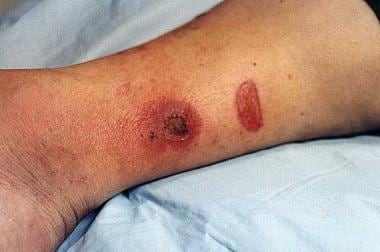
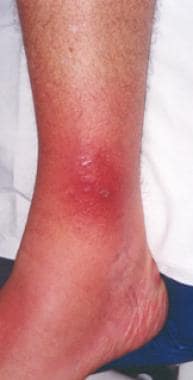 Patient with cellulitis of the left ankle. This cellulitis was caused by community-acquired methicillin-resistant Staphylococcus aureus (CA-MRSA). (Photo courtesy of Texas Dept. of Public Health.)
Signs and symptoms
Nonpurulent cellulitis is associated with the four cardinal signs of infection, as follows:
-
Erythema
-
Pain
-
Swelling
-
Warmth
Physical examination findings that suggest the most likely pathogen include the following:
-
Skin infection without underlying drainage, penetrating trauma, eschar, or abscess is most likely caused by streptococci; Staphylococcus aureus, often community-acquired MRSA, is the most likely pathogen when these factors are present [2]
-
Violaceous color and bullae suggest more serious or systemic infection with organisms such as Vibrio vulnificus or Streptococcus pneumoniae
The following findings suggest severe infection:
-
Malaise, chills, fever, and toxicity
-
Lymphangitic spread (red lines streaking away from the area of infection)
-
Circumferential cellulitis
-
Pain disproportionate to examination findings
Indications for emergent surgical evaluation are as follows [3, 4] :
-
Violaceous bullae
-
Cutaneous hemorrhage
-
Skin sloughing
-
Skin anesthesia
-
Rapid progression
-
Gas in the tissue
-
Hypotension
See Clinical Presentation for more detail.
Diagnosis
Generally, no workup is required in uncomplicated cases of cellulitis that meet the following criteria:

Background
The term cellulitis is commonly used to indicate a nonnecrotizing inflammation of the skin and subcutaneous tissues, a process usually related to acute infection that does not involve the fascia or muscles. Cellulitis is characterized by localized pain, swelling, tenderness, erythema, and warmth.
Cellulitis has been classically considered to be an infection without formation of abscess (nonpurulent), purulent drainage, or ulceration. At times, cellulitis may overlap with other conditions, so that the macular erythema coexists with nodules, areas of ulceration, and frank abscess formation (purulent cellulitis) (see Presentation). [19]
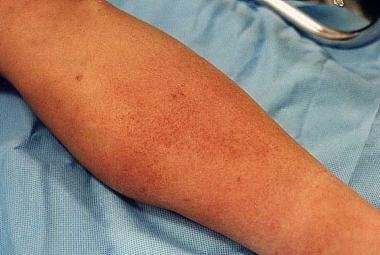 Mild cellulitis with a fine lacelike pattern of erythema. This lesion was only slightly warm and caused minimal pain, which is typical for the initial presentation of mild cellulitis.
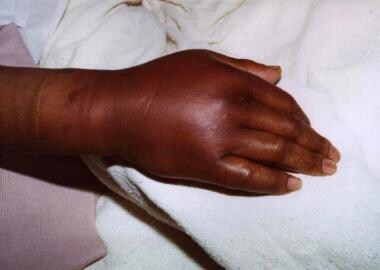 Swelling seen in cellulitis involving the hand. In a situation with hand cellulitis, always rule out deep infection by imaging studies or by obtaining surgical consultation.
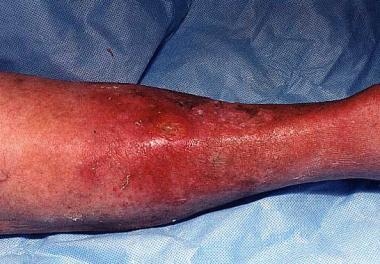 Severe cellulitis of the leg in a woman aged 80 years. The cellulitis developed beneath a cast and was painful and warm to the touch. Significant erythema is evident. The margins are irregular but not raised. An ulcerated area is visible in the center of the photograph.
 Burns complicated by cellulitis. The larger lesion is a second-degree burn (left), and the smaller lesion is a first-degree burn (right), each with an expanding zone of erythema consistent with cellulitis.
Streptococcal species are the most common causes of erysipelas and diffuse cellulitis or nonpurulent cellulitis that is not associated with a defined portal. [3] S aureus is the usual causative organism in purulent cellulitis associated with furuncles, carbuncles, or abscesses.
Pathophysiology
Cellulitis usually follows a breach in the skin, such as a fissure, cut, laceration, insect bite, or puncture wound. In some cases, there is no obvious portal of entry and the breach may be due to microscopic changes in the skin or invasive qualities of certain bacteria. Organisms on the skin and its appendages gain entrance to the dermis and multiply to cause cellulitis. Facial cellulitis of odontogenic origin may also occur. Patients with toe-web intertrigo and/or tinea pedis —as well as those with lymphatic obstruction, venous insufficiency, pressure ulcers, and obesity—are particularly vulnerable to recurrent episodes of cellulitis. [10, 20, 21, 22]
The vast majority of cases of cellulitis are likely caused by Streptococcus pyogenes and, to a lesser degree, by Staphylococcus aureus. In rare cases, cellulitis results from the metastatic seeding of an organism from a distant focus of infection, especially in immunocompromised individuals. Distant seeding is particularly common in cellulitis due to S pneumoniae (pneumococcus) and marine Vibriospecies. Neisseria meningitidis, Pseudomonas aeruginosa, Brucella species, and Legionella species have also been reported as rare causes of cellulitis resulting from hematogenous spread. [19, 23]
Etiology
Host factors
Certain host factors predispose to severe infection. The elderly and individuals with diabetes mellitus are at risk for more severe disease. [24] In addition, patients with diabetes, immunodeficiency, cancer, venous stasis, chronic liver disease, peripheral arterial disease, and chronic kidney disease appear to be at higher risk for recurrent infection because of an altered host immune response. Local control of immune function through interleukin-driven neutrophil recruitment, protective action of antimicrobial peptides, and the integrity of the cutaneous barrier have significant effects on the host’s defense against infection. [19, 25]
Cellulitis due to lymphatic obstruction or venectomy may be caused by non–group A streptococci (ie, groups B, C, and G). [26, 27] Postvenectomy status following saphenous vein stripping can also result in cellulitis. [26] Lymphadenectomy following tumor excision, such as mastectomy, is also a predisposing factor for cellulitis.
Immunogenetic factors may play a role in some families who have an underlying susceptibility to an infection progressing to cellulitis. Other factors that affect host immunity and predispose to cellulitis include concurrent intravenous or subcutaneous “skin popping” drug use; infections in this setting may be polymicrobial, but community-acquired methicillin-resistant S aureus (CA-MRSA) is the most common pathogen in these patients. [19]
Patient with cellulitis of the left ankle. This cellulitis was caused by community-acquired methicillin-resistant Staphylococcus aureus (CA-MRSA). (Photo courtesy of Texas Dept. of Public Health.)
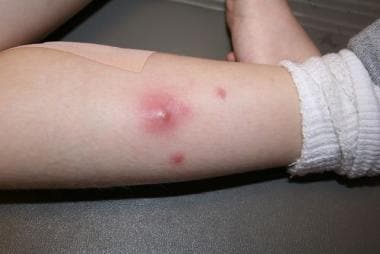 Abscess and associated cellulitis caused by community-acquired methicillin-resistant Staphylococcus aureus (CA-MRSA). (Photo courtesy of Texas Dept. of Public Health.)
In individuals with normal host defenses, the most common causative organisms are group A streptococci (GAS) and S aureus. Group B Streptococcus cellulitis occurs in infants younger than 6 months because their immune responses are not fully developed, and it may also be seen in adults with comorbidities such as diabetes or liver disease. For infantile cellulitis, presentations may include sepsis. [19, 28]
Historically, facial cellulitis in children was frequently associated with H influenzae type B and S pneumoniae, but this is now generally considered a rarity because of routine H influenza e type B and pneumococcal vaccines. However, a study of 500,000 pediatric hospitalizations demonstrated that, although bacterial meningitis and epiglottitis diminished as a result of immunization for H influenzae type B and S pneumoniae, the incidence of facial cellulitis was unaffected. [29] Nonetheless, another study noted that 96% of the serotypes that cause facial cellulitis were included in the heptavalent-conjugated pneumococcal vaccine that was routinely used at the time of the study.
Impetigo is commonly caused by strains of S aureus and/or S pyogenes, and erysipelas (acute infection of the upper dermis, characterized by a sharply demarcated, raised border) is more commonly caused by streptococcal species such as S pyogenes.
Immunocompromised hosts may become infected from nontraditional cellulitis organisms, including gram-negative rods (eg, Pseudomonas, Proteus, Serratia, Enterobacter, Citrobacter), anaerobes, and others (eg, Helicobacter cinaedi, Fusarium species). Although fungi (eg, Cryptococcus) and herpes simplex virus may also cause cellulitis, these causes are rare.
Pneumococci may cause a particularly malignant form of cellulitis that is frequently associated with tissue necrosis, suppuration, and bloodstream invasion. Two distinct syndromes are recognized: the first is marked by involvement of the extremities in patients with diabetes or substance abuse, and the second is marked by involvement of the head, neck, and upper torso in patients with systemic lupus erythematosus, nephrotic syndrome, or hematologic disorders. [30]
Mycobacterial infections may present as cellulitis. In contradistinction to the usual bacterial cellulitis, these presentations often range from subacute to chronic and are typically unresponsive to short courses of antibiotics—which should then prompt further investigation. The diagnosis is made on the basis of the presence of granulomas, multinucleated giant cells, and acid-fast bacilli (AFB) from biopsy specimens or mycobacterial culture. [31, 32, 33]
S aureus is the leading cause of SSTIs in injection drug users, [34] followed by Streptococcus species. [35]
Gram-negative bacteria may cause bullous cellulitis in patients with cirrhosis. [36] Early recognition is vital, because the course of the disease is rapid, typically progressing to septic shock and death. Gram stain and culture of fluid aspirated from the bullae may aid in management.
Recurrent staphylococcal cellulitis may occur in otherwise immunologically normal patients with nasal carriage of staphylococci and those with Job syndrome.
Hospital-acquired infections
Various hospital-acquired infections following soft tissue trauma may lead to cellulitis. It is unusual to have infection occur in areas around surgical wounds fewer than 24 hours postoperatively, but if there is such a clinical problem, group A beta-hemolytic Streptococcus [GABHS] or Clostridium perfringens (which produces gas that may be appreciated as crepitus on examination) usually is the cause. Acinetobacter baumannii is an emerging multidrug-resistant pathogen in these scenarios. [37]
Cellulitis due to lymphatic obstruction or venectomy may be caused by non–group A streptococci (ie, groups B, C, and G). [26, 27] Postvenectomy status following saphenous vein stripping can also result in cellulitis. [26] Cellulitis may also be associated with tinea pedis, and in such cases, culture of toe-web spaces may help identify a bacterial pathogen. [38] Lymphadenectomy following tumor excision, such as mastectomy, is also a predisposing factor for cellulitis.
Varicella
Cellulitis can complicate varicella and may be identified by larger margins of erythema surrounding the vesicles. One study identified patients with invasive GAS cellulitis complicating varicella. [39] The median onset of GAS infection was Day 4 of varicella, with fever, vomiting, and localized swelling reported. This condition mandates antibiotic treatment and careful clinical follow-up. Untreated cellulitis in association with varicella may progress to severe necrotizing SSTIs requiring surgical intervention. [40, 4]
MRSA
Although cellulitis can be complicated by abscess formation, it typically develops from an abscessogenic focus. One maxim in microbiology is the following: "The hallmark of staph infection is abscess formation." This has become a significant concern because of changing patterns of antibiotic resistance of S aureus, particularly MRSA. [41]
MRSA was first reported in 1968 [42] ; for years, MRSA infections were identified only in patients with recent hospitalization, surgery, renal dialysis, residence in long-term-care facilities, or IV drug use. However, in the 1990s, isolates of S aureus were found in patients without risk factors for nosocomial disease. [43] These isolates, which mostly maintain susceptibility to antibiotics such as trimethoprim-sulfamethoxazole or tetracycline, have been termed CA-MRSA to distinguish them from the previously identified hospital or healthcare-associated MRSA (HA-MRSA).
Patient with cellulitis of the left ankle. This cellulitis was caused by community-acquired methicillin-resistant Staphylococcus aureus (CA-MRSA). (Photo courtesy of Texas Dept. of Public Health.)
Abscess and associated cellulitis caused by community-acquired methicillin-resistant Staphylococcus aureus (CA-MRSA). (Photo courtesy of Texas Dept. of Public Health.)
Although reports have indicated that MRSA causes the majority of SSTIs, these studies are plagued by variability in case-finding methodologies. [44] Furthermore, in the context of cellulitis, the finding is misleading in that these reports come from analysis of wound cultures in cases in which abscess formation occurred. Cultures in cellulitis are difficult to perform and frequently do not yield positive results; therefore, these tests are rarely done clinically. Consequently, the results of these studies cannot be generalized to cellulitis without abscess formation. Studies are under way to determine the incidence of S aureus —in particular, CA-MRSA in SSTI in which there is no identifiable abscess. However, until results of those studies are available, treatment decisions must be made on clinical grounds. Because treatment failures after empiric treatment may often occur, because of the emergence of resistant strains, microbiologic investigations are strongly recommended.
Bite wounds, lacerations, and puncture wounds
Mammalian bite wounds represent a specific subset of cellulitis with unique pathogens, and the infections are usually polymicrobial. [45] Human, dog, cat, and wild animal bites all predispose to cellulitis with unique pathogens, but dog bites are the most commonly encountered bite wound in both the primary care and the emergency setting. [46] Several organisms are of particular interest in animal bites, including the following [45] :
-
Capnocytophaga canimorsus (dog)
-
Eikenella corrodens (human)
-
Pasteurella multocida (dog or cat)
-
Streptobacillus moniliformis (rat)
Puncture wounds, especially through the bottom of athletic shoes, may cause Pseudomonas osteomyelitis and/or cellulitis. However, lacerations and puncture wounds sustained in an aquatic environment (eg, oceans, lakes, streams) may be contaminated with bacteria not typically found in land-based injuries, including Aeromonas hydrophila, Pseudomonas and Plesiomonas species, Vibrio species, Erysipelothrix rhusiopathiae, and Mycobacterium marinum. [47] Individuals with chronic liver disease are particularly susceptible to V vulnificus infections. [48]
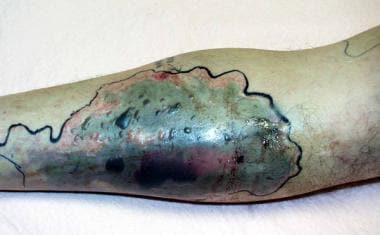 Cellulitis due to documented Vibrio vulnificus infection. (Image courtesy of Kepler Davis.)
Epidemiology
Because cellulitis is not a reportable disease, the exact prevalence is uncertain; however, it is a relatively common infection, affecting all racial and ethnic groups. There is no statistically significant difference in the incidence of cellulitis in men and women, [49] and usually no age predilection is described. Nonetheless, studies have found a higher incidence of cellulitis in individuals older than 45 years. [21, 50, 51] Cellulitis was more common in geriatric patients in a retrospective study of international travelers by the GeoSentinel Surveillance Network. [52]
Certain age groups are at higher risk in some unique scenarios, such as the following:
-
Historically, buccal cellulitis caused by H influenzae type B was more common in children younger than 3 years; vaccination against this organism may have decreased the incidence of buccal cellulitis, but recent data suggest that this source remains a consideration, even in vaccinated cohorts [29]
-
Perianal cellulitis, usually with group A beta-hemolytic Streptococcus (GABHS), occurs in children younger than 3 years [54]
-
Elderly patients with cellulitis are predisposed to thrombophlebitis
A study of an insurance database in Utah found an incidence rate of 24.6 cases per 1000 person-years. [50] The incidence was higher in males and in those individuals aged 45-64 years. [50] In a large epidemiologic hospital-based study on skin, soft tissue, bone, and joint infections, 37.3% patients were identified as having cellulitis. [55]
Overall rates of visits increased for SSTIs from 32.1 to 48.1 visits per 1000 population and reached 14.2 million by 2005, and visits for abscess and cellulitis increased from 17.3 to 32.5 visits per 1000 population and accounted for more than 95% of the increase, according to the National Ambulatory Medical Care Survey and National Hospital Ambulatory Medical Care Survey. [56] The study provided data regarding visits by patients with SSTIs to physician offices, hospital outpatient departments, and emergency departments in the United States. [56]
Cellulitis was found to account for approximately 3% of emergency medical consultations at one United Kingdom district general hospital.
Prognosis
Many cases of cellulitis and SSTI can be treated on an outpatient basis with oral antibiotics and do not result in lasting sequelae. Most patients’ conditions respond well to oral antibiotics. When outpatient therapy is unsuccessful, or for patients who require admission initially, IV antibiotics are usually effective.
Cellulitis may progress to serious illness by uncontrolled contiguous spread, including via the lymphatic or circulatory systems. Associated conditions or complications include lymphangitis, abscess formation, and, rarely, gangrenous cellulitis or necrotizing fasciitis. [57] Certain species, most notably group A beta-hemolytic Streptococcus (GABHS) and S aureus, produce toxins that may mediate a more severe systemic infection, leading to septic shock and death. [58, 59]
Patient Education
Depending on the location of the affected area, the patient should decrease physical activity and elevate the extremity, if possible. They may take over-the-counter (OTC) pain medication such as acetaminophen (Tylenol) or ibuprofen (Advil, Motrin) for pain, if approved by their physician.
Patients should call their doctor's office or seek urgent evaluation if they have any of the following features:
-
Fever (>100.5°F), especially when associated with chills
-
Cellulitis with surrounding soft, fluctuant areas that are suggestive of abscess formation
-
Red streaking from an area of cellulitis or a fast-spreading area of redness, which indicates that the infection may need closer observation, change in antibiotic treatment, or inpatient supportive care
-
Significant pain not relieved by acetaminophen or ibuprofen
-
Inability to move an extremity or joint because of pain
Although any cellulitis infection may be severe, patients with diabetes, cancer, chronic lymphedema, or immunosuppression should be made aware that they are more predisposed to serious infection. Patients with an underlying genetic condition, such as an immunodeficiency disease, are also at especially high risk for minor skin infections to progress to cellulitis. [19]
-
Mild cellulitis with a fine lacelike pattern of erythema. This lesion was only slightly warm and caused minimal pain, which is typical for the initial presentation of mild cellulitis.
-
Swelling seen in cellulitis involving the hand. In a situation with hand cellulitis, always rule out deep infection by imaging studies or by obtaining surgical consultation.
-
Severe cellulitis of the leg in a woman aged 80 years. The cellulitis developed beneath a cast and was painful and warm to the touch. Significant erythema is evident. The margins are irregular but not raised. An ulcerated area is visible in the center of the photograph.
-
Burns complicated by cellulitis. The larger lesion is a second-degree burn (left), and the smaller lesion is a first-degree burn (right), each with an expanding zone of erythema consistent with cellulitis.
-
Cellulitis due to documented Vibrio vulnificus infection. (Image courtesy of Kepler Davis.)
-
A case of cellulitis without associated purulence in an infant. Note the presence of lymphedema, a risk factor for cellulitis.(Photo courtesy of Amy Williams.)
-
Patient with cellulitis of the left ankle. This cellulitis was caused by community-acquired methicillin-resistant Staphylococcus aureus (CA-MRSA). (Photo courtesy of Texas Dept. of Public Health.)
-
Abscess and associated cellulitis caused by community-acquired methicillin-resistant Staphylococcus aureus (CA-MRSA). (Photo courtesy of Texas Dept. of Public Health.)
-
Guidelines for the management of patients who require hospitalization for cellulitis or cutaneous abscess. AFB = acid-fast bacilli; BID = twice daily; CRP = C reactive protein; CT = computed tomography scanning; DS = double strength; DM = diabetes mellitus; ESR = erythrocyte sedimentation rate; ESRD = end-stage renal disease; HIV = human immunodeficiency virus; ICU = intensive care unit; I&D = incision and drainage; ID = infectious disease; IDU = injection drug user; IV = intravenous; LRINEC = Laboratory Risk Indicator for Necrotizing Fasciitis; MRI = magnetic resonance imaging; MSRA = methicillin-resistant Staphylococcus aureus; NSAIDS = nonsteroidal anti-inflammatory drugs; PO = by mouth; SSTI = skin and soft-tissue infections; TID = 3 times daily. Adapted from Jenkins TC, Knepper BC, Sabel AL, et al. Decreased antibiotic utilization after implementation of a guideline for inpatient cellulitis and cutaneous abscess. Arch Intern Med. 2011;171(12):1072-9.
-
A male patient with orbital cellulitis with proptosis, ophthalmoplegia, and edema and erythema of the eyelids. The patient also exhibited pain on eye movement, fever, headache, and malaise.
-
A male patient with orbital cellulitis with proptosis, ophthalmoplegia, and edema and erythema of the eyelids. The patient also exhibited chemosis and resistance to retropulsion of the globe.
-
Gross photograph of complicated cellulitis. Instead of the presence of yellow fat, the tissue is hemorrhagic and necrotic.
-
Hematoxylin and eosin (H&E) stain, high power. This image shows deeper subcutaneous tissue involved in a case of cellulitis, with acute inflammatory cells and fat necrosis.
-
Hematoxylin and eosin (H&E) stain, high power. This image shows cellulitis caused by herpes simplex virus, with the multinucleated organism in the center of the picture.
Tables
Location |
Likely Organisms |
Other Organisms |
Complication/ Discussion |
Antibiotic Regimen -- Oral/ Outpatient |
Indication for Hospitalization |
Antibiotic Regimen -- Parenteral/ Hospitalized |
Uncomplicated cellulitis |
Group A streptococci much more likely than Staphylococcus aureus |
|
|
Cephalexin or dicloxacillin or clindamycin |
|
Cefazolin or oxacillin or nafcillin |
Cellulitis, concern for methicillin-resistant S aureus is a concern |
Group A streptococci and S aureus |
|
|
[(Cephalexin or dicloxacillin or clindamycin) plus trimethoprim/ sulfamethoxazole] or Clindamycin |
|
Vancomycin Daptomycin Ceftaroline |
Dog bite |
Pasteurella species (50% of wounds) S aureus Streptococcus pyogenes |
Staphylococci, streptococci Aerobes --Moraxella and Neisseria Anaerobes --Fusobacterium, Bacteroides, Porphyromonas, and Prevotella |
Capnocytophaga canimorsus may cause sepsis in patients with asplenia/hepatic disease. Avoid first-generation cephalosporins/ erythromycin/ dicloxacillin. High likelihood of infection – Prophylactic antibiotics indicated for the following wounds: deep puncture, hands, requiring surgical repair, immunocompromised host, venous or lymphatic compromise, crush injury. Requires close follow-up care within 24-48 h. |
Amoxicillin/ clavulanate Penicillin allergic: Moxifloxacin |
Deep wounds or severe wounds; infections not responding to oral antibiotics |
Third-generation cephalosporin (ceftriaxone [Rocephin]) plus metronidazole or beta-lactam/beta-lactamase inhibitor (eg, ampicillin/sulbactam) or fluoroquinolone plus metronidazole or carbapenem (ertapenem) |
Human bite |
Eikenella corrodens (gram-negative facultative anaerobe, 29% of wounds) Aerobic gram-positive cocci, anaerobes |
|
Clenched fist lacerations over metacarpophalangeal joints should be considered human bites; anesthetize wounds and irrigate; reevaluate within 24-48 h. Intercanine distance >3 cm is likely bite from adult; if wound to child, consider abuse. |
Amoxicillin/ clavulanate Penicillin allergic: Moxifloxacin or (Clindamycin or metronidazole) plus (doxycycline or cefuroxime or trimethoprim/ sulfamethoxazole) |
|
Third-generation cephalosporin (Rocephin) plus metronidazole or beta-lactam/beta-lactamase inhibitor (eg, ampicillin/sulbactam) or fluoroquinolone plus metronidazole or carbapenem (ertapenem) |
Cat bite |
Pasteurella multocida and P septica (75% of wounds) |
Staphylococci, streptococci, Bacteroides, Peptostreptococcus, Actinomyces, Fusobacterium, Porphyromonas, and Veillonella parvula |
Avoid first-generation cephalosporins/ erythromycin/ dicloxacillin High likelihood of infection -- Prophylactic antibiotics indicated for the following wounds: deep puncture, hands, requiring surgical repair, immunocompromised host, venous or lymphatic compromise. Requires close follow-up care within 24-48 h. |
Amoxicillin/ clavulanate Penicillin allergic -- Moxifloxacin or (Clindamycin or metronidazole) plus (doxycycline or cefuroxime or trimethoprim/ sulfamethoxazole) |
Deep wounds or severe wounds; infections not responding to oral antibiotics |
Third-generation cephalosporin (Rocephin) plus metronidazole or beta-lactam/beta-lactamase inhibitor (eg, ampicillin/sulbactam) or fluoroquinolone plus metronidazole or carbapenem (ertapenem) |
Preseptal (periorbital) cellulitis |
Haemophilus influenzae type b, Streptococcus pneumoniae, S aureus, other streptococcal species, and anaerobes |
Nocardia brasiliensis, Bacillus anthracis, Pseudomonas aeruginosa, Neisseria gonorrhoeae, Proteus species, Pasteurella multocida, Mycobacterium tuberculosis |
Largest study indicates that H influenzae type b and S pneumoniae not diminished in facial cellulitis as a result of immunizations [29] |
Amoxicillin-clavulanate, cefpodoxime, cefdinir |
Age < 1 y/ more severe disease require intravenous antibiotic |
Third-generation cephalosporin (Rocephin) |
Lower extremity -- Complicating saphenous venectomy site after coronary bypass grafting |
No pathogen identifiable in most infections, but it is likely to be streptococcal (> staphylococcal) Non-group A beta-hemolytic streptococci most likely organism; S aureus less common |
|
Recurrent episodes common; may be associated with rigors, extreme fatigue, myalgias, and hypotension; some associated with tinea pedis (toe web cultures may be useful in establishing probable pathogen) |
Dicloxacillin or cephalexin. Add trimethoprim/ sulfamethoxazole or tetracycline or clindamycin if concern for methicillin-resistant S aureus |
|
First-generation cephalosporin (cefazolin); clindamycin; vancomycin |
Breast/arm - - (not mastitis) Complicating breast cancer surgery/lymph node dissection |
No pathogen identifiable in most infections Group A or Non-group A beta-hemolytic streptococci most likely organisms |
|
|
Dicloxacillin, cephalexin. Add trimethoprim/ sulfamethoxazole or tetracycline or clindamycin if concern for methicillin-resistant S aureus |
Fever, recent chemotherapy, neutropenia |
Multiple regimens, none clearly superior –Piperacillin/tazobactam or ceftazidime plus aminoglycoside; or ciprofloxacin plus beta-lactam or monotherapy with piperacillin/tazobactam or cefepime |
Aquatic environment -- Fresh water/ salt water/ brackish water/ swimming pools/ aquarium Puncture/ laceration |
Aeromonas hydrophila, Pseudomonas and Plesiomonas species, Vibrio species, Erysipelothrix rhusiopathiae, Mycobacterium marinum, and others |
|
A hydrophila and Vibrio vulnificus may produce rapidly progressive soft tissue infection and sepsis |
Fluoroquinolone (eg, ciprofloxacin or levofloxacin) Note: For M marinum infection, use clarithromycin plus either ethambutol or rifampin |
|
Third- or fourth-generation cephalosporin (eg, ceftazidime or cefepime) or fluoroquinolone (eg, ciprofloxacin or levofloxacin) |
Clenched-fist injury |
E corrodens (gram-negative anaerobe, 29 % of wounds); aerobic gram-positive cocci, anaerobes |
|
Lacerations over metacarpophalangeal joints should be considered human bites; anesthetize wounds and irrigate; reevaluate within 24-48 h Lacerations of extensor tendon |
Amoxicillin/ clavulanate; penicillin allergic: Moxifloxacin or (clindamycin or metronidazole) plus (doxycycline or cefuroxime or trimethoprim/ sulfamethoxazole) |
Failure to respond to oral therapy marked by increasing pain and swelling or purulent drainage |
Beta-lactam/beta-lactamase inhibitor (eg, ampicillin/sulbactam) |
Odontogenic facial cellulitis |
Aerobic and facultative organisms: group A beta-hemolytic streptococci, Neisseria and Eikenella species Anaerobes: Prevotella and Peptostreptococcus species |
|
Require extraction or root canal |
Amoxicillin-clavulanate or clindamycin |
|
Beta-lactam/beta-lactamase inhibitor (eg, ampicillin/sulbactam) or clindamycin |
