Continually Updated Clinical Reference
 
 
  All Sources     eMedicine     Medscape     Drug Reference     MEDLINE
 
eMedicine - Tinea Cruris : Article by

Quick Find
Authors & Editors
Introduction
Clinical
Differentials
Workup
Treatment
Medication
Follow-up
Miscellaneous
Multimedia
References

Related Articles
Acanthosis Nigricans

Candidiasis, Cutaneous

Contact Dermatitis, Allergic

Contact Dermatitis, Irritant

Erythrasma

Familial Benign Pemphigus (Hailey-Hailey Disease)

Folliculitis

Intertrigo

Psoriasis, Plaque

Seborrheic Dermatitis


Patient Education
Skin, Hair, and Nails Center

Ringworm on Body Overview

Ringworm on Body Causes

Ringworm on Body Symptoms

Ringworm on Body Treatment


Author: Michael Wiederkehr, MD, Consulting Staff, Livingston Dermatology Associates

Michael Wiederkehr is a member of the following medical societies: American Medical Association

Coauthor(s): Robert A Schwartz, MD, MPH, Professor and Head of Dermatology, Professor of Medicine, Professor of Pediatrics, Professor of Pathology, Professor of Preventive Medicine and Community Health, UMDNJ-New Jersey Medical School

Editors: Gregory J Raugi, MD, PhD, Professor, Department of Internal Medicine, Division of Dermatology, University of Washington at Seattle; Chief, Dermatology Section, Primary and Specialty Care Service, Veterans Administration Medical Center of Seattle; Richard P Vinson, MD, Assistant Clinical Professor, Department of Dermatology, Texas Tech University School of Medicine; Consulting Staff, Mountain View Dermatology, PA; Lester F Libow, MD, Dermatopathologist, South Texas Dermatopathology Laboratory; Glen H Crawford, MD, Assistant Clinical Professor, Department of Dermatology, University of Pennsylvania School of Medicine; Chief, Division of Dermatology, The Pennsylvania Hospital; Dirk M Elston, MD, Director, Department of Dermatology, Geisinger Medical Center

Author and Editor Disclosure

Synonyms and related keywords: tinea inguinalis, groin dermatophytosis, ringworm of the groin, gym itch, eczema marginatum, dhobie itch, jock itch, crotch rot, Trichophyton rubrum, T rubrum, Epidermophyton floccosum, E floccosum, Trichophyton mentagrophytes, T mentagrophytes, Trichophyton verrucosum, T verrucosum

Background

Tinea cruris, a pruritic superficial fungal infection of the groin and adjacent skin, is the second most common clinical presentation for dermatophytosis. Tinea cruris is a common and important clinical problem that may, at times, be a diagnostic and therapeutic challenge.

Pathophysiology

The most common etiologic agents for tinea cruris include Trichophyton rubrum and Epidermophyton floccosum; less commonly Trichophyton mentagrophytes and Trichophyton verrucosum are involved. Tinea cruris is a contagious infection transmitted by fomites, such as contaminated towels or hotel bedroom sheets, or by autoinoculation from a reservoir on the hands or feet (tinea manuum, tinea pedis, tinea unguium). The etiologic agents produce keratinases, which allow invasion of the cornified cell layer of the epidermis. The host immune response may prevent deeper invasion. Risk factors for initial infection or reinfection include wearing tight-fitting or wet clothing or undergarments.

Frequency

United States

Dermatophytosis accounts for approximately 10-20% of all visits to dermatologists.

International

Tinea cruris has a worldwide distribution but is found more commonly in hot humid climates.

Mortality/Morbidity

No mortality is associated with tinea cruris. Associated pruritus leads to morbidity resulting from lichenification, secondary bacterial infection, and irritant and allergic contact dermatitis caused by topically applied medications.

Sex

Tinea cruris is 3 times more common in men than in women.

Age

Adults are affected much more commonly than are children.


History

Patients complain of pruritus and rash in the groin. A history of previous episodes of a similar problem usually is elicited. Additional historical information may include recently visiting a tropical climate, wearing tight-fitting clothes (including bathing suits) for extended periods, sharing clothing with others, participating in sports, or coexisting diabetes mellitus or obesity. Prison inmates, members of the armed forces, members of athletic teams, and people who wear tight clothing may be subject to independent or additional risk for dermatophytosis.

Physical

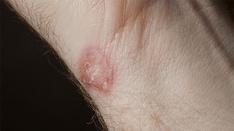
Tinea cruris manifests as a symmetric erythematous rash in the groin.

  • Large patches of erythema with central clearing are centered on the inguinal creases and extend distally down the medial aspects of the thighs and proximally to the lower abdomen and pubic area.
  • Scale is demarcated sharply at the periphery.
  • In acute infections, the rash may be moist and exudative.
  • Chronic infections typically are dry with a papular annular or arciform border and barely perceptible scale at the margin.
  • Central areas typically are hyperpigmented and contain a scattering of erythematous papules and a little scale.
  • The penis and scrotum typically are spared; however, the infection may extend to the perineum and buttocks.
  • Secondary changes of excoriation, lichenification, and impetiginization may be present as a result of pruritus.
  • Chronic infections modified by the application of topical corticosteroids are more erythematous, less scaly, and may have follicular pustules.
  • Approximately one half of patients with tinea cruris have coexisting tinea pedis.
  • Erythematous-scale plaques and erythematous-liquenificated plaques were the most frequently found clinical types in an excellent Brazilian study (Silva-Tavares, 2001). T rubrum was the prevalent dermatophyte in 90% of the cases, followed by T tonsurans (6%) and T mentagrophytes (4%).

Causes

The dermatophyte T rubrum is the most common etiologic agent for tinea cruris. In a Brazilian series, T rubrum was the prevalent dermatophyte in 90% of the cases, followed by T tonsurans (6%) and T mentagrophytes (4%) (Silva-Tavares, 2001). Other organisms, including E floccosum and T verrucosum, cause an identical clinical condition. T rubrum and E floccosum infections are more apt to become chronic and noninflammatory, while infection by T mentagrophytes often is associated with an acute inflammatory clinical presentation.


Acanthosis Nigricans
Candidiasis, Cutaneous
Contact Dermatitis, Allergic
Contact Dermatitis, Irritant
Erythrasma
Familial Benign Pemphigus (Hailey-Hailey Disease)
Folliculitis
Intertrigo
Psoriasis, Plaque
Seborrheic Dermatitis

Other Problems to be Considered

Histiocytosis X
Psoriasis inversus


Lab Studies

  • Microscopic examination of a potassium hydroxide (KOH) wet mount of scales is diagnostic. The procedure for KOH wet mount is as follows:
    • Clean the area with 70% alcohol.
    • Collect scales from the margin of the lesion; use a scalpel or the edge of a glass slide for this purpose. Cover the collected scales with a cover slip; allow a drop of KOH (10-15% wt/vol) to run under the cover slip.
    • The keratin and debris should dissolve after a few minutes. The process can be hastened by heating the slide or by the addition of a keratolytic or dimethyl sulfoxide to the KOH formulation.
    • The addition of 1 drop of lactophenol cotton blue solution to the wet mount preparation heightens the contrast and aids in the diagnosis.
    • Negative results on KOH preparation do not exclude fungal infection.
    • Scale culture is useful for fungal identification but is a more specific, albeit less sensitive, diagnostic test than KOH wet mount.
  • Growth on Mycosel or Sabouraud agar plates usually is sufficient within 3-6 weeks to allow specific fungal identification.

Procedures

  • Negative KOH wet mount examination and cultures exclude other conditions in the differential diagnosis. If tinea cruris still is suggested, repeat the tests, several times if necessary.
  • Punch biopsy is diagnostic but has low sensitivity and low specificity. Using periodic acid-Schiff stain (fungal elements appear pink) or methenamine silver stains (fungal elements appear brown or black) on the processed tissue enhances the sensitivity of the biopsy procedure.
  • Wood lamp examination may be helpful to exclude erythrasma, which reveals coral red florescence of the affected area.

Histologic Findings

Microscopic examination of hematoxylin and eosin–stained tissue sections reveals patterns of inflammation strongly suggestive of dermatophyte infection. The inflammation typically is perivascular; the epidermis exhibits spongiosis or a psoriasiform pattern of hyperplasia. Granulomatous dermatitis may accompany folliculitis.

Specific diagnostic findings include the presence of neutrophils in the cornified cell layer and the sandwich sign, in which fungal elements are sandwiched between 2 zones of differing structure within the cornified cell layer. The upper zone of the cornified cell layer has a typical basket-weave pattern of orthokeratosis, while the lower zone consists of more compact orthokeratosis and parakeratosis. The presence of spores and branching hyphae can be confirmed using periodic acid-Schiff or methenamine silver stains, but histologic examination provides no clues regarding the dermatophyte species.


Medical Care

Clinical cure of an uncomplicated infection usually can be achieved using topical antifungal agents of the imidazole or allylamine family. Consider patients unable to use topical treatments consistently or with extensive or recalcitrant infection as candidates for systemic administration of antifungal therapy.

Prevention of reinfection is an essential component of disease management. Patients with tinea cruris often have concurrent dermatophyte infections of the feet and hands.

  • Treat all active areas of infection simultaneously to prevent reinfection of the groin from other body sites.
  • Advise patients with tinea pedis to put on their socks before their undershorts to reduce the possibility of direct contamination.
  • Advise patients with tinea cruris to dry the crural folds completely after bathing and to use separate towels for drying the groin and other parts of the body.

Diet

Recommend weight loss for patients who are obese and have tinea cruris.


To achieve the best results, particularly with follicular or extensive disease, the authors often recommend a combination of topical and systemic therapy.

Drug Category: Antifungal agents

The 2 classes of antifungal medications used most commonly to treat tinea cruris are the azoles and the allylamines. Azoles inhibit the enzyme lanosterol 14-alpha-demethylase, an enzyme that converts lanosterol to ergosterol, which is an important component of the fungal cell wall. Membrane damage results in permeability problems and renders the fungus unable to reproduce. Allylamines inhibit squalene epoxidase, which is an enzyme that converts squalene to ergosterol, resulting in the accumulation of toxic levels of squalene in the cell and in cell death. Examples of both classes of antifungal agents are available for topical and systemic administration.

Drug NameTerbinafine (Lamisil)
DescriptionSynthetic allylamine derivative, which inhibits squalene epoxidase, a key enzyme in sterol biosynthesis in fungi that results in a deficiency of ergosterol, causing fungal cell death. Widely studied and effective topical or oral antifungal. Topical form available without prescription. Some clinicians reserve this drug for more widespread/resistant infections because of its broad coverage and increased cost. Studies have found this medication to be effective and well tolerated in children.
Adult DoseTopical: Apply to affected area qd for 1-4 wk
Oral: 250 mg/d for 2 wk
Pediatric DoseTopical: Administer as in adults
Oral treatment based on body weight:
12-20 kg: 62.5 mg/d for 6-12 wk
20-40 kg: 125 mg/d for 6-12 wk
>40 kg: 250 mg/d for 6-12 wk as in adults
ContraindicationsDocumented hypersensitivity
InteractionsWhen administered concurrently with cyclosporine, oral administration of terbinafine may increase cyclosporine clearance; conversely, rifampin may decrease terbinafine clearance; cimetidine may decrease terbinafine clearance
PregnancyC - Safety for use during pregnancy has not been established.
PrecautionsDiscontinue if symptoms or signs of hepatobiliary dysfunction or cholestatic hepatitis develop or if chemical irritation occurs; topical dosage form is for external use only; avoid contact with eyes

Drug NameButenafine (Mentax)
DescriptionPotent antifungal related to the allylamines. Damages fungal cell membranes causing fungal cell growth to arrest.
Available in 1% cream only.
Adult DoseApply topically to affected area qd for 2-4 wk
Pediatric Dose<12 years: Not established
>12 years: Administer as in adults
ContraindicationsDocumented hypersensitivity
InteractionsNone reported
PregnancyB - Usually safe but benefits must outweigh the risks.
PrecautionsUse topically (not in eyes, vagina, or other internal routes)

Drug NameClotrimazole (Lotrimin, Mycelex)
DescriptionOften, first-line drug used in the treatment of tinea cruris. Broad-spectrum antifungal agent that inhibits yeast growth by altering cell membrane permeability, causing death of fungal cells. Reevaluate diagnosis if no clinical improvement after 4 wk.
Available without a prescription. 1% cream, solution/spray, and lotion available.
Adult DoseGently massage into affected area and surrounding skin areas bid for 4 wk
Pediatric DoseAdminister as in adults
ContraindicationsDocumented hypersensitivity
InteractionsNone reported
PregnancyB - Usually safe but benefits must outweigh the risks.
PrecautionsNot for treatment of systemic fungal infections; avoid contact with the eyes; if irritation or sensitivity develops, discontinue use and institute appropriate therapy

Drug NameMiconazole (Micatin, Monistat-Derm)
DescriptionDamages fungal cell wall membrane by inhibiting biosynthesis of ergosterol. Membrane permeability is increased causing nutrients to leak, resulting in fungal cell death.
Available without a prescription. 2% cream, solution/spray, lotion, and powder forms available. Lotion is preferred in intertriginous areas. If cream is used, apply sparingly to avoid maceration effects.
Adult DoseCream and lotion: Cover affected areas bid for 4 wk
Powder: Spray or sprinkle liberally over affected area bid for 4 wk
Pediatric DoseAdminister as in adults
ContraindicationsDocumented hypersensitivity
InteractionsNone reported
PregnancyC - Safety for use during pregnancy has not been established.
PrecautionsDiscontinue if sensitivity or chemical irritation occurs; for external use only; avoid contact with eyes

Drug NameKetoconazole (Nizoral)
Description2% cream. Imidazole broad-spectrum antifungal agent; inhibits synthesis of ergosterol, causing cellular components to leak, resulting in fungal cell death.
Adult DoseRub gently into affected area qd or bid for 2-4 wk
Pediatric DoseAdminister as in adults
ContraindicationsDocumented hypersensitivity
InteractionsNone reported
PregnancyC - Safety for use during pregnancy has not been established.
PrecautionsDiscontinue if sensitivity or irritation develops; for external use only; avoid contact with eyes

Drug NameEconazole (Spectazole)
DescriptionEffective in cutaneous infections. Interferes with RNA and protein synthesis and metabolism. Disrupts fungal cell wall permeability, causing fungal cell death.
Adult DoseApply sparingly over affected area qd/bid for 2-4 wk
Pediatric DoseAdminister as in adults
ContraindicationsDocumented hypersensitivity
InteractionsNone reported
PregnancyC - Safety for use during pregnancy has not been established.
PrecautionsDiscontinue if sensitivity or irritation develops; for external use only; avoid contact with eyes

Drug NameNaftifine (Naftin)
DescriptionBroad-spectrum antifungal agent and synthetic allylamine derivative; may decrease the synthesis of ergosterol, which in turn inhibits fungal cell growth
Available in 1% cream or solution.
If no clinical improvement after 4 wk, reevaluate patient.
Adult DoseCream/gel: Gently massage sparingly into affected area and surrounding skin qd for 2-4 wk
Pediatric DoseAdminister as in adults
ContraindicationsDocumented hypersensitivity
InteractionsNone reported
PregnancyB - Usually safe but benefits must outweigh the risks.
PrecautionsDiscontinue use if sensitivity or chemical irritation occurs; for external use only; avoid contact with eyes

Drug NameOxiconazole (Oxistat)
DescriptionBroad-spectrum antifungal agent. Inhibits synthesis of ergosterol, causing cellular components to leak, resulting in fungal cell death.
1% cream or lotion.
Adult DoseApply topically to affected area qd for 2-4 wk
Pediatric Dose<12 years: Not established
>12 years: Administer as in adults
ContraindicationsDocumented hypersensitivity
InteractionsNone reported
PregnancyB - Usually safe but benefits must outweigh the risks.
PrecautionsFor external use only

Drug NameTolnaftate (Tinactin)
DescriptionNonprescription medication used in the treatment of tinea cruris. Available in 1% cream, solution/spray, and powder.
Adult DoseApply topically bid
Pediatric DoseAdminister as in adults
ContraindicationsDocumented hypersensitivity
InteractionsNone reported
PregnancyC - Safety for use during pregnancy has not been established.
PrecautionsFor external use only

Drug NameHaloprogin (Halotex)
DescriptionAgent for use in the treatment of tinea cruris. Prescription only. Available in 1% cream and solution/spray.
Adult DoseApply topically tid
Pediatric DoseAdminister as in adults
ContraindicationsDocumented hypersensitivity
InteractionsNone reported
PregnancyB - Usually safe but benefits must outweigh the risks.
PrecautionsFor external use only

Drug NameCiclopirox (Loprox)
DescriptionSynthetic broad-spectrum antifungal agent. Interferes with synthesis of DNA, RNA, and protein by inhibiting the transport of essential elements in fungal cells. Prescription only. Available in 1% cream and lotion.
Adult DoseMassage into affected areas bid; reevaluate diagnosis if no improvement after 4 wk
Pediatric DoseAdminister as in adults
ContraindicationsDocumented hypersensitivity
InteractionsNone reported
PregnancyB - Usually safe but benefits must outweigh the risks.
PrecautionsFor external use only; avoid contact with eyes and other internal routes

Drug NameItraconazole (Sporanox)
DescriptionFungistatic activity. Synthetic triazole antifungal agent that slows fungal cell growth by inhibiting cytochrome P450-dependent synthesis of ergosterol, a vital component of fungal cell membranes. Widely used and well-studied oral antifungal that can be used in the treatment of tinea cruris. Studies have shown that it is tolerated better than griseofulvin. Best results are noted 2-3 wk after the end of treatment.
Adult Dose200 mg PO qd for 1 wk; not to exceed 400 mg/d; increase in 100-mg increments if no improvement (administer >200 mg/d in divided doses)
Pediatric Dose5 mg/kg/d PO for 1 wk
ContraindicationsDocumented hypersensitivity; may not be taken in conjunction with cisapride, midazolam, triazolam, and lovastatin
InteractionsAvoid alcohol because disulfiramlike reactions may occur; antacids may reduce absorption; rhabdomyolysis may occur with coadministration of HMG-CoA reductase inhibitors; coadministration with cisapride may cause cardiac arrhythmia; coadministration with midazolam or triazolam may increase their plasma levels
PregnancyC - Safety for use during pregnancy has not been established.
PrecautionsAdverse effects include headache, nausea, vomiting, reversible elevation of liver enzymes, hepatotoxicity, hallucinations, hypokalemia, and edema

Drug NameSulconazole (Exelderm)
DescriptionBroad-spectrum antifungal agent. Inhibits synthesis of ergosterol, causing cellular components to leak, resulting in fungal cell death.
1% cream or solution.
Adult DoseApply topically to affected area qd for 2-4 wk
Pediatric Dose<12 years: Not established
>12 years: Administer as in adults
ContraindicationsDocumented hypersensitivity
InteractionsNone reported
PregnancyC - Safety for use during pregnancy has not been established.
PrecautionsFor external use only; avoid contact with eyes and other internal routes

Drug NameGriseofulvin (Fulvicin-U/F, Grifulvin-V)
DescriptionFungistatic activity. Fungal cell division is impaired by interfering with microtubule. Binds to keratin precursor cells. Keratin gradually is replaced by noninfected tissue, which is highly resistant to fungal invasions.
Less effective than itraconazole in treatment of tinea cruris.
Adult Dose500 mg microsize (330-375 mg ultramicrosize) PO qd or divided bid for 2-4 wk
Pediatric Dose10-25 mg/kg/d PO; 20 mg microsize/kg/d (5 mg/lb/d) PO or 7.3 mg ultramicrosize/kg/d (3.3 mg/lb/d) PO
ContraindicationsDocumented hypersensitivity; do not administer with cisapride
InteractionsAvoid alcohol because disulfiramlike reactions may occur; intense UV light exposure may result in phototoxic reactions; may decrease hypoprothrombinemic activity of warfarin; contraceptives may lose effectiveness; may reduce effects of cyclosporine; may decrease serum salicylate concentrations; barbiturates may decrease serum griseofulvin levels
PregnancyC - Safety for use during pregnancy has not been established.
PrecautionsOn prolonged therapy, observe patients closely; monitor renal, hepatic, and hematopoietic function regularly; lupuslike syndromes or exacerbation of lupus erythematosus may occur; photosensitivity may occur; therefore advise patients to take protective measures against exposure to UV light or sunlight


Further Outpatient Care

  • Repeat scraping or culture may be indicated if treatment is unsuccessful.

Deterrence/Prevention

  • Recurrence of the disease is common; therefore, it is of utmost importance to treat concurrent fungal infections and to keep the groin region dry to prevent recurrence of tinea cruris. Advise patients to dry the area after bathing, using a towel or a hair dryer.
  • Advise patients to avoid wearing tight-fitting clothing to prevent moisture build-up.
  • Advise patients who are obese to lose weight.
  • Advise patients to put on socks before undergarments to minimize the possibility of fungal transfer from the feet to the groin.
  • Antifungal powders, which have the added benefit of drying the region, may be helpful in preventing recurrence.

Complications

  • Tinea cruris can become infected secondarily by candidal or bacterial organisms. In addition, the area can become lichenified and hyperpigmented in the setting of a chronic fungal infection.
  • Mistreatment of tinea cruris with topical steroids can result in exacerbation of the disease. Although patients may note initial relief of symptoms, the infection may spread.

Prognosis

  • The prognosis of tinea cruris is excellent with appropriate diagnosis and treatment; however, recurrence is likely if the groin region is not kept dry.

Patient Education


Medical/Legal Pitfalls

  • Failure to check a patient's medication list for possible drug interactions
  • Failure to monitor blood work, which may be necessary with administration of oral antifungals


Media file 1:  Tinea cruris.
Click to see larger pictureClick to see detailView Full Size Image
Media type:  Photo

Media file 2:  Tinea cruris.
Click to see larger pictureClick to see detailView Full Size Image
Media type:  Photo

Media file 3:  Tinea cruris.
Click to see larger pictureClick to see detailView Full Size Image
Media type:  Photo

Media file 4:  Tinea cruris (hematoxylin and eosin stain).
Click to see larger pictureClick to see detailView Full Size Image
Media type:  Image

Media file 5:  Tinea cruris (periodic acid-Schiff stain, magnification X 20).
Click to see larger pictureClick to see detailView Full Size Image
Media type:  Photo

Media file 6:  Tinea cruris (Gomori methenamine-silver stain, magnification X 20).
Click to see larger pictureClick to see detailView Full Size Image
Media type:  Photo


  • Aoshima T. 1991 Epidemiological survey of dermatophytosis at Otsu Red Cross Hospital. Acta Dermatol-Kyoto. 1998;93 (3):297-301.
  • Bakos L, Brito AC, Castro LC, et al. Open clinical study of the efficacy and safety of terbinafine cream 1% in children with tinea corporis and tinea cruris. Pediatr Infect Dis J. Jun 1997;16(6):545-8. [Medline].
  • Bonifaz A, Saul A. Comparative study between terbinafine 1% emulsion-gel versus ketoconazole 2% cream in tinea cruris and tinea corporis. Eur J Dermatol. Mar 2000;10(2):107-9. [Medline].
  • Drake LA, Dinehart SM, Farmer ER, et al. Guidelines of care for superficial mycotic infections of the skin: tinea corporis, tinea cruris, tinea faciei, tinea manuum, and tinea pedis. Guidelines/Outcomes Committee. American Academy of Dermatology. J Am Acad Dermatol. Feb 1996;34(2 Pt 1):282-6. [Medline].
  • Elewski BE. Tinea cruris. In: Demis DJ, ed. Clinical Dermatology. Vol 3. Unit 17-10. Philadelphia: Lippincott Williams & Wilkins;1999:1-5.
  • Elmets CA. Management of common superficial fungal infections in patients with AIDS. J Am Acad Dermatol. Sep 1994;31(3 Pt 2):S60-3. [Medline].
  • Foster KW, Ghannoum MA, Elewski BE. Epidemiologic surveillance of cutaneous fungal infection in the United States from 1999 to 2002. J Am Acad Dermatol. May 2004;Vol. 50, Issue 5:Pages 748-752.
  • Ginter G, Rieger E. State of the art in diagnosis and treatment of cutaneous mycoses. Acta Derm Venereol (Ljubljana). 1996;5:3-13.
  • Gupta AK, Nolting S, de Prost Y, et al. The use of itraconazole to treat cutaneous fungal infections in children. Dermatology. 1999;199(3):248-52. [Medline].
  • Gupta AK, Einarson TR, Summerbell RC, Shear NH. An overview of topical antifungal therapy in dermatomycoses. A North American perspective. Drugs. May 1998;55(5):645-74. [Medline].
  • Gupta AK, Chaudhry M, Elewski B. Tinea corporis, tinea cruris, tinea nigra, and piedra. Dermatol Clin. Jul 2003;Vol. 21, Issue 3:Pages 395-400.
  • Korstanje MJ, Staats CC. Fungal infections in the Netherlands. Prevailing fungi and pattern of infection. Dermatology. 1995;190(1):39-42. [Medline].
  • Lachapelle JM, De Doncker P, Tennstedt D, et al. Itraconazole compared with griseofulvin in the treatment of tinea corporis/cruris and tinea pedis/manus: an interpretation of the clinical results of all completed double-blind studies with respect to the pharmacokinetic profile. Dermatology. 1992;184(1):45-50. [Medline].
  • Ledezma E, Lopez JC, Marin P, et al. Ajoene in the topical short-term treatment of tinea cruris and tinea corporis in humans. Randomized comparative study with terbinafine. Arzneimittelforschung. Jun 1999;49(6):544-7. [Medline].
  • Lesher JL Jr, Babel DE, Stewart DM, et al. Butenafine 1% cream in the treatment of tinea cruris: a multicenter, vehicle-controlled, double-blind trial. J Am Acad Dermatol. Feb 1997;36(2 Pt 1):S20-4. [Medline].
  • Lesher JL Jr. Oral therapy of common superficial fungal infections of the skin. J Am Acad Dermatol. Jun 1999;40(6 Pt 2):S31-4. [Medline].
  • Maleszka R. [Treatment of tinea unguium]. Przegl Dermatol. Mar-Apr 1989;76(2):97-103. [Medline].
  • Martin ES, Elewski BE. Cutaneous Fungal Infections in the Elderly. Clinics in Geriatric Medicine. February 2002;Vol. 18, Issue 1:Pages 59-75.
  • Noble SL, Forbes RC, Stamm PL. Diagnosis and management of common tinea infections. Am Fam Physician. Jul 1998;58(1):163-74, 177-8. [Medline].
  • Nowicki R. Dermatophytoses in the Gdansk area, Poland: a 12-year survey. Mycoses. Sep-Oct 1996;39(9-10):399-402. [Medline].
  • Osaka City University Butenafine Research Group. Clinical usefulness of butenafine hydrochloride on tinea superficialis and tinea unguinum. Acta Dermatol-Kyoto. 1995;90:237-46.
  • Rand S. Overview: The treatment of dermatophytosis. Journal of the American Academy of Dermatology. November 2000;Vol. 43, Issue 5 Supplement 2:Pages 104-112.
  • Reduta T, Laudanska H, Chodynicka B. Contact allergy in patients witheczema cruris and leg ulcers. Przegl Dermatol. 2001;88:157-160.
  • Rogl Butina M. Side effects of systemic antimycotic treatment. Acta Derm Venereol (Ljubljana). 1998;7:139-44.
  • Sadri MF, Farnaghi F, Danesh-Pazhooh M, Shokoohi A. The frequency of tinea pedis in patients with tinea cruris in Tehran, Iran. Mycoses. 2000;43(1-2):41-4. [Medline].
  • Shahi SK, Shukla AC, Bajaj AK, et al. Broad spectrum herbal therapy against superficial fungal infections. Skin Pharmacol Appl Skin Physiol. Jan-Feb 2000;13(1):60-4. [Medline].
  • Silva-Tavares H, Alchorne MM, Fischman O. Tinea cruris epidemiology (Sao Paulo, Brazil). Mycopathologia. 2001;149(3):147-9. [Medline].
  • Soyer HP, Cerroni L. The significance of histopathology in the diagnosis of dermatomycoses. Acta Derm Venereol (Ljubljana). 1992;1:84-7.
  • Torok L, Tiszlavicz L, Somogyi T, et al. Perianal ulcer as a leading symptom of paediatric Langerhans'' cell histiocytosis. Acta Derm Venereol. Jan-Feb 2000;80(1):49-51. [Medline].
  • Torrens JK, McWhinney PH. Parotid swelling and terbinafine. BMJ. Feb 7 1998;316(7129):440-1. [Medline].

Tinea Cruris excerpt

Article Last Updated: May 25, 2006