
Practice Essentials
Scurvy is a state of dietary deficiency of vitamin C (ascorbic acid). The human body lacks the ability to synthesize and make vitamin C and therefore depends on exogenous dietary sources to meet vitamin C needs.The body's pool of vitamin C can be depleted in 1-3 months. Ascorbic acid is prone to oxidation in vivo, and body stores are affected by environmental and lifestyle factors (eg, smoking), biological conditions (eg, inflammation, iron excess), and pathologic conditions (eg, malabsorption) that may alter its oxidation. Consumption of fruits and vegetables or diets fortified with vitamin C is essential to avoid ascorbic acid deficiency. [1, 2, 3, 4, 5, 6]
Although scurvy is uncommon, it still occurs and can affect adults and children who have chronic dietary vitamin C deficiency (see the image below).
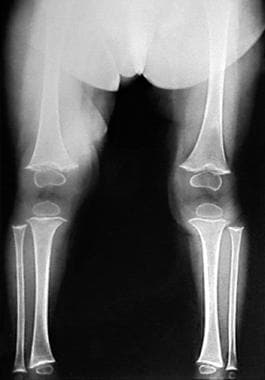 Anteroposterior radiograph of the lower extremities shows ground-glass osteopenia, a characteristic of scurvy.
Signs and symptoms include fatigue, malaise, anemia, myalgia, bone pain, easy bruising, swelling, petechiae, gingivitis, perifollicular hemorrhages, corkscrew hairs, and poor wound healing. If left untreated, the disease can progress to jaundice, neuropathy, hemolysis, seizures, and death.
Plasma ascorbic acid level may help in establishing the diagnosis, but this level tends to reflect the recent dietary intake rather than the actual tissue levels of vitamin C. Signs of scurvy can occur with low-normal serum levels of vitamin C.
The only effective therapy for scurvy is vitamin C replacement. Thus, the goal of treatment is to saturate the body rapidly with ascorbic acid; at maximum doses, body stores become saturated in a few days. With proper treatment, bleeding stops within 24 hours, and perifollicular petechiae resolve in 2 weeks.

Pathophysiology
Humans, other primates, and guinea pigs are unable to synthesize L-ascorbic acid (vitamin C); therefore, they require it in their diet. [7] The enzyme L-gluconolactone oxidase, which would usually catalyze the conversion of L-gluconogammalactone to L-ascorbic acid, is defective due to a mutation or inborn error in carbohydrate metabolism.
The total body pool of vitamin C is approximately 1500 mg. The absorbed vitamin is found ubiquitously in body tissues, with the highest concentrations in glandular tissue and the lowest concentrations in muscle and stored fat. Ascorbic acid is metabolized in the liver by oxidation and sulfation. The renal threshold for excretion by the kidney in urine is approximately 1.4 mg/100 mL plasma. Excess amounts of ascorbic acid are excreted unchanged or as metabolites. When body tissue or plasma concentrations of vitamin C are low, excretion of the vitamin is decreased. Scurvy occurs after vitamin C has been eliminated from the diet for at least 3 months and when the body pool falls below 350 mg.
One study identified a genetic polymorphism of the human plasma protein haptoglobin, Hp 2, which may be an important non-nutritional modifying factor in the pathogenesis of vitamin C deficiency. The Hp 2-2 polymers are less efficient inhibitors of hemoglobin-driven oxidative stress, leading to ascorbic acid depletion. The Hp 2-2 phenotype is present in 35% of whites and 50% of South Asians and East Asians and may help identify patients who are more prone to develop clinically significant vitamin C deficiency. [1]
Vitamin C functionality
Vitamin C is required as a redox agent, reducing metal ions in many enzymes and removing free radicals. In this capacity, it protects DNA, protein, and vessel walls from damage caused by free radicals.
Vitamin C is functionally most relevant for the triple-helix formation of collagen; a vitamin C deficiency results in impaired collagen synthesis. [8] The typical pathologic manifestations of vitamin C deficiency, including poor wound healing, are noted in collagen-containing tissues and in organs and tissues such as skin, cartilage, dentine, osteoid, and capillary blood vessels. Pathologic changes in affected children and adults are a function of the rate of growth of the affected tissues; hence, the bone changes are often observed only in infants during periods of rapid bone growth. Defective collagen synthesis leads to defective dentine formation, hemorrhaging into the gums, and loss of teeth. Hemorrhaging is a hallmark feature of scurvy and can occur in any organ. Hair follicles are one of the common sites of cutaneous bleeding.
The bony changes occur at the junction between the end of the diaphysis and growth cartilage. Osteoblasts fail to form osteoid (bone matrix), resulting in cessation of endochondral bone formation. Calcification of the growth cartilage at the end of the long bones continues, leading to the thickening of the growth plate. The typical invasion of the growth cartilage by the capillaries does not occur.
Preexisting bone becomes brittle and undergoes resorption at a normal rate, resulting in microscopic fractures of the spicules between the shaft and calcified cartilage. With these fractures, the periosteum becomes loosened, resulting in the classic subperiosteal hemorrhage at the ends of the long bones. Guidelines for the evaluation of fractures in infants and young children have been established. [9] Intra-articular hemorrhage is rare because the periosteal attachment to the growth plate is very firm.
Although the clinical manifestations are unclear, vitamin C is a cofactor in the metabolism of tyrosine and cholesterol and the synthesis of carnitine, neurotransmitters (eg, norepinephrine), peptide hormones, corticosteroids, and aldosterone.
Vitamin C also affects hematopoiesis by enhancing the absorption of iron from the small intestine by reducing dietary iron from the ferric form to the ferrous form. This may contribute to the anemia seen with vitamin C deficiency, in which the availability of intracellular iron is reduced. Vitamin C is also necessary to convert folic acid to its active metabolite, folinic acid.
Etiology
Scurvy is caused by a prolonged dietary deficiency of vitamin C. Humans obtain 90% of their intake of vitamin C from fruits and vegetables, and cooking these sources decreases vitamin C content 20-40%. The National Health Institute (NIH), the Food and Nutrition Board of the National Academy of Sciences, and the National Research Council recommend a daily dietary allowance of vitamin C of 75 mg for women and 90 mg for men.
The body's pool of vitamin C can be depleted in 1-3 months. Ascorbic acid is prone to oxidation in vivo, and body stores are affected by environmental and lifestyle factors (eg, smoking), biological conditions (eg, inflammation, iron excess), and pathologic conditions (eg, malabsorption) that may alter its oxidation.
Risk factors for vitamin C deficiency include the following [10, 11] :
-
Babies who are fed only cow's milk or plant-based beverages (almond milk) [12] during the first year of life
-
Individuals with alcohol use disorder [7] and those who conform to food fads
-
Elderly individuals who eat a tea-and-toast diet; retired people who live alone and those who eat primarily at fast food restaurants [2]
-
Economically disadvantaged persons, who tend to not purchase foods high in vitamin C (eg, green vegetables, citrus fruits) [13]
-
Refugees who are dependent on external suppliers for their food and have limited access to fresh fruits and vegetables
-
Cigarette smokers: These individuals require an increased intake of vitamin C because of lower vitamin C absorption and increased catabolism
-
Pregnant and lactating women and those with thyrotoxicosis: These individuals require an increased intake of vitamin C because of increased utilization
-
People with anorexia nervosa or anorexia from other diseases such as AIDS or cancer [14]
-
People with disease of the small intestine and malabsorptive conditions such as Crohn, Whipple, and celiac disease, as well as after gastric bypass surgery, [17] because vitamin C is absorbed in the small intestine
-
Individuals with iron overload disorders: These may lead to renal vitamin C wasting
Other factors that may lead to vitamin C deficiency include ignorance (eg, boiling of fruit juices), restrictive diets imposed by food allergies, and neurodevelopmental disabilities associated with compromised oral intake of foods. [3, 11, 18]
A case report of vitamin C deficiency in a patient on warfarin raises the possibility of risk in the vitamin K–restricted diet, since overlap exists in foods containing vitamin K and vitamin C. [19]
Studies have shown that iron is important in the absorption of vitamin C, and iron deficiency may lower the expression of the sodium-dependent vitamin C transporter in intestinal cells, leading to vitamin C deficiency. [20]
Besides poor diet and anorexia in cancer patients, another mechanism of vitamin C deficiency has been proposed. In a study of cancer patients with adequate daily intake but low serum vitamin C levels, authors proposed increased use of vitamin C possibly to scavenge lipid peroxides or vitamin C sequestration by tumor cells. [21]
Epidemiology
United States statistics
In a 2021 analysis, data from the National Health and Nutrition Examination Survey (NHANES 2017-2018) assessing the prevalence of vitamin C deficiency in the United States found a 5.9% prevalence, in which only current smoking status had an association with deficiency (gender, age, race, and obesity were accounted for). [22] When compared to data from NHANES 2005-2006, there was a mean fall in serum vitamin C level but no significant change in the prevalence of vitamin C deficiency.
NHANES 2004 showed that men aged 20-39 years and those older than 60 years had a higher prevalence of deficiency than similarly aged women. Overall, 8.2% of men and 6% of women (7.1% overall prevalence) were deficient in vitamin C, which decreased from the NHANES 1994, which showed 14% of men and 10% of women deficient. [23] NHANES 2005-2006 showed a lower prevalence of 3.6% of vitamin C deficiency among men and women older than 6 years. [4]
Patients at risk include those who have chronic malnutrition, those who are elderly or alcoholic, those who subsist on diets devoid of fresh fruits and vegetables, and men who live alone (widower scurvy). Infants and children on restrictive diets because of medical, economic, or social reasons are at risk for scurvy. Occurrence of scurvy is uncommon in those younger than 7 months, although infants fed evaporated or condensed milk formulas may develop this disease. If a mother has an adequate diet, breast milk contains sufficient vitamin C for a baby's needs. Commercially available formulas and many prepared fruit juices are fortified with vitamin C.
Other reported cases include people with monotonous or peculiar diets, including patients undergoing dialysis; those with cognitive disorders, [24, 25] psychiatric illnesses, [26] malabsorption, inflammatory bowel disease, Whipple disease, or dyspepsia (those who avoid acidic foods); and those receiving cancer chemotherapy,
International statistics
Scurvy is a problem when general malnutrition exists, as in some impoverished, underdeveloped third-world countries. Scurvy also occurs in epidemic proportions in international refugee camps and in populations that subsist mainly on cereal grains.
A study of nonhospitalized patients in Paris found that 5% of women and 12% of men were deficient [27] ; in those older than 65 years, this proportion increased to 15% of women and 20% of men.
In a 2024 systematic review of vitamin C deficiency (serum/plasma vitamin C < 11.4 μmol/L, wholeblood level < 17μmol/L, or leukocytes < 57 nmol/108 cells) in hospitalized adults in high-income countries, Golder et al found a 27.7% cumulative prevalence, which was particularly common in individuals with severe acute disease and poor nutrition. [28] Independent risk factors for vitamin C deficiency were being retired and excessive alcohol and tobacco intake.
In a 2024 retrospective (2017-2021) observational study at a single hospital in New South Wales, Australia, older people and men were more likely than women to have significant vitamin C deficiency, and individuals living in regions associated with low socioeconomic status were also more likely to have insufficient vitamin C levels (29.9%) or severe deficiency (24.5%). [29] In a separate study at various Australian centers, Gunton and Bechara found that half of those attending a foot wound clinic, 59% of those at a diabetic foot infection and vascular surgery center, and 30% of individuals at a periodontl clinic had low or deficient levels of vitamin C. [30]
In a case series from Thailand that reviewed 28 cases of scurvy in infants and children (10 mo to 9 yr and 7 mo; median age, 29 mo) hospitalized over a 7-year period (1995-2002), investigators noted that prolonged consumption of heated milk (ultra-high temperature [UHT] milk) and inadequate intake of vegetables and fruits were the risk factors for the development of scurvy. [31]
In tests of plasma vitamin C levels in the low-income/materially deprived population of the United Kingdom, carried out between 2003 and 2005 (433 men; 876 women), the Low Income Diet and Nutrition Survey found evidence of vitamin C deficiency in an estimated 25% of men and 16% of women. [13] Another 20% of the study population had vitamin C levels in the depleted range. According to the report, predictors of plasma vitamin C levels at or below the depleted range include being male, having a low dietary intake of vitamin C, not taking vitamin supplements, and smoking. [13]
A study of healthy elderly (age 70-75 yr) persons living in Padua, Italy, took a baseline and 10-year follow-up dietary history and found vitamin C deficiency rose over the 10-year span, from 3% to 6% in men and from 2.3% to 4.5% in women, which led the authors to recommend multivitamin supplementation in healthy elderly persons. [32]
Race, sex, and age differences in incidence
NHANES 2021-2023 data revealed that among American males older than 20 years, the daily intake was 78.7 mg, whereas it was 75.9 mg for females. Teenage females (age 12-19 years) had the lowest intake (65.4 mg), followed by women in their 50s (71.7%). [33] Early middle-aged males (age 30-39 years) had similar low intake of vitamin C (65.6 mg) as teenage girls, followed by those in their 50s (78.5 mg) and 20s (78.6 mg).
According to NHANES 2004, non-Hispanic white men (11.8%) (had a slightly increased risk of vitamin C deficiency compared with non-Hispanic black men (8.9%) and Mexican American men (7.7%). [23] Similarly, the non-Hispanic white women (8.2%) had higher rates of vitamin C deficiency compared with non-Hispanic black women (5%) and Mexican American women (4.2%). Mexican American males and females had a lower risk of vitamin C deficiency probably because the traditional Mexican diet is rich in chilies, tomatoes, and squashes, which are high in vitamin C. [23]
Some studies show vitamin C deficiency to be more common among men, whereas others show equal distribution among men and women.
Although scurvy can occur at any age, the incidence of scurvy peaks in children aged 6-12 months who are fed a diet deficient in citrus fruits or vegetables, as well as in elderly populations, who sometimes have "tea-and-toast" diets deficient in vitamin C. Scurvy is uncommon in the neonatal period.
Prognosis
Typically, scurvy carries an excellent prognosis if diagnosed and treated appropriately. Fatigue, body aches, and anorexia generally improve within a day with appropriate therapy. [11] Other manifestations of scurvy, including the following, tend to dramatically improve, resolving within weeks, if adequate oral vitamin C is given in daily doses to recoup body stores:
-
Spontaneous bleeding stops within 1 day
-
Muscle and bone pain abate quickly
-
Bleeding and sore gums heal in 2-3 days
-
Ecchymoses heal within 12 days
In advanced scurvy, serum bilirubin normalizes in less than 1 week, and anemia is corrected in less than a month.
There is an increased risk of frailty and cognitive impairment in vitamin C-deficient individuals. [28]
Complications
The predominant morbidity associated with this disease is a result of hemorrhage into various tissues and depends on the site of involvement. Subperiosteal hemorrhages cause pain and tenderness, resulting in pseudoparalysis. Loss of function at the site of the hemorrhage and anemia are typical sequelae of the hemorrhages observed in scurvy. Subperiosteal hemorrhage in the tibia and femur causes excruciating pain.
Laboratory data suggest that the neonatal brain is particularly susceptible to vitamin C deficiency and that this condition may adversely affect early brain development. [34]
Until minimal daily requirements of vitamin C were supplied, scurvy plagued prolonged naval voyages and military campaigns as personnel succumbed to its devastating effects. Lethargy, fatigue, and hemorrhagic manifestations of impaired collagen synthesis affecting oral, ophthalmic, musculoskeletal, cardiac, and gastrointestinal structures and functions incapacitated or killed more people than enemy action in many cases.
-
Anteroposterior radiograph of the lower extremities shows ground-glass osteopenia, a characteristic of scurvy.
-
Perifollicular hemorrhage.
-
Periodontal images of the patient taken before periodontal treatment. Extensive gingival overgrowth with severe periodontal inflammation was observed in the maxillary and mandibular arches at the first visit (July, 2008). Image from open access article Omori K, Hanayama Y, Naruishi K, Akiyama K, Maeda H, Otsuka F, Takashiba S. Gingival overgrowth caused by vitamin C deficiency associated with metabolic syndrome and severe periodontal infection: a case report. Clin Case Rep. 2014 Dec; 2(6):286-95.
-
Treatment protocol for above patient with extensive gingival overgrowth with severe periodontal inflammation in the maxillary and mandibular arches. Image from open access article Omori K, Hanayama Y, Naruishi K, Akiyama K, Maeda H, Otsuka F, Takashiba S. Gingival overgrowth caused by vitamin C deficiency associated with metabolic syndrome and severe periodontal infection: a case report. Clin Case Rep. 2014 Dec; 2(6):286-95.
-
Periodontal images taken before and after ascorbic acid supplementation. (A) Recurrent gingival overgrowth observed after the second gingivectomy and before ascorbic acid supplementation (September, 2011), (B) images taken after 9 months of ascorbic acid supplementation (June, 2012). The white arrows indicate typical sites of recurrent gingival overgrowth. Image from open access article Omori K, Hanayama Y, Naruishi K, Akiyama K, Maeda H, Otsuka F, Takashiba S. Gingival overgrowth caused by vitamin C deficiency associated with metabolic syndrome and severe periodontal infection: a case report. Clin Case Rep. 2014 Dec; 2(6):286-95.
Tables
| Age | Recommended Amount |
|---|---|
| Birth to 6 mo | 40 mg |
| Infants 7-12 mo | 50 mg |
| Children 1-3 yr | 15 mg |
| Children 4-8 yr | 25 mg |
| Children 9-13 yr | 45 mg |
| Boys 14-18 yr | 75 mg |
| Girls 14-18 yr | 65 mg |
| Men | 90 mg |
| Women | 75 mg |
| Pregnant females < 18 yr | 80 mg |
| Pregnant women 19-50 yr | 85 mg |
| Breastfeeding females < 18 yr | 115 mg |
| Breastfeeding women 19-50 yr | 120 mg |
