Practice Essentials
Atopic dermatitis (AD) is a chronic, pruritic inflammatory skin condition that typically affects the face (cheeks), neck, arms, and legs but usually spares the groin and axillary regions. AD has enormous morbidity, and the incidence and prevalence appear to be increasing. AD usually starts in early infancy, but also affects a substantial number of adults. AD is commonly associated with elevated levels of immunoglobulin E (IgE) and may be associated with other atopic ([IgE-associated) diseases (eg, acute allergic reaction to foods, asthma, urticaria, and allergic rhinitis). [1]
The finding that AD is the first disease to present in a series of allergic diseases—including food allergy, asthma, and allergic rhinitis, in order—has given rise to the “atopic march” theory, which suggests that early or severe AD and cutaneous sensitization to environmental allergens may lead to subsequent allergic disease at other epithelial barrier surfaces (eg, gastrointestinal or respiratory tract). [2, 3] This hypothesis has been supported by cross-sectional and longitudinal studies.
Guidelines on diagnosis and assessment, topical therapy, phototherapy and systemic agents, and disease flares and adjunctive therapy were published by the American Academy of Dermatology (AAD) in 2014. [4] The AAD has since published several updates to these guidelines. [5, 6, 7]
Signs and symptoms
Incessant pruritus (itchiness) is the only symptom of AD. The disease typically has an intermittent course with flares and remissions occurring, often for unexplained reasons.
Primary physical findings include the following:
-
Xerosis (dry skin)
-
Lichenification (thickening of the skin and an increase in skin markings)
-
Eczematous lesions (skin inflammation)
The eczematous changes and its morphology are seen in different locations, depending on the age of the patient (ie, infant, child, or adult).
The following is a constellation of symptoms and features commonly seen in AD:
-
Pruritus
-
Early age of onset
-
Chronic and relapsing course
-
IgE reactivity
-
Peripheral eosinophilia
-
Staphylococcus aureus superinfection
-
Personal history of asthma or hay fever or a history of atopic diseases in a first-degree relative
See Presentation for more detail.
Diagnosis
The following features should be considered in the diagnosis of AD in accordance with the American Academy of Dermatology (AAD) 2014 Guidelines [8] :
Essential features (must be present) are as follows:
-
Pruritus
-
Eczema (acute, subacute, chronic) - (1) Typical morphology and age-specific patterns (facial/neck/extensor involvement in children, flexural involvement in any age group, sparing of the groin and axillary regions); (2) chronic or relapsing history
Important features (supporting the diagnosis) are as follows:
-
Early age of onset
-
Atopy - (1) Personal and/or family history; (2) IgE reactivity
-
Xerosis
Associated features (nonspecific but suggesting the diagnosis) are as follows:
-
Atypical vascular responses (eg, facial pallor, delayed blanch response)
-
Keratosis pilaris/pityriasis alba/hyperlinear palms/ichthyosis
-
Ocular/periorbital changes
-
Other regional findings (eg, perioral changes/periauricular lesions)
-
Perifollicular accentuation/lichenification/prurigo
Conditions to be excluded are as follows:
-
Scabies
-
Seborrheic dermatitis
-
Contact dermatitis
-
Ichthyoses
-
Cutaneous T-cell lymphoma
-
Psoriasis
-
Photosensitivity dermatoses
-
Immune deficiency diseases
-
Erythroderma of other causes
Additional diagnostic considerations are as follows:
-
No reliable biomarker exists for the diagnosis of AD
-
Laboratory testing is seldom necessary, but a complete blood count (CBC) can be useful to exclude immune deficiency; an IgE level can be helpful to confirm an atopic pattern; a swab of skin can be helpful to identify S aureus superinfection
-
Allergy and radioallergosorbent testing is of little value
-
Biopsy shows an acute, subacute, or chronic spongiotic dermatitis pattern that is nonspecific but can be helpful to rule out other conditions (eg, cutaneous T-cell lymphoma)
See Workup for more detail.
Management of atopic dermatitis
Agents typically used to treat AD include the following:
-
Moisturizers - Petrolatum, Aquaphor, or newer agents such as Atopiclair and Mimyx
-
Topical steroids (current mainstay of treatment; commonly used in conjunction with moisturizers) - Hydrocortisone, triamcinolone, or betamethasone; ointment bases are generally preferred, particularly in dry environments
-
Broad immunomodulators - Tacrolimus and pimecrolimus (calcineurin inhibitors; generally considered second-line therapy)
-
Biologic therapies - Interleukin inhibitors (dupilumab [anti-IL-4Ra], tralokinumab [anti-IL-13], lebrikizumab [anti-IL-13]); Janus kinase (JAK) inhibitors (eg, abrocitinib, upadacitinib, ruxolitinib topical); topical phosphodiesterase-4 (PDE-4) inhibitors (eg, crisaborole topical, roflumilast topical)
Other treatments that have been tried include the following:
-
Ultraviolet (UV)-A, UV-B, UV-A plus UV-B, psoralen plus UV-A (PUVA), or UV-B1 (narrow-band UV-B) therapy
-
In severe disease, methotrexate, azathioprine, cyclosporine, and mycophenolate mofetil [9]
-
Probiotics
-
Antibiotics for clinical infection caused by S aureus or flares of disease [12]
-
Intranasal mupirocin ointment and diluted bleach (sodium hypochlorite) baths
Nonmedical measures that may be helpful include the following:
-
Using soft clothing (eg, cotton) next to the skin; wool products should be avoided
-
Maintaining mild temperatures, particularly at night
-
Using a humidifier (cool mist) in both winter and summer
-
Washing clothes in a mild detergent, with no bleach or fabric softener
-
Avoiding specific foods as appropriate if there is concomitant food allergy
See Treatment and Medication for more detail.

Pathophysiology
Despite advances in the understanding of the genetics of AD, the pathophysiology remains poorly defined. Two main hypotheses have been proposed regarding the development of inflammation that leads to AD. The first suggests a primary immune dysfunction resulting in IgE sensitization, allergic inflammation, and a secondary epithelial barrier disturbance. The second proposes a primary defect in the epithelial barrier leading to secondary immunologic dysregulation and resulting in inflammation.
In healthy individuals, balance exists between important subsets of T cells (eg, Th1, Th2, Th17, Th22). The primary immune dysfunction hypothesis invokes an imbalance in the T cell subsets, with Th2 cells predominating; this results in the production of type 2 cytokines such as interleukin (IL)-4, IL-5, and IL-13, causing an increase in IgE from plasma cells. Later, in persons with chronic AD, the Th1 cells have been shown to predominate. More recently, Th17 cells have been found to be elevated in patients with AD. [13] Although primarily considered a Th2 cell‒associated cytokine-mediated disease, the precise contributions of Th1 and Th17 cell responses remain to be fully defined.
In addition to T and B cells, other innate immune cells have also been implicated in the pathogenesis of AD, including eosinophils and mast cells. [14, 15] More recently, basophils and newly identified innate immune cells called group 2 innate lymphoid cells (ILC2s) have been shown to underlie the pathogenesis of AD. [16, 17, 18, 19, 20] Together, basophils and ILC2s are critical sources of the type 2 cytokines IL-4, IL-5, and IL-13. [16, 17] Further, these cells appear to be potently regulated by a family of epithelial cell‒derived cytokines directly released from damaged keratinocytes, including thymic stromal lymphopoietin (TSLP), IL-25, and IL-33. [21]
Taken together, these studies highlight a new paradigm in which, in addition to classical adaptive Th2 cells, innate type 2 immune cells play critical roles in the etiology of AD through interactions with epidermal-derived cytokines.
In terms of AD-associated itch, Th2 cells are known to be significant sources of the itch-inducing cytokine or pruritogen IL-31. [22] Clinical trial data have indicated that blocking this pathway may be a key mechanism by which atopic itch can be treated clinically. Additionally, a 2017 study found that that neuronal, rather than immune, signaling of the type 2 cytokines IL-4 and IL-13 critically regulate AD-associated itch. [23] Indeed, the dual IL-4 and IL-13 blocker, dupilumab, has emerged as a highly effective treatment for AD and was approved by the FDA in March 2017. Thus, blocking cytokine-nerve interactions with targeted biologic therapies has emerged as a useful therapeutic strategy.
The epidermal barrier dysfunction hypothesis suggests that patients develop AD as a result of skin barrier defects that allow antigens to enter, resulting in the production of inflammatory cytokines. Some authors question whether such antigens can also be absorbed from the gut (eg, from food), the lungs (eg, from house dust mites), or both. Xerosis and ichthyosis are known to be associated in many AD patients. Clinically, 37-50% of people with ichthyosis vulgaris have atopic disease, and as many as 37% of those with AD show evidence of ichthyosis. Mutations in the gene for filaggrin, a key epidermal barrier protein, cause ichthyosis vulgaris and are the strongest known genetic risk factors for AD. [24, 25]
Furthermore, filaggrin mutations are associated with early-onset AD and with airway disease in the setting of AD. [26] One mechanism by which filaggrin defects may influence inflammation is by the release of epithelial cell‒derived cytokines, including TSLP, IL-25, and IL-33, all of which are known to be upregulated in the context of AD. [27, 28, 29, 30] TSLP has been shown to be a potent promoter of basophil and ILC2 responses in the skin, whereas IL-25 and IL-33 preferentially elicit ILC2s. [16, 17, 20]
Although filaggrin is strongly linked to AD, mutations are found in only 30% of European patients, raising the question of whether other genetic variants may also be responsible for some of the findings in the pathogenesis of AD. Indeed, genetic variants of TSLP have been shown to interact with mutations in filaggrin to influence AD disease persistence in patients. [31]
In AD, transepidermal water loss is increased. Whether primary immune dysregulation causes secondary epithelial barrier breakdown or whether primary epithelial barrier breakdown causes secondary immune dysregulation that results in disease remains unknown. However, given that filaggrin is critical for epithelial integrity, it is now thought that loss of filaggrin function leads to increased transepidermal penetration of environmental allergens, increasing inflammation and sensitivity and potentially leading to the atopic march. [32]
Etiology
Genetics
A family history of AD is common. [33, 34] The strongest known genetic risk factor for AD is the presence of a loss-of-function mutation in filaggrin. Genome-wide association studies (GWAS) have identified susceptibility loci at 11q13.5 in European populations, at 5q22.1 and 1q21.3 in a Chinese Han population, and at 20q13.33 in both Chinese Han and German populations. A meta-analysis of GWAS studies in European populations identified SNPs rs479844 near OVOL1, rs2164983 near ACTL9, and rs2897442 in intron 8 of KIF3A. Many of these loci contain genes that encode proteins involved in epidermal proliferation and differentiation or inflammatory cytokines.
Infection
The skin of patients with AD is colonized by S aureus. Clinical infection with S aureus often causes a flare of AD, and S aureus has been proposed as a cause of AD by acting as a superantigen. Similarly, superinfection with herpes simplex virus can also lead to a flare of disease and a condition referred to as eczema herpeticum.
Hygiene
The hygiene hypothesis has been advanced as a cause for the increase in AD. This hypothesis attributes the rise in AD to reduced exposure to various childhood infections and bacterial endotoxins. [35, 36]
Climate
AD flares occur in extremes of climate. Heat is poorly tolerated, as is extreme cold. A dry atmosphere increases xerosis. Sun exposure improves lesions, but sweating increases pruritus. These external factors act as irritants or allergens, ultimately setting up an inflammatory cascade.
Food antigens
The role of food antigens in the pathogenesis of AD is controversial, both in the prevention of AD and by the withdrawal of foods in persons with established disease. Because of the controversy regarding the role of food in AD, most physicians do not withdraw food from the diet. Nevertheless, acute food reactions (urticaria and anaphylaxis) are commonly encountered in children with AD.
Probiotics
The role of probiotics in the diet of patients with AD remains controversial. [37]
Aeroallergens
A role for aeroallergens and house dust mites has been proposed, but this awaits further corroboration.
Tobacco
A study by Lee et al suggested a correlation between early and/or current exposure to cigarette smoking and adult onset of AD. [38] The study also determined that exposure to tobacco smoke in childhood is linked to adult onset of AD.
Epidemiology
United States and international statistics
The prevalence of AD in the United States has been reported to be 10-12% in children and 0.9% in adults. A study examining physician visits for AD in the United States from 1997 to 2004 found that a large increase in office visits for AD occurred and that Blacks and Asians visited more frequently for AD than Whites. [39] It should be noted that this increase involved all diseases under the umbrella of AD; it was not been possible to distinguish specific increases in individual disease types.
Globally, the prevalence rate of AD is rising. AD has been estimated to affect 15-30% of children and 2-10% of adults in developed countries. In China and Iran, the prevalence is approximately 2-3%. The frequency is increased in patients who emigrate to developed countries from underdeveloped countries. [40]
Age-, sex-. and race-related demographics
In 85% of cases, AD occurs in the first year of life; in 95% of cases, it occurs before age 5 years. The incidence of AD is highest in early infancy and childhood. The disease may have periods of complete remission, particularly in adolescence, and may then recur in early adult life. In the adult population, the frequency of AD is 3% or higher, but onset may be delayed until adulthood.
The male-to-female ratio for AD is 1:1.4.
AD affects persons of all races. Immigrants from developing countries who live in developed countries have a higher incidence of AD than the indigenous population, and the incidence is rapidly rising in developed countries.
Prognosis
Most patients with this skin condition improve; this can occur at any age [41] iOne third of patients develop allergic rhinitis. One third of patients develop asthma.
In a longitudinal study of 7157 children and adolescents with AD from the Pediatric Eczema Elective Registry, researchers found that symptoms of mild-to-moderate AD are likely to persist into the teen years or beyond. [42, 43, 44] Approximately two thirds of the patients were followed for at least 2 years, and the rest were followed for at least 5 years.
From the ages of 2 to 26 years, more than 80% of patients reported having continued symptoms and/or use of topical medications to control symptoms. [42, 43, 44] By age 20 years, approximately half of the patients had experienced at least one 6-month symptom- and medication-free period. Living in southern states, having a relative with an atopic illness, and exposure to pollen, wool, pets, cigarettes, fumes, some foods or drinks, and soaps/detergents were linked to persistent symptoms.
Mortality/morbidity
Incessant itch and work loss in adult life is a great financial burden. A number of studies have reported that the financial burden to families and government is similar to that of asthma, arthritis, and diabetes mellitus. In children, the disease causes an enormous psychological burden on families, as well as loss of school days. Sleep disturbance is common in AD patients, owing to the incessant pruritus. Sleep disturbances can significantly impact quality of life. Mortality due to AD is unusual.
Kaposi varicelliform eruption (eczema herpeticum) is a well-recognized complication of AD. It usually occurs with a primary herpes simplex infection, but it may also be seen with recurrent infection. Vesicular lesions usually begin in areas of eczema and spread rapidly to involve all eczematous areas and healthy skin. Lesions may become secondarily infected. Timely treatment with acyclovir ensures a relative lack of severe morbidity or mortality.
Another cause of Kaposi varicelliform eruption is vaccination with vaccinia for the prevention of smallpox, but because this is no longer mandatory, patients with AD do not develop the sequelae of eczema vaccinatum that was seen in the past. It was usually contracted by the patient from the vaccination of themselves or their close relatives. This condition had a high mortality (as high as 25%). In the current climate of threats of bioterrorism, vaccination may once again become necessary, and physicians should be aware of eczema vaccinatum in this setting.
It should be noted that chickenpox vaccine does not carry the same risk as herpes simplex and vaccinia vaccines.
Bacterial infection with S aureus or Streptococcus pyogenes is not infrequent in the setting of AD. The skin of patients with AD is colonized by S aureus; however, colonization does not necessarily imply clinical infection, and physicians should only treat patients with clinical infection. The emergence of methicillin-resistant S aureus (MRSA) may prove to be a problem in the future in these patients. Eczematous and bullous lesions on the palms and soles are often infected with beta-hemolytic group A Streptococcus.
Urticaria and acute anaphylactic reactions to food occur with increased frequency in patients with AD. The food groups most commonly implicated include peanuts, eggs, milk, soy, fish, and seafood. In studies in peanut-allergic children, the vast majority were atopic.
Latex and nickel allergies are more common in patients with AD than in the general population.
An estimated 30% of AD patients develop asthma, and 35% have nasal allergies.
Patient Education
Treatment and maintenance regimens should be frequently reinforced with patients. Patients may be advised to contact the National Eczema Association for Science and Education at 4460 Redwood Hwy, Suite 16-D, San Rafael, CA 94903-1953.
Patients should be informed that although treatment of this skin condition does not produce cure, good itch control can be achieved
Patients may be shown videos that illustrate how to apply medication and discuss the role of moisturization. A randomized controlled trial by Armstrong et al demonstrated improved patient education and clinical outcome in patients who watched a video on AD as compared with patients who received a pamphlet. [45] The study emphasized the importance of lifestyle changes and daily care in the successful treatment of AD.
-
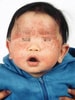
Atopic dermatitis. Typical atopic dermatitis on the face of an infant.
-
Atopic dermatitis. Flexural involvement in childhood atopic dermatitis.
-
Atopic dermatitis. Dirty neck sign in chronic atopic dermatitis.
-
Atopic dermatitis. Irritation around mouth of an infant with atopic dermatitis.
Tables

What would you like to print?
- Nemolizumab Effective in Atopic Dermatitis
- Atopic Dermatitis Highlights From AAD 2025
- Lebrikizumab Compared With Dupilumab in Atopic Dermatitis
-
 What's New in Psoriasis? Dermasphere Podcasters Weigh In
-
American Academy of Dermatology (AAD) 2025 Annual Meeting
-
More Than Hives: Discussing Chronic Spontaneous Urticaria