| Patient Education |
|
Click here for patient education.
|
|
You are in: eMedicine Specialties >
Emergency Medicine > INFECTIOUS DISEASES
Diphtheria
Article Last Updated: Sep 5, 2006
AUTHOR AND EDITOR INFORMATION
Section 1 of 10
Author: Elzbieta Pilat, MD, Staff Physician, Department of Emergency Medicine, State University of New York Downstate, Kings County Hospital Center
Elzbieta Pilat is a member of the following medical societies: American College of Physicians, American College of Physicians, American Medical Association, Emergency Medicine Residents Association, and Society for Academic Emergency Medicine
Coauthor(s):
Lorenzo Paladino, MD, Assistant Professor, Department of Emergency Medicine, SUNY Health Science Center at Brooklyn; Consulting Staff, Assistant Director of Research, Department of Emergency Medicine, Kings County Hospital Center;
Malini K Singh, MD, Staff Physician, Department of Emergency Medicine, Jacobi/Montefiore Medical Center
Editors: Steven A Conrad, MD, PhD, Chief, Department of Emergency Medicine; Chief, Multidisciplinary Critical Care Service, Professor, Department of Emergency and Internal Medicine, Louisiana State University Health Sciences Center; Francisco Talavera, PharmD, PhD, Senior Pharmacy Editor, eMedicine; Barry J Sheridan, DO, Chief, Department of Emergency Medical Services, Brooke Army Medical Center; John D Halamka, MD, MS, Associate Professor of Medicine, Harvard Medical School, Beth Israel Deaconess Medical Center; Chief Information Officer, CareGroup Healthcare System and Harvard Medical School; Attending Physician, Division of Emergency Medicine, Beth Israel Deaconess Medical Center; Jonathan Adler, MD, Attending Physician, Department of Emergency Medicine, Massachusetts General Hospital; Division of Emergency Medicine, Harvard Medical School
Author and Editor Disclosure
Synonyms and related keywords:
diphtheria, Corynebacterium diphtheriae, C diphtheriae, Corynebacterium ulcerans, mitis, intermedius, gravis, diphtheria vaccine, diphtheria toxoid
Background
Diphtheria is caused by an aerobic, nonencapsulated, nonmotile, gram-positive bacillus Corynebacterium diphtheriae. The disease has been described in ancient records by Hippocrates as far back as the 5th century BC. Numerous epidemics swept through Europe over the ages. In the 18th century, diphtheria plagued the American colonies claiming a large number of victims. The number of deaths due to C diphtheriae did not fall dramatically until the 1940s with the introduction of diphtheria vaccine.
The bacterium exists as an exotoxin producing strain (tox+) and a nontoxigenic form (tox-). Three strains of C diphtheriae exist: gravis, intermedius, and mitis; each differs in the severity of disease they produce in humans. C diphtheriae typically provokes a localized mucosal infection of the upper respiratory tract; however, occasionally, it is responsible for a severe systemic disease mediated by the production of an exotoxin. Infection with the diphtheria bacillus may result in an active infection or a carrier state. Asymptomatic carriers may be reservoirs for active infections.
Corynebacterium ulcerans causes cutaneous diphtheria, a mild disease localized to the skin. This article discusses primarily the effects of diphtheria on the upper respiratory tract.
Pathophysiology
Humans comprise the only reservoir of infection. Carriers are usually asymptomatic. C diphtheriae spreads via respiratory droplets, contact with nasopharyngeal secretions, or wound exudates in cases of cutaneous disease. Rarely one may contract diphtheria via fomites. Overcrowding, poor health, and substandard living conditions facilitate the spread of the disease.
C diphtheriae is not a particularly invasive organism. It occupies the superficial layers of the respiratory tract and the skin causing local tissue inflammatory reaction followed by tissue necrosis. The occurrence of systemic disease depends on the elaboration of a potent exotoxin by tox+ strains. The diphtheria toxin is a 62,000-dalton polypeptide composed of 2 joined segments (A and B). The B fragment binds to a receptor on a susceptible cell and undergoes proteolytic cleavage, thus facilitating the entry of segment A, which inactivates RNA translocase. The process ultimately functions to inhibit protein synthesis in mammalian cells. The locally produced toxin is then carried via lymphatics and blood vessels to susceptible tissues. It exhibits a predilection for the myocardium and the cells of the nervous system.
Production of toxin by C diphtheriae is dependent on the presence of tox+ gene carried by a lysogenic beta-phage. Tox- strains can acquire toxigenicity following an infection with a lysogenic beta-phage. The transformation has been observed in vitro and in vivo.
Cases of a nontoxigenic strain of C diphtheriae causing invasive disease have been documented. In 2004, an otherwise healthy 38-year-old man in Poland developed septicemia and endocarditis following an infection with such a strain. The mechanism for the infection has not been elucidated as of yet.
Classically, diphtheria presents as a respiratory tract infection within the first few days of the onset of illness. It is characterized by the formation of a dense, gray pseudomembrane composed of a mixture of dead cells, fibrin, RBCs, WBCs, and organisms. Removal of the membrane reveals a bleeding, edematous mucosa. The distribution of the membrane varies from local (eg, tonsillar, pharyngeal) to widely covering the entire tracheobronchial tree. A combination of cervical adenopathy and swollen mucosa imparts a "bull's neck" appearance to the victims. The most frequent cause of death is suffocation following aspiration of the pseudomembrane.
Cutaneous diphtheria is a disease seen mostly, but not exclusively, in tropical regions. It is characterized by indolent, nonhealing ulcers covered with a gray membrane. The ulcers are often co-infected with Staphylococcus aureus and group A streptococci. This form of the disease is seen with increasing frequency in poor inner city dwellers and alcoholics. Bacteria from cutaneous lesions have been found to cause pharyngeal infections and thus serve as a reservoir for infection.
Frequency
United States
In the prevaccine era, multiple cases affecting primarily children were seen in the winter months. The introduction of diphtheria toxoid in the 1940s dramatically reduced the incidence of this disease. Currently, only sporadic cases occur mainly if the Native American population.
The 1920s saw 140-150 cases per 100,000 population, with 206,000 cases reported in 1921 alone.
In 1945, 19,000 cases were reported.
From 1970-1979, 196 cases were reported annually, and starting in 1980, cutaneous cases due to nontoxigenic strains were no longer included in the reporting.
From 1980-2004, 57 cases of diphtheria were reported, but only 5 since 2000. The vast majority of these cases occurred in individuals lacking immunizations entirely or in those who were incompletely immunized.
In 2001, 2 probable cases of diphtheria (pharyngeal) were reported in Michigan and Montana. None of them were travel related.
In October 2003, a case of respiratory diphtheria was reported in Pennsylvania in a male traveling to Haiti. The patient was unvaccinated and did not recover from the disease.
Currently, diphtheria occurs sporadically mostly among the Native American population, homeless people, and alcoholics.
International
Diphtheria continues to occur in other parts of the world.
From 1990-1995, a diphtheria epidemic emerged in the Russian Federation rapidly spreading to involve all Newly Independent States (NIS) and Baltic States. This was the largest epidemic recorded since wide implementation of the vaccine program. Between 1990 and 1998 an excess of 157,000 cases were reported in those countries, accounting for more than 80% of cases reported worldwide. The vast majority of cases occurred among the adult population.
From 1993-2003, a decade long epidemic in Latvia resulted in 1359 reported cases of diphtheria with 101 deaths. The incidence fell from 3.9 cases per 100,000 cases in 2001 to 1.12 cases per 100,000 population in 2003. Most cases were registered in unvaccinated adults.
From 1995-2002, 17 cases of cutaneous diphtheria due to toxigenic strains were reported in the United Kingdom.
In 2004, there was a case report in Poland of diphtheria with systemic involvement due to nontoxigenic strain of C diphtheriae.
In the 1980s and 1990s, outbreaks were reported in both industrialized (Germany, Sweden) and developing countries (China, Ecuador, Sudan, Thailand, Nepal).
Mortality/Morbidity
The most widely quoted diphtheria mortality rate is 5-10%. It may reach higher than 20% in children younger than 5 years. Disproportionately high rates of death were observed in individuals older than 40 years during an epidemic in the States of the former Soviet Union. Infection with the gravis strain is associated with higher mortality rates.
In the 1920s in the United States, 15,000 deaths were reported annually.
In the 1990-1998 NIS epidemic, 5,000 deaths were reported.
Mortality rates have not changed over the past few decades; most deaths occur on days 3-4 secondary to asphyxia with the membrane or myocarditis.
Mortality rates of 30-40% have been reported for bacteremic disease.
Race
No racial predilection for the disease is apparent.
Sex
No significant differences exist between the incidence of disease in males and females. In certain regions of the world, however, women may have lower immunization rates than males. Interestingly, women accounted for the majority of deaths in the epidemic in the Newly Independent States.
Age
Historically, diphtheria was primarily a disease of childhood affecting populations younger than 12 years. Infants became susceptible to the disease at age 6-12 months after their transplacentally derived immunity waned. Since the advent of diphtheria toxoid, cases of pediatric disease have declined dramatically. Recently, however, diphtheria has shifted into the adult population. This trend is largely due to incomplete immunization status or a total lack of it.
History
- Onset of symptoms of respiratory diphtheria typically follows an incubation period of 2-5 days (range, 1-10 d). Symptoms are frequently general and nonspecific, often resembling viral upper respiratory infection (URI). Patients may present with the following:
- Low-grade fever (rarely >103°F) (50-85%) and chills
- Malaise, weakness, prostration
- Sore throat (85-90%)
- Headache
- Cervical lymphadenopathy and membrane formation (about 50%)
- Serosanguineous or seropurulent nasal discharge, white nasal membrane
- Hoarseness, dysphagia (26-40%)
- Dyspnea, respiratory stridor, wheezing, cough
- Respiratory diphtheria may quickly progress to respiratory failure due to aspiration of pseudomembrane into the tracheobronchial tree.
- Cutaneous diphtheria often develops at a site of previous trauma or a primary dermatologic disease. It follows an indolent course, typically lasting weeks to months. Occasionally, it may cause respiratory diphtheria.
Physical
- Cutaneous diphtheria begins as a painful lesion resembling an erythematous pustule, which breaks down to form an ulcer covered with a gray membrane.
- Pharyngeal diphtheria
- Patients may present with general symptoms of fever, halitosis, tachycardia, and anxiety.
- Tonsils and pharynx: Pharyngeal erythema and edema, thick, gray, leathery membrane variably covers the tonsils, soft palate, oropharynx, nasopharynx, and uvula. Attempts at scraping the pseudomembrane causes bleeding of the underlying mucosa.
- Neck: Extensive anterior and submandibular cervical lymphadenopathy imparts a bull's neck appearance. The patient may hold his or her head in extension. It can be associated with dysphonia.
- Respiratory embarrassment may manifest itself as stridor, wheezing, cyanosis, accessory muscle use, and retractions.
- Cardiac toxicity typically occurs after 1-2 weeks of illness following improvement in the pharyngeal phase of the disease. It may manifest as follows:
- Myocarditis - Seen in as many as 60% of patients (especially if previously unimmunized); can present acutely with CHF, circulatory collapse, or in a more subtle way with progressive dyspnea, diminished heart sounds, cardiac dilatation, and weakness
- Atrioventricular blocks, ST-T wave changes, and various dysrhythmias
- Endocarditis
- Neurologic toxicity is proportional to the severity of the pharyngeal infection. Most patients with severe disease develop neuropathy. Deficits include the following:
- Regurgitation of swallowed fluids due to paralysis of the soft palate and posterior pharyngeal wall
- Oculomotor and ciliary paralysis accounting for cranial neuropathies
- Dysfunction of facial, pharyngeal, or laryngeal nerves
- Peripheral neuritis develops anywhere from 10 days to 3 months after the onset of pharyngeal disease. It manifests itself initially as a motor defect of the proximal muscle groups in the extremities extending distally. Various degrees of dysfunction exist, ranging from diminished DTRs to paralysis.
- Occasionally, a glove-and-stocking neuropathy pattern can be observed.
- All nerve damage due to diphtheria eventually resolves.
- Other systems involvement: Diphtheria is occasionally seen in the female genital tract, conjunctivae, or ear.
- Invasive disease may manifest as endocarditis, mycotic aneurysm, septic arthritis, or osteomyelitis. Nontoxigenic C diphtheriae has been implicated in all of the cases.
Causes
Increased risk for diphtheria infection includes the following factors:
- Incomplete or absent immunization, especially true for the adult population, but also for the pediatric population in underdeveloped countries. In some cases, immunity does not prevent infection but lessens the severity of the disease.
- Low herd immunity
- Travel to endemic areas or regions with current epidemics
- Immunocompromised state - Due to pharmacologic immune suppression, disease states including HIV, or relative compromise such as from diabetes or alcoholism
- Low socioeconomic status - Native American population is at an increased risk.
- Large-scale population movements - Implicated in the spread of the epidemic in the Newly Independent States of the former Soviet Union
- Poor healthcare care system infrastructure
- Overcrowding - Homeless shelters, jails
Angioedema
Endocarditis
Epiglottitis, Adult
Mononucleosis
Myocarditis
Pediatrics, Epiglottitis
Pediatrics, Pharyngitis
Peritonsillar Abscess
Pharyngitis
Rheumatic Fever
Shock, Septic
Other Problems to be Considered
Tonsillitis
Peripheral nerve palsies
Vincent angina
Septic arthritis
Lab Studies
- Aim to isolate C diphtheriae in culture media and through toxin production testing.
- Bacteriologic testing
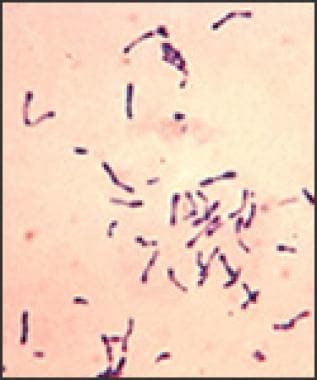
- Gram stain shows club-shaped, nonencapsulated, nonmotile bacilli found in clusters reminiscent of Chinese characters.
- Immunofluorescent staining of 4-hour cultures or methylene blue stained specimen may sometimes allow for a speedy identification.
- Cultures: Inoculation of tellurite or Loeffler media with swabs taken from the nose, pseudomembrane, tonsillar crypts, any ulcerations, or discolorations. Identification is accomplished through observation of colonial morphology, microscopic appearance, and fermentation reactions. Any diphtheria bacilli isolated must be tested for toxin production.
- Obtain throat and pharyngeal swabs from all close contacts
- Toxigenicity testing is aimed to determine the presence of toxin production.
- Elek test detects the development of an immunoprecipitin band on a filter paper impregnated with antitoxin and then laid over an agar culture of the organism being tested.
- Polymerase chain reaction (PCR) assays for detection of DNA sequence encoding the A subunit of tox+ strain are both rapid and sensitive.
- Other laboratory studies
- CBC may show moderate leukocytosis.
- Urinalysis (UA) may demonstrate transient proteinuria (both tests are nonspecific).
- Serum antibodies to diphtheria toxin prior to administration of antitoxin. Low levels cannot exclude the possibility of the disease; high level may protect against severe illness (concentrations of 0.1 to 0.01 IU are thought to confer protection).
- Serum troponin I levels seem to correlate with the severity of myocarditis.
Imaging Studies
- Chest radiograph and soft tissue neck radiograph may show prevertebral soft tissue swelling, enlarged epiglottis, and narrowing of the subglottic region.
- Echocardiography may demonstrate valvular vegetations.
Other Tests
- ECG may show ST-T wave changes, variable heart block, and dysrhythmia.
Procedures
- Endotracheal intubation
- Surgical airway - Cricothyrotomy or tracheostomy
- Electrical pacing for high-grade conduction disturbances
Prehospital Care
Careful assessment of airway patency and cardiovascular stability. Patients should be transported to the nearest hospital.
Emergency Department Care
Treatment should be initiated even before confirmatory tests are completed because of the high potential for mortality and morbidity.
- Isolate all cases promptly and use universal precautions to limit the number of possible contacts.
- Secure definite airway for patients with impending respiratory compromise or the presence of laryngeal membrane. Early airway management allows access for mechanical removal of tracheobronchial membranes and prevents the risk of sudden asphyxia through aspiration.
- Maintain close monitoring of cardiac activity for early detection of rhythm abnormalities. Initiate electrical pacing for clinically significant conduction disturbance and provide pharmacologic intervention for arrhythmias or for heart failure.
- Two large-bore IVs for patients with toxic appearance; invasive monitoring and aggressive resuscitation for patients with septicemia
- Prompt antibiotic coverage (penicillin or erythromycin) for eradication of organisms thus limiting the amount of toxin production. Antibiotics hasten recovery and prevent the spread of the disease to other individuals.
- Neutralize the toxin as soon as diphtheria is suspected. Diphtheria antitoxin is a horse-derived hyperimmune antiserum that neutralizes circulating toxin prior to its entry into the cells. It prevents the progression of symptoms. The dose and route of administration (IV vs IM) are dependent on the severity of the disease.
- Diphtheria disease does not confer immunity; thus, initiation or completion of immunization with diphtheria toxoid is necessary.
- Obtain throat and nasal swabs from persons in close contact with the suspected diphtheria victim; administer age-appropriate diphtheria booster. Initiate antibiotic therapy with benzathine penicillin (one time dose) or oral erythromycin for 7-10 days. Erythromycin has been shown to be slightly superior in the eradication of the carrier state but does not guarantee it. Therefore, throat cultures should be repeated in 2 weeks.
Consultations
- Centers for Disease Control and Prevention (CDC) to report the case and secure help in obtaining antitoxin
- Infectious disease service and neurology
- Cardiology for assistance in managing cardiac complications
- Critical care service for admission into the ICU
- Surgery for assistance in obtaining a surgical airway if needed in a nonemergent fashion.
Patients with active disease as well as all close contacts have to be treated with an appropriate antibiotic regimen. In addition to antimicrobial agents, all active cases of infection with a toxigenic strain must receive antitoxin. This horse-derived serum is active against any unbound toxin. The cornerstone of prevention is immunization against diphtheria. All patients should complete their age-appropriate primary immunizations and boosters as necessary. Current immunization schedules can be obtained from the CDC Web site.
Drug Category: Antibiotics
Erythromycin and penicillin are both recommended for the treatment of diphtheria. Some studies suggest that erythromycin may be better at eradication of the carrier state. Penicillin is recommended in household contacts who may not comply with the duration of erythromycin treatment. The treatment of endocarditis requires the addition of an aminoglycoside.
| Drug Name | Erythromycin (E-Mycin, Ery-Tab) |
| Description | Inhibits bacterial growth, possibly by blocking dissociation of peptidyl tRNA from ribosomes causing RNA-dependent protein synthesis to arrest. For treatment of staphylococcal and streptococcal infections. Age, weight, and severity of infection determine proper dosage in children. When bid dosing is desired, one half the total daily dose may be taken q12h. Double the dose for more severe infections. Has the added advantage of being a good anti-inflammatory agent by inhibiting migration of polymorphonuclear leukocytes. |
| Adult Dose | 2 g/d IV divided bid or 2 g/d PO divided qid for 14 d |
| Pediatric Dose | 20-50 mg/kg/d IV divided bid; not to exceed 2 g/d; alternately, 40-50 mg/kg/d PO divided qid for 14 d |
| Contraindications | Documented hypersensitivity; caution in myasthenia gravis, impaired liver function, QT prolongation, cardiomyopathy, bradycardia |
| Interactions | Coadministration may increase toxicity of theophylline, digoxin, carbamazepine, and cyclosporine; may potentiate anticoagulant effects of warfarin; coadministration with lovastatin and simvastatin increases risk of rhabdomyolysis; decreases metabolism of repaglinide, thus increasing serum levels and effects |
| Pregnancy | B - Usually safe but benefits must outweigh the risks.
|
| Precautions | Caution in liver disease; estolate formulation may cause cholestatic jaundice; GI adverse effects are common (give doses pc); discontinue use if nausea, vomiting, malaise, abdominal colic, or fever occur |
| Drug Name | Penicillin G procaine |
| Description | Interferes with synthesis of cell wall mucopeptide during active multiplication, resulting in bactericidal activity against susceptible microorganisms. Long-acting parenteral penicillin (IM only) to treat moderately severe infections caused by penicillin G–sensitive microorganisms. |
| Adult Dose | 600,000 U/d IM divided bid for 10 d |
| Pediatric Dose | Treatment: 25,000-50,000 U/kg/d IM divided bid for 14 d Cutaneous diphtheria: 7-10 d has been administered |
| Contraindications | Documented hypersensitivity, caution if cephalosporin allergy |
| Interactions | Increases risk of bleeding when administered concurrently with warfarin; ethacrynic acid, aspirin, indomethacin, and furosemide may compete with penicillin G for renal tubular secretion increasing penicillin serum concentrations |
| Pregnancy | B - Usually safe but benefits must outweigh the risks.
|
| Precautions | Never use IV route to administer penicillin G procaine; administer >10 d to eliminate organism and prevent complications such as endocarditis and rheumatic fever; perform cultures after treatment to confirm streptococci eradication Caution in impaired renal function |
Drug Category: Antitoxins
Derived from a horse serum neutralizes only unbound toxin. It is imperative to administer as soon as diphtheria is suspected. Diphtheria antitoxin was first used in the United States in 1891.
| Drug Name | Diphtheria antitoxin |
| Description | Neutralizes toxin before it enters cells. Dose given depends on site of infection and length of time patient is symptomatic. In United States, DAT available from CDC. Contact diphtheria duty officer at 404-639-8255 from 8 am to 4:30 pm (EST) or at 404-639-2889 all other times. Report all suspected cases of diphtheria to local and state health departments. |
| Adult Dose | 20,000-40,000 U IV over 60 min for laryngeal or pharyngeal disease of <48 h duration 40,000-60,000 U for nasopharyngeal lesions 80,000-120,000 U for extensive disease with duration of 3 or more days or edema of the neck (bull neck) Administer IM for less severe disease Test all patients with a 1:10-1:100 dilution of DAT SC; if an immediate reaction occurs, administer epinephrine; hypersensitivity to horse serum not contraindication to antitoxin injection; desensitize subjects with increasing doses of diluted DAT |
| Pediatric Dose | Administer as in adults |
| Contraindications | Documented hypersensitivity |
| Interactions | None reported |
| Pregnancy | C - Safety for use during pregnancy has not been established.
|
| Precautions | Approximately 10% of patients may develop serum sickness; hypersensitivity reactions can include anaphylaxis, requiring epinephrine treatment |
Further Inpatient Care
- Provide supportive care, continuation of antibiotic treatment, antipyretics for fever.
- Closely observe for development of primary or secondary bacterial pneumonia.
- Perform serial ECGs to detect cardiac abnormalities.
- Provide physical therapy for patients with neurologic dysfunction.
- Patients with endocarditis may require valve replacement.
Further Outpatient Care
- Complete age-appropriate immunization schedule.
- Treat all household and other close contacts with antibiotics (penicillin IM if unable to ensure full compliance with oral erythromycin regimen).
In/Out Patient Meds
- Bronchodilators (may be beneficial for patients mild respiratory symptoms)
- Antipyretics
- Antibiotics - Penicillin, erythromycin
Transfer
- Intensive care unit admission is recommended for patients with impending respiratory compromise.
Deterrence/Prevention
- Full immunization with diphtheria toxoid, booster shots every 10 years
- Avoid travel to areas with ongoing epidemics
- Lifestyle changes - Treatment of alcohol and drug dependence
- Improvement of socioeconomic status of populations at risk
Complications
- Respiratory failure due to pseudomembrane formation or aspiration, tissue edema, and necrosis
- Cardiac - Myocarditis, cardiac dilatation and failure, mycotic aneurysm, endocarditis
- Rhythm disturbances - Heart block including AV dissociation and dysrhythmias
- Secondary bacterial pneumonia
- Cranial nerve dysfunction and peripheral neuropathy, total paralysis
- Septicemia
- Septic arthritis, osteomyelitis
- Metastasis of infection to distant sites (spleen, CNS)
- Death
Prognosis
- Cardiac involvement is associated with a very a poor prognosis, particularly AV and left bundle-branch blocks (mortality rate 60-90%).
- Bacteremic disease carries a mortality rate of 30-40%.
- High mortality rate is seen with invasive disease.
- High mortality rates are seen in individuals younger than 5 years and older than 40 years.
Patient Education
- Widespread awareness of the need for universal immunization
- Stress the importance of seeking medical attention in all cases of contact with suspected diphtheria cases
Medical/Legal Pitfalls
- Failure to recognize diphtheria and to prompt treatment of those infected and their close contacts
- Failure to recognize cardiac dysrhythmias
- Failure to secure airway in the face of impending respiratory failure from obstructive pseudomembrane
- Failure to admit patients to appropriate hospital setting
- CDC. Recommended childhood immunization schedule--United States, January 1995. Advisory Committee on Immunization Practices. American Academy of Pediatrics. American Academy of Family Physicians. National Immunization Program, CDC. MMWR Morb Mortal Wkly Rep. Jan 6 1995;43(51-52):959-60. [Medline].
- CDC. Summary of notifiable diseases--United States, 2001. MMWR Morb Mortal Wkly Rep. May 2 2003;50(53):i-xxiv, 1-108. [Medline].
- Chen RT, Broome CV, Weinstein RA. Diphtheria in the United States, 1971-81. Am J Public Health. Dec 1985;75(12):1393-7. [Medline].
- de Benoist AC, White JM, Efstratiou A, et al. Imported cutaneous diphtheria, United Kingdom. Emerg Infect Dis. Mar 2004;10(3):511-3. [Medline].
- Dittmann S, Wharton M, Vitek C. Successful control of epidemic diphtheria in the states of the Former Union of Soviet Socialist Republics: lessons learned. J Infect Dis. Feb 2000;181 Suppl 1:S10-22. [Medline].
- Farizo KM, Strebel PM, Chen RT, et al. Fatal respiratory disease due to Corynebacterium diphtheria: Case review of guidelines for management, investigation, and control. Clin Infect Dis. 1993;16:59-68. [Medline].
- Gruner E, Opravil M, Altwegg M. Nontoxigenic Corynebacterium diphtheriae isolated from intravenous drug users. Clin Infect Dis. Jan 1994;18(1):94-6. [Medline].
- Harnisch JP, Tronca E, Nolan CM, et al. Diphtheria among alcoholic urban adults. Ann Intern Med. 1989;111:71-82. [Medline].
- Havaldar PV, Sankpal MN, Doddannavar RP. Diphtheritic myocarditis: clinical and laboratory parameters of prognosis and fatal outcome. Ann Trop Paediatr. Sep 2000;20(3):209-15. [Medline].
- Holmes RK. Diphtheria, other corynebacterial infections and Anthrax. Principles of Internal Medicine. 2001;1:909-912.
- Jayashree M, Shruthi N, Singhi S. Predictors of outcome in patients with diphtheria receiving intensive care. Indian Pediatr. Feb 2006;43(2):155-60. [Medline].
- Lakkireddy DR, Kondur AK, Chediak EJ. Cardiac troponin I release in non-ischemic reversible myocardial injury from acute diphtheric myocarditis. Int J Cardiol. Feb 15 2005;98(2):351-4. [Medline].
- Lumio JT, Groundstroem KW, Melnick OB. Electrocardiographic abnormalities in patients with diphtheria: a prospective study. Am J Med. Jan 15 2004;116(2):78-83.
- Lurie P, Stafford H, Tran P. Fatal respiratory diphtheria in a U.S. traveler to Haiti--Pennsylvania, 2003. MMWR Morb Mortal Wkly Rep. Jan 9 2004;52(53):1285-6. [Medline].
- Mandell, Bennett, Dolin. Corynebacterium diphtheriae. Principles and Practice of Infectious Diseases. 2005;2457-2464.
- Patel UV, Patel BH, Bhavsar BS. A Retrospective Study of Diphtheria Cases Rajkot,Gujarat. Indian Journal of Community Medicine. 2004;XXIX, No.4..
- Prasad KC, Karthik S, Prasad SC. A comprehensive study on lesions of the pinna. Am J Otolaryngol. Jan-Feb 2005;26(1):1-6. [Medline].
- Tiley SM, Kociuba KR, Heron LG, et al. Infective endocarditis due to nontoxigenic Corynebacterium diphtheriae: Report of seven cases and review. Clin Infect Dis. 1993;16:271-275. [Medline].
- Vitek CR, Wharton M. Diphtheria in the former Soviet Union: reemergence of a pandemic disease. Emerg Infect Dis. Oct-Dec 1998;4(4):539-50. [Medline].
- Welty T, La Fromboise C, Dixon J. Toxigenic Corynebacterium diphtheriae--Northern Plains Indian Community, August-October 1996. MMWR Morb Mortal Wkly Rep. Jun 6 1997;46(22):506-10. [Medline].
- Zasada AA, Zaleska M, Podlasin RB. The first case of septicemia due to nontoxigenic Corynebacterium diphtheriae in Poland: case report. Ann Clin Microbiol Antimicrob. 2005;4:8. [Medline].
Diphtheria excerpt Article Last Updated: Sep 5, 2006
|