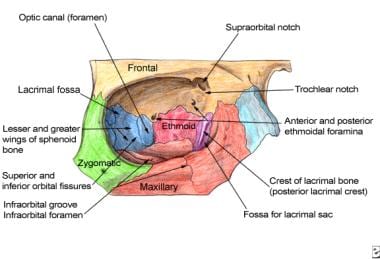
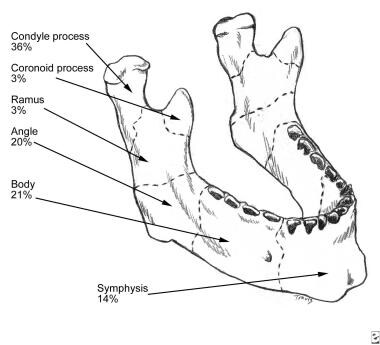
You are in: eMedicine Specialties > Emergency Medicine > TRAUMA AND ORTHOPEDICS Fracture, FaceArticle Last Updated: Mar 6, 2008AUTHOR AND EDITOR INFORMATIONAuthor: Thomas Widell, MD, Vice Chairman, Assistant Professor, Department of Emergency Medicine, Rosalind Franklin School of Medicine/The Chicago Medical School, North Chicago, Illinois; Associate Residency Director, University of Chicago Emergency Medicine Program, Chicago, Illinois; Program Director Emergency Medical Education, Attending Physician, Mount Sinai Hospital Medical Center, Chicago, Illinois Editors: Francis Counselman, MD, Program Director, Chair, Professor, Department of Emergency Medicine, Eastern Virginia Medical School; Francisco Talavera, PharmD, PhD, Senior Pharmacy Editor, eMedicine; Tom Scaletta, MD, Past-President, American Academy of Emergency Medicine; Chairperson, Department of Emergency Medicine, Edward Hospital; Assistant Professor of Emergency Medicine, Rush Medical College and Cook County Hospital; John D Halamka, MD, MS, Associate Professor of Medicine, Harvard Medical School, Beth Israel Deaconess Medical Center; Chief Information Officer, CareGroup Healthcare System and Harvard Medical School; Attending Physician, Division of Emergency Medicine, Beth Israel Deaconess Medical Center; Steven C Dronen, MD, FAAEM, Director of Emergency Services, Director of Chest Pain Center, Department of Emergency Medicine, Ft Sanders Sevier Medical Center Author and Editor Disclosure Synonyms and related keywords: face fracture, facial fracture, facial injury, alveolar fracture, Le Fort fracture, maxillofacial fracture, nasal fracture, zygoma fracture, simple nasal fracture, zygomatic arch fractures, zygomaticomaxillary fracture, tripod fractures, nasoethmoidal fractures, midface fracture INTRODUCTIONBackgroundIn approximately 400 BC, Hippocrates provided the first description of a variety of facial injuries. Rene Le Fort used cadaver studies in 1900 to provide detailed descriptions of 3 basic types of facial fracture. Endotracheal anesthesia and radiography developed during the First World War led to better understanding and treatment of facial fractures. During the Second World War, a multidisciplinary approach to treatment of facial fractures continued to improve the outcomes of severely injured soldiers. The more recent introduction of CT reconstruction, along with new surgical techniques, has improved cosmetic results immensely. PathophysiologyMaxillofacial fractures result from blunt or penetrating trauma. Blunt injuries are far more common, including vehicular accidents, altercations, sports-related trauma, occupational injuries, and falls. Penetrating injuries include gunshot wounds, stabbings, and explosions. Mass, density, and shape of the striking object, as well as speed of impact, directly affect type and severity of facial injury. The force required to fracture various facial bones may be classified as high impact (greater than 50 times force of gravity [g]) or low impact (less than 50 g).
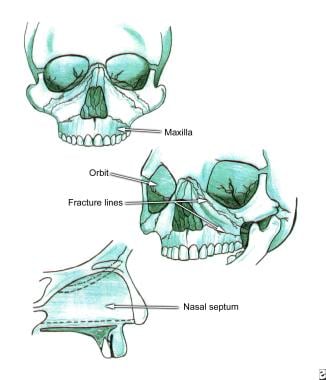
Simple nasal fractures are the most common of all facial fractures. They must be distinguished from the more serious nasoethmoidal (NOE) fractures. NOE fractures extend into the nose through the ethmoid bones. Fractures through the ethmoid are prone to cerebrospinal fluid (CSF) leaks from dural tears. Zygomatic arch fractures tend to occur in 2-3 places along the arch. Often 3 breaks occur, 1 at each end of the arch and a third in the middle, forming a V-shaped fracture; this often impinges on the temporalis muscle below, causing trismus. Zygomaticomaxillary (tripod) fractures result from a direct blow to the cheek. Fracture occurs at articulations of the zygoma with the frontal bone maxillae and zygomatic arch and often extends through the orbital floor. Because the infraorbital nerve passes through the orbital floor, hypesthesia often occurs in its sensory distribution. Alveolar fractures occur just above the level of the teeth through the alveolar portion of the maxilla. Usually a group of teeth is loose, and blood is noted at the gingival line. Le Fort fractures Le Fort or midface fractures are classified into 3 types and occasionally are mixed from one side of the face to the other.
For more information, see Medscape's Trauma Resource Center. FrequencyUnited StatesApproximately 3 million facial injuries occur annually, but most do not involve maxillofacial fractures. One study placed the incidence of severe maxillofacial injury (fractures and lacerations) at 0.04-0.09% for motor vehicle collisions. Motor vehicle-related injuries are more common in rural areas, and altercation-related injuries are more frequent in inner cities. Mortality/MorbidityIncidence of other major injuries is as high as 50% in high-impact facial fractures, compared with 21% for low-impact fractures. Motor vehicle collision-related fractures are more likely to have associated injuries than violence-related fractures. The mortality rate is as high as 12% in high-impact fractures but is rarely due to maxillofacial injury. The incidence of associated cervical spine injuries has been reported in the 0.2-6% range. SexAdult male-to-female ratio is 3:1. Suspect domestic violence or sexual assault in women as this may coexist in 30% of cases. AgeMale predominance is reduced to 3:2 in children. Child abuse should be suspected, particularly in nonmotor vehicular injuries. CLINICALHistory
Physical
DIFFERENTIALSCorneal Abrasion Corneal Laceration Dislocations, Mandible Domestic Violence Elder Abuse Epidural Hematoma Fractures, Frontal Fractures, Mandible Fractures, Orbital Globe Rupture Neck Trauma Pediatrics, Child Abuse Retinal Detachment Sexual Assault Subdural Hematoma
|
| Drug Name | Ibuprofen (Ibuprin, Advil, Motrin) |
|---|---|
| Description | Usually DOC for treatment of mild to moderately severe pain, if no contraindications. Inhibits inflammatory reactions and pain, probably by decreasing activity of enzyme cyclooxygenase, which inhibits prostaglandin synthesis. |
| Adult Dose | 200-400 mg PO q4-6h prn; not to exceed 3.2 g/d |
| Pediatric Dose | <6 months: Not established 6 months to 12 years: 20-40 mg/kg/d PO divided tid/qid >12 years: Administer as in adults |
| Contraindications | Documented hypersensitivity; peptic ulcer disease; recent GI bleeding or perforation; renal insufficiency; high risk of bleeding |
| Interactions | Aspirin increases risk of inducing serious NSAID-related adverse effects; probenecid may increase concentrations and, possibly, toxicity; may decrease effects of hydralazine, captopril, and beta-blockers; may decrease diuretic effects of furosemide and thiazides; may increase PT in patients taking anticoagulants—monitor PT closely and instruct patients to watch for signs of bleeding; may increase risk of methotrexate toxicity; may increase phenytoin levels |
| Pregnancy | B - Fetal risk not confirmed in studies in humans but has been shown in some studies in animals D - Fetal risk shown in humans; use only if benefits outweigh risk to fetus |
| Precautions | Caution in congestive heart failure, hypertension, and decreased renal and hepatic function; caution in coagulation abnormalities or during anticoagulant therapy |
| Drug Name | Naproxen (Anaprox, Naprelan, Naprosyn) |
|---|---|
| Description | For relief of mild to moderately severe pain. Inhibits inflammatory reactions and pain by decreasing activity of enzyme cyclooxygenase, which decreases prostaglandin synthesis. |
| Adult Dose | 500 mg PO followed by 250 mg q6-8h; not to exceed 1.25 g/d |
| Pediatric Dose | <2 years: Not established >2 years: 2.5 mg/kg/dose PO; not to exceed 10 mg/kg/d |
| Contraindications | Documented hypersensitivity; peptic ulcer disease; recent GI bleeding or perforation; renal insufficiency |
| Interactions | Aspirin increases risk of inducing serious NSAID-related adverse effects; probenecid may increase concentrations and, possibly, toxicity; may decrease effects of hydralazine, captopril, and beta-blockers; may decrease diuretic effects of furosemide and thiazides; may increase PT in patients taking anticoagulants—monitor PT closely and instruct patients to watch for signs of bleeding; may increase risk of methotrexate toxicity; may increase phenytoin levels |
| Pregnancy | B - Fetal risk not confirmed in studies in humans but has been shown in some studies in animals D - Fetal risk shown in humans; use only if benefits outweigh risk to fetus |
| Precautions | Acute renal insufficiency, interstitial nephritis, hyperkalemia, hyponatremia, and renal papillary necrosis may occur; patients with preexisting renal disease or compromised renal perfusion risk acute renal failure; leukopenia occurs rarely, is transient, and usually returns to normal during therapy; persistent leukopenia, granulocytopenia, or thrombocytopenia warrants further evaluation and may require discontinuation of drug |
| Drug Name | Flurbiprofen (Ansaid) |
|---|---|
| Description | Has analgesic, antipyretic, and anti-inflammatory effects. May inhibit cyclooxygenase enzyme, inhibiting prostaglandin biosynthesis. |
| Adult Dose | 200-300 mg/d PO divided bid/qid |
| Pediatric Dose | Not established |
| Contraindications | Documented hypersensitivity |
| Interactions | Aspirin increases risk of inducing serious NSAID-related adverse effects; probenecid may increase concentrations and, possibly, toxicity; may decrease effects of hydralazine, captopril, and beta-blockers; may decrease diuretic effects of furosemide and thiazides; may increase PT in patients taking anticoagulants—monitor PT closely and instruct patients to watch for signs of bleeding; may increase risk of methotrexate toxicity; may increase phenytoin levels |
| Pregnancy | C - Fetal risk revealed in studies in animals but not established or not studied in humans; may use if benefits outweigh risk to fetus D - Fetal risk shown in humans; use only if benefits outweigh risk to fetus |
| Precautions | Acute renal insufficiency, interstitial nephritis, hyperkalemia, hyponatremia, and renal papillary necrosis may occur; patients with preexisting renal disease or compromised renal perfusion risk acute renal failure; leukopenia occurs rarely, is transient, and usually returns to normal during therapy; persistent leukopenia, granulocytopenia, or thrombocytopenia warrants further evaluation and may require discontinuation of drug |
| Drug Name | Ketoprofen (Oruvail, Orudis, Actron) |
|---|---|
| Description | Used for relief of mild to moderately severe pain and inflammation. Administer small dosages initially to patients with small bodies, older persons, and those with renal or liver disease. Doses higher than 75 mg do not increase therapeutic effects. Administer high doses with caution and closely observe patients for response. |
| Adult Dose | 25-50 mg PO q6-8h prn; not to exceed 300 mg/d |
| Pediatric Dose | <3 months: Not established 3 months to 14 years: 0.1–1 mg/kg PO q6-8h >12 years: Administer as in adults |
| Contraindications | Documented hypersensitivity |
| Interactions | Aspirin increases risk of inducing serious NSAID-related adverse effects; probenecid may increase concentrations and, possibly, toxicity; may decrease effects of hydralazine, captopril, and beta-blockers; may decrease diuretic effects of furosemide and thiazides; may increase PT in patients taking anticoagulants—monitor PT closely and instruct patients to watch for signs of bleeding; may increase risk of methotrexate toxicity; may increase phenytoin levels |
| Pregnancy | B - Fetal risk not confirmed in studies in humans but has been shown in some studies in animals D - Fetal risk shown in humans; use only if benefits outweigh risk to fetus |
| Precautions | Caution in congestive heart failure, hypertension, and decreased renal and hepatic function; caution in coagulation abnormalities or during anticoagulant therapy |
Pain control is essential to quality patient care. It ensures patient comfort, promotes pulmonary toilet, and aids physical therapy regimens. Many analgesics have sedating properties that benefit patients who have sustained fractures.
| Drug Name | Acetaminophen (Tylenol, Panadol, aspirin-free Anacin) |
|---|---|
| Description | DOC for treatment of pain in patients with documented hypersensitivity to aspirin and NSAIDs, those with upper GI disease, or those taking oral anticoagulants. |
| Adult Dose | 325-650 mg PO q4-6h or 1000 mg tid/qid; not to exceed 4 g/d |
| Pediatric Dose | <12 years: 10-15 mg/kg/dose PO q4-6h prn; not to exceed 2.6 g/d >12 years: 325-650 mg PO q4h; not to exceed 5 doses/d |
| Contraindications | Documented hypersensitivity; known G-6-P deficiency |
| Interactions | Rifampin can reduce analgesic effects; barbiturates, carbamazepine, hydantoins, and isoniazid may increase hepatotoxicity |
| Pregnancy | B - Fetal risk not confirmed in studies in humans but has been shown in some studies in animals |
| Precautions | Hepatotoxicity possible in chronic alcoholics following various dose levels; severe or recurrent pain or high or continued fever may indicate a serious illness; acetaminophen is contained in many OTC products, and combined use with these products may result in cumulative acetaminophen doses exceeding recommended maximum dose |
| Drug Name | Acetaminophen and codeine (Tylenol #3) |
|---|---|
| Description | Drug combination indicated for treatment of mild to moderately severe pain. |
| Adult Dose | 30-60 mg based on codeine content PO q4-6h or 1-2 tabs q4h; not to exceed 12 tabs/d |
| Pediatric Dose | 0.5-1 mg/kg/dose based on codeine content PO q4-6h; 10-15 mg/kg/dose based on acetaminophen content; not to exceed 2.6 g/d of acetaminophen |
| Contraindications | Documented hypersensitivity |
| Interactions | CNS depressants or tricyclic antidepressants increase toxicity |
| Pregnancy | C - Fetal risk revealed in studies in animals but not established or not studied in humans; may use if benefits outweigh risk to fetus |
| Precautions | Caution in patients dependent on opiates since this substitution may result in acute opiate-withdrawal symptoms; caution in severe renal or hepatic dysfunction |
| Drug Name | Hydrocodone bitartrate and acetaminophen (Vicodin ES) |
|---|---|
| Description | Drug combination indicated for relief of moderately severe to severe pain. |
| Adult Dose | 1-2 tab/cap PO q4-6h prn |
| Pediatric Dose | <12 years: 10-15 mg/kg/dose acetaminophen PO q4-6h prn; not to exceed 2.6 g/d of acetaminophen >12 years: 750 mg acetaminophen PO q4h; single dose not to exceed 10 mg of hydrocodone bitartrate; not to exceed 5 doses/d |
| Contraindications | Documented hypersensitivity; high-altitude cerebral edema; elevated intracranial pressure |
| Interactions | Phenothiazines may decrease analgesic effects; CNS depressants or tricyclic antidepressants increase toxicity |
| Pregnancy | C - Fetal risk revealed in studies in animals but not established or not studied in humans; may use if benefits outweigh risk to fetus |
| Precautions | Tablets contain metabisulfite which may cause hypersensitivity; caution in patients dependent on opiates since this substitution may result in acute opiate-withdrawal symptoms; caution in severe renal or hepatic dysfunction |
| Drug Name | Oxycodone and acetaminophen (Percocet) |
|---|---|
| Description | Drug combination indicated for relief of moderately severe to severe pain. DOC for aspirin-hypersensitive patients. |
| Adult Dose | 1-2 tab/cap PO q4-6h prn |
| Pediatric Dose | 0.05-0.15 mg/kg/dose oxycodone PO q4-6h prn; not to exceed 5 mg/dose of oxycodone |
| Contraindications | Documented hypersensitivity |
| Interactions | Phenothiazines may decrease analgesic effects; CNS depressants or tricyclic antidepressants increase toxicity |
| Pregnancy | C - Fetal risk revealed in studies in animals but not established or not studied in humans; may use if benefits outweigh risk to fetus |
| Precautions | Duration of action may increase in elderly persons; be aware of total daily dose of acetaminophen patient is receiving; do not exceed 4000 mg/24 h of acetaminophen; higher doses may cause liver toxicity |
| Drug Name | Oxycodone and aspirin (Percodan) |
|---|---|
| Description | Drug combination indicated for relief of moderately severe to severe pain. |
| Adult Dose | 1-2 tab/cap PO q4-6h prn |
| Pediatric Dose | 0.05-0.15 mg/kg/dose oxycodone PO q4-6h prn; not to exceed 5 mg/dose of oxycodone |
| Contraindications | Documented hypersensitivity; liver damage; hypoprothrombinemia; vitamin K deficiency; bleeding disorders; asthma Because of association of aspirin with Reye syndrome, do not use in children (<16 y) who have flu |
| Interactions | Phenothiazines may decrease analgesic effects; CNS depressants or tricyclic antidepressants increase toxicity; may potentiate anticoagulant effects of warfarin |
| Pregnancy | D - Fetal risk shown in humans; use only if benefits outweigh risk to fetus |
| Precautions | Duration of action may increase in elderly persons; caution in renal or liver impairment, peptic ulcer disease, and erosive gastritis |
| Drug Name | Morphine sulfate (Duramorph, Astramorph, MS Contin) |
|---|---|
| Description | DOC for narcotic analgesia due to its reliable and predictable effects, safety, and ease of reversibility with naloxone. Morphine sulfate administered IV may be dosed in a number of ways and commonly is titrated until desired effect obtained. |
| Adult Dose | Starting dose: 0.1 mg/kg IV/IM/SC Maintenance dose: 5-20 mg/70 kg IV/IM/SC q4h Relatively hypovolemic patients: Start with 2 mg IV/IM/SC and reassess hemodynamic effects of dose |
| Pediatric Dose | Neonates: 0.05-0.2 mg/kg IV prn Children: 0.1-0.2 mg/kg IV q2-4h prn |
| Contraindications | Documented hypersensitivity; hypotension; potentially compromised airway in which establishing rapid airway control would be difficult |
| Interactions | Phenothiazines may antagonize analgesic effects; tricyclic antidepressants, MAOIs, and other CNS depressants may potentiate adverse effects |
| Pregnancy | C - Fetal risk revealed in studies in animals but not established or not studied in humans; may use if benefits outweigh risk to fetus |
| Precautions | Avoid in hypotension, respiratory depression, nausea, emesis, constipation, and urinary retention; caution in atrial flutter and other supraventricular tachycardias; has vagolytic action and may increase ventricular response rate |
Empiric antimicrobial therapy must be comprehensive and should cover all likely pathogens in the context of the clinical setting.
| Drug Name | Cephalexin (Biocef, Keflex, Keftab) |
|---|---|
| Description | First-generation cephalosporin that inhibits bacterial replication by inhibiting bacterial cell wall synthesis. Bactericidal and effective against rapidly growing organisms forming cell walls. Resistance occurs by alteration of penicillin-binding proteins. Effective for treatment of infections caused by streptococcal or staphylococci, including penicillinase-producing staphylococci. May use to initiate therapy when streptococcal or staphylococcal infection is suspected. Used orally when outpatient management is indicated. |
| Adult Dose | 250-1000 mg PO q6h; not to exceed 4 g/d |
| Pediatric Dose | 25-50 mg/kg/d PO q6h; not to exceed 3 g/d |
| Contraindications | Documented hypersensitivity |
| Interactions | Coadministration with aminoglycosides increases nephrotoxic potential |
| Pregnancy | B - Fetal risk not confirmed in studies in humans but has been shown in some studies in animals |
| Precautions | Adjust dose in severe renal insufficiency (high doses may cause CNS toxicity); superinfections and promotion of nonsusceptible organisms may occur with prolonged use or repeated therapy |
| Drug Name | Sulfamethoxazole and trimethoprim (Bactrim, Bactrim DS, Septra, Septra DS) |
|---|---|
| Description | Inhibits bacterial growth by inhibiting synthesis of dihydrofolic acid. |
| Adult Dose | 160 mg (trimethoprim)/800 mg (sulfamethoxazole) PO q12h (ie, 1 double-strength [DS] tab q12h) |
| Pediatric Dose | 5-10 mg/kg/d (based on trimethoprim component) PO divided bid |
| Contraindications | Documented hypersensitivity; megaloblastic anemia due to folate deficiency |
| Interactions | May increase PT when used with warfarin (perform coagulation tests and adjust dose accordingly); coadministration with dapsone may increase blood levels of both drugs; coadministration of diuretics increases incidence of thrombocytopenia purpura in elderly persons; phenytoin levels may increase with coadministration; may potentiate effects of methotrexate in bone marrow depression; hypoglycemic response to sulfonylureas may increase with coadministration; may increase levels of zidovudine |
| Pregnancy | C - Fetal risk revealed in studies in animals but not established or not studied in humans; may use if benefits outweigh risk to fetus |
| Precautions | Do not use during last trimester of pregnancy because of potential toxicity to newborn (eg, jaundice, hemolytic anemia, kernicterus) Dosage adjustments (adult adjustments) CrCl (mL/min) 80-50: Recommended IV dose q18h CrCl 50-10: Recommended IV dose q24h CrCl <10: Not recommended HD: 4-5 mg/kg after HD During peritoneal dialysis: 0.16-0.8 g q48h Discontinue at first appearance of skin rash or sign of adverse reaction; obtain CBCs frequently; discontinue therapy if significant hematologic changes occur; goiter, diuresis, and hypoglycemia may occur with sulfonamides; prolonged IV infusions or high doses may cause bone marrow depression (if signs occur, give 5-15 mg/d leucovorin); caution in folate deficiency (eg, chronic alcoholics, elderly persons, those receiving anticonvulsant therapy, or those with malabsorption syndrome); hemolysis may occur in G-6-PD deficiency; patients with AIDS may not tolerate or respond to TMP-SMZ; caution in renal or hepatic impairment (perform urinalyses and renal function tests during therapy); give fluids to prevent crystalluria and stone formation |
| Drug Name | Amoxicillin and clavulanate (Augmentin, Augmentin XR) |
|---|---|
| Description | Amoxicillin inhibits bacterial cell wall synthesis by binding to penicillin-binding proteins. Addition of clavulanate inhibits beta-lactamase producing bacteria. Good alternative antibiotic for patients allergic or intolerant to the macrolide class. Usually is well tolerated and provides good coverage to most infectious agents. Not effective against Mycoplasma and Legionella species. The half-life of oral dosage form is 1-1.3 h. Has good tissue penetration but does not enter cerebrospinal fluid. For children > 3 months, base dosing protocol on amoxicillin content. Because of different amoxicillin/clavulanic acid ratios in 250-mg tab (250/125) vs 250-mg chewable tab (250/62.5), do not use 250-mg tab until child weighs >40 kg. |
| Adult Dose | 875 mg PO bid for 7-10 d |
| Pediatric Dose | <3 months: 125 mg/5 mL PO susp based on amoxicillin; 30 mg/kg/d divided bid for 7-10 d >3 months: if using 200 mg/5 mL or 400 mg/5 mL susp, 45 mg/kg/d PO q12h; if using 125 mg/5 mL or 250 mg/5 mL susp, 40 mg/kg/d PO q8h for 7-10 d >40 kg: Administer as in adults |
| Contraindications | Documented hypersensitivity |
| Interactions | Coadministration with warfarin or heparin, increases risk of bleeding; may act synergistically against selected microorganisms when coadministered with aminoglycosides; coadministration with allopurinol may increase incidence of amoxicillin rash; may decrease efficacy of oral contraceptives when administered concomitantly |
| Pregnancy | B - Fetal risk not confirmed in studies in humans but has been shown in some studies in animals |
| Precautions | Hepatic impairment may occur with prolonged treatment in elderly persons; diarrhea may occur; adjust dose in renal impairment; cross allergy may occur with other beta-lactams and cephalosporins |
Patients with painful injuries usually experience significant anxiety. Anxiolytics allow a smaller analgesic dose to achieve the same effect.
| Drug Name | Lorazepam (Ativan) |
|---|---|
| Description | Sedative hypnotic in benzodiazepine class that has short onset of effect and relatively long half-life. By increasing action of GABA, a major inhibitory neurotransmitter, may depress all levels of CNS, including limbic and reticular formation. Excellent for sedating patients for longer than 24-h period. Monitor patient's BP after administering dose. Adjust as necessary. |
| Adult Dose | Initial dose: 2 mg total or 0.044 mg/kg IV, whichever is smaller |
| Pediatric Dose | 0.05-0.1 mg/kg IV slowly q2-5min; may repeat dose of 0.05 mg/kg IV slowly |
| Contraindications | Documented hypersensitivity; preexisting CNS depression; hypotension; narrow-angle glaucoma |
| Interactions | Alcohol, phenothiazines, barbiturates, and MAOIs increase toxicity |
| Pregnancy | D - Fetal risk shown in humans; use only if benefits outweigh risk to fetus |
| Precautions | Caution in renal or hepatic impairment, myasthenia gravis, organic brain syndrome, or Parkinson disease |
Article Last Updated: Mar 6, 2008