Continually Updated Clinical Reference
 
 
  All Sources     eMedicine     Medscape     Drug Reference     MEDLINE
 
eMedicine - Fracture, Frontal : Article by

Quick Find
Authors & Editors
Introduction
Clinical
Differentials
Workup
Treatment
Medication
Follow-up
Miscellaneous
References

Related Articles
Blast Injuries

Corneal Abrasion

Corneal Laceration

Dislocations, Mandible

Domestic Violence

Epidural Hematoma

Epistaxis

Fractures, Cervical Spine

Fractures, Face

Fractures, Frontal

Fractures, Mandible

Fractures, Orbital

Globe Rupture

Neck Trauma

Pediatrics, Child Abuse

Retinal Detachment

Sexual Assault

Shock, Hemorrhagic

Spinal Cord Injuries

Subarachnoid Hemorrhage

Subdural Hematoma


Patient Education
Breaks, Fractures, and Dislocations Center

Facial Fracture Overview

Facial Fracture Causes

Facial Fracture Symptoms

Facial Fracture Treatment


Author: Thomas Widell, MD, Vice Chairman, Assistant Professor, Department of Emergency Medicine, Rosalind Franklin School of Medicine/The Chicago Medical School, North Chicago, Illinois; Associate Residency Director, University of Chicago Emergency Medicine Program, Chicago, Illinois; Program Director Emergency Medical Education, Attending Physician, Mount Sinai Hospital Medical Center, Chicago, Illinois

Editors: Francis Counselman, MD, Program Director, Chair, Professor, Department of Emergency Medicine, Eastern Virginia Medical School; Francisco Talavera, PharmD, PhD, Senior Pharmacy Editor, eMedicine; Eric Legome, MD, Residency Director, Assistant Professor of Emergency Medicine, Department of Emergency Medicine New York University, New York University Hospital, Bellevue Hospital Center, Manhattan VA; John D Halamka, MD, MS, Associate Professor of Medicine, Harvard Medical School, Beth Israel Deaconess Medical Center; Chief Information Officer, CareGroup Healthcare System and Harvard Medical School; Attending Physician, Division of Emergency Medicine, Beth Israel Deaconess Medical Center; Rick Kulkarni, MD, Medical Director, Assistant Professor of Surgery, Section of Emergency Medicine, Yale-New Haven Hospital

Author and Editor Disclosure

Synonyms and related keywords: frontal fracture, facial injuries, maxillofacial fractures, frontal bone fractures, supraorbital fractures, high-impact facial injuries, low-impact facial injuries, trauma injuries, facial fracture

Background

Hippocrates described an array of facial injuries as long ago as 400 BC. In 1823, von Graeffe described an elastic tube placed in the nose to maintain an open airway. During the early 20th century, Sir Harold Gilles, father of plastic surgery, taught army personnel about breathing problems in patients with facial injuries and to place them supine to maintain an airway.

René Le Fort, a Frenchman, studied cadavers in 1901. He described 3 basic types of fractures. Endotracheal anesthesia and radiography developed during the First World War led to a better understanding and treatment of facial fractures. During the Second World War, a multidisciplinary approach to treatment of facial fractures continued to improve the outcomes of severely injured soldiers. Advent of CT reconstruction of facial bones, along with new surgical techniques, has dramatically improved the final appearance patients who have sustained bony injuries.

Pathophysiology

Maxillofacial fractures result from blunt or penetrating injury. Blunt injuries are far more common, resulting from vehicular accidents, altercations, sporting-related trauma, occupational injuries, and falls. Penetrating injuries mainly are the result of gunshot wounds, stabbings, and explosions.

Type of object striking the face and force behind the object are the main determinants of whether a person sustains soft-tissue or bony injury. In automobile accidents, striking a hard dashboard is more likely to cause bony injury than striking a padded dashboard or an airbag. Striking the steering wheel concentrates the force more than striking the flat surface of the dashboard. This also holds true for altercations with a bat, as compared to a bare fist or boxing glove. Penetrating injury from a shot gun at a distance is not likely to cause fractures. Bullets from low-velocity guns are likely to cause fractures; high-velocity bullets cause fractures and extensive soft-tissue damage.

The amount of force needed to fracture different bones of the face has been studied; injuries have been divided into those that require high impact to fracture (greater than 50 times the force of gravity [g]) and those that require a low impact to fracture (50 g or less).

  • High impact
    • Supraorbital rim - 200 g
    • Symphysis of the mandible - 100 g
    • Frontal-glabellar bone - 100 g
    • Angle of mandible - 70 g
  • Low impact
    • Zygoma - 50 g
    • Nasal bone - 30 g

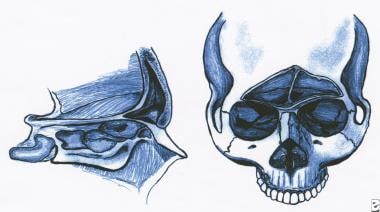
Frontal bone and supraorbital fractures require high-energy impact. Forces this strong may indicate intracranial injury. Frontal bone contains the frontal sinus, and fractures of only the anterior (outer) table or both anterior and posterior (inner) tables are possible. Associated fractures of the supraorbital ridge, nasoethmoidal complex, and other facial bones also may occur (see Fractures, Face).

For more information, see Medscape's Trauma Resource Center.

Frequency

United States

Approximately 3 million facial injuries occur annually; however, most do not involve maxillofacial fractures. One study placed the incidence of severe maxillofacial injury (fractures and lacerations) at 0.04-0.09% for persons in motor vehicle accidents. Incidence of fractures due to motor vehicle injuries is higher in rural areas, and altercation-related fractures are more frequent in urban areas.

Mortality/Morbidity

Incidence of other major injuries is as high as 50% in high-impact fractures, while it is 21% for low-impact fractures. Motor vehicle accidents are more likely than violent altercations to cause other injuries. Mortality rate in high-impact fractures is as high as 12%, yet deaths rarely occur from maxillofacial injury. The incidence of cervical spine injuries associated with frontal fractures has been reported in the 0.2-6.0% range.

Sex

Adult male-to-female ratio is 3:1. Consider domestic violence in women with facial injuries not related to a motor vehicle crash.

Age

Male predominance is reduced to 2:1 in children. Consider child abuse when facial injuries are found in children.


History

  • Since maxillofacial fractures are the result of trauma, primary survey and attention to ABCs take priority. Focus initially on patency of airway, control of cervical spine, and whether the patient is having difficulty breathing, and determine if the patient is experiencing symptoms of shock or neurologic impairment.
  • Once life threats have been addressed, obtain a thorough history.
    • Allergies
    • Medications
    • Medical history
    • Last meal
    • Events leading to injury
  • Question patient about injury.
    • Does patient have epistaxis or clear fluid draining from nares or ears?
    • Did patient lose consciousness?
    • Has patient had any visual problems, such as double or blurred vision?
    • Has patient had any hearing problems, such as decreased hearing or tinnitus?
    • Do the teeth come together normally and is patient able to bite down without pain?
    • Does patient have areas of numbness or tingling on the face?
    • In women, ask if the injury was from a partner or if they feel threatened by anyone.
    • In children, ask questions to determine if child abuse is an issue.

Physical

  • Complete exam of the face is necessary since multiple injuries can occur easily. Portions of the exam specific for the frontal bone are marked with an asterisk (*).
    • Inspect face for asymmetry, which is often easiest to do looking down from the head of the bed.
    • *Inspect open wounds for foreign bodies and palpate for bony injury.
    • *Palpate bony structures of the supraorbital ridge and frontal bone for step-off fractures.
    • *Examine eyes thoroughly for injury, abnormality of ocular movements, and visual acuity.
    • Inspect nares for telecanthus and widening of the nasal bridge. Palpate for tenderness and crepitus.
    • Inspect nasal septum for septal hematoma and clear rhinorrhea, which suggests cerebrospinal fluid (CSF) leak.
    • Palpate zygoma along its arch as well as its articulations with frontal bone, temporal bone, and maxillae.
    • Check facial stability by grasping teeth and hard palate, then gently pushing back and forth, then up and down, feeling for movement or instability of midface.
    • Inspect teeth for fracture and bleeding at gum line, a sign of fracture through alveolar bone. Test for stability.
    • Check teeth for malocclusion and step-off.
    • Palpate mandible for tenderness, edema, and step-off along its symphysis, body, angle, and condyle anterior to ear canal.
    • *Evaluate supraorbital, infraorbital, inferior alveolar, and mental nerve distributions for hypoesthesia and anesthesia.
    • Frontal fracture is suspected in patients who experience high-impact, blunt trauma and have a physical exam demonstrating step-off of the frontal bone or supraorbital ridge. Epistaxis or CSF leak merits further evaluation if the patient has a forehead injury.


Blast Injuries
Corneal Abrasion
Corneal Laceration
Dislocations, Mandible
Domestic Violence
Epidural Hematoma
Epistaxis
Fractures, Cervical Spine
Fractures, Face
Fractures, Frontal
Fractures, Mandible
Fractures, Orbital
Globe Rupture
Neck Trauma
Pediatrics, Child Abuse
Retinal Detachment
Sexual Assault
Shock, Hemorrhagic
Spinal Cord Injuries
Subarachnoid Hemorrhage
Subdural Hematoma

Other Problems to be Considered

Airway obstruction
Dental fractures
Foreign body aspiration, teeth
Nerve injury - Supraorbital, infraorbital, inferior alveolar, facial


Lab Studies

  • Direct lab studies toward workup of trauma patient.
  • If fracture is an isolated injury, obtain preoperative labs if surgery is planned.

Imaging Studies

  • Radiographs
    • Obtain routine facial views, including Waters, Caldwell, and lateral projections.
    • Caldwell projection provides the best view of the anterior table; however, the posterior table is difficult to assess in any of the standard plain film views.
  • CT scan
    • Frontal sinus fractures usually require CT scan, examining bone windows to evaluate the posterior table of the frontal sinus.
    • Look for associated orbital rim and nasoethmoidal fractures on CT scan.
    • Consider brain CT scan to exclude brain injuries or intracranial bleeds.

Other Tests

  • Test clear rhinorrhea for glucose to help determine if it is CSF, as nasal secretions are normally low in glucose.
  • If blood is present, this test is unreliable.
  • Blood-tinged fluid can be placed on filter paper to look for a double ring sign of CSF around blood; however, this is not reliable.

Procedures

  • When dural leak causing CSF rhinorrhea is suspected yet cannot be proven, the following procedure, which is generally not performed in the emergency department, may be done. Inject fluorescein dye into the lumbar subarachnoid space. Examine the discharged nasal fluid 30 minutes later with a Wood lamp for fluorescence; fluorescence confirms CSF rhinorrhea.


Prehospital Care

  • ABCs are first priority. Hold airway open by chin lift, jaw thrust, or airway adjuncts, including endotracheal intubation.
  • Because of concerns over intracranial placement of endotracheal tubes, avoid using the nasotracheal route for intubation if the patient has extensive facial damage or midface fracture is suspected.
  • Place the patient on a backboard with a collar if cervical spine injury is a possibility.
  • Treat hypoventilation with intubation and bag ventilation.
  • Control actively bleeding wounds by applying a bandage with direct pressure.

Emergency Department Care

  • ABCs take priority; reassess airway frequently.
  • Do not focus solely on the obvious deformity, thereby failing to perform a complete primary survey.
  • Rapidly diagnose other life threats and undertake appropriate resuscitation. Follow with a complete secondary survey.
  • Diagnosis of frontal bone fracture in the ED is part of secondary survey.

Consultations

  • If a frontal fracture is diagnosed, refer patient to a neurosurgeon, as these injuries often are associated with intracranial injury.
  • Provide care for a patient with multiple injuries in conjunction with a surgeon experienced in trauma care.
  • The incidence of posttraumatic stress disorder is high in patients with facial injuries, and a consultation with a psychiatrist should be considered.


When airway control is needed, rapid-sequence induction is often the preferred method. Rapid-sequence induction utilizes medications to induce unconsciousness and muscle paralysis to facilitate intubation. A cricothyroidotomy kit should be at bedside in case problems arise.

Medication for pain control is appropriate, including NSAIDs, narcotics, or local anesthetics.

Use of prophylactic antibiotics is controversial when a CSF leak is identified. It is usually left to the discretion of the specialist assuming care of the patient.

In cases of open wounds, administer tetanus toxoid if the patient is not up to date.

Drug Category: Nonsteroidal anti-inflammatory agents (NSAIDs)

These drugs are used most commonly for relief of mild to moderately severe pain. Effects of NSAIDs in the treatment of pain tend to be patient specific, yet ibuprofen is usually DOC for initial therapy. Other options include flurbiprofen, ketoprofen, and naproxen.

Drug NameIbuprofen (Ibuprin, Advil, Motrin)
DescriptionUsually DOC for treatment of mild to moderately severe pain, if no contraindications. Inhibits inflammatory reactions and pain, probably by decreasing activity of enzyme cyclooxygenase, which inhibits prostaglandin synthesis.
Adult Dose200-400 mg PO q4-6h prn; not to exceed 3.2 g/d
Pediatric Dose<6 months: Not established
6 months to 12 years: 20-40 mg/kg/d PO divided tid/qid
>12 years: Administer as in adults
ContraindicationsDocumented hypersensitivity; peptic ulcer disease; recent GI bleeding or perforation; renal insufficiency; high risk of bleeding
InteractionsAspirin increases risk of inducing serious NSAID-related adverse effects; probenecid may increase concentrations and, possibly, toxicity; may decrease effects of hydralazine, captopril, and beta-blockers; may decrease diuretic effects of furosemide and thiazides; may increase PT in patients taking anticoagulants—monitor PT closely and instruct patients to watch for signs of bleeding; may increase risk of methotrexate toxicity; may increase phenytoin levels
PregnancyB - Fetal risk not confirmed in studies in humans but has been shown in some studies in animals
D - Fetal risk shown in humans; use only if benefits outweigh risk to fetus
PrecautionsCaution in congestive heart failure, hypertension, and decreased renal and hepatic function; caution in coagulation abnormalities or during anticoagulant therapy

Drug NameNaproxen (Anaprox, Naprelan, Naprosyn)
DescriptionRelieves mild to moderately severe pain. Inhibits inflammatory reactions and pain by decreasing activity of enzyme cyclooxygenase, which decreases prostaglandin synthesis.
Adult Dose500 mg PO followed by 250 mg q6-8h; not to exceed 1.25 g/d
Pediatric Dose<2 years: Not established
>2 years: 2.5 mg/kg/dose PO; not to exceed 10 mg/kg/d
ContraindicationsDocumented hypersensitivity; peptic ulcer disease; recent GI bleeding or perforation; renal insufficiency
InteractionsAspirin increases risk of inducing serious NSAID-related adverse effects; probenecid may increase concentrations and, possibly, toxicity; may decrease effects of hydralazine, captopril, and beta-blockers; may decrease diuretic effects of furosemide and thiazides; may increase PT in patients taking anticoagulants—monitor PT closely and instruct patients to watch for signs of bleeding; may increase risk of methotrexate toxicity; may increase phenytoin levels
PregnancyB - Fetal risk not confirmed in studies in humans but has been shown in some studies in animals
D - Fetal risk shown in humans; use only if benefits outweigh risk to fetus
PrecautionsAcute renal insufficiency, interstitial nephritis, hyperkalemia, hyponatremia, and renal papillary necrosis may occur; patients with preexisting renal disease or compromised renal perfusion risk acute renal failure; leukopenia occurs rarely, is transient, and usually returns to normal during therapy; persistent leukopenia, granulocytopenia, or thrombocytopenia warrants further evaluation and may require discontinuation of drug

Drug NameKetoprofen (Oruvail, Orudis, Actron)
DescriptionFor relief of mild to moderately severe pain and inflammation.
Administer small dosages initially to patients with small bodies, older persons, and those with renal or liver disease.
Doses higher than 75 mg do not increase therapeutic effects.
Administer high doses with caution and closely observe patient for response.
Adult Dose25-50 mg PO q6-8h prn; not to exceed 300 mg/d
Pediatric Dose<3 months: Not established
3 months to 12 years: 0.1–1 mg/kg PO q6-8h
>12 years: Administer as in adults
ContraindicationsDocumented hypersensitivity
InteractionsAspirin increases risk of inducing serious NSAID-related adverse effects; probenecid may increase concentrations and, possibly, toxicity; may decrease effects of hydralazine, captopril, and beta-blockers; may decrease diuretic effects of furosemide and thiazides; may increase PT in patients taking anticoagulants—monitor PT closely and instruct patients to watch for signs of bleeding; may increase risk of methotrexate toxicity; may increase phenytoin levels
PregnancyB - Fetal risk not confirmed in studies in humans but has been shown in some studies in animals
D - Fetal risk shown in humans; use only if benefits outweigh risk to fetus
PrecautionsCaution in congestive heart failure, hypertension, and decreased renal and hepatic function; caution in coagulation abnormalities or during anticoagulant therapy

Drug NameFlurbiprofen (Ansaid, Ocufen)
DescriptionHas analgesic, antipyretic, and anti-inflammatory effects. May inhibit cyclooxygenase enzyme, inhibiting prostaglandin biosynthesis.
Adult Dose200-300 mg/d PO divided bid/qid
Pediatric DoseNot established
ContraindicationsDocumented hypersensitivity
InteractionsAspirin increases risk of inducing serious NSAID-related adverse effects; probenecid may increase concentrations and, possibly, toxicity; may decrease effects of hydralazine, captopril, and beta-blockers; may decrease diuretic effects of furosemide and thiazides; may increase PT in patients taking anticoagulants—monitor PT closely and instruct patients to watch for signs of bleeding; may increase risk of methotrexate toxicity; may increase phenytoin levels
PregnancyC - Fetal risk revealed in studies in animals but not established or not studied in humans; may use if benefits outweigh risk to fetus
D - Fetal risk shown in humans; use only if benefits outweigh risk to fetus
PrecautionsAcute renal insufficiency, interstitial nephritis, hyperkalemia, hyponatremia, and renal papillary necrosis may occur; patients with preexisting renal disease or compromised renal perfusion risk acute renal failure; leukopenia occurs rarely, is transient, and usually returns to normal during therapy; persistent leukopenia, granulocytopenia, or thrombocytopenia warrants further evaluation and may require discontinuation of drug

Drug Category: Analgesics

Pain control is essential to quality care. It ensures patient comfort, promotes pulmonary toilet, and aids physical therapy regimens. Many analgesics have sedating properties that benefit patients who have sustained fractures.

Drug NameAcetaminophen and codeine (Tylenol #3)
DescriptionDrug combination indicated for treatment of mild to moderately severe pain.
Adult Dose30-60 mg/dose based on codeine content PO q4-6h or 1-2 tab q4h; not to exceed 12 tab/d
Pediatric Dose0.5-1 mg/kg/dose based on codeine content PO q4-6h; 10-15 mg/kg/dose based on acetaminophen content; not to exceed 2.6 g/d of acetaminophen
ContraindicationsDocumented hypersensitivity
InteractionsCNS depressants or tricyclic antidepressants increase toxicity
PregnancyC - Fetal risk revealed in studies in animals but not established or not studied in humans; may use if benefits outweigh risk to fetus
PrecautionsCaution in patients dependent on opiates since this substitution may result in acute opiate-withdrawal symptoms; caution in severe renal or hepatic dysfunction

Drug NameHydrocodone bitartrate and acetaminophen (Vicodin ES)
DescriptionDrug combination indicated for relief of moderately severe to severe pain.
Adult Dose1-2 tab/cap PO q4-6h prn
Pediatric Dose<12 years: 10-15 mg/kg/dose acetaminophen PO q4-6h prn; not to exceed 2.6 g/d of acetaminophen
>12 years: 750 mg acetaminophen PO q4h; single dose not to exceed 10 mg of hydrocodone bitartrate; not to exceed 5 doses/d
ContraindicationsDocumented hypersensitivity; high-altitude cerebral edema; elevated intracranial pressure
InteractionsPhenothiazines may decrease analgesic effects; CNS depressants or tricyclic antidepressants increase toxicity
PregnancyC - Fetal risk revealed in studies in animals but not established or not studied in humans; may use if benefits outweigh risk to fetus
PrecautionsTablets contain metabisulfite, which may cause hypersensitivity; caution in patients dependent on opiates since this substitution may result in acute opiate-withdrawal symptoms; caution in severe renal or hepatic dysfunction

Drug NameOxycodone and acetaminophen (Percocet)
DescriptionDrug combination indicated for relief of moderately severe to severe pain. DOC for aspirin-hypersensitive patients.
Adult Dose1-2 tab/cap PO q4-6h prn
Pediatric Dose0.05-0.15 mg/kg/dose oxycodone PO q4-6h prn; not to exceed 5 mg/dose of oxycodone
ContraindicationsDocumented hypersensitivity
InteractionsPhenothiazines may decrease analgesic effects; CNS depressants or tricyclic antidepressants increase toxicity
PregnancyC - Fetal risk revealed in studies in animals but not established or not studied in humans; may use if benefits outweigh risk to fetus
PrecautionsDuration of action may increase in elderly persons; be aware of total daily dose of acetaminophen patient is receiving; do not exceed 4000 mg/24 h of acetaminophen; higher doses may cause liver toxicity

Drug NameMorphine sulfate (Duramorph, Astramorph, MS Contin)
DescriptionDOC for narcotic analgesia because of its reliable and predictable effects, safety, and ease of reversibility with naloxone.
Morphine sulfate administered IV may be dosed in a number of ways and commonly is titrated until desired effect obtained.
Adult DoseStarting dose: 0.1 mg/kg IV/IM/SC
Maintenance dose: 5-20 mg/70 kg IV/IM/SC q4h
Relatively hypovolemic patients: Start with 2 mg IV/IM/SC and reassess hemodynamic effects of dose
Pediatric DoseNeonates: 0.05-0.2 mg/kg IV prn
Children: 0.1-0.2 mg/kg IV q2-4h prn
ContraindicationsDocumented hypersensitivity; hypotension; potentially compromised airway in which establishing rapid airway control would be difficult
InteractionsPhenothiazines may antagonize analgesic effects; tricyclic antidepressants, MAOIs, and other CNS depressants may potentiate adverse effects
PregnancyC - Fetal risk revealed in studies in animals but not established or not studied in humans; may use if benefits outweigh risk to fetus
PrecautionsAvoid in hypotension, respiratory depression, nausea, emesis, constipation, and urinary retention; caution in atrial flutter and other supraventricular tachycardias; has vagolytic action and may increase ventricular response rate

Drug Category: Immunoglobulins

Patients who may not have been immunized against Clostridium tetani products should receive tetanus immune globulin.

Drug NameTetanus immune globulins (Hyper-Tet)
DescriptionFor passive immunization of any person with a wound that may be contaminated with tetanus spores.
Adult DoseFor prophylaxis: 250-500 U IM in opposite extremity to tetanus toxoid
For clinical tetanus: 3,000-10,000 U IM
Pediatric DoseFor prophylaxis: 250 U IM in opposite extremity to tetanus toxoid
For clinical tetanus: 3,000-10,000 U IM
ContraindicationsSince antibodies in globulin preparation may interfere with immune response to vaccination, do not administer within 3 mo of live virus immune globulin administration; may be necessary to revaccinate persons who received immune globulin shortly after live virus vaccination
InteractionsNone reported
PregnancyC - Fetal risk revealed in studies in animals but not established or not studied in humans; may use if benefits outweigh risk to fetus
PrecautionsPersons with isolated IgA deficiency have potential for developing antibodies to IgA and could have anaphylactic reactions to subsequent administration of blood products that contain IgA; do not perform skin testing since intradermal injection of concentrated gamma globulin may cause localized area of inflammation and can be misinterpreted, causing the medication to be withheld from a patient not allergic to this material; true allergic responses to human gamma globulin given in prescribed IM manner are extremely rare; do not admix with other medications since usually incompatible

Drug Category: Toxoid

This agent is used for tetanus immunization. Booster injection in previously immunized individuals is recommended to prevent this potentially lethal syndrome.

Drug NameTetanus toxoid
DescriptionUsed to induce active immunity against tetanus in selected patients. Tetanus and diphtheria toxoids are the immunizing DOC for most adults and children >7 y. Necessary to administer booster doses to maintain tetanus immunity throughout life.
Pregnant patients should receive only tetanus toxoid, not a diphtheria antigen-containing product.
In children and adults, may administer into deltoid or midlateral thigh muscles. In infants, preferred site of administration is midthigh laterally.
Adult DosePrimary immunization: 0.5 mL IM, give 2 injections 4-8 wk apart and a third dose 6-12 mo after second injection
Booster dose: 0.5 mL q10y
Pediatric DoseAdminister as in adults
ContraindicationsDocumented hypersensitivity; history of any type of neurological symptoms or signs following administration of this product
FDA recommends that elective tetanus immunization be deferred during any outbreak of poliomyelitis because tetanus toxoid injections are important cause of provocative poliomyelitis
InteractionsPatients receiving immunosuppressants, including corticosteroids or radiation therapy, may remain susceptible despite immunization due to poor immune response; cimetidine may enhance or augment delayed-hypersensitivity responses to skin-test antigens; avoid concurrent chloramphenicol since it may impair amnestic response to tetanus toxoid; concurrent use of tetanus immune globulin may delay development of active immunity by several days (interaction is nevertheless clinically insignificant and does not preclude its concurrent use)
PregnancyC - Fetal risk revealed in studies in animals but not established or not studied in humans; may use if benefits outweigh risk to fetus
PrecautionsDo not use to treat actual tetanus infections, or for immediate prophylaxis of unimmunized individuals (use instead tetanus antitoxin, preferably human tetanus immune globulin) diminished antibody response to active immunization may be seen in patients receiving immunosuppressive therapy; better to defer primary diphtheria immunization until immunosuppressive therapy discontinued; routine immunization of symptomatic and asymptomatic HIV-infected persons recommended


Further Inpatient Care

  • Since these fractures require extreme force, admitting all except those few patients with isolated, nondisplaced anterior table fractures is appropriate.
  • Patients with depression of the inner table often require neurosurgical intervention to elevate the fragment.
  • Those with continued CSF leak may require a frontal sinus procedure involving ablation of the sinus and removal of the inner table to allow the frontal sinus to become part of cranium.

Transfer

  • If appropriate specialists are not available, arrange transfer to a higher level hospital. Regulations of the Emergency Medical Treatment and Active Labor Act (EMTALA) must be followed.

Deterrence/Prevention

  • Use of seat belts and airbags can reduce incidence of facial injuries in motor vehicle accidents. Use of helmets with facial guards can reduce injury in motorcycle accidents and in such sports as skiing, snowboarding, hockey, and football.

Complications

  • CSF leaks may continue, though most cease by 2-3 weeks after the injury.
  • Observe patient closely for signs and symptoms of meningitis or abscess formation.

Patient Education

  • For excellent patient education resources, visit eMedicine's Breaks, Fractures, and Dislocations Center. Also, see eMedicine's patient education article, Facial Fracture.
  • Patients should be made aware of the high incidence of posttraumatic stress disorder in facial injuries and have resources available should symptoms occur.


Medical/Legal Pitfalls

  • Failure to diagnose frontal fracture
  • Failure to diagnose associated intracranial or cervical spine injuries because focus was on obvious injury

Special Concerns

  • Always consider loss of airway and intracranial and intraabdominal injury.


  • Glynn SM, Asarnow JR, Asarnow R, et al. The development of acute post-traumatic stress disorder after orofacial injury: a prospective study in a large urban hospital. J Oral Maxillofac Surg. Jul 2003;61(7):785-92. [Medline].
  • Hendler BH, Rosen P. Maxillofacial trauma. In: Rosen P, ed. Emergency Medicine: Concepts and Clinical Practice. Mosby-Year Book; 1998:1093-1103.
  • McGill J, Ling L, Taylor P. Facial trauma. Diagnostic Radiology in Emergency Medicine. Mosby-Year Book; 1992:51-76.
  • Smith RG. Maxillofacial injuries. In: Harwood-Nuss A, ed. The Clinical Practice of Emergency Medicine. Lippincott Williams & Wilkins Publishers; 1991:337-43.
  • Snell RS, Smith MS. The face, scalp, and mouth. In: Clinical Anatomy for Emergency Medicine. Mosby-Year Book; 1993:206-241.
  • Spoor T, Ramocki JM, Kwito GM. Ocular trauma. In: Wilson RF, Walt AJ, eds. Management of Trauma: Pitfalls and Practice. Lippincott, Williams & Wilkins; 1996:225-41.
  • Sullivan W. Trauma to the face. In: Wilson RF, Walt AJ, eds. Management of Trauma: Pitfalls and Practice. Lippincott, Williams & Wilkins; 1996:242-69.
  • Thomas SH, Shepherd SM. Maxillofacial injuries. In: Harwood-Nuss A, ed. The Clinical Practice of Emergency Medicine. Lippincott, Williams & Wilkins; 1996:408-18.
  • Hasan N, Colucciello SA. Maxillofacial trauma. In: Tintinalli JE, Gabor KD, Stapczynski SJ, eds. Emergency Medicine: A Comprehensive Study Guide. 6th ed. McGraw-Hill Co Inc; 2004:chap 257, p1583-1590.
  • McKay MP. Facial trauma. In: Marx JA, Hockberger RS, Walls RM, eds. Rosen's Emergency Medicine, Concepts and Clinical Practice. Vol 1. 6th ed. Philadelphia, PA: Mosby Elsevier; 2006:382-98/chap 39.

Fracture, Frontal excerpt

Article Last Updated: Mar 6, 2008