You are in: eMedicine Specialties >
Emergency Medicine > TRAUMA AND ORTHOPEDICS
Fracture, Hip
Article Last Updated: Jul 22, 2008
AUTHOR AND EDITOR INFORMATION
Section 1 of 12
Author: Moira Davenport, MD, Attending Physician, Departments of Emergency Medicine and Orthopedic Surgery, Allegheny General Hospital
Moira Davenport is a member of the following medical societies: American College of Emergency Physicians and Society for Academic Emergency Medicine
Editors: Francis Counselman, MD, Program Director, Chair, Professor, Department of Emergency Medicine, Eastern Virginia Medical School; Francisco Talavera, PharmD, PhD, Senior Pharmacy Editor, eMedicine; Eric Legome, MD, Chair, Department of Emergency Medicine, St Vincent's Hospital, Manhattan; John D Halamka, MD, MS, Associate Professor of Medicine, Harvard Medical School, Beth Israel Deaconess Medical Center; Chief Information Officer, CareGroup Healthcare System and Harvard Medical School; Attending Physician, Division of Emergency Medicine, Beth Israel Deaconess Medical Center; Rick Kulkarni, MD, Medical Director, Assistant Professor of Surgery, Section of Emergency Medicine, Yale-New Haven Hospital
Author and Editor Disclosure
Synonyms and related keywords:
hip fracture, fracture of the hip, femoral head fractures, femoral neck fractures, intertrochanteric fractures, trochanteric fractures, subtrochanteric fractures, hip joint, iliofemoral ligament, pubofemoral ligament, ischiofemoral ligament, avascular necrosis, intracapsular fracture, extracapsular fracture, anterior dislocation, posterior dislocation, single fragment fracture, comminuted fracture, stress fracture, incomplete fracture, impacted fracture, partially displaced fracture, completely displaced fracture, single fracture lines, multiple fracture lines, nondisplaced fracture
Background
Fractures of the hip are relatively common in adults and often lead to devastating consequences. Disability frequently results from persistent pain and limited physical mobility. Hip fractures are associated with substantial morbidity and mortality; approximately 15-20% of patients die within 1 year of fracture. Interestingly, morbidity and mortality in those older than 90 years sustaining a hip fracture were not found to be statistically higher than others in the same age group without such an injury. Most hip fractures occur in elderly individuals as a result of minimal trauma, such as a fall from standing height. In young, healthy patients these fractures usually result from high-velocity injuries, such as motor vehicle collisions or falls from significant heights. Despite comparable fracture locations, the differences in low- and high-velocity injuries in older versus younger patients outweigh their similarities. High-velocity injuries are more difficult to treat and are associated with more complications than minor trauma injuries.
A recent study by Egan et al identified several risk factors associated with the risk of a hip fracture patient sustaining a second fall.1 Increasing age, cognitive impairment, decreasing bone mass, decreasing depth perception, decreased mobility, dizziness, and a poor/fair self-perceived state of health were all linked to increasing likelihood of sustaining a second fall and thus a possible second hip fracture.
For more information, see Medscape's Fracture Resource Center.
For a related CME activity, see CME - A 49-Year-Old Man With a Femur Fracture and Hyperdense Bones.
Pathophysiology
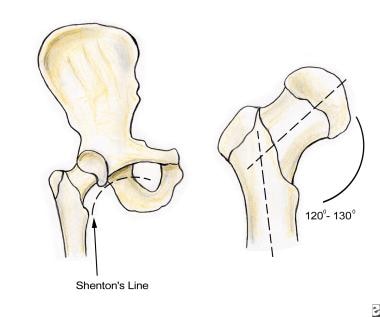
Skeletal anatomyThe hip joint is a large multiaxial ball-and-socket synovial joint, enclosed by a thick articular capsule. The hip joint is designed for stability and a wide range of movement. Next to the shoulder, it is the most moveable of all joints. During standing, the entire weight of the upper body is transmitted to the heads and necks of the femurs. The round head of the femur articulates with the cuplike acetabulum. The depth of the acetabulum is increased by the reinforcing fibrocartilaginous labrum, which "grasps" the femoral head, covering more than half of it. Articular cartilage covers the entire head of the femur, except for the pit (fovea) for the ligament of the femoral head. The strong, loose fibrous capsule permits free movement of the hip joint, attaching proximally to the acetabulum and transverse acetabular ligament. The fibrous capsule attaches distally to the neck of the femur only anteriorly at the intertrochanteric line and root of the greater trochanter. Posteriorly, the fibrous capsule crosses to the neck proximal to the intertrochanteric crest without attaching to it. The fibrous capsule thickens to form 3 ligaments of the hip joint: the Y-shaped iliofemoral ligament (of Bigelow), the pubofemoral ligament, and the ischiofemoral ligament. The hip joint is further supported by the femur and the muscles that cross the joint; this bone and these muscles are the largest and most powerful in the human body. The anatomy of the femur is shown in Media file 1. The length, angle, and narrow circumference of the femoral neck permit substantial range of motion at the hip but also subject the femoral neck to incredible shearing forces. A fracture results when these forces exceed the strength of the bone. The intertrochanteric line is an oblique line that connects the greater and lesser trochanters, dividing the femoral neck from the shaft. Hip fractures involve fracture of any aspect of the proximal femur, from the head to the first 4-5 cm of the subtrochanteric area.
Vascular supplyThe vascular supply to the proximal femur is tenuous and provided largely by two sources. Branches of the medial and lateral circumflex femoral arteries, usually branches of the deep femoral artery, ascend on the posterior aspect of the femoral neck in the retinacula (reflections of the capsule along the neck of the femur toward the head). The branches of the medial and lateral circumflex arteries perforate the bone just distal to the head of the femur where they anastomose with branches from the foveal artery and with medullary branches located within the shaft of the femur. The ligament of the head of the femur usually contains the artery of the ligament of the head of the femur (foveal artery), a branch of the obturator artery. The foveal artery enters the head of the femur only when the center of the ossification has extended to the pit (fovea) for the ligament of the head, around age 11-13 years. This anastomosis persists even in advanced age but is never established in 20% of the population. Femoral neck fractures often disrupt the blood supply to the head of the femur. The medial circumflex artery supplies most of the blood to the head and neck of the femur and is often torn in femoral neck fractures. In some cases, the blood supplied by the foveal artery may be the only blood received by the proximal fragment of the femoral head. If the blood vessels are ruptured, the fragment of bone may receive no blood and undergo avascular necrosis (AVN).
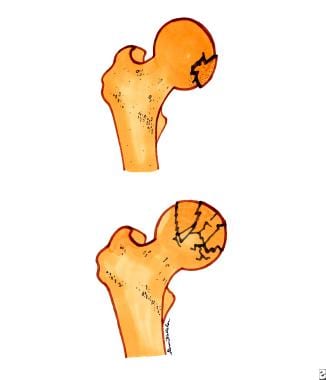
Classifying fracturesHip fractures can be classified based on their relation to the hip capsule (intracapsular and extracapsular), geographic location (head, neck, trochanteric, intertrochanteric, and subtrochanteric), and degree of displacement. Higher-grade displacement implies worse prognosis. Fractures of the femoral head and neck are intracapsular, whereas those of the trochanteric, intertrochanteric, and subtrochanteric regions are extracapsular. The treatment as well as the prognosis for successful union and restoration of normal function varies considerably with fracture type. Intracapsular hip fractures, like all other intracapsular fractures, frequently have complicated healing. The thick capsule that surrounds these fractures separates them from adjacent soft tissue and capillaries, leading to impaired callous formation. Thus, nonunion and AVN are added complications of these fractures. Femoral head fractures Isolated femoral head fractures are rare and are usually associated with hip dislocations. Superior femoral head fractures normally are associated with anterior dislocations, while inferior femoral head fractures are associated with posterior dislocations. They are usually best appreciated on postreduction radiographs for hip dislocations. Fractures of the femoral head are more common in younger patients as a result of major trauma, which is more likely to cause femoral neck fractures in older patients.
Femoral neck fractures These are rare among younger patients but are commonly seen in older adults, most often secondary to osteoporosis or osteomalacia. These fractures usually result from minor trauma with falls accounting for 90%, or torsion. From proximal to distal, femoral neck fractures can be further delineated as subcapital, transcervical, and basicervical, all of which are intracapsular and associated with potential disruption of the vascular supply. The incidence of avascular necrosis (AVN) is up to 15% in nondisplaced fractures and increases to nearly 90% with untreated, completely displaced fractures.
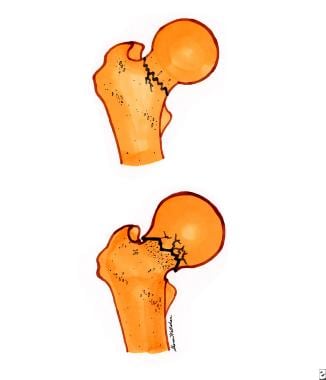
- Type 1 - Stress fractures or incomplete fractures (see Media file 3)
- Type 2 - Impacted fractures (see Media file 3)
- Type 3 - Partially displaced fractures (see Media file 4)
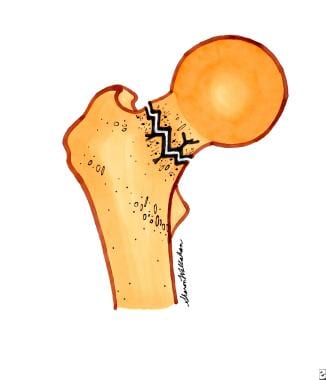
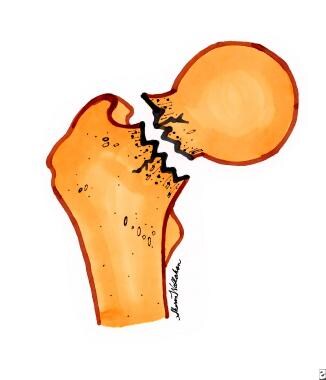
- Type 4 - Completely displaced or comminuted fractures (see Media file 5)
Trochanteric fractures Greater trochanteric fractures usually result from avulsion injuries at the insertion of the gluteus medius. Lesser trochanteric fractures may be caused by avulsion injuries of the iliopsoas secondary to forceful contraction. These are most common in children and young athletes (eg, dancers, gymnasts).
- Type 1 - Nondisplaced fractures (see Media file 6)
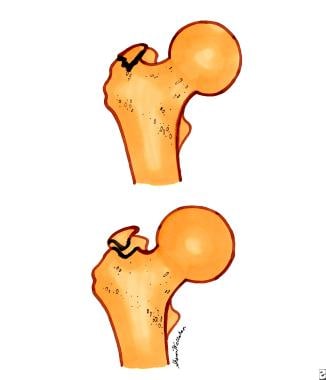
- Type 2 - Displaced fractures; >1 mm displacement for fractures of the greater trochanter and >2 mm displacement for fractures of the lesser trochanter (see Media file 6)
Intertrochanteric fractures These extracapsular fractures occur in a line between the greater and lesser trochanters, generally in elderly patients and women secondary to osteoporosis.
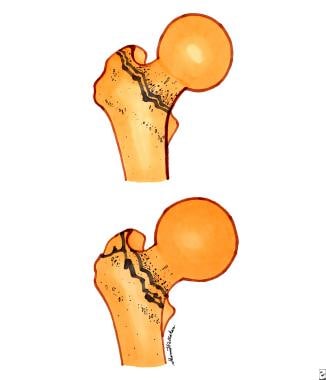
- Type 1 - Single fracture line without displacement; stable (see Media file 7)
- Type 2 - Multiple fracture lines (comminution) with displacement; unstable (see Media file 7)
Subtrochanteric fractures These fractures have a bimodal age distribution and are seen most often in those aged 20-40 years in association with high-energy trauma and in patients older than 60 years secondary to falls on osteoporotic bones.
- Stable: Bony contact of medial and posterior femoral cortices
- Unstable
Frequency
United States
In the United States, hip fracture occurs in approximately 80 per 100,000 persons or approximately 250,000 persons each year. The rate of hip fracture increases with age, doubling each decade after age 50 years. Nearly half of all hip fractures occur in adults older than 80 years. Hip fracture at a young age is rare and is usually the result of a high-velocity injury or, rarely, secondary to bone pathology.
International
The US frequency of hip fracture, when age and sex are adjusted, ranks the highest in the world. Western Europe and New Zealand also have reported high rates, with the lowest rates occurring in the South African Bantu people and in East Asian countries, where the incidence of osteoporosis is low.
Mortality/Morbidity
- Reported overall mortality rate of hip fractures is 15-20%, yet in older persons this can increase to 36% over the year following hip fracture. Rate of mortality is greatest in the first few months following injury but remains high for up to 1 year. It then returns to the same rate for age- and sex-matched people without hip fracture. Surgical delay independently affects mortality. Patients for whom surgery is delayed for 2 days or more, have a 17% higher mortality rate at 1 month. A subsequent study showed increased mortality but decreased readmission rate in those repaired more than 4 days from the time of injury.2 Also, general anesthesia was associated with higher morbidity than was spinal/epidural anesthesia.2
- Morbidity associated with hip fracture is staggering, especially in older persons. Morbidity from immobilization includes development of deep vein thrombosis, pulmonary embolism, pneumonia, and muscular deconditioning. Morbidity from surgical procedures includes complications of anesthesia, postoperative infection, loss of fixation, malunion or nonunion, as well as the complications associated with immobilization as outlined above.
- Hip fracture resulting from major trauma often is associated with other bone and soft-tissue injuries, intra-abdominal and intrapelvic injuries, major blood loss, head and neck injuries, and other extremity injuries. Morbidity associated with an inability to return to a prefracture level of mobility results in a loss of independence, reduction in quality of life, and depression, particularly in older persons.
Race
The incidence of hip fracture is 2-3 times greater in whites than in nonwhites, primarily because of the increased rate of osteoporosis in whites. This difference is not unique to females; African American and Asian men have been found to have significantly higher bone densities than their Caucasian and Latino counterparts.3
Sex
Rate of hip fracture is 2-3 times greater in women than in men. At least 75% of all hip fractures occur in women. The lifetime risk of hip fracture in white women and men is 15% and 5%, respectively. Femoral neck fractures are more common in women than in men by about 4:1, while intertrochanteric fractures are more common in women than in men by about 5:1.
History
- In elderly patients, hip fracture most often results from a simple fall; in a small percentage, it occurs spontaneously, in the absence of any trauma.
- Patient complains of pain and inability to move the hip.
- With stress fractures in young athletes and nondisplaced fractures, patient may complain of pain in hip or knee and may be ambulatory.
- Patient may have a history of other osteoporotic fractures, such as Colles or vertebral compression fractures.
Physical
- Perform a primary survey in trauma patients and stabilize as needed.
- Complete a detailed secondary survey because of the high likelihood of associated injuries. Up to 70% of patients with femoral head fracture-dislocations experienced major associated injuries, including other extremity injuries, intra-abdominal or intrapelvic injuries, neck injuries, and head injuries.
- Pay particular attention to vital signs and secondary manifestations of shock such as changes in skin, mental status, and urine output. Hip fractures are associated with blood volume losses of up to 1500 mL.
- Inspect and palpate for deformity, hematoma formation, laceration, and asymmetry.
- Observe the anatomical position of the extremity because this alone provides useful clues to the type of injury the patient has sustained.
- Femoral head fracture: Posterior dislocation is most common (eg, a dashboard injury), in which case the extremity appears adducted and internally rotated. With anterior dislocation, the extremity is abducted, and externally rotated.
- Femoral neck fracture: With partial or completely displaced fractures (types 3 and 4, respectively), the patient has severe pain and lies with the extremity slightly shortened, abducted, and externally rotated. In the case of a stress fracture or severe impaction fractures (types 1 and 2, respectively), the only physical findings may be minor pain with little or no limitation in range of motion.
- Trochanteric fracture: With a greater trochanteric fracture, the patient presents with pain, especially with abduction and extension. No deformity may be apparent, but pressure through greater trochanters will result is pain. With a lesser trochanteric fracture, pain occurs during flexion and internal rotation.
- Intertrochanteric fracture: The extremity appears shortened and significantly externally rotated, in contrast to the minimal deformities associated with femoral neck fractures. Pain, hip edema and ecchymosis, and pain with any movement may also be noted.
- Subtrochanteric fracture: The proximal femur usually is held in flexion and external rotation.
- In assessing range of motion (ROM), first test external and internal rotation with the extremity held in extension. If a fracture exists, especially one that is displaced, the remainder of ROM examination is extremely painful, of limited diagnostic use, and potentially dangerous. If the patient has pain with the initial ROM examination, obtain radiograph before completing the examination.
- Perform a detailed distal neurovascular examination.
- If the patient is a trauma victim, assess for pelvic fractures by stressing the pelvis anteriorly to posteriorly through iliac crests and symphysis pubis, and laterally to medially through iliac crests.
Causes
- In young persons, hip fractures generally result from trauma associated with significant force. For example, 75% of all femoral head fractures, more common among young patients, occur as a result of motor vehicle collisions.
- In older persons, more than 90% of hip fractures result from trauma or torsion associated with a minor fall or, occasionally, in the absence of any obvious traumatic event.
- Osteoporosis is the leading cause of hip fracture.
- Other risk factors for hip fracture include the following:
- Neurological impairment
- Caucasian race
- Cigarette smoking
- Institutional living
- Maternal history of hip fracture
- Previous hip fracture
- Physical inactivity
- Tall stature
- Alcohol abuse
- Previous Colles or vertebral fracture attributed to osteoporosis
- Low body weight
- Impaired vision
- Prolonged corticosteroid use
- Use of medications that decrease bone mass, including furosemide, thyroid hormone, phenobarbital, and phenytoin
Dislocations, Hip
Fractures, Pelvic
Lab Studies
- Laboratory studies are not useful in the diagnosis of fracture. Preoperative laboratory studies usually are drawn.
Imaging Studies
- Anteroposterior (AP) and lateral views demonstrate most fractures.
- If a fracture is not obvious, look for alteration of the Shenton line and compare it to the other hip. In addition, check the neck-shaft angle, which is determined by measuring the angle created by lines drawn through the centers of the femoral shaft and femoral neck. This should be approximately 120-130°.
- For patients in whom femoral neck fracture is strongly suspected but standard x-ray findings are negative, an AP view with internal rotation provides a better view of the femoral neck.
- If radiographic findings are equivocal but the history and physical examination are concerning for fracture, CT scan should be considered, particularly in unstable patients or those for whom MRI would be significantly delayed.
- MRI and bone scan
- If standard radiograph findings are negative and hip fracture still is strongly suspected, MRI and bone scan have high sensitivity in identifying occult injuries.
- MRI is 100% sensitive in patients with equivocal radiographic findings.
- Traditionally, bone scan has been thought to be unreliable before 48-72 hours after fracture, but one study found a sensitivity of 93% regardless of time from injury, including fractures less than 24 hours old.
- For patients in whom a fracture is strongly suspected and radiographs are negative, consider admission if MRI or bone scan is not readily available.
Prehospital Care
- Prehospital treatment of a patient who complains of hip pain should include immobilization on a stretcher.
- If the patient is a victim of multiple traumas, address the ABCs and immobilize the cervical spine as appropriate.
- If fracture or deformity of the femur is obvious, apply a traction splint and place an intravenous (IV) line for hydration.
- If the patient is hypotensive or tachycardic, initiate crystalloid fluid bolus and place patient on supplemental oxygen.
Emergency Department Care
- If the patient is a victim of trauma, attend to the ABCs first and conduct a thorough search for other possible injuries.
- In cases of obvious femur fracture, immobilize the patient, place 2 large-bore IV lines for hydrations and possible transfusion, restrict the patient's oral intake to nothing by mouth (NPO), and obtain specimens for preoperative labs if necessary.
- Orthopedic treatment decisions vary significantly among different practitioners, thus early consultation for all hip fractures is recommended.
- Initiate appropriate parenteral analgesia as soon as possible.
- Femoral head fractures
- Type 1: Orthopedic consultation in the ED should be obtained. Treatment is to reduce dislocated femoral head and fracture fragment as soon as possible to avoid avascular necrosis. Small fracture fragments may need to be removed. If a single attempt at closed reduction fails, then open reduction and internal fixation (ORIF) is the next treatment of choice.
- Type 2: Early orthopedic consultation for admission and arthroplasty is recommended.
- Femoral neck fractures
- Type 1: Some practitioners handle these fractures nonoperatively with initial immobilization in selected patients, while others prefer operative treatment in all patients.
- Types 2, 3, and 4: Management usually includes ORIF or arthroplasty; however, some impacted fractures can be treated conservatively. Early orthopedic consultation is recommended.
- Trochanteric fractures
- Type 1: Management is most often conservative, and orthopedic consultation is recommended.
- Type 2: These fractures usually are treated with reduction and internal fixation, except in older or debilitated patients in whom conservative treatment is appropriate.
- Intertrochanteric fractures
- Apply traction or a traction splint.
- Note the potential for significant blood loss. IV fluid resuscitation is generally recommended.
- Stable and unstable fractures usually are treated with ORIF unless the patient is not an operative candidate for other reasons.
- Early orthopedic consultation is recommended.
- Subtrochanteric fractures
- Significant hemorrhage is common, and IV fluid resuscitation is frequently necessary.
- ED application of traction or traction splint is necessary.
- Properly evaluate the entire patient to rule out associated severe injuries.
- Consult orthopedic surgeon for admission and ORIF for most patients.
Consultations
Orthopedic surgery; vascular surgery or neurology, if necessary
Parenteral analgesia is strongly recommended. A muscle relaxant also may be necessary. Administer antibiotics to cover skin flora (ie, cefazolin sodium) and tetanus immunization, as necessary, in open fractures.
Drug Category: Analgesics
Pain control is essential to quality patient care. It ensures patient comfort, promotes pulmonary toilet, and aids physical therapy regimens. Many analgesics have sedating properties that benefit patients who have sustained fractures.
| Drug Name | Morphine sulfate (Duramorph, Astramorph, MS Contin) |
| Description | DOC for narcotic analgesia due to its reliable and predictable effects, safety, and ease of reversibility with naloxone. Morphine sulfate administered IV may be dosed in a number of ways and commonly is titrated until desired effect attained. |
| Adult Dose | Starting dose: 0.1 mg/kg IV/IM/SC Maintenance dose: 5-20 mg/70 kg IV/IM/SC q4h Relatively hypovolemic patients: Start with 2 mg IV/IM/SC and reassess hemodynamic effects of dose |
| Pediatric Dose | Neonates: 0.05-0.2 mg/kg IV/IM/SC prn Children: 0.1-0.2 mg/kg IV/IM/SC q2-4h prn |
| Contraindications | Documented hypersensitivity; hypotension; potentially compromised airway in which establishing rapid airway control would be difficult |
| Interactions | Phenothiazines may antagonize analgesic effects; tricyclic antidepressants, MAOIs, and other CNS depressants may potentiate adverse effects |
| Pregnancy | C - Fetal risk revealed in studies in animals but not established or not studied in humans; may use if benefits outweigh risk to fetus
|
| Precautions | Avoid in hypotension, respiratory depression, nausea, emesis, constipation, and urinary retention; caution in atrial flutter and other supraventricular tachycardias; has vagolytic action and may increase ventricular response rate |
| Drug Name | Fentanyl citrate (Duragesic, Sublimaze) |
| Description | More potent narcotic analgesic than morphine sulfate with much shorter half-life. DOC for conscious sedation analgesia. Ideal for analgesic action of short duration during anesthesia (premedication, induction, maintenance), and in immediate postoperative period. With short duration (30-60 min) that is easy to titrate, excellent choice for pain management and sedation. Easily and quickly reversed by naloxone. After initial dose, do not titrate subsequent doses more frequently than q3h or q6h. When using transdermal dosage form, pain is controlled in most patients with 72-h dosing intervals. However, a small number of patients require dosing intervals of 48 h. |
| Adult Dose | 0.5-1 mcg/kg/dose IV/IM q30-60min Transdermal: Apply 25 mcg/h system q48-72h |
| Pediatric Dose | <2 years: 2-3 mcg/kg/dose IV/IM q30-60min 2-12 years: 1-2 mcg/kg/dose IV/IM q60min >12 years: Administer as in adults |
| Contraindications | Documented hypersensitivity; hypotension; potentially compromised airway in which establishing rapid airway control would be difficult |
| Interactions | Phenothiazines may antagonize analgesic effects; tricyclic antidepressants may potentiate adverse effects |
| Pregnancy | C - Fetal risk revealed in studies in animals but not established or not studied in humans; may use if benefits outweigh risk to fetus
|
| Precautions | Caution in hypotension, respiratory depression, constipation, nausea, emesis, and urinary retention; idiosyncratic reaction, known as chest wall rigidity syndrome, may require neuromuscular blockade to increase ventilation |
Drug Category: Antibiotics
Therapy must cover all likely pathogens in the context of the clinical setting.
| Drug Name | Cefazolin (Ancef, Kefzol, Zolicef) |
| Description | First-generation, semisynthetic cephalosporin that acts by binding to 1 or more penicillin-binding proteins to arrest bacterial cell wall synthesis and inhibit bacterial replication. Primarily active against skin flora, including Staphylococcus aureus. Typically use alone for skin and skin-structure coverage. Total daily dosages are same for IV/IM routes. |
| Adult Dose | 2 g IV/IM q6-12h; not to exceed 12 g/d |
| Pediatric Dose | 25-100 mg/kg/d IV/IM divided q6-8h; not to exceed 6 g/d |
| Contraindications | Documented hypersensitivity |
| Interactions | Probenecid prolongs effects; coadministration with aminoglycosides may increase renal toxicity; may yield false-positive urine dip test for glucose |
| Pregnancy | B - Fetal risk not confirmed in studies in humans but has been shown in some studies in animals
|
| Precautions | Adjust dose in renal impairment; superinfections and promotion of nonsusceptible organisms may occur with prolonged use or repeated therapy |
| Drug Name | Gentamicin (Gentacidin, Garamycin) |
| Description | Aminoglycoside antibiotic used for gram-negative bacterial coverage. Commonly used in combination with both an agent against gram-positive organisms and one that covers anaerobes. Used in conjunction with ampicillin or vancomycin for prophylaxis in patients with open fractures. |
| Adult Dose | 1.5 mg/kg IV; not to exceed 80 mg |
| Pediatric Dose | 2 mg/kg IV |
| Contraindications | Documented hypersensitivity; non–dialysis-dependent renal insufficiency |
| Interactions | Other aminoglycosides, cephalosporins, penicillins, and amphotericin B may increase nephrotoxicity; aminoglycosides enhance effects of neuromuscular blocking agents, thus prolonged respiratory depression may occur; loop diuretics may increase auditory toxicity of aminoglycosides—possible irreversible hearing loss of varying degrees may occur (monitor regularly) |
| Pregnancy | C - Fetal risk revealed in studies in animals but not established or not studied in humans; may use if benefits outweigh risk to fetus
|
| Precautions | Narrow therapeutic index (not intended for long-term therapy); caution in renal failure (not on dialysis), myasthenia gravis, hypocalcemia, and conditions that depress neuromuscular transmission; adjust dose in renal impairment |
| Drug Name | Ampicillin (Omnipen, Marcillin) |
| Description | Used along with gentamicin for prophylaxis in patients with open fractures. Interferes with bacterial cell wall synthesis during active multiplication, causing bactericidal activity against susceptible organisms. Given in place of amoxicillin in patients unable to take medication orally. |
| Adult Dose | 2 g IV/IM |
| Pediatric Dose | 50 mg/kg IV/IM |
| Contraindications | Documented hypersensitivity |
| Interactions | Probenecid and disulfiram elevate levels; allopurinol decreases effects and has additive effects on ampicillin rash; may decrease effects of oral contraceptives |
| Pregnancy | B - Fetal risk not confirmed in studies in humans but has been shown in some studies in animals
|
| Precautions | Adjust dose in renal failure; evaluate rash and differentiate from hypersensitivity reaction |
| Drug Name | Vancomycin (Vancocin) |
| Description | Potent antibiotic directed against gram-positive organisms and active against Enterococcus species. Also useful in treatment of septicemia and skin-structure infections. Used in conjunction with gentamicin for prophylaxis in penicillin-allergic patients with open fractures. May need to adjust dose in patients with renal impairment. |
| Adult Dose | 1 g IV infused over 1 h |
| Pediatric Dose | 1.5 mg/kg IV infused over 1 h |
| Contraindications | Documented hypersensitivity |
| Interactions | Erythema, histaminelike flushing, and anaphylactic reactions may occur when administered with anesthetic agents; taken concurrently with aminoglycosides, risk of nephrotoxicity may increase above that with aminoglycoside monotherapy; effects in neuromuscular blockade may be enhanced when coadministered with nondepolarizing muscle relaxants |
| Pregnancy | C - Fetal risk revealed in studies in animals but not established or not studied in humans; may use if benefits outweigh risk to fetus
|
| Precautions | Caution in renal failure, neutropenia; red man syndrome caused by too rapid IV infusion (dose given over a few min) but rarely happens when dose given over 2 h or by PO or IP route; red man syndrome not an allergic reaction |
Further Inpatient Care
- Most patients should be admitted to the hospital under the care of an orthopedic surgeon. If operative repair is planned, the patient should be cleared medically by his or her primary care physician or internist.
- Patients with multiple medical problems can be admitted to the primary care service with orthopedic consultation.
- Patients who have sustained multiple traumas should be admitted to the trauma service or general/trauma surgeon.
Further Outpatient Care
- Few patients are eligible for discharge; those who are sent home usually require prolonged bed rest.
- Consultation with an orthopedist is imperative because of the variety of treatment options and preferences.
Deterrence/Prevention
- The best prevention is deterrence, specifically, avoiding the risk factors (see Causes) and undertaking fall prevention in older persons. An older patient who presents after a fall should undergo a risk assessment to prevent further falls.
- Calcium supplementation, bisphosphonates, parathyroid hormone, and estrogen replacement therapy may decrease the risk of hip fractures in individuals with osteoporosis.
Complications
Prognosis
- Hip fracture outcomes vary considerably depending upon the patient's age, comorbidities, fracture type, and numerous other factors.
- In general, young patients almost always regain the ability to ambulate, yet depending on fracture type, they may not return to their previous level of activity.
- Many older patients do not regain the ability to ambulate or are able to do so only with assistance. This profoundly affects their ability to live independently.
- Almost 20% of patients never regain the ability to ambulate, and a similar percentage are unable to ambulate outside their homes.
- Only 50-65% regain their premorbid ambulatory status.
Patient Education
- Prevention of hip fracture is vastly superior to current treatment modalities. Gear patient education toward identification of avoidable risk factors in the patient's life.
- In young persons, stress avoidance of tobacco and alcohol abuse and safe, responsible use of motorized vehicles.
- Counsel older persons on ways to make their home environment safe from falls. Encourage them to consult with their primary physician regarding medications or supplements for the prevention and treatment of osteoporosis.
- For excellent patient education resources, visit eMedicine's Foot, Ankle, Knee, and Hip Center and Breaks, Fractures, and Dislocations Center.
Medical/Legal Pitfalls
- Failure to prevent patient with a stress or incomplete femoral neck fracture from ambulating, thus creating a complete or displaced fracture
- Failure to consider diagnosis of stress fracture of the femoral neck in a young patient with chronic hip or knee pain
- Failure to consider diagnosis of incomplete femoral neck fracture in an older patient with hip pain and nondiagnostic standard radiograph views.
The authors and editors of eMedicine gratefully acknowledge the contributions of previous authors, Gigi R Madore, MD, and Geoff Winkley, MD, to the development and writing of this article.
| Media file 2:
Femoral head fractures. Top diagram is a single-fragment femoral head fracture. Bottom diagram is a comminuted femoral head fracture. |
 | View Full Size Image | |
Media type: Image
|
| Media file 3:
Femoral neck fractures. Top diagram is a nondisplaced, or incomplete, femoral neck fracture. Bottom diagram is an impacted femoral neck fracture. |
 | View Full Size Image | |
Media type: Image
|
| Media file 6:
Trochanteric fractures. Top diagram is a nondisplaced trochanteric fracture. Bottom diagram is a displaced trochanteric fracture. |
 | View Full Size Image | |
Media type: Image
|
| Media file 7:
Intertrochanteric fractures. Top diagram is a single fracture line intertrochanteric fracture. Bottom diagram is a displaced, or multiple fracture line, intertrochanteric fracture. |

 | View Full Size Image | |
Media type: Image
|
- Egan M, Jaglal S, Byrne K, Wells J, Stolee P. Factors associated with a second hip fracture: a systematic review. Clin Rehabil. Mar 2008;22(3):272-82. [Medline].
- Radcliff TA, Henderson WG, Stoner TJ, Khuri SF, Dohm M, Hutt E. Patient risk factors, operative care, and outcomes among older community-dwelling male veterans with hip fracture. J Bone Joint Surg Am. Jan 2008;90(1):34-42. [Medline].
- Marshall LM, Zmuda JM, Chan BK, Barrett-Connor E, Cauley JA, Ensrud KE, et al. Race and ethnic variation in proximal femur structure and BMD among older men. J Bone Miner Res. Jan 2008;23(1):121-30. [Medline].
- Delee JC. Fractures in Adults. Lippincott-Raven Publishers; 1996:1659-63.
- Geiderman J. Hip injuries. In: Harwood-Nuss A, Linden CH, eds. The Clinical Practice of Emergency Medicine. Lippincott-Raven Publishers; 1991:407-409.
- Gurr DE, Gibbs MS. Femur and hip. In: Rosen's Emergency Medicine: Concepts and Clinical Practice. 5th ed. Mosby Inc; 2002:643-674.
- Holder LE, Schwarz C, Wernicke PG, Michael RH. Radionuclide bone imaging in the early detection of fractures of the proximal femur (hip): multifactorial analysis. Radiology. Feb 1990;174(2):509-15. [Medline].
- LaVelle DG. Fractures of hip. In: Campbell's Operative Orthopaedics. 10th ed. Mosby Inc; 2003:2873-2938.
- Lin JT, Lane JM. Osteoporosis: a review. Clin Orthop Relat Res. Aug 2004;126-34. [Medline].
- Lu-Yao GL, Baron JA, Barrett JA, Fisher ES. Treatment and survival among elderly Americans with hip fractures: a population-based study. Am J Public Health. Aug 1994;84(8):1287-91. [Medline].
- McGuire KJ, Bernstein J, Polsky D, Silber JH. The 2004 Marshall Urist award: delays until surgery after hip fracture increases mortality. Clin Orthop Relat Res. Nov 2004;294-301. [Medline].
- Norton R, Campbell AJ, Lee-Joe T. Circumstances of falls resulting in hip fractures among older people. J Am Geriatr Soc. Sep 1997;45(9):1108-12. [Medline].
- Quinn SF, McCarthy JL. Prospective evaluation of patients with suspected hip fracture and indeterminate radiographs: use of T1-weighted MR images. Radiology. May 1993;187(2):469-71. [Medline].
- Simon RR, Koenigsknecht SJ. Emergency Orthopedics: The Extremities. 3rd ed. McGraw-Hill Professional Publishing; 1995:251-262.
- Steele MT, Ellison SR. Trauma to the pelvis, hip and femur. In: Tintinalli JE, et al, eds. Emergency Medicine: A Comprehensive Study Guide. The McGraw-Hill Companies Inc; 2004:1717-1726.
- Van Balen R, Steyerberg EW, Polder JJ, et al. Hip fracture in elderly patients: outcomes for function, quality of life, and type of residence. Clin Orthop Relat Res. Sep 2001;232-43. [Medline].
- van de Kerkhove MP, Antheunis PS, Luitse JS, Goslings JC. Hip fractures in nonagenarians: perioperative mortality and survival. Injury. Feb 2008;39(2):244-8. [Medline].
- Zuckerman JD. Hip fracture. N Engl J Med. Jun 6 1996;334(23):1519-25. [Medline].
Fracture, Hip excerpt Article Last Updated: Jul 22, 2008
|