Continually Updated Clinical Reference
 
 
  All Sources     eMedicine     Medscape     Drug Reference     MEDLINE
 
eMedicine - Abdominal Trauma, Penetrating : Article by

Quick Find
Authors & Editors
Introduction
Clinical
Differentials
Workup
Treatment
Medication
Follow-up
Miscellaneous
Multimedia
References

Related Articles
Anemia, Acute

Compartment Syndrome, Abdominal

Diaphragmatic Injuries

Domestic Violence

Pregnancy, Trauma

Shock, Hemorrhagic

Shock, Hypovolemic

Trauma, Lower Genitourinary

Trauma, Upper Genitourinary

Ultrasonography, Abdominal


Patient Education
Wounds Center

Puncture Wound Overview

Puncture Wound Causes

Puncture Wound Symptoms

Puncture Wound Treatment


Author: Paul A Testa, MD, Resident, Department of Emergency Medicine, New York University Medical Center, Bellevue Hospital

Paul A Testa is a member of the following medical societies: American Academy of Emergency Medicine, American College of Emergency Physicians, and Emergency Medicine Residents Association

Coauthor(s): Eric Legome, MD, Residency Director, Assistant Professor of Emergency Medicine, Department of Emergency Medicine New York University, New York University Hospital, Bellevue Hospital Center, Manhattan VA; Lewis J Kaplan, MD, FACS, FCCM, FCCP, Director, SICU and Surgical Critical Care Fellowship, Associate Professor, Department of Surgery, Section of Trauma, Surgical Critical Care, and Surgical Emergencies, Yale University School of Medicine

Editors: Roy Alson, MD, PhD, FACEP, FAAEM, Associate Professor, Department of Emergency Medicine, Wake Forest University School of Medicine; Medical Director, Forsyth County EMS; Deputy Medical Advisor, North Carolina Office of EMS; Associate Medical Director, North Carolina Baptist AirCare; Francisco Talavera, PharmD, PhD, Senior Pharmacy Editor, eMedicine; Jon Mark Hirshon, MD, MPH, Associate Professor, Department of Emergency Medicine, University of Maryland School of Medicine; John D Halamka, MD, MS, Associate Professor of Medicine, Harvard Medical School, Beth Israel Deaconess Medical Center; Chief Information Officer, CareGroup Healthcare System and Harvard Medical School; Attending Physician, Division of Emergency Medicine, Beth Israel Deaconess Medical Center; Rick Kulkarni, MD, Medical Director, Assistant Professor of Surgery, Section of Emergency Medicine, Yale-New Haven Hospital

Author and Editor Disclosure

Synonyms and related keywords: gunshot wound, GSW, stab wounds, SW, shotgun wounds, impalement, penetrating trauma, penetrating abdominal wounds, penetrating abdominal trauma, intra-abdominal hemorrhage, peritonitis, intra-abdominal injury, peritoneal injury, abdominal injury, abdominal trauma, intraperitoneal injury

Background

During the Civil War and late 1800s, penetrating abdominal wounds were managed expectantly and were nearly uniformly fatal. Laparotomy became the treatment of choice during World War I but still with high mortality. By World War II, early laparotomy resulted in a survival rate close to 50%. The 1950s afforded availability of antimicrobials, better understanding of fluid replacement, and faster transport from the scene, which further increased survival rates. By the late 1950s, mandatory laparotomy was the rule for the management of patients with abdominal penetrating trauma. Since the 1960s, mortality rates of 9.5-12.7% for civilian gunshot wounds and as low as 3.6% for stab wounds have been reported in the United States.

Over this period of time, there has been a substantial evolution in patient management. Resuscitation protocols reflect the impact of appropriate crystalloid administration, the immunomodulatory properties of blood transfusions and an understanding for physiologic end points of resuscitation. Damage control surgery and treatment of abdominal compartment syndrome have had major impacts on care of the severely injured. Technologies allow less invasive and more rapid and specific diagnostic evaluations. Selective operative management and increasing application of angioembolization have served to further reduce surgical intervention. Refinement of evidence-based clinical pathways has allowed for a judicious allocation of resources.

Nevertheless, penetrating abdominal organ injury patterns and survival have plateaued over the past decade. Death from refractory hemorrhagic shock or exsanguination in the first 24 hours remains the most common cause of mortality. Damage control surgery is being used more frequently with improved early survival but with a concurrent increase in late morbidity.

Pathophysiology

Physiologic evaluation of the patient with penetrating abdominal trauma concentrates on two major findings: peritonitis and hemodynamic instability.

Peritoneal signs develop when the peritoneal envelope and the posterior aspect of the anterior abdominal wall are both inflamed. The peritoneal or retroperitoneal blood and organ contents inflame deeper nerve endings (visceral afferent pain fibers) and result in poorly defined pain. Irritation of the parietal peritoneum leads to somatic pain, which tends to be more localized; however, the diffuse nature of intra-abdominal spillage often leads to diffuse findings. The back or shoulder distribution of pain may provide a clue to the damaged organ (ie, shoulder pain from a damaged spleen with subphrenic blood).

Hemodynamically stable patients with penetrating abdominal trauma and peritonitis can be assumed to have a hollow visceral perforation and may have significant intra-abdominal hemorrhage. Thus, peritonitis on physical examination is a trigger for emergent intervention regardless of vital signs.

Hypotension, narrow pulse pressure, and tachycardia or signs of inadequate end organ perfusion in the setting of penetrating abdominal trauma provide evidence of significant intra-abdominal injury, especially vascular trauma, and warrant immediate surgical exploration. Confounding injuries or medical problems, such as tension pneumothorax or acute myocardial infarction, need be excluded.

Wounds located on the anterior abdomen can be explored locally to determine whether they penetrate the peritoneum. On the flank area and back area, exploration is more difficult and less reliable. Therefore, flank and back wounds are not explored and are considered penetrating unless obviously superficial.

Gunshot wounds, considered high-velocity projectiles, are the most common cause (64%) of penetrating abdominal trauma, followed by stab wounds (31%) and shotgun wounds (5%). Injury patterns differ depending on the weapon. Low-velocity stab wounds are generally less destructive and have a lower degree of morbidity and mortality than gunshot wounds and shotgun blasts. Gunshot wounds and other projectiles have a higher degree of energy and produce fragmentation and cavitation, resulting in greater morbidity.

The severity of shotgun wounds depends on the distance of the victim from the weapon. The mass of a bullet is minimal, and, thus, their velocity decreases rapidly when the bullet leaves the barrel of the gun. When the distance is less than 3 yd, the injury is considered high velocity, and if the distance exceeds 7 yd, most of the buckshot penetrates only the subcutaneous tissue.

In penetrating abdominal trauma due to stab wounds, the most commonly injured organs are the liver (40%), small bowel (30%), diaphragm (20%), and colon (15%). Intra-abdominal injuries from a gunshot wound are to the small bowel (50%), colon (40%), liver (30%), and abdominal vascular structures (25%).

Frequency

United States

Tracking trauma is the purview of the National Center for Injury Prevention and Control (NCICP). Data collected by this organization suggest that traumatic injury is the third overall leading cause of death and the number one cause of death in persons aged 1-44 years. Penetrating abdominal trauma affects approximately 35% of those patients admitted to urban trauma centers and 1-12% of those admitted to suburban or rural centers.

The mechanism that underlies the penetrating trauma (eg, gunshot wound, stab wound, impalement) relates to the mode of injury (eg, accidental or intentional injury, homicide, suicide). Homicide or intentional injury is the predominant mode of abdominal injury in this patient population. Accidental injury is most common in pediatric home firearm injuries but is uncommon by comparison to the overall levels of homicide and intentional injury. Suicide via penetrating abdominal trauma is uncommon.

International

The frequency of penetrating abdominal injury across the globe relates to the industrialization of developing nations, weapons available, and, significantly, to the presence of military conflicts. Therefore, frequency varies.

Mortality/Morbidity

  • The death rate from penetrating abdominal trauma spans the entire spectrum (0-100%), depending on the extent of injury. Patients with violation of anterior abdominal wall fascia without peritoneal injury have a 0% mortality rate and minimal morbidity rate, while those with multiorgan injury complexes presenting with hypotension, base deficit less than -15 mEq/L HCO3, lactate level more than 20 mmol/L, and near exsanguination have an almost 100% mortality rate.
  • An average mortality rate for all patients with penetrating abdominal trauma is approximately 5% in most level 1 trauma centers, but this population is necessarily biased given the higher acuity seen at such centers, thus skewing the data.
  • The most common morbidities following penetrating abdominal trauma are wound infection (2-8%) and intra-abdominal abscess with or without sepsis (10-80%, depending on presence or absence of bowel injury in combination with major vascular injury).

Race

  • Race distribution in patients with penetrating abdominal trauma depends significantly on the location of the receiving hospital. Urban centers predominantly receive young African American and Hispanic males more frequently than young white males due to population demographics in these areas. A similar distribution occurs for their female counterparts.
  • Although quantifying the death rate for penetrating abdominal trauma by race is difficult, the relative risk of death for penetrating injury in general is known. African American males have a 3-fold increase in relative risk of death compared with their white male counterparts. African American females have a 2.5-fold increase in relative risk of death compared with their white female counterparts. However, suburban centers tend to receive a greater proportion of youthful to middle-aged white males as their predominant patient population because of regional demographics.

Sex

Males comprise the great majority of patients with penetrating trauma injuries across the United States and the world. In some areas of the United States, approximately 90% of patients with penetrating trauma are male.

Age

Injuries are the leading cause of death in patients aged 1-44 years.


History

The history provides clues to the most likely injury patterns and potential management priorities. Emergency medical services (EMS) personnel are often essential in providing a history, especially in a critically ill patient or someone with altered mental status.

  • A common acronym is the AMPLE history:
    • Allergies
    • Medications
    • Prior illnesses and operations
    • Last meal
    • Events and environment surrounding injury
  • Further historical factors include the following:
    • Anatomic location of injury and type of weapon (ie, gun, knife), which directs the diagnostic process; the number of gunshots heard, times stabbed, and position of the patient at the time of injury help describe the trajectory and path of the injuring object.
    • Close-range injuries transfer more kinetic energy than those sustained at a distance, although range is often difficult to ascertain when assessing gunshot wounds.
    • Blood loss at the scene should be quantified as accurately as possible from EMS personnel. However, previous research has shown that this assessment is very difficult and rarely reliable. The character of the bleeding (eg, arterial pumping, venous flow) may assist in determining whether major vascular injury has occurred.
    • The initial level of consciousness or, for moribund patients, the presence of any signs of life at the scene (ie, pupillary response, respiratory efforts, heart rate or tones) is vital to determine the prognosis and to guide resuscitative efforts. Particularly important is the patient's response to therapy en route to the ED. Evidence of hypotension in the field should raise suspicion for intra-abdominal injury.

Physical

The initial physical examination begins with visual assessment of the patient during transport into the ED, with particular focus on the ABCs. Rapid determinations regarding respiratory effort, perfusion, external hemorrhage, and consciousness level are usually easily made.

Initial vital signs assist in determining injury severity and need for operative intervention. Tachycardia, high or low respiratory rate, and hypotension are indicators for need for greater resource availability.

  • Primary survey
    • The primary survey is defined by the mnemonic ABCDE: Airway, Breathing, Circulation, Disability, and Exposure/Environment. Although described sequentially, much of this evaluation may be performed simultaneously and problems identified are managed immediately.
      • Airway - The airway always is assessed immediately for patency, protective reflexes, foreign body, secretions, and injury.
      • Breathing - Breathing is assessed by determining the patient's respiratory rate and by subjectively quantifying the depth and effort of inspiration.
      • Circulation: The circulation assessment begins with an evaluation of the patient's mental status, skin color, and skin temperature. Patients in significant hemorrhagic shock will progress from anxiety to agitation and finally coma if their blood loss continues unabated. The traditional vital signs of heart rate, blood pressure, and respiratory rate are not sensitive or specific for hemorrhagic shock.
      • Disability: This is assessed early to document neurologic deficits before giving sedation or paralytics. The Glasgow Coma Score and the gross motor and sensory status of all 4 extremities should be determined and recorded. The physician also should recognize the need for cerebro-protection measures in cases of brain injury.
      • Exposure/environment: Exposure is particularly important in the patient with a traumatic mechanism of injury where failure to identify a second or third injury may result in major morbidity due to failure to diagnose a life-threatening injury. Complete exposure and head-to-toe visualization of the patient is mandatory in a patient with penetrating abdominal trauma. This includes buttocks, posterior part of the legs, scalp, posterior part of the neck, and perineum. There is little to be gained by practicing spinal immobilization unless spinal injury is obvious.
    • Once the primary survey is complete, a complete head-to-toe physical examination is performed as an integral part of the secondary survey, including digital rectal and genital examinations. This detailed examination may need to be delayed until after operative therapy has corrected obvious life-threatening injury.
  • Secondary survey and injury assessment
    • External inspection for injuries with respect to anatomic landmarks aids identification of possible intracavitary injury. In evaluating patients with penetrating abdominal trauma, the abdomen is classically divided as follows:
      • Anterior abdomen - Anterior costal margins to inguinal creases, between the anterior axillary lines
      • Intrathoracic abdomen or thoracoabdominal area - Fourth intercostal space anteriorly (nipple) and seventh intercostal space posteriorly (scapular tip) to inferior costal margins
      • Flank - Scapular tip to iliac crest, between anterior and posterior axillary lines
      • Back - Scapular tip to iliac crest, between posterior and axillary lines
    • The physical examination is a more reliable indicator for surgical intervention with penetrating abdominal trauma than with blunt trauma. At many trauma centers, repeated abdominal examinations are the preferred approach for managing hemodynamically stable patients with penetrating abdominal stab wounds. Development of peritonitis or hemodynamic instability is an indication for operative intervention. While selective nonoperative management of penetrating abdominal trauma is practiced at most trauma centers in this country, hemodynamic instability and diffuse abdominal tenderness indicating peritonitis are surgical indications.
    • Common physical examination recommendations include evaluation for tympany (a bell-like or percussive note upon gently tapping on the abdomen), dullness to percussion, and bowel sounds. Abdominal distention, not clearly due to "bagging" or swallowed air, may be an indicator of an intra-abdominal catastrophe. A vascular injury is often found in combination with hollow or solid viscus penetration or devitalization.
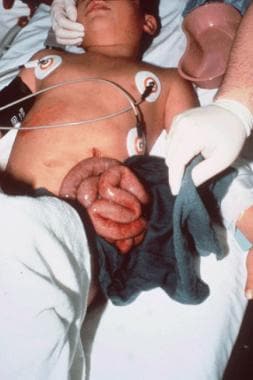
    • Evisceration has historically been a clear indication for operative management. However, some centers replace eviscerated omentum and serially observe or image these patients.
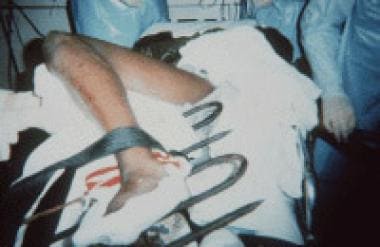
    • Impaling objects may tamponade otherwise uncontrolled hemorrhage if the object resides within or crosses a major vessel or solid organ such as the portal vein or liver. Therefore, penetrative objects should not be removed except where definitive treatment can be provided.
    • Several studies have looked at ED observation and serial examination with discharge in 10-12 hours on patients with negative findings. While promising, this has not been fully validated in multiple centers.
    • Increasing pain, peritoneal findings (eg, point tenderness, involuntary guarding, rebound tenderness), or diffuse and poorly localized pain that fails to resolve also indicates that surgical exploration should be undertaken.

Causes

  • Urban violence
  • Domestic violence crosses all socioeconomic barriers and is an important consideration in the evaluation of injuries sustained at home and those reportedly involving the patient's family or significant other.
  • Illegal drugs and legally purchased ethanol fuel all types of violence.
  • Global factors - From a global perspective, penetrating abdominal trauma in most settings results principally from military actions and wars.
  • Penetrating abdominal trauma may be iatrogenically introduced. A documented complication of diagnostic peritoneal lavage (DPL) is injury to the underlying bowel, bladder, or major vessels such as the aorta or vena cava. However, the incidence of such complications is relatively small.


Anemia, Acute
Compartment Syndrome, Abdominal
Diaphragmatic Injuries
Domestic Violence
Pregnancy, Trauma
Shock, Hemorrhagic
Shock, Hypovolemic
Trauma, Lower Genitourinary
Trauma, Upper Genitourinary
Ultrasonography, Abdominal

Other Problems to be Considered

Coagulopathy
Comorbid medical conditions
Concomitant closed head injury
Concomitant penetrating chest injury


Lab Studies

  • Patients with penetrating abdominal trauma generally require complete laboratory profiles in case of need for emergent operation.
    • Blood type and crossmatch
    • Complete blood count (CBC)
    • Electrolyte levels
    • BUN level
    • Creatinine level
    • Glucose level
    • Prothrombin time (PT)/activated partial thromboplastin time (aPTT)
    • Venous or arterial lactate level
    • Calcium, magnesium, and phosphate levels
    • Urinalysis
    • Serum and urine toxicology screen
  • Calculate the anion gap (reference range, 8-12 mmol/L) and base deficit (reference range, ±4 mmol/L) as guides to hypoperfusion.

Imaging Studies

  • The imaging needs of each patient differ, depending on hemodynamic stability and associated injuries.
  • Plain radiography
    • Plain abdominal radiography should be obtained with a history of projectiles or retained foreign body. The radiograph allows one to account for bullets, shrapnel, and foreign bodies. If all foreign bodies are not accounted for, consider the possibility that it is intraluminal or intravascular and a potential source of emboli distant from the site of entrance.
    • Chest radiography allows for evaluation of pneumothorax or hemothorax and is relatively specific, although insensitive, for diagnosing diaphragmatic injury.
  • FAST examination: The focused assessment with sonography for trauma (FAST) examination has gained acceptance in the evaluation of penetrating abdominal trauma. Speed, noninvasiveness, and reproducibility make it a good diagnostic study to aid in rapidly diagnosing intraperitoneal injury that requires laparotomy. That is, a positive FAST result in the setting of penetrating trauma is usually an indication for laparotomy due to the high positive predictive value for a therapeutic laparotomy. Unfortunately, a negative FAST result cannot rule out the need for laparotomy and cannot be relied on to exclude important intraperitoneal injury.
  • Ultrasonography: Sonographic evaluation of penetrating wounds also has been evaluated in the detection of fascial defects resulting from anterior abdominal stab injuries, reducing the need for local wound exploration. In one prospective trial, a positive fascial sonogram result obviated the need for invasive wound exploration because such patients were then taken to the operating room (OR). However, a negative fascial sonogram result did not rule out a penetration of the peritoneum.
  • Computed tomography
    • Triple contrast computed tomography (CT), using intravenous, oral, and rectal contrast, enables evaluation of the intraperitoneal and retroperitoneal structures. It is useful for evaluation of penetrating flank and back wounds and is found to be 97% accurate. Exploration of these wounds is more difficult, less reliable, and therefore not indicated.
    • Abdominal CT is the most sensitive and specific study in identifying and assessing the injury severity to the liver or spleen. The presence of a contrast blush on CT or ongoing hemorrhage is indication for laparotomy or angiography and embolization.
    • The primary limitation is lack of sensitivity in diagnosing mesenteric, hollow visceral, and diaphragmatic injuries, all of which are common in penetrating trauma. Therefore, unless the wound is clearly superficial on CT scan, admission and serial observation is indicated, even with a negative CT result for injury.
    • No absolute indications exist for CT in anterior penetrating trauma. Some centers use CT as a screening tool to complement physical examination, while others perform serial examination or DPL.
    • Increasingly, CT scan is being used for penetrating, nontangential gunshot wounds with a decrease in the negative laparotomy rate. It should be used only with patients who are stable and do not have evidence of generalized peritonitis. While it has been studied in several forms, the latest study looked at intravenous contrast alone with good results.1

Other Tests

  • Almost all other tests relate to (1) a skeletal survey for associated fractures, (2) a CT scan of the brain for coincident head injuries, or (3) a retrograde urethrogram or cystogram in a stable patient who has blood at the urethral meatus or evidence of urethral or bladder injury from penetration.
  • Nuclear medicine studies have no role in the acutely injured abdominal trauma patient.

Procedures

  • Local wound exploration
    • In the trauma patient with an anterior stab wound, local wound exploration may be a valuable diagnostic aid. Its utility is dependent on the wound's mechanism and location. Stab wounds to the anterior abdomen are well suited for local wound exploration because many do not penetrate the fascia. Exploration requires aseptic technique, good overhead lighting, and local anesthesia. The wound is enlarged as necessary so that the posterior fascia may be evaluated. If penetration occurs or is inconclusive, the wound is considered intraperitoneal and must be evaluated further by DPL or more invasive procedures.
    • Gunshot wounds and those produced by thin instruments, such as an ice pick, are more difficult to explore, and accordingly, are generally considered intraperitoneal injuries.
    • Once the area is surgically prepared, draped, and anesthetized, the wound may be widened with gentle retraction and gently probed with a hemostat to determine if a tract exists. If the wound is small, extending it to aid visualization is accomplished with a No 10 blade scalpel. The rectus fibers may be separated by spreading in their direction using a hemostat or Kelly clamp. The posterior rectus sheath is easily identifiable as a white layer directly underlying the rectus musculature. If yellow fat or omentum is identified, a fascial violation is established.
  • Diagnostic peritoneal lavage
    • The utility of DPL in the hemodynamically stable patient with penetrating abdominal injury is to identify hollow viscus or diaphragmatic injury. A DPL may be performed infraumbilically or supraumbilically. The bladder and stomach must be decompressed. An open mini-laparotomy or closed Seldinger technique may be used. Once the catheter is in place, the initial aspiration of gross blood or food particles mandates surgical exploration, and the procedure is terminated. If the aspiration is negative for blood, 1000 mL of warm Ringer lactate solution (20 mL/kg for pediatric patients) is infused rapidly and allowed to return by placing the intravenous bag on the floor.
    • Fluid is sent for analysis (eg, cell count, differential, Gram stain, bilirubin, amylase, vegetable matter, fecal matter). A positive test result varies with the mechanism of injury. A 100,000 RBC count or 100-500 WBC count may be considered positive in a stab wound. However, if a diaphragmatic injury is possible, some physicians lower the value of a positive test to 5000 RBC. Because of the more serious nature of gunshot wounds, clinicians often use a similarly lower value for a positive test when there is concern a projectile has entered the peritoneal cavity.
    • The lower the threshold for positivity, the more sensitive the test, but the higher the nontherapeutic laparotomy rate (ie, higher rate of false-positive result).
    • The primary disadvantages are invasiveness, inability to evaluate the retroperitoneum, moderate specificity for therapeutic laparotomy, and a significant false-positive rate.
  • Proctosigmoidoscopy
    • This procedure is indicated for evaluation of suspected rectal or sigmoid injury. While mainly performed by surgeons, it is occasionally performed by emergency physicians.
    • The patient is placed in the left lateral decubitus position in a knee-chest manner (provided the spine is clear). The sigmoidoscope is introduced into the anal canal and directed toward the patient's umbilicus. Identification of rectal or low sigmoid colon full-thickness rents, intramural hematoma, or luminal arterial blood loss requires prompt surgical exploration.
  • Laparoscopy
    • Laparoscopy is a reasonably safe, effective procedure for the evaluation and treatment of hemodynamically stable patients with abdominal trauma, and it can reduce the number of nontherapeutic laparotomies performed. In thoracoabdominal stab wounds, laparoscopy aids in the diagnosis of diaphragmatic and other intra-abdominal injuries.
    • Patients with stab wounds to the anterior abdomen or with uncertain peritoneal penetration are also candidates for diagnostic laparoscopy. Gunshot wounds to the anterior abdomen with questionable penetration may be assessed this way.
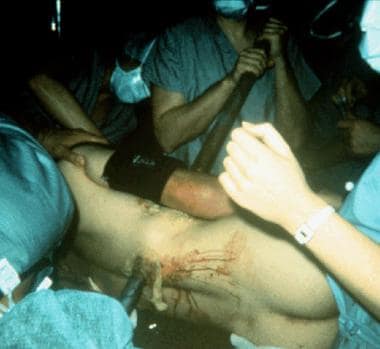
  • Emergency department thoracotomy
    • Victims of penetrating abdominal trauma with loss of vital signs or in whom present with exsanguination hemorrhage that is not controllable with direct external pressure are candidates for an ED left anterolateral-left thoracotomy. The purpose of this procedure is to relieve cardiac tamponade, control cardiac bleeding, obtain proximal aortic control, and provide open cardiac massage to improve cardiopulmonary cerebral resuscitation efforts.
    • This procedure is performed only in extremely selected circumstances since survival from abdominal injury requiring a resuscitative ED thoracotomy is rare. It is much more effective if the arrest is due to cardiac injury with thoracoabdominal trauma. Patients who may be considered for thoracotomy are those who had vital signs on arrival or en route, with or without pulseless electrical activity (PEA) on the monitor. Thoracotomy is rarely successful in blunt trauma.
    • After rapidly preparing and draping the entire chest, a curvilinear incision is made from the left sternal border of the fifth intercostal space to the table, paralleling the course of the underlying rib. All tissues above the rib are divided with the scalpel, respirations are halted, and the intercostal muscle bundle above the rib is pierced with a finger or a Kelly clamp and then divided with a curved Mayo scissor for the length of the incision. The lungs are reinflated, and a rib spreader is inserted with a ratchet mechanism placed laterally. The pericardium is opened longitudinally to avoid injury to the pericardiacophrenic vessels and the phrenic nerve. Subluxing the heart into the left chest allows for open massage. The left lung is retracted superiorly using a moist laparotomy pad, and the inferior pulmonary ligament is divided using Metzenbaum scissors.
    • The tissues overlying and just lateral to the vertebral bodies contain the aorta, esophagus, thoracic duct, and countless nerves. Usually, blunt dissection frees the aorta enough to place a Satinsky or long, curved DeBakey clamp. In certain circumstances, the aorta is not identified easily, and the aorta and esophagus must be clamped en masse in a patient who is in extremis. Warm saline is essential to prevent cooling of the heart, and presser support usually is needed as well.


Prehospital Care

  • The scope of care that paramedics deliver at the scene of the injury has evolved in parallel with the changing standard of care in the hospital setting.
    • Because most deaths occurred from exsanguination associated with prehospital hypotension, trauma system response is designed to minimize care in the field and expedite transport to the emergency department and to reduce the time to definitive care.
    • Aggressive intravenous fluid administration to maintain or reach normotension is discouraged in patients with penetrating injury unless the patient manifests severe shock or prolonged transport is expected.
  • Prehospital personnel must be well trained in properly assessing patients and in transporting them to the closest appropriate facility or trauma center. The receiving hospital should be notified as soon as possible by radio or ground line to give the ED time to prepare and to alert the appropriate staff. The mode of transportation also must be considered. In an urban setting with multiple appropriate facilities, the best transport is probably by ground. In the rural setting, where the closest facility is 25 minutes or more away, trauma patients' best chance for survival may be transport by air ambulance.

Emergency Department Care

Missed intra-abdominal injuries are among the most frequent causes of potentially preventable trauma deaths. The evaluation and management of abdominal trauma is dependent on mechanism and location of injury, hemodynamic and neurologic status of the patient, associated injuries, and institutional resources. A team leader should direct resuscitation and coordinate all care. Depending on the institution, it may be an emergency physician, trauma surgeon, or one of their supervised residents. Given the potential for significant injury, a junior level physician should not lead care without direct oversight.

  • ED care of the patient with penetrating trauma revolves around several important concepts. On arrival, as the ABCDE's are being assessed, a few brief interventions should be performed. The patient should be placed on a cardiac monitor, pulse oximeter, and 100% nonrebreather oxygen mask. Intravenous access should be established.
    • Assessment and treatment of the basics of trauma life support
      • Airway: Patients with severe shock or loss of ability to control their airway should be intubated to ensure appropriate oxygenation or ventilation. In general, occult cervical spine injury in penetrating trauma is highly unlikely. Unless there are clear deficits or associated blunt injury, cervical collars are rarely necessary and may hinder resuscitation.
      • Breathing: Tube thoracostomy or needle decompression should be undertaken immediately for patients with obvious pneumothorax. If the patient is otherwise stable, he or she should have a chest radiograph performed in the trauma room. An upright positioned radiograph during expiration may provide the best evidence of pneumothorax. Ultrasonography for pneumothorax has been shown to be highly accurate and may be used as the initial test, but it should be followed by a radiograph at some point.
      • Circulation: The route of intravenous access is important. Large-bore peripheral intravenous catheters in the upper extremities are the resuscitation lines of choice. These allow for rapid volume/blood infusion versus a central line where the infusion rate is slower. Still, extensive debate exists in the literature on the amount and end points for resuscitation prior to definitive control of hemorrhage. Both animal data and several studies in humans are looking at "permissive hypotension," that is, actively or passively allowing the blood pressure to remain in the hypotensive ranges less than 90 mm Hg. The theory is that this will prevent disruption of clot and dilution of clotting factors while maintaining adequate blood viscosity. While no definite consensus exists, prevailing thought seems to promote limited resuscitation with avoidance of attempting to raise blood pressure to normal or near-normal levels until hemorrhage is definitively controlled.
      • Deficits: A rapid and brief evaluation for neurologic deficits should be conducted.
      • Exposure: All patients with penetrating trauma should be fully undressed. Complete exposure and head-to-toe visualization of the patient is mandatory in a patient with penetrating abdominal trauma. This includes the buttocks, posterior part of the legs, scalp, posterior part of the neck, and perineum. There is little to be gained by practicing spinal immobilization unless spinal injury is obvious.
      • Depending on the initial assessment, and in all seriously injured patients, a Foley catheter should be placed if possible to monitor urine output and to check for hematuria. In addition, a nasogastric tube (NGT) or orogastric tube (OGT) should be inserted to evaluate for intragastric blood and to decompress the stomach so as to reduce aspiration risk. Appropriate laboratory specimens should be immediately sent to the laboratory for evaluation.
  • After the initial evaluation, further evaluation depends on the hemodynamics and mechanism of wounds. Briefly, options are as follows:
    • Stab wounds
      • Unstable patients or those with clear-cut peritonitis should undergo exploratory laparotomy.
      • If stable, patients may have local wound exploration to ascertain if the peritoneum was violated. If unable to perform or if flank or thoracoabdominal wounds are present, other methods must be used. DPL is still an option, but it is currently being used less frequently. A positive FAST examination result has a high positive predictive value for a therapeutic laparotomy, but a negative FAST examination result cannot be relied upon to rule out injury.
      • If thoracoabdominal, a chest radiograph should be obtained. If no signs of diaphragmatic injury are present, laparoscopy is usually advocated; although some surgeons will elect not too perform this on a right-sided wound given the low likelihood of delayed complications.
      • The use of CT scan is still controversial; some centers use it as a screening test in patients with anterior stab wounds, while others feel the cost-benefit ratio is not justified. A triple contrast CT should be performed on patients with penetrating flank wounds.
      • Essentially all nonoperative patients, except those who have a wound that clearly does not penetrate the abdomen, should be observed for serial examinations. Literature is beginning to support a shortened time frame of 12 hours, but most centers use about 24 hours.
    • Gunshot wounds
      • All unstable gunshot wounds should proceed emergently to the operating room (OR). Abdominal and other radiographs (depending on possible bullet course and number of wounds) should be taken at some point during the patient's care to account for all bullets.
      • In the past, all gunshot wounds that were clearly nontangential were taken to the OR for exploration. An increasing body of literature supports CT imaging, either triple contrast or just intravenous contrast alone to evaluate for intra-abdominal or retroperitoneal injury. This has been shown to significantly decrease the need for laparotomy without a concurrent increase in morbidity. All hollow viscus injuries need emergent laparotomy; however, isolated liver or spleen injuries are sometimes observed or undergo angioembolization.
  • Patient disposition relates to the type of facility and to the mechanism of and potential for injury. The most common post-ED disposition for patients with penetrating abdominal trauma is to the OR. Any patient with an obvious reason for laparotomy (eg, evisceration, rigid abdomen, hypotension) should be taken directly to the OR following initial evaluation and resuscitation in the ED. Some facilities do not have a surgical or OR team available 24 hours a day. In this case, these patients must be transferred to an appropriate facility. Similar concerns occur if the patient's injuries overwhelm the available resources at the receiving facility.

Consultations

In general, consultation by a general or trauma surgeon should be undertaken for victims of penetrating trauma.

  • At some centers, trauma surgeons perform the majority of operative repair, while at others, consultants may be involved as individual injuries are identified. For example, a vascular surgeon may repair major arterial and venous injuries or a urologist may address injuries to the bladder, kidneys, and ureters.
  • Trauma surgeons, even if not directly performing care, should oversee the patient's care and postoperative course.


In general, medications used to treat victims of penetrating abdominal trauma fall into discrete categories. Analgesics, anxiolytics, antimicrobials (skin and enteric flora), immune boosters (tetanus booster), and neuromuscular blockers comprise the major classes of pharmacotherapeutic agents used for these patients.

Drug Category: Analgesics

Pain control is essential to quality patient care. Appropriate and sufficient pain control is important. Concerns still exist regarding pain control in patients undergoing observation. A reasonable protocol should be developed by institutions in consultation with the trauma service or consulting surgeon. Postoperatively, analgesics are essential to ensure patient comfort, promote pulmonary toilet, and enable physical therapy regimens.

Drug NameMorphine sulfate (MS Contin, Oramorph SR, Duramorph)
DescriptionDrug of choice for analgesia due to reliable and predictable effects, safety profile, and ease of reversibility with naloxone.
Various IV doses are used; commonly titrated until desired effect is obtained.
Adult DoseInitial dose: 0.1 mg/kg IV/IM
Maintenance dose: 5-20 mg/70 kg IV/IM q4h
Relatively hypovolemic patients: Start with 2 mg IV/IM; reassess the hemodynamic effects of dose
Pediatric DoseNeonates: 0.05-0.2 mg/kg/dose IV prn
Children: 0.1-0.2 mg/kg/dose IV/IM q2-4h prn
ContraindicationsDocumented hypersensitivity; hypotension; respiratory depression; potentially compromised airway in which establishing rapid airway control would be difficult; nausea; emesis; constipation; urinary retention
InteractionsPhenothiazines may antagonize analgesic effects of opiate agonists; tricyclic antidepressants, MAOIs, and other CNS depressants may potentiate adverse effects
PregnancyC - Fetal risk revealed in studies in animals but not established or not studied in humans; may use if benefits outweigh risk to fetus
PrecautionsCaution in hypotension, respiratory depression, nausea, emesis, constipation, urinary retention, atrial flutter, and other supraventricular tachycardias; has vagolytic action and may increase ventricular response rate

Drug NameFentanyl citrate (Duragesic, Sublimaze)
DescriptionPotent narcotic analgesic with much shorter half-life than morphine sulfate. Common choice for procedural sedation analgesia. Excellent for analgesic action of short duration during anesthesia and immediate postoperative period. Excellent choice for pain management and sedation with short duration (30-60 min) and easy to titrate. Easily and quickly reversed by naloxone.
After initial dose, subsequent doses should not be titrated more frequently than q3h or q6h thereafter.
Most patients are controlled with 72-h dosing intervals when using transdermal dosage form, although some patients require 48-h dosing intervals.
Adult Dose0.5-1 mcg/kg/dose IV/IM q30-60min
Alternatively, apply a 25 mcg/h transdermal system q48-72h
Pediatric Dose<2 years: 2-3 mcg/kg/dose IV/IM q30-60min
2-12 years: 1-2 mcg/kg/dose q1h
>12 years: Administer as in adults
ContraindicationsDocumented hypersensitivity; hypotension; potentially compromised airway in which it would be difficult to establish rapid airway control
InteractionsPhenothiazines may antagonize analgesic effects of opiate agonists; tricyclic antidepressants may potentiate adverse effects of fentanyl when both drugs are used concurrently
PregnancyC - Fetal risk revealed in studies in animals but not established or not studied in humans; may use if benefits outweigh risk to fetus
PrecautionsCaution in hypotension, respiratory depression, constipation, nausea, emesis, and urinary retention; idiosyncratic reaction, known as chest wall rigidity syndrome, may require neuromuscular blockade to increase ventilation

Drug Category: Anxiolytics

Patients with painful injuries usually experience significant anxiety. Anxiolytics allow the clinician to administer a smaller analgesic dose to achieve the same effect.

Drug NameLorazepam (Ativan)
DescriptionSedative hypnotic with short onset of effects and relatively long half-life.
By increasing the action of GABA, a major inhibitory neurotransmitter in the brain, may depress all levels of CNS, including limbic and reticular formation.
Excellent choice when patient must be sedated for longer than 24 h.
Adult DoseInitial dose: 2 mg IV total or 0.044 mg/kg IV, whichever is smaller
For greater lack of recall: 0.05 mg/kg IV q4-8h; not to exceed 4 mg/dose
Pediatric Dose0.05-0.1 mg/kg IV slowly over 2-5 min; may repeat a dose of 0.5 mg/kg IV slowly
ContraindicationsDocumented hypersensitivity; preexisting CNS depression; hypotension; narrow-angle glaucoma
InteractionsToxicity of benzodiazepines in CNS increases when used concurrently with alcohol, phenothiazines, barbiturates, and MAOIs
PregnancyD - Fetal risk shown in humans; use only if benefits outweigh risk to fetus
PrecautionsCaution in renal or hepatic impairment, myasthenia gravis, organic brain syndrome, or Parkinson disease

Drug NameMidazolam hydrochloride (Versed)
DescriptionShorter-acting benzodiazepine sedative-hypnotic useful in patients requiring immediate and/or short-term sedation. Also useful for its amnestic effects. Frequently used for procedural sedation
Adult DoseProcedural sedation:
Loading dose: 0.05-0.2 mg IV over 2 min
Maintenance dose: Infuse 1-2 mcg/kg/min IV titrated to the desired effect
Dosing range: 0.4-6 mcg/kg/min
Alternatively, 0.07-0.08 mg/kg IM
Average total dose is 5 mg administered up to 1 h before surgery
Pediatric DoseSedation, anxiolysis, or amnesia: 0.1-0.15 mg/kg IV over 2-3 min; may use up to 0.5 mg/kg in very anxious patients
Intranasal route may be used for pediatric sedation (to age 2 y); doses are 1-2 mg and are limited by volume delivered
ContraindicationsDocumented hypersensitivity; preexisting hypotension; narrow-angle glaucoma; sensitivity to propylene glycol (the diluent)
InteractionsSedative effects may be antagonized by theophyllines; narcotics and erythromycin may accentuate sedative effects due to decreased clearance
PregnancyD - Fetal risk shown in humans; use only if benefits outweigh risk to fetus
PrecautionsCaution in congestive heart failure, pulmonary disease, renal impairment, and hepatic failure

Drug Category: Antibiotics

Antibiotic prophylaxis is proven to reduce postoperative surgical infections after penetrating abdominal trauma.

The Eastern Association for the Surgery of Trauma (EAST) Practice Management Guidelines Work Group recently published evidence-based consensus guidelines addressing the use and duration of antimicrobial prophylaxis after penetrating abdominal trauma. They recommended, in the absence of hollow viscus injury, patients should receive a single dose of a broad-spectrum antimicrobial agent that provides both aerobic and anaerobic coverage. No specific agent is recommended, but it may be a single agent with beta-lactam coverage or combination therapy with an aminoglycoside and clindamycin or metronidazole. In patients with a hollow viscus injury, antimicrobial prophylaxis should be extended to 24 hours.

While some controversies still exist regarding therapy for seriously injured patients, for the emergency physician, the key point is to start antibiotics in the ED. If the patient requires emergent laparotomy and must be rapidly transported, it may be done upon arrival to the OR.

Drug NameCefotetan (Cefotan)
DescriptionSecond-generation cephalosporin with activity against some gram-positive cocci, gram-negative rod infections, and anaerobic bacteria. Inhibits bacterial cell wall synthesis by binding to one or more of the penicillin-binding proteins; inhibits final transpeptidation step of peptidoglycan synthesis, resulting in cell wall death.
Infections caused by cephalosporin- or penicillin-resistant gram-negative bacteria may respond to cefotetan.
Antibiotics have proven effective in decreasing rate of postoperative wound infection and improving outcome in patients with intraperitoneal infection and septicemia.
Adult Dose2 g IV once prior to surgery, followed by 4 doses of 2 g q12h
Pediatric DoseNot established
ContraindicationsDocumented hypersensitivity
InteractionsProbenecid may increase effects of cefotetan; coadministration with aminoglycosides or furosemide may increase nephrotoxicity (closely monitor renal function)
PregnancyB - Fetal risk not confirmed in studies in humans but has been shown in some studies in animals
PrecautionsAdjust dose in severe renal insufficiency (high doses may cause CNS toxicity); superinfections, and promotion of nonsusceptible organisms may occur with prolonged use or repeated therapy

Drug NameMetronidazole hydrochloride (Flagyl)
DescriptionImidazole ring-based antibiotic active against various anaerobic bacteria and protozoa. Used in combination with other antimicrobial agents (except for Clostridium difficile enterocolitis).
Adult DoseLoading dose: Infuse 15 mg/kg IV over 1 h or 1 g for a 70-kg adult
Maintenance dose: 6 h following the loading dose, infuse 7.5 mg/kg IV over 1 h q6-8h or 500 mg for a 70-kg adult; not to exceed 4 g/d
Pediatric DoseAdminister as in adults (using body weight)
15-30 mg/kg/d IV divided bid/tid for 7 d or 40 mg/kg PO once; not to exceed 2 g/d
ContraindicationsDocumented hypersensitivity
InteractionsCimetidine may increase toxicity; may increase effects of anticoagulants; may increase toxicity of lithium and phenytoin; disulfiramlike reaction may occur with orally ingested ethanol
PregnancyB - Fetal risk not confirmed in studies in humans but has been shown in some studies in animals
PrecautionsAdjust dose in hepatic disease; monitor for seizures and development of peripheral neuropathy

Drug NameGentamicin sulfate (Garamycin, Gentacidin)
DescriptionAminoglycoside antibiotic for gram-negative coverage. Used in combination with an agent against gram-positive organisms and one that covers anaerobes.
Not the drug of choice. Consider if penicillins or other less toxic drugs are contraindicated, when clinically indicated, and in mixed infections caused by susceptible staphylococci and gram-negative organisms.
Dosing regimens are numerous; adjust dose based on creatinine clearance and changes in volume of distribution. May be administered IV/IM.
Adult DoseSerious infections and normal renal function: 3 mg/kg/d IV q8h
Loading dose and maintenance dose: 1-2.5 mg/kg IV and 1-1.5 mg/kg IV q8h, respectively
Extended dosing regimen for life-threatening infections: 5 mg/kg/d IV/IM q6-8h
Follow each regimen by at least a trough level drawn on the third or fourth dose (0.5 h before dosing); may draw a peak level 0.5 h after 30-min infusion
Pediatric Dose<5 years: 2.5 mg/kg/dose IV/IM q8h
>5 years: 1.5-2.5 mg/kg/dose IV/IM q8h or 6-7.5 mg/kg/d IV divided q8h; not to exceed 300 mg/d; monitor as in adults
ContraindicationsDocumented hypersensitivity; non–dialysis-dependent renal insufficiency
InteractionsCoadministration with other aminoglycosides, cephalosporins, penicillins, and amphotericin B may increase nephrotoxicity; aminoglycosides enhance effects of neuromuscular blocking agents (prolonged respiratory depression may occur); coadministration with loop diuretics may increase auditory toxicity of aminoglycosides; possible irreversible hearing loss of varying degrees may occur (monitor regularly)
PregnancyC - Fetal risk revealed in studies in animals but not established or not studied in humans; may use if benefits outweigh risk to fetus
PrecautionsNarrow therapeutic index (not intended for long-term therapy); caution in renal failure (not on dialysis), myasthenia gravis, hypocalcemia, and conditions that depress neuromuscular transmission; adjust dose in renal impairment

Drug NameVancomycin hydrochloride (Vancocin, Lyphocin)
DescriptionPotent antibiotic directed against gram-positive organisms and active against enterococcal species. Useful in treatment of septicemia and skin-structure infections. Indicated for patients who cannot receive or who are unresponsive to penicillins and cephalosporins or who have infections with resistant staphylococci. For penetrating abdominal injuries, it is combined with an agent active against enteric flora and/or anaerobes.
To avoid toxicity, current recommendation is to assay trough levels after third dose drawn 0.5 h prior to next dosing. Use creatinine clearance to adjust dose in patients with renal impairment.
Used in conjunction with gentamicin for prophylaxis in penicillin-allergic patients undergoing GI or GU procedures.
Adult Dose500 mg to 2 g/d IV divided tid/qid for 7-10 d
Pediatric Dose40 mg/kg/d IV divided tid/qid for 7-10 d
ContraindicationsDocumented hypersensitivity
InteractionsErythema, histaminelike flushing, and anaphylactic reactions may occur when administered with anesthetic agents; taken concurrently with aminoglycosides, risk of nephrotoxicity may increase above that with aminoglycoside monotherapy; effects in neuromuscular blockade may be enhanced when coadministered with nondepolarizing muscle relaxants
PregnancyC - Fetal risk revealed in studies in animals but not established or not studied in humans; may use if benefits outweigh risk to fetus
PrecautionsCaution in renal failure, neutropenia; red man syndrome (not an allergic reaction) is caused by too-rapid IV infusion (dose administered over a few min), but this rarely occurs when dose administered over 2-h period or by PO or IP routes

Drug NameAmpicillin sodium-sulbactam sodium (Unasyn)
DescriptionDrug combination of beta-lactamase inhibitor with ampicillin. Covers skin, enteric flora, and anaerobes. Not ideal for nosocomial pathogens.
Adult Dose1.5 (1 g ampicillin + 0.5 g sulbactam) to 3 g (2 g ampicillin + 1 g sulbactam) IV/IM q6-8h; not to exceed 4 g/d sulbactam or 8 g/d ampicillin
Pediatric Dose<3 months: Not established
3 months to 12 years: 100-200 mg ampicillin/kg/d (150-300 mg Unasyn) IV divided q6h
>12 years: Administer as in adults
ContraindicationsDocumented hypersensitivity
InteractionsProbenecid and disulfiram elevate ampicillin levels; allopurinol decreases ampicillin effects and has additive effects on ampicillin rash; may decrease effects of PO contraceptives
PregnancyB - Fetal risk not confirmed in studies in humans but has been shown in some studies in animals
PrecautionsAdjust dose in renal failure; evaluate rash and differentiate from hypersensitivity reaction

Drug Category: Neuromuscular blocking agents

Many patients with penetrating abdominal trauma require urgent airway control.

Drug NameSuccinylcholine chloride (Anectine Chloride, Anectine Flo-Pack)
DescriptionPrototypical depolarizing neuromuscular blocker that is ultra–short-acting and predictable in onset (<1 min) and duration (4-6 min). Highly ionized, relatively fat-insoluble; does not readily cross placenta.
Pediatric patients must be pretreated with atropine to avoid bradycardia and cardiac arrest. May also occur in adults but more commonly is associated with administration of either a higher dose or a second dose.
Adult DoseIntubation: 0.6 mg/kg IV
Dose should be individualized and may range between 0.3-1.1 mg/kg
Pediatric DoseAdminister as in adults
ContraindicationsDocumented hypersensitivity; malignant hyperthermia; myopathies associated with elevated serum creatine phosphokinase levels; narrow-angle glaucoma; hyperkalemia; malignant hyperthermia; penetrating eye injuries
InteractionsConcomitant administration with nondepolarizing muscle relaxants may enhance neuromuscular blocking action; activity is prolonged when concurrently administered with oxytocin, quinidine, beta-blockers, and procainamide
PregnancyC - Fetal risk revealed in studies in animals but not established or not studied in humans; may use if benefits outweigh risk to fetus
PrecautionsCaution in paraplegia, hyperkalemia, severe burns, and deficiencies in plasma cholinesterase; bolus administration in infants and children has been associated with malignant arrhythmias and hyperkalemic rhabdomyolysis

Drug NameVecuronium bromide (Norcuron)
DescriptionPrototypic, nondepolarizing, neuromuscular blocking agent that reliably results in muscular paralysis. For intubation and maintenance of paralysis, a continuous infusion may be used.
Infants are more sensitive to neuromuscular blockade activity; recovery is prolonged by 50%, although the same dose is used. Not recommended for use in neonates.
Adult Dose0.08-0.1 mg/kg IV
Dose may be reduced to 0.05 mg/kg if patient has been treated with succinylcholine
Maintenance dose for paralysis: 0.025-0.1 mg/kg/h IV; can be titrated to desired train-of-four response (commonly 2 of 4 twitches)
Pediatric DoseNeonates: Not recommended
7 weeks to 1 year: 0.08-0.1 mg/kg/dose followed by maintenance dose of 0.05-0.1 mg/kg q1h prn
1-10 years: May require higher initial dose and more frequent supplementation
>10 years: Administer as in adults
ContraindicationsDocumented hypersensitivity; myasthenia gravis or related syndromes
InteractionsNeuromuscular blockade is enhanced when used concurrently with inhalational anesthetics; renal or hepatic failure, as well as concomitant administration of steroids, may result in prolonged blockade despite withdrawal of agent
PregnancyC - Fetal risk revealed in studies in animals but not established or not studied in humans; may use if benefits outweigh risk to fetus
PrecautionsSmall doses may have profound effects in myasthenia gravis or myasthenic syndrome

Drug Category: Immune enhancement

For penetrating abdominal trauma resulting in wounds contaminated with either dirt or debris or for wounds caused by metallic objects carrying a risk of Clostridium tetani infection. Tetanus results from elaboration of an exotoxin from C tetani. A booster injection in previously immunized individuals is recommended to prevent this potentially lethal syndrome. Patients who may not have been immunized against C tetani products (eg, immigrants) should receive tetanus immune globulin (Hyper-Tet).

Drug NameTetanus toxoid aluminum phosphate
DescriptionInduces active immunity against tetanus in selected patients. The immunizing agents of choice for most adults and children >7 y are tetanus and diphtheria toxoids. Necessary to administer booster doses to maintain tetanus immunity throughout life.
Pregnant patients should receive only tetanus toxoid not a diphtheria antigen-containing product.
In children and adults, may administer into deltoid or midlateral thigh muscles. In infants, preferred site of administration is the mid thigh laterally.
Adult DosePrimary immunization: 0.5 mL IM; administer 2 injections 4-8 wk apart and a third dose 6-12 mo after second injection
Booster dose: 0.5 mL q10y
Pediatric DoseAdminister as in adults
ContraindicationsDocumented hypersensitivity; history of any type of neurologic symptoms or signs following administration of this product; FDA recommends that elective tetanus immunization be deferred during any outbreak of poliomyelitis because tetanus toxoid injections are an important cause of provocative poliomyelitis
InteractionsBecause of poor immune response, patients receiving immunosuppressants, including corticosteroids or radiation therapy, may remain susceptible despite immunization; cimetidine may enhance or augment delayed-hypersensitivity responses to skin-test antigens; avoid concurrent use of medication with systemic chloramphenicol since it may impair amnestic response to tetanus toxoid; concurrent use of tetanus immune globulin may delay development of active immunity by several days (interaction is nevertheless clinically insignificant and does not preclude its concurrent use)
PregnancyC - Fetal risk revealed in studies in animals but not established or not studied in humans; may use if benefits outweigh risk to fetus
PrecautionsDo not use to treat actual tetanus infections or for immediate prophylaxis of unimmunized individuals (instead use tetanus antitoxin, preferably human tetanus immune globulin); diminished antibody response to active immunization may be seen in patients receiving immunosuppressive therapy; better to defer primary diphtheria immunization until immunosuppressive therapy is discontinued; routine immunization of symptomatic and asymptomatic persons infected with HIV is recommended


Further Inpatient Care

  • Operative management: For emergency physicians (EPs), operative management is generally outside their scope of practice. Although the EP should be familiar with resuscitative ED thoracotomy, actual surgical procedures are almost never practiced in the ED. Below is a brief overview of some of the treatments that patients may undergo.
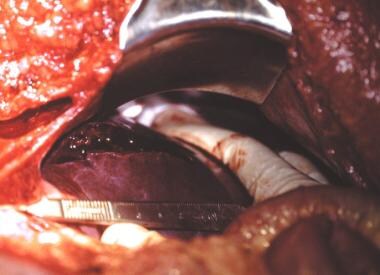
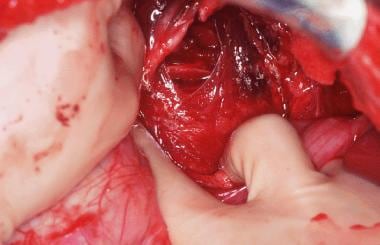
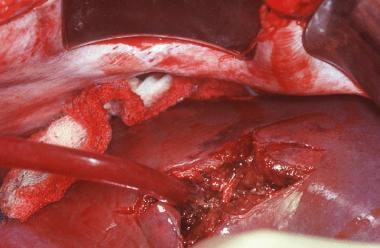
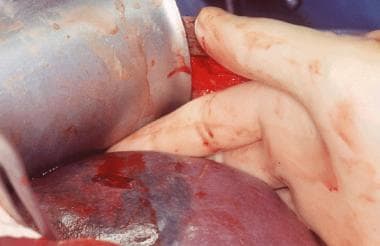
    • Liver: The key rules in operative hepatic injury are gaining adequate exposure and obtaining hemostasis. Simple lacerations may be managed by direct pressure, electrocautery, or topical hemostatic agents. Compression of the portal triad, the Pringle maneuver, is performed for more serious injuries; it controls ongoing hemorrhage from the portal venous and hepatic arterial systems. The laceration may then be approached with finger fracture and direct ligation of the bleeding vessels. After obtaining hemostasis, the laceration is often tamponaded with a vascularized omental flap.
    • Spleen: Based on the patient's hemodynamic status, comorbidities, and operative access, the surgeon will plan for splenorrhaphy or splenectomy. Splenorrhaphy includes electrocautery, topical hemostatic agents, compressive mesh, or partial splenectomy.
    • Pancreas: The pancreas, because of its protected retroperitoneal location, is less commonly injured. However, penetrating abdominal trauma accounts for 70-80% of pancreatic injuries, and mortality rates exceed 30%. Most pancreatic injuries are diagnosed intraoperatively. Pancreatic duct status and injury location are determinants in the management of pancreatic injuries. Proximal injuries are to the right of the mesenteric vessels, while distal injuries are to the left. Proximal injuries are managed by closed suction drainage only. Distal pancreatic traumas with duct involvement undergo distal pancreatectomy and closed suction drainage.
    • Hollow viscus injuries: In penetrating abdominal trauma, hollow visceral injuries are frequent. Discussions of the complex repair options are not within the scope of this article but generally include wound inversion, primary repair, anastomosis, or colostomy.
    • Damage control surgery: Abbreviated laparotomy after control of surgical hemorrhage and enteric spill, with physiologic resuscitation in the intensive care unit and staged abdominal reconstruction, has been termed damage control. Attempts to definitively repair all injuries at an initial operation for abdominal trauma induce risks, which may markedly outweigh possible benefit. Damage control techniques involve perihepatic or intra-abdominal packing and towel clip closure of the abdomen. Included in the approach are therapeutic decompressive celiotomy and prophylactically leaving open the abdominal fascia after laparotomy.
  • Complication prevention (eg, to prevent problems such as deep vein thrombosis [DVT] and pulmonary embolism [PE], stress ulceration and bleeding, pressure ulceration, atelectasis, ventilator-associated pneumonia, catheter-related sepsis, ICU psychosis)
  • General ward care focuses on wound care, fluid balance, nutrition, pain control, physical therapy, muscular reconditioning, social service issues, health insurance concerns (eg, enrollment in medical assistance programs), and rehabilitation needs.
  • Disposition planning is essential for timely coordination of care and discharge. Coordinating follow-up appointments, establishing an outpatient medication regimen, and initiating communication with the medical doctors who will resume the patient's care are important.

Further Outpatient Care

  • Outpatient priorities are distinctly different from those operative during the inpatient phase and are followed by the surgical team who operated on the patient. For example, management and coordination of physical and occupational therapy as well as long-term wound cosmesis are well distant from the expertise of the EP.

In/Out Patient Meds

  • Antibiotics: Patients who will undergo laparotomy should have a preoperative dose of antibiotics active against anaerobes and aerobes. They have been proven to reduce the incidence of postoperative wound infections. A fuller discussion is provided in Medication.
  • Anticoagulants: Subcutaneous heparin is commonly used with mechanical methods to decrease the risk of DVT in the immobilized patient.
  • Histamine blockers or proton pump inhibitors: Critically injured patients are commonly placed on these medications for stress ulcer prophylaxis.
  • Analgesics: Postoperative pain control is required for patient comfort and to allow for improved mobility and breathing.

Transfer

  • Advanced trauma life support (ATLS) guidelines exist to help direct the transfer of trauma patients to a designated trauma facility; however, the mode of transportation is not specified.
  • Patients who are potentially unstable and who require a long ground transport time (ie, >30 min) or a potentially problematic ground transport route (eg, across an inner city) may be better served by air ambulance transport. Airway control is always an important issue and must be addressed appropriately prior to transport.
  • In general, reasons to transfer patients to a regional resource trauma facility include (1) no OR or surgeon available; (2) if the patient has multiple or multicavitary injuries; (3) requirements that cannot be provided at the initial receiving facility (eg, neurosurgery, cardiopulmonary bypass, post–solid-organ transplant), or injuries that would overwhelm the initial facility (eg, massive transfusion requirement). Patients who are unstable or have evidence of injury requiring immediate laparotomy, such as penetrating trauma with vascular injury, should not be transferred until they have had stabilizing surgical intervention. Obviously, if no surgeon is available, transfer may be the only course of action.
  • Practitioners must be cognizant of Emergency Medical Treatment and Active Labor Act (EMTALA)/Consolidated Omnibus Budget Reconciliation Act (COBRA) violations and document accordingly (see COBRA Laws and EMTALA).

Deterrence/Prevention

  • Society's limited ability to deter violent crimes reaches far beyond a discussion of penetrating abdominal trauma. Economic and legal climates appear to play a large role in the incidence of violence. The EP should be an advocate for better community resources and support educational efforts to decrease the burden of penetrating trauma.

Complications

  • Complications are common in patients with penetrating abdominal trauma. They are usually managed by surgeons during the patient's hospital stay or after discharge from the hospital.
    • Complications tend to be concerns related to the breakdown of the surgical wounds, both intraperitoneal and extraperitoneal; intra-abdominal infections; and the development of abdominal compartment syndrome, which is diagnosed when the intra-abdominal pressures are greater than 30 mm Hg.
    • Patients who present to the ED in the early postoperative period with abdominal pain or signs of infection should be strongly considered for CT scan and surgical consultation.

Prognosis

  • Survival from penetrating abdominal trauma has not measurably changed in the past decade largely because of death within 24 hours resulting from irreversible hemorrhagic shock and exsanguination. More than 80% of deaths occur within 24 hours of admission, 66.7% at the initial operation associated with abdominal vascular injury. In contrast, survival from penetrating abdominal injury without vascular injury remains high.
    • Temporal distribution of deaths in penetrating trauma is significantly different from that in blunt trauma. Most deaths from penetrating trauma occur between 1 and 6 hours from admission, followed by fewer deaths 6 and 24 hours postadmission. In contrast, the highest number of deaths from blunt trauma occurs 72 hours postadmission and the lowest number during the first hour.
    • Deaths caused by penetrating trauma are significantly more likely to occur in the emergency department or the operating room than deaths caused by blunt trauma, which predominantly occur in the ICU.
    • Deaths generally occur within the first 72 hours from hypoperfusion and its sequelae. ICU deaths 2 or more weeks later are usually from complications related to sepsis, the systemic inflammatory response syndrome (SIRS), or multiple organ dysfunction syndrome.
    • General factors that predict increased mortality from penetrating abdominal trauma are female gender, long interval between injury and operation, presence of shock on admission, and presence of cranial injury.
    • The death rate is markedly influenced by prehospital hypotension, exsanguination, arrest in the field or on presentation, acidosis with an initial pH less than 7, lactate level greater than 20 mmol/L, or base deficit more negative than -15 mEq HCO3.

Patient Education

  • Paramount importance must be placed on patient, family, and support system education if the medical community wishes to proactively reduce the incidence of violent injury in our society. Such an educational initiative should begin with the initial evaluation in the ED.
  • No single solution exists for every hospital or community–individualization is the key. Healthcare providers should be an integral part of reducing violence in society.
  • For excellent patient education resources, visit eMedicine's Wounds Center. Also, see eMedicine's patient education articles Puncture Wound.


Medical/Legal Pitfalls

  • Documentation
    • Federal regulations for Medicare/Medicaid billing establish rigid guidelines for the documentation of billed services. Such documentation is essential in ensuring that the transfer of care from the ED is smooth and that the care rendered in the ED is completely understood by the receiving team.
    • Thoroughly document for best patient care and medicolegal concerns.
    • All care provided, medical decision making, and response to treatment should all be documented. Care should be taken to avoid any documentation that is highly subjective or unable to be substantiated.
  • Refusal of care/restraint
    • Little controversy exists when a competent individual refuses care and signs out against medical advice. Clear chart documentation of the circumstances and information provided and an assessment of the patient's ability to understand the consequences of the action are necessary to protect the physician against liability.
    • More problematic are situations in which an awake and conversant patient who is agitated, angry, or disorderly refuses care, and the physician cannot evaluate or document whether the patient truly understands the consequences of his or her actions. Family involvement is essential to obtain information regarding the patient's mental baseline. If the patient is judged to be in his or her usual competent state, the family can be involved in subsequent care and follow-up. If the patient is not at baseline, the family can serve as the responsible party for the initiation of care.
    • Should physical and chemical restraint be required, explain these issues to the family and document that discussion (including the names of the responsible individuals present) in the medical record. Also, document alternatives to restraints and the response to failed interventions.
    • If the patient has a life-threatening injury, obviously, all efforts must be made to convince the patient to accept treatment and the ability to understand refusal of care must be clear. If concerns exist regarding competency, psychiatric consultation should be considered.
  • Blood product transfusion in a Jehovah's Witness adherent
    • Virtually all medical centers require consent for blood and/or blood product transfusion, including autologous products. Patients with acute blood loss (eg, trauma, GI bleeding, ruptured aortic aneurysm) who are unable to delineate their wishes may be transfused blood products as a lifesaving measure without formal or informal consent.
    • A legal difficulty arises if such a patient is a Jehovah's Witness adherent. Clearly, the patient must be informed of the transfused products and the rationale for that mode of therapy. It is wise to engage the patient's family, clergy, social services, hospital administration, risk management, ethics committee, and legal department. A multidisciplinary approach to this problem may demonstrate to the patient and their family that the clinician appreciates the gravity of the problem and is sympathetic to their dilemma.
    • There is uniform agreement that clinicians should proceed with lifesaving measures appropriate to a patient's clinical situation, according to the standard of care in their community, including blood product transfusion unless it is known that the patient refuses that specific therapy.
  • Postmortem procedures
    • Performing stressful and technically demanding procedures of potentially lifesaving value in an unstressed situation may allow the novice to hone their skills without harming a patient. Nevertheless, much controversy exists concerning the appropriateness of such procedures. Such issues arise most commonly at teaching hospitals.
    • Postmortem procedures may include but are not limited to the following: endotracheal intubation (oral, digital, retrograde, light wand), common femoral venous access, urinary bladder catheterization, needle thoracostomy, and chest tube removal-replacement-resuturing through the same site. An ethical approach to this issue is to obtain consent for the performance of these procedures from surviving family members. In the literature, although not large numbers, a substantial percentage of families (50-60%) agree to postmortem procedures.
  • Ballistics: Gunshot and stab wounds are usually reportable injuries at the time of the incident, though this may vary by jurisdiction. In the trauma room, care should be taken not to destroy the clothing and in particular to cut around and not through bullet holes, to turn over to law enforcement any foreign body recovered from the patient, and to describe precisely, or even to photograph, any entrance or exit wounds.
  • Iatrogenic injury: Truthful documentation of iatrogenic injury that occurred during an indicated course of