Continually Updated Clinical Reference
 
 
  All Sources     eMedicine     Medscape     Drug Reference     MEDLINE
 
eMedicine - Fracture, Rib : Article by

Quick Find
Authors & Editors
Introduction
Clinical
Differentials
Workup
Treatment
Medication
Follow-up
Multimedia
References

Related Articles
Abdominal Trauma, Blunt

Back Pain, Mechanical

Costochondritis

Dissection, Aortic

Domestic Violence

Elder Abuse

Esophagitis

Fractures, Clavicle

Fractures, Sternal

Pneumothorax, Tension and Traumatic

Pulmonary Embolism

Trauma, Upper Genitourinary


Patient Education
Click here for patient education.


Author: Christopher I Doty, MD, FAAEM, Assistant Professor of Emergency Medicine, Residency Program Director, Department of Emergency Medicine, Kings County Hospital Center, State University of New York Downstate Medical Center

Christopher I Doty is a member of the following medical societies: American Academy of Emergency Medicine, American College of Emergency Physicians, American Medical Association, and Society for Academic Emergency Medicine

Coauthor(s): Richard Sinert, DO, Associate Professor of Emergency Medicine, Clinical Assistant Professor of Medicine, State University of New York College of Medicine; Consulting Staff, Department of Emergency Medicine, Kings County Hospital Center

Editors: Michelle Ervin, MD, Chair, Department of Emergency Medicine, Howard University Hospital; Francisco Talavera, PharmD, PhD, Senior Pharmacy Editor, eMedicine; Eric Legome, MD, Residency Director, Assistant Professor of Emergency Medicine, Department of Emergency Medicine New York University, New York University Hospital, Bellevue Hospital Center, Manhattan VA; John D Halamka, MD, MS, Associate Professor of Medicine, Harvard Medical School, Beth Israel Deaconess Medical Center; Chief Information Officer, CareGroup Healthcare System and Harvard Medical School; Attending Physician, Division of Emergency Medicine, Beth Israel Deaconess Medical Center; Rick Kulkarni, MD, Medical Director, Assistant Professor of Surgery, Section of Emergency Medicine, Yale-New Haven Hospital

Author and Editor Disclosure

Synonyms and related keywords: rib fractures, broken ribs, blunt thoracic injury, blunt chest trauma, chest trauma, flail chest, rib injury, abdominal trauma, thoracic injuries, blunt trauma

Background

Simple rib fractures are the most common injury sustained following blunt chest trauma, accounting for more than half of thoracic injuries from nonpenetrating trauma. Approximately 10% of all patients admitted after blunt chest trauma have one or more rib fractures. These fractures are rarely life-threatening in themselves but can be an external marker of more severe visceral injury inside the abdomen and the chest.

The most common mechanism of injury for rib fractures in elderly persons is a fall from height or from standing. In adults, motor vehicle accident is the most common mechanism. Youths sustain rib fractures most often secondary to recreational and athletic activities.

Pathophysiology

The chest wall protects underlying sensitive structures by surrounding internal organs with hard osseous structures including the ribs, clavicles, sternum, and scapulae. An intact chest wall is necessary for normal respiration.

Rib fractures may compromise ventilation by a variety of mechanisms. Pain from rib fractures can cause respiratory splinting, resulting in atelectasis and pneumonia. Multiple contiguous rib fractures (ie, flail chest) interfere with normal costovertebral and diaphragmatic muscle excursion, potentially causing ventilatory insufficiency. Fragments of fractured ribs can also act as penetrating objects leading to the formation of a hemothorax or a pneumothorax. Ribs commonly fracture at the point of impact or at the posterior angle (structurally their weakest area). Ribs four through nine (4-9) are the most commonly injured.

Frequency

United States

The incidence of rib fractures is dramatically underreported.

International

The prevalence of rib fractures is linked to the prevalence of the underlying cause of the trauma. Rib fractures are more common in countries with higher incidence of MVAs.

Mortality/Morbidity

Rib fractures are not usually dangerous in and of themselves. Morbidity correlates with the degree of injury to underlying structures.

  • In one study of patients with rib fractures, the mortality rate reached 12%; of these, 94% had associated injuries and 32% had a hemothorax or a pneumothorax.1 More than half of all patients required either operative or ICU management. Average blood loss per fractured rib is reportedly 100-150 mL.
  • Position of the fractured rib in the thorax helps identify potential injury to specific underlying organs. Fracture of the lower ribs usually is associated with injury to abdominal organs rather than to lung parenchyma. Fracture of the left lower ribs is associated with splenic injuries, and fracture of the right lower ribs is associated with liver injuries. Fracture of the floating ribs (ribs 11, 12) is often associated with renal injuries.
  • First rib fractures were once thought to be a harbinger of severe trauma, since the first rib is very well protected by the shoulder, lower neck musculature, and clavicle and was thought to require a much higher impact force to fracture than other ribs. These data are now in question, but until further studies are done, fractures of the first rib should raise suspicion of significant chest trauma. Mortality rates as high as 36% have been previously reported with first rib fractures, which are associated with injury to the lung, ascending aorta, subclavian artery, and brachial plexus.

Race

No data support any race predilection except for general trends for sustaining other types of trauma.

Sex

No data support any sex predilection except for general trends for sustaining other types of blunt trauma.

Age

Because children have more elastic ribs, they are less likely than adults to sustain fractures following blunt chest trauma. Elderly individuals are more likely to have associated injuries and complications.

  • Children present more frequently with trauma to the underlying chest and abdominal organs without the associated rib fractures commonly seen in adults. Classically, this made rib fractures in children an ominous sign of potential high-force injury.
  • Consider child abuse in children who lack a significant mechanism for multiple rib fractures or have fractures in different stages of healing. Recent data have shown that children younger than 2 years with rib fractures have a prevalence of child abuse as high as 83%.
  • Older persons are more prone to rib fractures than younger adults and, therefore, the pulmonary sequelae such as atelectasis, pneumonia, and respiratory arrest. The presence of cardiopulmonary disease also significantly increases morbidity and mortality rates in patients older than 65 years.


History

  • Description of the prehospital scene by paramedics can provide important clues to the possibility of rib fractures.
  • After motor vehicle collisions, deformation of the steering wheel and activation of seat belts and airbags have been associated with rib injuries.
  • Patients with rib fracture frequently complain of pain on inspiration and dyspnea.
  • Rib fractures have been reported after coughing spells without other significant trauma.
  • Athletes with high force, recurrent movements of the arms (eg, discus throwers) have had stress fractures of the upper and middle ribs.

Physical

  • Tenderness on palpation, crepitus, and chest wall deformity are common findings of rib fracture.
  • Paradoxical chest wall excursion with inspiration is seen with flail chest. A flail chest occurs when a large segment of ribs are not attached to the spine. These ribs are broken in at least 2 places on each rib. The paradoxical movement occurs because the middle section of the rib between the 2 fracture sites moves in response to intrathoracic pressure changes not intercostal muscle contractions.
  • Specific signs of ventilatory insufficiency include cyanosis, tachypnea, retractions, and use of accessory muscles for ventilation.
  • Less specific signs include anxiety and agitation.

Causes

  • Motor vehicle crashes (most common mechanism)
  • Blunt trauma
  • Falls
  • Assaults
  • Coughing spells


Abdominal Trauma, Blunt
Back Pain, Mechanical
Costochondritis
Dissection, Aortic
Domestic Violence
Elder Abuse
Esophagitis
Fractures, Clavicle
Fractures, Sternal
Pneumothorax, Tension and Traumatic
Pulmonary Embolism
Trauma, Upper Genitourinary


Lab Studies

  • Laboratory studies are generally not useful. Tests of the pulmonary function (arterial blood gas measurements) are used to determine if the lungs have been contused but do not actually test for rib fractures.

Imaging Studies

  • Chest radiographs
    • Anteroposterior (AP) and lateral chest films are used routinely to assist in the diagnosis of rib fractures, yet sensitivity as low as 50% has been reported. Delayed or follow-up radiographs can be very helpful.
    • Chest radiographs are much more useful in the diagnosis of underlying injuries, including hemothorax, pneumothorax, lung contusion, atelectasis, pneumonia, and vascular injuries.
  • Rib radiographs
    • Obtaining a rib radiograph series remains controversial, as the additional information rarely changes the clinical picture or alters treatment. This rib detail radiographs can be helpful in evaluation of the 1st and 2nd ribs and the 7th through 12th ribs. Formal plain radiographs can also be useful to document abuse for legal purposes.
    • Diagnostic sensitivity is higher in rib radiographs than in chest radiographs; however, with a high clinical suspicion, treat for fracture regardless of the radiographic result.
  • Chest CT scan
    • A chest CT scan is more sensitive than plain radiographs for detecting rib fractures. The modality can also provide information regarding the number of ribs involved.
    • If complications from rib fractures is suspected clinically or diagnosed by plain radiographs, a chest CT scan may be helpful to document specific injuries, characterize extent of injury, and plan for definitive management.
    • An associated CT scan of the abdomen with intravenous contrast should be considered in cases involving lower rib fractures with suspected or known injury to the liver and/or the spleen.
  • Angiography
    • Since first and second rib fractures are often associated with vascular injury, ED physicians should consider angiography for such patients, especially if symptoms and signs of neurovascular compromise are present.
    • This is particularly important with posteriorly displaced fractures of the first 2 ribs, which have a much higher degree of association with abnormal angiographic findings than other rib fractures.
    • While first rib fractures previously were considered a strong risk factor for aortic injury, most authorities now believe that aortography and/or CT scan are not indicated without other evidence of injury, such as abnormal mediastinum.


Prehospital Care

  • Focus care on airway maintenance and supplemental oxygen.

Emergency Department Care

  • Goal of initial ED care is stabilization of the trauma patient and multisystem trauma evaluation.
  • Primary focus of treatment for rib fractures is pain relief and adequate clearing of pulmonary secretions.
  • Isolated rib fractures, without associated injuries, may be managed on an outpatient basis with oral analgesics.
  • Other options include parenterally administered narcotics titrated to prevent respiratory depression.
  • Patient-controlled anesthesia allows adequate pain relief with minimal inhibition of respiratory drive.
  • Intercostal nerve blocks provide pain relief without affecting respiratory function, although risks of this procedure include intravascular injection and pneumothorax.
  • For hospitalized patients, consider epidural and intrapleural catheter placement for delivery of anesthetics. Patient-controlled analgesia pumps have also shown to be useful in these patients.
  • While rib belts or binders do control pain, they have been linked to hypoventilation, atelectasis, and pneumonia. As a result, their use is no longer recommended.
  • For patients with a significant mechanism of trauma, a CT of the chest and abdomen can be useful in scanning for significant related injury.

Consultations

  • Because of the close association of rib fractures with injury to underlying structures, the ED physician may need to consult the trauma service.
  • Pain management specialists can be helpful for admitted patients.


Pain control remains the mainstay of treatment, usually with nonsteroidal anti-inflammatory or oral narcotic agents.

Drug Category: Nonsteroidal anti-inflammatory drugs (NSAIDs)

These agents are used most commonly for the relief of mild to moderately severe pain. Effects of NSAIDs in the treatment of pain tend to be patient specific, yet ibuprofen is usually the first-line drug of choice for initial therapy. Other options include fenoprofen, flurbiprofen, ketoprofen, indomethacin, and piroxicam.

Drug NameIbuprofen (Ibuprin, Advil, Motrin)
DescriptionFirst-line drug of choice for treatment of mild to moderately severe pain, if no contraindications. Inhibits inflammatory reactions and pain, probably by decreasing activity of enzyme cyclooxygenase, which, in turn, decreases prostaglandin synthesis.
Adult Dose600-800 mg PO q6h prn; not to exceed 3.2 g/d
Pediatric Dose<6 months: Not established
6 months to 12 years: 20-40 mg/kg/d PO divided tid/qid
>12 years: Administer as in adults
ContraindicationsDocumented hypersensitivity; peptic ulcer disease; recent GI bleeding or perforation; renal insufficiency; high risk of bleeding
InteractionsCoadministration with aspirin increases risk of inducing serious NSAID-related adverse effects; probenecid may increase concentrations and, possibly, toxicity of NSAIDs; may decrease effect of hydralazine, captopril, and beta-blockers; may decrease diuretic effects of furosemide and thiazides; may increase PT when taking anticoagulants (instruct patients to watch for signs of bleeding); may increase risk of methotrexate toxicity; phenytoin levels may be increased when administered concurrently
PregnancyB - Fetal risk not confirmed in studies in humans but has been shown in some studies in animals
D - Fetal risk shown in humans; use only if benefits outweigh risk to fetus
PrecautionsCaution in congestive heart failure, hypertension, and decreased renal and hepatic function; caution in coagulation abnormalities or during anticoagulant therapy

Drug NameKetoprofen (Oruvail, Orudis, Actron)
DescriptionFor relief of mild to moderately severe pain and inflammation.
Administer small dosages initially to patients with lower body weights, older persons, and those with renal or liver disease. Doses higher than 75 mg do not increase therapeutic effects. Administer high doses with caution and observe closely.
Adult Dose25-50 mg PO q6-8h prn; not to exceed 300 mg/d
Pediatric Dose<3 months: Not established
3 months to 14 years: 0.1-1 mg/kg PO q6-8h
>12 years: Administer as in adults
ContraindicationsDocumented hypersensitivity
InteractionsCoadministration with aspirin increases risk of inducing serious NSAID-related adverse effects; probenecid may increase concentrations and, possibly, toxicity of NSAIDs; may decrease effect of hydralazine, captopril, and beta-blockers; may decrease diuretic effects of furosemide and thiazides; may increase PT when taking anticoagulants (instruct patients to watch for signs of bleeding); may increase risk of methotrexate toxicity; phenytoin levels may be increased when administered concurrently
PregnancyB - Fetal risk not confirmed in studies in humans but has been shown in some studies in animals
D - Fetal risk shown in humans; use only if benefits outweigh risk to fetus
PrecautionsCaution in congestive heart failure, hypertension, and decreased renal and hepatic function; caution in coagulation abnormalities or during anticoagulant therapy

Drug NameNaproxen (Anaprox, Naprelan, Naprosyn)
DescriptionUsed for relief of mild to moderately severe pain. Inhibits inflammatory reactions and pain by decreasing activity of enzyme cyclooxygenase, which decreases prostaglandin synthesis.
Adult Dose500 mg PO followed by 250 mg PO q6-8h; not to exceed 1.25 g/d
Pediatric Dose<2 years: Not established
>2 years: 2.5 mg/kg/dose PO; not to exceed 10 mg/kg/d
ContraindicationsDocumented hypersensitivity; peptic ulcer disease; recent GI bleeding or perforation; renal insufficiency
InteractionsCoadministration with aspirin increases risk of inducing serious NSAID-related adverse effects; probenecid may increase concentrations and, possibly, toxicity of NSAIDs; may decrease effect of hydralazine, captopril, and beta-blockers; may decrease diuretic effects of furosemide and thiazides; may increase PT when taking anticoagulants (instruct patients to watch for signs of bleeding); may increase risk of methotrexate toxicity; phenytoin levels may be increased when administered concurrently
PregnancyB - Fetal risk not confirmed in studies in humans but has been shown in some studies in animals
D - Fetal risk shown in humans; use only if benefits outweigh risk to fetus
PrecautionsAcute renal insufficiency, interstitial nephritis, hyperkalemia, hyponatremia, and renal papillary necrosis may occur; patients with preexisting renal disease or compromised renal perfusion risk acute renal failure; leukopenia occurs rarely, is transient, and usually returns to normal during therapy; persistent leukopenia, granulocytopenia, or thrombocytopenia warrants further evaluation and may require discontinuation of drug

Drug Category: Analgesics

Pain control is essential to quality patient care. It ensures patient comfort, promotes pulmonary toilet, and aids physical therapy regimens. Many analgesics have sedating properties that benefit patients who have sustained fractures.

Drug NameAcetaminophen (Tylenol, Panadol, Paracetamol)
DescriptionDOC for pain in patients with documented hypersensitivity to aspirin or NSAIDs, with upper GI disease, or who are taking oral anticoagulants.
Effective in relieving mild to moderate acute pain; however, has no peripheral anti-inflammatory effects. May be preferred in elderly patients because of fewer GI and renal side effects.
Adult Dose325-650 mg PO q4-6h or 1000 mg tid/qid; not to exceed 4 g/d
Pediatric Dose<12 years: 10-15 mg/kg/dose PO q4-6h prn; not to exceed 2.6 g/d
>12 years: 325-650 mg PO q4h; not to exceed 4 g/d
ContraindicationsDocumented hypersensitivity; known G-6-P deficiency
InteractionsRifampin can reduce analgesic effects of acetaminophen; coadministration with barbiturates, carbamazepine, hydantoins, and isoniazid may increase hepatotoxicity
PregnancyB - Fetal risk not confirmed in studies in humans but has been shown in some studies in animals
PrecautionsHepatotoxicity possible in chronic alcoholics following various dose levels; severe or recurrent pain or high or continued fever may indicate a serious illness; acetaminophen is contained in many OTC products and combined use with these products may result in cumulative acetaminophen doses exceeding recommended maximum dose

Drug NameAcetaminophen and codeine (Tylenol #2, Tylenol #3, Tylenol #4)
DescriptionCombines analgesic effects of a centrally acting opium-derived alkaloid (codeine) and a peripherally acting nonopioid analgesic (acetaminophen). Indicated for treatment of mild to moderate pain.
Adult DoseTylenol #2: 1-2 tab (15 mg codeine phosphate plus 300 mg acetaminophen) PO q4-6h prn; not to exceed 360 mg codeine or 4 g acetaminophen/24 h
Tylenol #3: 1 tab (30 mg codeine phosphate plus 300 mg acetaminophen) PO q4-6h prn; not to exceed 360 mg codeine or 4 g acetaminophen/24 h
Tylenol #4: 60 mg codeine phosphate plus 300 mg acetaminophen PO q4-6h prn; not to exceed 360 mg codeine or 4 g acetaminophen/24 h
Pediatric DoseBased on codeine: 0.5-1 mg/kg/dose PO q4-6h
Based on acetaminophen: 10-15 mg/kg/dose PO q4h; not to exceed 75 mg/kg/d or 2.6 g/d
<3 years: Not established
3-6 years: 5 mL (1 tsp) PO qid prn
6-12 years: 10 mL (2 tsp) PO qid prn
>12 years: Administer as in adults
ContraindicationsDocumented hypersensitivity
InteractionsToxicity of codeine increases with CNS depressants, tricyclic antidepressants, MAO inhibitors, neuromuscular blockers, CNS depressants, phenothiazines, and narcotic analgesics
Rifampin can reduce analgesic effects of acetaminophen; coadministration with barbiturates, carbamazepine, hydantoins, and isoniazid may increase hepatotoxicity of acetaminophen
PregnancyC - Fetal risk revealed in studies in animals but not established or not studied in humans; may use if benefits outweigh risk to fetus
PrecautionsCaution in patients dependent on opiates since this substitution may result in acute opiate-withdrawal symptoms; caution in severe renal or hepatic dysfunction
Hepatotoxicity with acetaminophen possible in chronic alcoholics following various dose levels; severe or recurrent pain or high or continued fever may indicate a serious illness; acetaminophen is contained in many OTC products and combined use with these products may result in cumulative acetaminophen doses and exceed recommended maximum dose

Drug NameHydrocodone and acetaminophen (Vicodin)
DescriptionDrug combination indicated for relief of moderately severe to severe pain.
Adult Dose1-2 tab PO q4-6h prn pain; not to exceed 5 tab/d
Pediatric DoseNot established
ContraindicationsDocumented hypersensitivity; high altitude cerebral edema (HACE) or elevated intracranial pressure (ICP)
InteractionsCoadministration with phenothiazines may decrease analgesic effects; toxicity increases with CNS depressants or tricyclic antidepressants
PregnancyC - Fetal risk revealed in studies in animals but not established or not studied in humans; may use if benefits outweigh risk to fetus
PrecautionsTablets contain metabisulfite, which may cause hypersensitivity; caution in patients dependent on opiates since this substitution may result in acute opiate-withdrawal symptoms; caution in severe renal or hepatic dysfunction

Drug NameOxycodone and acetaminophen (Percocet)
DescriptionDrug combination indicated for the relief of moderate to severe pain. DOC for aspirin-hypersensitive patients.
Adult Dose1-2 tab or cap PO q4-6h prn
Pediatric Dose0.05-0.15 mg/kg/dose PO oxycodone; not to exceed 5 mg/dose of oxycodone q4-6h prn
ContraindicationsDocumented hypersensitivity
InteractionsPhenothiazines may decrease analgesic effects of this medication; toxicity increases with coadministration of either CNS depressants or tricyclic antidepressants
PregnancyC - Fetal risk revealed in studies in animals but not established or not studied in humans; may use if benefits outweigh risk to fetus
PrecautionsDuration of action may increase in elderly persons; be aware of total daily dose of acetaminophen patient is receiving; do not exceed 4000 mg/24 h of acetaminophen; higher doses may cause liver toxicity

Drug NameOxycodone and aspirin (Percodan)
DescriptionDrug combination indicated for relief of moderately severe to severe pain.
Adult Dose1-2 tab or cap PO q4-6h prn
Pediatric Dose0.05-0.15 mg/kg/dose oxycodone PO q4-6h prn; not to exceed 5 mg/dose of oxycodone
ContraindicationsDocumented hypersensitivity; liver damage, hypoprothrombinemia, vitamin K deficiency, bleeding disorders, and asthma; because of association of aspirin with Reye syndrome, do not use in children who have the flu and are <16 y
InteractionsPhenothiazines may decrease analgesic effects; conversely, toxicity increases when administered concurrently with CNS depressants or tricyclic antidepressants; may also potentiate anticoagulant effects of warfarin
PregnancyD - Fetal risk shown in humans; use only if benefits outweigh risk to fetus
PrecautionsDuration of action may increase in elderly persons; caution in renal or liver impairment, peptic ulcer disease, and erosive gastritis

Drug NameHydrocodone and ibuprofen (Vicoprofen)
DescriptionDrug combination indicated for the relief of moderate to severe pain.
Adult Dose1-2 tab PO q4-6h prn pain; not to exceed 5 doses/d acetaminophen or 10 mg of hydrocodone bitartrate/dose
Pediatric Dose<12 years: 10-15 mg/kg/dose PO acetaminophen q4-6h prn; not to exceed 2.6 g/d acetaminophen or 5 mg of hydrocodone bitartrate/dose
>12 years: 750 mg PO acetaminophen q4h; not to exceed 5 doses/d acetaminophen or 10 mg of hydrocodone bitartrate/dose
ContraindicationsDocumented hypersensitivity
InteractionsCoadministration with aspirin increases risk of inducing serious NSAID-related adverse effects; probenecid may increase concentrations and, possibly, toxicity of NSAIDs; may decrease effect of hydralazine, captopril, and beta-blockers; may decrease diuretic effects of furosemide and thiazides; monitor PT closely (instruct patients to watch for signs of bleeding); may increase risk of methotrexate toxicity; phenytoin levels may be increased when administered concurrently
PregnancyC - Fetal risk revealed in studies in animals but not established or not studied in humans; may use if benefits outweigh risk to fetus
PrecautionsCaution in impaired renal function, peptic ulcer disease, impaired thyroid function, asthma, hypertension, edema, heart failure, increased intracranial pressure, and erosive gastritis; duration of action may increase in elderly persons

Drug NameMorphine sulfate
DescriptionUsed to achieve a desired anxiolytic and analgesic effect because easily titrated to desired level of pain control or sedation. Reversed by naloxone.
Adult Dose2.5-5 mg IV q10-15min prn
Pediatric DoseNeonates: 0.05-0.2 mg/kg/dose IV prn
Children: 0.1-0.2 mg/kg IV q2-4h prn
ContraindicationsDocumented hypersensitivity; hypotension; potentially compromised airway where establishing rapid airway control would be difficult
InteractionsPhenothiazines may antagonize analgesic effects of opiate agonists; tricyclic antidepressants, MAO inhibitors, and other CNS depressants may potentiate adverse effects of morphine
PregnancyC - Fetal risk revealed in studies in animals but not established or not studied in humans; may use if benefits outweigh risk to fetus
PrecautionsCaution in hypotension, respiratory depression, nausea, emesis, constipation, urinary retention, atrial flutter, and other supraventricular tachycardias; has vagolytic action and may increase ventricular response rate


Further Inpatient Care

  • Patients with isolated rib fractures who are unable to cough and clear secretions adequately should be considered for admission for 24-hour observation.
  • A lower threshold for admission of older persons with isolated rib fractures is warranted because of their higher incidence of hypoventilation, hypercapnia, atelectasis, and pneumonia.
  • Admission may also allow for observation for occult intra-abdominal organ injury.
  • Patients being admitted should have good pain control and if possible given an incentive spirometer to prevent pulmonary splinting and its resultant complications.

Further Outpatient Care

  • Patients with minor rib injuries able to cough and clear secretions may be discharged with adequate analgesic medications.
  • Consider an incentive spirometer, especially with multiple fractures, as it may help avoid complications and remind the patient to avoid splinting and to take deep breaths.

Transfer

  • Currently, no published guidelines exist for transfer of patients with simple rib fracture to a regional trauma center.
  • Some studies have concluded that the presence of 3 or more rib fractures identifies a subgroup of adult patients who may require tertiary care.

Deterrence/Prevention

  • No clear data indicate how to decrease the number of rib fractures associated with car crashes as the restraint systems all exert force on the rib cage.

Complications

  • Hypoventilation
  • Hypercapnia
  • Hypoxia
  • Atelectasis
  • Pneumonia
  • Damage to underlying visceral organs

Prognosis

  • Isolated rib fractures in younger patients have a good prognosis.
  • Older patients have a higher incidence of significant pulmonary complications.


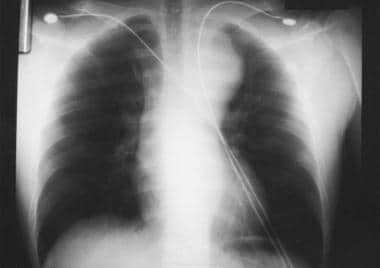
Media file 1:  Aortic injury is closely associated with a widening of greater than 8 cm measured at the widest points of the mediastinum on an upright anteroposterior chest radiograph.
Click to see larger pictureClick to see detailView Full Size Image
Media type:  Radiograph


  1. Ziegler DW, Agarwal NN. The morbidity and mortality of rib fractures. J Trauma. Dec 1994;37(6):975-9. [Medline].
  2. Albers JE, Rath RK, Glaser RS. Severity of intrathoracic injuries associated with first rib fractures. Ann Thorac Surg. Jun 1982;33(6):614-8. [Medline].
  3. Baker CC, Oppenheimer L, Stephens B. Epidemiology of trauma deaths. Am J Surg. Jul 1980;140(1):144-50. [Medline].
  4. Coris EE, Higgins HW. First rib stress fractures in throwing athletes. Am J Sports Med. Sep 2005;33(9):1400-4. [Medline].
  5. Flagel BT, Luchette FA, Reed RL. Half-a-dozen ribs: the breakpoint for mortality. Surgery. Oct 2005;138(4):717-23; discussion 723-5. [Medline].
  6. Fulda GJ, Giberson F, Fagraeus L. A prospective randomized trial of nebulized morphine compared with patient-controlled analgesia morphine in the management of acute thoracic pain. J Trauma. Aug 2005;59(2):383-8; discussion 389-90. [Medline].
  7. Garcia VF, Gotschall CS, Eichelberger MR. Rib fractures in children: a marker of severe trauma. J Trauma. Jun 1990;30(6):695-700. [Medline].
  8. Hurley ME, Keye GD, Hamilton S. Is ultrasound really helpful in the detection of rib fractures?. Injury. Jun 2004;35(6):562-6. [Medline].
  9. Lee RB, Bass SM, Morris JA Jr. Three or more rib fractures as an indicator for transfer to a Level I trauma center: a population-based study. J Trauma. Jun 1990;30(6):689-94. [Medline].
  10. LoCicero J, Mattox KL. Epidemiology of chest trauma. Surg Clin North Am. Feb 1989;69(1):15-9. [Medline].
  11. Love JC, Symes SA. Understanding rib fracture patterns: incomplete and buckle fractures. J Forensic Sci. Nov 2004;49(6):1153-8. [Medline].
  12. Newman RJ, Jones IS. A prospective study of 413 consecutive car occupants with chest injuries. J Trauma. Feb 1984;24(2):129-35. [Medline].
  13. Richardson JD, Adams L, Flint LM. Selective management of flail chest and pulmonary contusion. Ann Surg. Oct 1982;196(4):481-7. [Medline].
  14. Richardson JD, McElvein RB, Trinkle JK. First rib fracture: a hallmark of severe trauma. Ann Surg. Mar 1975;181(3):251-4. [Medline].
  15. Ruddy RM. Trauma and the paediatric lung. Paediatr Respir Rev. Mar 2005;6(1):61-7. [Medline].
  16. Stawicki SP, Grossman MD, Hoey BA. Rib fractures in the elderly: a marker of injury severity. J Am Geriatr Soc. May 2004;52(5):805-8. [Medline].
  17. Trinkle JK, Richardson JD, Franz JL. Management of flail chest without mechanical ventilation. Ann Thorac Surg. Apr 1975;19(4):355-63. [Medline].
  18. Wilson JM, Thomas AN, Goodman PC. Severe chest trauma. Morbidity implication. Arch Surg. Jul 1978;113(7):846-9. [Medline].
  19. Woodring JH, Fried AM, Hatfield DR. Fractures of first and second ribs: predictive value for arterial and bronchial injury. AJR Am J Roentgenol. Feb 1982;138(2):211-5. [Medline].

Fracture, Rib excerpt

Article Last Updated: Feb 14, 2008