Continually Updated Clinical Reference
 
 
  All Sources     eMedicine     Medscape     Drug Reference     MEDLINE
 
eMedicine - Acute Coronary Syndrome : Article by

Quick Find
Authors & Editors
Introduction
Clinical
Differentials
Workup
Treatment
Medication
Follow-up
Miscellaneous
Multimedia
References

Related Articles
Anxiety

Aortic Stenosis

Asthma

Cardiomyopathy, Dilated

Esophagitis

Gastroenteritis

Hypertensive Emergencies

Myocardial Infarction

Myocarditis

Pericarditis and Cardiac Tamponade

Pneumothorax, Iatrogenic, Spontaneous and Pneumomediastinum

Pulmonary Embolism


Patient Education
Click here for patient education.


Author: Drew E Fenton, MD, Family Practice Physician, Ocean Medical Family and Urgent Care

Drew E Fenton is a member of the following medical societies: American Academy of Emergency Medicine

Editors: Edward Bessman, MD, Chairman, Department of Emergency Medicine, John Hopkins Bayview Medical Center; Assistant Professor, Department of Emergency Medicine, Johns Hopkins University; Francisco Talavera, PharmD, PhD, Senior Pharmacy Editor, eMedicine; Gary Setnik, MD, Chair, Department of Emergency Medicine, Mount Auburn Hospital; Assistant Professor, Division of Emergency Medicine, Harvard Medical School; John D Halamka, MD, MS, Associate Professor of Medicine, Harvard Medical School, Beth Israel Deaconess Medical Center; Chief Information Officer, CareGroup Healthcare System and Harvard Medical School; Attending Physician, Division of Emergency Medicine, Beth Israel Deaconess Medical Center; Jonathan Adler, MD, Attending Physician, Department of Emergency Medicine, Massachusetts General Hospital; Division of Emergency Medicine, Harvard Medical School

Author and Editor Disclosure

Synonyms and related keywords: acute coronary syndrome, ST-elevation myocardial infarction, STEMI, non-ST-elevation myocardial infarction, NSTEMI, ACS, angina, myocardial ischemia, acute myocardial ischemia, myocardial infarction, MI, coronary artery disease, coronary heart disease, heart disease, chest pain, atherosclerotic plaques, variant angina, Prinzmetal angina, coronary vasospasm, stable angina, unstable angina, hypertension, diabetes mellitus, smoking, hypercholesterolemia, hyperlipidemia

Background

The initial diagnosis of acute coronary syndrome (ACS) is based on history, risk factors, and, to a lesser extent, ECG findings. The symptoms are due to myocardial ischemia, the underlying cause of which is an imbalance between supply and demand of myocardial oxygen.

Patients with ACS include those whose clinical presentations cover the following range of diagnoses: unstable angina, non–ST-elevation myocardial infarction (NSTEMI), and ST-elevation myocardial infarction (STEMI). This ACS spectrum concept is a useful framework for developing therapeutic strategies.

Pathophysiology

Myocardial ischemia is most often due to atherosclerotic plaques, which reduce the blood supply to a portion of myocardium. Initially, the plaques allow sufficient blood flow to match myocardial demand. When myocardial demand increases, the areas of narrowing may become clinically significant and precipitate angina. Angina that is reproduced by exercise, eating, and/or stress and is subsequently relieved with rest, and without recent change in frequency or severity of activity that produce symptoms, is called chronic stable angina. Over time, the plaques may thicken and rupture, exposing a thrombogenic surface upon which platelets aggregate and thrombus forms. The patient may note a change in symptoms of cardiac ischemia with a change in severity or of duration of symptoms. This condition is referred to as unstable angina.

Patients with STEMI have a high likelihood of a coronary thrombus occluding the infarct artery. Angiographic evidence of coronary thrombus formation may be seen in more than 90% of patients with STEMI but in only 1% of patients with stable angina and about 35-75% of patients with unstable angina or NSTEMI. However, not every STEMI evolves into a Q-wave MI; likewise, a patient with NSTEMI may develop Q waves.

The excessive mortality rate of coronary heart disease is primarily due to rupture and thrombosis of the atherosclerotic plaque. Inflammation plays a critical role in plaque destabilization and is widespread in the coronary and remote vascular beds. Systemic inflammatory, thrombotic, and hemodynamic factors are relevant to the outcome. Evidence indicates that platelets contribute to promoting plaque inflammation as well as thrombosis. A new theory of unbalanced cytokine-mediated inflammation is emerging, providing an opportunity for intervention.

A less common cause of angina is dynamic obstruction, which may be caused by intense focal spasm of a segment of an epicardial artery (Prinzmetal angina). Coronary vasospasm is a frequent complication in patients with connective tissue disease. Other causes include arterial inflammation and secondary unstable angina. Arterial inflammation may be caused by or related to infection. Secondary unstable angina occurs when the precipitating cause is extrinsic to the coronary arterial bed, such as fever, tachycardia, thyrotoxicosis, hypotension, anemia, or hypoxemia. Most patients who experience secondary unstable angina have chronic stable angina as a baseline medical condition.

Spontaneous and cocaine-related coronary artery dissection remains an unusual cause of ACS and should be included in the differential diagnosis, especially when a younger female or cocaine user is being evaluated. An early clinical suspicion of this disease is necessary for a good outcome. Cardiology consultation should be obtained for consideration for urgent percutaneous coronary intervention.

Although rare, pediatric and adult ACS may result from the following (see Myocardial Infarction in Childhood):

  • ACS may occur with Marfan syndrome; Kawasaki disease; Takayasu arteritis; or cystic medial necrosis with aortic root dilatation, aneurysm formation, and dissection into the coronary artery.
  • Anomalous origin of the left coronary artery from the pulmonary artery may occur as unexplained sudden death in a neonate.
  • Coronary artery ostial stenosis may occur after repair of a transposition of the great arteries in the neonatal period.
  • An aberrant left main coronary artery with its origin at the right sinus of Valsalva may cause ACS, especially with exertion.
  • Traumatic myocardial infarction can occur in patients at any age.
  • Accelerated atherosclerosis is known to occur in cardiac transplant recipients on immunosuppressive therapy.
  • ACS may occur with progeria.

Irrespective of the cause of unstable angina, the result of persistent ischemia is myocardial infarction (MI).

Frequency

United States

Although the exact incidence of ACS is difficult to ascertain, hospital discharge data indicate that 1,680,000 unique discharges for ACS occurred in 2001.

International

In Britain, annual incidence rate of angina is estimated at 1.1 cases per 1000 males and 0.5 cases per 1000 females aged 31-70 years. In Sweden, chest pain of ischemic origin is thought to affect 5% of all males aged 50-57 years. In industrialized countries, annual incidence rate of unstable angina is approximately 6 cases per 10,000 people.

Mortality/Morbidity

When the only therapy for angina was nitroglycerin and limitation of activity, patients with newly diagnosed angina had a 40% incidence of MI and a 17% mortality rate within 3 months. A recent study shows that the 30-day mortality rate from ACS has decreased as treatment has improved, a statistically significant 47% relative decrease in 30-day mortality rate among newly diagnosed ACS from 1987-2000. This decrease in mortality rate is attributed to aspirin, glycoprotein (GP) IIb/IIIa blockers, and coronary revascularization via medical intervention or procedures.

Clinical characteristics associated with a poor prognosis include advanced age, male sex, prior MI, diabetes, hypertension, and multiple-vessel or left-mainstem disease.

Sex

Incidence is higher in males among all patients younger than 70 years. This is due to the cardioprotective effect of estrogen in females. At 15 years postmenopause, the incidence of angina occurs with equal frequency in both sexes. Evidence exists that women more often have coronary events without typical symptoms, which might explain the frequent failure to initially diagnose ACS in women.

Age

ACS becomes progressively more common with increasing age. In persons aged 40-70 years, ACS is diagnosed more often in men than in women. In persons older than 70 years, men and women are affected equally.


History

  • Typically, angina is a symptom of myocardial ischemia that appears in circumstances of increased oxygen demand. It is usually described as a sensation of chest pressure or heaviness, which is reproduced by activities or conditions that increase myocardial oxygen demand.
  • Not all patients experience chest pain. Some present with only neck, jaw, ear, arm, or epigastric discomfort.
  • Other symptoms, such as shortness of breath or severe weakness, may represent anginal equivalents.
  • A patient may present to the ED because of a change in pattern or severity of symptoms. A new case of angina is more difficult to diagnose because symptoms are often vague and similar to those caused by other conditions (eg, indigestion, anxiety).
  • Patients may have no pain and may only complain of episodic shortness of breath, weakness, lightheadedness, diaphoresis, or nausea and vomiting.
  • Patients may complain of the following:
    • Palpitations
    • Pain, which is usually described as pressure, squeezing, or a burning sensation across the precordium and may radiate to the neck, shoulder, jaw, back, upper abdomen, or either arm
    • Exertional dyspnea that resolves with pain or rest
    • Diaphoresis from sympathetic discharge
    • Nausea from vagal stimulation
    • Decreased exercise tolerance
    • Patients with diabetes and elderly patients are more likely to have atypical presentations and offer only vague complaints, such as weakness, dyspnea, lightheadedness, and nausea.
  • Stable angina
    • Involves episodic pain lasting 5-15 minutes
    • Provoked by exertion
    • Relieved by rest or nitroglycerin
  • Unstable angina: Patients have increased risk for adverse cardiac events, such as MI or death. Three clinically distinct forms exist, as follows:
    • New-onset exertional angina
    • Angina of increasing frequency or duration or refractory to nitroglycerin
    • Angina at rest
  • Variant angina (Prinzmetal angina)
    • Occurs primarily at rest
    • Triggered by smoking
    • Thought to be due to coronary vasospasm
  • Elderly persons and those with diabetes may have particularly subtle presentations and may complain of fatigue, syncope, or weakness. Elderly persons may also present with only altered mental status. Those with preexisting altered mental status or dementia may have no recollection of recent symptoms and may have no complaints whatsoever.
  • As many as half of cases of ACS are clinically silent in that they do not cause the classic symptoms described above and consequently go unrecognized by the patient. Maintain a high index of suspicion for ACS especially when evaluating women, patients with diabetes, older patients, patients with dementia, and those with a history of heart failure.

Physical

  • Physical examination results are frequently normal. If chest pain is ongoing, the patient will usually lie quietly in bed and may appear anxious, diaphoretic, and pale.
  • Hypertension may precipitate angina or reflect elevated catecholamine levels due to either anxiety or exogenous sympathomimetic stimulation.
  • Hypotension indicates ventricular dysfunction due to myocardial ischemia, infarction, or acute valvular dysfunction.
  • Congestive heart failure (CHF)
  • Jugular venous distention
    • Third heart sound (S3) may be present.
    • A new murmur may reflect papillary muscle dysfunction.
    • Rales on pulmonary examination may suggest left ventricular (LV) dysfunction or mitral regurgitation.
    • Presence of a fourth heart sound (S4) is a common finding in patients with poor ventricular compliance due to preexisting ischemic heart disease or hypertension.

Causes

  • Atherosclerotic plaque is the predominant cause. Coronary artery vasospasm is less common.
  • Alternative causes of angina include the following:
    • Ventricular hypertrophy due to hypertension, valvular disease, or cardiomyopathy
    • Embolic occlusion of the coronary arteries
    • Hypoxia, as in carbon monoxide poisoning or acute pulmonary disorders
    • Cocaine and amphetamines, which increase myocardial oxygen demand and may cause coronary vasospasm
    • Underlying coronary artery disease, which may be unmasked by severe anemia
    • Inflammation of epicardial arteries
    • Coronary artery dissection
  • Risk factors for ACS should be documented and include the following:
    • Male gender
    • Diabetes mellitus (DM)
    • Smoking history
    • Hypertension
    • Increased age
    • Hypercholesterolemia
    • Hyperlipidemia
    • Prior cerebrovascular accident (CVA) - These patients constitute 7.5% of patients with ACS and have high-risk features.
    • Inherited metabolic disorders
    • Methamphetamine use
    • Occupational stress
    • Connective tissue disease


Anxiety
Aortic Stenosis
Asthma
Cardiomyopathy, Dilated
Esophagitis
Gastroenteritis
Hypertensive Emergencies
Myocardial Infarction
Myocarditis
Pericarditis and Cardiac Tamponade
Pneumothorax, Iatrogenic, Spontaneous and Pneumomediastinum
Pulmonary Embolism


Lab Studies

  • Troponin I is considered the preferred biomarker for diagnosing myocardial necrosis. Troponins have the greatest sensitivity and specificity in detecting MI, and elevated serum levels are considered diagnostic of MI. They also have prognostic value.
    • For early detection of myocardial necrosis, sensitivity of troponin is superior to that of the creatine kinase–MB (CK-MB). Troponin I is detectable in serum 3-6 hours after an MI, and its level remains elevated for 14 days.
    • Troponin is a contractile protein that normally is not found in serum. It is released only when myocardial necrosis occurs.
    • Troponin should be used as the optimum biomarkers for the evaluation of patients with ACS who have coexistent skeletal muscle injury.
  • Troponin T has similar release kinetics to troponin I, and levels remains elevated for 14 days. False-positive results may occur in patients with renal failure. Minor elevations in troponin T level also identify patients at risk for subsequent cardiac events.
  • Elevated troponin levels may also point to minor myocardial injury due to other causes. Zellweger et al described 4 patients with elevated troponin levels after supraventricular tachycardia without evidence of coronary artery disease and very low risk scores for ACS.1 Similarly, Koller found that endurance athletes may show elevated serum troponin levels in the absence of ACS.2
  • CK-MB levels begin to rise within 4 hours after MI, peak at 18-24 hours, and subside over 3-4 days. A level within the reference range does not exclude myocardial necrosis.
    • The upper limit of normal for CK-MB is 3-6% of total CK. A normal level in the ED does not exclude the possibility of MI. A single assay in the ED has a 34% sensitivity for MI. Serial sampling over periods of 6-9 hours increases sensitivity to approximately 90%. Serial CK-MB over 24 hours detects myocardial necrosis with a sensitivity near 100% and a specificity of 98%.
    • Occasionally, a very small infarct is missed by CK-MB; therefore, troponin levels should be measured for patients suspected to have MI who have negative results from serial CK-MB tests.
    • One study looked at using the 2-hour delta (increase or decrease) of cardiac markers as 1 of 6 criteria in making the diagnosis of ACS and MI. According to one of the Erlanger criteria, an increase in the CK-MB level of 1.5 ng/mL or greater or an increase of the cardiac troponin I level of 0.2 ng/mL or greater over 2 hours in itself would allow one to make the provisional diagnosis of ACS with a high degree of sensitivity and specificity, even if the total levels were within the normal range. Patients with recent MI were also identified by a decreasing curve of CK-MB. Using this 2-hour delta of cardiac markers greatly reduces the number of cases of MI and ACS that are overlooked in patients who are then inappropriately discharged home.
  • Myoglobin, a low-molecular-weight heme protein found in cardiac and skeletal muscle, is released more rapidly from infarcted myocardium than troponin and CK-MB and may be detected as early as 2 hours after MI. Myoglobin levels, although highly sensitive, are not cardiac specific. They may be useful for early detection of MI when performed with other studies.
  • Cardiac markers should be used liberally to evaluate patients with prolonged episodes of ischemic pain, with new changes on ECG, or with nondiagnostic or normal ECGs in whom the diagnosis of ACS or MI is being considered.
  • Complete blood count is indicated to determine if anemia is a precipitant. Transfusion with packed red blood cells may be indicated.
  • A chemistry profile is indicated. Obtain a basic metabolic profile, including a check of blood glucose level, renal function, and electrolytes levels, for patients with new-onset angina. Potassium and magnesium levels should be monitored and corrected. Creatinine levels must be considered before using an angiotensin-converting enzyme (ACE) inhibitor.
  • Other biochemical markers
    • C-reactive protein (CRP) is a marker of acute inflammation. Patients without biochemical evidence of myocardial necrosis but elevated CRP level are at increased risk of an adverse event.
    • Interleukin 6 is the major determinant of acute-phase reactant proteins in the liver, and serum amyloid A is another acute-phase reactant. Elevations of either of these can be predictive in determining increased risk of adverse outcomes in patients with unstable angina.
  • In one study, patients presenting to the ED with suspected myocardial ischemia showing higher levels of inflammatory cytokines were associated with an increased risk of a serious cardiac event during the subsequent 3 months. However, the cytokines have limited ability to predict a serious adverse cardiac event.
  • Erythrocyte sedimentation rate rises above reference range values within 3 days and may remain elevated for weeks.
  • Serum lactase dehydrogenase level rises above the reference range within 24 hours of MI, reaches a peak within 3-6 days, and returns to the baseline within 8-12 days.

Imaging Studies

  • Chest radiograph may demonstrate complications of ischemia, such as pulmonary edema, or it may provide clues to alternative causes of symptoms, such as thoracic aneurysm or pneumonia.
  • Echocardiogram often demonstrates wall motion abnormalities due to ischemia. It is of limited value in patients whose symptoms have resolved or in those with preexisting wall motion abnormalities. However, echocardiogram may be useful in identifying precipitants for ischemia, such as ventricular hypertrophy and valvular disease.
  • Radionuclide myocardial perfusion imaging has been shown to have favorable diagnostic and prognostic value in this setting, with an excellent early sensitivity to detect acute myocardial infarction (MI) not achieved by other testing modalities.
    • A normal resting perfusion imaging study has been shown to have a negative predictive value of more than 99% in excluding MI. Observational and randomized trials of both rest and stress imaging in the ED evaluation of patients with chest pain have demonstrated reductions in unnecessary hospitalizations and cost savings compared with routine care.
    • Perfusion imaging has also been used in risk stratification after MI and for measurement of infarct size to evaluate reperfusion therapies. Novel "hot spot" imaging radiopharmaceuticals that visualize infarction or ischemia are currently undergoing evaluation and hold promise for future imaging of ACS. (See Myocardial Ischemia - Nuclear Medicine and Risk Stratification.)
  • Recent advances include dual-source 64-slice CT scanners that can do a full scan in 10 seconds and produce high-resolution images that allow fine details of the patient's coronary arteries to be seen. This technology allows for noninvasive and early diagnosis of coronary artery disease and thus earlier treatment before the coronary arteries become more or completely occluded. It allows direct visualization of not only the lumen of the coronary arteries but also plaque within the artery. Dual-source 64-slice CT scanning is being used with intravenous contrast to determine if a stent or graft is open or closed.
  • Technetium-99m (99mTc) tetrofosmin single-photon emission computed tomography (SPECT) is a useful method to exclude high-risk patients among patients with chest pain in the emergency department.
  • Resting cardiac magnetic resonance imaging (MRI) has exhibited diagnostic operating characteristics suitable for triage of patients with chest pain in the ED. Performed urgently to evaluate chest pain, MRI accurately detected a high fraction of patients with ACS, including patients with enzyme-negative unstable angina. MRI can identify wall thinning, scar, delayed enhancement (infarction), and wall motion abnormalities (ischemia). Coronary artery assessment may be coupled with magnetic resonance (MR) angiography in the future.

Other Tests

  • ECG is the most important ED diagnostic test for angina. It may show changes during symptoms and in response to treatment, which would confirm a cardiac basis for symptoms. It also may demonstrate preexisting structural or ischemic heart disease (left ventricular hypertrophy, Q waves). A normal ECG or one that remains unchanged from the baseline does not exclude the possibility that chest pain is ischemic in origin. Changes that may be seen during anginal episodes include the following:
    • Transient ST-segment elevations (fixed changes suggest acute MI) may be observed. In patients with elevated ST segments, consider LV aneurysm, pericarditis, Prinzmetal angina, early repolarization, and Wolff-Parkinson-White syndrome as possible diagnoses.
    • Dynamic T-wave changes (inversions, normalizations, or hyperacute changes) may be observed. In patients with deep T-wave inversions, consider CNS events or drug therapy with tricyclic antidepressants or phenothiazines.
    • ST depressions may be junctional, downsloping, or horizontal.
    • Diagnostic sensitivity may be increased by performing right-sided leads (V4R), posterior leads (V8, V9), and serial recordings.


Prehospital Care

Generally, patients transported with chest pain should initially be managed under the assumption that the pain is ischemic in origin. Prehospital interventions should be guided by the nature of the presenting complaint, individual risk factors, and associated symptoms (eg, breathing difficulty, hemodynamic instability, appearance of ectopy). Airway, breathing, and circulation should be rapidly assessed with institution of CPR, ACLS-guided interventions, or other measures as indicated for the unstable patient.

  • Obtain intravenous access.
  • Administer supplemental oxygen.
  • Aspirin (162-325 mg) should be given in the field, chewed and swallowed.
  • Telemetry and prehospital ECG, if available, may be helpful in selected circumstances. Certain EMS systems have investigated protocols for prehospital administration of thrombolytic therapy. This has not become a trend due to unproven benefit and due to the increase in availability of percutaneous coronary intervention (PCI) in many medical centers as an alternative to thrombolysis for STEMI.
  • Perform pulse oximetry.
  • Administer sublingual or aerosolized nitroglycerin if chest pain is ongoing and is believed to be cardiac in origin.

Emergency Department Care

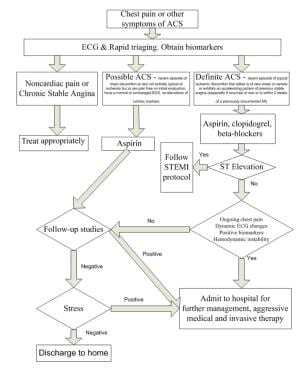
The ACS spectrum concept is a useful framework for developing therapeutic strategies. Antithrombin therapy and antiplatelet therapy should be administered to all patients with an ACS regardless of the presence or the absence of ST-segment elevation. Patients presenting with persistent ST-segment elevation are candidates for reperfusion therapy (either pharmacological or catheter based) to restore flow promptly in the occluded epicardial infarct-related artery. Patients presenting without ST-segment elevation are not candidates for immediate pharmacological reperfusion but should receive anti-ischemic therapy and PCI when appropriate. "Time is myocardium" is a dictum to be remembered as survival has been shown to correlate with time to reperfusion in patients with acute MI. Many centers set goals for, and routinely record, door-to-ECG, door-to-needle (thrombolytic therapy), or door-to-vascular access (for patients receiving PCI) times as measures of quality of care provided.

  • Goals of ED care are rapid identification of patients with STEMI, exclusion of alternative causes of nonischemic chest pain, and stratification of patients with acute coronary ischemia into low- and high-risk groups.
  • Obtain intravenous access, administer supplemental oxygen, and provide telemetry monitoring if these procedures have not already been accomplished in the prehospital phase. In addition, obtain a 12-lead ECG as soon as possible after arrival.
  • Complete a history and physical examination, with focus on risk factors for coronary ischemia; onset, duration, and pattern of symptoms; and early identification of complications of myocardial ischemia (eg, new murmurs, CHF).
  • Perform frequent reassessment of vital signs and symptoms in response to administered therapies.
  • Serial ECGs and continuous ST-segment monitoring may be useful.
  • Many EDs have an observation unit that may be an appropriate disposition for patients who meet admission criteria.
  • Medical therapy, as discussed in Medication, is indicated.

Consultations

Cardiology or interventional cardiology consultation may be indicated for patients with any of the following:

  • STEMI - Depending on the center, the patient may be a candidate for PCI, and immediate interventional cardiology consultation is indicated.
    • Ongoing symptoms highly suggestive of acute coronary ischemia and nondiagnostic ECG (eg, left bundle-branch block [LBBB])
    • Ongoing symptoms refractory to aggressive medical therapy
    • Hemodynamic instability
    • Evidence of acute valvular dysfunction
    • Shock
    • Known severe aortic stenosis and ongoing symptoms
    • Uncertainty of the diagnosis


The goals of treatment are to preserve patency of the coronary artery, augment blood flow through stenotic lesions, and reduce myocardial oxygen demand. All patients should receive antiplatelet agents, and patients with evidence of ongoing ischemia should receive aggressive medical intervention until signs of ischemia, as determined by symptoms and ECG, resolve.

Drug Category: Antiplatelet agents

These agents inhibit the cyclooxygenase system, decreasing the level of thromboxane A2, which is a potent platelet activator. Antiplatelet therapy has been shown to reduce mortality rates by reducing the risk of fatal strokes and fatal myocardial infarctions.

Drug NameAspirin (Anacin, Ascriptin, Bayer Aspirin)
DescriptionEarly administration of aspirin in patients with AMI may reduce cardiac mortality in first month.
Adult Dose160-324 mg PO or chewed; suppository if patient is unable to take PO medications
Pediatric DoseNot established
ContraindicationsDocumented hypersensitivity; liver damage; hypoprothrombinemia; vitamin K deficiency; bleeding disorders; asthma; children (<16 y) with flu (because of association of aspirin with Reye syndrome)
InteractionsEffects may decrease with antacids and urinary alkalinizers; corticosteroids decrease salicylate serum levels; additive hypoprothrombinemic effects and increased bleeding time may occur with coadministration of anticoagulants; may antagonize uricosuric effects of probenecid and increase toxicity of phenytoin and valproic acid; doses >2 g/d may potentiate glucose-lowering effect of sulfonylurea drugs
PregnancyD - Fetal risk shown in humans; use only if benefits outweigh risk to fetus
PrecautionsMay cause transient decrease in renal function and aggravate chronic kidney disease; avoid use in severe anemia, in history of blood coagulation defects, or in patients taking anticoagulants

Drug Category: Nitrates

These agents oppose coronary artery spasm and reduce myocardial oxygen demand by reducing both preload and afterload.

Drug NameNitroglycerin (Nitro-Bid)
DescriptionCauses relaxation of the vascular smooth muscle via stimulation of intracellular cyclic guanosine monophosphate production, causing a decrease in blood pressure.
Adult Dose400 mcg SL or spray q5min, repeated up to 3 times
If symptoms persist, administer 5-10 mcg/min IV infusion
Dose should be titrated to reduce MAP by 10%, relieve symptoms, limit adverse effects of hypotension (>30% reduction in MAP or <90 mm Hg systolic), or relieve intolerable headache
Pediatric DoseNot established
ContraindicationsDocumented hypersensitivity; severe anemia; shock; postural hypotension; head trauma; closed-angle glaucoma; cerebral hemorrhage
InteractionsAspirin may increase nitrate serum concentrations; marked symptomatic orthostatic hypotension may occur with coadministration of calcium channel blockers (dose adjustment of either agent may be necessary)
PregnancyC - Fetal risk revealed in studies in animals but not established or not studied in humans; may use if benefits outweigh risk to fetus
PrecautionsCaution in coronary artery disease and low systolic blood pressure

Drug Category: Analgesics

These agents reduce pain, which decreases sympathetic stress, in addition to providing some preload reduction.

Drug NameMorphine sulfate (Duramorph, Astramorph, MS Contin)
DescriptionDOC for narcotic analgesia because of its reliable and predictable effects, safety profile, and ease of reversibility with naloxone.
Morphine sulfate administered IV may be dosed in a number of ways and commonly titrated until desired effect obtained.
Adult Dose2-4 mg IV q5-15min; titrate to symptomatic relief or adverse effects (eg, lethargy, hypotension, respiratory depression)
Pediatric DoseNot established
ContraindicationsDocumented hypersensitivity; hypotension; potentially compromised airway in which establishing rapid airway control would be difficult
InteractionsPhenothiazines may antagonize analgesic effects of opiate agonists; tricyclic antidepressants, MAOIs, and other CNS depressants may potentiate adverse effects of morphine
PregnancyC - Fetal risk revealed in studies in animals but not established or not studied in humans; may use if benefits outweigh risk to fetus
PrecautionsCaution in hypotension, respiratory depression, nausea, emesis, constipation, and urinary retention; caution in atrial flutter and other supraventricular tachycardias; has vagolytic action and may increase ventricular response rate

Drug Category: Anticoagulants

These agents are used to prevent recurrence of clot after a spontaneous fibrinolysis.

Drug NameHeparin
DescriptionAugments activity of antithrombin III and prevents conversion of fibrinogen to fibrin. Does not actively lyse but is able to inhibit further thrombogenesis. Prevents recurrence of a clot after spontaneous fibrinolysis.
Adult Dose80 U/kg IV bolus, followed by an infusion of 18 U/kg/h
Pediatric DoseNot established
ContraindicationsDocumented hypersensitivity; diagnosed subacute bacterial endocarditis; active bleeding; history of heparin-induced thrombocytopenia
InteractionsDigoxin, nicotine, tetracycline, and antihistamines may decrease effects; NSAIDs, aspirin, dextran, dipyridamole, and hydroxychloroquine may increase heparin toxicity
PregnancyC - Fetal risk revealed in studies in animals but not established or not studied in humans; may use if benefits outweigh risk to fetus
PrecautionsObserve for prolonged or excessive bleeding at venipuncture sites; some preparations contain benzyl alcohol as a preservative; benzyl alcohol, used in large amounts, has been associated with fetal toxicity (gasping syndrome); use of preservative-free heparin is recommended in neonates; use with caution in patients with shock or severe hypotension

Drug Category: Beta-adrenergic blockers

These agents have antiarrhythmic and antihypertensive properties as well as  ability to reduce ischemia. They minimize the imbalance between myocardial supply and demand by reducing afterload and wall stress. In patients with acute MI, they have been shown to decrease infarct size as well as short- and long-term mortality, which is a function of their anti-ischemic and antiarrhythmic properties.

Drug NameMetoprolol (Lopressor)
DescriptionSelective beta1-adrenergic receptor blocker that decreases the automaticity of contractions.
During IV administration, carefully monitor blood pressure, heart rate, and ECG. Goal of treatment is to reduce heart rate to 60-90 beats/min.
Adult Dose5 mg slow IV infusion q5min; to a maximum dose of 15 mg or desired heart rate
Pediatric DoseNot established
ContraindicationsDocumented hypersensitivity; uncompensated congestive heart failure; bradycardia; asthma; cardiogenic shock; AV conduction abnormalities
InteractionsAluminum salts, barbiturates, NSAIDs, penicillins, calcium salts, cholestyramine, and rifampin may decrease bioavailability and plasma levels of metoprolol, possibly resulting in decreased pharmacologic effects; toxicity of metoprolol may increase with coadministration of sparfloxacin, phenothiazines, astemizole (recalled from US market), calcium channel blockers, quinidine, flecainide, and contraceptives; metoprolol may increase toxicity of digoxin, flecainide, clonidine, epinephrine, nifedipine, prazosin, verapamil, and lidocaine
PregnancyC - Fetal risk revealed in studies in animals but not established or not studied in humans; may use if benefits outweigh risk to fetus
PrecautionsBeta-adrenergic blockade may reduce signs and symptoms of acute hypoglycemia and may decrease clinical signs of hyperthyroidism; abrupt withdrawal may exacerbate symptoms of hyperthyroidism, including thyroid storm; monitor patients closely and withdraw the drug slowly; during IV administration, carefully monitor blood pressure, heart rate, and ECG

Drug NameEsmolol (Brevibloc)
DescriptionExcellent drug for use in patients at risk for complications from beta-blockers, particularly reactive airway disease, mild-to-moderate LV dysfunction, and peripheral vascular disease. Short half-life of 8 min allows for titration to desired effect with ability to stop quickly prn.
Adult DoseInitial maintenance dose: 0.1 mg/kg/min IV; titrate in increments of 0.05 mg/kg/min q10-15min to a total dose of 0.2 mg/kg/min
Optional loading dose: 0.5 mg/kg slow IV infusion
Pediatric DoseNot established
ContraindicationsDocumented hypersensitivity; uncompensated congestive heart failure; bradycardia; cardiogenic shock; AV conduction abnormalities
InteractionsAluminum salts, barbiturates, NSAIDs, penicillins, calcium salts, cholestyramine, and rifampin may decrease bioavailability and plasma levels, possibly resulting in a decreased pharmacologic effect; conversely, cardiotoxicity of sotalol may increase when coadministered with sparfloxacin, astemizole (recalled from US market), calcium channel blockers, quinidine, flecainide, or contraceptives
Toxicity of sotalol increases when administered concurrently with digoxin, flecainide, acetaminophen, clonidine, epinephrine, nifedipine, prazosin, haloperidol, phenothiazines, or catecholamine-depleting agents
PregnancyC - Fetal risk revealed in studies in animals but not established or not studied in humans; may use if benefits outweigh risk to fetus
PrecautionsDo not use in cocaine-related ischemia; beta-adrenergic blockade may decrease the signs and symptoms of acute hypoglycemia and the clinical signs of hyperthyroidism; abrupt withdrawal may exacerbate symptoms of hyperthyroidism, including thyroid storm; slowly withdraw drug; closely monitor patients

Drug Category: Glycoprotein IIB/IIA inhibitors

Glycoprotein (GP) IIb/IIIa antagonists prevent the binding of fibrinogen, thereby blocking platelet aggregation. Studies to date suggest that as a class, the addition of intravenous GP IIb/IIIa inhibitors to aspirin and heparin improves both early and late outcomes, including mortality, Q-wave MI, need for revascularization procedures, and length of hospital stay.

Currently, IIb/IIIb antagonists in combination with aspirin are considered standard antiplatelet therapy for patients at high risk for unstable angina. Adenosine diphosphate (ADP) antagonists are not considered standard therapy but may be used in patients unable to tolerate aspirin.

Drug NameAbciximab (ReoPro)
DescriptionChimeric human-murine monoclonal antibody. Binds to receptor with high affinity and reduces platelet aggregation by 80%. Inhibition of platelet aggregation persists for up to 48 h after end of infusion.
Abciximab has been approved for use in elective/urgent/emergent percutaneous coronary intervention.
Adult Dose0.25 mg/kg bolus IV followed by an infusion of 0.125 mcg/kg/min; maximum 10 mcg/min for 12 h
Pediatric DoseNot established
ContraindicationsDocumented hypersensitivity; bleeding diathesis; thrombocytopenia (>100,000 cells/mcL); recent trauma; intracranial tumor and/or hemorrhage; severe uncontrolled hypertension; history of vasculitis; cerebrovascular accident within 2 y; active internal bleeding; intracranial hemorrhage; hemorrhagic stroke; severe HTN (systolic BP >200 mm Hg, or diastolic BP >110 mm Hg); major surgical procedure within the past month
InteractionsToxicity increases with coadministration of anticoagulants, antiplatelets, and thrombolytics
PregnancyC - Fetal risk revealed in studies in animals but not established or not studied in humans; may use if benefits outweigh risk to fetus
PrecautionsBleeding complications may occur in patients <75 kg, >65 y, with history of GI disease, or recently received thrombolytic therapy; severe thrombocytopenia may occur within first 24 h of use
Patients receiving other drugs that affect hemostasis (eg, thrombolytics, NSAIDs, dipyridamole, ticlopidine, clopidogrel)

Drug NameEptifibatide (Integrilin)
DescriptionAntagonist of the platelet GP IIb/IIIa receptor, which reversibly prevents von Willebrand factor, fibrinogen, and other adhesion ligands from binding to the GP IIb/IIIa receptor. End effect is the inhibition of platelet aggregation. Effects persist over duration of maintenance infusion and are reversed when infusion ends.
Adult DoseUnstable angina: 180 mcg/kg IV bolus, followed by a continuous infusion of 2 mcg/kg/min until discharge or surgery
Patients undergoing PCI: 135 mcg/kg IV bolus; administer before PCI, followed by a continuous infusion of 0.5 mcg/kg/min
Pediatric DoseNot established
ContraindicationsDocumented hypersensitivity; severe hypertension (SBP >200 mm Hg); active internal bleeding; history of intracranial hemorrhage; intracranial neoplasm, arteriovenous malformation, or aneurysm; acute pericarditis; bleeding diathesis; trauma or stroke within previous 30 d; platelet count <100,000/mm3; history of thrombocytopenia following exposure to this product
Also contraindicated if serum creatinine level >2 mg/dL (for 180-mcg/kg bolus and 2-mcg/kg/min infusion) or >4 mg/dL (for 135-mcg/kg bolus and 0.5-mcg/kg/min infusion)
History of bleeding diathesis within 30 d; intracranial hemorrhage; history of hemorrhagic stroke; severe HTN (systolic BP >200 mm Hg, or diastolic BP >110 mm Hg); major surgical procedure within the past month
InteractionsWhen used with heparin and aspirin, an increase in bleeding, compared with using heparin and aspirin alone, can occur
If using concurrently with other drugs that affect hemostasis (eg, warfarin), closely monitor patients
PregnancyC - Fetal risk revealed in studies in animals but not established or not studied in humans; may use if benefits outweigh risk to fetus
PrecautionsMost common complications encountered during therapy with eptifibatide are bleeding events; caution in patients with a platelet count <150,000/mm3 and in hemorrhagic retinopathy; because agent inhibits platelet aggregation, caution when using concurrently with drugs that affect hemostasis (eg, thrombolytics, ticlopidine, NSAIDs, warfarin, dipyridamole, clopidogrel); measure activated clotting time (ACT) and maintain aPTT between 50-70 s unless PCI needs to be performed; maintain ACT between 300-350 s during PCI; if platelets decrease to <100,000/mm3, additional platelet counts should be obtained to exclude possibility of pseudothrombocytopenia; if thrombocytopenia confirmed, discontinue GP IIb/IIIa inhibitors and heparin and appropriately monitor and treat the condition; to monitor unfractionated heparin, monitor aPTT 6 h after start of heparin infusion and adjust to maintain aPTT higher than twice the baseline level

Drug NameTirofiban (Aggrastat)
DescriptionNonpeptide antagonist of GP IIb/IIIa receptor. Reversible antagonist of fibrinogen binding. When administered IV, more than 90% of platelet aggregation inhibited.
Approved for use in combination with heparin for patients with unstable angina who are being treated medically and for those undergoing PCI.
Adult Dose0.4 mcg/kg/min IV for 30 min; continue at 0.1 mcg/kg/min
Dose should be halved in patients with severe renal insufficiency (CrCl <30 mL/min)
Pediatric DoseNot established
ContraindicationsDocumented hypersensitivity; severe hypertension (SBP >200 mm Hg); active internal bleeding; history of intracranial hemorrhage, intracranial neoplasm, arteriovenous malformation, or aneurysm; acute pericarditis; bleeding diathesis; trauma or stroke within the previous 30 d; platelet count <100,000/mm3; history of thrombocytopenia following exposure to this product
Also contraindicated if serum creatinine level >2 mg/dL (for 180-mcg/kg bolus and 2-mcg/kg/min infusion) or >4 mg/dL (for 135-mcg/kg bolus and 0.5-mcg/kg/min infusion)
History of bleeding diathesis within 30 d; intracranial hemorrhage; a history of hemorrhagic stroke; severe HTN (systolic BP >200 mm Hg, or diastolic BP >110 mm Hg); major surgical procedure within the past month
InteractionsWhen used with heparin and aspirin, an increase in bleeding, compared with using heparin and aspirin alone, can occur
If using concurrently with other drugs that affect hemostasis (eg, warfarin), closely monitor patients
PregnancyB - Fetal risk not confirmed in studies in humans but has been shown in some studies in animals
PrecautionsMost common complications in therapy with tirofiban are bleeding events; caution in patients with platelet counts <150,000/mm3 and in patients with hemorrhagic retinopathy
Before treating, monitor platelet counts, serum creatinine level, hemoglobin, hematocrit, and PT/aPTT within 6 h after loading infusion and at least daily thereafter (more frequently if evidence suggests significant decline)
Because these agents inhibit platelet aggregation, caution when using concurrently with drugs that affect hemostasis (eg, thrombolytics, ticlopidine, NSAIDs, warfarin, dipyridamole, clopidogrel)
Measure ACT and maintain aPTT between 50-70 s unless PCI needs to be performed; maintain ACT between 300-350 s during PCI; if platelet count decreases to <100,000/mm3, obtain additional platelet counts to exclude pseudothrombocytopenia; if thrombocytopenia is confirmed, discontinue GP IIb/IIIa inhibitors and heparin and appropriately monitor and treat the condition
To monitor unfractionated heparin, monitor aPTT 6 h after beginning heparin infusion; adjust to maintain aPTT higher than 2 times baseline

Drug Category: Low molecular weight heparins

Low molecular weight heparin (enoxaparin) has been shown to reduce cardiac ischemic events and death by as much as 15% in patients with unstable angina. The benefits appear to be sustained at 1 year, with a 13% reduction in patients requiring coronary artery bypass graft (CABG) or percutaneous transluminal coronary angioplasty (PTCA) and a 15% reduction in death or AMI. These clinical effects have been reported with all patients also receiving aspirin.

One systematic review comparing low molecular weight heparin (LMWH) with unfractionated heparin found no significant difference in benefits between the two. The advantages of using LMWH over unfractionated heparin are ease of administration, absence of need for anticoagulation monitoring, safety profile, and potential for overall cost savings. Although 3 LMWHs are approved for use in the United States, only enoxaparin is currently approved for use in unstable angina. Lev et al found that the combination of eptifibatide with enoxaparin appears to have a more potent antithrombotic effect than that of eptifibatide and unfractionated heparin (UFH).3

Drug NameEnoxaparin (Lovenox)
DescriptionLMWH is produced by partial chemical or enzymatic depolymerization of UFH. Binds to antithrombin III, enhancing its therapeutic effect. The heparin-antithrombin III complex binds to and inactivates activated factor X (Xa) and factor II (thrombin). LMWH differs from unfractionated heparin by having a higher ratio of antifactor Xa to antifactor IIa compared with UFH. Maximum antifactor Xa and antithrombin activities occur 3-5 h after administration.
Indicated for treatment of acute ST-segment elevation myocardial infarction (STEMI) managed medically or with subsequent percutaneous coronary intervention (PCI). Also indicated as prophylaxis of ischemic complications caused by unstable angina and non-Q-wave MI.
Adult DoseTreatment regimens include aspirin (75-325 mg/d) if not contraindicated
NSTEMI
1 mg/kg SC q12h
CrCl <30 mL/min: 1 mg/kg SC qd
STEMI
<75 years: 30 mg IV single bolus plus 1 mg/kg SC, then 1 mg/kg SC q12h; not to exceed 100 mg/dose for first 2 SC doses
<75 years and CrCl <30 mL/min: 30 mg IV single bolus plus 1 mg/kg SC, then 1 mg/kg SC qd; not to exceed 100 mg/dose for first 2 SC doses
>75 years: 0.75 mg/kg SC q12h (no initial IV bolus administered), not to exceed 75 mg/dose for first 2 doses
>75 years and CrCl <30 mL/min: 1 mg/kg SC qd (no initial IV bolus administered)
With PCI: If last enoxaparin dose administered >8 h before balloon inflation, administer an additional IV bolus of 0.3 mg/kg
With thrombolytic agent: Give dose specified for age and renal function between 15 min before and 30 min after the start of fibrinolytic therapy
Pediatric DoseNot established
ContraindicationsDocumented hypersensitivity; major bleeding; thrombocytopenia
InteractionsPlatelet inhibitors or oral anticoagulants (eg, dipyridamole, salicylates, aspirin, NSAIDs, sulfinpyrazone, ticlopidine) may increase risk of bleeding
PregnancyB - Fetal risk not confirmed in studies in humans but has been shown in some studies in animals
PrecautionsIf thromboembolic event occurs despite LMWH prophylaxis, discontinue drug and initiate alternate therapy; elevation of hepatic transaminase levels may occur but is reversible; heparin-associated thrombocytopenia may occur with fractionated LMWHs; 1 mg of protamine sulfate will reverse effect of approximately 1 mg of enoxaparin if significant bleeding complications develop; obtain hemostasis at puncture site before sheath removal after PCI

Drug Category: Direct thrombin inhibitors

Hirudin is the prototype of direct thrombin inhibitors. Hirudin binds directly to the anion binding site and the catalytic sites of thrombin to produce potent and predictable anticoagulation.

Drug NameHirudin (Lepirudin, Refludan)
DescriptionWhen compared with unfractionated heparin in unstable angina trials, hirudin demonstrated a modest short-term reduction in the composite end point of death or nonfatal MI. Risk of bleeding is increased modestly. Currently, hirudin is indicated only in patients unable to receive heparin because of heparin-induced thrombocytopenia.
Adult Dose0.4 mg/kg IV bolus over 15-20 s, followed by a continuous infusion of 0.15 mg/kg/h; goal is to increase aPTT 1.5-2.5 times the control; adjust dosing in renal impairment
Pediatric DoseNot established
ContraindicationsDocumented hypersensitivity
InteractionsIntracranial bleeding may be life threatening following concomitant thrombolytic therapy with rtPA or streptokinase
PregnancyB - Fetal risk not confirmed in studies in humans but has been shown in some studies in animals
PrecautionsAssociated with an increased need for transfusion (compared with unfractionated heparin) and increased risk of intracranial hemorrhage; no specific antidote exists; if life-threatening bleeding occurs, stop administration, determine coagulation profiles, send T/S, and prepare for blood transfusion

Drug NameBivalirudin (Angiomax)
DescriptionSynthetic analogue of recombinant hirudin. Inhibits thrombin. Used for anticoagulation in unstable angina undergoing PTCA. With provisional use of glycoprotein IIb/IIIa inhibitor (GPIIb/IIIa inhibitor) indicated for use as anticoagulant in patients undergoing PCI. Potential advantages over conventional heparin therapy include more predictable and precise levels of anticoagulation, activity against clot-bound thrombin, absence of natural inhibitors (eg, platelet factor 4, heparinase), and continued efficacy following clearance from plasma (because of binding to thrombin).
Adult Dose0.75 mg/kg IV bolus initially; followed by 1.75 mg/kg/h IV for duration of procedure or up to 4 h
Pediatric DoseNot established
ContraindicationsDocumented hypersensitivity; cerebral aneurysm; intracranial hemorrhage, general uncontrollable hemorrhage, or active major bleeding
InteractionsClinical trials have shown that patients undergoing PTCA/PCI, coadministration of bivalirudin with heparin, warfarin, or thrombolytics may increase risks of major bleeding events compared with patients not receiving these medications concomitantly
PregnancyB - Fetal risk not confirmed in studies in humans but has been shown in some studies in animals
PrecautionsCaution in renal impairment (dose only needs adjustment in patients with severe renal impairment of CrCl <30 mL/min and patients who are hemodialysis dependent), recent surgery or trauma, GI ulceration; risk of bleeding; may cause back pain, nausea, headache, hypotension

Drug Category: Adenosine diphosphate receptor antagonists

Two thienopyridines, clopidogrel and ticlopidine, are ADP antagonists that are approved for antiplatelet activity. Both have irreversible antiplatelet activity but take several days to manifest. A potential additive benefit exists when ADP antagonists are used in conjunction with aspirin.

These drugs may be considered alternatives to aspirin in patients intolerant or allergic to aspirin.

Drug NameClopidogrel (Plavix)
DescriptionGenerally preferred over ticlopidine because it more rapidly inhibits platelets and appears to have a more favorable safety profile.
Adult Dose300 mg PO loading dose, followed by 75 mg PO qd
Pediatric DoseNot established
ContraindicationsDocumented hypersensitivity; active bleeding; peptic ulcer or CNS hemorrhage
InteractionsSafety of concomitant use of heparin not established; coadministration with NSAIDS is associated with increased gastrointestinal bleeding
PregnancyB - Fetal risk not confirmed in studies in humans but has been shown in some studies in animals
PrecautionsTTP has been reported rarely after use of Plavix; caution in patients at risk of bleeding from trauma, surgery, or other pathological conditions; caution in prolonged bleeding time or liver disease

Drug NameTiclopidine (Ticlid)
DescriptionBeneficial effects were noted in patients with UA after 2 wk of use in one randomized trial. When compared to controls, ticlopidine use decreased vascular deaths and nonfatal MIs.
Adult Dose250 mg PO bid
Pediatric DoseNot established
ContraindicationsDocumented hypersensitivity; presence of neutropenia or thrombocytopenia or past history of either TTP or aplastic anemia; hemostatic disorder or active bleeding; severe liver impairment
InteractionsEffects may decrease with coadministration of corticosteroids and antacids; toxicity increases when taken concurrently with theophylline, cimetidine, aspirin, and NSAIDS
PregnancyB - Fetal risk not confirmed in studies in humans but has been shown in some studies in animals
PrecautionsDiscontinue if absolute neutrophil count decreases to <1200 per mm3 or if platelet count falls to <80,000 per mm3; GI adverse effects include diarrhea, abdominal pain, nausea, and vomiting; may cause neutropenia, which usually reverses within 1-3 wk of discontinuation of therapy


Further Inpatient Care

  • Patients with unstable angina, ECG changes, or both should be admitted to a telemetry bed. A certain subset of patients with stable angina may be treated as outpatients with antianginal agents, but close follow-up is necessary.
  • Patients with symptoms refractory to aggressive medical treatment, shock, suspected or known aortic stenosis, or new or worsening mitral regurgitation are at high risk. Management for these patients should include the following:
    • Admission to an intensive care unit setting
    • Cardiology consultation
  • Intra-aortic balloon pump (IABP) and early angiography to delineate anatomy should be considered.
  • Antiplatelet and antianginal medications initiated in the ED should be continued. Subsequent dosing is determined by symptomatic response and tolerance of side effects.
  • The routine use of lidocaine as prophylaxis for ventricular arrhythmias in patients with ACS is not indicated. In MI, it has been shown to increase mortality rates. Lidocaine may be used for patients with complex ventricular ectopy or for patients with hemodynamically significant, nonsustained, or sustained ventricular tachycardia.

Further Outpatient Care

  • Patients with chronic stable angina may be considered for discharge after occurrence of the following:
    • Symptom duration is brief and identical to symptoms experienced in the past.
    • ECG is normal or unchanged.
    • Patient has access to timely follow-up with a primary care provider.
  • When in doubt, admit. The usual reason for a patient with chronic stable angina to present to the ED is a change in pattern or severity of symptoms, which makes their angina unstable.
  • A study by Bartholomew et al may be helpful in making the decision to admit or discharge. This prospective thrombolysis in myocardial infarction risk score (TIMI-RS) used 7 variables in patients with suspected ACS: (1) age older than 65 years, (2) 3 or more cardiac risk factors, (3) ST deviation, (4) aspirin use within 7 days, (5) 2 or more anginal events over 24 hours, (6) history of coronary stenosis, and (7) elevated troponin levels. Patients were contacted at 30 days, and data were collected concerning major adverse cardiac events.4
    • In patients presenting with chest pain, a higher TIMI-RS was associated with an increase in major adverse cardiac events within 30 days. The authors concluded that the 30-day event rate was 0% for a score of 1, 20% for a score of 2, 24% for a score of 3, 42% for a score of 4, 52% for a score of 5, and 70% for a score of 6 or 7 (p < 0.0001).
    • The TIMI-RS successfully differentiates early risk for major adverse cardiac events in a general population presenting with symptoms suggestive of ACS. A simple bedside calculation of the TIMI-RS provides rapid risk stratification, allowing facilitation of therapeutic decision-making in patients with symptoms suggestive of ACS and may be helpful with the patient's disposition.

In/Out Patient Meds

  • Aspirin
  • Use clopidogrel as a substitute for patients unable to take aspirin because of a history of hypersensitivity or bleeding. Use a 300-mg loading dose, then 75 mg qd.
  • Nitrates
    • Use topical or oral nitrates for those who are discharged or for those who are stable inpatients.
    • Intravenous infusion is preferable for those admitted with unstable symptoms.
  • Beta-blockers
    • Metoprolol and propranolol are excellent choices for inpatient and outpatient management.
    • Use esmolol for inpatient treatment, particularly those at risk for adverse effects from beta-blockade.
  • Heparin: Use heparin for inpatient management of unstable angina. Some preliminary data suggest that LMWH is a safe and effective alternative.
  • Significant clustering of recurrent ischemic events occurs within 24 hours after cessation of both short-term UFH and enoxaparin treatment, and patients should be carefully monitored during that period. This early rebound may be prevented by continuation of a fixed dose of enoxaparin.

Transfer

  • Consider transfer only for patients at particularly high risk and for those who are being evaluated in a center without access to timely cardiac catheterization, PTCA, or bypass.
  • High-risk criteria include the following:
    • Symptoms refractory to medical management
    • Hemodynamic instability, cardiogenic shock
    • New or worsening mitral regurgitant murmur
    • Known or suspected severe aortic stenosis
  • The risks of transferring these unstable patients must be carefully weighed against the benefits of transfer.

Deterrence/Prevention

  • Cessation of smoking
  • Assessment of lipid profile and dietary changes, where appropriate (Among patients who have recently had an ACS, an intensive lipid-lowering statin regimen provides greater protection against death or major cardiovascular events than a standard regimen.5)
  • Blood pressure control
  • Compliance with medications, particularly aspirin
  • Comprehensive risk assessment by primary care provider, including exercise tolerance test (ETT) for individuals at high risk and identification of structural heart disease (eg, left ventricular hypertrophy [LVH], aortic stenosis)

Complications

  • Acute myocardial infarction
  • Cardiogenic shock
  • Ischemic mitral regurgitation
  • Arrhythmias
    • Supraventricular arrhythmias (rare complication of ischemia, may actually precipitate ischemic events)
    • Ventricular arrhythmias; simple and complex premature ventricular contractions (PVCs), and nonsustained ventricular tachycardia (NSVT)
  • Atrioventricular nodal blockade
    • Usually transient in setting of reversible ischemia
    • Treatment guided by location of block and hemodynamic stability
  • Ventricular rupture occurs in the interventricular septum or the LV free wall. This represents a catastrophic event with mortality rates greater than 90%. Prompt recognition, stabilization, and surgical repair are crucial to any hope of survival. An echocardiogram will usually define the abnormality, and a right heart catheterization may show an oxygenation increase with septal rupture.

Prognosis

  • Patients with angina either proceed to infarct or have their disease stabilized by medical and/or interventional therapies. Patients with angina are a heterogeneous group; therefore, prognosis varies with respect to stability of disease, demographics, comorbidity, and current intervention.
  • Patients with ACS with atrial fibrillation (AF) are associated with increased morbidity and mortality.6
  • Patients with ACS and diabetes mellitus, especially those with ST elevation, had increased in-hospital mortality rates. Among patients with ACS and diabetes mellitus, those receiving insulin had worse outcomes. Outcomes were similar for those on hypoglycemic medication or on diet alone.7
  • In chronic stable angina, prognosis is generally excellent. Factors that have been shown to impact prognosis include the following:
    • Aspirin reduces progression to both nonfatal MI and cardiac death.
    • Beta-blockers control anginal symptoms and reduce cardiac complications in patients with hypertension.
    • PTCA and revascularization improve the prognosis in high-risk patients.
    • Poor prognostic factors include male sex, diabetes, and hypertension.
  • In unstable angina, prognosis is determined by the ability to control symptoms acutely, preventing progression to AMI. Factors associated with a poorer prognosis include the following:
    • Evidence of myocardial necrosis, as determined by elevated troponin T level
    • Delays in angiography in patients at high risk (Early angiography allows for triage to medical therapy, PTCA, or revascularization.)

Patient Education

  • For patients being discharged home, emphasize the following:
    • Timely follow-up with primary care provider
    • Compliance with discharge medications, specifically aspirin and other medications used to control symptoms
    • Need to return to ED for any change in frequency or severity of symptoms


Medical/Legal Pitfalls

  • Failure to consider the diagnosis - Groups at risk include the following:
    • Women, particularly premenopausal
    • Patients with diabetes
    • Elderly patients
    • Patients with cocaine-related ischemia
  • Inadequate risk stratification in ED
  • Failure to administer aspirin as first-line therapy
  • Overcautious use of beta-blockers in ED


Media file 1:  A 50-year-old man with type 1 diabetes mellitus and hypertension presents after experiencing 1 hour of midsternal chest pain that began after eating a large meal. Pain is now present but is minimal. Aspirin is the single drug that will have the greatest potential impact on subsequent morbidity. In the setting of ongoing symptoms and ECG changes, nitrates titrated to 10% reduction in blood pressure and symptoms, beta-blockers, and heparin are all indicated. If the patient continues to have persistent signs and/or symptoms of ischemia, addition of a glycoprotein IIb/IIIa inhibitor should be considered.
Click to see larger pictureClick to see detailView Full Size Image
Media type:  ECG

Media file 2:  A 62-year-old woman with a history of chronic stable angina and a "valve problem" presents with new chest pain. She is symptomatic on arrival, complaining of shortness of breath and precordial chest tightness. Her initial vital signs are blood pressure 140/90 mm Hg and heart rate is 98. Her ECG is as shown. She is given nitroglycerin sublingually, and her pressure decreases to 80/palpation. Right ventricular ischemia should be considered in this patient.
Click to see larger pictureClick to see detailView Full Size Image
Media type:  ECG


  1. Zellweger MJ, Schaer BA, Cron TA, Pfisterer ME, Osswald S. Elevated troponin levels in absence of coronary artery disease after supraventricular tachycardia. Swiss Med Wkly. Aug 9 2003;133(31-32):439-41. [Medline].
  2. Koller A. Exercise-induced increases in cardiac troponins and prothrombotic markers. Med Sci Sports Exerc. Mar 2003;35(3):444-8.