
Practice Essentials
Mumps is an acute, self-limited, systemic viral illness characterized by the swelling of one or more of the salivary glands, typically the parotid glands. The illness is caused by the RNA virus, Rubulavirus. Rubulavirus is within the genus Paramyxovirus and is a member of the family Paramyxoviridae. This virus contains a single-stranded, negative-sense RNA surrounded by a glycoprotein envelope. Of 2 glycoproteins on the surface of the RNA viral envelope, one mediates neuraminidase and hemagglutination activity, whereas the other is responsible for fusion to the lipid membrane of the host cell.
Rubulavirus can be isolated in viral culture from saliva, urine, and cerebrospinal fluid (CSF). Chemical agents (ie, ether, formalin, chloroform), heat and ultraviolet light can inactivate this virus.
Serologic assays determine the presence of an antibody response and assess differences between acute and convalescent titers. Affected salivary glands show edema and lymphocytic infiltration. (See the image below.)
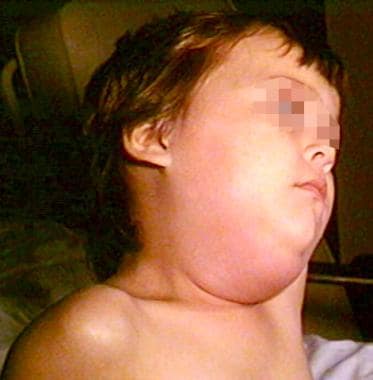
Even though the mumps virus, Rubulavirus, shares similar morphologic features to human parainfluenza viruses (known as hPIVs, as part of the Paramyxovirus genus), no cross-immunity between these viruses is known. The mumps virus does share various epidemiologic characteristics with other well-known viral pediatric diseases, such as measles (RNA virus, of the genus Morbillivirus, in the Paramyxoviridae family) and rubella (RNA virus, of the genus Rubivirus, in the Togaviridae family).
Mumps occurs worldwide. Humans are the only known natural hosts. This Paramyxovirus is highly infectious to nonimmune individuals and is the only cause of epidemic parotitis. Although mumps cases occur at any time of year, an increase in case number is noted during late winter and early spring. [1]

Background
Vaccination history and timeline
The monovalent live, attenuated mumps vaccine was licensed in the United States in December 1967, and the Advisory Committee on Immunization Practices (ACIP) recommended that its use be considered for children nearing puberty, for adolescents, and for adults. At this time, the public health community considered mumps vaccination a low priority; as such, the ACIP believed that mumps immunization should not compromise the effectiveness of established immunization public health programs. By 1972, the ACIP recommendations were changed to indicate that mumps vaccination was particularly important for the initially targeted teenage and adult age groups. Hence, in 1977, routine vaccination was recommended for all children age 12 years and older. (See Treatment.)
In 1980, further recommendations called for mumps vaccination of susceptible children, adolescents, and adults, unless it was medically contraindicated. Following these comprehensive recommendations and enactment of state laws requiring mumps vaccination for school entry and attendance, the reported incidence of mumps steadily declined.
However, in 1986 and 1987, large outbreaks of mumps occurred among under-immunized cohorts of people born between 1967 and 1977, as based on a single-dose mumps vaccine regimen. This caused a shift in peak incidence from persons age 5-9 years to those age 10-19 years. [2] In 1989, the ACIP recommended that a second dose of mumps-containing vaccine be given to children age 4-6 years (at time of entry to kindergarten or first grade) and designated MMR as the vaccine of choice. [2, 3]
Over the next decade (1988-1998), the incidence of mumps decreased among all age groups. The greatest decrease occurred among persons aged 10-19 years. This age group had reversed the trend seen in 1986 and 1987, when a resurgence of outbreaks had occurred among susceptible adolescents and young adults.
Subsequent outbreaks have occurred among well-vaccinated populations. During 1989-1990, a large outbreak occurred among students in a primary and a secondary school. Most students in these schools had been vaccinated, suggesting that a vaccination failure (in addition to failure to vaccinate) might have contributed to the outbreak. Another mumps outbreak occurred a year later, in a secondary school where most of the students had been vaccinated; this outbreak was mostly attributed to primary vaccination failure.
The shift in higher risk for mumps to these other age groups (ie, from younger school-aged children to older children, adolescents, and young adults), which occurred after the routine use of the mumps vaccine was initiated, has persisted despite minimal fluctuations in disease incidence that have occurred among the various age groups.
Transmission, course, and symptoms
Humans are the sole reservoir for the mumps virus. The transmission mode is person to person via respiratory droplets and saliva, direct contact, or fomites. (See Etiology.) The presence of maternal antibodies typically protects infants younger than 12 months old from the disease. Infections can be a symptomatic in 20-30% of persons. Of those with symptomatic infection, adults tend to be more severely affected when compared to children. Lifelong immunity usually follows clinical or subclinical mumps infection, although second infections have been documented.
Mumps has an incubation period of 16-18 days; however, cases can arise 12-25 days after exposure. After this period, prodromal symptoms (such as low-grade fever, malaise, myalgias, headache, and anorexia) occur; these symptoms can last 3-5 days.
After this prodromal period (about 48 h), the clinical path of the virus depends on which organ is affected. The most common presentation is a parotitis, which occurs in 30 to 40% of all patients and in 95% of those who are symptomatic. Parotitis is caused by direct viral infection of the ductal epithelium and presents with localized gland inflammation. Other reported sites of infection are the central nervous system (CNS), eyes, pancreas, kidneys, testes, ovaries, and joints.
Mumps is the only known cause of epidemic parotitis; as such, parotitis is used as a clinical parameter of maximum communicability of the mump virus. A patient is considered infectious from about 3 days before the onset of, and up to 4 days after, the start of active parotitis (although it has been suggested that the communicable period is actually longer, lasting from 6 days before, to 9 days after, facial swelling is apparent).
After the prodromal period, one or both parotid glands begin to enlarge. Initially, local parotid tenderness and same-sided earache can occur. Ordinarily, the parotid glands are not palpable; but in patients with mumps, parotid swelling increases rapidly over several days. Seventy to 80% of symptomatic cases are bilateral with unilateral swelling occurring first, followed by bilateral parotid involvement. Occasionally, simultaneous involvement of both glands occurs. Edema over the parotid gland presents with non-discrete borders, pain with pressure, and obscures the angle of the mandible. The opening of the parotid duct (also known as Stensen's duct) appears erythematous and enlarged. Parotid swelling can last for 10 days. Serologically, this inflammatory process can be confirmed with an elevated salivary amylase (s-amylase) level.
Despite the classic correlation of mumps and parotitis, mumps is no longer the most common cause of parotid swelling. Other viral causes include cytomegalovirus, parainfluenza virus 1 and 3, influenza A, and HIV. Bacterial infections, drug reactions, and metabolic disorders can also cause parotitis. Refer to the Medscape article on Parotitis for further information.
Other sites of viral infection
Central nervous system
CNS involvement is the most common extrasalivary complication of mumps. Its presentation is most often as aseptic meningitis rather than as a true encephalitis. This complication occurs up to 3 times more often in males when compared with females. [4] It may precede parotitis or occur in its absence, but it usually presents within the first week after parotid swelling.
Aseptic meningitis has been seen in up to 10% of patients with history of parotitis. This percentage increases to 50% in those patients without parotid gland swelling. Salient clinical indicators of CNS involvement include headache, fever, nausea, vomiting, and nuchal rigidity. Marked changes in sensorium, convulsions, paresis, and/or paralysis present in patients with encephalitis, not typically in aseptic meningitis.
In clinically diagnosed aseptic meningitis or encephalitis, the CSF profile is similar. A CSF mononuclear pleocytosis occurs, as does normal glucose; although hypoglycorrhachia has been reported. Pleocytosis has a wide range of WBCs per microliter (10-2000 WBCs/µL), with a lymphocytic predominance, although an early polymorphonuclear predominance has been reported. CSF total protein is usually normal or can be mildly elevated. [5] In addition, the mumps virus can be isolated from CSF early in the illness. Pleocytosis in the CSF has also been shown to occur in persons without clinical signs of CNS involvement.
CNS involvement (meningitis or encephalitis) carries a good prognosis and is usually associated with a complete recovery.
Neuritis of the auditory nerve may cause sensorineural deafness. [6] A sudden onset of tinnitus, ataxia, and vomiting precedes a permanent hearing loss. Other neurologic complications include facial nerve neuritis and myelitis.
Gastrointestinal
Another clinical manifestation of mumps is acute pancreatitis. Pancreatitis presents with mid-abdominal pain and distention, fever (typically low grade), nausea, and vomiting. An elevated serum lipase value supports this diagnosis.
Genitourinary
Approximately one third of post-pubertal male patients develop unilateral orchitis. Orchitis is the most common complication of mumps infection in adult males. This inflammation usually follows parotitis but may precede or occur in the absence of parotid gland swelling. Orchitis usually appears during the first week of parotitis, but it can occur in the second or third week. Bilateral orchitis occurs less frequently (about 10% of cases). Gonadal atrophy may follow orchitis and poses a greater risk with bilateral involvement; however, sterility is rare. [7] Prepubertal boys may develop orchitis, but it is uncommon in boys younger than 10 years old.
Orchitis presents with high fevers (39-41°C), severe testicular pain accompanied by swelling, and erythema of the scrotum. Nausea, vomiting, and abdominal pain are often present. Fever and gonadal swelling usually resolve in 1 week, but tenderness may persist.
Retrospective case studies have investigated a possible link between mumps orchitis and the subsequent development of testicular cancer; no increased risk has been shown to date. [8, 9]
Oophoritis occurs in about 7% of postpubertal female patients.
Mumps in infancy
Maternal transplacental antibodies protect infants up to 12 months of age. Infants born to mothers who have had mumps a week prior to delivery, may have clinically apparent mumps at birth or develop illness in the neonatal period.
Etiology
After the initial entry into the respiratory system, the virus replicates locally. Viremic dissemination then occurs to target tissues, such as the salivary glands (parotid glands) and extrasalivary locations (CNS). These findings are based on experimentally induced mumps infection by Henly et al in 1948.
A secondary phase of viremia that occurs before the immune response is due to the replication of the virus at the target organs. Viruria is also common, via blood transmission of the virus into the kidneys, where active replication occurs. Therefore, impaired renal function (glomerulonephritis) may occur.
Cell necrosis and inflammation with mononuclear cell infiltration is the tissue response. Salivary glands show edema and desquamation of necrotic epithelial cells lining the ducts. Focal hemorrhage and destruction of germinal epithelium may occur, leading to duct plugging.
Risk factors
Lack of immunization, international travel, and immune deficiencies are all factors that increase risk of infection by the Paramyxovirus mumps virus.
Epidemiology
United States statistics
After licensure of the mumps vaccine in the United States in December 1967 and the subsequent introduction of state-mandated immunization laws in an increasing number of states, the reported incidence of mumps substantially decreased. There were 666 cases of mumps reported in 1998. This number is in marked contrast to 152,209 cases reported in 1968, 30 years earlier.
Although incidence decreased in all age groups, the largest decreases (>50% reduction in incidence rate per 100,000 population) occurred in persons aged 10 years or older. Overall, the incidence of mumps was lowest in US states with comprehensive school immunization laws requiring mumps vaccination for entry.
Presently, the prevalence of mumps is at record low levels because of the recommendation of 2 doses of MMR vaccine and its high coverage rate in the United States. During the 1990s, mumps cases continued to substantially decline, from 5292 reported cases in 1990 to 266 reported cases in 2001, meeting the Healthy People 2000 Objective of less than 500 cases per year. In 2003, the Centers for Disease Control and Prevention (CDC) reported a total of 231 cases. [10]
However, in July 2005, an epidemic occurred in Sullivan County, New York at a summer camp. [11] An investigation conducted by the New York State Department of Health (NYSDOH) identified 31 cases of mumps, likely introduced by a camp counselor who had traveled from the United Kingdom and had not been vaccinated for mumps. The United Kingdom reported an epidemic of mumps this year, with 56,390 cases reported in persons aged 15-24 years who were not vaccinated. [12]
Even though 96% of the participants at this summer camp had been vaccinated for mumps, a mumps outbreak can result from exposure to virus imported from a country with an ongoing mumps epidemic (as in this outbreak). The likelihood of disease in US residents caused by imported virus from areas with mumps epidemics remains high.
Since 2007, about one-third of mumps cases reported in the United States have occurred in children and adolescents. Most of the patients (87%) had previously received the MMR vaccine. [13]
International statistics
The mumps virus is present throughout the world and hence, risk of exposure to mumps outside the United States may be high. In many countries worldwide, mumps remains endemic. The mumps vaccine is in use in only 57% of countries belonging to the World Health Organization (WHO), predominantly those countries with more developed economies. [14]
Worldwide variations in the number of persons who receive the mumps vaccination make it difficult to estimate the number of cases. The incidence varies markedly from region to region.
Race-, sex-, and age-related demographics
Race
During 1990-1998, race and ethnicity were reported for approximately two thirds of cases in each of 28 states and the District of Columbia. Mumps incidence decreased for people of all races during this period. However, for each year, incidence was highest among Black persons, ranging from 1.2-8.2 times the incidence of any other racial group. Moreover, this higher incidence was found to occur within each age grouping; this observation was most notable for persons aged 5-19 years.
Although incidence rates for Hispanics exceeded the rates for non-Hispanics in every age group, differences in rates were minimal for children younger than 5 years and for persons aged 20 years or older. The greatest difference in incidence rates between Hispanics and non-Hispanics was in persons aged 5-19 years.
Sex
Males and females are affected equally with parotitis.
CNS involvement has shown a male-to-female ratio of 3:1.
Age
Today, most reported mumps cases occur in school-aged children (aged 5-14 years). This was also the case in the prevaccine era. An average of 75% of mumps cases were reported from 1967-1971, whereas 60% of mumps cases occurred in this same age population from 1985-1987, within the first 5-year period post licensure. For 2 consecutive years, 1986 and 1987, the reported peak incidence rate shifted from children, 5-9 years old, to older age groups.
Persons aged 15 years or older accounted for more than 33% of the reported total from 1985-1987. During the earlier years, 1967-1971, an average of only 8% of reported mumps cases occurred among this population group. From 1985-1987, the incidence of reported mumps increased in all age groups. The most dramatic increases were noted among adolescents aged 10-14 years (almost a 7-fold increase) and young adults aged 15-19 years (more than an 8-fold increase).
Increased occurrence of mumps in susceptible adolescents and young adults has been documented by several outbreaks in high schools, on college campuses, and in occupational settings. [15] Nonetheless, despite this age shift in reported mumps, the overall reported risk of disease in persons aged 10-14 years and those aged 15 years or older is still lower risk than that seen in the prevaccine and early postvaccine eras.
Prognosis
The prognosis for patients with uncomplicated mumps is excellent.
For patients with encephalitis, the prognosis is generally favorable. Reported rates of mumps encephalitis cite 5 cases per 1000 reported mumps cases. Permanent sequelae are rare; however, neurologic damage and death can occur with the average encephalitis case-fatality rate of 1.4%. Approximately 10% of patients develop a mild form of aseptic meningitis, which can be confused with bacterial meningitis. Transient myelitis or polyneuritis is also uncommon.
Sensorineural deafness is a serious complication involving the CNS. [6] It occurs infrequently, with an estimated frequency of 0.5-5 cases per 100,000 reported mumps cases. Permanent deafness after mumps is rare and, if it occurs, primarily affects unilateral hearing (only 20% bilateral). Transient sensorineural hearing loss occurs in 4% of adults with mumps. Minor degrees of hearing loss are more likely to occur with higher incidence and are most likely reversible.
Pancreatitis occurs in 5% of persons infected with mumps. The hyperglycemia that results is usually transient, but a few cases of diabetes mellitus have occurred as a post complication. Limited experimental, clinical, and epidemiologic data suggest permanent pancreatic damage may result from injury caused by direct viral invasion. At present, it is unclear if the mumps virus is responsible. [16]
Orchitis (usually unilateral) has been reported as a complication in 20-50% of clinical mumps cases in postpubertal males. A degree of testicular atrophy occurs in about 35% of cases of mumps orchitis. Complete sterility is rare. Impaired fertility occurs in 13% of patients.
Oophoritis is a benign inflammation of the ovaries and occurs in about 5% of postpubertal females. Compromised fertility has not been shown.
Other rare complications include myocarditis, thyroiditis, mastitis, viral pneumonia nephritis, arthritis, and thrombocytopenia purpura. These complications usually resolve within 2-3 weeks without sequelae. Thirteen percent of adults with myocarditis had significant electrocardiographic findings of depressed ST segments and bradycardia. The incidence of myocarditis is 15%, but typically it is asymptomatic. [17] However, death due to myocarditis has been reported.
Mumps infection in pregnant women increases the risk of embryonic loss, spontaneous fetal loss, and fetal death, especially during the first trimester of pregnancy (reported to be as high as 27%). No association has been found between mumps and congenital anomalies. Studies relating maternal mumps infection to endocardial fibroelastosis in the fetus are inconclusive. Mumps during pregnancy was rare prior to immunization recommendations and is now even less common with the widespread use of mumps vaccination programs.
Death due to mumps is rare; the majority of fatalities (>50%) occur in patients older than 19 years.
Complications
A list of potential complications from mumps infection is cited below:
-
Aseptic meningitis/encephalitis
-
Sensorineural hearing loss/deafness [6]
-
Transverse myelitis
-
Polyneuritis
-
Guillain-Barré syndrome
-
Cerebellar ataxia (with encephalitis)
-
Keratouveitis
-
Thyroiditis
-
Myocarditis
-
Mastitis
-
Pneumonia
-
Pancreatitis
-
Nephritis
-
Orchitis
-
Oophoritis
-
Arthritis
-
Thrombocytopenia purpura
Patient Education
Advise parents and educators to exclude infected children from large-population facilities until 9 days after parotid swelling begins or until this swelling subsides.
Advise all children and adults to follow good hand washing practices.
-
Child with mumps.
-
This patient with mumps has marked bilateral swelling of the salivary glands. Courtesy of Sheldon Mintz, DDS.
