Continually Updated Clinical Reference
 
 
  All Sources     eMedicine     Medscape     Drug Reference     MEDLINE
 
eMedicine - Nailbed Injuries : Article by

Quick Find
Authors & Editors
Introduction
Clinical
Differentials
Workup
Treatment
Medication
Follow-up
Miscellaneous
Multimedia
References

Related Articles
Fingertip Injuries

Fractures, Hand


Patient Education
Skin, Hair, and Nails Center

Subungual Hematoma Overview

Subungual Hematoma Causes

Subungual Hematoma Symptoms

Subungual Hematoma Treatment


Author: Darrell Sutijono, MD, Staff Physician, Department of Emergency Medicine, Kings County Hospital/University Hospital, SUNY Downstate Medical Center

Darrell Sutijono is a member of the following medical societies: American Academy of Emergency Medicine, American College of Emergency Physicians, and Society for Academic Emergency Medicine

Coauthor(s): Mark A Silverberg, MD, FACEP, MMB, Assistant Professor, Assistant Residency Director, Department of Emergency Medicine, State University of New York Downstate College of Medicine; Consulting Staff, Department of Emergency Medicine, Staten Island University Hospital, Kings County Hospital, University Hospital, State University of New York Downstate at Brooklyn

Editors: Eric Kardon, MD, FACEP, Consulting Staff, Department of Emergency Medicine, Athens Regional Medical Center; Francisco Talavera, PharmD, PhD, Senior Pharmacy Editor, eMedicine; Tom Scaletta, MD, President, American Academy of Emergency Medicine; Chairperson, Department of Emergency Medicine, Edward Hospital; Assistant Professor of Emergency Medicine, Rush Medical College/Cook County Hospital; John Halamka, MD, Chief Information Officer, CareGroup Healthcare System, Assistant Professor of Medicine, Department of Emergency Medicine, Beth Israel Deaconess Medical Center; Assistant Professor of Medicine, Harvard Medical School; Rick Kulkarni, MD, Medical Director, Assistant Professor of Surgery, Section of Emergency Medicine, Yale-New Haven Hospital

Author and Editor Disclosure

Synonyms and related keywords: nailbed injury, nailbed injuries, finger injury, nail bed injuries, fingertip injuries, finger tip injuries, nail anatomy, nail loss, abnormal growth of nail, nonadherence of new nail, splitting of the nail, soft tissue infection of the nail, osteomyelitis of the underlying distal tuft

Background

Nailbed injuries are common, with fingertip injuries being the most often seen type of hand injuries. The fingertip is frequently injured because it is the point of interaction between the body and one's surroundings in the majority of activities performed on a daily basis, and it is the most distal portion of the upper extremities.

In addition to long-term cosmetic consequences, injuries to the nail can affect daily living. The nail provides protection for the fingertip, offers the ability to pick up small objects, and plays a role in tactile sensation. It also serves as a counter force when the finger pad touches an object; two-point discrimination distance widens substantially with removal of a nail.

Pathophysiology

To fully appreciate the consequences and treatment of nailbed injuries, reviewing the anatomy of the nailbed and the surrounding tissues is useful.

  • Nail - Hard structure composed of desiccated, keratinized squamous cells
  • Perionychium - Composed of the nailbed and paronychia
  • Nailbed - Soft tissue below the nail that is bound to the underlying periosteum of the distal phalanx and consists of the germinal and sterile matrix
  • Paronychia - Lateral nail folds
  • Hyponychium - Junction between the nailbed and fingertip skin that contains large numbers of polymorphonuclear leukocytes and lymphocytes, which protect the subungual tissue from infection
  • Nail fold - Holds the proximal nail
  • Eponychium - Commonly known as the cuticle, or the distal portion of the nail fold where it attaches to the dorsum of the nail
  • Lunula - White opacity distal to the eponychium, caused by the presence of nail cell nuclei in the germinal matrix as they stream upward and distally to create nail

Nail formation is a collective production by 3 areas of the perionychium:

  • The germinal (intermediate) matrix, covering the ventral floor of the proximal volar nail fold to the lunula, produces 90% of nail volume. It is immediately distal to the extensor tendon attachment to the distal phalanx. As the cells are produced, they force cells ahead to flatten and stream distally into the nail because of the confining boundaries of the nail fold. The nuclei of the cells disintegrate as they grow beyond the lunula, giving the nail its clear appearance.
  • The sterile (ventral) matrix begins as the lunula ends and extends out to the hyponychium. It is closely adherent to the dorsal periosteum of the distal phalanx. It contributes a small amount to the nail but mostly provides adherence between the nail and the nailbed.
  • The proximal half of the dorsal roof of the nail fold produces cells that give the nail its shine.

Longitudinal nail growth takes between 70 and 160 days to cover the entire length of the nail. After an injury, nail growth is stunted or absent for up to 21 days. The nail then grows rapidly for approximately the next 50 days and then slows again before a normal and sustained growth rate resumes. These relative accelerations and slowdowns in nail growth create the characteristic lump that is often observed on most nails that regrow after trauma.

As a result of scar tissue being unable to produce nail material, damage to specific components of the perionychium will lead to characteristic defects during regrowth of the posttraumatic nail. A scar of the dorsal roof of the nail fold creates a dull streak on the nail surface, while a scar of the germinal matrix may cause a split or absent nail, and a scar in the sterile matrix results in a split or nonadherent nail beyond the scar.

The nailbed is supplied by two volar arterial arches that are anastomoses between digital arteries of the finger or toe, just above the periosteum of the distal phalanx. Venous drainage coalesces in the proximal nailbed and proximal to the nail fold and drains over the dorsum of the finger. Abundant lymphatic vessels are present in the nailbed. The perionychium is innervated by the dorsal branches of the paired digital nerves, one to the nail fold, one to the fingertip, and one to the pulp.

Frequency

United States

The hand is involved in 11-14% of on-the-job injuries and 10% of all accident cases in US emergency departments. However, the exact prevalence of nailbed injuries is unknown since many patients with nailbed injuries do not bother to seek a physician's care for what they perceive as a minor trauma.

Mortality/Morbidity

Complications of nailbed injuries include nail loss, abnormal growth, nonadherence of new nail, splitting of the nail, soft tissue infection, and osteomyelitis of the underlying distal tuft.

Race

No racial predilection exists.

Sex

A 3:1 male-to-female predominance of injury exists.

Age

Nailbed injuries occur in all ages; however, the most common age group is between 4 to 30 years old. Fingertip injuries account for two thirds of hand injuries in children, and damage to the nailbed occurs in 15-24% of these injuries.


History

A complete history for a nailbed injury should include hand dominance, time of the injury, the presence of an associated open wound, previous history of hand injury, tetanus status, occupation and hobbies, and the patient's overall health. All of these aspects of the patient's presentation may affect the treatment plan for the injury. Also, inquire about the circumstances of the accident, as the mechanism of injury has prognostic implications for severity of injury and wound contamination.

Most injuries of the nailbed involve the fingertip versus an isolated nailbed injury (6:1 ratio). The right and left hands are affected equally. However, the long finger is most often affected, since it is usually the last to be pulled from a situation that has the potential to cause trauma. After the long finger, the ring, index, pinky, and thumb are affected in that order. The middle and distal third of the nail are the most frequent sites of injury.

Crush and avulsion injuries as well as injuries associated with distal phalanx fractures have a worse prognosis. Injuries that span the entire nailbed or most of the bed and fold also fare worse than those that are isolated to one to two thirds of the nailbed or only to the nail fold and germinal matrix.

Physical

A general examination is necessary to rule out additional injuries.

The injured finger can usually be examined without anesthesia, although children or those in severe pain may require a digital block first. A complete sensory examination (performed prior to a digital block) as well as motor function and vascular supply is necessary. If the nail is avulsed from the nail fold and is unstable, a digital block will usually be necessary to accurately examine the extent of injury. Loupe magnification may be used if necessary.

The presence and extent of devascularized and macerated skin should be noted as the presence of active bleeding, a subungual hematoma, avulsion of the nail, disruption of the nailbed, and any specific pattern of laceration (linear, stellate, flap) of the nailbed if visible. Observe the posture of the fingers, and look for any presence of deformities signifying fracture, dislocation, or tendon avulsion, and the presence of glass, wood, metal, or other foreign body fragments.

Nailbed injuries are often accompanied by subungual hematomas, lacerations to the surrounding skin, crush or avulsion injuries to the distal finger, and associated fractures of the distal phalanx.

A subungual hematoma is a common presentation, and the possibility of an underlying nailbed laceration or injury should always be considered. Lacerations of the nailbed associated with subungual hematomas are most often stellate. Simple lacerations are uncommon unless an accompanying crushing component that was strong enough to collapse the nail through the nailbed and onto the distal phalanx or to fracture the distal phalanx occurred. Fracture of the distal phalanx usually disrupts the matrix but may not break the nail.

The nail may also be partially or completely avulsed from the nail fold. Nail plate avulsion is almost invariably accompanied by significant nail bed laceration that requires repair. Fractures of the distal phalanx are present in 50% of nailbed injuries.

Causes

Most injuries of the nailbed are due to crushing injuries, such as with a hammer. Twenty-five percent of nailbed injuries involve the finger being crushed in a doorway, most commonly car doors. Crush injuries squeeze the soft tissue of the nailbed between the nail and the distal phalanx. This may result in a simple subungual hematoma or a simple or stellate laceration. Saws, knives, drills, moving belts, and lawnmowers are also common causes of nailbed injuries.


Fingertip Injuries
Fractures, Hand


Imaging Studies

  • Depending on the extent of injury, radiologic evaluation with anteroposterior, lateral, and oblique views of the injured fingers are useful to rule out foreign bodies and fractures or dislocations of the distal finger. Fifty-percent of nailbed injuries have an associated distal phalangeal fracture, most often a comminuted tuft fractures. These require no specific treatment other than repair of the nailbed and replacement of the nail in the nail fold.


Emergency Department Care

  • Subungual hematoma
    • Small and painless subungual hematomas require no treatment, as blood will be incorporated into the surrounding tissues and eventually be removed with the free edge. If the subungual hematoma covers more than 25% of the nailbed or is causing pain it should be evacuated via trephination.
    • The treatment of subungual hematomas covering greater than 25-50% of the nailbed is controversial. The standard of care has been to remove the nail and repair any underlying laceration because 50% of hematomas have significant nail bed lacerations. The incidence increases to 94% when associated with distal phalangeal fracture, regardless of the size of the hematoma.
    • Recent studies have concluded that as long as the nail is still partially adherent to the nailbed or paronychia and is not displaced out of the nail fold, removal of the nail and repair of the nailbed does not improve outcome versus simple trephination. No correlation was found between adverse outcome and the size of the hematoma or presence of an associated fracture.
    • The advantages of simple trephination alone are less pain for the patient, shorter length of stay, and less costly intervention.
  • Evacuation of hematomas
    • Various methods of trephination exist. The easiest and safest is to use an electric cautery, which melts a hole through the nail. Once the cautery encounters the underlying hematoma, the tip cools, preventing further injury to the nailbed. If the hole is of adequate size, blood will drain and relieve some pain and the pressure sensation for the patient.
    • A paper clip may also be used after it is heated until red hot.
    • Use of an 18-gauge needle is less optimal because of the risk of injury to the nailbed once the nail has been penetrated.
    • An alternative technique is use of a sterile 29-gauge extra-fine insulin syringe needle. Instead of penetrating the nail, the needle is inserted at the hyponychium parallel to the nail, aimed at the most distal portion of the hematoma. Care is taken to keep the needle closer to the nail versus the nail bed. Once the hematoma is penetrated the needle may be withdrawn, and light pressure placed on the nail will help with evacuation of the hematoma. This technique may obviate the need for digital block anesthesia, and also may be favorable in evacuating hematomas of the smaller toe nailbeds, where trephination is more difficult.
  • Nailbed repair: Principles of treatment include minimal debridement, preservation of as much tissue as possible, atraumatic wound care, and splinting with the nail or an alternative material.
    • A digital block of 1% lidocaine hydrochloride without epinephrine provides anesthesia of sufficient duration for most repairs. Bupivacaine extends anesthesia time 4-8 hours for longer procedures. A metacarpal or an axillary block may be used for multiple nailbed injuries.
    • Children may require conscious sedation.
    • The hand should be prepared with povidone-iodine (Betadine) and covered with sterile drapes. The injured finger should be exsanguinated with a half-inch or 1-inch Penrose drain wrapped in a distal to proximal direction and placed around the base to serve as a tourniquet and provide a blood-free field.
    • The nail is elevated using the blades of either fine or curved iris scissors or small elevator scissors. Specific care is necessary to not injure the nailbed. A blunt dissecting technique should be used, and the scissors are placed gently underneath the nail until they reach the nail fold. Slowly open the scissors as it is removed. Care must again be taken to avoid further damage to the underlying nailbed or overlying nail fold. Once the nail is sufficiently separated from the nailbed, it is gently removed by applying firm and steady distal traction using a hemostat.
    • Lacerations to the nailbed should be repaired using 6-0 or smaller absorbable sutures. Minimal to no debridement should be performed because aggressive debridement may cause undue tension on the repair and results in scarring.
    • When repairing avulsed nails and nailbeds, if the nail is detached proximally, it must be removed to inspect for any damage to the nailbed. Careful inspection of the nail is important because often only a fragment of nailbed may be attached to the undersurface of the avulsed nail. Only outer and dorsal surfaces of the nail should be cleaned. Any large fragments of nailbed should be preserved for use as a free graft. Crushing injuries leave many small pieces of nailbed. If all fragments are not incorporated into the repair, they may grow independently and cause nail horns or spicules. If tissue is not available and the defect is small enough, the area will heal effectively by secondary intention.
    • Simple dorsal roof lacerations can often be repaired by accurately repairing the skin overlying the nail fold. However, if possible, suturing of the dorsal roof with a 7-0 chromic suture may provide more accurate repair. Associated paronychial injuries must be repaired and stented to prevent pterygium or adhesions, as it serves as a mold to coax nail to grow along a proper path. Distal phalangeal fracture reduction and healing is important to final nail formation. Poor reduction of the bone translates directly into irregularities of the nailbed.
    • A small hole should be made in the nail, preferably so that it is not overlying the laceration, to allow drainage and thus prevent a growing hematoma to separate the nail from the nailbed.
    • The nail is then placed back in the nail fold as a stent and held in position by 5-0 or smaller nylon sutures placed as follows:
      • Distally through the hyponychium and the nail
      • Through a half-buried horizontal mattress suture placed down proximal to the nail fold into proximal nail then back out the nail fold
      • Through the paronychia and nail bilaterally
      • As a dorsal figure-of-eight suture - A suture is placed transversely just distal to the hyponychium then placed proximal to the nail fold in the same direction and tied back to itself. If the nail slips laterally, 2 small vertical cuts may be made in the nail for the suture to catch upon.
    • The use of tissue adhesives such as Indermil (n-butyl cyanoacrylate) or Dermabond (octyl-2-cyanoacrylate) is a less invasive option for nailbed and nail repair.
      • Nail fragments may be repaired together first using adhesive, then secured into the nail fold by a thin layer placed under the nail, using gentle downward pressure while the adhesive dries.
      • Alternatively, nail fragments may be pieced together on the nailbed, with a light coating of adhesive wiped or dripped between adjoining fragments and on skin adjacent to the perimeter of the nail. As the adhesive dries, use forceps to maintain external pressure.
      • Chloramphenicol ointment may be used in a similar fashion for simple lacerations, with a small amount applied under the nail so that the ointment forms an adhesive layer as it is positioned into the nail fold.
    • The proximal nail should be reinserted into the nail fold. The replaced nail keeps the nail fold open for new nail growth and provides a protective cover for the nailbed and a precise template for new nail to follow as it regenerates. It also serves as a rigid splint for any underlying fractures and reduces postoperative discomfort and improves postoperative function.
    • If the original nail is missing, nonadherent gauze, aluminum suture package material, 0.020-inch reinforced silicone sheeting, acrylic (artificial) nail, or splints made from hypodermic syringes or nasogastric tubing may be used as the splint in place of the nail.
    • Dress the injured finger with nonadherent gauze and 2-inch gauze roll then splint the finger.

Consultations

A hand surgeon should be consulted for significantly avulsed nail matrix or for severe crush injuries.


The goal of pharmacotherapy is to reduce pain and to prevent infection. If not updated, tetanus immunization is indicated.

Drug Category: Antibiotics

Therapy must cover all likely pathogens in the context of the clinical setting. The prophylactic use of antibiotics is indicated depending on mechanism and extent of injury, such as for crush injuries and human or animal bites. Although the benefit of prophylactic antibiotics has not been proven, even if an open fracture of the distal phalanx is present, to be safe, many clinicians still prescribe a first-generation cephalosporin when bone or joint are exposed below a nailbed injury. A large, randomized controlled study may be necessary in the near future to examine the utility of antibiotics in such circumstances.

Drug NameCephalexin (Keflex, Biocef)
DescriptionFirst-generation cephalosporin that inhibits bacterial growth by inhibiting bacterial cell wall synthesis. Bactericidal and effective against rapidly growing organisms forming cell walls. Acceptable alternative to penicillin and may be useful in patients with minor penicillin allergies.
Adult Dose250-500 mg PO qid
Pediatric Dose25-50 mg/kg/d PO divided q6h
ContraindicationsDocumented hypersensitivity
InteractionsAminoglycosides increase nephrotoxic potential of cephalexin
PregnancyB - Fetal risk not confirmed in studies in humans but has been shown in some studies in animals
PrecautionsAdjust dose in renal impairment

Drug Category: Nonsteroidal anti-inflammatory agents (NSAIDs)

NSAIDs are commonly used for relief of mild to moderate pain. Effects of NSAIDs in treating pain tend to be patient specific, but ibuprofen is usually the DOC for initial therapy. Other options include ketoprofen, flurbiprofen, and naproxen.

Drug NameIbuprofen (Ibuprin, Advil, Motrin)
DescriptionUsually DOC for treatment of mild to moderate pain if no contraindications exist. Decreases inflammatory reactions and pain by inhibiting the activity of the enzyme cyclooxygenase, resulting in diminished prostaglandin synthesis.
Adult Dose400-800 mg PO q4-6h; not to exceed 3200 mg/d
Pediatric Dose<12 years: 10 mg/kg/dose PO qid
>12 years: Administer as in adults
ContraindicationsDocumented hypersensitivity; peptic ulcer disease; recent GI bleeding or perforation; renal insufficiency; high risk of bleeding; because of potential cross-sensitivity to other NSAIDs, do not administer to patients hypersensitive to aspirin, iodides, or other NSAIDs
InteractionsCoadministration with aspirin increases risk of inducing serious NSAID-related adverse effects; probenecid may increase concentrations and, possibly, toxicity of NSAIDs; may decrease effect of hydralazine, captopril, and beta-blockers; may decrease diuretic effects of furosemide and thiazides; monitor PT closely (instruct patients to watch for signs of bleeding); may increase risk of methotrexate toxicity; phenytoin levels may be increased when administered concurrently
PregnancyB - Fetal risk not confirmed in studies in humans but has been shown in some studies in animals
D - Fetal risk shown in humans; use only if benefits outweigh risk to fetus
PrecautionsCaution in congestive heart failure, hypertension, and decreased renal and hepatic function; caution in anticoagulation abnormalities or during anticoagulant therapy

Drug NameFlurbiprofen (Ansaid)
DescriptionHas analgesic, antipyretic, and anti-inflammatory effects. Decreases inflammatory reactions and pain by inhibiting the activity of the enzyme cyclooxygenase, resulting in diminished prostaglandin synthesis.
Adult Dose200-300 mg/d PO divided bid/qid
Pediatric DoseNot established
ContraindicationsDocumented hypersensitivity
InteractionsCoadministration with aspirin increases risk of inducing serious NSAID-related adverse effects; probenecid may increase concentrations and, possibly, toxicity of NSAIDs; may decrease effect of hydralazine, captopril, and beta-blockers; may decrease diuretic effects of furosemide and thiazides; monitor PT closely (instruct patients to watch for signs of bleeding); may increase risk of methotrexate toxicity; phenytoin levels may be increased when administered concurrently
PregnancyC - Fetal risk revealed in studies in animals but not established or not studied in humans; may use if benefits outweigh risk to fetus
D - Fetal risk shown in humans; use only if benefits outweigh risk to fetus
PrecautionsAcute renal insufficiency, interstitial nephritis, hyperkalemia, hyponatremia, and renal papillary necrosis may occur; patients with preexisting renal disease or compromised renal perfusion risk acute renal failure; leukopenia occurs rarely, is transient, and usually returns to normal during therapy; persistent leukopenia, granulocytopenia, or thrombocytopenia warrants further evaluation and may require discontinuation of drug

Drug NameKetoprofen (Oruvail, Orudis, Actron)
DescriptionUsed for relief of mild to moderate pain and inflammation. For patients with a small body size, elderly persons, and those with renal or liver disease, initially administer small dosages. Doses >75 mg do not increase therapeutic effects. Administer high doses with caution and closely observe patients' responses.
Adult Dose25-50 mg PO q6-8h prn; not to exceed 300 mg/d
Pediatric Dose<3 months: Not established
3 months to 14 years: 0.1-1 mg/kg PO q6-8h
>12 years: Administer as in adults
ContraindicationsDocumented hypersensitivity
InteractionsCoadministration with aspirin increases risk of inducing serious NSAID-related adverse effects; probenecid may increase concentrations and, possibly, toxicity of NSAIDs; may decrease effect of hydralazine, captopril, and beta-blockers; may decrease diuretic effects of furosemide and thiazides; monitor PT closely (instruct patients to watch for signs of bleeding); may increase risk of methotrexate toxicity; phenytoin levels may be increased when administered concurrently
PregnancyB - Fetal risk not confirmed in studies in humans but has been shown in some studies in animals
D - Fetal risk shown in humans; use only if benefits outweigh risk to fetus
PrecautionsCaution in congestive heart failure, hypertension, and decreased renal and hepatic function; caution in anticoagulation abnormalities or during anticoagulant therapy

Drug NameNaproxen (Anaprox, Naprelan, Naprosyn)
DescriptionUsed for relief of mild to moderate pain. Decreases inflammatory reactions and pain by inhibiting the activity of the enzyme cyclooxygenase, resulting in diminished prostaglandin synthesis.
Adult Dose500 mg PO followed by 250 mg q6-8h; not to exceed 1.25 g/d
Pediatric Dose<2 years: Not established
>2 years: 2.5 mg/kg/dose PO; not to exceed 10 mg/kg/d
ContraindicationsDocumented hypersensitivity; peptic ulcer disease; recent GI bleeding or perforation; renal insufficiency; high risk of bleeding
InteractionsCoadministration with aspirin increases risk of inducing serious NSAID-related adverse effects; probenecid may increase concentrations and, possibly, toxicity of NSAIDs; may decrease effect of hydralazine, captopril, and beta-blockers; may decrease diuretic effects of furosemide and thiazides; monitor PT closely (instruct patients to watch for signs of bleeding); may increase risk of methotrexate toxicity; phenytoin levels may be increased when administered concurrently
PregnancyB - Fetal risk not confirmed in studies in humans but has been shown in some studies in animals
D - Fetal risk shown in humans; use only if benefits outweigh risk to fetus
PrecautionsAcute renal insufficiency, interstitial nephritis, hyperkalemia, hyponatremia, and renal papillary necrosis may occur; patients with preexisting renal disease or compromised renal perfusion risk acute renal failure; leukopenia occurs rarely, is transient, and usually returns to normal during therapy; persistent leukopenia, granulocytopenia, or thrombocytopenia warrants further evaluation and may require discontinuation of drug

Drug Category: Analgesics

These agents are commonly used for relief of mild to severe pain.

Drug NameAcetaminophen (Tylenol, Panadol, Aspirin-free Anacin)
DescriptionDOC for pain in patients with documented hypersensitivity to aspirin or NSAIDs, with upper GI disease, or who are taking oral anticoagulants.
Adult Dose325-650 mg PO q4-6h or 1000 mg PO tid/qid; not to exceed 4 g/d PO
Pediatric Dose<12 years: 10-15 mg/kg/dose PO q4-6h prn; not to exceed 2.6 g/d
>12 years: 325-650 mg PO q4h; not to exceed 5 doses/d
ContraindicationsDocumented hypersensitivity; known G-6-P deficiency
InteractionsRifampin can reduce analgesic effects of acetaminophen; coadministration with barbiturates, carbamazepine, hydantoins, and isoniazid may increase hepatotoxicity
PregnancyB - Fetal risk not confirmed in studies in humans but has been shown in some studies in animals
PrecautionsSevere or recurrent pain or high or continued fever may indicate a serious illness; acetaminophen is contained in many OTC products and combined use with these products may result in cumulative acetaminophen doses exceeding recommended maximum dose

Drug NameAcetaminophen and codeine (Tylenol #3)
DescriptionDrug combination indicated for treatment of mild to moderate pain.
Adult Dose30-60 mg/dose PO based on codeine content q4-6h or 1-2 tab q4h; not to exceed 12 tab/d
Pediatric Dose0.5-1 mg/kg/dose PO based on codeine q4-6h; 10-15 mg/kg/dose PO based on acetaminophen content; not to exceed 2.6 g/d of acetaminophen
ContraindicationsDocumented hypersensitivity
InteractionsToxicity increases with CNS depressants or tricyclic antidepressants
PregnancyC - Fetal risk revealed in studies in animals but not established or not studied in humans; may use if benefits outweigh risk to fetus
PrecautionsCaution in patients dependent on opiates since this substitution may result in acute opiate-withdrawal symptoms; caution in severe renal or hepatic dysfunction

Drug NameHydrocodone bitartrate and acetaminophen (Vicodin ES)
DescriptionDrug combination indicated for the relief of moderate to severe pain.
Adult Dose1-2 tab or cap PO q4-6h prn; not to exceed 4 g/d of acetaminophen
Pediatric Dose<12 years: 10-15 mg/kg/dose acetaminophen PO q4-6h prn; not to exceed 2.6 g/d acetaminophen
>12 years: 750 mg acetaminophen PO q4h; not to exceed 10 mg hydrocodone bitartrate per dose or 5 doses/24 h
ContraindicationsDocumented hypersensitivity; high altitude cerebral edema (HACE) or elevated intracranial pressure (ICP)
InteractionsCoadministration with phenothiazines may decrease analgesic effects; toxicity increases with CNS depressants or tricyclic antidepressants
PregnancyC - Fetal risk revealed in studies in animals but not established or not studied in humans; may use if benefits outweigh risk to fetus
PrecautionsTab contain metabisulfite, which may cause hypersensitivity; caution in patients dependent on opiates since this substitution may result in acute opiate-withdrawal symptoms; caution in severe renal or hepatic dysfunction

Drug NameOxycodone and acetaminophen (Percocet)
DescriptionDrug combination indicated for the relief of moderate to severe pain. DOC for aspirin-hypersensitive patients.
Adult Dose1-2 tab or cap PO q4-6h prn; not to exceed 4 g/d of acetaminophen
Pediatric Dose0.05-0.15 mg/kg/dose PO oxycodone; not to exceed 5 mg/dose of oxycodone q4-6h prn
ContraindicationsDocumented hypersensitivity
InteractionsPhenothiazines may decrease analgesic effects of this medication; toxicity increases with coadministration of either CNS depressants or tricyclic antidepressants
PregnancyC - Fetal risk revealed in studies in animals but not established or not studied in humans; may use if benefits outweigh risk to fetus
PrecautionsDuration of action may increase in elderly patients; be aware of total daily dose of acetaminophen that patient is receiving

Drug Category: Toxoid

This agent is used for tetanus immunization. Administer booster injection in previously immunized individuals to prevent this potentially lethal syndrome.

Drug NameTetanus toxoid
DescriptionUsed to induce active immunity against tetanus in selected patients. The immunizing agent of choice for most adults and children aged > 7 y are tetanus and diphtheria toxoids. Necessary to administer booster doses to maintain tetanus immunity throughout life. Pregnant patients should receive only tetanus toxoid, not a diphtheria antigen-containing product. May administer into deltoid or midlateral thigh muscles in children and adults. In infants, preferred site of administration is the mid thigh laterally.
Adult DosePrimary immunization: 0.5 mL IM, give 2 injections 4-8 wk apart and a third dose 6-12 mo after second injection
Booster dose: 0.5 mL q10y
Pediatric DoseAdminister as in adults
ContraindicationsDocumented hypersensitivity; a history of any type of neurologic symptoms or signs following administration of this product; FDA recommends that elective tetanus immunization be deferred during any outbreak of poliomyelitis because tetanus toxoid injections are an important cause of provocative poliomyelitis
InteractionsPatients receiving immunosuppressants, including corticosteroids or radiation therapy, may remain susceptible despite immunization due to poor immune response; cimetidine may enhance or augment delayed-hypersensitivity responses to skin-test antigens; avoid concurrent use of medication with systemic chloramphenicol because it may impair amnestic response to tetanus toxoid; concurrent use of tetanus immune globulin may delay development of active immunity by several days (interaction is, nevertheless, clinically insignificant and does not preclude its concurrent use)
PregnancyC - Fetal risk revealed in studies in animals but not established or not studied in humans; may use if benefits outweigh risk to fetus
PrecautionsDo not use to treat actual tetanus infections, or for immediate prophylaxis of unimmunized individuals (instead use tetanus antitoxin, preferably human tetanus immune globulin); diminished antibody response to active immunization may be observed in patients receiving immunosuppressive therapy; better to defer primary diphtheria immunization until immunosuppressive therapy discontinued; routine immunization of symptomatic and asymptomatic HIV-infected persons is recommended

Drug Category: Immunoglobulins

Patients who may not have been immunized against Clostridium tetani products should receive tetanus immune globulin (Hyper-Tet).

Drug NameTetanus immune globulins (Hyper-Tet)
DescriptionUsed for passive immunization of persons with wounds that may be contaminated with tetanus spores.
Adult DoseProphylaxis: 250-500 U IM in extremity opposite to tetanus toxoid injection site
Clinical tetanus: 3000-10,000 U IM
Pediatric DoseAdminister as in adults
ContraindicationsSince antibodies in globulin preparation may interfere with immune response to vaccination, do not administer within 3 mo of live-virus immune globulin administration; may be necessary to revaccinate persons who received immune globulin shortly after live-virus vaccination
InteractionsNone reported
PregnancyC - Fetal risk revealed in studies in animals but not established or not studied in humans; may use if benefits outweigh risk to fetus
PrecautionsPersons with isolated IgA deficiency have potential for developing antibodies to IgA and could have anaphylactic reactions to subsequent administration of blood products that contain IgA; do not perform skin testing because intradermal injection of concentrated gamma globulin may cause localized area of inflammation and can be misinterpreted, causing the medication to be withheld from a patient not allergic to this material; true allergic responses to human gamma globulin given in prescribed IM manner are extremely rare; do not admix with other medications because they are usually incompatible


Further Outpatient Care

  • In general, except for a simple subungual hematoma in which the nailbed was not inspected for potential laceration or injury, a wound check in 2-5 days is suggested to check for infection and to repack the nail fold, if necessary.
  • Sutures should be removed from any replaced nail in approximately 2-3 weeks.
  • If acrylic nail, hypodermic syringe sheath, or other material was used as a stent, it should be removed in 3 weeks.
  • If the original nail was used as a splint, it will be pushed out as new nail grows in, and it will fall out on its own.

In/Out Patient Meds

  • The prophylactic use of antibiotics is indicated, depending on mechanism and extent of injury, such as for crush injuries and human or animal bites. Although the benefit of prophylactic antibiotics has not been proven, even if an open fracture of the distal phalanx is present, to be safe, many clinicians still prescribe a first-generation cephalosporin when bone or joint is exposed below a nailbed injury. A large, randomized controlled study may be necessary in the near future to examine the utility of antibiotics in such circumstances.

Complications

  • Scarring
  • Loss or obstruction of the nailfold
  • Destruction of nail with lack of new nail growth
  • Abnormal nail growth or disrupted nail growth
  • Infection

Prognosis

  • Nailbed injuries generally heal well with appropriate treatment, although it may take months to years for the nail to grow back into the proper shape.

Patient Education

  • All patients should be advised that a deformed nail is a possibility.
  • New nail growth may take from 3-12 months and even then, it may be misshapen for a longer time.
  • If problems with new nail growth exist at 6 or 12 months, patients may want to follow up with a hand surgeon for possible scar excision or nailbed revisions.
  • For excellent patient education resources, visit eMedicine's Skin, Hair, and Nails Center. Also, see eMedicine's patient education article Subungual Hematoma (Bleeding Under Nail).


Medical/Legal Pitfalls

  • Vigilant repair of nailbed injuries should be performed to decrease the possibility of a cosmetically unacceptable result.
  • In certain cases, patients who are employed to do fine motor skills may lose their jobs due to hand and/or nailbed injuries that are not repaired correctly or if the injury is so severe it cannot be repaired adequately.


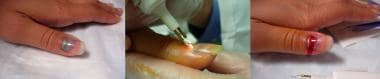
Media file 1:  Trephination of a subungual hematoma.
Click to see larger pictureClick to see detailView Full Size Image
Media type:  Photo

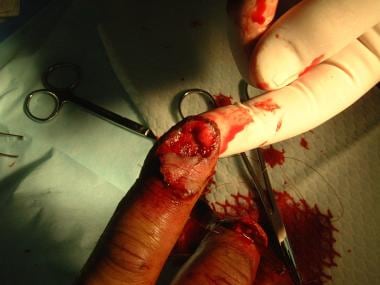
Media file 2:  Nailbed repair.
Click to see larger pictureClick to see detailView Full Size Image
Media type:  Photo


  • Abbase EH, Tadjalli HE, Shenaq SM. Fingertip and nail bed injuries. Repair techniques for optimum outcome. Postgrad Med. Nov 1995;98(5):217-9, 223-4, 230 passim. [Medline].
  • Bayraktar A, Ozcan M. A nasogastric catheter splint for a nailbed. Ann Plast Surg. Jul 2006;57(1):120. [Medline].
  • Brown RE. Acute nail bed injuries. Hand Clin. Nov 2002;18(4):561-75. [Medline].
  • Chudnofsky CR, Sebastian S. Special wounds. Nail bed, plantar puncture, and cartilage. Emerg Med Clin North Am. Nov 1992;10(4):801-22. [Medline].
  • de Alwis W. Fingertip Injuries. Emerg Med Australas. Jun 2006;18(3):229-37. [Medline].
  • Etoz A, Kahraman A, Ozgenel Y. Nail bed secured with a syringe splint. Plast Reconstr Surg. Nov 2004;114(6):1682-3. [Medline].
  • Guy RJ. The etiologies and mechanisms of nail bed injuries. Hand Clin. Feb 1990;6(1):9-19; discussion 21. [Medline].
  • Hallock GG. Expanded applications for octyl-2-cyanoacrylate as a tissue adhesive. Ann Plast Surg. Feb 2001;46(2):185-9. [Medline].
  • Hallock GG, Lutz DA. Octyl-2-Cyanoacrylate adhesive for rapid nail plate restoration. J Hand Surg [Am]. Sep 2000;25(5):979-81. [Medline].
  • Harrison BP, Hilliard MW. Emergency department evaluation and treatment of hand injuries. Emerg Med Clin North Am. Nov 1999;17(4):793-822. [Medline].
  • Hart RG, Kleinert HE. Fingertip and nail bed injuries. Emerg Med Clin North Am. Aug 1993;11(3):755-65. [Medline].
  • Inglefield CJ, D'Arcangelo M, Kolhe PS. Injuries to the nail bed in childhood. J Hand Surg [Br]. Apr 1995;20(2):258-61. [Medline].
  • Jeys LM, Khafagy R. A useful technique for securing nails: the figure-of-eight suture. Br J Plast Surg. Oct 2001;54(7):651. [Medline].
  • Kaya TI, Tursen U, Baz K, Ikizoglu G. Extra-Fine Insulin Syringe Needle: An Excellent Instrument for the Evacuation of Subungual Hematoma. Dermatol Surg. Nov 2003;29(11):1141-3. [Medline].
  • Meek S, White M. Subungual haematomas: is simple trephining enough?. J Accid Emerg Med. Jul 1998;15(4):269-71. [Medline].
  • Melone CP Jr, Grad JB. Primary care of fingernail injuries. Emerg Med Clin North Am. May 1985;3(2):255-61. [Medline].
  • Pasapula C, Strick M. The use of chloramphenicol ointment as an adhesive for replacement of the nailplate after simple nail bed repairs. J Hand Surg [Br]. Dec 2004;29(6):634-5. [Medline].
  • Purcell EM, Hussain M, McCann J. Fashionable splint for nailbed lacerations: the acrylic nail. Plast Reconstr Surg. Jul 2003;112(1):337-8. [Medline].
  • Richards AM, Crick A, Cole RP. A novel method of securing the nail following nail bed repair. Plast Reconstr Surg. Jun 1999;103(7):1983-5. [Medline].
  • Roser SE, Gellman H. Comparison of nail bed repair versus nail trephination for subungual hematomas in children. J Hand Surg [Am]. Nov 1999;24(6):1166-70. [Medline].
  • Shepard GH. Management of acute nail bed avulsions. Hand Clin. Feb 1990;6(1):39-56; discussion 57-8. [Medline].
  • Stevenson TR. Fingertip and nailbed injuries. Orthop Clin North Am. Jan 1992;23(1):149-59. [Medline].
  • Van Beek AL, Kassan MA, Adson MH, Dale V. Management of acute fingernail injuries. Hand Clin. Feb 1990;6(1):23-35; discussion 37-8. [Medline].
  • Zook EG. Anatomy and physiology of the perionychium. Hand Clin. Feb 1990;6(1):1-7. [Medline].
  • Zook EG. Understanding the perionychium. J Hand Ther. Oct-Dec 2000;13(4):269-75. [Medline].

Nailbed Injuries excerpt

Article Last Updated: Oct 1, 2007