Continually Updated Clinical Reference
 
 
  All Sources     eMedicine     Medscape     Drug Reference     MEDLINE
 
eMedicine - Pediatrics, Child Abuse : Article by

Quick Find
Authors & Editors
Introduction
Clinical
Differentials
Workup
Treatment
Follow-up
Miscellaneous
Multimedia
References

Related Articles
Domestic Violence

Idiopathic Thrombocytopenic Purpura

Impetigo

Pediatrics, Meningitis and Encephalitis

Pediatrics, Nursemaid Elbow

Pediatrics, Status Epilepticus

Pediatrics, Sudden Infant Death Syndrome

Rhabdomyolysis

Subdural Hematoma

Toxicity, Salicylate


Patient Education
Children's Health Center

Child Abuse Introduction

Bruises Overview

Black Eye Overview


Author: Lawrence R Ricci, MD, Director of Spurwink Child Abuse Program, Assistant Professor, Department of Pediatrics, University of Vermont College of Medicine

Coauthor(s): Ann S Botash, MD, Vice Chair for Educational Affairs, Director, CARE Program, Professor of Pediatrics, Department of Pediatrics, State University of New York Upstate Medical University

Editors: Kirsten A Bechtel, MD, Assistant Professor of Pediatrics, Department of Pediatrics, Yale University School of Medicine; Consulting Staff, Department of Pediatric Emergency Medicine, Yale-New Haven Children's Hospital; Mary L Windle, PharmD, Adjunct Assistant Professor, University of Nebraska Medical Center College of Pharmacy, Pharmacy Editor, eMedicine.com, Inc; Wayne Wolfram, MD, MPH, Clinical Associate Professor, Departments of Pediatrics, Children's Hospital and University of Cincinnati; John Halamka, MD, Chief Information Officer, CareGroup Healthcare System, Assistant Professor of Medicine, Department of Emergency Medicine, Beth Israel Deaconess Medical Center; Assistant Professor of Medicine, Harvard Medical School; Richard G Bachur, MD, Assistant Professor of Pediatrics, Harvard Medical School; Associate Chief and Fellowship Director, Attending Physician, Division of Emergency Medicine, Children's Hospital of Boston

Author and Editor Disclosure

Synonyms and related keywords: physical abuse, sexual abuse, psychological abuse, neglect, shaken baby syndrome, SBS, shaken impact syndrome, fatal head trauma, fatal abdominal trauma, domestic violence, metaphyseal fractures, bucket handle fractures, posterior rib fractures, scapular fractures, spinous process fractures, sternal fractures, epiphyseal separations, vertebral body fractures, digital fractures, complex skull fractures, clavicle fractures, long bone shaft fractures, linear skull fractures, subgaleal hematomas, subarachnoid hemorrhages, subdural hematomas, parenchymal brain injuries, retinal hemorrhages, intracranial trauma, diffuse axonal injury, secondary cerebral edema, ruptured small bowel, peritonitis

Background

The general principles of emergency medical intervention with the physically abused child can be viewed as a series of diagnostic and therapeutic steps. These include suspecting abuse, establishing the diagnosis, treating injuries, addressing safety issues, reporting to appropriate child protective agencies and law enforcement, documenting findings, and recommending follow-up treatment.

Other components of the medical provider's role include expert testimony, when required, and referral, when available, to a child abuse medical specialist for definitive medical forensic assessment.

In executing these tasks, the most important treatment priority is ensuring the health and safety of the child.

Pathophysiology

The 4 overlapping categories of child abuse are as follows: physical abuse, sexual abuse, psychological abuse, and neglect. Each has unique characteristics and requires individual approaches to diagnosis and management.

Physical abuse is characterized by physical injury (eg, bruises, fractures, tissue disruption) resulting from hitting, punching, beating, kicking, biting, burning, shaking, or otherwise harming a child. The injury may have resulted from physical punishment. The intent of the abuser (to inflict injury or not) is not relevant to the medical diagnosis. Physical abuse of a child can be viewed as a spectrum of inflicted injuries. At one end of the spectrum lie inflicted minor bruises and lacerations, at the other end are severe multisystem trauma and death.

Sexual abuse is described in Pediatrics, Child Sexual Abuse.

Frequency

United States

More than 3 million reports are made to child protective authorities in the United States each year. Every year, nearly 1.4 million children (approximately 3% of the population <18 y) are victimized in some manner. Of this population, 160,000 experience serious or life-threatening injuries. Approximately 1200 children die each year from abusive injuries or neglect. Many of these seriously injured and murdered children have presented to the ED for initial care.

International

Internationally, the prevalence and characteristics of child abuse vary from country to country. Other industrialized countries with well-developed social service agencies, such as Great Britain and New Zealand, have incidence and prevalence reports similar to that of the United States. Less developed countries underreport abuse, yet often experience other forms of serious abuse, such as child prostitution in Thailand and homelessness in Brazil.

Mortality/Morbidity

  • Apart from the obvious physical sequelae of abuse (eg, death, traumatic brain injury, disfigurement), long-term mental health consequences of physical abuse include violence, criminal behavior, substance abuse, self-injurious and suicidal behavior, depression, anxiety, and other mental health problems.
  • A small but significant number of abused children, although by no means a majority, later abuse their own children.

Race

Physical child abuse affects children of all ethnic groups and socioeconomic status. However, anything that increases stress on a family such as poverty or unemployment increases the risk of abuse. At the same time, it is important for clinicians to not make the mistake so well documented in the literature of failing to suspect injuries in infants whose caretakers appear to have a higher socioeconomic status.

Sex

Although female victims are more commonly reported in instances of child sexual abuse, no gender preponderance exists in child physical abuse. However, several studies have demonstrated a statistically significant though small increase in frequency of abusive head injuries in male infants as opposed to female infants.

Age

Physical abuse can occur at any age.

  • Infants are more vulnerable to fatal head trauma, whereas toddlers are more vulnerable to fatal abdominal trauma.
  • The incidence of physical abuse generally decreases during early school years but then increases slightly during adolescent years.


History

The abused child may present in the company of a nonoffending or even offending parent or a representative from child protective services with the primary complaint of suspected physical abuse. Alternatively, the child may present to the ED accompanied by a caregiver with injuries the practitioner subsequently determines to be abusive. A careful history should be obtained as to how the injury or assault occurred. History taking is the first step in decision-making and requires a compassionate yet objective approach. This should include enough information to document whether reasonable cause exists to suspect that abuse may have occurred.

When abuse is likely, taking a medical history may be coordinated with obtaining a forensic interview with representatives from child protective services and law enforcement. The medical interview should be neither confrontational nor focus on clearly law enforcement questions. The medical care provider should not offer information to the caregivers regarding the believed etiology of the injuries (eg, suggesting that shaking caused a subdural hematoma and retinal hemorrhages). Consultation with appropriate investigative authorities and careful forensic assessment generally must first be completed. Prematurely released information about the mechanism of a possible criminal act could impede later law enforcement interrogation as well as cause unnecessary family distress in cases where the etiology ultimately is other than abuse.

  • Important concepts to keep in mind while taking a medical history include the following:
    • Obtain all historical information from everyone, including children, separately.
    • Use open-ended, nonleading questions—particularly with younger children.
    • Inquire not only about physical abuse but also about sexual abuse, domestic violence, and witnessed abuse.
  • Historical characteristics of abusive injuries
    • Unexplained or poorly explained injuries
    • Injuries incompatible with the stated history
    • Changing history recognizing that minor discrepancies in the history may have little or no significance.
    • Significant delay in seeking treatment, again recognizing that some abused children are brought in immediately after the abuse and in some cases of accidental injuries an insignificant delay may be present
  • The physically abused child typically presents with an obvious injury. It is not uncommon, however, for the abused child to present with symptoms of occult injury—particularly in cases of head and abdominal trauma.
  • Infants with head injuries may present with nonspecific symptoms including the following:
    • Lethargy
    • Irritability
    • Persistent unexplained vomiting
    • Apnea
    • Coma
    • Convulsions
  • Symptoms of abdominal trauma secondary to perforation, obstruction, or bleeding include the following:
    • Vomiting
    • Pain
    • Tenderness
    • Shock
    • Sepsis
  • Life-threatening abdominal trauma, as in head trauma, may present without visible external signs or history to suggest such an injury.

Physical

The physical examination offers an opportunity not only to assess the child for the classic injuries of physical abuse (eg, burns, bruises, fractures, head trauma) but also to assess the child's general well being and to observe the child's behavior and parent-child interaction. General appearance should be documented including nutritional status and growth parameters. Areas often overlooked in the physical examination include the scalp, tympanic membranes, auricles, frenulum of the lips and tongue, neck, fundi, and inner aspects of the arms and legs.

  • Physical characteristics of abusive injuries
    • Injuries in various stages of healing
    • Multiplanar injuries, such as back and front together or right and left side together
    • Injuries with an obvious pattern, such as from a hand or implement
    • Assault like locations of injuries, such as the trunk, upper arms, upper legs, neck and face, and perineal area, which are typically well protected in accidental injuries such as falls
  • Children do bruise accidentally but almost never before they start to walk. Be particularly suspicious of bruises on a nonambulating infant, especially on the face. Accidental bruising typically occurs in the following locations:
    • Knee and shin
    • Forearm
    • Forehead and chin
    • Bony prominence, such as elbows, hips, and spine
  • Burns may be inflicted and can be caused by contact injury, such as from a hot iron, a cigarette, or from hot water immersion.
    • Nonaccidental hot water immersion burns are typically bilateral and symmetrical with well-demarcated lines and without splash marks.
    • Distinguishing inflicted burns, such as those from a cigarette, from impetigo is important. The latter is often a superficial yellow-crusted lesion with associated satellite lesions.
  • Approximately 30% of all childhood fractures are inflicted. In children younger than 1 year, 75% of fractures are likely to be inflicted.
    • In young infants, fractured collarbones or simple linear skull fractures may result from a minor accidental fall (defined as a fall from a height of 3-4 ft or less).
    • The shape of a long-bone fracture, whether spiral or transverse, is less important than the location of the fracture and the age of the child. Examples include a midshaft spiral femur fracture in a 6-month-old infant (likely abuse) compared with a spiral fracture in a 3-year-old child secondary to a twisting fall (likely accidental).
    • An experienced radiologist and a careful family history usually can rule out rare inherited bone disorders, such as osteogenesis imperfecta. In some cases, however, when the question of osteogenesis imperfecta has been raised, a genetics consultation with or without skin biopsy and fibroblast collagen analysis may be necessary, although certainly not in the emergency setting.
    • Fractures in children due to inflicted injury can be divided into 3 categories, as follows:
      • Highly specific injuries include metaphyseal fractures, sometimes termed classic metaphyseal lesions (CMLs), posterior rib fractures, scapular fractures, spinous process fractures, and sternal fractures.
      • Moderate-specificity fractures include multiple fractures (especially if bilateral), fractures of different ages, epiphyseal separations, vertebral body fractures, digital fractures, and complex skull fractures.
      • Common but low-specificity fractures include clavicle fractures, long-bone shaft fractures, and linear skull fractures. Moderate- and low-specificity fractures become highly specific when a credible history of accidental trauma is absent, particularly in infants.
  • Injuries most often observed in instances of inflicted head trauma include subgaleal hematomas, skull fractures, subarachnoid hemorrhages, subdural hematomas, and parenchymal brain injuries.
    • Epidural hematomas may be inflicted but are most often caused by accidental falls.
    • Diffuse, severe brain injury typically requires that significant deceleration forces be applied to the head. This may or may not be accompanied by an impact to the head. Without such forces, unexplained, severe, diffuse brain trauma in infants could indicate abuse.
    • Common presentations for the child with a head injury due to abuse include the following:
      • Acute critical illness at the time of presentation, such as unresponsiveness, apnea, bradycardia, seizures, or cardiopulmonary arrest
      • Subtle subacute or chronic symptoms, such as vomiting, lethargy, irritability, or increasing head circumference (There may be no visible head trauma.)
  • The shaken baby syndrome (SBS), or shaken impact syndrome, is a well-recognized clinical syndrome caused by violent shaking of young infants, often followed by an impact to the head from being thrown onto a fixed surface. These actions may result in a constellation of physical examination findings including the following:
    • Retinal hemorrhages, recognizing that a few posterior pole hemorrhages as opposed to extensive multilayered hemorrhages may not signify abuse in and of themselves
    • Intracranial trauma (particularly subdural hemorrhage)
    • Diffuse axonal injury
    • Secondary cerebral edema
    • Fractures of the posterior and anterolateral ribs or metaphyses of long bones (eg, tibia, humerus)
  • In recent years, specialists in child abuse have moved away from the terms shaken baby syndrome and shaken impact syndrome in favor of the less specific terms abusive head trauma or nonaccidental head injury. This change appropriately reflects the problems inherent in identifying a specific mechanism of injury rather than the somewhat easier task of distinguishing accidental from nonaccidental trauma.
  • The abused child may present in extremis from circulatory or CNS compromise without any history of trauma.
    • A high index of suspicion for occult head, chest, and abdominal trauma and a physiologic approach to resuscitation are important.
    • Shock in these children is usually due to occult blood loss but may be due to dehydration, toxins, CNS dysfunction, external loss from lacerations or burns, or infection (eg, ruptured small bowel with resulting peritonitis).

Causes

Physical abuse of children is a complex phenomenon resulting from a combination of individual, family, and social factors. In some cases, physical abuse has been suggested to be triggered by caregivers interacting with a high-risk child (eg, children who are physically, mentally, temperamentally, or behaviorally difficult).

  • Socioeconomic stressors
    • Poverty
    • Unemployment
    • Frequent geographic moves
    • Isolation
    • Domestic violence
    • Attachment problems
    • Punitive child-rearing styles
  • Parent stressors
    • Low self-esteem
    • Abused as children themselves
    • Depression
    • Substance abuse
    • Character disorders
    • Unrealistic expectations of the child
  • Triggering situations
    • Discipline
    • Argument/family conflict
    • Substance abuse
    • Acute environmental problems


Domestic Violence
Idiopathic Thrombocytopenic Purpura
Impetigo
Pediatrics, Meningitis and Encephalitis
Pediatrics, Nursemaid Elbow
Pediatrics, Status Epilepticus
Pediatrics, Sudden Infant Death Syndrome
Rhabdomyolysis
Subdural Hematoma
Toxicity, Salicylate

Other Problems to be Considered

Osteogenesis imperfecta
Pediatrics, seizures
Accidental injury
Other bleeding diatheses (eg, vitamin K deficiency, von Willebrand disease)


Lab Studies

  • Complete blood count including hematocrit may be indicated. Chronic anemia may be found in infants who are neglected and undernourished, but anemia in the setting of unexplained tachycardia or abdominal trauma may be indicative of internal hemorrhage.
  • Urinalysis
    • Hematuria may indicate kidney or urethral trauma.
    • Occult blood without red blood cells may indicate rhabdomyolysis.
  • A urine toxicology screen may be indicated in the infant with an altered level of consciousness.
  • Stool guaiac may be useful if a history of gastrointestinal bleeding or suspicion of occult abdominal trauma is present.
  • In any child with suspicious bruising, a coagulation profile is helpful if exclusion of bleeding diatheses is needed. Prothrombin time, activated partial thromboplastin time, and platelet count may be obtained.  Other coagulation screens should be dictated by the clinical presentation and may require consultation with a hematologist.
  • Elevated liver transaminases and amylase levels may be indicative of abdominal trauma and should point to the need for abdominal CT scan with contrast as the next step.

Imaging Studies

  • Radiographic bone survey
    • A full radiographic abuse survey (skeletal survey) is indicated in any child aged 2 years or younger with evidence or strong suspicion of physical abuse.
    • The bone survey should include at a minimum 2 views of each extremity (individual long bones are highly recommended rather than single views of the entire extremity), anteroposterior (AP) and lateral skull, AP and lateral spine, chest, abdomen, pelvis, hands, and feet. Films should be reviewed carefully for classic metaphyseal lesions and healing fractures—particularly of the posterior ribs.
    • In several studies, the incidence of occult clinically asymptomatic fractures is 15% in physically abused children younger than 2 years.
  • A noncontrast CT scan of the head is indicated in any infant thought to have inflicted intracranial trauma, either because of the history of possible mechanism of injury, such as violent shaking, or because of suspicious CNS signs or symptoms.
  • An abdominal CT scan may be useful in the child who is unconscious or in whom abdominal trauma is suspected, particularly if bleeding is present and a source cannot be identified. Very often, a CT scan of the chest can be combined with the abdominal views to look for rib and lung injury.
  • While CT scans of the brain are useful for rapid identification of CNS injury, MRI may be more sensitive for detecting diffuse axonal injury and for detecting and dating subdural hematomas and parenchymal brain injury.
  • A radionucleotide bone scan may be useful to detect rib fractures prior to callous formation and to confirm the presence of fractures that are not well delineated on the skeletal survey.
  • Photographs of all visible injuries should be taken as soon as possible. This can often be completed by law enforcement or child protective services but particularly when such photographic assistance is not available photographs should be obtained by the medical personnel caring for the child. It is particularly important to obtain photographs of burns before a dressing is applied.

Other Tests

  • Dilated eye examination by an ophthalmologist is particularly important in the infant suspected of SBS.
  • Children with concerns about injuries to the genital area should have a skilled evaluation to look for forensic evidence of sexual abuse.
  • In cases of neglect, particularly when failure to thrive is in question, a workup for organic problems may be undertaken. Such a workup may include the following:
    • Stool sample for ova and parasites
    • Urine culture and urinalysis
    • Sweat test
    • Lead level
    • HIV testing
    • The most common cause of failure to thrive is nonorganic failure to thrive, which is often because of social and economic factors within the family. This diagnosis is best made following an extended inpatient stay, careful monitoring of the child, and a comprehensive family assessment.
    • Tuberculin skin testing
    • Some child abuse experts recommend a chest radiograph to look for occult rib fractures in a child with nonorganic failure to thrive.

Procedures

  • Lumbar puncture
    • A spinal or subdural tap may be diagnostic of a subarachnoid hemorrhage if blood is present in the CSF.
    • Xanthochromia should be noted, particularly if the differential is between a traumatic lumbar puncture and old subarachnoid blood.
    • Careful thought should be given before performing a lumbar puncture (LP) because of the possibility of cerebellar herniation. A CT scan prior to LP may be warranted.


Prehospital Care

  • The prehospital emergency medical provider is in an ideal position to observe and document the initial appearance of the child and family in their home environment.
    • The provider must suspect abuse, yet be objective regarding his or her suspicions. Care must be taken regarding any questions or comments to the family so that the investigation is not tainted.
    • At the same time, the prehospital provider should treat injuries according to existing treatment protocols.
  • The initial statement of mechanism of injury should be carefully documented. In cases of abuse, the family may change the story and the initial history is critical.
    • This may be important for comparison if the story changes.
    • Observations and concerns should be conveyed to hospital personnel, and a detailed descriptive report should be written.
  • Most importantly, the emergency medical provider must report or see that a report is made to the appropriate authorities when abuse is suspected.

Emergency Department Care

The initial medical treatment of the physically abused child in the ED should proceed no differently from treatment of the accidentally injured child, except that forensic data collection and analysis are of particular and pressing importance.

  • Initial assessment and treatment of the seriously physically abused child should proceed according to established guidelines, such as those contained in the Advanced Trauma Life Support Course for Physicians or in the textbook of Advanced Pediatric Life Support. Priorities include recognition of airway, breathing, and circulatory problems, instituting airway and ventilatory management, and establishing vascular access for fluid resuscitation and medication administration.
  • The child who is apneic, convulsing, or comatose requires airway support. In the face of cerebral edema, fluid restriction, steroids, hyperventilation, and osmolar drugs may be of benefit.
    • A subdural anterior fontanel tap may be indicated for diagnostic and therapeutic purposes.
    • Seizures, if present, should be treated according to standard guidelines.
  • Intracranial lesions requiring surgical treatment are not common in the abused child with head injury. Such treatment should be guided by the results of a clinical examination, CT scan, and consultation with a pediatric neurosurgeon.
  • Cervical spine injuries, though uncommon in child abuse, still require consideration, particularly in the child who is unresponsive or has a serious head injury.
  • Blunt abdominal trauma from child abuse should be identified quickly and treated aggressively because of its attendant high mortality.
  • Photographs should be taken of all visible cutaneous injuries before treatment. A detailed report, preferably typed and including appropriate drawings, should be prepared as soon as possible. Remember that such documentation does not necessarily require offering an opinion whether child abuse has occurred.
  • Establishing an institutional protocol for the treatment of abuse cases is helpful. Such a protocol should state the following:
    • The diagnostic and therapeutic steps that are to be taken
    • Who should be consulted, such as institutional social services or a child abuse team
    • How to notify state child protective service agencies
  • The infant who is brought to the hospital dead or who dies shortly after admission presents a particular diagnostic and therapeutic dilemma.
    • In this situation, the central differential diagnosis is often between sudden infant death syndrome (SIDS) and child abuse.
    • Depending on state or regional protocols, the medical examiner should be called immediately for decisions about further testing and disposition of the body.
    • Families in such circumstances should be managed supportively while appropriate investigative information is gathered.
    • Such a process often involves expeditious consultation with child protective services and law enforcement.
    • Although discussing the possible differential diagnosis (eg, SIDS) with the family may be appropriate, it is equally important to remember that SIDS is a diagnosis of exclusion requiring a complete autopsy and death scene investigation.
    • On the other hand, little is gained from an accusatory inconsiderate approach to families.

Consultations

The ED, where many physical abuse cases first present, has the advantage of immediate social service consultation and multidisciplinary collaboration.

  • The medical care of the seriously injured abused child should be team based and include a physician experienced in the treatment of pediatric emergencies, a surgeon experienced in managing childhood trauma, and a physician experienced in the management of the abused child. The team may require the services of specialists in pediatric radiology, neurology, neurosurgery, and ophthalmology.
  • Subspecialty child abuse consultation can be beneficial. Specialists such as child abuse pediatricians, available in many areas of the country, are able to assist the practitioner by establishing or corroborating a medicolegal diagnosis and by testifying in court as needed. A listing of such pediatricians is maintained by the Ray Helfer Society.
  • Practitioners who suspect that a child has been or will be abused must immediately make a report to the appropriate mandatory reporting state agency.
    • Reporting should be completed before a child is discharged from the hospital, and, in some states, it is mandated to occur within a certain number of hours after the suspicion is made.
    • Usually, it is appropriate to notify parents when a report to child protective authorities is being made.
    • An exception to this rule can be made if such notification may cause the caregiver to flee with or without the child or otherwise cause harm to the child or significant disruption.
  • Practitioners suspecting that a crime has been committed should make an expeditious report to the appropriate law enforcement agency. Indeed, some states require such a report.
  • Nurses play critical roles as team members in identifying and treating the physically abused child. As mandated reporters, they are also responsible for reporting their suspicions.
    • Nursing history should be carefully documented and include direct quotes of questions and answers.
    • Such nursing history can be compared later to other histories for inconsistencies.


Further Inpatient Care

  • Hospitalize the abused child if safety cannot otherwise be guaranteed.
    • The severity of the injuries should not be the sole determining factor for hospitalization.
    • Hospitalization may offer time to sort out difficult diagnostic (whether the injury is inflicted or accidental) and therapeutic (whether the child is safe going home) decisions.
    • Most seriously injured children are best monitored in an intensive care setting.
    • Depending on the complexity of services needed, the clinician should consider transferring the child to a specialized pediatric center.
  • Child abuse and neglect frequently occur in concert with other forms of family violence and disfunction, including spousal abuse and substance abuse. If a child witnesses domestic violence, this should be reported to child protective services.
    • In one study of the hospital records of mothers of 32 abused children, the records of 60% of the mothers were diagnostic or highly suggestive of previous maternal spousal victimization.
    • This study suggests that abused children are at high risk for exposure to violence against their mothers.
    • Such history of violence should be actively sought and aggressively treated in collaboration with community-based domestic violence programs.

Further Outpatient Care

  • In addition to the medical follow-up needs (eg, orthopedic, surgical, neurological) of the abused child, these children often need child protective and mental health follow-up care.

Deterrence/Prevention

  • Early detection of at-risk families and appropriate intervention may prevent future abuse. Likewise, identification of children with less severe physical abuse—with aggressive intervention—may prevent more severe subsequent injuries or death.

Complications

  • Complications include long-term physical and psychological sequelae.

Prognosis

  • Without appropriate social service and mental health intervention, child abuse is usually a recurrent and sometimes escalating problem.

Patient Education

  • Parents should be educated about appropriate discipline techniques including discouraging the use of physical discipline, particularly in high-risk families.
  • Parents should be informed that exposure to domestic violence could have profound and long-lasting adverse effects on a child's behavior.
  • Parents should be educated about the dangers of shaking infants.
  • For patient education resources, visit eMedicine's Children's Health Center. Also, see eMedicine's patient education articles Child Abuse, Bruises, and Black Eye.


Medical/Legal Pitfalls

  • The practitioner's role, when possible, is to offer an opinion about the presence of abuse for the purposes of child safety. If the practitioner is not comfortable offering an opinion about inflicted trauma, it is incumbent on that practitioner to refer a child to a child abuse specialist who may offer such an opinion.
    • Although medical providers should document suspected perpetrators for the purposes of ensuring the safety of the child, further documentation regarding provider opinion about the guilt of the person in question is not part of the medical provider role.
    • Medical practitioners are held under the "reasonable medical certainty" standard. Although this is difficult to quantify, such a standard is suggested to mean that the practitioner is certain enough of the diagnosis to offer treatment for that diagnosis.
    • Simply saying that it is possible for an injury to have been accidental may not be helpful to law enforcement and child protective services. This is particularly true if "possible" is taken to mean anything is possible. The standard usually applied to injury assessment is reasonably possible, or with some degree of likelihood.
    • Medical providers should avoid offering an opinion that abuse did or did not occur based on their feelings about a parent or caretaker. Such criteria are notoriously inaccurate. Likewise providers may not know the entire story or have access to scene investigation that could significantly impact an opinion.
  • Medical providers are legally protected when reporting suspected abuse in good faith. However, it is never appropriate for the emergency practitioner to accuse someone of abusing his or her child or of lying about how an injury may have occurred.
  • Medical providers are at greater medicolegal risk if abuse is missed and a child is further injured than in reporting possible abuse that later turns out to be something else.
  • Aging bruises, once seemingly a simple task using standard aging charts, is now known to be much less precise than originally thought.
    • It may be possible to say that a bruise is probably fresh if it is red, blue, or purple, and a bruise is probably older if it is green, yellow, or brown.
    • Otherwise, bruise aging by color analysis should be discouraged.


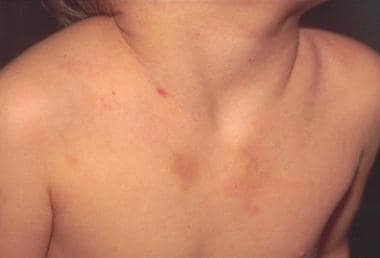
Media file 1:  A 4-year-old boy who was forcibly grabbed about the neck by his father. The 2 anterior chest bruises are consistent with thumbprints.
Click to see larger pictureClick to see detailView Full Size Image
Media type:  Photo

Media file 2:  A 5-year-old girl who presented within 24 hours of being slapped on the leg. The markings are bruises and not erythema. The linear parallel lines are virtually diagnostic of a human handprint.
Click to see larger pictureClick to see detailView Full Size Image
Media type:  Photo

Media file 3:  A 6-year-old girl who presents a few days after being disciplined on the buttocks with a wooden spoon by her mother. This pattern of bruises is of suspicious shape, number, and location.
Click to see larger pictureClick to see detailView Full Size Image
Media type:  Photo

Media file 4:  An 8-month-old infant who is brought into the ED by his mother with the history of having fallen from a changing table. Note the acute transverse midshaft humerus fracture. This fracture is most consistent with a snapping injury, not a fall onto a flat surface. The mother subsequently described grabbing the child's arm to lift him after the fall and hearing a snap.
Click to see larger pictureClick to see detailView Full Size Image
Media type:  X-RAY

Media file 5:  A 2-month-old infant presented to the ED with the history from the father that the child had slipped in the tub the night before. Note the periosteal callus formation, indicating that the fracture is at least 1 week old and, thus, inconsistent with the history being offered.
Click to see larger pictureClick to see detailView Full Size Image
Media type:  X-RAY

Media file 6:  Head CT scan of a 15-month-old infant who allegedly fell 5 feet from a bunk bed onto new one-half-inch thick carpet and pad over plywood at daycare. Large acute left frontoparietal subdural hematoma is present with midline shift. Surgical evacuation was required. Bilateral retinal hemorrhages were also present. This severe head injury particularly with associated retinal hemorrhages is inconsistent with a 5-foot fall and is more consistent with shaken impact baby syndrome.
Click to see larger pictureClick to see detailView Full Size Image
Media type:  CT


  • American Academy of Pediatrics Committee on Child Abuse and Neglect. Shaken baby syndrome: inflicted cerebral trauma. Pediatrics. Dec 1993;92(6):872-5. [Medline].
  • American Academy of Pediatrics Committee on Hospital Care. Medical necessity for the hospitalization of the abused and neglected child. Pediatrics. Apr 1998;101(4 Pt 1):715-6. [Medline].
  • American Academy of Pediatrics, Hymel KP; Committee on Child Abuse and Neglect; National Association of Medical Examiners. Distinguishing sudden infant death syndrome from child abuse fatalities. Pediatrics. Jul 2006;118(1):421-7. [Medline].
  • American Academy of Pediatrics. Committee on Child Abuse and Neglect. American Academy of Pediatrics: Distinguishing sudden infant death syndrome from child abuse fatalities. Pediatrics. 2001;107(2):437-41. [Medline].
  • American Academy of Pediatrics. Committee on Child Abuse and Neglect. Foregoing life-sustaining medical treatment in abused children. Pediatrics. 2000;106(5):1151-3. [Medline].
  • Berkowitz CD. Pediatric abuse. New patterns of injury. Emerg Med Clin North Am. May 1995;13(2):321-41. [Medline].
  • Block RW, Krebs NF; American Academy of Pediatrics Committee on Child Abuse and Neglect; American Academy of Pediatrics Committee on Nutrition. Failure to thrive as a manifestation of child neglect. Pediatrics. Nov 2005;116(5):1234-7. [Medline].
  • Botash AS. Child Abuse Evaluation and Treatment for Medical Providers. SUNY Upstate Medical University. 2005. Syracuse, NY. Available at http://www.ChildAbuseMD.com.
  • Christian CW, Taylor AA, Hertle RW, Duhaime AC. Retinal hemorrhages caused by accidental household trauma. J Pediatr. Jul 1999;135(1):125-7. [Medline].
  • Christopher NC, Anderson D, Gaertner L, et al. Childhood injuries and the importance of documentation in the emergency department. Pediatr Emerg Care. Feb 1995;11(1):52-7. [Medline].
  • Duffy SJ, McGrath ME, Becker BM, Linakis JG. Mothers with histories of domestic violence in a pediatric emergency department. Pediatrics. May 1999;103(5 Pt 1):1007-13. [Medline].
  • Herman-Giddens ME, Brown G, Verbiest S, et al. Underascertainment of child abuse mortality in the United States. JAMA. Aug 4 1999;282(5):463-7. [Medline].
  • Hibbard RA, Desch LW; American Academy of Pediatrics Committee on Child Abuse and Neglect; American Academy of Pediatrics Council on Children With Disabilities. Maltreatment of children with disabilities. Pediatrics. May 2007;119(5):1018-25. [Medline].
  • Hyden PW, Gallagher TA. Child abuse intervention in the emergency room. Pediatr Clin North Am. Oct 1992;39(5):1053-81. [Medline].
  • Hymel KP; Committee on Child Abuse and Neglect. When is lack of supervision neglect?. Pediatrics. Sep 2006;118(3):1296-8. [Medline].
  • Jenny C, Committee on Child Abuse and Neglect. Evaluating infants and young children with multiple fractures. Pediatrics. Sep 2006;118(3):1299-303. [Medline].
  • Jenny C, Hymel KP, Ritzen A, et al. Analysis of missed cases of abusive head trauma. JAMA. Feb 17 1999;281(7):621-6. [Medline].
  • Kellogg N; American Academy of Pediatrics Committee on Child Abuse and Neglect. Oral and dental aspects of child abuse and neglect. Pediatrics. Dec 2005;116(6):1565-8. [Medline].
  • Kellogg ND; American Academy of Pediatrics Committee on Child Abuse and Neglect. Evaluation of suspected child physical abuse. Pediatrics. Jun 2007;119(6):1232-41. [Medline].
  • Kleinman PK, ed. Diagnostic Imaging of Child Abuse. Baltimore, Md: Lippincott Williams & Wilkins; 1987.
  • Lonergan GJ, Baker AM, Morey MK, Boos SC. From the archives of the AFIP. Child abuse: radiologic-pathologic correlation. Radiographics. Jul-Aug 2003;23(4):811-45. [Medline].
  • Myers JE. Proof of physical child abuse. In: Missouri Law Review. 1988:189-225.
  • Reece RM. Fatal child abuse and sudden infant death syndrome: a critical diagnostic decision. Pediatrics. Feb 1993;91(2):423-9. [Medline].
  • Reece RM, Ludwig S, eds. Child Abuse: Medical Diagnosis and Treatment. Philadelphia, Pa: Lea & Febiger; 2001.
  • Rubin DM, Christian CW, Bilaniuk LT, Zazyczny KA, Durbin DR. Occult head injury in high-risk abused children. Pediatrics. Jun 2003;111(6 Pt 1):1382-6. [Medline].
  • Stirling J Jr; American Academy of Pediatrics Committee on Child Abuse and Neglect. Beyond Munchausen syndrome by proxy: identification and treatment of child abuse in a medical setting. Pediatrics. May 2007;119(5):1026-30. [Medline].
  • Sugar NF, Taylor JA, Feldman KW. Bruises in infants and toddlers: those who don't cruise rarely bruise. Puget Sound Pediatric Research Network. Arch Pediatr Adolesc Med. Apr 1999;153(4):399-403. [Medline].

Pediatrics, Child Abuse excerpt

Article Last Updated: Nov 1, 2007