|
Related Articles | Anemia, Sickle Cell
Ankle Injury, Soft Tissue
Appendicitis, Acute
Arthritis, Rheumatoid
Back Pain, Mechanical
Bites, Insects
Catscratch Disease
Erythema Multiforme
Fractures, Ankle
Fractures, Femur
Fractures, Foot
Fractures, Hip
Fractures, Knee
Fractures, Pelvic
Fractures, Tibia and Fibula
Gout and Pseudogout
Hemophilia, Type A
Hemophilia, Type B
Inflammatory Bowel Disease
Legg-Calve-Perthes Disease
Neoplasms, Spinal Cord
Pediatrics, Meningitis and Encephalitis
Pediatrics, Sickle Cell Disease
Rheumatic Fever
Toxicity, Heavy Metals
Warts, Plantar
|
| Patient Education |
|
Click here for patient education.
|
|
You are in: eMedicine Specialties >
Emergency Medicine > PEDIATRIC
Pediatrics, Limp
Article Last Updated: Jun 23, 2008
AUTHOR AND EDITOR INFORMATION
Section 1 of 12
Author: Brian Wai Lin, MD, Staff Physician, Stanford/Kaiser Emergency Medicine Residency, Stanford University School of Medicine
Brian Wai Lin is a member of the following medical societies: Alpha Omega Alpha, American Academy of Emergency Medicine, American College of Emergency Physicians, and Emergency Medicine Residents Association
Coauthor(s):
Erik D Schraga, MD, Consulting Staff, Department of Emergency Medicine, Mills-Peninsula Emergency Medical Associates; Consulting Staff, Permanente Medical Group, Kaiser Permanente, Santa Clara Medical Center;
Kathryn J Stevens, MD, FRCR, Assistant Professor, Department of Radiology, Musculoskeletal Imaging and Assistant Professor of Orthopaedic Surgery (by courtesy), Stanford Medical Center
Editors: Garry Wilkes, MBBS, FACEM, Director of Emergency Medicine, Bunbury Health Service, Western Australia Country Health Service; Adjunct Associate Professor, School of Exercise, Biomedical and Health Sciences, Faculty of Computing, Health and Science, Edith Cowan University; Medical Director, St John Ambulance Service; Mary L Windle, PharmD, Adjunct Assistant Professor, University of Nebraska Medical Center College of Pharmacy, Pharmacy Editor, eMedicine.com, Inc; Grace M Young, MD, Associate Professor, Department of Pediatrics, University of Maryland Medical Center; John D Halamka, MD, MS, Associate Professor of Medicine, Harvard Medical School, Beth Israel Deaconess Medical Center; Chief Information Officer, CareGroup Healthcare System and Harvard Medical School; Attending Physician, Division of Emergency Medicine, Beth Israel Deaconess Medical Center; Richard G Bachur, MD, Assistant Professor of Pediatrics, Harvard Medical School; Associate Chief and Fellowship Director, Attending Physician, Division of Emergency Medicine, Children's Hospital of Boston
Author and Editor Disclosure
Synonyms and related keywords:
limping, limping in children, steppage gait, shuffling gait, peripheral nerve palsies, Marie-Charcot-Tooth disease, posttraumatic peroneal nerve palsy, ataxia, labyrinthitis, alcohol-induced organic brain disease, inherited diseases, Friedreich ataxia, otitis media, antalgic gaits, truncal lurch gait, exaggerated trunk swing, osteomyelitis, slapping gait, leg injuries, leg fractures, toddler's fractures, abuse injuries, sprains, avascular necrosis, Legg-Calve-Perthes disease, cerebral palsy, spastic paralysis, scissoring gait, vaulting gait, abnormal gait, toe-walking gait, leg length discrepancy, abductor lurch, Trendelenburg gait, waddling gait, stooped gait
Background
Limp is defined by a deviation from the normal gait pattern expected for a child’s age.1 It can be a challenging problem for the emergency or pediatric practitioner, as causes span multiple organ systems and anatomic locations. The differential diagnosis may be categorized based on acuity of presentation, age of the patient, etiology, type of gait disturbance, or anatomic location of suspected pathology.
Diagnostic entities range from trivial causes such as a rock in the shoe to potentially life- and limb-threatening causes such as septic arthritis and malignancy. The possibility of serious pathology underlying an acute presentation of limp makes accurate assessment, diagnostic evaluation, treatment, and appropriate follow-up essential.
Pathophysiology
Walking is the culmination of the successful integration of numerous biomechanical systems. Almost every major system of the body can be involved. Ultimately, any process affecting the upper or lower motor neurons, motor end plates, musculature, bony structures, or joints may manifest as a limp. Upper motor neuron lesions, such as brain anoxia and cerebral palsy, may be detected in the spastic gait (toe walking and/or scissoring) of an afflicted child. Destruction of the dorsal columns may result from neurosyphilis or spinal column space-occupying lesions, leading to loss of proprioception and subsequent slapping gait. Peripheral nerve palsies, such as hereditary motor sensory neuropathy (including Marie-Charcot-Tooth disease) or posttraumatic peroneal nerve palsy, can result in a steppage gait. Musculoskeletal pathology of the lower extremity and back most often lead to an antalgic gait. These may be traumatic, infectious, inflammatory, or rheumatologic in nature. Toddler's fractures, abuse injuries, sprains, and avascular necrosis (eg, vertebrae, femur, tarsals, metatarsals) are all possible contributors to the antalgic gait. Joint pathology, such as idiopathic avascular necrosis of the hip (Legg-Calve-Perthes disease), may cause a Trendelenburg gait as described below.
Posttraumatic, infectious, or degenerative back and spine disease can also produce alterations in gait.
Frequency
United States
The incidence of limping is not known.
International
While little published data exist, one European study found the incidence of atraumatic limp in children aged 1-14 years to be 180 cases per 100,000, or every 58th visit to a pediatric emergency department.2
Mortality/Morbidity
Although relatively uncommon, a few “can’t miss” causes of pediatric limp may cause significant morbidity and mortality. Among 243 patients visiting one pediatric emergency department, 1.6% were diagnosed with osteomyelitis, 2.1% were diagnosed with Legg-Calve-Perthes disease, and 0.8% were diagnosed with a neoplasia.3 No patients in this cohort had a septic arthritis or fracture related to child abuse. Thus, the incidence of these conditions and other life- and limb-threatening conditions presenting as a limp are poorly characterized.
Sex
- Limping due to trauma and trauma-related conditions (eg, Legg-Calve-Perthes disease, toxic synovitis, tibial osteitis, groin strains) is observed more commonly in males than in females.
- Incidence of congenital conditions (eg, limp associated with congenital hip dysplasia and meningomyelocele) corresponds to the sex predilection of the underlying condition.
- Some systemic illnesses associated with limping (eg, rheumatoid arthritis [RA], systemic lupus erythematosus [SLE]) have a predilection for females.
Age
Age group of the patient may be one of the most helpful factors in narrowing the initial differential diagnosis of limping: - Toddlers (aged 1-3 y)
- These children are ambulatory and active but have immature gaits and are thus prone to falls, typically with a torsional component.
- Infections play a major role, as the bony cortex is developing and its ability to resist bacterial invasion is limited.
- Causes of limp in the toddler are infectious/inflammatory (eg, transient synovitis, septic arthritis, osteomyelitis), trauma (eg, toddler's fracture [see Media file 6], stress fractures, puncture wounds, lacerations), neoplasm, developmental dysplasia of the hips, neuromuscular disease, cerebral palsy, and congenital hypotonia.
- Children (aged 4-10 y)
- Being more rambunctious carries with it more risk of high-energy injuries, such as fractures, dislocations, and ligamentous injuries.
- Microtrauma to the vascular supply of the femoral head is thought to be a cause of Legg-Calve-Perthes disease (LCP), a common source of limping in this age group. See Media file 5.
- Infections continue to plague this age group. Terminal vessels occur in the metaphysis of growing bones, which is a common site for infection.
- Rheumatoid conditions begin to emerge.
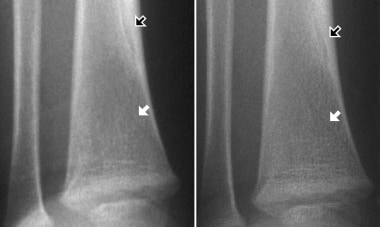
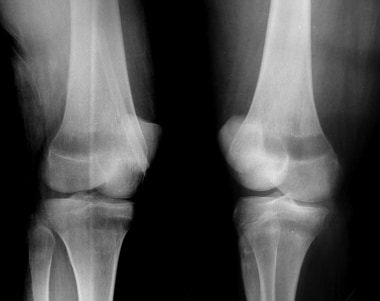
- Neoplastic lesions such as leukemia (see Media file 10) and Ewing sarcoma (see Media file 8) can occur.
- Adolescents (older than 11 y)
- The bony architecture is more mature and resilient, and muscle strength also has increased dramatically.
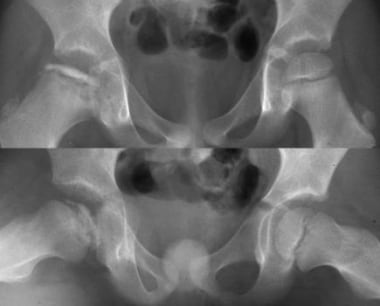
- A slipped capital femoral epiphysis is an example of how bone maturation, strength, and weight mismatches can result in problems (see Media file 16).
- At this age, arthritis, sexually transmitted diseases (with arthralgias and arthritis), and neoplasms may present as a limp.
- Other common causes of limping in the adolescent are juvenile arthritis (see Media file 9), trauma, leg length discrepancy, and neoplasms such as osteosarcoma (see Media file 15).
History
History is an essential component of evaluating the child with a limp. Specific considerations in the patient interview are warranted depending on the age of the patient: - In a toddler, history may be limited to observations by the parent or caregiver. The caregiver should be asked where he or she perceives the source of the patient’s pain to be, as their longitudinal perspective may allow detection of a problem not evident during a relatively brief examination period. However, a pitfall in this approach is that referred pain may confound the diagnostic workup.
- Older children will be better able to localize a source of pain, if present, and recount any preceding trauma. A careful history may reveal a traumatic cause that has been forgotten or overlooked. Conversely, trauma is sometimes offered in the history when a nontraumatic diagnosis is present, leading to a search-satisfaction error.
- Private interview with the child is indicated in cases of suspected abuse or to assess an adolescent’s risk for infectious arthritis secondary to sexual contact.
The history should include questions about the following associated qualities or risk factors: - Fever, chills, or other constitutional symptoms
- Time of day when symptoms are exacerbated or most noticeable
- Early morning stiffness may be the first indication of JIA.
- Nocturnal pain suggests osteoid osteoma or other bone neoplasms.
- Growing pains, a diagnosis of exclusion, requires that symptoms only occur at night and that the patient has no limp or symptoms during the day.
- A history of upper respiratory tract infectious symptoms
- Recent or concurrent URI symptoms suggest a transient synovitis (see Media file 7).
- A remote history of URI may be a clue to a missed streptococcal infection predisposing to a poststreptococcal reactive arthritis.
- Associated pains
- Muscle pain, ligamentous strains, bruises, and injection sites all can cause limps. Back pain is associated with diskitis.
- Joint pain may be from local pathology or referred pain.
- Chronicity of symptoms: Long-standing and progressive symptoms may be due to underlying neuromuscular disease. For example, is the child able to play and keep up with his peers?
- Palliative/provocative features
- Pain aggravated by activity may be due to overuse syndromes, stress fractures, or hypermobility syndrome.
- Pain easing with activity suggests an inflammatory etiology (eg, arthritis).
- New footwear or a change in the amount of walking may be reported.
- Signs of weakness, paresthesias, or incontinence may be detected in acute spinal cord syndromes.
- Dark or discolored urine may be reported with myositis.
- Easy bruising, weight loss, or bone pain may be seen with neoplastic or other infiltrative disease.
- History of urethral discharge suggests a genitourinary tract abnormality; vaginal discharge may point toward a diagnosis of pelvic inflammatory disease; testicular pain in males may present as a limp.
- Family history may include short stature, vitamin D–resistant rickets, Charcot-Marie-Tooth disease, SLE, RA, or a history of developmental delay (eg, cerebral palsy).
Physical
The examination should be thorough and encompass an assessment of gait, orthopedic examination, neurologic examination, and a focused general medical examination. The toddler or nonverbal child may not be able to cooperate with detailed physical examination. Thus, simple observation of interaction with the caregiver is of critical value. Much of the examination can be performed with the child in the caregiver's lap to mitigate patient distress. The young patient who is reluctant or refusing to walk may be encouraged by having the parent or caregiver stand on the opposite side of the room. Assessment of gait - The normal human gait typically is a smooth and unlabored fluid movement, transferring weight from one leg to the other.
- The stance phase begins with the heel strike, continues into midstance, and finishes with the toe-off or push-off movement.
- Both feet are in contact with the ground for only 20% of the gait cycle.
- The swing phase comprises the remainder of the gait and is the amount of time the foot is not in contact with the floor. It is divided into the 3 phases as follows: acceleration, swing, and deceleration.
- In order for gait to be smooth and fluid, joint flexibility, pelvic rotation, pelvic tilt, balance, and strength all have to be unimpaired.
- Assessment of a gait disorder must take developmental status into consideration.
- At approximately age 9 months, infants pull up to stand and walk by holding onto furniture or other items.
- Most children older than 1 year can walk unassisted.
- Initially, the child's gait differs from the adult's gait in several ways. Although the gait appears quicker because the child takes more steps per minute, the velocity is actually lower due to a significantly shorter stride length. The child also seems more off balance and displays a wider-based gait. Intrinsic hip abductor weakness leads to a mild Trendelenburg gait and a noticeably shorter stance phase.
- By their third year, children have assumed adult gait characteristics. Thereafter, growth increases gait velocity by lengthening the stride.
- Abnormal gaits causing limp
- An antalgic gait is caused by pain. Attempts to bear weight invoke spinal responses that inhibit normal gait. The stance phase of the painful extremity is significantly shortened. The shortened swing phase of the contralateral side produces the quickstep or antalgic gait.
- Abductor lurch or Trendelenburg gait is observed with hip disease. The trunk swings over the affected leg on the ground (stance phase). If the condition is bilateral, the trunk swings from side to side. The cause is weakness of the hip abductors (eg, gluteus medius) responsible for keeping the pelvis level during the swing phase. It may become weak if the hip is chronically affected. A child with Legg-Calve-Perthes disease or a slipped capital femoral epiphysis may present with this type of gait, particularly if the condition has been chronic.
- The steppage gait is commonly observed in patients with foot drop due to injury to the peroneal nerve or disease causing weakness of the tibialis anterior muscle.
- The toe-walking gait is manifested when a real or apparent leg length discrepancy is present. Contractures and muscle spasms can make the lengths seem different, when, in fact, the skeleton is symmetric. Causes include tight heel cords from mild cerebral palsy, leg length differences, or heel pain. Occasionally, no cause is found.
- The vaulting gait occurs when a child with knee pain or quadriceps weakness walks stiff legged to avoid bending the knee, forcing him or her to vault over the leg to get to the toe off position. This may also be seen in patients avoiding hip flexion, such as with psoas muscle inflammation.
Orthopedic examination
- Evaluate gait (see Assessment of gait disorder). Gait assessment should be performed with the child barefoot to remove shoe-related pathology from the assessment.
- Feet and shoes: The pattern of wear reflects gait abnormalities. Items such as a stone in the shoe or a cobbler's nail protruding through the inner sole, plantar warts, tight shoes, and ingrown toenails may only be found by including the feet and shoes in the examination.
- Asymmetry of the gluteal skin folds is associated with congenital hip dysplasias.
- Inspect and palpate the spine and lower extremities for deformities or point tenderness suggesting fracture or bony pathology.
- Joints: Evaluate for warmth, effusion, and range of motion.
- Leg lengths: Leg length is measured from the anterior superior iliac spine to the medial malleolus of the ankle. A discrepancy of only one half of an inch can lead to gait changes. An abnormally long leg can be caused by developmental dysplasia of the hip, growth plate injury from antecedent trauma, Legg-Calves-Perthes disease, or disuse.
- Galeazzi test (see Media file 2): The Galeazzi test is a useful maneuver to detect leg length discrepancy. The patient is placed supine on an examination table, with hips and knees in maximal flexion and the feet planted on the table. In an abnormal test, the knee heights will be discrepant.
- FABER test (see Media file 3): This acronym stands for hip Flexion, ABduction, and External Rotation. The patient’s ankle is placed over the contralateral knee while the examiner places downward pressure on the ipsilateral knee. Pain provoked by this maneuver suggests pathology at the ipsilateral sacroiliac joint.
- Trendelenburg test: This test can unmask neurologic and joint problems. The patient is asked to stand on the affected leg, which causes a pelvic tilt toward the ipsilateral side. The test may be abnormal in developmental dysplasia of the hip, Legg-Calves-Perthes disease, slipped capital femoral epiphysis, and neurologic conditions causing weakness of the gluteus medius muscle.
- Prone internal rotation (see Media file 4): Since the hip joint is not as easy to directly assess for swelling and erythema (relative to the knee and ankle), range of motion testing allows the best surrogate evaluation. The most sensitive test for hip joint pathology is prone internal rotation. With the patient in the prone position, the knees are flexed and the ankles are rotated away from the body. The motions of extension and internal rotation will increase intracapsular pressure and will not be tolerated in patients with hip joint pathology such as transient synovitis or septic arthritis.
Neurologic examination
- Assess motor function, sensation, and coordination through observation or direct testing if the child is able to cooperate.
- Assessment of deep tendon reflexes will give insight into upper and motor neuron lesions that may be a cause of weakness.
- Asymmetry of the thighs or the legs suggest more chronic conditions, since long-standing neuromuscular pathologies produce weakness and wasting.
Medical examination
- A general medical examination is indicated in all patients to confirm pathology suspected based on history and gait assessment. It also serves as a screen for obscure or occult etiologies of limp.
- Jaundice, blue sclera, and iritis or keratitis are associated with sickle cell anemia, osteogenesis imperfecta, or JIA, respectively.
- Rheumatic fever may be detected by a new or changing murmur.
- Back examination may reveal tufts of hair or spinal dimples, overlying a spina bifida.
- Purpuric lesions may be a clue for Henoch-Schönlein purpura, and when present with fever, may represent invasive bacterial infection or endocarditis.
- Petechiae can be seen with invasive infections or leukemia.
- Abdominal examination may reveal tenderness associated with an abscess or appendicitis.
- Examination of the scrotum may reveal a tender testicle as a source of limp.
- Urethral discharge can be associated with both rheumatologic conditions as well as infectious arthritis.
Causes
See Physical.
Anemia, Sickle Cell
Ankle Injury, Soft Tissue
Appendicitis, Acute
Arthritis, Rheumatoid
Back Pain, Mechanical
Bites, Insects
Catscratch Disease
Erythema Multiforme
Fractures, Ankle
Fractures, Femur
Fractures, Foot
Fractures, Hip
Fractures, Knee
Fractures, Pelvic
Fractures, Tibia and Fibula
Gout and Pseudogout
Hemophilia, Type A
Hemophilia, Type B
Inflammatory Bowel Disease
Legg-Calve-Perthes Disease
Neoplasms, Spinal Cord
Pediatrics, Meningitis and Encephalitis
Pediatrics, Sickle Cell Disease
Rheumatic Fever
Toxicity, Heavy Metals
Warts, Plantar
Other Problems to be Considered
 Diagnostic considerations for limping, organized by system and patient age.
Lab Studies
Laboratory testing may be indicated if a serious or systemic cause of limp is suspected. Comprehensive testing is typically not necessary; investigations should be used to exclude or confirm suspected diagnoses based on history and physical examination. CBC count and erythrocyte sedimentation rate (ESR) or C-reactive protein (CRP) level are usually the most helpful and often are requested by consultants. - Complete blood cell count
- Any abnormal value in the WBC count, hemoglobin or hematocrit, or platelet count warrants further investigation, especially for signs of neoplastic disease. Bone pain, which may cause a limp, is a subtle but early and important sign of neoplastic disease in children, namely, leukemia or osteosarcoma.
- A markedly elevated ESR may be suggestive of an underlying rheumatoid condition if no clear infectious source or supportive clinical findings are found.
- A WBC count greater than 12,000 cells/mm and ESR greater than 40 mm/h in combination with an inability to bear weight and history of fever have been suggested as diagnostic criteria to distinguish septic arthritis from transient synovitis in patients with acute hip pain.4
- These criteria are widely used by orthopedic surgeons in determining which patients require hip arthrocentesis.
- Note that external validation in another retrospective cohort showed diminished performance of these criteria,5 and they have not been prospectively validated to date.
- A blood culture should be considered for patients with limp and fever.
- Serum chemistries: Serum electrolytes and liver function tests are of little diagnostic value but may be obtained if a systemic/metabolic cause of limp is a concern.
- Urinalysis may be obtained.
- Hematuria may be associated with endocarditis, HSP, acute glomerulonephritis, and SLE.
- Pyuria often is associated with appendicitis or salpingitis, both of which may result in a shuffling or vaulting gait.
- The presence of uric acid crystals may support the diagnosis of gout. Obtain serum uric acid level if gout is suspected. Although an uncommon pediatric diagnosis, it may be seen in renal transplant patients who often have asymptomatic hyperuricemia.
- Stool cultures: Salmonella enteritis and Yersinia infection may cause joint symptoms.6
Imaging Studies
Plain radiographs are the minimal imaging workup necessary on the initial ED visit to evaluate for obvious bony pathology. Other imaging studies may be scheduled or obtained on an inpatient basis depending on the severity of diseases being considered. - Plain films should include views of the entire limb, bearing weight when possible. Films of the bones/joints above and below the site of suspected pathology may be required in the toddler or nonverbal child who poorly localizes pain. Consider obtaining films of the contralateral, unaffected side if a pediatric radiologist is not available for immediate interpretation, as multiple growth plates and ossification centers in developing children can make interpretation difficult. Spine films may be indicated with back pain, midline tenderness, or any neurologic complaints.
- Bone scan
- Intravenous technetium 99m–labeled methylene diphosphonate tracer accumulates in areas of increased cellular activity, blood flow, and bone turnover. A 3-phase scan consisting of a blood flow, blood pool, and delayed imaging phases is the current recommended protocol.
- Scintigraphy is useful in detecting early Legg-Calve-Perthes disease, osteomyelitis, diskitis, stress fractures, and osteoid osteomas. Scintigraphy is 84-100% sensitive and 70-96% specific for osteomyelitis. It also has an adjunctive role to the skeletal survey for nonaccidental trauma.
- Bone scans deliver a relatively high radiation dose, an important consideration in children. Other diagnostic modalities including plain films and ultrasonography should be considered first, especially when anatomic site of pathology is easily located by physical examination.
- Timing of scintigraphy in the evaluation of the limping child may pose a diagnostic dilemma. False-negative results may be produced by scanning too early, as results may not become positive until 48-72 hours into an inflammatory process.7 Further complicating the matter is that procedures such as joint aspiration, which should be performed as soon as possible in suspected septic arthritis, may cause false-positive scintigraphy results. It is therefore up to the clinician’s judgment as to how to orchestrate these procedures in a limping patient with suspected serious pathology.
- Ultrasonography is useful for diagnosing soft tissue and joint pathology. A key advantage of ultrasonography is that anatomic structures can be evaluated both statically and dynamically.
- It is particularly useful in younger children in whom the skeleton is incompletely ossified; for example, it can make the diagnosis of DDH in infants.
- Ultrasonography can confirm the presence of a joint effusion and can guide diagnostic or therapeutic aspiration.
- Although currently the domain of radiologists, ultrasonography of the hip by the emergency physician may have developing role for guiding bedside management of limping patients.8
- Computerized tomography scan
- Judicious use of CT scanning may be indicated for the limping pediatric patient. In the absence of neurologic or musculoskeletal examination findings, intra-abdominal pathology becomes a greater concern. Atypical appendicitis, psoas abscesses, and GU tract abnormalities may be visualized.
- CT scan gives better resolution of bone and soft tissues than plain films and has the advantage of multiplanar imaging capabilities. CT can also help identify periosteal abscesses or pyomyositis in association with osteomyelitis.
- CT scan can aid in diagnosing joint effusions. However, given the adverse effects of radiation exposure and the availability of other diagnostic modalities, CT should not be used for this purpose.
- Tarsal coalition, the abnormal union of two or more bones of the hindfoot and midfoot, is one disorder that has been better studied since the advent of CT scanning.
- Magnetic resonance imaging
- MRI is an excellent imaging modality to evaluate bony and soft tissue pathology and has the advantage of multiplanar imaging capabilities and no radiation exposure.
- MRI is the imaging modality of choice for evaluating internal joint derangement, soft tissue or bony infection, tumors, and osteonecrosis. It is also helpful for imaging the brain and spinal cord.
- Disadvantages of MRI include expense, relatively poor availability, and long duration. The prolonged scan time can result in significant motion artifact and may necessitate sedation in younger children. Contraindications to MRI include pacemakers, intracranial surgical clips, metallic foreign bodies, particularly in the eye, and indwelling pumps or stimulator devices.
Other Tests
- Synovial fluid analysis remains the criterion standard for diagnosis of suspected septic arthritis.
- Cerebrospinal fluid
- Meningitis has been associated with limping, probably due to meningismus.9
- A cerebrospinal fluid (CSF) analysis should be obtained if meningitis is strongly suspected (ie, symptoms including fever, headache, meningismus).
- Other tests (informational): These usually are obtained on subsequent visits (not on the first ED visit) to investigate chronic, progressive, or recurrent causes of limp.
- Sickle cell preparation
- Lupus erythematosus (LE) preparation
- Lupus antibodies
- Antinuclear antibody (ANA)
- Anti-DNA (rheumatoid arthritis, scleroderma, SLE)
- Antimuscle antibodies (myasthenia gravis)
- Human leukocyte antigen (HLA) (Specific HLA types are associated with various rheumatoid disorders.)
- Rheumatoid factors
- Creatinine phosphokinase (myositis)
- Aldolase (some forms of muscular dystrophy)
- Serologies such as Lyme disease, parvovirus, or antistreptolysin-O (ASLO)
Procedures
- Arthrocentesis: Aspiration of synovial fluid from the hip, knee, ankle, metatarso-phalangeal, or interphalangeal joints should be performed as clinically indicated.
- Bone aspirates: Fine needle aspiration or open biopsy may be indicated in the nonemergent setting to confirm suspected diagnoses of malignancy causing limp, such as osteosarcoma or Ewing sarcoma, and to identify other bony or soft tissue lesions.
- Sputum aspirates: Tuberculous arthritis is rare but becoming more common in association with immune deficiency states. Pott disease may be an insidious cause of limp but would more likely be associated with systemic symptoms of tuberculosis.
Prehospital Care
Splinting and transportation make up the majority of services that prehospital personnel render to a limping patient.
Emergency Department Care
- Emergency care of the limping patient is broken into 4 components:
- Relief of acute pain
- Identification of the cause
- Initiation of therapy for the source of the limping
- Referral to the appropriate health care professional for follow-up care
- Reduction of dislocations and displaced fractures reduces discomfort and may restore perfusion in cases of vascular compromise.
- In cases of suspected osteomyelitis, diskitis, or septic joint, intravenous antibiotics should be initiated as soon as diagnosis is confirmed.
- Acetaminophen or ibuprofen usually is adequate for pain relief, although opiates or local or regional anesthesia may be required for more painful or extensive conditions.
- For fractures, sprains, and acute traumatic injuries, immobilization with home care instructions to rest, ice, and elevate the injured area may suffice to provide pain relief.
- Whenever crutches are dispensed or prescribed, the provider has a duty to train the patient in the proper application, including walking forwards and backwards, plus ascending and descending a few steps. Document training in a chart note.
- Various fractures and sprains may require splints; prefabricated knee immobilizers and short leg walker boots may be useful in weight-bearing injuries.
Consultations
In most cases, the diagnosis is clear and no further consultation is necessary. Specific conditions may require consultation from the following specialists:
- Orthopedic surgeon
- Infectious diseases specialist
- Neurologist or rheumatologist
- Neurosurgeon
- Child protective services: Any child with an unexplained fracture or injury should be referred for evaluation by Child Protective Services.
Pediatric patients with limping usually can be treated with nonnarcotic analgesic or nonsteroidal anti-inflammatory medications. Some require glucocorticoids, muscle relaxants, or antibiotics. Opiate analgesia rarely is needed.
Drug Category: Analgesics
Pain control is essential to quality patient care and ensures patient comfort.
| Drug Name | Ibuprofen (Motrin, Advil) |
| Description | NSAID DOC for patients with mild to moderate pain. Inhibits inflammatory reactions and pain by decreasing prostaglandin synthesis. |
| Adult Dose | 400-800 mg/dose PO tid/qid prn pain; not to exceed 3.2 g/d |
| Pediatric Dose | 10-15 mg/kg/dose PO q6h |
| Contraindications | Documented hypersensitivity; peptic ulcer disease, recent GI bleeding or perforation, renal insufficiency, or high risk of bleeding; asthma with nasal polyps |
| Interactions | Coadministration with aspirin increases risk of inducing serious NSAID-related adverse effects; probenecid may increase concentrations and, possibly, toxicity of NSAIDs; may decrease effect of hydralazine, captopril, and beta-blockers; may decrease diuretic effects of furosemide and thiazides; monitor PT closely (instruct patients to watch for signs of bleeding); may increase risk of methotrexate toxicity; phenytoin levels may be increased when administered concurrently |
| Pregnancy | B - Fetal risk not confirmed in studies in humans but has been shown in some studies in animals
|
| Precautions | Caution in congestive heart failure, hypertension, and decreased renal and hepatic function; caution in anticoagulation abnormalities or during anticoagulant therapy; adverse effects include CNS effects (eg, dizziness, fatigue) and GI effects (eg, abdominal pain, nausea, heartburn) |
| Drug Name | Acetaminophen (Tylenol) |
| Description | DOC for pain in patients with documented hypersensitivity to aspirin or NSAIDs, with upper GI disease, or who are taking oral anticoagulants. Inhibits cyclooxygenase in the CNS. |
| Adult Dose | 325-650 mg PO q4-6h or 1000 mg tid/qid; not to exceed 4g/d |
| Pediatric Dose | 10-15 mg/kg/dose PO/PR q4-6h |
| Contraindications | Documented hypersensitivity; G-6-P deficiency |
| Interactions | Rifampin can reduce analgesic effects of acetaminophen; coadministration with barbiturates, carbamazepine, hydantoins, and isoniazid may increase hepatotoxicity |
| Pregnancy | B - Fetal risk not confirmed in studies in humans but has been shown in some studies in animals
|
| Precautions | Hepatotoxicity possible in persons with chronic alcoholism following various dose levels; severe or recurrent pain or high or continued fever may indicate a serious illness; acetaminophen is contained in many OTC products and combined use with these products may result in cumulative acetaminophen doses exceeding recommended maximum dose |
Drug Category: Benzodiazepines
These agents may act in the spinal cord to induce muscle relaxation.
| Drug Name | Diazepam (Valium) |
| Description | Depresses all levels of CNS (eg, limbic and reticular formation), possibly by increasing activity of GABA. |
| Adult Dose | 2-4 mg PO bid/qid; 2-10 mg IV may repeat in 3-4 h prn Individualize dosage and increase cautiously to avoid adverse effects; do not administer >5 mg/min in adults |
| Pediatric Dose | 0.1 mg/kg PO; 0.04-0.2 mg/kg IV; 0.5 mg/kg PR; not to exceed 10 mg Individualize dosage and increase cautiously to avoid adverse effects; do not administer >1-2 mg/min IV in children |
| Contraindications | Documented hypersensitivity; narrow-angle glaucoma |
| Interactions | Increases toxicity of benzodiazepines in CNS with coadministration of phenothiazines, barbiturates, alcohols, and MAOIs |
| Pregnancy | D - Fetal risk shown in humans; use only if benefits outweigh risk to fetus
|
| Precautions | Caution with other CNS depressants, low albumin levels, or hepatic disease (may increase toxicity) |
Drug Category: Glucocorticoids
These agents are used as anti-inflammatories for inflamed muscle and soft tissues.
| Drug Name | Prednisone (Deltasone, Orasone, Sterapred) |
| Description | May decrease inflammation by reversing increased capillary permeability and suppressing PMN activity. |
| Adult Dose | 5-60 mg/d PO qd or divided bid/qid |
| Pediatric Dose | 1-2 mg/kg/d PO in divided doses |
| Contraindications | Documented hypersensitivity; connective tissue, fungal, tubercular skin, or viral infections; peptic ulcer disease; hepatic dysfunction; GI disease |
| Interactions | Coadministration with estrogens may decrease clearance; concurrent use with digoxin, may cause digitalis toxicity secondary to hypokalemia; phenobarbital, phenytoin, and rifampin may increase metabolism of glucocorticoids (consider increasing maintenance dose); monitor for hypokalemia with coadministration of diuretics |
| Pregnancy | B - Fetal risk not confirmed in studies in humans but has been shown in some studies in animals
|
| Precautions | Abrupt discontinuation of glucocorticoids may cause adrenal crisis; hyperglycemia, edema, osteonecrosis, myopathy, peptic ulcer disease, hypokalemia, osteoporosis, euphoria, psychosis, myasthenia gravis, growth suppression, and infections may occur with glucocorticoid use |
Drug Category: Antibiotics
Empiric antimicrobial therapy must be comprehensive and should cover all likely pathogens in the context of the clinical setting.
| Drug Name | Ceftriaxone (Rocephin) |
| Description | Third-generation cephalosporin with broad-spectrum, gram-negative activity; lower efficacy against gram-positive organisms; higher efficacy against resistant organisms. Arrests bacterial growth by binding to one or more penicillin-binding proteins. Its long half-life allows for once-daily dosing. |
| Adult Dose | 1-2 g IV qd |
| Pediatric Dose | 50-100 mg/kg/d IV qd or divided q12h |
| Contraindications | Documented hypersensitivity; hyperbilirubinemic neonates |
| Interactions | Probenecid may increase ceftriaxone levels; coadministration with ethacrynic acid, furosemide, and aminoglycosides may increase nephrotoxicity |
| Pregnancy | B - Fetal risk not confirmed in studies in humans but has been shown in some studies in animals
|
| Precautions | Adjust dose in renal impairment; caution in breastfeeding women and in those with allergy to penicillin; adverse effects include skin rash, diarrhea, and pain at injection site |
| Drug Name | Cefuroxime (Ceftin) |
| Description | Second-generation cephalosporin maintains gram-positive activity that first-generation cephalosporins have; adds activity against Proteus mirabilis, Haemophilus influenzae, Escherichia coli, Klebsiella pneumoniae, and Moraxella catarrhalis. Condition of patient, severity of infection, and susceptibility of microorganism determines proper dose and route of administration. |
| Adult Dose | 750-1500 mg IV q8h |
| Pediatric Dose | 50 mg/kg/dose IV q8h |
| Contraindications | Documented hypersensitivity |
| Interactions | Disulfiramlike reactions may occur when alcohol is consumed within 72 h after taking cefuroxime; may increase hypoprothrombinemic effects of anticoagulants; may increase nephrotoxicity in patient receiving potent diuretics (eg, loop diuretics); coadministration with aminoglycosides increase nephrotoxic potential; probenecid increases cefuroxime serum concentration |
| Pregnancy | B - Fetal risk not confirmed in studies in humans but has been shown in some studies in animals
|
| Precautions | Administer half dose if creatinine clearance is 10-30 mL/min and one-quarter dose if less than 10 mL/min; fungal and microorganism overgrowth may occur with prolonged therapy; caution in allergy to penicillin; adverse effects include skin rash and GI upset (including diarrhea) |
| Drug Name | Nafcillin (Nafcil, Unipen) |
| Description | Initial therapy for suspected penicillin G-resistant streptococcal or staphylococcal infections. Use parenteral therapy initially in severe infections. Change to oral therapy as condition warrants. Because of thrombophlebitis, particularly in children and elderly persons, administer parenterally only for short term (1-2 d); change to oral route as clinically indicated. |
| Adult Dose | 500-1000 IV mg q4-6h |
| Pediatric Dose | 50 mg/kg IV q6h |
| Contraindications | Documented hypersensitivity |
| Interactions | Probenecid increases nafcillin serum concentration; associated with warfarin resistance when administered concurrently; effects may decrease with bacteriostatic action of tetracycline derivatives |
| Pregnancy | B - Fetal risk not confirmed in studies in humans but has been shown in some studies in animals
|
| Precautions | To optimize therapy, determine causative organisms and susceptibility; >10 d treatment to eliminate infection and prevent sequelae (eg, endocarditis, rheumatic fever); take cultures after treatment to confirm that infection is eradicated; caution in patients allergic to cephalosporins |
Further Inpatient Care
- If suspicion of septic arthritis, osteomyelitis, or neoplastic disease is strong, the child should be admitted to a pediatric service with appropriate pediatric consultative services.
Further Outpatient Care
- All children with a limp should have close follow-up visits with their pediatrician or primary care physician within 24 hours of their ED visit. Any persistence of a limp without cause should be investigated further.
Complications
- Left untreated, a slipped capital femoral epiphysis can result in permanent gait abnormalities.
- Early treatment of several disorders that may cause limping can result in resolution or at least limit the extent of the injury.
- The degree to which intervention will play a role is entirely dependent on the etiology of the limp.
Prognosis
- The prognosis varies depending upon the etiology.
Medical/Legal Pitfalls
Be vigilant in the approach to the limping individual because some pitfalls do exist. It is the duty of the practitioner to identify potentially life and limb-threatening conditions such as septic arthritis or a fracture. Although not necessarily an acutely life-threatening condition, underlying malignancy should be identified to avoid potential delay in diagnosis and treatment. Of utmost importance, all patients require appropriate discharge instructions and follow-up arrangements. - Some of the conditions associated with limping in which immediate diagnosis and treatment is of great importance include the following:
- Septic arthritis of the hip, knee, or ankle
- Osteomyelitis
- Fractures and injuries related to child abuse
- Tumors of the CNS may cause a progressive loss of gait, and a history of deterioration demands investigation. Ewing sarcoma and osteogenic sarcoma can be devastating if early detection does not occur.
- Other causes do not demand urgent treatment, but their potential for long-term morbidity if undetected underscores the importance of timely follow-up:
- Slipped capital femoral epiphysis
- Developmental dysplasia of the hip
- Fractures of the tarsal bones and some involving the ankles can be very subtle.
- Salter-Harris type I fractures are often missed and may lead to long-term growth disturbance. Patients with open physes and traumatic injuries should not be casually considered to have a sprain without adequate follow-up.
- The pediatric and emergency practitioner should be weary of labeling acute limps as idiopathic "growing pains." The diagnosis of growing pains requires that (1) leg pain is bilateral; (2) pain only occurs at night; and (3) the patient has no daytime symptoms or limping.1 This should thus be treated as a diagnosis of exclusion, after all emergent and urgent causes of limp have been considered.
Special Concerns
- A system to follow-up the radiologist's reading is essential when incidental tumors are identified.
The authors and editors of eMedicine gratefully acknowledge the contributions of previous author, Martin I Herman, MD, to the development and writing of this article.
| Media file 1:
Diagnostic considerations for limping, organized by system and patient age. |
 | View Full Size Image | |
Media type: Chart
|
| Media file 2:
Demonstration of Galeazzi test to evaluate for leg length discrepancy. |
 | View Full Size Image | |
Media type: Photo
|
| Media file 3:
Demonstration of FABER test to evaluate for sacro-iliac joint pathology. |
 | View Full Size Image | |
Media type: Photo
|
| Media file 4:
Demonstration of prone internal rotation. The maneuver increases intracapsular pressure in the hip and will not be tolerated by a patient with an inflammatory process. |
 | View Full Size Image | |
Media type: Photo
|
| Media file 5:
Legg-Calve-Perthes disease. Patient with a painful hip and limp for several months. Reproduced with permission from Loren Yamamoto, Radiology Cases in Pediatric Emergency Medicine. |
 | View Full Size Image | |
Media type: Radiograph
|
| Media file 6:
Toddler's fracture. Reproduced with permission from Radiology Cases in Pediatric Emergency Medicine, Volume 4, Case 18, Melinda D. Santhany, MD. Kapiolani Medical Center for Women and Children, University of Hawaii, John A. Burns School of Medicine. |
 | View Full Size Image | |
Media type: Radiograph
|
| Media file 7:
Transient synovitis. Ultrasound image of the left hip shows a large joint effusion. The fluid was aspirated leading to complete resolution of symptoms. No organisms were grown, and the diagnosis was transient synovitis. |
 | View Full Size Image | |
Media type: Ultrasound
|
| Media file 8:
Ewing sarcoma. Anteroposterior radiograph of the femur in a 14-year-old male shows an ill-defined permeative lytic lesion of the proximal femur, with lamellated periosteal reaction (arrows). Coronal inversion recovery MRI image demonstrated a tumor within the proximal femur, with reactive bone marrow edema. Lamellated periosteal reaction is present (arrows), and edema is seen in the adjacent soft tissues. The tumor was biopsy-proven as Ewing sarcoma. |
 | View Full Size Image | |
Media type: Radiograph
|
| Media file 9:
Juvenile idiopathic arthritis. Anteroposterior radiograph of the hip shows ballooning of the femoral metaphysis and flattening of the femoral epiphysis, with erosion of the femoral head. On the sagittal T2-weighted image, a joint effusion with prominent nodular synovitis is observed (arrows). Erosions are seen in the acetabulum and femoral head (open arrows). |
 | View Full Size Image | |
Media type: Image
|
| Media file 10:
Knee radiographs in leukemia. Oblique radiographs of the knee show lucent metaphyseal bands, which are seen in 90% of patients with leukemia. |
 | View Full Size Image | |
Media type: Radiograph
|
| Media file 11:
Osteochondroma. Anteroposterior and lateral radiographs of the left leg in a 10-year-old boy with hereditary multiple exostoses showing multiple osteochondromas (arrows). |
 | View Full Size Image | |
Media type: Radiograph
|
| Media file 12:
Osgood-Schlatter disease. Lateral radiograph of the left knee showing fragmentation of the tibial tubercle with overlying soft tissue swelling, consistent with Osgood-Schlatter disease. |
 | View Full Size Image | |
Media type: Radiograph
|
| Media file 13:
Osteoid osteoma. Anteroposterior film of the femur in a 10-year-old boy shows cortical thickening of the medial aspect of the distal femur (arrows). Coronal inversion recovery demonstrates a high signal intensity lesion in the medial cortex, with associated bone marrow edema, biopsy proven to be an osteoid osteoma. |
 | View Full Size Image | |
Media type: Image
|
| Media file 14:
Osteomyelitis. Anteroposterior radiograph of the pelvis in a 16-month-old boy shows erosion and lucency of the metaphysis in the right proximal femur (arrows). Coronal inversion recovery image show a joint effusion in the right hip. Extensive bone marrow edema is present in the femoral metaphysis, with edema in the surrounding soft tissues. |
 | View Full Size Image | |
Media type: Image
|
| Media file 15:
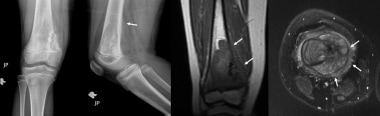
Osteosarcoma. Anteroposterior and lateral radiographs in a 9-year-old girl shows a destructive lesion of the distal femoral metaphysis medially, with aggressive sunburst periosteal reaction and a Codman's triangle on the lateral view (arrow). Coronal T1-weighted and axial T2-weighted images showing an expansile tumor of the distal femur with cortical destruction and extension into the soft tissues (arrows). |
 | View Full Size Image | |
Media type: Image
|
| Media file 16:
Slipped capital femoral epiphysis. Anteroposterior pelvis in an overweight13-year-old adolescent girl shows widening of the epiphyseal plate with irregular margins. Frog leg lateral views shows posteromedial displacement of the femoral head. |
 | View Full Size Image | |
Media type: Radiograph
|
| Media file 17:
Legg-Calve-Perthes disease. Anteroposterior and frog leg lateral radiographs of the pelvis in a 8-year-old girl shows fragmentation and collapse of the left femoral capital epiphysis. |
 | View Full Size Image | |
Media type: Radiograph
|
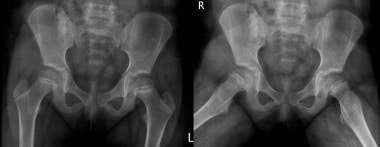
| Media file 18:
Developmental dysplasia of the hip. Anteroposterior radiograph of the pelvis in a 2-year-old child demonstrates a shallow acetabulum on the right, with lateral uncovering of the femoral head. The left hip appears unremarkable. |
 | View Full Size Image | |
Media type: Radiograph
|
- Nelson WE, Behrman RE, Kliegman R, Arvin AM. Textbook of Pediatrics. 15th. Philidelphia: Saunders; 1996.
- Singer JI. The cause of gait disturbance in 425 pediatric patients. Pediatr Emerg Care. Mar 1985;1(1):7-10. [Medline].
- Fischer SU, Beattie TF. The limping child: epidemiology, assessment and outcome. J Bone Joint Surg Br. Nov 1999;81(6):1029-34. [Medline].
- Kocher MS, Zurakowski D, Kasser JR. Differentiating between septic arthritis and transient synovitis of the hip in children: an evidence-based clinical prediction algorithm. J Bone Joint Surg Am. Dec 1999;81(12):1662-70. [Medline].
- Kocher MS, Mandiga R, Zurakowski D, Barnewolt C, Kasser JR. Validation of a clinical prediction rule for the differentiation between septic arthritis and transient synovitis of the hip in children. J Bone Joint Surg Am. Aug 2004;86-A(8):1629-35. [Medline].
- Berezin S, Newman LJ, Wasserman E. Limp in a child associated with Yersinia enterocolitica infection. N Y State J Med. May 1984;84(5):230-1. [Medline].
- Nadel HR. Bone scan update. Semin Nucl Med. Sep 2007;37:332-9. [Medline].
- Shavit I, Eidelman M, Galbraith R. Sonography of the hip-joint by the emergency physician: its role in the evaluation of children presenting with acute limp. Pediatr Emerg Care. Aug 2006;22(8):570-3. [Medline].
- Carraccio CL, Lomonico MP, Fisher MC. Limp as a presenting sign of meningitis.
|