Continually Updated Clinical Reference
 
 
  All Sources     eMedicine     Medscape     Drug Reference     MEDLINE
 
eMedicine - Pediatrics, Pharyngitis : Article by

Quick Find
Authors & Editors
Introduction
Clinical
Differentials
Workup
Treatment
Medication
Follow-up
Miscellaneous
References

Related Articles
Diphtheria

Mononucleosis

Pediatrics, Epiglottitis

Pediatrics, Pharyngitis

Peritonsillar Abscess

Pharyngitis


Patient Education
Ear, Nose, and Throat Center

Sore Throat Overview

Sore Throat Causes

Sore Throat Symptoms

Sore Throat Treatment

Strep Throat Overview


Author: Harold K Simon, MD, MBA, Professor of Pediatrics and Emergency Medicine, Associate Division Director of Pediatric Emergency Medicine, Emory University School of Medicine, Children's Healthcare of Atlanta

Harold K Simon is a member of the following medical societies: Ambulatory Pediatric Association, American Academy of Pediatrics, Sigma Xi, and Society for Academic Emergency Medicine

Editors: Garry Wilkes, MBBS, FACEM, Director of Emergency Medicine, Bunbury Health Service, Western Australia Country Health Service; Adjunct Associate Professor, School of Exercise, Biomedical and Health Sciences, Faculty of Computing, Health and Science, Edith Cowan University; Medical Director, St John Ambulance Service; Mary L Windle, PharmD, Adjunct Assistant Professor, University of Nebraska Medical Center College of Pharmacy, Pharmacy Editor, eMedicine.com, Inc; Grace M Young, MD, Associate Professor, Department of Pediatrics, University of Maryland Medical Center; John D Halamka, MD, MS, Associate Professor of Medicine, Harvard Medical School, Beth Israel Deaconess Medical Center; Chief Information Officer, CareGroup Healthcare System and Harvard Medical School; Attending Physician, Division of Emergency Medicine, Beth Israel Deaconess Medical Center; Richard G Bachur, MD, Assistant Professor of Pediatrics, Harvard Medical School; Associate Chief and Fellowship Director, Attending Physician, Division of Emergency Medicine, Children's Hospital of Boston

Author and Editor Disclosure

Synonyms and related keywords: pharyngitis in children, pharyngitis, group A beta-hemolytic streptococcal pharyngitis, GABHS, group C streptococci, group G streptococci, Neisseria gonorrhoeae, Corynebacterium diphtheriae, Corynebacterium hemolyticum, rhinovirus, adenovirus, parainfluenza virus, coxsackievirus, coronavirus, echovirus, herpes simplex virus, Epstein-Barr virus, mononucleosis, cytomegalovirus, Staphylococcus aureus, Haemophilus influenzae, Branhamella catarrhalis, Bacteroides fragilis, Bacteroides oralis, Bacteroides melaninogenicus,Fusobacterium species, Peptostreptococcus species, Chlamydia trachomatis, Mycoplasma pneumoniae

Background

Studies in the late 1940s and 1950s showed that penicillin (PCN) therapy for group A beta-hemolytic streptococcal (GABHS) pharyngitis could prevent rheumatic heart disease. The American Heart Association has recommended PCN therapy since 1953, and this remains the primary treatment of choice to prevent rheumatic heart disease.

Initial studies using a 5- to 7-day course showed a decline in the number of GABHS positive follow-up throat cultures from 53% to 18%. Subsequent 10-day courses of penicillin proved to be the most beneficial in eradicating GABHS from the pharynx. Therefore, the diagnosis and proper treatment of GABHS are of vital importance.

The effectiveness of antimicrobial therapy in the preventing poststreptococcal glomerulonephritis is less certain.

Pathophysiology

GABHS pharyngitis is spread via respiratory secretions through close contacts. It has an incubation period of 2-5 days.

Over 80 M-protein types of GABHS have been isolated with serotypes 1, 3, 5, 6, 18, 19, and 24 associated with rheumatic fever (ie, rheumatogenic forms) and others, such as serotypes 49, 55, and 57, associated with pyoderma and acute poststreptococcal glomerulonephritis.

Causes of pharyngitis in children vary from viruses, which often require only supportive therapy, to bacterial pathogens, such as GABHS, which require antibiotics. Primary bacterial pathogens that account for approximately 30% of cases of pharyngitis in children include GABHS (common), group C streptococci (uncommon), group G streptococci (uncommon), Neisseria gonorrhoeae (uncommon), Corynebacterium diphtheriae (rare), and Corynebacterium hemolyticum (extremely rare).

Viruses are isolated in approximately 40% of cases and include rhinovirus, adenovirus, parainfluenza virus, coxsackievirus, coronavirus, echovirus, herpes simplex virus, Epstein-Barr virus (mononucleosis), and cytomegalovirus.

Other probable copathogens for pharyngitis in children include Staphylococcus aureus, Haemophilus influenzae, Branhamella catarrhalis, Bacteroides fragilis, Bacteroides oralis, Bacteroides melaninogenicus, Fusobacterium species, and Peptostreptococcus species.

Other, less common, causes of pharyngitis include Chlamydia trachomatis and Mycoplasma pneumoniae.

In approximately 30% of cases, no pathogen is isolated.

Frequency

United States

Approximately 10% of children evaluated by medical care providers each year are evaluated for pharyngitis, and 25-50% of them have GABHS. However, it is important to note that approximately 20% of asymptomatic children are long-term carriers of GABHS.

Sex

No sex predilection exists.

Age

  • Pharyngitis occurs in all age groups.
  • Streptococcal infections have the greatest incidence in those aged 5-18 years.
  • In children younger than 2 years, most pharyngitis is of viral etiology, although GABHS rarely can occur in this younger age group.


History

  • The clinical differentiation of the possible pathogens of pharyngitis often is difficult based on history or physical examination. In 1962, Feinstein et al wrote, "The only typical feature of streptococcal infections is their failure to show a single, consistent, typical feature."
  • History of exposure to known carriers
  • Fever
  • Sore throat
  • Headache
  • Abdominal pain
  • Anorexia
  • Chills
  • Malaise

Physical

While no single or combination of physical findings is specific for distinguishing GABHS from viral etiologies, several items on physical examination are suggestive.

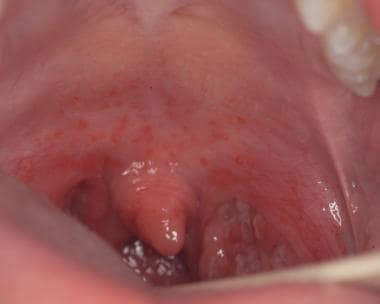
  • Enlarged tonsils
  • Pharyngeal erythema
  • Tonsillar exudates with necrotic crypts
  • Soft-palate petechiae
  • Tender cervical adenopathy
  • Fever
  • Scarlet fever rash (punctate erythematous macules and fine papules with reddened flexor creases and circumoral pallor), the so-called sandpaper rash
  • Conjunctivitis (more commonly with adenovirus infections)
  • Viral pharyngitis usually is associated with sneezing, rhinorrhea, and cough.
  • Mononucleosis typically is exudative with extensive false membranes.
  • Herpangina (usually coxsackievirus A) is associated with papulovesicular lesions.
  • Diphtheria, which is rare in developed countries, is associated with a thick gray membrane that is difficult to remove.

Causes

  • Acute bacterial pharyngitis
    • Group A beta-hemolytic streptococci
    • N gonorrhoeae
    • C diphtheriae
    • H influenzae
    • Moraxella (Branhamella) catarrhalis
    • Group C and G streptococci (rare)
  • Acute viral pharyngitis
    • Rhinovirus
    • Adenovirus
    • Parainfluenza virus
    • Coxsackievirus
    • Coronavirus
    • Echovirus
    • Epstein-Barr virus (mononucleosis)
    • Cytomegalovirus
  • Chronic pharyngitis (usually noninfectious)
    • Irritation from postnasal discharge of chronic allergic rhinitis
    • Chemical irritation
    • Neoplasms and vasculitides


Diphtheria
Mononucleosis
Pediatrics, Epiglottitis
Pediatrics, Pharyngitis
Peritonsillar Abscess
Pharyngitis

Other Problems to be Considered

Tracheitis
Retropharyngeal abscess


Lab Studies

  • The criterion standard diagnostic test for GABHS is a throat culture.
    • This can take up to 24 hours for results.
    • Many institutions have rapid strep antigen testing available for the detection of GABHS.
    • Rapid testing can be highly reliable when used in conjunction with throat cultures and is 70-90% sensitive and 95-100% specific compared to throat culture. Screening with rapid strep testing has been shown to be a prudent and cost-effective approach when followed up with culture (criterion standard) when the rapid strep test result is negative.
    • Throat culture results are highly sensitive and specific for GABHS, but results can vary based on technique, sampling, and media.
  • Leukocytosis (if bacterial)

Other Tests

  • Screening for gonococcal infection requires a warm Thayer-Martin plate.
  • Viruses can be cultured in special media.
  • Mono-spot or Epstein-Barr virus serologies are used to diagnose mononucleosis.
  • Gram stain may be suggestive of the etiology.
  • Streptococcal isolates can be serotyped.


Emergency Department Care

  • For patients with viral etiologies for their pharyngitis, care should be supportive, with antipyretics, analgesics, and measures to guarantee good hydration. IV fluids may be necessary.
  • For patients with GABHS, the criterion standard therapy is PCN. Based on the availability of rapid testing for GABHS and the clinical severity of the patient, one can decide between initiating therapy if a rapid test is positive for GABHS or delaying therapy until culture results are obtained if no rapid testing is available.
  • The issue of early versus delayed therapy for GABHS pharyngitis, until cultures can be obtained, has several considerations.
    • Early therapy (within 48 hours of symptoms) appears to shorten the duration of symptoms, limit the spread to others, allow the patient and family to return to their usual routine sooner, and limit losses to follow up.
    • Cons for early therapy before rapid GABHS screen or throat culture results can be obtained include the following:
      • Early therapy may lead to a higher failure rate secondary to an inability to create an immune response to the infection.
      • Rheumatic fever can be prevented even if antibiotic therapy is initiated as late as 9 days from the onset of symptoms.
      • Possible drug reactions may occur.
      • Expenses can be avoided by not immediately treating cases that are caused by pathogens other than GABHS.
    • Therefore, decisions on treatment must be individualized based on available testing, severity of symptoms, comfort with the availability to arrange follow-up care, and the need for the patient and the family to quickly return to their regular routine (eg, school, daycare).

Consultations

  • Refer to ear, nose, and throat (ENT) specialist for possible tonsillectomy if pharyngitis is recurrent or severe.
  • Refer to the primary care physician for follow-up care.


The criterion standard for treatment of GABHS pharyngitis is penicillin (PCN) in conjunction with supportive care for pain, fever, and prevention of dehydration. Ampicillin or amoxicillin often have been used in place of PCN; however, no microbiologic advantages exist over PCN therapy. Compliance has been better with bid/tid PCN than with traditional qid regimens. Amoxicillin taken once daily has even been shown effective in a recent preliminary report.

Cephalosporins also have been used with questionably improved failure rates compared with PCN. Cephalosporins resist degradation by beta-lactamases and are very effective against copathogens. First- or second-generation cephalosporins are best. Some of the cephalosporins include cephalexin, cefadroxil, cefuroxime, cefixime, cefdinir, and cefpodoxime.

Macrolide antibiotics are recommended for penicillin-allergic patients.

Recently, corticosteroids (oral dexamethasone) have been suggested as an adjunct therapy to decrease pain and length of symptoms in adults with pharyngitis. The one randomized controlled study in children found that the use of single-dose oral dexamethasone (0.6 mg/kg, not to exceed 10 mg) did not decrease the time to onset of clinically significant pain relief or time to complete pain relief.1 However, for the subset of children with positive rapid strep test results, a statistically significant (but marginally clinically significant) improvement in time to onset of pain relief occurred.

Drug Category: Antibiotics

Empiric antimicrobial therapy must be comprehensive and should cover all likely pathogens in the context of this clinical setting.

Drug NamePenicillin G benzathine (Bicillin L-A, Permapen)
DescriptionInterferes with synthesis of cell wall mucopeptide during active multiplication, resulting in bactericidal activity against susceptible microorganisms. Effective in over 90% of cases.
Not to be administered IV/IA/SC.
Adult Dose1,200,000 U IM once
Pediatric Dose<27.3 kg: 600,000 U IM once
>27.3 kg: Administer as in adults
Alternative dose: 25,000-50,000 U/kg/dose IM; not to exceed 1,200,000 U/dose
ContraindicationsDocumented hypersensitivity
InteractionsProbenecid can increase effects of PCN; coadministration of tetracyclines can decrease effects of PCN
PregnancyB - Fetal risk not confirmed in studies in humans but has been shown in some studies in animals
PrecautionsCaution in impaired renal function

Drug NamePenicillin VK (Veetids)
DescriptionInhibits the biosynthesis of cell wall mucopeptide. Bactericidal against sensitive organisms when adequate concentrations are reached, and most effective during the stage of active multiplication. Inadequate concentrations may produce only bacteriostatic effects. Treatment of choice if patients can tolerate PO therapy.
Treatment regimens as low as 2 doses/d are proven effective. Krober et al found failure rates of 31%, 6%, and 11% for qd, bid, and qid dosing, respectively.2
Adult Dose500 mg PO bid/tid for 10 d
Pediatric Dose<27.3 kg: 125 mg PO tid/qid for 10 d
>27.3 kg: 250 mg PO tid/qid for 10 d
ContraindicationsDocumented hypersensitivity
InteractionsProbenecid may increase effectiveness by decreasing clearance; tetracyclines are bacteriostatic, causing a decrease in the effectiveness of PCNs when administered concurrently
PregnancyB - Fetal risk not confirmed in studies in humans but has been shown in some studies in animals
PrecautionsCaution in renal impairment

Drug NameErythromycin (E.E.S., Eryc, Ery-Tab, EryPed)
DescriptionFor PCN allergic patients, the AAP recommends erythromycin ethylsuccinate. (Other macrolides, such as clarithromycin for 10 d or azithromycin for 5 d, have also been approved.)
Inhibits bacterial growth, possibly by blocking dissociation of peptidyl t-RNA from ribosomes causing RNA-dependent protein synthesis to arrest. For treatment of staphylococcal and streptococcal infections.
Adult Dose400-800 mg PO qid for 10 d
Pediatric Dose40 mg/kg/d PO divided tid/qid for 10 d
ContraindicationsDocumented hypersensitivity; hepatic impairment
InteractionsCoadministration may increase toxicity of theophylline, digoxin, carbamazepine, and cyclosporine; may potentiate anticoagulant effects of warfarin; coadministration with lovastatin and simvastatin increases risk of rhabdomyolysis
PregnancyB - Fetal risk not confirmed in studies in humans but has been shown in some studies in animals
PrecautionsCaution in liver disease; estolate formulation may cause cholestatic jaundice; GI adverse effects are common (give doses pc); discontinue use if nausea, vomiting, malaise, abdominal colic, or fever occur

Drug NameCefuroxime (Ceftin)
DescriptionSecond-generation cephalosporin maintains gram-positive activity that first-generation cephalosporins have; adds activity against Proteus mirabilis, H influenzae, Escherichia coli, Klebsiella pneumoniae, and M catarrhalis.
Condition of patient, severity of infection, and susceptibility of microorganism determine proper dose and route of administration.
Administer with food to minimize GI adverse effects.
Adult Dose250-500 mg PO bid
Pediatric Dose20 mg/kg PO divided bid; not to exceed 250 mg/d (suspension); or 125 mg PO bid (tab)
ContraindicationsDocumented hypersensitivity
InteractionsDisulfiramlike reactions may occur when alcohol is consumed within 72 h after taking cefuroxime; may increase hypoprothrombinemic effects of anticoagulants; may increase nephrotoxicity in patient receiving potent diuretics such as loop diuretics; coadministration with aminoglycosides increase nephrotoxic potential; probenecid increases serum concentrations
PregnancyB - Fetal risk not confirmed in studies in humans but has been shown in some studies in animals
PrecautionsAdminister half dose if CrCl is 10-30 mL/min and one-fourth dose if <10 mL/min; fungal and microorganism overgrowth may occur with prolonged therapy; caution in PCN allergy

Drug NameCefixime (Suprax)
DescriptionBy binding to one or more of the PCN-binding proteins, it arrests bacterial cell wall synthesis and inhibits bacterial growth.
Administer with food to minimize GI adverse effects.
Adult Dose400 mg PO qd or divided q12h
Pediatric Dose<50 kg or <12 years: 8 mg/kg susp PO qd or 4 mg/kg PO q12h
>50 kg or >12 years: Administer as in adults
ContraindicationsDocumented hypersensitivity
InteractionsCoadministration of aminoglycosides increase nephrotoxicity; probenecid may increase effects
PregnancyB - Fetal risk not confirmed in studies in humans but has been shown in some studies in animals
PrecautionsUse with caution with patients who have a documented hypersensitivity to PCNs.
Use with caution in patients with reduced renal function
GI adverse effects, including nausea and diarrhea, are some of the more common adverse drug reactions

Drug NameCefpodoxime proxetil (Vantin)
DescriptionA second-generation cephalosporin indicated for the management of infections caused by susceptible mixed aerobic-anaerobic microorganisms.
Cefpodoxime inhibits bacterial cell wall synthesis by binding to one or more of the PCN-binding proteins. Bacteria eventually lyse because of the ongoing activity of cell wall autolytic enzymes while cell wall assembly is arrested.
Adult Dose100 mg/dose PO q12h
Pediatric Dose10 mg/kg/d PO divided q12h; not to exceed 200 mg/d
ContraindicationsDocumented hypersensitivity
InteractionsAlcoholic beverages consumed <72 h after taking cefaclor may produce disulfiramlike reactions; may increase hypoprothrombinemic effects of anticoagulants; coadministration with potent diuretics and aminoglycosides (eg, loop diuretics) may increase nephrotoxicity
PregnancyB - Fetal risk not confirmed in studies in humans but has been shown in some studies in animals
PrecautionsAdjust dose in renal impairment; caution in PCN allergy; adverse effects include nausea, vomiting, and diarrhea

Drug NameCefditoren (Spectracef)
DescriptionSemi-synthetic cephalosporin administered as prodrug. Hydrolyzed by esterases during absorption and distributed in circulating blood as active cefditoren.
Bactericidal activity results from inhibition of cell wall synthesis via affinity for penicillin-binding proteins.
No dose adjustment necessary for mild renal impairment (CrCl 50-80 mgL/min/1.73 m2) or mild to moderate hepatic impairment.
Indicated for the treatment of acute exacerbation of pharyngitis/tonsillitis caused by susceptible strains of Streptococcus pyogenes.
Adult Dose200 mg PO with meals bid for 10 d
Moderate renal impairment (CrCl 30-49 mL/min/1.73 m2: No more than 200 mg PO bid
Severe renal impairment (CrCl <30 mL/min/1.73 m2): 200 mg PO qd
Pediatric Dose<12 years: Not established
>12 years: Administer as in adults
ContraindicationsDocumented hypersensitivity to drug, penicillin, related compounds, or milk protein sodium caseinate; carnitine deficiency or inborn errors of metabolism that may result in clinically significant carnitine deficiency
InteractionsAbsorption reduced with H2 receptor antagonists and antacids of magnesium and aluminum hydroxides may reduce absorption; probenecid may increase plasma concentrations of cefditoren
PregnancyB - Fetal risk not confirmed in studies in humans but has been shown in some studies in animals
PrecautionsMay cause diarrhea, nausea, and vaginal moniliasis (yeast infection); pseudomembranous colitis may occur; clinical manifestations of carnitine deficiency may occur with prolonged use; prolonged use may result in emergence and overgrowth of resistant organisms; caution in breastfeeding

Drug NameAzithromycin (Zithromax)
DescriptionActs by binding to 50S ribosomal subunit of susceptible microorganisms and blocks dissociation of peptidyl tRNA from ribosomes, causing RNA-dependent protein synthesis to arrest. Nucleic acid synthesis is not affected. Concentrates in phagocytes and fibroblasts as demonstrated by in vitro incubation techniques. In vivo studies suggest that concentration in phagocytes may contribute to drug distribution to inflamed tissues. Treats mild-to-moderate microbial infections.
Shorter course and one-a-day dosing make this a good alternative for patients who are sensitive to penicillin.
Adult Dose500 mg PO qd for 4-5 d
Pediatric Dose12 mg/kg/d PO qd for 5 d; not to exceed 500 mg/d
ContraindicationsDocumented hypersensitivity; hepatic impairment; do not administer with pimozide
InteractionsMay increase toxicity of theophylline, warfarin, and digoxin; effects are reduced with coadministration of aluminum and/or magnesium antacids; nephrotoxicity and neurotoxicity may occur when coadministered with cyclosporine
PregnancyC - Fetal risk revealed in studies in animals but not established or not studied in humans; may use if benefits outweigh risk to fetus
PrecautionsSite reactions can occur with IV route; bacterial or fungal overgrowth may result from prolonged antibiotic use; may increase hepatic enzymes and cholestatic jaundice; caution in patients with impaired hepatic function, prolonged QT intervals, or pneumonia; caution in hospitalized, geriatric, or debilitated patients

Drug NameRifampin (Rifadin)
DescriptionRecommended in conjunction with PCN for recurrent GABHS and for carrier states.
Inhibits DNA-dependent RNA polymerase activity in susceptible cells. Specifically, it interacts with bacterial RNA polymerase but does not inhibit the mammalian enzyme.
Take on an empty stomach.
Adult Dose10 mg/kg/d PO as a single dose; not to exceed 600 mg/d
Pediatric Dose20 mg/kg/d PO divided qid for last 4 d of 10-d therapy with penicillin VK or 10 mg/kg PO q12h for 4 d in conjunction with penicillin G benzathine
ContraindicationsDocumented hypersensitivity
InteractionsInduces microsomal enzymes, which may decrease effects of acetaminophen, oral anticoagulants, barbiturates, benzodiazepines, beta-blockers, chloramphenicol, oral contraceptives, corticosteroids, mexiletine, cyclosporine, digitoxin, disopyramide, estrogens, hydantoins, methadone, clofibrate, quinidine, dapsone, tazobactam, sulfonylureas, theophyllines, tocainide, and digoxin; blood pressure may increase with coadministration of enalapril; coadministration with isoniazid may result in higher rate of hepatotoxicity than with either agent alone (discontinue one or both agents if alterations in LFTs occur)
PregnancyC - Fetal risk revealed in studies in animals but not established or not studied in humans; may use if benefits outweigh risk to fetus
PrecautionsObtain CBCs and baseline clinical chemistries prior to and throughout therapy; in liver disease, weigh benefits against risk of further liver damage; interruption of therapy and high-dose intermittent therapy are associated with thrombocytopenia that is reversible if therapy is discontinued as soon as purpura occurs; if treatment is continued or resumed after appearance of purpura, cerebral hemorrhage or death may occur; may discolor the urine, tears, sweat, or other body fluids

Drug NameCephalexin (Keflex)
DescriptionFirst-generation cephalosporin that inhibits bacterial replication by inhibiting bacterial cell wall synthesis. Bactericidal and effective against rapidly growing organisms forming cell walls.
Resistance occurs by alteration of penicillin-binding proteins. Effective for treatment of infections caused by streptococcal or staphylococci, including penicillinase-producing staphylococci. May use to initiate therapy when streptococcal or staphylococcal infection is suspected.
Used orally when outpatient management is indicated. At least as effective as erythromycin in eradicating GABHS infection.
Adult Dose250-1000 mg PO q6h for 10 d
Pediatric Dose50 mg/kg/d PO divided q6h for 10 d; not to exceed 3 g/d
ContraindicationsDocumented hypersensitivity
InteractionsCoadministration with aminoglycosides increases nephrotoxic potential
PregnancyB - Fetal risk not confirmed in studies in humans but has been shown in some studies in animals
PrecautionsAdjust dose in severe renal insufficiency (high doses may cause CNS toxicity); superinfections, and promotion of nonsusceptible organisms may occur with prolonged use or repeated therapy

Drug NameClindamycin (Cleocin)
DescriptionLincosamide for treatment of serious skin and soft tissue staphylococcal infections. Also effective against aerobic and anaerobic streptococci (except enterococci). Inhibits bacterial growth, possibly by blocking dissociation of peptidyl t-RNA from ribosomes causing RNA-dependent protein synthesis to arrest. Used for recurrent GABHS pharyngitis or in cases of carrier state.
Take capsule with full glass of water.
Adult Dose150-450 mg PO q6-8h
Pediatric Dose20 mg/kg/d PO divided tid for 10 d; not to exceed 1.8 g/d
ContraindicationsDocumented hypersensitivity; regional enteritis, ulcerative colitis, hepatic impairment, antibiotic-associated colitis
InteractionsIncreases duration of neuromuscular blockade, induced by tubocurarine and pancuronium; erythromycin may antagonize effects; antidiarrheals may delay absorption
PregnancyB - Fetal risk not confirmed in studies in humans but has been shown in some studies in animals
PrecautionsAdjust dose in severe hepatic dysfunction; no adjustment necessary in renal insufficiency; associated with severe and possibly fatal colitis

Drug Category: Corticosteroids

These agents have anti-inflammatory properties and cause profound and varied metabolic effects. Corticosteroids modify the body's immune response to diverse stimuli.

Drug NameDexamethasone (Decadron)
DescriptionHas many pharmacologic benefits but significant adverse effects. Stabilizes cell and lysosomal membranes, increases surfactant synthesis, increases serum vitamin A concentration, and inhibits prostaglandin and proinflammatory cytokines (eg, TNF-alpha, IL-6, IL-2, and IFN-gamma). The inhibition of chemotactic factors and factors that increase capillary permeability inhibits recruitment of inflammatory cells into affected areas. Suppresses lymphocyte proliferation through direct cytolysis and inhibits mitosis. Breaks down granulocyte aggregates, and improves pulmonary microcirculation. For symptom relief in patients with severe exudative pharyngitis.
Adverse effects are hyperglycemia, hypertension, weight loss, GI bleeding or perforation synthesis, cerebral palsy, adrenal suppression, and death. Most of the adverse effects of corticosteroids are dose-dependent or duration-dependent.
Readily absorbed via the GI tract and metabolized in the liver. Inactive metabolites are excreted via the kidneys. Lacks salt-retaining property of hydrocortisone.
Patients can be switched from an IV to PO regimen in a 1:1 ratio.
Adult Dose10 mg IM single dose
Pediatric Dose0.6 mg/kg PO/IM single dose; not to exceed 10 mg
ContraindicationsDocumented hypersensitivity; active bacterial or fungal infection
InteractionsEffects decrease with coadministration of barbiturates, phenytoin, and rifampin; dexamethasone decreases effect of salicylates and vaccines used for immunization
PregnancyC - Fetal risk revealed in studies in animals but not established or not studied in humans; may use if benefits outweigh risk to fetus
PrecautionsIncreases risk of multiple complications, including severe infections; monitor adrenal insufficiency when tapering drug; abrupt discontinuation of glucocorticoids may cause adrenal crisis; hyperglycemia, edema, osteonecrosis, myopathy, peptic ulcer disease, hypokalemia, osteoporosis, euphoria, psychosis, myasthenia gravis, growth suppression, and infections are possible complications of glucocorticoid use


Further Inpatient Care

  • Rarely, small children with signs and symptoms of dehydration secondary to refusal to drink may require hospitalization for IV hydration.
  • Usually, even those patients who require IV hydration in the ED will take adequate oral fluids following their IV fluid bolus to allow home management.

Further Outpatient Care

  • Given that more than 90% of children clear GABHS from their pharynx within 24 hours of antibiotic therapy, they should remain out of school or daycare for 1 day.
  • If symptoms persist for greater than 24-48 hours, they should be re-evaluated for the possibility of other concerns as well as treatment failures.
  • Follow-up cultures are not routinely necessary unless concerns of recurrences or a carrier state exist.
  • Families should be instructed to encourage adequate hydration and antipyretics for pain and fever.
  • If worsening or signs of dehydration occur, patients should be instructed to seek immediate medical care or consultation with their primary medical provider.

In/Out Patient Meds

  • In addition to adequate antibiotic therapy for those with GABHS, all patients, irrespective of the etiology of their pharyngitis, should have antipyretics recommended for pain or fever.
    • Ibuprofen given at 10 mg/kg/dose PO q8h
    • Acetaminophen at 15 mg/kg/dose PO q4-6h
  • For patients with herpangina (stomatitis/pharyngitis), Maalox/Benadryl mixed 1:1 can be given PO before meals to decrease the associated discomfort and enhance good hydration. This can be dosed based on the Benadryl component at 1.25 mg/kg/dose PO, swish and swallow q6h prn.

Complications

  • Rheumatic fever
  • Poststreptococcal glomerulonephritis
  • Peritonsillar abscess
  • Systemic infection
  • Otitis media
  • Mastoiditis
  • Septicemia or toxic shock syndrome
  • Rhinitis
  • Sinusitis
  • Pneumonia

Prognosis

  • Streptococcal pharyngitis has a 5- to 7-day course.
    • Symptoms usually resolve spontaneously, without treatment; however, rheumatic complications are still possible.
    • Suppurative complications, such as a peritonsillar abscess, require surgical intervention.

Patient Education

  • Instruct on the importance of completing a 10-day course of antibiotics, regardless of symptom response.
  • For excellent patient education resources, visit eMedicine's Ear, Nose, and Throat Center. Also, see eMedicine's patient education articles Sore Throat and Strep Throat.


Special Concerns

  • While treatment concerns for the prevention of rheumatic fever are the primary reason for treating GABHS, several interesting facts were found during recent outbreaks of rheumatic fever in 1985 and 1990.
    • No previous significant increases in GABHS were noted in the communities prior to the outbreaks.
    • The outbreaks were observed in middle class areas in which compliance rates with medical therapy are relatively high.
    • Unlike most prior outbreaks, severe pharyngitis rarely was noted and only 46% of patients reported even having a recent sore throat.
    • Only 24% of the patients felt they had sore throats that were significant enough for them to seek medical care.
    • Almost 20% of the cases were in children who received antibiotics for their pharyngitis (type of antibiotic, length of therapy, and compliance issues were unclear).
    • Therefore, outbreaks may in fact be most related to the rheumatogenic quality of the GABHS.


  1. Bulloch B, Kabani A, Tenenbein M. Oral dexamethasone for the treatment of pain in children with acute pharyngitis: a randomized, double-blind, placebo-controlled trial. Ann Emerg Med. May 2003;41(5):601-8. [Medline].
  2. Krober MS, Weir MR, Themelis NJ, et al. Optimal dosing interval for penicillin treatment of streptococcal pharyngitis. Clin Pediatr (Phila). Nov 1990;29(11):646-8. [Medline].
  3. American Academy of Pediatrics. Report of the committee on infectious diseases. In: Peter G, ed. Red Book. Elk Grove Village, AAP; & 1997 1994:430-9; 483-9.
  4. Denny FW, Wannamaker LW, Brink WR, et al. Prevention of rheumatic fever; treatment of the preceding streptococcic infection. J Am Med Assoc. May 13 1950;143(2):151-3. [Medline].
  5. el-Daher NT, Hijazi SS, Rawashdeh NM. Immediate vs. delayed treatment of group A beta-hemolytic streptococcal pharyngitis with penicillin V. Pediatr Infect Dis J. Feb 1991;10(2):126-30. [Medline].
  6. Feder HM Jr, Gerber MA, Randolph MF. Once-daily therapy for streptococcal pharyngitis with amoxicillin. Pediatrics. Jan 1999;103(1):47-51. [Medline].
  7. Gerber MA. Diagnosis and treatment of pharyngitis in children. Pediatr Clin North Am. Jun 2005;52(3):729-47, vi. [Medline].
  8. Gerber MA, Markowitz M. Streptococcal pharyngitis: Clearing up the controversies. Contemp Pediatr. 1992;118-31.
  9. Marvez-Valls EG, Stuckey A, Ernst AA. A randomized clinical trial of oral versus intramuscular delivery of steroids in acute exudative pharyngitis. Acad Emerg Med. Jan 2002;9(1):9-14. [Medline].
  10. Peter G, Smith AL. Group A streptococcal infections of the skin and pharynx (second of two parts). N Engl J Med. Aug 18 1977;297(7):365-70. [Medline].
  11. Pichichero ME. Controversies in the treatment of streptococcal pharyngitis. Am Fam Physician. Dec 1990;42(6):1567-76. [Medline].
  12. Roosevelt GE, Kulkarni MS, Shulman ST. Critical evaluation of a CLIA-waived streptococcal antigen detection test in the emergency department. Ann Emerg Med. Apr 2001;37(4):377-81. [Medline].
  13. Snellman LW, Stang HJ, Stang JM. Duration of positive throat cultures for group A streptococci after initiation of antibiotic therapy. Pediatrics. Jun 1993;91(6):1166-70. [Medline].
  14. Van Cauwenberge PB, Vander Mijnsbrugge A. Pharyngitis: a survey of the microbiologic etiology. Pediatr Infect Dis J. Oct 1991;10(10 Suppl):S39-42. [Medline].
  15. Wannamaker LW, Rammelkamp CH, Denny FW, et al. Prophylaxis of acute rheumatic fever by treatment of the preceding streptococcal infection with various amounts of depot penicillin. Am J Med. Jun 1951;10(6):673-95. [Medline].

Pediatrics, Pharyngitis excerpt

Article Last Updated: Jan 28, 2008