Practice Essentials
Overdose of the oral anticoagulant warfarin (Coumadin), or drug interactions with warfarin, can lead to toxicity. Similarly, toxicity can result from exposure to superwarfarins, which are long-acting anticoagulants used in rodenticides. [1, 2] (See Etiology and Prognosis.)
Warfarin is the most common oral anticoagulant in current use. Broad-ranging applications, such as in the treatment of patients with mechanical heart valves, chronic atrial fibrillation, deep venous thrombosis, pulmonary embolism, and dilated cardiomyopathy, have led to widespread exposure to this drug. (See Etiology and Epidemiology.) [4]
Additionally, although warfarin is no longer used primarily as a rodenticide, several long-acting coumarin derivatives (the so-called superwarfarin anticoagulants, such as brodifacoum, diphenadione, chlorophacinone, and bromadiolone) are used for this purpose and can produce profound and prolonged anticoagulation. Common commercial products containing superwarfarins include D-con Mouse Prufe I and II, Ramik, and Talon-G.
Blood levels of warfarin are neither readily available nor helpful. The anticoagulant effect is best quantified by baseline and daily repeated measurement of the prothrombin time (PT) and the International Normalized Ratio (INR), which may not be elevated until 1-2 days postingestion. (See Workup).
In the absence of serious or life-threatening hemorrhage, treatment with oral vitamin K1 is recommended. Significant superwarfarin poisoning may require many weeks of vitamin K1 therapy. Active, serious hemorrhage should be treated with four-factor prothrombin complex concentrate (PCC), if available. Recombinant factor VIIa (rFVIIa) may be considered if PCC is not available. If neither PCC nor rFVIIa is available, fresh frozen plasma may be administered instead. (See Treatment and Medication.)

Background
Toxicity from coumarins was first noted in animals. Livestock were difficult to feed on North American prairies until the introduction of melilots, or sweet clovers (ie, Melilotus alba, Melilotus officinalis), from Europe in the early 1900s.
In 1924, Schofield noted that cattle in Alberta, Canada that were fed moldy spoiled sweet clover hay were dying from a previously undescribed hemorrhagic disorder; properly cured hay appeared harmless. Bishydroxycoumarin, the active ingredient responsible for this hemorrhagic disorder, was discovered in 1939 by Campbell and Link. [3]
Bishydroxycoumarin is formed when fungi in moldy sweet clover oxidize coumarin to 4-hydroxycoumarin, an anticoagulant. In 1940, bishydroxycoumarin was synthesized and used clinically 1 year later as an oral anticoagulant under the American trade name dicumarol.
Coumarin-derivatives possessing a 4-hydroxy group with a carbon at the 3 position of the coumarin-base structure possess anticoagulant activity and are referred to as hydroxycoumarins, which are not present in coumarin itself.
Warfarin (name derived from Wisconsin Alumni Research Foundation and "arin" from coumarin) was synthesized and used as a rodenticide for nearly a decade prior to its 1954 introduction into clinical medicine.
Today, the 4-hydroxy coumarins are primarily used as anticoagulants and rodenticides. Second-generation rodenticides (long-acting anticoagulants, such as brodifacoum) are characterized by their clinical effects and very long half-lives.
Coumarin-derived products may be synthesized or obtained from tonka seeds (Dipteryx odorata, Dipteryx oppositifolia). Oral anticoagulants are divided into two groups, hydroxycoumarins (including warfarin) and indanediones.
Etiology
Coumarins inhibit hepatic synthesis of the vitamin K ̶ dependent coagulation factors II, VII, IX, and X and the anticoagulant proteins C and S. Vitamin K is a cofactor in the synthesis of these clotting factors. The vitamin K ̶ dependent step involves carboxylation of glutamic acid residues and requires regeneration of the used vitamin K back to its reduced form.
Coumarins and related compounds inhibit vitamin K1 -2,3 epoxide reductase, preventing vitamin K from being reduced to its active form. The degree of effect on the vitamin K ̶ dependent proteins depends on the dose and duration of treatment with warfarin.
Since warfarin does not affect the activity of previously synthesized and circulating coagulation factors, depletion of these mature factors through normal catabolism must occur before the anticoagulant effects of the drug are observed. Each factor differs in its degradation half-life: factor II requires 60 hours, factor VII requires 4-6 hours, factor IX requires 24 hours, and factor X requires 48-72 hours. The half-lives of proteins C and S are approximately 8 and 30 hours, respectively. As a result, 3-4 days of therapy may be needed before complete clinical response to any one dosage is observed.
Because warfarin also reduces the activity of anticoagulant proteins C and S, a transient hypercoagulable state may occur shortly after treatment with warfarin is started. Rapid loss of protein C temporarily shifts the balance in favor of clotting until sufficient time has passed for warfarin to decrease the activity of coagulant factors.
The oral bioavailability of warfarin and the superwarfarins is nearly 100%. Warfarin is highly bound (approximately 97%) to plasma protein, mainly albumin. The high degree of protein binding is one of several mechanisms whereby other drugs interact with warfarin. Warfarin is distributed to the liver, lungs, spleen, and kidneys. It does not appear to be distributed to breast milk in significant amounts. It crosses the placenta and is a known teratogen.
The duration of anticoagulant effect after a single dose of warfarin is usually 5-7 days. However, superwarfarin products may continue to produce significant anticoagulation for weeks to months after a single ingestion. In one reported overdose case with measured serum levels, the half-life of brodifacoum was 56 days. [5]
Warfarin is metabolized by hepatic cytochrome P-450 (CYP) isoenzymes predominantly to inactive hydroxylated metabolites, which are excreted in the bile. It also is metabolized by reductases to reduced metabolites (warfarin alcohols), which are excreted in the kidneys. Warfarin metabolism may be altered in the presence of liver dysfunction or advanced age but is not affected by kidney impairment. Drug interactions are extensive and many known examples are enumerated below. Excessive anticoagulation may also occur because of unintentional or intentional overdose.
Lack of familiarity with the interactions between warfarin and other drugs may lead to clinically relevant and avoidable increases or decreases in prothrombin time (PT).
Drugs that prolong the prothrombin time
Note that the S-isomer is more potent than the R-isomer; thus, drugs that inhibit S-isomer metabolism have a greater effect on PT.
Drugs that inhibit warfarin metabolism include the following:
-
Allopurinol
-
Amiodarone
-
Azole antifungals
-
Capecitabine
-
Cephalosporin antibiotics
-
Chloramphenicol
-
Chlorpropamide
-
Cimetidine
-
Cotrimoxazole
-
Disulfiram
-
Ethanol (acute ingestion)
-
Flutamide
-
Isoniazid (INH)
-
Macrolide antibiotics
-
Metronidazole
-
Omeprazole
-
Penicillin antibiotics
-
Phenytoin
-
Propafenone
-
Propoxyphene
-
Quinidine
-
Quinolone antibiotics
-
Statins (particularly lovastatin and pravastatin)
-
Sulfinpyrazone
-
Sulfonamides
-
Tamoxifen
-
Tolbutamide
-
Zafirlukast
-
Zileuton
Many antibiotics, especially parenteral cephalosporins, can inhibit vitamin K activity. A high penicillin dose also can inhibit the activity of vitamin K, possibly due to decreased gastrointestinal (GI) flora synthesis of vitamin K. Using data from the Medicare Part D prescription drug program, Baillargeon et al found that patients 65 years and older who were continuous warfarin users had a two-fold increased risk of bleeding requiring hospitalization within 15 days of exposure to an antibiotic (azole, cephalosporins, cotrimoxazole, macrolides, penicillin, quinolones). [6]
In a study of patients taking antibiotics and warfarin, serious bleeding events occurred significantly more often with antibiotics considered to be high-risk for interactions with warfarin (trimethoprim/sulfamethoxazole, ciprofloxacin, levofloxacin, metronidazole, fluconazole, azithromycin, and clarithromycin) than with antibiotics considered low-risk (clindamycin and cephalexin). Of the 22,272 patients in the study, 14,078 received high-risk agents and 8194 received low-risk antibiotics. Bleeding events occurred in 93 patients in the high-risk group and 36 patients in the low-risk group. Increases in international normalized ratio (INR) values were common; for example, 9.7% of patients prescribed fluconazole had an INR greater than 6. [7]
An additive anticoagulant effect is produced by the following drugs:
-
Aspirin
-
Clopidogrel
-
Heparin
-
Low molecular weight heparin
-
Direct thrombin inhibitors (eg, argatroban, lepirudin)
Drugs that interfere with protein binding
Drugs that interfere with protein binding—and thus enhance the anticoagulant effect of warfarin—include the following:
-
Chloral hydrate
-
Clofibrate
-
Diazoxide
-
Ethacrynic acid
-
Miconazole (including intravaginal use)
-
Nalidixic acid (displaces protein binding)
-
Salicylates
-
Sulfonamides
-
Sulfonylureas
Drugs that can reduce PT by decreasing the warfarin effect
The following drugs cause inhibition of warfarin absorption:
-
Cholestyramine
-
Sucralfate
-
Aluminum hydroxide
-
Colestipol
The following drugs cause enhanced warfarin metabolism:
-
Barbiturates
-
Carbamazepine
-
Ethanol
-
Glutethimide
-
Griseofulvin
-
Phenytoin
-
Rifampin
The following foods have a very high vitamin K content (> 200 mcg):
-
Brussel sprouts
-
Chickpeas
-
Collard greens
-
Coriander
-
Endive
-
Kale
-
Liver
-
Parsley
-
Red leaf lettuce
-
Spinach
-
Swiss chard
-
Black/green teas
-
Turnip greens
-
Watercress
The following foods have a high vitamin K content (100-200 mcg):
-
Basil
-
Broccoli
-
Butterhead lettuce
-
Canola oil
-
Chives
-
Coleslaw
-
Cucumbers (with peel)
-
Green onions
-
Mustard greens
-
Soybean oil
The following foods have a medium vitamin K content (50-100 mcg):
-
Apples (green)
-
Asparagus
-
Cabbage
-
Cauliflower
-
Mayonnaise
-
Nuts (pistachios)
-
Summer squash
The following foods have a low vitamin K content (< 50 mcg):
-
Apples (red)
-
Avocados
-
Beans
-
Breads/grains
-
Carrots
-
Celery
-
Cereal
-
Coffee
-
Corn
-
Cucumbers (without the peel)
-
Dairy products
-
Eggs
-
Fruits
-
Iceberg lettuce
-
Meats/fish/poultry
-
Pastas
-
Peanuts
-
Peas
-
Potatoes
-
Rice
-
Tomatoes
Epidemiology
Occurrence in the United States
Although NOACs (novel oral anticoagulants; eg, factor Xa inhibitors, thrombin inhibitors) have progressively replaced warfarin over the past decade, warfarin continues to be be involved in a significant percentage of cases of potential toxicity in the United States. According to American Association of Poison Control Centers (AAPCC) data, 761 single exposures to pharmaceutical warfarin were reported in 2021, which represents over 10% of anticoagulant cases. Children younger than 6 years accounted for 121 exposures, and persons older than 19 years accounted for 557. The majority of cases (655) were unintentional exposures. Major outcomes occurred in 9 cases and 3 deaths were reported. [8]
In addition, the AAPCC reported 103 single exposures to warfarin-type anticoagulant rodenticides and 3066 single exposures to long-acting anticoagulant rodenticides, with 76 and 2237 involving children younger than 6 years, respectively. These represent the majority of rodenticide exposures reported to poison control centers. Exposure was unintentional in 99 cases. No major outcomes or deaths were reported. [8]
Therapeutic anticoagulants represented the most frequent medication type seen for adverse effects in 60 US emergency departments (EDs) between 2017-2019. The estimated incidence was 4.5 per 1000 population. Warfarin accounted for 7471 ED visits during this period. [9]
Age-related demographics
Complications from incorrect dosing of warfarin occur most often in adults. Unintentional ingestions of superwarfarins are far more common in children, with approximately 89% of reported exposures occurring in children younger than age 6 years. Pediatric exposures usually involve a single small ingestion and result in no symptoms or alteration in the PT. [10] Adults who intentionally ingest superwarfarin agents are more likely to ingest a toxic dose and to experience the anticoagulant effects of these products.
Prognosis
Hemorrhage
Bleeding is the primary adverse effect of warfarin and superwarfarin toxicity and is related to the intensity of anticoagulation, length of therapy, the patient's underlying clinical state, and use of other drugs that may affect hemostasis or interfere with warfarin metabolism. [11] Fatal or nonfatal hemorrhage may occur from any tissue or organ.
Children rarely ingest enough product to develop clinical evidence of anticoagulation. A study of 595 children younger than age 6 years who had ingested superwarfarin rodenticides found only 2 with elevated PTs (international normalized ratio [INR] 1.5 and 1.8), and neither had symptoms. [10]
Over the 20-year period from 1985-2004, the AAPCC’s Toxic Exposure Surveillance System (TESS) database reported no deaths in children younger than age 6 years after ingestion of superwarfarins and only one adult death due to unintentional ingestion. [12] Virtually all cases of severe hemorrhage occurred after intentional self-poisoning.
Minor bleeding from mucous membranes, subconjunctival hemorrhage, hematuria, epistaxis, and ecchymoses may occur.
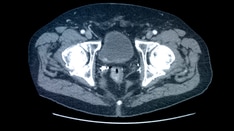
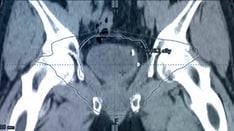
Major bleeding complications include GI hemorrhage, intracranial bleeding, and retroperitoneal bleeding. Massive hemorrhage usually involves the GI tract but may involve the spinal cord or cerebral, pericardial, pulmonary, adrenal, or hepatic sites. Although rare, massive intraocular hemorrhage has been reported in patients with preexisting disciform macular degeneration.
In a population-based retrospective cohort study of patients aged 65 years or older with atrial fibrillation (AF) who underwent dialysis, warfarin was found to be associated with a 44% higher risk of bleeding and did not reduce the risk of stroke. [13]
Skin necrosis
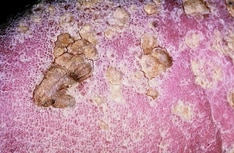
Skin necrosis, usually observed between the third and eighth days of therapy, is a relatively uncommon, adverse reaction to warfarin. When skin necrosis occurs, it can be extremely severe and disfiguring and may require treatment through debridement or amputation of the affected tissue, limb, breast, or penis.
It occurs more frequently in women and in patients with preexisting protein C deficiency and is found, less commonly, in men and in patients with protein S deficiency. Patients initially become hypercoagulable because warfarin depresses levels of the anticoagulant proteins C and S more quickly than it does coagulant proteins II, VII, IX, and X.
Extensive thrombosis of the venules and capillaries occurs within the subcutaneous fat. Women note an intense, painful burning in areas such as the thigh, buttocks, waist, and/or breast several days after beginning warfarin; skin necrosis and permanent scarring may follow.
Immediate withdrawal of warfarin therapy is indicated. Heparin can be substituted safely for warfarin; however, treatment of patients who require long-term anticoagulant therapy remains problematic.
Restarting warfarin therapy at a low dose (eg, 2 mg) while continuing heparin treatment for 2-3 days may be reasonable. The dosage of warfarin can be increased gradually over several weeks.
Warfarin and pregnancy
Warfarin crosses the placenta during pregnancy and has the potential to cause teratogenesis and bleeding in the fetus. Warfarin and other coumarin derivatives cause an embryopathy commonly termed fetal warfarin syndrome (FWS). No data are available on whether superwarfarin compounds cross the placenta or are excreted in breast milk.
During the first trimester, particularly during weeks 6-12 of gestation, embryopathy caused by exposure and characterized by nasal hypoplasia with or without stippled epiphyses (chondrodysplasia punctata) may occur.
Central nervous system (CNS) abnormalities, including dorsal midline dysplasia characterized by agenesis of the corpus callosum, Dandy-Walker malformation, and midline cerebellar atrophy have been reported.
Ventral midline dysplasia, characterized by optic atrophy and eye abnormalities, has been observed. Seizures, deafness, blindness, and intellectual disability can result from exposure in any trimester. Spontaneous fetal abortion and stillbirth are known to occur, and an increased risk of fetal mortality is associated with warfarin use.
Although rare, other teratogenic occurrences reported after in utero exposure to warfarin include the following:
-
Urinary tract abnormalities (eg, single kidney)
-
Asplenia
-
Anencephaly
-
Spina bifida
-
Cranial nerve palsy
-
Hydrocephalus
-
Cardiac defects and congenital heart disease
-
Polydactyly
-
Deformities of toes
-
Diaphragmatic hernia
-
Corneal leukoma
-
Cleft palate
-
Cleft lip
-
Schizencephaly
-
Microcephaly
The effects of anticoagulation on the fetus are a particular concern during labor, when the combination of the trauma of delivery and anticoagulation may lead to bleeding in the neonate.
A few small studies have looked at the use warfarin in pregnancy after the 12th week of gestation, but these studies are insufficient to recommend the use of warfarin in the pregnant patient. Thus, do not administer warfarin during pregnancy.
Additional complications
Other adverse reactions that occur infrequently with long-term warfarin therapy include the following:
-
Agranulocytosis
-
Alopecia
-
Anaphylactoid reactions
-
Anorexia
-
Cold intolerance
-
Diarrhea
-
Dizziness
-
Elevated hepatic enzyme levels
-
Exfoliative dermatitis
-
Headache
-
Hepatitis
-
Jaundice
-
Leukopenia
-
Nausea and/or vomiting
-
Pruritus
-
Urticaria
Rare events of tracheal or tracheobronchial calcification have been reported in association with long-term warfarin therapy. The clinical significance is not known. Priapism is associated with anticoagulant administration; however, a causal relationship with warfarin is not established.
Spontaneous intramural hematoma of the intestine may cause bowel obstruction and has been reported with an estimated prevalence of 1 in 2500 patients taking warfarin. [14]
Patient Education
Instruct regular users of warfarin in the proper use of their medication and in methods of avoiding accidental overdose (eg, employment of daily pillboxes). Generally, the primary care provider handles this.
After acute ingestions by children, instruct parents to remove possible sources of intoxication (eg, poisons on the floor, under the sink, in the garage).
For patient education information, see Poisoning and Poison Proofing Your Home.