Continually Updated Clinical Reference
 
 
  All Sources     eMedicine     Medscape     Drug Reference     MEDLINE
 
You are in: eMedicine Specialties > Emergency Medicine > Environmental

Bites, Animal

Last Updated: February 2, 2006
Email to a Colleague
Synonyms and related keywords: animal bites, bite wound, animal bite wound, dog bite, cat bite, pet bite, wild animal bite, bite wound infection

  AUTHOR INFORMATION Section 1 of 10    Click here to go to the next section in this topic
Author Information Introduction Clinical Differentials Workup Treatment Medication Follow-up Miscellaneous Bibliography

Author: Jack L Stump, MD, FAAEM, FACEP, Consulting Staff, Department of Emergency Medicine, Emergency Medicine Associates, PC, Southwest Washington Medical Center

Jack L Stump, MD, FAAEM, FACEP, is a member of the following medical societies: American Academy of Emergency Medicine

Editor(s): Robert M McNamara, MD, FAAEM, Professor of Emergency Medicine, Temple University; Chief, Department of Internal Medicine, Section of Emergency Medicine, Temple University Hospital; Francisco Talavera, PharmD, PhD, Senior Pharmacy Editor, eMedicine; James S Walker, DO, Program Coordinator, Associate Professor, Department of Emergency Medicine, University of Oklahoma Health Sciences Center; John Halamka, MD, Chief Information Officer, CareGroup Healthcare System, Assistant Professor of Medicine, Department of Emergency Medicine, Beth Israel Deaconess Medical Center; Assistant Professor of Medicine, Harvard Medical School; and Jonathan Adler, MD, Attending Physician, Department of Emergency Medicine, Massachusetts General Hospital; Division of Emergency Medicine, Harvard Medical School

Disclosure


  INTRODUCTION Section 2 of 10   Click here to go to the previous section in this topic Click here to go to the top of this page Click here to go to the next section in this topic
Author Information Introduction Clinical Differentials Workup Treatment Medication Follow-up Miscellaneous Bibliography

Background: Because many animal bites are never reported, determining the exact incidence of animal bite wounds in the United States, let alone the world, is difficult. An estimated 68 million dogs lived in the United States in 2001; these account for an estimated 5 million dog bites per year, of which 800,000 require medical attention; 368,245 were seen in emergency departments. Substantially more dog bites occur than cat bites. These two types of bite wounds account for most animal bite wounds encountered in the ED.

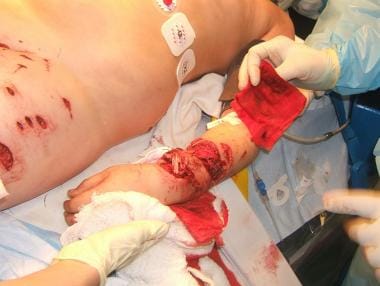
Pathophysiology: Dog bites typically cause a crushing-type wound because of their rounded teeth and strong jaws. An adult dog can exert 200 pounds per square inch (psi) of pressure, with some large dogs able to exert 450 psi. Such extreme pressure may damage deeper structures such as bones, vessels, tendons, muscle, and nerves.

The sharp pointed teeth of cats usually cause puncture wounds and lacerations that may inoculate bacteria into deep tissues.

Limited literature is available on other animal bites. Monkey bites have a notorious reputation based largely on anecdotal reports. Bites from large herbivores generally have a significant crush element because of the force involved.

Bites of the hand generally have a high risk for infection because of the relatively poor blood supply of many structures in the hand and anatomic considerations that make adequate cleansing of the wound difficult. In general, the better the vascular supply and the easier the wound is to clean (ie, laceration vs puncture), the lower the risk of infection.

A major concern in all bite wounds is subsequent infection. Infections can be caused by nearly any group of pathogens (bacteria, viruses, rickettsia, spirochetes, fungi). Common bacteria involved in bite wound infections include the following:

  • Dog bites

    • Staphylococcus

    • Streptococcus

    • Eikenella

    • Pasteurella

    • Proteus

    • Klebsiella

    • Haemophilus

    • Enterobacter

    • DF-2 or Capnocytophaga canimorsus

    • Bacteroides

  • Cat bites

    • Pasteurella

    • Actinomyces

    • Propionibacterium

    • Bacteroides

    • Fusobacterium

    • Clostridium

    • Wolinella

    • Peptostreptococcus

    • Staphylococcus

    • Streptococcus

Nearly all infections are mixed infections. Additionally, ED physicians should always consider the need for tetanus and rabies prophylaxis.

Frequency:

  • In the US: Of an estimated 3-6 million animal bites per year in the United States, approximately 80-90% are from dogs, 5-15% from cats, and 2-5% from rodents, with the balance from other small animals (eg, rabbits, ferrets), farm animals, monkeys, reptiles, and others. Some estimate that 1% of emergency visits are for dog bite wounds. Approximately 1% of dog bite wounds and 6% of cat bite wounds require hospitalization.
  • Internationally: It is difficult to get accurate numbers. Examples of animals inflicting bites can be quite exotic, such as large cats (tigers, lions, leopards), wild dogs, hyenas, wolves (Eurasia), crocodiles, and other reptiles. Most bites, however, are from domestic dogs. In developing countries, dog bites carry a high risk of rabies infection.

Mortality/Morbidity: Dog attacks kill approximately 10-20 people each year in the United States. Most of these fatalities, unfortunately, are young children. Rabies, of course, is a generally fatal complication. While local infection and cellulitis are the leading causes of morbidity, sepsis is a potential complication of bite wounds, particularly C canimorsus (DF-2) sepsis in immunocompromised individuals. Pasteurella multocida infection (the most common pathogen contracted from cat bites) also may be complicated by sepsis. Meningitis, osteomyelitis, and septic arthritis are additional concerns in bite wounds.

Sex: Women are more frequently bitten by cats, while men are more often bitten by dogs (despite being man's best friend).

Age: Peak incidence of animal bites occurs among children aged 5-14 years.


  CLINICAL Section 3 of 10   Click here to go to the previous section in this topic Click here to go to the top of this page Click here to go to the next section in this topic
Author Information Introduction Clinical Differentials Workup Treatment Medication Follow-up Miscellaneous Bibliography

History:

Physical: Major resuscitation rarely is required. Since patients typically are children, reassurance and parental presence may facilitate examination. Where applicable, consider the following:

Causes: Bite wounds from cats and dogs can occur without provocation, but provoked bites, such as disturbing animals while they are eating, are more common. Older animals often are less tolerant of disturbances, especially by children.
  DIFFERENTIALS Section 4 of 10   Click here to go to the previous section in this topic Click here to go to the top of this page Click here to go to the next section in this topic
Author Information Introduction Clinical Differentials Workup Treatment Medication Follow-up Miscellaneous Bibliography

Bites, Human
Cellulitis
Fractures, Cervical Spine
Hand Infections
Neck Trauma
Osteomyelitis
Rabies
Tetanus


Quick Find
Author Information
Introduction
Clinical
Differentials
Workup
Treatment
Medication
Follow-up
Miscellaneous
Bibliography

Click for related images.

Related Articles
Bites, Human

Cellulitis

Fractures, Cervical Spine

Hand Infections

Neck Trauma

Osteomyelitis

Rabies

Tetanus


Patient Education


  WORKUP Section 5 of 10   Click here to go to the previous section in this topic Click here to go to the top of this page Click here to go to the next section in this topic
Author Information Introduction Clinical Differentials Workup Treatment Medication Follow-up Miscellaneous Bibliography

Lab Studies:

  • Fresh wounds should not be cultured. Infected wounds are generally cultured.
  • Other laboratory tests are indicated as the patient's condition dictates (eg, CBC and blood cultures for patients with sepsis).
  • If C canimorsus sepsis is suspected, examine the peripheral smear for the organism, a bacillus.

Imaging Studies:

  • Radiography is indicated if any concerns exist that deep structures are at risk (eg, hand wounds; deep punctures; crushing bites, especially over joints).
    • Occult fractures or osteomyelitis may be discovered.
    • Radiographs may find foreign bodies in the wound (eg, teeth).
    • Children who have been bitten in the head should be examined for bony penetration with plain films or CT scan. If the child was shaken, consider cervical spine evaluation.

Other Tests:

  • If patient has possible sepsis or other serious complications, further laboratory testing is needed. Otherwise, routine testing rarely is necessary.
  TREATMENT Section 6 of 10   Click here to go to the previous section in this topic Click here to go to the top of this page Click here to go to the next section in this topic
Author Information Introduction Clinical Differentials Workup Treatment Medication Follow-up Miscellaneous Bibliography

Prehospital Care:

  • Complete trauma evaluation occasionally may be indicated.
  • Rinse wounds with sterile solution, if possible, and cover.
  • Encourage patient to seek prompt care.

Emergency Department Care:

  • Most wounds can be treated in the ED. Essentials of treatment are necessary inspection, debridement, irrigation, and closure, if indicated.
    • Carefully inspect wounds to identify deep injury and devitalized tissue. It is nearly impossible to obtain an adequate inspection of a wound without it first being anesthetized. Care should be taken to visualize the bottom of the wound and, if applicable, to examine the wound through a range of motion.
    • Debridement is an effective means of preventing infection. Removing devitalized tissue, particulate matter, and clots prevents these from becoming a source of infection, much like any foreign body. Clean surgical wound edges result in smaller scars and promote faster healing.
    • Irrigation is another important means of infection prevention. A 19-gauge blunt needle and a 35-mL syringe provide adequate pressure (7 psi) and volume to clean most wounds. In general, 100-200 mL of irrigation solution per inch of wound is required. Heavily contaminated wounds require more irrigation. Large dirty wounds may require irrigation in the operating room. Isotonic sodium chloride solution is a safe, available, effective, and inexpensive irrigating solution. Few of the numerous other solutions and mixtures of saline and antibiotics have any advantages over saline. If a shieldlike device is used, take care to prevent the irrigating solution from returning to the wound, which decreases the effectiveness of the irrigation.
    • Consider primary closure in relatively clean bite wounds or wounds that can be cleansed effectively. Others are best treated by delayed primary closure. Facial wounds, because of the excellent blood supply, are at low risk for infection, even if closed primarily. Bite wounds to the lower extremities, with a delay in presentation, or in immunocompromised hosts generally should be left open.
  • Consider tetanus and rabies prophylaxis for all wounds.
  • In one study of 145 recent (<6 h) dog bites of the face in 45 children, treatment with pressure irrigation and wound-edge excision resulted in a 0.4% infection rate without the use of antibiotics.

Consultations:

  • Extensive wounds, those involving tissue loss, or those involving complex structures may require plastic surgery consultation.
  • If the skull is penetrated, neurosurgery consultation is indicated.

  MEDICATION Section 7 of 10   Click here to go to the previous section in this topic Click here to go to the top of this page Click here to go to the next section in this topic
Author Information Introduction Clinical Differentials Workup Treatment Medication Follow-up Miscellaneous Bibliography

This is one of most controversial subjects in wound care. Remember that proper wound care (inspection, debridement, irrigation, closure, if indicated) reduces infection more than antibiotics. In general, low-risk wounds, such as bite wounds to the face, do not need antibiotics. High-risk wounds (eg, cat bites that are a true puncture, bites to the hand, poor general health) generally require antibiotics. Literature does not support one clear recommendation.

Antirabies treatment may be indicated for bites by foxes, bats, raccoons, or skunks in the Americas (see Rabies for treatment and dosing information). For cat and dog bites, consult local public health authorities for their current recommendations if the offending animal cannot be secured and observed.

Drug Category: Antibiotics -- Proponents of oral antibiotics are in two camps: amoxicillin/clavulanate therapy versus amoxicillin and cephalexin therapy. Amoxicillin/clavulanate is assumed to cover staphylococci and Pasteurella species. A single medication taken 3 times a day should have good compliance. Two-drug therapy of amoxicillin and cephalexin seems to offer better coverage but may result in poorer compliance. Five days of prophylactic antibiotics generally is considered adequate.

Patients who are allergic to penicillin may use cefuroxime (cat), doxycycline (cat), erythromycin, or trimethoprim-sulfamethoxazole, although these are less effective. Clindamycin plus ciprofloxacin (adults) or clindamycin plus trimethoprim-sulfamethoxazole (pediatrics) may provide better coverage. Azithromycin may be an effective alternative because of high tissue concentration.
Drug Name
Amoxicillin and clavulanate (Augmentin) -- Drug combination that extends antibiotic spectrum of penicillin to include bacteria normally resistant to beta-lactam antibiotics. Indicated for skin and skin structure infections caused by beta-lactamase–producing strains of Staphylococcus aureus.
Adult Dose500/125 mg PO tid or 875/125 mg PO bid
Pediatric Dose10-15 mg/kg PO tid (based on amoxicillin component)
ContraindicationsDocumented hypersensitivity
Interactions Coadministration with warfarin or heparin increases risk of bleeding
Pregnancy B - Usually safe but benefits must outweigh the risks.
PrecautionsGive for a minimum of 10 d to eliminate organism and prevent sequelae (endocarditis, rheumatic fever); following treatment, perform cultures to confirm eradication of streptococci
Drug Name
Amoxicillin (Trimox, Biomox, Amoxil) -- Alone, this drug is effective against Pasteurella species. However, not indicated for skin and skin structure infections caused by beta-lactamase–producing strains of Staphylococcus aureus. A second antibiotic such as cephalexin is needed for Staphylococcus infections.
Adult Dose250-500 mg PO tid
Pediatric Dose30-50 mg/kg/d PO divided tid; not to exceed 500 mg/dose
ContraindicationsDocumented hypersensitivity
InteractionsReduces the efficacy of oral contraceptives
Pregnancy B - Usually safe but benefits must outweigh the risks.
PrecautionsAdjust dose in renal impairment; may enhance chance of candidiasis
Drug Name
Cephalexin (Keflex, Biocef, Keftab) -- First-generation cephalosporin that arrests bacterial growth by inhibiting bacterial cell wall synthesis. Bactericidal activity against rapidly growing organisms. Primary activity against skin flora.
Adult Dose250-500 mg PO qid
Pediatric Dose25-50 mg/kg/d PO divided qid; not to exceed 500 mg/dose
ContraindicationsDocumented hypersensitivity
InteractionsCoadministration with aminoglycosides increases nephrotoxic potential
Pregnancy B - Usually safe but benefits must outweigh the risks.
PrecautionsAdjust dose in severe renal insufficiency (high doses may cause CNS toxicity); superinfections and promotion of non-susceptible organisms may occur with prolonged use or repeated therapy
Drug Name
Erythromycin (Erythrocin, Eryc, E.E.S., Ery-Tab) -- Inhibits bacterial growth, possibly by blocking dissociation of peptidyl tRNA from ribosomes, causing RNA-dependent protein synthesis to arrest. For treatment of staphylococcal and streptococcal infections. In children, age, weight, and severity of infection determine proper dosage. When bid dosing is desired, half of total daily dose may be taken q12h. For more severe infections, double the dose
Adult Dose250 mg PO qid
Pediatric Dose20-50 mg/kg/d PO divided qid; not to exceed 500 mg/dose
ContraindicationsDocumented hypersensitivity; hepatic impairment
InteractionsCoadministration may increase toxicity of theophylline, digoxin, carbamazepine, and cyclosporine; may potentiate anticoagulant effects of warfarin; coadministration with lovastatin and simvastatin increases risk of rhabdomyolysis
Pregnancy B - Usually safe but benefits must outweigh the risks.
PrecautionsCaution in liver disease; estolate formulation may cause cholestatic jaundice; GI adverse effects are common (give doses pc); discontinue use if nausea, vomiting, malaise, abdominal colic, or fever occur
Drug Name
Sulfamethoxazole/trimethoprim (Bactrim, Bactrim DS, Septra, Septra DS) -- Inhibits bacterial growth by inhibiting synthesis of dihydrofolic acid.
Adult Dose400-800 mg SMX PO bid
Pediatric Dose30-60 mg/kg/d SMX PO divided bid; not to exceed 800 mg/dose
ContraindicationsDocumented hypersensitivity; megaloblastic anemia due to folate deficiency
InteractionsMay increase PT when used with warfarin (perform coagulation tests and adjust dose accordingly); coadministration with dapsone may increase blood levels of both drugs; coadministration of diuretics increases incidence of thrombocytopenia purpura in elderly; phenytoin levels may increase with coadministration; may potentiate effects of methotrexate in bone marrow depression; hypoglycemic response to sulfonylureas may increase with coadministration; may increase levels of zidovudine
Pregnancy C - Safety for use during pregnancy has not been established.
PrecautionsDiscontinue at first appearance of skin rash or sign of adverse reaction; obtain CBCs frequently; discontinue therapy if significant hematologic changes occur; goiter, diuresis, and hypoglycemia may occur with sulfonamides; prolonged IV infusions or high doses may cause bone marrow depression (if signs occur, give 5-15 mg/d leucovorin); caution in folate deficiency (eg, chronic alcoholism, advanced age, anticonvulsant therapy, malabsorption syndrome); hemolysis may occur in G-6-PD deficiency; patients with AIDS may not tolerate or respond to TMP-SMZ; caution in renal or hepatic impairment (perform urinalyses and renal function tests during therapy); give fluids to prevent crystalluria and stone formation
Drug Name
Clindamycin (Cleocin) -- Lincosamide for treatment of serious skin and soft tissue staphylococcal infections. Also effective against aerobic and anaerobic streptococci (except enterococci). Inhibits bacterial growth, possibly by blocking dissociation of peptidyl tRNA from ribosomes, causing RNA-dependent protein synthesis to arrest.
Adult Dose300 mg PO qid
Pediatric Dose10-25 mg/kg/d PO divided qid; not to exceed 600 mg/dose
ContraindicationsDocumented hypersensitivity; regional enteritis, ulcerative colitis, hepatic impairment, antibiotic-associated colitis
InteractionsIncreases duration of neuromuscular blockade induced by tubocurarine and pancuronium; erythromycin may antagonize effects of clindamycin; antidiarrheals may delay absorption of clindamycin
Pregnancy B - Usually safe but benefits must outweigh the risks.
PrecautionsAdjust dose in severe hepatic dysfunction; no adjustment necessary in renal insufficiency; associated with severe and possibly fatal colitis by allowing overgrowth of Clostridium difficile
Drug Name
Ciprofloxacin (Cipro) -- Fluoroquinolone with activity against pseudomonads, streptococci, MRSA, S epidermidis, and most gram-negative organisms, but no activity against anaerobes. Inhibits bacterial DNA synthesis and, consequently, growth. Trovafloxacin (Trovan) overcomes many of these limitations. Continue treatment for at least 2 d (7-14 d typical) after signs and symptoms have disappeared.
Adult Dose500 mg PO bid
Pediatric DoseNot recommended
ContraindicationsDocumented hypersensitivity
InteractionsAntacids, iron salts, and zinc salts may reduce serum levels; administer antacids 2-4 h before or after taking fluoroquinolones; cimetidine may interfere with metabolism of fluoroquinolones; ciprofloxacin reduces therapeutic effects of phenytoin; probenecid may increase ciprofloxacin serum concentrations; may increase toxicity of theophylline, caffeine, cyclosporine, and digoxin (monitor digoxin levels); may increase effects of anticoagulants (monitor PT)
Pregnancy C - Safety for use during pregnancy has not been established.
PrecautionsIn prolonged therapy, perform periodic evaluations of organ system functions (eg, renal, hepatic, hematopoietic); adjust dose in renal function impairment; superinfections may occur with prolonged or repeated antibiotic therapy
Drug Name
Azithromycin (Zithromax) -- Inhibits bacterial growth, possibly by blocking dissociation of peptidyl tRNA from ribosomes, causing RNA-dependent protein synthesis to arrest. Treats mild-to-moderate microbial infections
Adult Dose500 mg PO d 1, then 250 mg PO qd for 4 d
Pediatric Dose10 mg/kg PO d 1; not to exceed 500 mg/dose, then 5 mg/kg PO qd for 4 d; not to exceed 250 mg/dose
ContraindicationsDocumented hypersensitivity; hepatic impairment; do not administer with pimozide
InteractionsMay increase toxicity of theophylline, warfarin, and digoxin; effects are reduced with coadministration of aluminum and/or magnesium antacids; nephrotoxicity and neurotoxicity may occur when coadministered with cyclosporine
Pregnancy B - Usually safe but benefits must outweigh the risks.
PrecautionsSite reactions can occur with IV route; bacterial or fungal overgrowth may result from prolonged antibiotic use; may increase hepatic enzymes and cholestatic jaundice; caution in patients with impaired hepatic function, prolonged QT intervals, or pneumonia; caution in hospitalized, geriatric, or debilitated patients
Drug Name
Doxycycline (Doryx, Vibramycin, Bio-Tab) -- Inhibits protein synthesis and thus bacterial growth by binding to 30S and possibly 50S ribosomal subunits of susceptible bacteria.
Adult Dose100 mg PO bid
Pediatric Dose<8 years: Not recommended
>8 years: 2-5 mg/kg/d PO in 1-2 divided doses; not to exceed 200 mg/d
ContraindicationsDocumented hypersensitivity; severe hepatic dysfunction
InteractionsBioavailability decreases with antacids containing aluminum, calcium, magnesium, iron, or bismuth subsalicylate; tetracyclines can increase hypoprothrombinemic effects of anticoagulants; tetracyclines can decrease effects of oral contraceptives, causing breakthrough bleeding and increased risk of pregnancy
Pregnancy D - Unsafe in pregnancy
PrecautionsPhotosensitivity may occur with prolonged exposure to sunlight or tanning equipment; reduce dose in renal impairment; consider drug serum level determinations in prolonged therapy; tetracycline use during tooth development (last one half of pregnancy through age 8 y) can cause permanent discoloration of teeth; Fanconilike syndrome may occur with outdated tetracyclines
Drug Name
Cefuroxime (Ceftin, Kefurox, Zinacef) -- Second-generation cephalosporin maintains gram-positive activity that first-generation cephalosporins have; adds activity against P mirabilis, H influenzae, E coli, K pneumoniae, and M catarrhalis. Condition of patient, severity of infection, and susceptibility of microorganism determine proper dose and route of administration.
Adult Dose500 mg PO bid
Pediatric Dose15-30 mg/kg/d PO divided bid; not to exceed 500 mg/dose
ContraindicationsDocumented hypersensitivity
InteractionsDisulfiramlike reactions may occur when alcohol is consumed within 72 h after taking cefuroxime; may increase hypoprothrombinemic effects of anticoagulants; may increase nephrotoxicity in patients receiving potent diuretics such as loop diuretics; coadministration with aminoglycosides increases nephrotoxic potential
Pregnancy C - Safety for use during pregnancy has not been established.
PrecautionsReduce dosage by half if creatinine clearance is 10-30 mL/min, and by 3/4 if <10 mL/min (high doses may cause CNS toxicity); bacterial or fungal overgrowth of nonsusceptible organisms may occur with prolonged or repeated therapy
  FOLLOW-UP Section 8 of 10   Click here to go to the previous section in this topic Click here to go to the top of this page Click here to go to the next section in this topic
Author Information Introduction Clinical Differentials Workup Treatment Medication Follow-up Miscellaneous Bibliography

Further Inpatient Care:

Further Outpatient Care:

In/Out Patient Meds:

Transfer:

Complications:

Prognosis:

Patient Education:

  MISCELLANEOUS Section 9 of 10   Click here to go to the previous section in this topic Click here to go to the top of this page Click here to go to the next section in this topic
Author Information Introduction Clinical Differentials Workup Treatment Medication Follow-up Miscellaneous Bibliography

Medical/Legal Pitfalls:

  • Meticulous documentation of both the history of the bite and of treatment is important to prevent questions about the appropriateness of care. Documentation should include decisions about antibiotic use and other aspects of care.
  • In many locations, animal bites must be reported to local authorities.

Special Concerns:

  • Pediatric patients
    • Previously bitten patients remain at risk if the dog, cat, or other animal that bit them continues to be aggressive or is located where another bite could occur.
    • Move the animal to another location.
  BIBLIOGRAPHY Section 10 of 10   Click here to go to the previous section in this topic Click here to go to the top of this page
Author Information Introduction Clinical Differentials Workup Treatment Medication Follow-up Miscellaneous Bibliography

Bites, Animal excerpt