Continually Updated Clinical Reference
 
 
  All Sources     eMedicine     Medscape     Drug Reference     MEDLINE
 
eMedicine - Endophthalmitis : Article by

Quick Find
Authors & Editors
Introduction
Clinical
Differentials
Workup
Treatment
Medication
Follow-up
Miscellaneous
Multimedia
References

Related Articles
Cavernous Sinus Thrombosis

Corneal Abrasion

Corneal Laceration

Corneal Ulceration and Ulcerative Keratitis

Endocarditis

Globe Rupture

Herpes Zoster Ophthalmicus

Iritis and Uveitis

Postoperative inflammation

Systemic Lupus Erythematosus

Vitreous Hemorrhage


Patient Education
Click here for patient education.


Author: Daniel J Egan, MD, Attending Physician, Department of Emergency Medicine, Saint Vincent's Hospital, Manhattan

Daniel J Egan is a member of the following medical societies: Alpha Omega Alpha, American College of Emergency Physicians, and Society for Academic Emergency Medicine

Coauthor(s): Jessica Radin Peters, MD, Attending Physician, Department of Emergency Medicine, Instructor, Harvard Medical School, Brigham and Women's Hospital; David A Peak, MD, Assistant Residency Director of Harvard Affiliated Emergency Medicine Residency, Attending Physician, Massachusetts General Hospital; Consulting Staff, Department of Hyperbaric Medicine, Massachusetts Eye and Ear Infirmary

Editors: Richard Lavely, MD, JD, MS, MPH, Lecturer in Health Policy and Administration, Department of Public Health, Yale University School of Medicine; Francisco Talavera, PharmD, PhD, Senior Pharmacy Editor, eMedicine; Douglas Lavenburg, MD, Clinical Professor, Department of Emergency Medicine, Christiana Care Health Systems; John Halamka, MD, Chief Information Officer, CareGroup Healthcare System, Assistant Professor of Medicine, Department of Emergency Medicine, Beth Israel Deaconess Medical Center; Assistant Professor of Medicine, Harvard Medical School; Jonathan Adler, MD, Attending Physician, Department of Emergency Medicine, Massachusetts General Hospital; Division of Emergency Medicine, Harvard Medical School

Author and Editor Disclosure

Synonyms and related keywords: endophthalmitis, inflammation of ocular cavities, inflammation of vitreous humor, inflammation of aqueous humor, sterile endophthalmitis, panophthalmitis, endogenous endophthalmitis, exogenous endophthalmitis

Background

Endophthalmitis involves inflammation of the intraocular cavities (ie, the aqueous or vitreous humor) usually caused by infection. Noninfectious (sterile) endophthalmitis may result from various causes such as retained native lens material after an operation or from toxic agents. Panophthalmitis is inflammation of all coats of the eye including intraocular structures.

The 2 types of endophthalmitis are endogenous (ie, metastatic) and exogenous. Endogenous endophthalmitis results from the hematogenous spread of organisms from a distant source of infection (eg, endocarditis). Exogenous endophthalmitis results from direct inoculation as a complication of ocular surgery, foreign bodies, and/or blunt or penetrating ocular trauma.

Pathophysiology

Under normal circumstances, the blood-ocular barrier provides a natural resistance against invading organisms.

In endogenous endophthalmitis, blood-borne organisms permeate the blood-ocular barrier either by direct invasion (ie, septic emboli) or by changes in vascular endothelium caused by substrates released during infection. Destruction of intraocular tissues may be due to direct invasion by the organism and/or from inflammatory mediators of the immune response.

Endophthalmitis may be as subtle as white nodules on the lens capsule, iris, retina, or choroid. It can also be as ubiquitous as inflammation of all the ocular tissues, leading to a globe full of purulent exudate. In addition, inflammation can spread to involve the orbital soft tissue.

Any surgical procedure that disrupts the integrity of the globe can lead to exogenous endophthalmitis (eg, cataract, glaucoma, retinal, radial keratotomy).

Frequency

United States

Endogenous endophthalmitis is rare, occurring in only 2-15% of all cases of endophthalmitis. Average annual incidence is about 5 per 10,000 hospitalized patients. In unilateral cases, the right eye is twice as likely to become infected as the left eye, probably because of its more proximal location to direct arterial blood flow from the right innominate artery to the right carotid artery. Since 1980, candidal infections reported in IV drug users have increased. The number of people at risk may be increasing because of the spread of AIDS, more frequent use of immunosuppressive agents, and more invasive procedures (eg, bone marrow transplantation).

Most cases of exogenous endophthalmitis (about 60%) occur after intraocular surgery. When surgery is implicated in the cause, endophthalmitis usually begins within 1 week after surgery. In the United States, postcataract endophthalmitis is the most common form, with approximately 0.1-0.3% of operations having this complication, which has increased over the last 3 years.

Posttraumatic endophthalmitis occurs in 4-13% of all penetrating ocular injuries. Incidence of endophthalmitis with perforating injuries in rural settings is higher when compared with nonrural settings. Delay in the repair of a penetrating globe injury is correlated with increased risk of developing endophthalmitis. Incidence of endophthalmitis with retained intraocular foreign bodies is 7-31%.

Mortality/Morbidity

  • Decreased vision and permanent loss of vision are common complications of endophthalmitis. Patients may require enucleation to eradicate a blind and painful eye.
  • Mortality is related to the patient comorbidity and the underlying medical problem.


History

History should be focused toward practices or procedures that would increase risk of endogenous or exogenous endophthalmitis (eg, intravenous drug use, other risks for sepsis or endocarditis, recent invasive ophthalmologic procedure). See discussion below in Causes.

  • Bacterial endophthalmitis usually presents acutely with pain, redness, lid swelling, and decreased visual acuity. Also, some bacteria (eg, Propionibacterium acnes) may cause chronic inflammation with mild symptoms. This organism is typical skin flora and usually is inoculated at the time of intraocular surgery.
  • Fungal endophthalmitis may present with an indolent course over days to weeks. Symptoms are often blurred vision, pain, and decreased visual acuity. A history of penetrating injury with a plant substance or soil-contaminated foreign body may often be elicited.
  • Individuals with candidal infection may present with high fever, followed several days later by ocular symptoms. Persistent fever of unknown origin (FUO) may be associated with an occult retinochoroidal fungal infiltrate.
  • History of ocular surgery, ocular trauma, hammering steel with steel, working with baling wire, or working in an industrial setting may be elicited.
  • In cases of postsurgical endophthalmitis, infection most often occurs shortly after surgery (eg, in the first week) but may occur months or years later as in the case of P acnes.
  • Symptoms
    • Visual symptoms in any hospitalized patient or patient taking immunosuppressive therapy
    • Visual loss
    • Eye pain and irritation
    • Headache
    • Photophobia
    • Ocular discharge
    • Intense ocular and periocular inflammation
    • Injected eye

Physical

Physical findings correlate with structures involved and degree of infection or inflammation. A thorough eye examination should be performed to include acuity, external examination, funduscopic examination, and slit lamp biomicroscopy. Seek signs of uveitis and other findings as described below. Emergent referral to an ophthalmologist for further evaluation, including more exhaustive physical examination, is indicated if endophthalmitis is seriously considered.

  • Eyelid swelling and erythema
  • Injected conjunctiva and sclera
  • Hypopyon (layering of inflammatory cells and exudate [pus] in the anterior chamber)
  • Vitreitis
  • Chemosis
  • Reduced or absent red reflex
  • Proptosis (a late finding in panophthalmitis)
  • Papillitis
  • Cotton-wool spots
  • Corneal edema and infection
  • White lesions in the choroid and retina
  • Chronic uveitis
  • Vitreal mass and debris
  • Purulent discharge
  • Fever
  • Cells and flare in the anterior chamber on slit lamp examination
  • Note: Absence of pain and hypopyon do not rule out endophthalmitis, particularly in the chronic indolent form of P acnes infection.

Causes

In a large clinical series, gram-positive organisms caused 56-90% of all cases of endophthalmitis. The most common organisms are coagulase-negative Staphylococcus epidermidis, Staphylococcus aureus, and Streptococcus species. Gram-negative organisms like Pseudomonas, Escherichia coli, and Enterococcus are observed in penetrating injuries. However, when endogenous endophthalmitis is considered alone, the percentage of bacterial organisms drops markedly because of a greater proportion of fungal infections.

  • Endogenous endophthalmitis
    • Individuals at risk for developing endogenous endophthalmitis usually have comorbidities that predispose them to infection. These include conditions such as diabetes mellitus, chronic renal failure, cardiac valvular disorders, systemic lupus erythematosus, AIDS, leukemia, gastrointestinal malignancies, neutropenia, lymphoma, alcoholic hepatitis, and bone marrow transplantation.
    • Invasive procedures, which may result in bacteremia, such as hemodialysis, bladder catheterization, gastrointestinal endoscopy, total parenteral nutrition, chemotherapy, and dental procedures, also can lead to endophthalmitis.
    • Recent nonocular trauma or surgery, prosthetic heart valves, immunosuppression, and intravenous drug abuse may predispose to endogenous endophthalmitis.
    • Sources for endophthalmitis include meningitis, endocarditis, urinary tract infection, and wound infection. Additionally, pharyngitis, pulmonary infection, septic arthritis, pyelonephritis, and intra-abdominal abscess also have been implicated as sources of infection.
    • Fungal organisms account for more than 50% of all cases of endogenous endophthalmitis. Candida albicans is by far the most frequent cause (75-80% of fungal cases). Aspergillosis is the second most common cause of fungal endophthalmitis, especially in IV drug users. Less frequent are other candidal species and Torulopsis, Sporotrichum, Cryptococcus, Coccidioides, and Mucor species.
    • Gram-positive organisms are most common among bacterial etiologies of endogenous endophthalmitis. The single most commonly involved organism is S aureus, which often is implicated with skin infections or chronic systemic disease, such as diabetes mellitus or renal failure. Streptococcal species including Streptococcus pneumoniae, Streptococcus viridans, and group A streptococci also are common. Other streptococcal species, eg, group B in newborns with meningitis or group G in elderly patients with wound infections or malignancies, also have been isolated. Bacillus cereus has been implicated in intravenous drug abuse and intravenous injections. Clostridium species have been implicated in association with bowel carcinomas.
    • Gram-negative bacteria are other bacterial etiologies. E coli is the most common among the gram-negative bacteria. Haemophilus influenzae, Neisseria meningitidis, Klebsiella pneumoniae, Serratia species, and Pseudomonas aeruginosa also can cause endogenous endophthalmitis.
    • Nocardia asteroides, Actinomyces species, and Mycobacterium tuberculosis are acid-fast bacteria that may cause endogenous endophthalmitis.
  • Exogenous endophthalmitis
    • Organisms that reside at the conjunctiva, eyelid, or eyelashes and are introduced at the time of surgery usually cause postoperative endophthalmitis.
    • Most cases of exogenous endophthalmitis develop postoperatively or after trauma to the eye. In fact, postoperative endophthalmitis is the most common cause of the disease. Of these cases, gram-positive organisms account for 56-90%, of which the majority are coagulase-negative Staphylococcus from the natural conjunctival flora; gram-negative organisms are the etiology in 7-29% of cases; and fungal organisms are found in 3-13% of cases.
    • The single most common cause of exogenous endophthalmitis is S epidermidis, which is a normal flora of the skin and conjunctiva. Other common gram-positive bacteria are S aureus and streptococcal species.
    • The most common gram-negative organisms associated with postoperative endophthalmitis are P aeruginosa and Proteus and Haemophilus species.
    • Although very rare, many different fungi have caused postoperative endophthalmitis, including Candida, Aspergillus, and Penicillium species.
  • In traumatic endophthalmitis, bacteria or fungi are introduced at the time of injury.  Endophthalmitis can occur in up to 13% of cases of penetrating injury to the globe. Since penetrating trauma usually occurs in a nonsterile environment, most objects that strike the eye are contaminated with multiple infectious agents. The risk of developing traumatic endophthalmitis by foreign objects carrying soil or vegetable matter is highest in rural settings. Staphylococcal, streptococcal, and Bacillus species usually cause traumatic endophthalmitis. B cereus has been implicated in 25% of traumatic endophthalmitis. A history of penetrating trauma with intraocular foreign body contaminated with organic matter implicates Bacillus species.
    • Patients with larger lacerations, delay in time to repair of open globe and those with more virulent organisms tend to do worse than patients with traumatic etiology.


Cavernous Sinus Thrombosis
Corneal Abrasion
Corneal Laceration
Corneal Ulceration and Ulcerative Keratitis
Endocarditis
Globe Rupture
Herpes Zoster Ophthalmicus
Iritis and Uveitis
Postoperative inflammation
Systemic Lupus Erythematosus
Vitreous Hemorrhage

Other Problems to be Considered

Postsurgical inflammation
Allergic reaction
Foreign bodies
Chemical or thermal burns
Trauma
Exposure keratopathy
Retinitis
Toxocara canis infection
Large cell lymphoma
Retinoblastoma
Acute retinal necrosis
Parasitic infection


Lab Studies

  • The most important laboratory study is Gram stain and culture of the aqueous and vitreous obtained by the ophthalmologist.
  • For endogenous endophthalmitis, other laboratory studies that may be performed include the following:
    • Complete blood count with differential - Evaluating for signs of infection, elevated white count, left shift
    • Erythrocyte sedimentation rate - Evaluating for rheumatic causes, chronic infections, or malignancy. The ESR is often normal in cases of endophthalmitis.
    • Blood urea nitrogen - Evaluating for renal failure or patients at increased risk
    • Creatinine - Evaluating for renal failure or patients at increased risk

Imaging Studies

  • Chest x-ray - Evaluating for source of infection
  • Cardiac ultrasound - Evaluating for endocarditis as source of infection
  • CT scan/MRI of orbit - May help rule out other entities in the differential diagnosis

Other Tests

  • Blood cultures - Evaluating for source of infection
  • Urine culture - Evaluating for source of infection
  • Other cultures depending on clinical signs or symptoms
    • Cerebrospinal fluid - Evaluating for source of infection
    • Throat culture - Evaluating for source of infection
    • Stool - Evaluating for source of infection
    • Indwelling intravascular catheter tip - Evaluating for source of infection
    • A culture of the penetrating object, if available, can be a valuable resource.

Procedures

  • Ophthalmological evaluation
    • Check visual acuity
    • Examine both eyes by slit lamp biomicroscopy
    • Intraocular pressure
    • Dilated funduscopy
    • Possible ultrasonography if fundus not well visualized (This will help determine if a retained intraocular foreign body is present, the density of the vitreitis, and if the retina is attached or not.)
    • Routine cultures should include aerobic, anaerobic, and fungal cultures.


Emergency Department Care

Once the diagnosis has been made, or strongly considered, prompt consultation to an ophthalmologist is needed. Treatment depends on the underlying cause of endophthalmitis. Final visual outcome is heavily dependent on timely recognition and treatment. Although multiple different approaches to and advances in treatment have been made, according to recent data, the rate of preservation of visual acuity has not changed significantly since 1995.

  • Treatment of postoperative endophthalmitis
    • Pars plana vitrectomy or vitreous aspiration may be performed by an ophthalmologist with administration of intravitreal antibiotics (ie, vancomycin, amikacin, ceftazidime).
    • Consider systemic antibiotic administration as well as intravitreal steroids.
    • Patients with postoperative endophthalmitis usually are not admitted to the hospital. However, the decision to admit the patient is determined by the ophthalmologist.
  • Treatment of traumatic endophthalmitis
    • Admit the patient to the hospital.
    • Treat ruptured globe (if present).
    • Systemic antibiotics including vancomycin and an aminoglycoside or a third-generation cephalosporin are indicated. Consider clindamycin until Bacillus species can be ruled out if soil contamination is suspected.
    • Topical fortified antibiotics are used.
    • Intravitreal antibiotics should be administered.
    • Consider pars plana vitrectomy.
    • Tetanus immunization is necessary if immunization record is not current.
    • Cycloplegic drops (ie, atropine) may be considered.
  • Treatment of endogenous bacterial endophthalmitis
    • Admit the patient to the hospital.
    • Broad-spectrum intravenous antibiotics including vancomycin and an aminoglycoside or third-generation cephalosporin. Consider adding clindamycin in intravenous drug users until Bacillus infection can be ruled out.
    • Periocular antibiotics are sometimes indicated.
    • Intravitreal antibiotics are indicated.
    • Cycloplegic drops (ie, atropine) may be administered.
    • Topical steroids may be considered.
    • Vitrectomy may be needed for virulent organisms.
  • Treatment of candidal endophthalmitis
    • Admit the patient to the hospital.
    • Oral fluconazole is indicated.
    • Amphotericin B intravenous or intravitreal may be considered.
    • Cycloplegic drops (ie, atropine) may be considered.

Consultations

Ophthalmologist: Emergent consultation is necessary if this diagnosis is entertained. This is an ophthalmologic emergency, as the patient is in danger of losing his or her vision.


In postoperative endophthalmitis, parenteral therapy is not necessary unless evidence of infection exists outside the globe.

In other forms of endophthalmitis, administer broad-spectrum antibiotics once cultures have been obtained. An ophthalmologist usually administers intravitreal and subconjunctival injections. The following list of systemic antibiotics can be administered in conjunction with injection.

Drug Category: Antibiotics

Empiric antimicrobial therapy must be comprehensive and should cover all likely pathogens in the context of the clinical setting.

Drug NameVancomycin (Vancocin)
DescriptionEmpiric coverage for gram-positive organisms including B cereus. DOC for both intravitreal and systemic administration; excellent gram-positive coverage and has added advantage of providing better coverage against resistant organisms; bactericidal against most organisms and bacteriostatic for enterococci; inhibits cell wall biosynthesis, interfering with cell-membrane permeability and RNA synthesis.
After systemic administration, drug penetrates most tissues including vitreous, especially if the blood-ocular barrier is compromised. Use creatine clearance to adjust dose in patients with renal impairment.
Adult Dose1 g IV, infused over 1 h; repeat q12h
Intravitreal dose: 1 mg in 0.1 mL
Pediatric Dose10 mg/kg IV q6h
ContraindicationsDocumented hypersensitivity
InteractionsSynergistic with aminoglycosides against B cereus, S aureus, enterococci, S viridans, and Streptococcus faecalis
Aminoglycosides increase risk of nephrotoxicity, requiring careful monitoring; risk of erythema and histaminelike flushing in children may occur when administered with anesthetic agents; increases neuromuscular blockade when used concurrently with nondepolarizing muscle relaxants
PregnancyC - Fetal risk revealed in studies in animals but not established or not studied in humans; may use if benefits outweigh risk to fetus
PrecautionsCaution in impaired renal function or previous hearing loss; red man syndrome may occur when administered too rapidly (rare when vancomycin is given over 2 h)

Drug NameGentamicin (Gentacidin, Garamycin)
DescriptionEmpiric coverage for gram-negative organisms including P aeruginosa. First choice aminoglycoside for systemic gram-negative coverage; bactericidal inhibitor of protein synthesis (30S ribosomal subunit).
Dosing regimens are numerous; adjust dose based on CrCl.
Adult DoseNormal renal function: 2 mg/kg load infused IV over 30-60 min, then 1.7 mg/kg IV q8h or 3-6 mg/kg/d IV divided q8h; adjust dose for renal function prn
Pediatric DoseNormal renal function (adjust dose prn):
Infants and neonates: 7.5 mg/kg/d IV divided q8h
>1 year: 6-7.5 mg/kg/d IV divided q8h
ContraindicationsDocumented hypersensitivity; non–dialysis-dependent renal insufficiency
InteractionsIncreases nephrotoxic potential when administered with other aminoglycosides, cephalosporins, penicillins, or amphotericin B; increases effect of neuromuscular blocking agents when used concurrently
Ototoxic effects may increase when administered with loop diuretics; monitor hearing in patients receiving aminoglycosides as damage may be irreversible
PregnancyC - Fetal risk revealed in studies in animals but not established or not studied in humans; may use if benefits outweigh risk to fetus
PrecautionsMay cause nephrotoxicity and ototoxicity; caution in premature infants and neonates

Drug NameCeftazidime (Fortaz, Ceptaz)
DescriptionThird-generation cephalosporin with broad gram-negative coverage but decreased efficacy to gram-positive organisms; gram-negative coverage includes Enterobacter, Citrobacter, Serratia, Neisseria, Providencia, and Haemophilus species.
Cephalosporins bind to one or more of the penicillin-binding proteins and prevent cell wall synthesis inhibiting bacterial growth.
Adult Dose2 g IV q12h
Pediatric DoseNeonates: 30 mg/kg IV q12h
<12 years: 100-150 mg/kg/d IV divided q8h; not to exceed 6 g/d
>12 years: Administer as in adults
ContraindicationsDocumented hypersensitivity
InteractionsNephrotoxicity may increase with aminoglycosides, furosemide, and ethacrynic acid; probenecid may increase ceftazidime levels
PregnancyB - Fetal risk not confirmed in studies in humans but has been shown in some studies in animals
PrecautionsAdjust dose in renal impairment

Drug NameCeftriaxone (Rocephin)
DescriptionThird-generation cephalosporin that crosses blood brain barrier. Active against resistant bacteria including gonococci, H influenzae, and other gram-negative organisms.
Used in suspected hematogenous source for endophthalmitis in combination with vancomycin while cultures are pending. Cephalosporins bind to the penicillin binding protein and prevent cell wall synthesis, which inhibits bacterial growth.
Adult Dose2 g IV q24h
Intravitreal dose: 2 mg in 0.1 mL
Pediatric Dose50-100 mg/kg/d IV divided q12-24h; not to exceed 4 g/d
ContraindicationsDocumented hypersensitivity
InteractionsProbenecid may increase ceftriaxone levels; concurrent use of furosemide and aminoglycosides may increase nephrotoxicity
PregnancyB - Fetal risk not confirmed in studies in humans but has been shown in some studies in animals
PrecautionsAdjust dose in renal impairment; caution in breastfeeding women

Drug NameCefotaxime (Claforan)
DescriptionThird-generation cephalosporin that has broad gram-negative coverage but lower efficacy for gram-positive organisms. Cephalosporins bind to one or more of the penicillin-binding proteins and prevent cell wall synthesis inhibiting bacterial growth.
Adult Dose2 g IV q4h
Pediatric Dose100-200 mg/kg/d IV divided q8h; not to exceed 12 g/d
ContraindicationsDocumented hypersensitivity
InteractionsProbenecid may increase cefotaxime levels; coadministration with furosemide and aminoglycosides may increase nephrotoxicity
PregnancyB - Fetal risk not confirmed in studies in humans but has been shown in some studies in animals
PrecautionsAdjust dose in severe renal impairment; has been associated with severe colitis; caution in breastfeeding women

Drug NameClindamycin (Cleocin)
DescriptionUse in IV drug abusers or penetrating trauma with soil contamination for suspected B cereus infection. Semisynthetic antibiotic that inhibits bacterial protein synthesis by interfering with peptide bond formation at the 50S ribosomal subunit; has both bacteriostatic and bactericidal activity.
Adult Dose600-900 mg IV q8h
Pediatric Dose20-40 mg/kg/d IV divided q6-8h
ContraindicationsDocumented hypersensitivity; regional enteritis, ulcerative colitis, hepatic impairment, antibiotic-associated colitis
InteractionsIncreases duration of neuromuscular blockade induced by tubocurarine and pancuronium; erythromycin may antagonize effects of clindamycin; antidiarrheals may delay absorption of clindamycin
PregnancyB - Fetal risk not confirmed in studies in humans but has been shown in some studies in animals
PrecautionsAdjust dose in severe hepatic dysfunction; may be associated with severe and possibly fatal pseudomembranous colitis
Hypotension or cardiopulmonary arrest may occur (rare) after too rapid IV use; anaphylaxis, Stevens-Johnsonlike syndrome, agranulocytosis, and aplastic anemia may occur

Drug Category: Antifungal

For suspected candidal or Aspergillus infection. Indicated in patients who are immunosuppressed, who have indwelling venous catheters, or who are currently taking broad-spectrum antibiotics.

Drug NameAmphotericin B (AmBisome)
DescriptionFungistatic or fungicidal depending on concentration attained in body fluids; polyene antibiotic produced by a strain of Streptomyces nodosus. Changes permeability of fungal cell membrane by binding to sterols, which causes fungal cell death as intracellular components leak out.
Adult Dose3 mg/kg/d IV for 14 d; infuse over 2-6 h
Pediatric DoseAdminister as in adults
ContraindicationsDocumented hypersensitivity
InteractionsConcurrent administration of antineoplastic agents may potentiate bronchospasm, hypotension, or renal toxicity
Monitor potassium levels closely when administered with thiazides or digitalis as potassium depletion may increase, leading to hypokalemia or digitalis toxicity
Coadministration of cyclosporin increases risk of nephrotoxicity; administered with aminoglycosides, additive nephrotoxicity and/or ototoxicity possible
PregnancyB - Fetal risk not confirmed in studies in humans but has been shown in some studies in animals
PrecautionsFrequently monitor renal function, serum electrolytes (magnesium and potassium), liver function, blood counts, and hemoglobin concentration; neutropenic patients receiving amphotericin B and leukocyte transfusions may experience pulmonary reactions, such as hypoxemia, acute dyspnea, or interstitial infiltrates
Separate the time of amphotericin B infusion as far as possible from time of leukocyte transfusion if transfusion is to be given


Transfer

  • The emergency department physician should consider transfer to another facility if ophthalmology consultation is not available at his or her institution.

Deterrence/Prevention

  • Use of appropriate protective eyewear can decrease risk of ocular trauma or globe penetration in certain circumstances.

Complications

  • Impairment of vision
  • Complete loss of vision
  • Loss of eye architecture
  • Enucleation

Prognosis

  • The prognosis is extremely variable because of the variety of organisms involved. The visual acuity at the time of the diagnosis and the causative agent are most predictive of outcome.
  • The outcome of endogenous endophthalmitis is generally worse than exogenous endophthalmitis due to the profile of the organisms typically involved with this form (ie, more virulent organisms, compromised host, delay in diagnosis).
  • In one retrospective study, only about 40% of individuals preserved vision of counting fingers or better.
  • In the endophthalmitis vitrectomy study group, 74% of patients had visual recovery of 20/100 or better.
  • The prognosis appears to also be related to the patient's underlying health conditions, with one study demonstrating worsened outcomes among diabetic patients.


Medical/Legal Pitfalls

  • Failure to consider diagnosis
  • Failure to obtain emergent ophthalmology consultation
  • Failure to obtain appropriate cultures prior to initiation of treatment


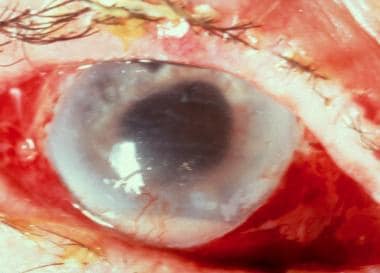
Media file 1:  Severe endophthalmitis. Image courtesy of Joan W. Miller, MD, and Mehran Afshari, MD, Massachusetts Eye and Ear Infirmary, Boston, Mass.
Click to see larger pictureClick to see detailView Full Size Image
Media type:  Photo


  • Albert DM, ed; Jakobiec FA. Endogenous endophthalmitis. In: Principles and Practice of Ophthalmology. Vol 5. W B Saunders Co; 1994:3120-3125.
  • Albert DM, Jakobiec FA. Postoperative endophthalmitis. In: Principles and Practice of Ophthalmology. W B Saunders Co; 2000:2441-2462.
  • Alfaro DV, Roth D, Liggett PE. Posttraumatic endophthalmitis. Causative organisms, treatment, and prevention. Retina. 1994;14(3):206-11. [Medline].
  • Boldt HC, Pulido JS, Blodi CF, et al. Rural endophthalmitis. Ophthalmology. Dec 1989;96(12):1722-6. [Medline].
  • Endophthalmitis Vitrectomy Study Group. Results of the Endophthalmitis Vitrectomy Study. A randomized trial of immediate vitrectomy and of intravenous antibiotics for the treatment of postoperative bacterial endophthalmitis. Arch Ophthalmol. Dec 1995;113(12):1479-96. [Medline].
  • Mandelbaum S, Forster RK. Postoperative endophthalmitis. Int Ophthalmol Clin. Summer 1987;27(2):95-106. [Medline].
  • Michelson JB, Friedlaender MH. Endophthalmitis of drug abuse. Int Ophthalmol Clin. Summer 1987;27(2):120-6. [Medline].
  • Ng JQ, Morlet N, Pearman JW, Constable IJ, McAllister IL, Kennedy CJ. Management and outcomes of postoperative endophthalmitis since the endophthalmitis vitrectomy study: the Endophthalmitis Population Study of Western Australia (EPSWA)'s fifth report. Ophthalmology. Jul 2005;112(7):1199-206. [Medline].
  • Okada AA, Johnson RP, Liles WC. Endogenous bacterial endophthalmitis. Report of a ten-year retrospective study. Ophthalmology. May 1994;101(5):832-8. [Medline].
  • Parrish CM, O'Day DM. Traumatic endophthalmitis. Int Ophthalmol Clin. 1987;27(2):112-9. [Medline].
  • Rowsey JJ, Jensen H, Sexton DJ. Clinical diagnosis of endophthalmitis. Int Ophthalmol Clin. Summer 1987;27(2):82-8. [Medline].
  • Taban M, Behrens A, Newcomb RL. Acute endophthalmitis following cataract surgery: a systematic review of the literature. Arch Ophthalmol. May 2005;123(5):613-20. [Medline].
  • Thompson JT, Parver LM, Enger CL, et al. Infectious endophthalmitis after penetrating injuries with retained intraocular foreign bodies. National Eye Trauma System. Ophthalmology. Oct 1993;100(10):1468-74. [Medline].
  • Uka J, Minamoto A, Shimizu R. A five-year review of patients admitted with the diagnosis of bacterial endophthalmitis. Hiroshima J Med Sci. Jun 2005;54(2):47-51. [Medline].
  • Verbraeken H, Rysselaere M. Post-traumatic endophthalmitis. Eur J Ophthalmol. Jan-Mar 1994;4(1):1-5. [Medline].
  • Wilhelmus KR. The pathogenesis of endophthalmitis. Int Ophthalmol Clin. Summer 1987;27(2):74-81. [Medline].
  • Wilson FM 2d. Causes and prevention of endophthalmitis. Int Ophthalmol Clin. Summer 1987;27(2):67-73. [Medline].
  • Ness T, Pelz K, Hansen LL. Endogenous endophthalmitis: microorganisms, disposition and prognosis. Acta Ophthalmol Scand. Aug 28 2007;epub:[Medline].
  • Gupta A, Srinivasan R, Gulnar D, Sankar K, Mahalakshmi T. Risk factors for post-traumatic endophthalmitis in patients with positive intraocular cultures. Eur J Ophthalmol. Jul-Aug 2007;17:642-7. [Medline].

Endophthalmitis excerpt

Article Last Updated: Dec 21, 2007