Continually Updated Clinical Reference
 
 
  All Sources     eMedicine     Medscape     Drug Reference     MEDLINE
 
eMedicine - Hypothermia : Article by

Quick Find
Authors & Editors
Introduction
Clinical
Differentials
Workup
Treatment
Medication
Follow-up
Miscellaneous
Multimedia
References

Related Articles
Alcoholism

Anorexia Nervosa

Delirium

Frostbite

Hypopituitarism (Panhypopituitarism)

Hypothyroidism

Myocardial Infarction

Pneumonia, Bacterial

Sepsis, Bacterial

Septic Shock

Shock, Hemorrhagic


Patient Education
Click here for patient education.


Author: T Grant Phillips, MD, Assistant Program Director, Department of Family Practice, Washington Hospital; Clinical Assistant Professor, Department of Family Medicine, University of Pittsburgh School of Medicine

Editors: Lisa Kirkland, MD, FACP, CNSP, MSHA, Assistant Professor, Department of Internal Medicine, Division of General Internal Medicine, Mayo Clinic; ANW Intensivists, Abbott Northwestern Hospital; Francisco Talavera, PharmD, PhD, Senior Pharmacy Editor, eMedicine; Om Prakash Sharma, MD, FRCP, FCCP, DTM&H, Professor, Department of Medicine, Division of Pulmonary and Critical Care Medicine, University of Southern California Keck School of Medicine; Rebecca J Schmidt, DO, FACP, FASN, Professor of Medicine, Section Chief, Department of Medicine, Section of Nephrology, West Virginia University School of Medicine; Michael R Pinsky, MD, CM, Professor of Critical Care Medicine, Bioengineering, Cardiovascular Diseases and Anesthesiology, University of Pittsburgh School of Medicine, University of Pittsburgh Medical Center

Author and Editor Disclosure

Synonyms and related keywords: hypothermia, accidental hypothermia, cold exposure, exposure, heat loss, extreme cold, low core temperature, low body temperature, thermoregulation

Background

For the sake of brevity, this discussion includes only accidental hypothermia, not intentional hypothermia, which is used in certain surgeries or in the intensive care unit.

Accidental hypothermia is defined as an unintentional decline in core temperature below 35°C (95°F). Primary hypothermia occurs because of accidental exposure to cold. Secondary hypothermia occurs when a disease state causes failure of thermoregulatory function.

At temperatures below 35°C (95°F), the patient becomes less capable of generating heat, and body temperature continues to fall unless some action is taken. At a core temperature less than 30°C (86°F), the body assumes the temperature of the surrounding environment. While a history of cold exposure makes the diagnosis of hypothermia easy, hypothermia confounding other more obvious medical problems makes treating patients with hypothermia a challenge.

Pathophysiology

Humans are homeothermic endotherms, in that we maintain a uniform body temperature by internal generation of heat. A stable body temperature results from a balance between internal heat production and heat loss to the environment. The CNS processes input from peripheral and central thermal sensors and regulates body temperature by maintaining this balance. If the core temperature begins to fall, voluntary and involuntary muscle activity (movement and shivering, respectively) can increase basal heat production by 2-5 times. Adaptive behaviors also play a role in thermoregulation. Disease states that affect cognition or motor function predispose patients to hypothermia when these behaviors fail to occur.

Primary hypothermia results from failure of heat generation in the face of a cold environment. The difference between ambient and core temperature does not have to be great. Since most heat generation occurs through muscle activity, as long as the level of muscle activity required to keep up with heat loss is sustained, the core temperature is maintained. As long as the ambient temperature remains low, fatigue eventually occurs and muscle activity declines or ceases, and the core temperature falls. Physical conditioning, dehydration, and lack of caloric intake necessary to feed the required muscle activity are examples of factors that exacerbate the problem (this often occurs in recreational situations by accident, misfortune, or stupidity). Medical conditions such as strokes or other injuries may prevent muscle activity or behavioral responses to cold, causing or worsening hypothermia.

Secondary hypothermia results when a disease state interferes with thermoregulation and subsequent failure of any of the multiple pathways that maintain heat balance. Onset of hypothermia can be triggered by events similar to the generation of primary hypothermia, and primary and secondary hypothermia may exist concurrently. For example, when a patient has a stroke (disruption of thermoregulation due to CNS injury) and falls to a concrete floor (heat loss through conduction) and cannot get up (failure of behavioral adaptations to cold), hypothermia may ensue.

A high index of suspicion is necessary to accurately diagnose and treat secondary hypothermia since many causes are possible, and treatment is predicated on identification and correction of the underlying abnormality.

A physiologic heat balance is a result of many variables, including the ability to generate heat, body size, age, insulation in the form of clothing, and the temperature of the environment to which the patient is exposed. Heat always flows from a warmer object to a colder object. Under most circumstances the body is warmer than the surrounding environment; thus, the natural flow of heat is out of the body.

Heat is lost or gained through several physical mechanisms, including radiation, conduction, convections, and evaporation. Radiation may account for 55% of loss, evaporation 30%, and conduction 15%, with convection being a relatively minor component. Being wet or immersed in water causes more rapid heat loss because water is 25 times more conductive than air. Concrete or stone is approximately 100 times more conductive, and direct exposure to this material results in even greater heat loss than with exposure to water. The ground is somewhere between stone and water, depending on its exact composition.

In summary, the body generally loses heat to the environment, and a drop in core temperature is the natural consequence of failed thermoregulation for any reason. Because many disease states interfere with thermoregulation, the complex interactions necessary for balanced thermoregulation can and do fail, resulting in a hypothermic patient.

Frequency

United States

In the United States, 646 hypothermia-related deaths were reported in 2002, with an annual death rate of 0.2 per 100,000 population. Hypothermia may account for even more deaths, especially in older persons, because hypothermia as a comorbid condition may not be recognized or reported. Homeless people and people with psychiatric disorders are often susceptible to hypothermia. In addition, a recent surge in cold weather recreation by novices has increased the incidence of accidental hypothermia.

Mortality/Morbidity

The mortality rate varies by location with a low of .49 persons per 100,000 population in southern states and a high of 4.64 persons per 100,000 population in Alaska.1

Race

Hypothermia affects all racial groups.

Sex

Males and females are equally susceptible to excessive cold; among civilian populations, most persons who die from hypothermia are male.2

Age

Approximately half of the deaths for which hypothermia was the underlying cause occurred in adults older than 65 years. This is not surprising, since the diseases that predispose patients to hypothermia are more common in this age group. Also, many elderly patients live in relative poverty and may not have adequate heating systems in their older housing or may not be able to afford rising energy costs. Subsequently, elderly patients can fall victim to accidental hypothermia during extremely cold weather without leaving their homes.

Older persons with preexisting medical conditions such as congestive heart failure, diabetes, or gait disturbance also are at increased risk for hypothermia.1


History

In some cases, hypothermia is suggested by an obvious history, such as a skier who is caught in an avalanche. In other cases, the history may not initially suggest the diagnosis of hypothermia. For example, cardiac arrest may be the result of and not the cause of hypothermia in an elderly person and could go unrecognized in the hectic emergency department. The signs and symptoms of hypothermia vary according to core temperature and represent a continuum rather than definitive categories. Especially in urban settings, the presentation may be subtle and easily overlooked.

Because hypothermia may accompany a more obvious condition, considering hypothermia in the differential diagnosis in any patient is critical, especially those who present with unexplained symptoms. Remembering that symptoms of a primary condition, such as a stroke, may overshadow the symptoms of hypothermia is also important.

  • Symptoms are vague and include the following:
    • Hunger, nausea, dizziness, chills, pruritus, or dyspnea may be present.
    • Extremity stiffness, weakness, and shivering also may be prominent.
    • Clinical manifestations of hypothermia depend on the severity of the temperature reduction and the patient's premorbid condition.
  • Risk factors include recreational exposure to a cold environment with outdoor activities such as skiing, winter camping, and hiking; poorly prepared individuals are at greater risk.
  • In one study, 5% of patients presenting to a trauma service were hypothermic.
  • Hypothermia may accompany drug use or an overdose and is usually caused by exposure to cold associated with inadequacy of the patient's response mechanisms.
    • Impaired judgment may result from use of alcohol, opioids, sedative-hypnotic agents, or phenothiazines.
    • Reduced shivering response may result from phenothiazines or sedative-hypnotics.
    • Peripheral vasodilatation can result from phenothiazine or vasodilator use.
    • Miscellaneous drugs that may result in reduced response mechanisms include acetaminophen, clonidine, lithium, and atropine.
  • Inadequate clothing for ambient temperatures (loss of behavioral response to cold) may affect individuals who are indigent or homeless, those with underlying mental disorders, elderly individuals, infants, and those who are immobilized due to injury or disease.
  • Hypothermia as a complication of underlying diseases and exposure to cold may affect individuals with conditions such as hypothyroidism, sepsis, pneumonia, stroke, pancreatitis, hyperglycemia or hypoglycemia, and uremia.
  • Patients who become slightly hypothermic have altered judgment (referred to being "cold stupid" by some laypersons), and they can exhibit bizarre behavior such as paradoxical undressing, in which they remove clothing despite the cold. This behavior may exacerbate heat loss, creating a downward cycle to worsening hypothermia.

Physical

Using a thermometer capable of registering as low as 25°C (77°F) for measuring core temperature is important when hypothermia is suspected. Determination of body temperature based on the clinical examination alone is not possible. Physical findings vary with the degree of hypothermia, the nature of associated injuries or illness, and an underlying illness that might be the cause of the hypothermia. Variability among patients with the same core temperature can be found.

  • Mild hypothermia (32-35°C or 89.6-95°F)
    • Tachypnea
    • Vasoconstriction
    • Tachycardia, hypertension
    • Ataxia
    • Dysarthria
    • Loss of fine motor coordination
    • Lethargy, apathy
    • Confusion, impaired judgment
    • Shivering
  • Moderate hypothermia (28-32°C or 82.4-89.6°F)
    • Shivering stops
    • Dilated pupils
    • Delirium
    • Reflexes slowed
    • Level of consciousness diminishes
    • Bradycardia
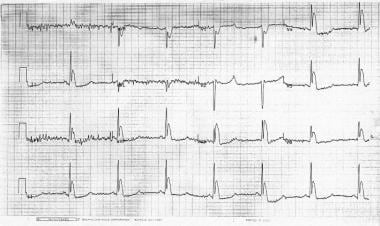
    • J waves on ECG
    • Cold diuresis
  • Severe hypothermia (<28°C or 82.4°F)
    • Unresponsiveness or coma
    • Hypotension
    • Very cold skin
    • Pulmonary edema, apnea
    • Acidemia
    • May appear dead
    • Ventricular fibrillation, asystole
    • Loss of reflexes

Causes

Humans have developed considerable behavioral adaptations to cold weather. Any disease that interferes with this adaptive behavior places a patient at risk. Hypothermia is more frequent among persons who are elderly, homeless, mentally ill, trauma victims, outdoor workers, and children.

  • Although numerous classifications exist and often overlap, causes of hypothermia can be divided into the following 3 categories: (1) decreased heat production, (2) increased heat loss, and (3) impaired thermoregulation. These can occur concurrently (as in a patient on phenothiazine who goes cross-country skiing and uses alcohol) or sequentially (such as an elderly patient who breaks a hip and is found on a cold floor hours after the injury) and are not mutually exclusive. In the urban setting, alcohol intoxication is the most common predisposing factor to hypothermia.
  • Patients who become slightly hypothermic experience altered judgment (referred to being cold stupid by some mountaineers).
    • They can exhibit bizarre behavior such as paradoxical undressing, where they remove clothing. This behavior may worsen heat loss, creating a vicious cycle.
    • The author has personal experience in trying to care for a mountaineer with hypothermia who was throwing off his coat and resisting efforts to be warmed. The ambient temperature was 15°F in a snowstorm.
  • Hypothermia can occur anytime the ambient temperature is lower than body temperature.
    • Hypothermia even may occur in relatively moderate environments, especially if the patient gets wet. People who participate in outdoor winter recreation who do not take this fact seriously are at risk.
    • Patients who have injuries or illness that interfere with thermoregulation can become hypothermic even in relatively mild environments.


Alcoholism
Anorexia Nervosa
Delirium
Frostbite
Hypopituitarism (Panhypopituitarism)
Hypothyroidism
Myocardial Infarction
Pneumonia, Bacterial
Sepsis, Bacterial
Septic Shock
Shock, Hemorrhagic

Other Problems to be Considered

Any disease can precipitate hypothermia if the heat-generation/heat-loss balance moves towards heat loss. The list of possible causes is immense. Some of the more common causes include the following:

  • Decreased heat production
  • Hypopituitarism
  • Anorexia nervosa and/or severe malnutrition
  • Hypoadrenalism
  • Hypothyroidism
  • Hypoglycemia
  • Neuromuscular inefficiency (extremes of age, paralysis)
  • Multiple sclerosis
  • Stroke
  • Coma from any cause
  • Increased heat loss
  • Accidental hypothermia in recreational situation
  • Spinal cord injury
  • Coma from any cause
  • Induced vasodilatation from pharmacologic or toxicologic etiologies
  • Erythrodermas that decrease the body's ability to preserve heat (burns, exfoliative dermatitis, and psoriasis)
  • Iatrogenic (cold, IV infusions, and lack of bed covers during resuscitation)
  • Poor behavioral adaptation to a cold environment (such as a patient with Alzheimer or Parkinson disease and neonates who cannot cover themselves)
  • Impaired thermoregulation
  • CNS trauma or tumor (local hypothalamic damage with resultant loss of thermoregulatory control)
  • Strokes
  • Intracranial bleeding
  • Subdural hematomas
  • Basilar skull fracture
  • Spinal cord transection
  • Toxicologic (barbiturates, ethanol, tricyclics, neuroleptics, benzodiazepines)
  • Various metabolic derangements (sickle cell disease, sarcoidosis)
  • Sepsis
  • Alzheimer and Parkinson disease, ie, failure of adaptive behavioral response to cold
  • Low cardiac output following acute myocardial infarction


Lab Studies

  • Hypothermia causes a multitude of laboratory abnormalities and could present a confusing clinical picture because the abnormalities may be a result of the hypothermia alone or a reflection of the underlying disease contributing to hypothermia.
  • The lab tests that follow should be ordered in all patients. Other testing is dictated by the clinical picture. Tests include the following:
    • Blood glucose: Hypothermia may cause hyperglycemia. Prolonged hypothermia causes hypoglycemia.
    • Serum electrolytes: Hypokalemia or hyperkalemia can occur. Electrolytes shift during rewarming and must be monitored closely. High serum potassium levels correlate with a poor prognosis.
    • Arterial blood gasses: The pH rises and PaO2 and PaCo2 fall as body temperature drops. Older literature suggests mathematically correcting arterial blood gas results before interpretation. Newer literature suggests that the arterial blood gasses should be interpreted uncorrected for temperature because arterial blood gasses are warmed to body temperature before being processed. Patient results are compared to normal values.
    • CBC count: Hematocrit increases as plasma volume decreases. The hematocrit level usually increases 2% for each 1°C drop in core temperature. Associated trauma may cause blood loss; therefore, a normal hematocrit level may be indicative of traumatic blood loss.
    • Coagulation profile: Prolonged bleeding time and clotting time are common. Coagulopathies are common and may be a manifestation of the underlying pathology that has precipitated the hypothermia, such as disseminated intravascular coagulation (DIC) from sepsis.
    • The prothrombin time and activated partial thromboplastin time results may appear normal but may not reflect activity in the patient because the blood is warmed in the lab in order to perform the test.
    • BUN and creatinine usually are elevated secondary to decreased renal blood flow.
  • Other tests might be ordered if indicated clinically. Indications may include the following:
    • Creatine kinase and amylase may be elevated.
    • Liver function tests may give a clue to underlying disorders contributing to or causing hypothermia.
    • Cardiac isoenzymes may indicate causative myocardial infarction.
    • Fibrin and fibrin split products may indicate DIC.
    • Toxicology screen may be indicated.
    • Blood alcohol level may need to be checked.

Imaging Studies

  • No routine imaging studies are helpful in the evaluation of hypothermia. Studies should be used as an adjunct to therapy in searching for the underlying cause of hypothermia or for coexisting disease.
  • Imaging studies are helpful in trauma patients, and chest radiography may be useful to ascertain preexisting pulmonary or cardiac disease.

Other Tests

  • Electrocardiogram
    • PR, QRS, and QTc may be prolonged
    • A classic ECG finding of a J wave, also referred to as an Osborne wave, may be seen.
    • A variety of arrhythmias also may be present and may occur as the body is rewarmed. Continuous monitoring is recommended during resuscitation.

Procedures

  • No special diagnostic procedures are specific to the diagnosis and treatment of hypothermia.
  • Other diagnostic procedures may be necessary, depending on the clinical scenario. For example, if sepsis is suspected, a lumbar puncture might be considered.
  • If the patient does not respond to therapy, the workup should be expanded to search for the underlying cause for the hypothermia.


Medical Care

Treatment begins in the prehospital environment, with removal of wet clothing, passive rewarming of the victim, and removal from the cold environment. Associated injuries are stabilized, and the patient should be transported as soon as possible. Rough handling of the patient may precipitate ventricular arrhythmias and should be avoided. An axiom in treatment is that a patient with hypothermia may appear dead; therefore, a patient is not considered dead until they are warm and dead.

Attention to basic life support (BLS) principles, with attention to airway, breathing, and circulation, is the cornerstone of prehospital care. Since patients may be breathing slowly, BLS providers should assess breathing over at least 35-45 seconds.

The temperature at which defibrillation attempts should be made has not been established, but, if ventricular fibrillation or ventricular tachycardia is present, defibrillation should be attempted but limited to one shock. If that does not convert the rhythm, efforts should be focused on rewarming the patient prior to repeat defibrillation. Automated external defibrillator (AED) defibrillation is recommended for prehospital use in hypothermia.

  • The procedure to follow upon arrival at the emergency department is as follows:
    • The patient's vital signs, temperature, and ECG should be monitored continuously.
    • Cardiopulmonary resuscitation (CPR) is started if no pulse is present.
    • Advanced cardiac life support (ACLS) management focuses on aggressive core rewarming.
    • Advanced trauma life support (ATLS) protocols should be followed if trauma is a factor in the development of the hypothermia.
    • Because many arrhythmias convert spontaneously upon rewarming, aggressive therapy of minor arrhythmias is not warranted. Transient ventricular arrhythmias should be ignored. This also is true of bradycardia or atrial arrhythmias.
    • Defibrillate at 2 J/kg (or the biphasic equivalent) if the patient is in ventricular fibrillation or ventricular tachycardia.
    • Amiodarone is a good choice for treatment of ventricular fibrillation. Since no controlled studies have been conducted on amiodarone as of 2005, this recommendation is extrapolated from standard ACLS protocols and recommendations by critical care specialists.
    • Success rates of defibrillation are low if the core temperature is less than 32°C.
    • If defibrillation fails, repeat attempts should be made after every 1°C rise in body temperature.
    • Intravenous drugs are often withheld if the core temperature is less than 30°C; intravenous drugs are given at longer intervals if the temperature is above 30°C.
    • Drugs that normally are used in arrest situations (eg, lidocaine) have little effect if core temperature is less than 30°C and should not be used until core temperature is above this value. Procainamide may precipitate ventricular fibrillation and should be avoided.
    • Accurate assessment of core temperature is important. The rectal temperature is the most accurate. Tympanic measurements are not reliable.
    • Oxygen therapy is started until blood gas results are available.
    • Indications for intubation are the same as in a normothermic patient. Because coagulopathies are common in patients with hypothermia, methods of intubation that pose the least risk of trauma are recommended. Intubation with direct visualization of the cords, performed by an experienced operator, is optimal. Because hypocapnia can increase ventricular irritability, avoiding overzealous ventilation is imperative.
    • Nasogastric tube placement may be warranted to relieve gastric distention.
    • A large bore IV line is placed. Hypothermic patients have vasodilatation on rewarming, so volume administration is recommended. An initial bolus of 250-500 cc of 5% dextrose in isotonic sodium chloride solution is indicated in most patients with a core temperature of less than 32°C. The clinical situation determines if more or less fluid should be used. Intravenous fluids should be heated to 40-42°C if possible. Rapid fluid resuscitation usually is necessary if the clinical scenario dictates because cardiovascular efficiency improves with crystalloid administration.
    • Hypotension is treated by volume replacement and rewarming. Vasopressors should be avoided because they have little effect on vasoconstriction secondary to hypothermia and can precipitate ventricular fibrillation.
    • Routine use of steroids, barbiturates, and antibiotics has not been shown to increase survival rates.
  • The cornerstone of treatment is rewarming the patient. Significant controversy exists regarding the best method to rewarm victims, and, consequently, the choice is based on the degree of temperature depression and availability. The practitioner should use the fastest method that is available and appropriate for the patient. The mechanical details of each method are not discussed in this text. The reader should decide which methods are available or practical in his or her institution and learn that method well.
    • Passive external warming: The patient is insulated from heat loss and allowed to generate heat by themselves. This method is useful for mild cases with no underlying disease. It is a slow method, generating only 0.5-2°C/h.
    • Active external warming: External heat is applied to the patient's skin in a noninvasive manner. It is useful in milder cases. Because the vasoconstricted extremities hold pooled blood, warming of the extremities may result in a reversal of the vasoconstriction and may release incompletely rewarmed blood back to the central circulation. This return of relatively cold blood to a warmer core may cause temperature after-drop or arrhythmias. Nevertheless, in 1 study, this method was used successfully in 16 patients. Rewarming the trunk alone may minimize this problem.
      • Immersion in water bath at 40°C: Monitoring and resuscitation are difficult.
      • Radiant heat sources from the typical hospital are warmers often used in nurseries. Heated blankets and heating pads also may be used.
      • Forced-air rewarming is practical and can rewarm as fast as 2.4°C/h. This should be used in conjunction with warmed oxygen and warmed IV fluids. One study showed no complications with this method
    • Active core rewarming: Numerous methods exist and are dependent on availability and operator competence. They include the following:
      • Heated infusions and heated inhalation: These should be used in all patients with hypothermia as an adjunct to other methods.
      • Heated gastric and colonic lavage: This method is limited by surface area and should be used as an adjunct to other methods. Kits are commercially available and are convenient. Regurgitation is common. CPR must be stopped during fluid installation.
      • Mediastinal lavage: The heart is bathed with isotonic sodium chloride solution, heated to 40°C, through a sternotomy or left thoracotomy incision. The procedure is invasive and should be used only if cardiopulmonary bypass is immediately available or the patient is in full cardiac arrest.
      • Closed thoracic lavage: A large bore thoracotomy tube is placed anteriorly. A drain tube is placed posteriorly. Sterile isotonic sodium chloride solution is infused and not recycled. This method could induce ventricular fibrillation if placed in the left hemithorax. It should be used only if cardiopulmonary bypass is immediately available.
      • Peritoneal lavage: This is available at most hospitals. A standard 1.5% dextrose dialysate is heated to 40-45°C. This method may help detoxification in drug overdose and rewarms the liver faster than other methods. Rewarming averages 1-3°C/h. It is not routinely advocated for stable patients.
    • Extracorporal blood rewarming: All of these methods take time to set up and have varying availabilities at each hospital. They require considerable skill to perform.
      • Hemodialysis
      • Atriovenous rewarming
      • Venovenous rewarming
      • Cardiopulmonary bypass: This may require systemic anticoagulation and may be contraindicated in trauma patients. It can worsen coagulopathies. Newer technology may permit use without anticoagulation. This method is fast; core temperature may rise 1-2°C every 3-5 minutes.
    • Diathermy: Heat is delivered ultrasonically by conversion of energy. It is contraindicated in patients with frostbite burns, significant edema, and implanted metallic objects.

Consultations

  • Consultation should be obtained early with a critical care specialist if possible and with a cardiothoracic surgeon if invasive rewarming methods are being considered.


The goals of pharmacotherapy are to reduce morbidity and to prevent complications.

Drug Category: Antiarrhythmic agents

These agents are indicated for ventricular fibrillation that is experienced during hypothermia.

Drug NameAmiodarone (Cordarone)
DescriptionUse of this drug in hypothermia is not supported by research. May inhibit AV conduction and sinus node function. Prolongs action potential and refractory period in myocardium and inhibits adrenergic stimulation. Prior to administration, control the ventricular rate and CHF (if present) with digoxin or calcium channel blockers.
Adult DoseLoading dose: 800-1600 mg/d PO in 1-2 doses for 1-3 wk; decrease to 600-800 mg/d in 1-2 doses for 1 mo
Maintenance dose: 400 mg/d PO; alternatively, 150 mg (10 mL) IV over first 10 min, followed by 360 mg (200 mL) over next 6 h, and then 540 mg over next 18 h
Pediatric Dose10-15 mg/kg/d or 600-800 mg/1.73 m2/d PO for 4-14 d or until adequate control of arrhythmia is attained
ContraindicationsDocumented hypersensitivity, complete AV block, and intraventricular conduction defects; patients taking ritonavir or sparfloxacin
InteractionsIncreases effect and blood levels of theophylline, quinidine, procainamide, phenytoin, methotrexate, flecainide, digoxin, cyclosporine, beta-blockers, and anticoagulants; cardiotoxicity is increased by ritonavir, sparfloxacin, and disopyramide; coadministration with calcium channel blockers may cause an additive effect and further decrease myocardial contractility; cimetidine may increase levels
PregnancyC - Fetal risk revealed in studies in animals but not established or not studied in humans; may use if benefits outweigh risk to fetus
PrecautionsCaution in thyroid or liver disease


Further Inpatient Care

  • Treatment of patients with hypothermia is 2-fold. It is of the utmost importance to correct the core temperature. Secondarily, evaluation and treatment of the underlying disorder that caused the hypothermia in the first place must be sought and corrected. The 2 problems are dealt with concurrently in both the prehospital and emergency department setting, and treatment continues in the critical care area.
  • All but the most minor of hypothermia patients need to be admitted to the ICU. After the body core temperature has been normalized, treatment involves that of the underlying disorder and any metabolic changes that occurred as a result of the hypothermia. Drug metabolism and excretion are reduced in patients with hypothermia. Drugs that are used in resuscitation may build up to toxic levels and need to be monitored in the ICU phase of therapy.
  • A detailed review of all the problems that can occur after hypothermia is essentially a textbook of intensive care medicine and beyond the scope of this text. A few common problems are addressed below. For additional information, see Hypothermia in the Emergency Medicine section of this journal.
    • Antibiotic use for suspected bacterial infections: Hypothermia compromises host defenses. Sepsis-induced hypothermia or the converse should be a consideration in all patients, but especially in elderly patients. Empiric antibiotics usually are not necessary in the average young patient with accidental hypothermia from an obvious cause, but they should be considered if the underlying pathophysiology suggests concurrent sepsis. In infants with hypothermia, the incidence of sepsis is high and empiric antibiotics should be considered. Elderly individuals with hypothermia have a high incidence of sepsis, and antibiotics should be used unless clearly not indicated.
    • Medication toxicity: The drugs used in resuscitation metabolize poorly and still may have significant hemodynamic effects after the core temperature normalizes. Rhabdomyolysis and compartment syndromes are common, and a high degree of suspicion must be maintained.
    • Coagulopathies may persist.
    • One must watch for adult respiratory distress syndrome, acute tubular necrosis, and DIC.
    • A workup for underlying diseases should be undertaken unless an obvious accidental cause is present.

Patient Education

  • Patient education centers on prevention of the causative factors. People who participate in outdoor recreation should become familiar with weather patterns, qualities of outdoor clothing, and sensible precautions to take prior to undertaking the activity.
  • For excellent patient education resources, visit eMedicine's Environmental Exposures and Injuries Center. Also, see eMedicine's patient education articles Hypothermia and Wilderness: Hypothermia.


Medical/Legal Pitfalls

Patients with hypothermia who are found outside the hospital and are unresponsive upon arrival at the emergency department may have been victims of foul play or accidents, and medical/legal issues may be important. Treatment of the patients with regard to evidence collection and police involvement should be considered if the clinical situation warrants.


Media file 1:  Illustration of ECG findings in a patient with hypothermia.
Click to see larger pictureClick to see detailView Full Size Image
Media type: 


  1. CDC. Hypothermia-related deaths--United States, 1999-2002 and 2005. MMWR Morb Mortal Wkly Rep. Mar 17 2006;55(10):282-4. [Medline].
  2. DeGroot DW, Castellani JW, Williams JO, Amoroso PJ. Epidemiology of U.S. Army cold weather injuries, 1980-1999. Aviat Space Environ Med. May 2003;74(5):564-70. [Medline].
  3. Dagan R, Gorodischer R. Infections in hypothermic infants younger than 3 months old. Am J Dis Child. May 1984;138(5):483-5. [Medline].
  4. Danzl DF, Pozos RS. Accidental hypothermia. N Engl J Med. Dec 29 1994;331(26):1756-60. [Medline].
  5. Danzl DF, Pozoz RS, Hamlet MP. Accidental Hypothermia. In: Auerbach PS, ed. Wilderness Medicine: Management of Wilderness and Environmental. 3rd ed. St Louis, Mo: Mosby;. 1995: 51-103.
  6. Danzl DF, Vicario SJ. Rare cause of axillary vein thrombosis. J Emerg Med. Nov-Dec 1995;13(6):821. [Medline].
  7. Darowski A, Najim Z, Weinberg JR, Guz A. Hypothermia and infection in elderly patients admitted to hospital. Age Ageing. Mar 1991;20(2):100-6. [Medline].
  8. Hanania NA, Zimmerman JL. Accidental hypothermia. Crit Care Clin. Apr 1999;15(2):235-49. [Medline].
  9. Harari A, Regnier B, Rapin M, Lemaire F, Le Gall JR. Haemodynamic study of prolonged deep accidental hypothermia. Eur J Intensive Care Med. May 1975;1(2):65-70. [Medline].
  10. Jolly BT, Ghezzi KT. Accidental hypothermia. Emerg Med Clin North Am. May 1992;10(2):311-27. [Medline].
  11. Steele MT, Nelson MJ, Sessler DI, Fraker L, Bunney B, Watson WA, et al. Forced air speeds rewarming in accidental hypothermia. Ann Emerg Med. Apr 1996;27(4):479-84. [Medline].
  12. Weinberg AD. The role of inhalation rewarming in the early management of hypothermia. Resuscitation. Feb 1998;36(2):101-4. [Medline].

Hypothermia excerpt

Article Last Updated: Mar 28, 2008