Continually Updated Clinical Reference
 
 
  All Sources     eMedicine     Medscape     Drug Reference     MEDLINE
 
eMedicine - Leprosy : Article by

Quick Find
Authors & Editors
Introduction
Clinical
Differentials
Workup
Treatment
Medication
Follow-up
Miscellaneous
Multimedia
References


Patient Education
Click here for patient education.


Author: D Scott Smith, MD, MSc, DTM&H, Adjunct Assistant Professor, Department of Microbiology and Immunology, Stanford University; Chief of Infectious Diseases and Geographic Medicine, Department of Internal Medicine, Kaiser Redwood City Hospital

D Scott Smith is a member of the following medical societies: American Medical Association, American Society of Tropical Medicine and Hygiene, Infectious Diseases Society of America, and International Society of Travel Medicine

Coauthor(s): Tara Ramachandra, BS, Stanford University School of Medicine

Editors: Fred A Lopez, MD, Associate Professor and Vice Chair, Department of Medicine, Assistant Dean for Student Affairs, Louisiana State University School of Medicine; Francisco Talavera, PharmD, PhD, Senior Pharmacy Editor, eMedicine; Charles V Sanders, MD, Edgar Hull Professor and Chairman, Department of Internal Medicine, Professor of Microbiology, Immunology and Parasitology, Louisiana State University School of Medicine at New Orleans; Medical Director, Medicine Hospital Center, Charity Hospital and Medical Center of Louisiana at New Orleans; Consulting Staff, Ochsner Medical Center; Eleftherios Mylonakis, MD, Clinical and Research Fellow, Department of Internal Medicine, Division of Infectious Diseases, Massachusetts General Hospital; Burke A Cunha, MD, Professor of Medicine, State University of New York School of Medicine at Stony Brook; Chief, Infectious Disease Division, Winthrop-University Hospital

Author and Editor Disclosure

Synonyms and related keywords: leprosy, Hansen's disease, Hansen disease, Mycobacterium leprae, M leprae, tuberculoid leprosy, TT leprosy, lepromatous leprosy, LL leprosy, BT leprosy, midborderline leprosy, BB leprosy, borderline lepromatous leprosy, BL leprosy, paucibacillary leprosy, PB leprosy, multibacillary leprosy, MB leprosy, indeterminate leprosy, borderline leprosy


Background

Leprosy is a chronic infection caused by the acid-fast, rod-shaped bacillus Mycobacterium leprae. Leprosy can be considered 2 connected diseases that primarily affect superficial tissues, especially the skin and peripheral nerves. Initially, a mycobacterial infection causes a wide array of cellular immune responses. These immunologic events then elicit the second part of the disease, a peripheral neuropathy with potentially long-term consequences.

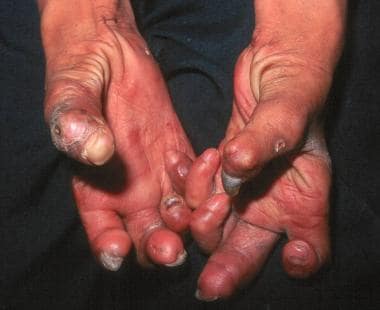
The social and psychological effects of leprosy, as well as its highly visible debilities and sequelae, have resulted in a historical stigma associated with leprosy (see Image 1). To minimize the prejudice against those with leprosy, the condition is also known as Hansen disease, named after G.A. Hansen, who is credited with the 1873 discovery of M leprae. This mycobacterium grows extremely slowly and has not been successfully cultured in vitro.

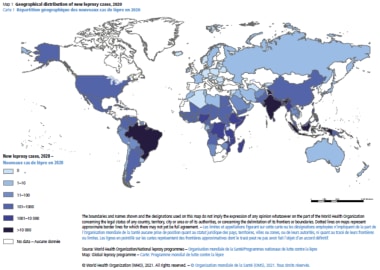
In the 1990s, the World Health Organization (WHO) launched a campaign to eliminate leprosy as a public health problem by 2000. Elimination, as defined by the WHO, was defined as a reduction of patients with leprosy requiring multidrug therapy to fewer than 1 per 10,000 population. This goal was achieved in terms of global prevalence by 2002, but 15 of the 122 countries where leprosy was endemic in 1985 still have prevalence rates of greater than 1 per 10,000 population.1

Although multidrug regimens have been used globally to cure nearly 14 million patients with leprosy since 1985, the number of new leprosy cases remained relatively unchanged from 1980 to 2000, ranging from 500,000-700,000 worldwide per year.2 Access and delivery of antibiotics continues to be a problem in the most endemic nations. With the precise transmission mechanism of leprosy still unknown and a lack of an effective vaccine, leprosy will probably continue to pose an ongoing public health problem in the coming decades.

Pathophysiology

Leprosy can manifest in different forms, depending on the host response to the organism.

Individuals who have a vigorous cellular immune response to M leprae have the tuberculoid form of the disease that usually involves the skin and peripheral nerves. The number of skin lesions is limited, and they tend to be dry and hypoesthetic. Nerve involvement is usually asymmetric. This form of the disease is also referred to as paucibacillary leprosy because of the low number of bacteria in the skin lesions (ie, <5 skin lesions, with absence of organisms on smear). Results of skin tests with antigen from killed organisms are positive in these individuals.

Individuals with minimal cellular immune response have the lepromatous form of the disease, which is characterized by extensive skin involvement. Skin lesions are often described as infiltrated nodules and plaques, and nerve involvement tends to be symmetric in distribution. The organism grows best at 27-30°C; therefore, skin lesions tend to develop in the cooler areas of the body, with sparing of the groin, axilla, and scalp. This form of the disease is also referred to as multibacillary leprosy because of the large number of bacteria found in the lesions (ie, >6 lesions, with possible visualization of bacilli on smear). Results of skin tests with antigen from killed organisms are nonreactive.

Patients may also present with features of both categories; however, over time, they usually evolve to one or the other (indeterminate or borderline leprosy). Interestingly, most individuals who are exposed to leprosy never develop the disease.

Classification of leprosy: Leprosy has 2 classification schemas: the 5-category Ridley-Jopling system and the simpler and more commonly used WHO standard.

  • Ridley-Jopling: Depending on the host response to the organism, leprosy can manifest clinically along a spectrum bounded by the tuberculoid and lepromatous forms of the disease. Most patients fall into the intermediate classifications, which include borderline tuberculoid leprosy, midborderline leprosy, and borderline lepromatous leprosy. The classification of the disease typically changes as it evolves during its progression or management. The Ridley-Jopling system is used globally and forms the basis of clinical studies of leprosy. It may also be more useful in guiding treatment regimens and assessing risk of acute complications. Physical findings in each subtype are presented in the Clinical section.
  • WHO system: The WHO recommends classifying leprosy according to the number of lesions and the presence of bacilli on a skin smear. This method is useful in countries where biopsy analysis in unavailable.  
    • Paucibacillary leprosy is characterized by 5 or fewer lesions with absence of organisms on smear. Paucibacillary leprosy generally includes the tuberculoid and borderline lepromatous categories from the Ridley-Jopling system.
    • Multibacillary leprosy is marked by 6 or more lesions with possible visualization of bacilli on smear. Lepromatous leprosy, borderline lepromatous leprosy, and midborderline leprosy on the Ridley-Jopling scale are included in the multibacillary leprosy category.

Frequency

United States

In the United States, an average of 150 cases are diagnosed each year. In 2004, 69 new cases of leprosy were detected and 131 total persons were reported to have the disease, according to the WHO. Most cases of leprosy in the United States are found in immigrants, although endemic foci exist in parts of Louisiana, Florida, and Texas along the Gulf of Mexico; in Mexican and Asian California populations; and in Spanish Americans in New York City. Around 85% of these detected leprosy cases involve patients who have lived in foreign countries, primarily Asia, Africa, and Latin America.3

International

According to WHO figures, the global registered prevalence of leprosy at the start of 2005 was 286,063 cases. Global annual detection rates have declined from 2001 to 2004, when 763,262 and 407,791 new cases were reported, respectively. Leprosy is still deemed a public health problem in 9 countries: Angola, Brazil, Central African Republic, Democratic Republic of the Congo, India, Madagascar, Mozambique, Nepal, and the United Republic of Tanzania. These countries account for 84% of reported cases. Furthermore, more than 94% of new cases of leprosy in Latin America are reported in Brazil.1

Mortality/Morbidity

Leprosy is rarely fatal, and the primary consequence of infection is nerve impairment and debilitating sequelae. According to one study, 33-56% of newly diagnosed patients already displayed signs of impaired nerve function.4 According to estimates, 3 million people who have completed multidrug therapy for leprosy have sustained disability due to nerve damage. Although both lepromatous leprosy and tuberculoid leprosy involve the skin and peripheral nerves, tuberculoid leprosy has more severe manifestations. Nerve involvement results in loss of sensory and motor function, which may lead to frequent trauma and amputation. The ulnar nerve is most commonly involved.

  • Damage in the following nerves is associated with characteristic impairments in leprosy:
    • Ulnar and median - Clawed hand
    • Posterior tibial - Plantar insensitivity and clawed toes
    • Common peroneal - Foot drop
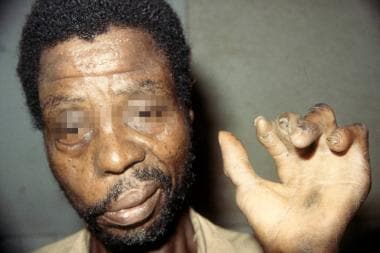
    • Radial cutaneous, facial, and greater auricular nerves (may also be involved; see Image 2)
  • Infiltration by bacteria may lead to destruction of nasal cartilage (lepromatous leprosy), ocular involvement, and diffuse thickening of the skin. Advanced cases of leprosy involve the loss of eyebrows and lashes, but these deformities are less common today.
  • Worldwide, leprosy is considered the most common cause of crippling of the hand, which is caused by ulnar nerve involvement.5 Peroneal nerve involvement can lead to foot drop, posterior tibial nerve involvement, and clawed toes.

Race

Leprosy was once endemic worldwide, and no racial predilection is known. In the late 1800s, the incidence of leprosy in northern Europe and North America dropped dramatically, and the disease is now reported primarily in tropical areas.

Sex

Leprosy is generally more common in males than in females, with a male-to-female ratio of 1.5:1. In some areas in Africa, the prevalence of leprosy among females is equal to or greater than that in males.2

Age

Leprosy can occur at any age, but, in developing countries, the age-specific incidence of leprosy peaks in children younger than 10 years, who account for 20% of leprosy cases. Leprosy is very rare in infants; however, they are at a relatively high risk of acquiring leprosy from the mother, especially in cases of lepromatous leprosy or midborderline leprosy.


History

  • Symptoms
    • Painless skin patch accompanied by loss of sensation but not itchiness (Loss of sensation is a feature of tuberculoid leprosy, unlike lepromatous leprosy, in which sensation is preserved; see Image 3.)
    • Loss of sensation or paresthesias where the affected peripheral nerves are distributed
    • Wasting and muscle weakness
    • Foot drop or clawed hands (may result from neuritic pain and rapid peripheral nerve damage; see Image 4)
    • Ulcerations on hands or feet (see Image 5)
    • Lagophthalmos, iridocyclitis, corneal ulceration, and/or secondary cataract due to nerve damage and direct bacillary skin or eye invasion6
  • Symptoms in reactions
    • Type 1 (reversal) - Sudden onset of skin redness and new lesions
    • Type 2 (erythema nodosum leprosum [ENL]; see Image 10) - Many skin nodules, fever, redness of eyes, muscle pain, and joint pain
  • Travel: Leprosy should be considered in anyone who has lived in the tropics or who has traveled for prolonged periods to endemic areas.
  • Exposure: The incubation period of leprosy is long, ranging from a few months to 20-50 years. The mean incubation time is estimated to be 10 years for lepromatous leprosy and 4 years for tuberculoid leprosy. The organism's slow dividing time (once every 2 wk) contributes to the challenge of epidemiologically linking exposures to the development of disease.
  • Because of immunologic reasons, only around 5-10% of the population is estimated to be susceptible to infection.

Physical

The cardinal signs of leprosy include hypoesthesia, skin lesions, and peripheral neuropathy. The first physical signs of leprosy are usually cutaneous. The subtype of leprosy often determines the degree of skin involvement.

  • Physical examination should include the following:
    • Evaluation of skin lesions
    • Careful sensory and motor examination
    • Palpation of peripheral nerves for pain or enlargement, with particular attention paid to the following locations:
      • Elbows - Ulnar nerve
      • Wrist - Superficial radial cutaneous and median nerves
      • Popliteal fossa - Common peroneal nerve
      • Neck - Great auricular nerve
  • Physical findings in specific leprosy subtypes include the following:
    • Tuberculoid leprosy
      • The initial lesion is often a sharply demarcated hypopigmented macule that is ovoid, circular, or serpiginous. The lesions may be somewhat elevated with a dry scaly center and erythematous borders.
      • Common lesion sites include the buttocks, face, and extensor surfaces of limbs. The perineum, scalp, and axilla are not normally involved because of the temperature differential in these zones, as predilection is toward cooler zones.
      • As the disease progresses, lesions tend to destroy the normal skin organs such as sweat glands and hair follicles.
      • Superficial nerves that lead from the lesions tend to enlarge and are sometimes palpable. The patient may experience severe neuropathic pain. Nerve involvement can also lead to trauma and muscle atrophy.
    • Lepromatous leprosy
      • This form is characterized by extensive bilaterally symmetric cutaneous involvement, which can include macules, nodules, plaques, or papules (see Image 6).
      • Unlike lesions in tuberculoid leprosy, those in lepromatous leprosy have poorly defined borders and raised and indurated centers. As in all forms of leprosy, lepromatous lesions are worst on cooler parts of the body. Common areas of involvement include the face, ears, wrists, elbows, buttocks, and knees.
      • Hoarseness, loss of eyebrows and eyelashes, and nasal collapse secondary to septa perforation may occur in advanced cases of disease. Involvement of the eye may include keratitis, glaucoma, or iridocyclitis (see Image 7).
      • The leonine facies associated with leprosy develop as the disease progresses, and the facial skin becomes thickened and corrugated.
      • Axillary and inguinal adenopathy may develop, in addition to scarring of the testes and subsequent gynecomastia and sterility.
      • Nerve involvement in lepromatous leprosy is not as severe as in tuberculoid leprosy, since nerves, although visibly thickened and highly infected, still function reasonably well in early stages of the disease.
    • Borderline tuberculoid leprosy: The lesions are few or moderate and asymmetric with almost complete anesthesia. Peripheral nerves are often involved and thickened asymmetrically, and cutaneous nerves are sometimes enlarged.
    • Midborderline leprosy: The number of skin lesions is moderate, and they are asymmetrical and somewhat anesthetic. Peripheral nerves may be somewhat symmetrically enlarged, but cutaneous nerves are not.
    • Borderline lepromatous leprosy: Moderate to numerous slightly asymmetrical skin lesions appear with minor or no anesthesia. Peripheral nerves are often enlarged symmetrically, but cutaneous nerves are not.
    • Indeterminate leprosy: Skin lesions are typically either hypopigmented or hyperpigmented macules or plaques. Patients may note that these lesions are anesthetic or paresthetic.

Causes

  • M leprae is the causative agent associated with leprosy, which has been recognized as an infectious disease for the last 2 millennia. M leprae was discovered as the causative agent in 1873. The acid fast, gram-positive bacillus is an obligate intracellular organism with a predilection for Schwann cells and macrophages. M leprae has not been successfully grown using artificial media.
  • The route of transmission has not been definitively established, although human-to-human aerosol spread of nasal secretions is thought to be the most likely mode of transmission in most cases. Leprosy is not spread by touch, since the mycobacteria are incapable of crossing intact skin. Living near people with leprosy is associated with increased transmission. Among household contacts, the relative risk for leprosy is increased 8- to 10-fold in multibacillary and 2- to 4-fold in paucibacillary forms. Animal reservoirs do exist (armadillos, certain nonhuman primates), and cases of suspected zoonotic transmission have been reported.


Other Problems to be Considered

Sensory loss (hypoesthesia) or neuropathy

Amyloidosis
Diabetic neuropathy
Neuropathies due to medications (ie, stavudine, didanosine, acetazolamide, vincristine, gabapentin [Neurontin], isoniazid)
Refsum disease
Sarcoidosis
Vitamin B-12 or folate deficiency

Skin lesions - Flat and hypopigmented

Contact dermatitis
Localized scleroderma
Nevus depigmentosus (congenital lesion)
Onchocerciasis
Pityriasis alba
Pityriasis versicolor
Post–kala-azar dermal leishmaniasis
Seborrheic dermatitis
Tinea corporis (and all dermatophytes)
Vitiligo
Yaws

Skin lesions - Raised and pigmented

Atypical necrobiosis of the face
Cutaneous leishmaniasis
Cutaneous tuberculosis
Follicular mucinosis
Generalized thickening of skin
Granuloma annulare
Granuloma multiforme
Kaposi sarcoma
Lupus erythematosus
Lupus vulgaris
Mycobacterium marinum infection
Myxoedema
Neurofibromatosis
Pachydermoperiostitis
Pityriasis rosea
Psoriasis
Scleroderma
Syphilis
Wegener granulomatosis


Lab Studies

The WHO case definition of leprosy is M leprae infection in an individual who has not completed a course of treatment and has one or more of the following:

  • Hypopigmented or reddish skin lesions with loss of sensation
  • Involvement of the peripheral nerves as demonstrated by their thickening and associated loss of sensation
  • Skin smear positive for acid-fast bacilli
Laboratory studies include the following:
  • Skin biopsy, nasal smears, or both are used to assess for acid-fast bacilli using Fite stain. Biopsies should be full dermal thickness taken from an edge of the lesion that appears most active.7
  • Serologic assays can be used to detect phenolic glycolipid-1 (specific for M leprae) and lipoarabinomannan (commonly seen in mycobacteria).7
  • Molecular probes detect 40-50% of cases missed on prior histologic evaluation. Since probes require a minimum amount of genetic material (ie, 104 DNA copies), they can fail to identify paucibacillary leprosy.

Laboratory tests related to drug treatment follow-up include the following:

  • CBC count
  • Creatinine level
  • Liver function tests

Other Tests

  • Immunologic tests include the following:
    • Lepromin skin test (not available in the United States): Although not diagnostic of exposure to or infection with M leprae, this test assesses a patient's ability to mount a granulomatous response against a skin injection of killed M leprae. Patients with tuberculoid leprosy or borderline lepromatous leprosy typically have a positive response (>5 mm). Patients with lepromatous leprosy typically have no response.
    • Phenolic glycolipid-1: This is a specific serologic test based on the detection of antibodies to phenolic glycolipid-1. This test yields a sensitivity of 95% for the detection of lepromatous leprosy but only 30% for tuberculoid leprosy.
    • Polymerase chain reaction (PCR): PCR and recombinant DNA technology have allowed for the development of gene probes with M leprae–specific sequences. This technology can be used to identify the mycobacterium in biopsy samples, skin and nasal smears, and blood and tissue sections.
    • Lymphocyte migration inhibition test (LMIT): As determined by a lymphocyte transformation and LMIT, cell-mediated immunity to M leprae is absent in patients with lepromatous leprosy but present in those with tuberculoid leprosy.
    • Contact or family screening for history of leprosy

Procedures

  • Skin biopsy samples stained with hematoxylin-eosin and Fite-Faraco are the primary basis for laboratory diagnosis and categorization. A full-thickness skin biopsy sample should be taken from an advancing border of an active lesion and should include dermis and epidermis. Skin smears that demonstrate acid-fast bacilli strongly suggest a diagnosis of leprosy, but the bacilli may not be demonstrable in tuberculoid (paucibacillary) leprosy.
  • A nerve biopsy can be beneficial in ruling out diseases such as hereditary neuropathies or polyarteritis nodosa. Nerve biopsies may also help identify abnormalities in patients with subclinical leprosy and may be the only way to definitively diagnose completely neuropathic forms of leprosy. If a nerve biopsy is needed to confirm diagnosis, a purely sensory nerve (eg, sural or radial cutaneous nerve) should be used. This procedure is rarely necessary.6

Histologic Findings

Findings vary but can include dermatitis, giant cells, infiltration of nerve bundles with mononuclear cells, and granulomas. Lepromatous lesions generally contain numerous acid-fast bacilli and fat-laden macrophages with a paucity of lymphocytes (see Image 8). In contrast, tuberculoid lesions contain few-to-no acid-fast bacilli but manifest granulomatous changes with epithelial cells and lymphocytes. The immunopathologic spectrum of leprosy has been delineated in the Leprosy topic in eMedicine's Neurology volume.

Staging

Leprosy is staged or graded based on microscopy findings to classify cases as paucibacillary or multibacillary so that duration and type of drug therapy can be determined.


Medical Care

In response to the increased incidence of dapsone resistance, the WHO introduced a multidrug regimen in 1981 that includes rifampicin, dapsone, and clofazimine. Some clinical studies have also shown that certain quinolones, minocycline, and azithromycin have activity against M leprae. The WHO recently recommended single-dose treatment with rifampin, minocycline, or ofloxacin in patients with paucibacillary leprosy who have a single skin lesion. However, the WHO still recommends the use of the long-term multidrug regimens whenever possible because they have been found to be more efficacious.

Multidrug Therapy Plan Recommended by the WHO

Type of LeprosyDaily, Self-AdministeredMonthly SupervisedMonths of Treatment
PaucibacillaryDapsone 100 mgRifampicin 600 mg6-12
MultibacillaryDapsone 100 mg,
Clofazimine 50 mg
Rifampicin 600 mg,
Clofazimine 300 mg
24
PediatricDapsone 2 mg/kg,
Clofazimine 1 mg/kg
Rifampicin 10 mg/kg,
Clofazimine 6 mg/kg
Same as in adults

US regimens emphasize the use of rifampin, which is the most bactericidal drug used to treat leprosy. Although a single dose of 600 mg once monthly (the WHO standard) is considered bactericidal, treatment plans in the United States may include doses of 600 mg/day.

  • Paucibacillary leprosy should be treated for 6-12 months with dapsone 100 mg/day unsupervised plus rifampin 600 mg/month supervised. This regimen should be followed by treatment with dapsone as monotherapy for 3 years in patients with tuberculoid leprosy or 5 years in patients with borderline lepromatous leprosy.
  • Multibacillary leprosy should be treated for 24 months with dapsone 100 mg/day unsupervised, clofazimine 50 mg/day unsupervised, and rifampin 600 mg plus clofazimine 300 mg/month supervised.
  • Corticosteroids have been used to treat nerve damage associated with leprosy, but a recent review of 3 randomized controlled trials shows no significant long-term effect.8 Prednisolone is believed to minimize pain and acute inflammation. The recommended initial dose is prednisolone 40 mg daily.

Surgical Care

  • The goals of surgical treatment in patients with leprosy are to prevent further deterioration, to improve motor function, and, in some cases, to improve sensation.
  • Preoperative requirements: First, a full sensory and motor appraisal with functional and occupational assessment must be completed to determine the extent of damage. Additionally, patients must have completed the multidrug therapy and should have negative skin smear results. The patient should not use steroids a few months before surgery, and acute neuritis should not be evident. Stiffness of hands and feet should be minimized with preoperative therapy.
  • Neural surgery
    • Attempts to restore autonomic function and sensation are rarely undertaken since little evidence shows that function is significantly regained. Draining of acute nerve abscesses and fascicular dissection can reduce the pressure on nerves and may improve sensation. In some cases, longitudinal epineurotomy may relieve some sensory loss. Considerable nerve function can be regained in the posterior tibial nerve with neurovascular decompression via release of the flexor retinaculum. Calcaneal bands can be slit to relieve distal compression of branches on the sole of the foot.
    • Nerve grafts may be of some benefit in patients with localized lesions. Neural surgery may also be indicated in patients with unremitting nerve pain.
  • Reconstruction and functional restoration5
    • In leprosy management, the goal of most surgical procedures is to remedy motor paralysis due to primary nerve impairment. Claw fingers and Z-thumbs caused by ulnar nerve paralysis are among the most common deformities. Clawed hands are repaired with arthrodesis or with a tendon transfer to 1 of 4 insertion sites on the finger: interosseus tendons, proximal phalanx, dorsal extensor expansion, or flexor sheath annular pulleys. The palmaris longus, flexor digitorum superficialis, extensor carpi radialis longus, and extensor indices are tendons that can be used for transfer. Tendon transfers are also used to repair abduction and opposition of the thumb, dorsiflexion of the foot, and flexion and extension of the metacarpophalangeal and proximal interphalangeal joints, respectively.
    • Contractures of the hand, such as the thumb web contracture, can be repaired with Z-plasty, and joint stability can be improved with tenodesis.
    • The constrictions caused by repetitive injury and healing in patients with leprosy can be treated with several methods. Possible treatment options include removal of the carpal tunnel roof, ulnar nerve transposition anteriorly, and epicondylectomy.
    • Procedures that limit hyperextension of the metacarpophalangeal joint or keep it in flexion are not indicated in the insensate hands of patients with leprosy, who suffer from continued weakness.
    • Amputation is a last resort and is reserved for cases of extremely diseased tissue.
  • Eye procedures: Loss of eyelid function may be treated with passing a strip from the temporalis muscle through the eyelid and connecting it to the inner canthus. Tarsorrhaphy may help narrow the opening of the eyelid, and canthoplasty reduces sagging of the eyelids.
  • Cosmetic surgery: After the disease is controlled medically, the following cosmetic procedures may also be considered:
    • Nasal reconstruction
    • Removal of excess skin
    • Replacement of eyebrows using transplants of scalp hair
    • Removal of breast tissue formation due to gynecomastia

Consultations

Consultations may include an orthopedic surgeon, dermatologist, neurologist, and physical therapist, based on the needs of the individual patient.


The goals of pharmacotherapy are to eradicate the infection, to prevent complications, and to reduce morbidity.
 
The multidrug therapy plan recommended by the WHO can be used to plan therapy based on the type of leprosy (paucibacillary or multibacillary) and whether it is supervised monthly or self-administered daily (see Medical Care).

Drug Category: Antimycobacterial Agents

These agents have bactericidal and bacteriostatic activity against mycobacteria.

Drug NameDapsone (Avlosulfon)
DescriptionBactericidal and bacteriostatic against mycobacteria; mechanism of action is similar to that of sulfonamides, in which competitive antagonists of PABA prevent formation of folic acid, inhibiting bacterial growth. Part of a 2-drug regimen for treatment of paucibacillary leprosy; part of a 3-drug regimen for treatment of multibacillary leprosy.
Adult DosePaucibacillary leprosy: 100 mg/d PO for 6-12 mo
Multibacillary leprosy: 100 mg/d PO for 24 mo
Pediatric Dose1-2 mg/kg/d PO; not to exceed 100 mg/d
ContraindicationsDocumented hypersensitivity; known G-6-PD deficiency; porphyria; anemia
InteractionsMay inhibit anti-inflammatory effects of clofazimine; hematologic reactions may increase with folic acid antagonists, eg, pyrimethamine (monitor for agranulocytosis during second and third mo of therapy); probenecid increases dapsone toxicity; trimethoprim with dapsone may increase toxicity of both drugs; because of increase in renal clearance, dapsone levels may significantly decrease when administered concurrently with rifampin
PregnancyC - Fetal risk revealed in studies in animals but not established or not studied in humans; may use if benefits outweigh risk to fetus
PrecautionsObtain weekly blood counts (first mo), then obtain WBC counts monthly (6 mo), then semiannually; discontinue upon significant reduction in platelets, leukocytes, or hematopoiesis
Caution in methemoglobin reductase deficiency, G-6-PD deficiency, or hemoglobin M because of the high risk of hemolysis and Heinz body formation; caution in patients exposed to other agents or conditions (eg, infection, diabetic ketosis) capable of producing hemolysis
Peripheral neuropathy can occur (rare)
Phototoxicity may occur when exposed to UV light

Drug NameRifampin (Rifadin, Rimactane)
DescriptionFor use in combination with at least 1 other antituberculous drug; inhibits DNA-dependent bacterial but not mammalian RNA polymerase. Most bactericidal drug used against M leprae. Cross-resistance may occur.
Treat for 6-9 mo or until 6 mo have elapsed from conversion to sputum-culture negativity.
Part of 2-drug regimen for treatment of paucibacillary leprosy; part of 3-drug regimen for treatment of multibacillary leprosy.
Adult DosePaucibacillary leprosy: 600 mg/mo PO/IV for 6 mo
Multibacillary leprosy: 600 mg/mo PO/IV for 24 mo
Pediatric Dose10-20 mg/kg PO/IV; not to exceed 600 mg/d
ContraindicationsDocumented hypersensitivity; reversal reactions or ENL; liver disease; jaundice; lactation
InteractionsInduces microsomal enzymes, which may decrease effects of acetaminophen, oral anticoagulants, barbiturates, benzodiazepines, beta-blockers, chloramphenicol, oral contraceptives, corticosteroids, mexiletine, cyclosporine, digitoxin, disopyramide, estrogens, hydantoins, methadone, clofibrate, quinidine, dapsone, tazobactam, sulfonylureas, theophyllines, tocainide, and digoxin; blood pressure may increase with coadministration of enalapril; coadministration with isoniazid may result in higher rate of hepatotoxicity than with either agent alone (discontinue one or both agents if alterations in LFTs occur)
PregnancyC - Fetal risk revealed in studies in animals but not established or not studied in humans; may use if benefits outweigh risk to fetus
PrecautionsObtain CBC count and baseline clinical chemistries prior to and throughout therapy; in liver disease, weigh benefits against risk of further liver damage; interruption of therapy and high-dose intermittent therapy are associated with thrombocytopenia that is reversible if therapy is discontinued as soon as purpura occurs; if treatment is continued or resumed after appearance of purpura, cerebral hemorrhage or death may occur; may cause red-orange discoloration of urine, feces, saliva, sweat, sputum, and tears

Drug NameClofazimine (Lamprene)
DescriptionInhibits mycobacterial growth, binds preferentially to mycobacterial DNA. Has antimicrobial properties, but mechanism of action is unknown. Part of 3-drug regimen for treatment of multibacillary leprosy.
Adult Dose50 mg/d PO for 24 mo in combination with dapsone and rifampin
Pediatric Dose1 mg/kg/d PO qd in combination with dapsone and rifampin (when self-administered) and 6 mg/kg/d PO if supervised
ContraindicationsDocumented hypersensitivity
InteractionsDapsone may inhibit anti-inflammatory activity of clofazimine
PregnancyC - Fetal risk revealed in studies in animals but not established or not studied in humans; may use if benefits outweigh risk to fetus
PrecautionsPatients should be warned that clofazimine may discolor skin, body fluids, and excrement; color ranges from pink to brownish-black; severe abdominal symptoms may require exploratory laparotomies; caution in patients with GI problems (eg, abdominal pain, diarrhea); skin discoloration due to drug may result in depression or suicide; apply oil to skin for dryness and ichthyosis

Drug NameMinocycline
DescriptionUsed to treat leprosy in patients who cannot tolerate clofazimine.
Adult Dose100 mg/d PO
Pediatric Dose<8 years: Not recommended
>8 years: Not established
ContraindicationsDocumented hypersensitivity; severe hepatic dysfunction
InteractionsBioavailability decreases with antacids containing aluminum, calcium, magnesium, iron, or bismuth subsalicylate; can decrease effects of oral contraceptives, causing breakthrough bleeding and increased risk of pregnancy; tetracyclines can increase hypoprothrombinemic effects of anticoagulants
PregnancyD - Fetal risk shown in humans; use only if benefits outweigh risk to fetus
PrecautionsPhotosensitivity may occur with prolonged exposure to sunlight or tanning equipment; reduce dose in renal impairment; consider drug serum level determinations in prolonged therapy; tetracycline use during tooth development (last one-half of pregnancy through age 8 y) can cause permanent discoloration of teeth; Fanconilike syndrome may occur with outdated tetracyclines; hepatitis or lupus-like syndromes may occur


Further Outpatient Care

  • The WHO recommends that the monthly doses of rifampin be administered under direct observation during the visit.
  • Monthly outpatient follow-up is recommended during treatment, although weekly visits may be necessary if the patient experiences a leprosy reaction.
  • Follow-up laboratory studies during treatment include the following:
    • Urinalyses
    • CBC count
    • Creatinine
    • Liver function tests
  • Yearly skin scrapings taken from the 3 or 4 most active lesions are recommended.
  • Response to treatment
    • Successful treatment can result in flattening and elimination of nodules, papules, and plaques, as well as improved nerve function. Bacillary load is rarely a convenient method of assessing response to treatment. Noncompliance or drug resistance should be suspected if intact organisms are present after several months of treatment.
    • Once treatment is completed, the patient should be monitored for the next 5-10 years to evaluate for signs of relapse. To date, the relapse rate following completion of multidrug therapy has been 1% for both types of leprosy. In such cases, new bacillus-positive lesions may develop and should be treated with a thorough US regimen that incorporates once-daily rifampin (see Treatment).
    • Patients who have been successfully treated occasionally develop reversal reactions and further neuropathy. If skin biopsy samples are bacillus-negative, these patients are deemed to have a reversal reaction (see Complications).

Complications

Careful attention to the development of reversal reactions during treatment and prompt and proper management will minimize long-term neurologic sequelae.

  • Type 1 reaction
    • Reversal reaction, or lepra type 1 reaction, is a delayed-type hypersensitivity reaction that arises when borderline leprosy shifts toward borderline lepromatous leprosy with treatment. These types of reactions reflect the development of an appropriate immune response and the local generation of tumor necrosis factor-alpha and interferon-gamma. The reaction is characterized by edema and erythema of existing skin lesions, formation of new skin lesions, neuritis, and additional sensory and motor loss.
    • The likelihood of a type 1 reaction in patients with borderline leprosy is 30%.6
    • Treatment includes nonsteroidal anti-inflammatory drugs (NSAIDs) and high-dose steroids. Prednisone is given at a dose of 40-60 mg/day with a decreasing taper of 5 mg every 2-4 weeks after improvement is demonstrated.
  • Type 2 reaction
    • Erythema nodosum leprosum (ENL), also known as lepra type 2 reaction, is a complication of lepromatous leprosy. It is characterized by the development of inflamed subcutaneous nodules accompanied at times by fever, lymphadenopathy, and arthralgias. High levels of tumor necrosis factor-alpha and immune complex deposition are associated with ENL.6 Treatment includes prednisolone, clofazimine, or thalidomide (see Images 9-10).
    • Mild ENL reactions are treated with aspirin 600-1200 mg/day in 4-6 doses per day.
    • Severe ENL reactions are treated with prednisone 60-80 mg/day with a slow taper, reducing by 5-10 mg every 2-4 weeks, depending on response and severity, to prevent residual deformity and nerve damage.
    • Alternatively, thalidomide 100 mg PO 4 times per day (if available and in the absence of contraindications) can be used in cases that involve large subcutaneous plaques, arthritis, and temperature that exceeds 38.8°C.
  • Lucio phenomenon is a severe complication of multibacillary leprosy that is marked by blue hemorrhagic plaques and necrotic ulcerations. The bacilli may extend to the endothelial cells along with the appearance of necrotic epidermis and vasculitis with thrombus formation and endothelial proliferation.

Prognosis

  • Recovery from neurologic impairment is limited, but skin lesions generally clear within the first year of therapy. Discoloration and skin damage typically persist.
  • Physical therapy, reconstructive surgery, nerve and tendon transplants, and surgical release of contractures have all contributed to increasing the functional ability in patients with leprosy. A common residual deformity is insensitive feet, as seen in persons with diabetes.

Patient Education

  • Regional ambulatory clinics: The National Hansen's Disease Programs (NHDP) provide outpatient services and medical care to patients with leprosy in the United States and Puerto Rico. With the goals of prevention and early detection, the program supports delivery of services in areas with considerable populations of patients with leprosy. For additional information about these free services, contact the NHDP directly at 1-800-642-2477. The NHDP Center in Baton Rouge, La, provides free histopathologic services to facilitate diagnosis. Eleven outpatient HD clinics are located at hospitals, universities, and public health departments in Arizona, California, Florida, Illinois, Massachusetts, New York, Puerto Rico, Texas, and Washington. These clinics provide the following services:
    • Skin biopsy diagnostic confirmation
    • Additional medical care
    • Hospitalization for treatment complications
    • Consultations
    • Materials for professional and patient education
  • Patients with leprosy should be advised about the importance of continuing long-term therapy until the course of antibiotics is completed. The WHO recommends that the monthly administration of rifampin be directly observed.
  • In patient with leprosy who have advanced nerve damage, self-care techniques are of utmost importance in maintaining function and preventing further disability. The use of visual input to regulate activity, self-inspection, hygiene, and proper footwear can help prevent ulcer formation and tissue damage.
  • The WHO recommends examination of all household contacts of patients with leprosy, with careful instructions to seek medical care if signs and symptoms of leprosy appear.
  • Pregnancy in patients with leprosy can result in hormonal changes that lead to suppression of cell-mediated immunity, which may exacerbate symptoms of leprosy. Furthermore, pregnant women with leprosy are at greater risk of developing reactions and relapses. Type 1 reactions are more likely during the first few months following childbirth, whereas type 2 reactions typically occur during the third trimester of pregnancy and during lactation.6


Special Concerns

Leprosy eradication is a major goal of several health initiatives and a campaign through the WHO. Great strides have been made in defining the disease and treating it with multidrug therapy. Beyond treatment of the infectious phase of leprosy, management of drug reactions and many of the complications, including neuropathy, physical deformity, and psychologic responses, is essential and remains a challenge in resource-poor settings. Despite these challenges, the disease burden has been decreased, with a prevalence of 286,000 leprosy cases in 2005 compared to 804,000 cases in 1998.


Media file 1:  Hands with Z-thumbs, clawing, contractures, and shortening of fingers due to repetitive injury and healing. Ho Chi Minh City, Vietnam. (Courtesy of D. Scott Smith, MD)
Click to see larger pictureClick to see detailView Full Size Image
Media type:  Photo

Media file 2:  Patient with facial nerve palsy and contractures of the hand. Daloa, Ivory Coast. (Courtesy of D. Scott Smith, MD)
Click to see larger pictureClick to see detailView Full Size Image
Media type:  Photo

Media file 3:  Chronic insensate patch due to leprosy infection. Ho Chi Minh City, Vietnam. (Courtesy of D. Scott Smith, MD)
Click to see larger pictureClick to see detailView Full Size Image
Media type:  Photo

Media file 4:  Characteristic clawed hand deformity caused by ulnar involvement in leprosy. Daloa, Ivory Coast. (Courtesy of D. Scott Smith, MD)
Click to see larger pictureClick to see detailView Full Size Image
Media type:  Photo

Media file 5:  Chronic nonhealing ulcer at the metatarsal head resulting from loss of sensation in the feet. Karigiri, Tamil Nadu, India. (Courtesy of Tara Ramachandra)
Click to see larger pictureClick to see detailView Full Size Image
Media type:  Photo

Media file 6:  Multiple flat hypopigmented lesions on shoulder and neck, suggestive of multibacillary leprosy. Note ulceration of hypothenar area of hand, indicative of ulnar neuropathy. Redwood City, California, United States. (Courtesy of D. Scott Smith, MD)
Click to see larger pictureClick to see detailView Full Size Image
Media type:  Image

Media file 7:  Man with advanced deformities caused by unmanaged leprosy. Keratitis, loss of eyebrow, thickened skin, and typical hand impairments. Ho Chi Minh City, Vietnam. (Courtesy of D. Scott Smith, MD)
Click to see larger pictureClick to see detailView Full Size Image
Media type:  Photo

Media file 8:  Histopathology of leprosy: Large numbers of acid-fast bacilli (in clusters) in histiocytes and within nerves. Fite-Faraco stain 500 X. (Courtesy of Tara Ramachandra and D. Scott Smith, MD)
Click to see larger pictureClick to see detailView Full Size Image
Media type:  Photo

Media file 9:  Patient with multibacillary leprosy showing subsequent erythema nodosum leprosum reaction. Santa Clara, California. (Courtesy of D. Scott Smith, MD)
Click to see larger pictureClick to see detailView Full Size Image
Media type:  Photo

Media file 10:  Patient with erythema nodosum leprosum type 2 reaction several weeks after initiation of drug therapy. This photograph was taken after tendon release. Redwood City, California. (Courtesy of D. Scott Smith, MD)
Click to see larger pictureClick to see detailView Full Size Image
Media type:  Image

Media file 11:  Increased pigmentation on the face due to clofazimine therapy. (Courtesy of D. Scott Smith, MD)
Click to see larger pictureClick to see detailView Full Size Image
Media type:  Photo


  1. World Health Organization. Global leprosy situation, 2005. Wkly Epidemiol Rec. Aug 26 2005;80(34):289-95. [Medline].
  2. Scollard DM, Adams LB, Gillis TP, et al. The continuing challenges of leprosy. Clin Microbiol Rev. Apr 2006;19(2):338-81. [Medline].
  3. Joyce MP, Scollard DM. Leprosy (Hansen's Disease). Conn's Current Therapy. 2004;100-105.
  4. Ustianowski AP, Lockwood DN. Leprosy: current diagnostic and treatment approaches. Curr Opin Infect Dis. Oct 2003;16(5):421-7. [Medline].
  5. Anderson GA. The surgical management of deformities of the hand in leprosy. J Bone Joint Surg Br. Mar 2006;88(3):290-4. [Medline].
  6. Walker SL, Lockwood DN. Leprosy. Clin Dermatol. Mar-Apr 2007;25(2):165-72. [Medline].
  7. Anderson H, Stryjewska B, Boyanton BL, et al. Hansen disease in the United States in the 21st century: a review of the literature. Arch Pathol Lab Med. Jun 2007;131(6):982-6. [Medline].
  8. Van Veen NH, Nicholls PG, Smith WC, Richardus JH. Corticosteroids for treating nerve damage in leprosy. Cochrane Database Syst Rev. Apr 18 2007;CD005491. [Medline].
  9. Bakker MI, Hatta M, Kwenang A, et al. Risk factors for developing leprosy--a population-based cohort study in Indonesia. Lepr Rev. Mar 2006;77(1):48-61. [Medline].
  10. Britton WJ, Lockwood DN. Leprosy. Lancet. Apr 10 2004;363(9416):1209-19. [Medline].
  11. Deps PD, Guedes BV, Bucker Filho J, Andreatta MK, Marcari RS, Rodrigues LC. Characteristics of known leprosy contact in a high endemic area in Brazil. Lepr Rev. Mar 2006;77(1):34-40. [Medline].
  12. Jacobson RR, Krahenbuhl JL, Yoder L. Overview of Leprosy. UpToDate. 2006.
  13. Leprosy. World Health Organization. Available at www.who.org.
  14. Moschella SL. An update on the diagnosis and treatment of leprosy. J Am Acad Dermatol. Sep 2004;51(3):417-26. [Medline].
  15. Rao PS, Sugamaran DS, Richard J, et al. Multi-centre, double blind, randomized trial of three steroid regimens in the treatment of type-1 reactions in leprosy. Lepr Rev. Mar 2006;77(1):25-33. [Medline].
  16. Sridharan R, Lorenzo N, Narasimhan L. Leprosy. eMedicine. 2005.
  17. van Beers SM, Hatta M, Klatser PR. Patient contact is the major determinant in incident leprosy: implications for future control. Int J Lepr Other Mycobact Dis. Jun 1999;67(2):119-28. [Medline].

Leprosy excerpt

Article Last Updated: Aug 19, 2008