Continually Updated Clinical Reference
 
 
  All Sources     eMedicine     Medscape     Drug Reference     MEDLINE
 
eMedicine - Rabies : Article by

Quick Find
Authors & Editors
Introduction
Clinical
Differentials
Workup
Treatment
Medication
Follow-up
Miscellaneous
Multimedia
References

Related Articles
Tetanus


Patient Education
Bacterial and Viral Infections Center

Rabies Overview

Rabies Causes

Rabies Symptoms

Rabies Treatment


Author: Sandra G Gompf, MD, FACP, FIDSA, Associate Professor of Infectious Diseases and International Medicine, University of South Florida College of Medicine; Chief of Infectious Diseases Section, Director, Occupational Health and Infection Control Programs, James A Haley Veterans Hospital

Sandra G Gompf is a member of the following medical societies: American College of Physicians and Infectious Diseases Society of America

Coauthor(s): Anibal Jose Maldonado, MD, Fellow, Division of Infectious Diseases and International Medicine, University of South Florida; Lucinda Elko, MD, Division of Infectious and Tropical Medicine, University of South Florida College of Medicine; Paul Arthur James, MD, IAFP Endowed Chair in Rural Medicine, Associate Professor of Family Medicine, Department of Family Medicine, University of Iowa College of Medicine; Wendy Carter, DO, Division of Infectious and Tropical Medicine, University of South Florida College of Medicine; Vinod Patel, MD, Medical Director, Jefferson Family Medicine Center; Clinical Assistant Professor, Department of Family Medicine, State University of New York at Buffalo

Editors: Daniel R Lucey, MD, MPH, Chief, Fellowship Program Director, Department of Internal Medicine, Division of Infectious Diseases, Washington Hospital Center; Professor, Department of Internal Medicine, Uniformed Services University of the Health Sciences; Francisco Talavera, PharmD, PhD, Senior Pharmacy Editor, eMedicine; Richard B Brown, MD, FACP, Chief, Division of Infectious Diseases, Baystate Medical Center; Professor, Department of Internal Medicine, Tufts University School of Medicine; Eleftherios Mylonakis, MD, Clinical and Research Fellow, Department of Internal Medicine, Division of Infectious Diseases, Massachusetts General Hospital; Burke A Cunha, MD, Professor of Medicine, State University of New York School of Medicine at Stony Brook; Chief, Infectious Disease Division, Winthrop-University Hospital

Author and Editor Disclosure

Synonyms and related keywords: rabies, Lyssavirus, lyssaviruses, zoonosis, encephalitis, furious rabies, paralytic rabies, hydrophobia, rabid animal bite, wild animal exposure, wild animal bite, wild animal injury, wild animal exposure, cat bite, dog bite, skunk, bat, bat bite, insect-eating bat, coyote, wolf, raccoon, jackal, fox, undomesticated canine, mad dog, dumb rabies, apathetic rabies, unpasteurized milk, rabies virus, RABV, Rhabdoviridae, rhabdoviruses

Background

The genus Lyssavirus consists of more than 80 viruses. In 1997, an unusual bat Lyssavirus caused a brief outbreak of a rabieslike illness in Australia. Classic rabies, the focus of this article, is the prototypical human Lyssavirus pathogen. Ten viruses are in the rabies serogroup, most of which only rarely cause human disease. The genus Lyssavirus, rabies serogroup, includes the classic rabies virus, Mokola virus, Duvenhage virus, Obodhiang virus, Kotonkan virus, Rochambeau virus, European bat Lyssavirus types 1 and 2, and Australian bat Lyssavirus.

The fatal madness of rabies has been described throughout recorded history, and its association with rabid canines is well known. For centuries, dog bites were treated prophylactically with cautery, unfortunately, with predictable results. In the 19th century, Pasteur developed a vaccine that successfully prevented rabies after inoculation and launched a new era of hope in the management of this uniformly fatal disease. Rabies is recognized as a zoonosis worldwide. Animal control and vaccination strategies currently supersede postexposure prophylaxis in preventing the spread of rabies. Through such programs, rabies has been eliminated in several nations and some areas in the US territories.

Human rabies reflects the prevalence of animal infection and the extent of contact this population has with humans. Less than 5% of cases in the developed world occur in domesticated dogs; however, unvaccinated dogs serve as the main reservoir worldwide. Undomesticated canines, such as coyotes, wolves, jackals, and foxes, are most prone to rabies and also serve as reservoirs. These reservoirs allow rabies to remain an indefinite public health concern, and ongoing public health measures are critical to its control. Raccoons, skunks, and insect-eating bats remain the prime vectors in the United States, followed by cats and cattle. Increasingly in the United States, the source of exposures cannot be identified, but the risk of death from rabies is exceedingly low, with fewer than 5 cases documented per year. Opossums are rarely infected and are not considered a likely risk for exposure.

Other very rare sources of exposure have included neurally derived tissues, such as a transplanted corneas, and laboratory aerosols. Recently, the first US instance of human rabies transmission via solid organ transplantation was documented in 3 recipients of a donor unsuspected of having rabies; transmission via organ transplantation has also been documented in other countries.

The rabies virus is a bullet-shaped virion with a single-stranded RNA nucleocapsid core and lipoprotein envelope. Its nucleocapsid material comprises the Negri bodies observed in the cytoplasm of infected neurons. The virus is transmitted in saliva or in aerosolized secretions from infected animals, typically via a bite. The virus is not hardy and is quickly inactivated by drying, ultraviolet rays, x-rays, trypsin, detergents, and ether.

Pathophysiology

The highly neurotropic virus evades immune surveillance by its sequestration in the nervous system. Upon inoculation, it enters the peripheral nerves. A prolonged incubation follows, the length of which depends on the size of the inoculum and its proximity to the CNS. Amplification occurs until bare nucleocapsids spill into the myoneural junction and enter motor and sensory axons. At this point, prophylactic therapy becomes futile, and the disease can be expected to follow its fatal course, with a mortality rate of 100%. The virus travels along these axons at a rate of 12-24 mm/d to enter the spinal ganglion. Its multiplication in the ganglion is heralded by the onset of pain or paresthesia at the site of the inoculum, which is the first clinical symptom and a hallmark finding. From here, the virus spreads quickly, at a rate of 200-400 mm/d, into the CNS, and spread is marked by rapidly progressive encephalitis. Thereafter, the virus spreads to the periphery and salivary glands.

Frequency

United States

The frequency with which rabies occurs varies in each area depending on animal control effectiveness and immunization programs. The largest number of human deaths annually was recorded during the first half of the 20th century, with an average of 50 documented cases per year. Most were related to rabid dog exposure. Since 1940, when canine rabies vaccination programs began, the average number of documented cases declined to 2 per year. From 2001-2005, 15 cases of human rabies were reported in the United States. Approximately 16,000-39,000 people receive rabies postexposure prophylaxis each year.

Some concern exists regarding occupational transmission from patient to health care worker. Despite the lack of proven occupational transmission, approximately 30% of health care worker contacts exposed to known cases of rabies have been treated with postexposure prophylaxis in the United States, some of which may have been unnecessary. The delivery of health care to a patient with rabies is not an indication for postexposure prophylaxis unless mucous membranes or open wounds are contaminated by saliva, tears, cerebrospinal fluid (CSF), or neurologic tissue. Adherence to standard infection control precautions recommended by the US Centers for Disease Control and Prevention (CDC) is expected to minimize the risk for exposure to rabies in caregivers.

International

Rabies is more prevalent in the developing world than in the developed world. The World Health Organization (WHO) estimates that 35,000-50,000 deaths occur annually secondary to rabies worldwide and that gross underreporting is likely. An estimated 10 million people receive postexposure prophylaxis each year after being exposed to animals with suspected rabies.

Mortality/Morbidity

If treatment is not received before the onset of symptoms, the mortality rate is 100%. Five cases of survival of human rabies have been documented in individuals who had been previously vaccinated or received postexposure prophylaxis. The survival of a teenaged girl from Wisconsin received substantial attention in October 2004 as the first case of human survival of rabies in the absence of preceding vaccination or postexposure prophylaxis. Notably, she received an investigational regimen of ribavirin, amantadine, and a ketamine-midazolam–induced coma; however, assessing whether this therapy was genuinely efficacious, whether other factors may have been involved, or whether these results are in fact reproducible is difficult.

In addition, bat rabies virus (isolated from the Wisconsin survivor) may be less neurovirulent than canine or other variants that are responsible for most human cases of rabies. The case, wherein the victim did not seek medical attention after handling a bat and being bitten, underscores the potentially long incubation period (in this case, 1 mo) and the need for ongoing public awareness of the risk of contracting this almost uniformly fatal infection.

Race

No predilection is known.

Sex

No predilection is recognized.

Age

No predilection is reported.


History

  • Incubation period
    • The virus transfers from peripheral areas to the CNS.
    • Patients remain asymptomatic.
    • The average duration of incubation is 20-90 days. Rarely, incubation lasts as long as 19 years. In more than 90% of cases, incubation is less than 1 year.
    • The incubation period is less than 50 days if the patient is bitten on the head or neck or if a heavy inoculum is transferred through multiple bites, deep wounds, or large wounds. A person with a scratch on the hand may take longer to develop symptoms of rabies than a person who receives a bite to the head.
    • The rabies virus is segregated from the immune system during this period, and no antibody response is observed.
    • Patients may not recall exposure because of the prolonged incubation period.
  • Prodromal period
    • The virus enters the CNS.
    • The duration of this period is 2-10 days.
    • Nonspecific symptoms and signs develop.
    • Paresthesia or pain at the inoculation site is pathognomonic for rabies and occurs in 50% of cases during this phase; this may be the patient's only presenting sign.
    • Symptoms may include malaise, anorexia, headaches, fever, chills, pharyngitis, nausea, emesis, diarrhea, anxiety, agitation, insomnia, and depression.
  • Acute neurologic period
    • This period is associated with objective signs of developing CNS disease.
    • The duration is 2-7 days.
    • Furious rabies may develop in this period. Patients develop agitation, hyperactivity, restlessness, thrashing, biting, confusion, or hallucinations. After several hours to days, this becomes episodic and interspersed with calm, cooperative, lucid periods. Furious episodes last less than 5 minutes. Episodes may be triggered by visual, auditory, or tactile stimuli, or they may be spontaneous. Seizures may occur. This phase may end in cardiorespiratory arrest or may progress to paralysis.
    • Paralytic rabies is also known as dumb rabies or apathetic rabies because the patient is relatively quiet compared with a person with the furious form.
    • Twenty percent of patients do not develop the furious form.
    • Paralysis occurs from the outset.
    • Fever and headache are prominent.
  • Coma
    • This begins within 10 days of onset; duration is variable.
    • Without intensive supportive care, respiratory depression, arrest, and death occur shortly after coma.
  • Recovery
    • This is unlikely. A few reports indicate that persons who survived had preexposure or postexposure prophylaxis.
    • Most US cases result in death within 14 days because of complications, despite intensive supportive care.

Physical

  • Incubation period: The virus transfers from peripheral areas to the CNS. Physical findings are not present.
  • Prodromal period: The virus enters the CNS. Signs include fever, agitation, emesis, or diarrhea.
  • Neurologic period
    • Furious rabies
      • Patients present with episodic delirium, psychosis, restlessness, thrashing, muscular fasciculations, seizures, and aphasia.
      • Hydrophobia and aerophobia are pathognomonic for rabies and occur in 50% of patients. Attempting to drink or having air blown in the face produces severe laryngeal or diaphragmatic spasms and a sensation of choking. This may be related to a violent response of the airway irritant mechanisms. Even the suggestion of drinking may induce hydrophobic spasm.
      • Autonomic instability is observed, including fever, tachycardia, hypertension, hyperventilation, drooling, anisocoria, mydriasis, lacrimation, salivation, perspiration, and postural hypotension.
      • Other neurologic signs include cranial nerve involvement with diplopia, facial palsy, and optic neuritis.
    • Paralytic rabies
      • Fever and nuchal rigidity may occur.
      • Paralysis is symmetric and may be either generalized or ascending and may be mistaken for Guillain-Barré syndrome. The sensory system is usually spared.
      • Calm clarity gradually progresses to delirium, stupor, and then coma.
  • Coma: Respiratory failure occurs within a week of neurological symptoms. Hypoventilation and metabolic acidosis predominate. Acute respiratory distress syndrome is common. Wide variations in blood pressure, cardiac arrhythmias, and hypothermia ensue. Bradycardia and cardiac arrest occur.

Causes

  • High-risk exposures consist of contact with saliva or infected CNS tissue, including corneal transplants, via the following:
    • The bite of an infected animal
    • Contact with broken skin
    • Contact with mucous membranes
    • Exposure to aerosolized secretions from an infected animal
  • Contact with unpasteurized milk from dairies: Each year since 1990, approximately 150 rabid cattle are been reported to the CDC.
  • Transplant patients: The innate state of immunosuppression in this population often provides a favorable environment for viral replication.
    • Corneal transplants: Currently, donated corneas are not accepted if the donor died from an encephalitis that may be consistent with rabies.
    • Kidney and liver transplants: In 2004, organs were inadvertently transplanted from a donor from Texas with rabies that had gone undiagnosed. The recipients developed clinical rabies within 30 days, resulting in 100% mortality.
    • Organ donation: Clinical screening of potential organ donors should include a history of animal bites, presence of clinical features of rabies, and a travel history (within a period of months) to areas where rabies is endemic. Pre-exposure rabies immunization of potential organ recipients is being evaluated as an alternative approach to prevent transmission associated with organ transplantation.
  • High-risk animal species in the United States include the following:
    • Bats
      • Bat bites, if noticed by the patient, are generally thought to be trivial injuries because of the small size of most temperate-zone species (eg, silver-haired bats, eastern pipistrelles). In addition, bat bites can go completely unrecognized by the patient; consequently, appropriate postexposure prophylaxis is not administered.
      • One third of rabies cases occur in children and most have no known exposure to a rabid animal. Because children may not be able to recall contact with a bat, if a bat is found in a room where a child has been sleeping, the bat should be captured and submitted for examination to the county or state health authorities. In 60% of cases, testing of the bat can avoid the need for rabies immunization.
      • In September 2005, a previously healthy 10-year-old boy in Mississippi died from encephalitis later attributed to rabies. Upon further questioning after the patient's death, family members recalled that bats were commonly seen outside the home. On two occasions, dead bats also were discovered inside the home. Several family members and friends who possibly had contact with the patient's saliva received postexposure prophylaxis.
      • At least 30 of the more than 39 species of bats in the United States have been reported as rabid at some time.
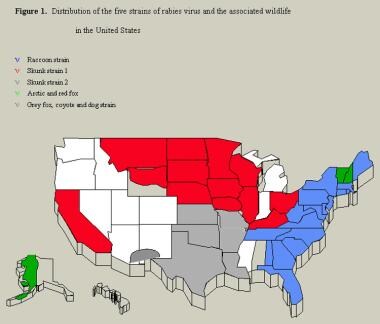
    • Raccoons: Raccoons have been recognized a reservoir for rabies in the southeastern United States since the 1950s. Currently, the risk of raccoon transmission exists in all of the eastern coastal states and Alabama, Pennsylvania, Vermont, West Virginia, and Ohio.
    • Skunks: Three areas are associated with skunk-borne rabies. These areas include the north-central United States, the south-central United States, and California.
    • Foxes
    • Dogs or cats along the Mexican border: Because of limited resources and minimal public health infrastructure in the bordering communities, efforts to maintain animal control through dog vaccination programs are hindered. Viral studies of human cases reported from US border states implicate an urban canine rabies strain and a link to coyote rabies in southern Texas.
  • Lower-risk animal species in the United States include dogs, cats, and ferrets in areas not near a border. No person in the United States has ever contracted rabies from a dog, cat, or ferret held in quarantine for 10 days.
  • The vaccinia-rabies glycoprotein virus used to bait wild animals is a self-replicating agent. Only one case has been documented of a pregnant woman developing a skin infection and needing surgery after she was bitten by her dog. Her history findings revealed that she was bitten when she took a vaccinia-rabies virus vaccine out of her dog's mouth. This oral animal vaccine may cause adverse effects, particularly in hosts with altered immunocompetence and in persons in whom smallpox vaccination is contraindicated (eg, pregnant women, patients with an exfoliative skin condition).


Tetanus

Other Problems to be Considered

Guillain-Barré syndrome
Viral encephalitis
Poliomyelitis
Transverse myelitis
Cerebrovascular accident
Psychosis
Intracranial mass
Epilepsy
Atropine poisoning
Creutzfeldt-Jacob disease


Lab Studies

  • Microbiology: The results of saliva culture for rabies virus are positive in low yield within 2 weeks of illness onset.
  • Serology:
    • Serum rapid fluorescent focus inhibition test (RFFIT) titer results are positive in 50% of cases.
    • Results of the CSF RFFIT are antibody-positive (2-25% of serum titer) after the first week of illness.
    • Detection of viral RNA from saliva using polymerase chain reaction (PCR) and viral antigen from brain biopsy specimens have 100% specificity.
    • Viral antigen assessment involving nuchal skin and corneal touch impressions have sensitivities of 67% and 25%, respectively.
  • Blood gas: Respiratory alkalosis resulting from hyperventilation develops in the prodromal and early acute neurologic phases, which is followed by respiratory acidosis as respiratory depression progresses.
  • Cerebrospinal fluid
    • After the first week of illness, 80% monocytosis is observed.
    • Protein and glucose test results are normal.
  • Hematology: Results of the WBC count range from normal to elevated, with 6-8% atypical monocytes.
  • Urinalysis: Albuminuria and sterile pyuria may be observed.
  • Future tests
    • The nucleic acid sequence-based amplification (NASBA) technique on urine samples may be used in the future.
    • The NASBA technique on saliva and CSF can be used for rapid diagnosis as early as 2 days after symptom onset.

Imaging Studies

  • As the neurologic phase progresses, chest radiograph findings may reveal infiltrates due to aspiration, nosocomial pneumonia, acute respiratory distress syndrome, or congestive heart failure.
  • Findings from an MRI and CT scan of the brain often indicate that no abnormalities are present.

Other Tests

  • Electroencephalogram findings include encephalopathic changes but no findings specific for rabies.
  • Supraventricular tachycardia may be observed during cardiac monitoring.
  • Eventually, bradycardia and cardiac arrest occur.

Procedures

  • Skin biopsy
    • Results from nuchal skin punch biopsy for immunofluorescent antibody staining are 50% positive within the first week.
    • Obtain a full-thickness punch biopsy from the nape of the neck and include hair follicles. Place the specimen in a sterile container with saline-soaked sterile gauze. Store at -70°C; then, obtain shipping instructions for a laboratory that performs the examination.
    • Nuchal skin biopsy is the most reliable test of infection during the first week.

Histologic Findings

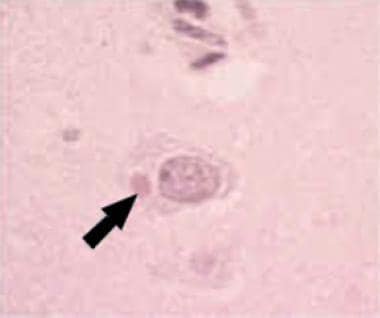
Eosinophilic cytoplasmic inclusions (Negri bodies) are observed in 70% of cases and are pathognomonic (see Image 1). Neuronal cell death is infrequently observed histopathologically.


Medical Care


  • Before the onset of symptoms, both passive and active immunizations are effective for preventing progression to full-blown rabies.
  • Vaccines commonly available in the United States are discussed further in Deterrence/Prevention.
    • Human diploid cell vaccine (HDCV, Pasteur Merièux)
    • Rabies vaccine, adsorbed (RVA, Michigan State Department of Health)
  • Optimal results require the following:
    • Immediate vigorous wound cleansing with a solution of 1 part soap and 4 parts water
    • Passive immunization
      • No prior vaccination with HDCV or RVA - Human rabies immunoglobulin (HRIG)
      • Prior vaccination - No HRIG
    • Active immunization
      • No prior vaccination with HDCV or RVA - Primary series HDCV or RVA
      • Prior vaccination - Booster series HDCV or RVA
  • A neutralizing antibody (NAb) titer greater than or equal to 0.5 IU/mL (or complete neutralization at a serum dilution of 1:5) is considered an acceptable antibody response for protection against rabies. Of 7 patients infected with HIV who had CD4 counts less than 200 cells/µL, 3 had a poor or even undetectable NAb response to vaccination. Patients infected with HIV who had higher CD4 lymphocyte counts had a good antibody response to postexposure rabies vaccination. If an acceptable antibody response is not achieved, a second double-dose series of rabies vaccine should be administered in an attempt to successfully mount an adequate antibody response.
  • Elderly patients (>50 y) produce antibody titer levels 52% lower than younger patients. Whether this equates to reduced protective efficacy remains unclear.
  • Do not administer immunoglobulin and vaccine with the same syringe or in the same site.
  • Passive antibody provides protection for 1-2 weeks until the vaccine elicits protective antibody.
  • In exposures to high-risk species, initiate treatment immediately pending laboratory examination of the animal, if it is caught.
  • Therapy can be stopped if results from the animal's brain examination are negative.
  • The median duration of illness in dogs, cats, and ferrets is less than 10 days, and viral shedding in saliva occurs within a few days of onset of illness and death. Because of the exceedingly low prevalence of rabies in domestic animals in the United States, healthy unvaccinated domestic dogs, cats, and ferrets may be observed for 10 days for signs of illness. If the animal remains healthy, administer no treatment; otherwise, begin treatment on the exposed individual pending necropsy results of the animal. Treatment can be discontinued if examination of the animal's brain is negative for rabies. Vaccinated animals in the United States have not transmitted rabies; outside the United States, rare instances of transmission occur. Species other than the above should be managed in conjunction with the local health department, taking into account whether viral shedding periods are known for the species, the animal's history and risk for rabies exposure, and local epidemiology.
  • Consult the local health department because the risk of rabies differs geographically based on local endemicity and immunization practices. Some countries and limited areas in US territories are considered rabies-free, and no prophylaxis is administered.
  • Note that an assessment of whether a bite was provoked is subjective and does not significantly affect the chances that the animal is rabid. Therefore, this is probably not helpful in determining the need for prophylactic treatment.
  • Intensive cardiopulmonary supportive care is the only treatment available for patients who are symptomatic.
  • Regardless of treatment, symptomatic rabies invariably is fatal, resulting from autonomic dysfunction that leads to cardiac arrhythmia and hypotension. Only 6 recorded cases of survivors exist, 5 of whom received some level of preexposure or postexposure prophylaxis in the asymptomatic phase and subsequently developed rabies. The use of ribavirin and induced coma has yet to be reproduced or validated in the one survivor who did not receive preexposure or postexposure prophylaxis; however, some role for combination therapies including ribavirin, interferon, ketamine, and immunomodulatory therapies has been proposed and may be considered in future cases under investigational protocols. The rarity of human rabies hinders timely testing for effective therapies. Immunomodulatory therapies such as rabies immunoglobulin, rabies vaccine, and interferon have not altered outcomes in trials.
  • Pregnancy is not a contraindication to postexposure prophylaxis against rabies, which is warranted to protect the life of the fetus and mother. No adverse pregnancy outcomes have been documented with postexposure prophylaxis. No mother-to-fetus transmission has been described, thus neither rabies exposure nor diagnosis of rabies in the mother is an indication for pregnancy termination.
  • Steroids, which are usually indicated in the treatment of local vaccine reactions or cerebral edema, are contraindicated because of increased mortality noted in animal studies and because they reduce the response to the vaccine.

Consultations

  • Local health department personnel
  • Infectious diseases specialist
  • Neurologist


Before the onset of symptoms, both passive and active immunizations are effective in preventing progression to full-blown rabies. Optimal results require immediate vigorous wound cleansing, passive immunization, and active immunization.

In developing countries, nerve tissue vaccines are still the most widely used type for prophylaxis of rabies worldwide. They are dangerous in terms of induction of autoimmune CNS disease, require multiple injections, and are not always effective. Two types exist, the Semple type (STV) and the suckling mouse brain vaccine (SMBV).

STV is obtained from inactivated virus prepared on adult animal nerve tissue. It is inexpensive and relatively easy to produce. In India, 3 million people receive postexposure courses of STV each year. STV may produce neurological reactions, including postvaccination encephalomyelitis, in up to 1 in 220 courses, with a 3% mortality rate.

SMBV is cultured on immature mouse brain tissue, which contains little myelin. It is the most widely used postexposure vaccine in Vietnam. Rare neurological reactions occur, with complications in 1 in 27,000 treated people, with a 22% mortality rate.

Both SMBV and STV are widely used throughout the developing world and are the vaccines administered to US travelers exposed to animal bites in such countries.

Drug Category: Immunizing agents (passive)

Rabies immunoglobulin is recommended as part of the rabies postexposure regimen for persons not previously immunized against rabies.

In the United States, passive immunization consists of administration of HRIG pooled from the sera of immunized human donors. Two products are available in the United States, BayRab and Imogam.

In developing countries, equine rabies immunoglobulin (ERIG) is sometimes used but has a higher incidence of adverse effects. ERIG is no longer produced by large pharmaceutical companies. When produced by smaller pharmaceutical firms, quality cannot be assured.

A US Investigational New Drug Application has been submitted for a new-generation purified ERIG.

A human rabies virus–specific monoclonal antibody is in development, theoretically to decrease the possibility of anaphylaxis.

Because of cost, ERIG and HRIG are not readily available throughout much of the developing world, areas in which rabies is more common than in the United States.

If HRIG is available only after more than a week after vaccination has started, then it is probably unnecessary because an active antibody response has already begun.

Vaccine and antiserum should never be mixed or injected in the same limb.

Drug NameRabies immune globulin-Human (BayRab, Imogam)
DescriptionHas been licensed since 1975, and, unlike its predecessor, ERIG, is not associated with significant adverse reactions, anaphylaxis, or serum sickness. Purified ERIG is still used in some developing nations because of cost or availability and is associated with an adverse effect rate of 0.8-6%, which usually involves minor reactions. HRIG is not associated with transmission of viral hepatitis or HIV. Experimentally, infiltration of HRIG at site of exposure is more protective than IM administration. Previously, half the dose was administered at the site and half IM; however, current recommendation is that the entire dose be infiltrated, if possible, in and around the site, with any remaining solution administered IM in the gluteus.
Adult Dose20 IU/kg; most or all of solution is infiltrated around the wound; any remaining solution should be administered IM in the gluteus; not to exceed 20 IU/kg
Pediatric DoseAdminister as in adults, except inject into anterolateral thigh
ContraindicationsDocumented hypersensitivity; to prevent interference with a maximum active immunity from rabies vaccine, do not administer in repeated doses once rabies vaccine treatment initiated; >20 IU/kg is associated with reduced antibody response to HDCV and should not be used
InteractionsThrough an antigen-antibody antagonism, RIG may diminish antibody response to MMR vaccine; should administer live virus vaccines 14-30 d before or 6-12 wk after immune globulin administration; antibody response to rabies vaccine may be delayed if administered simultaneously with RIG
PregnancyB - Usually safe but benefits must outweigh the risks.
PrecautionsCaution in thrombocytopenia or bleeding disorders; do not administer immunoglobulin and vaccine using same syringe or in same site

Drug Category: Rabies vaccines (United States)

Promote immunity by inducing an active immune response.

Advantages of HDCV include freedom from heterologous protein, a high level of immunogenicity that permits a rational dosing schedule, and efficacy demonstrated in trials. The disadvantage of these vaccines is the cost of production.

The CDC only recommends postexposure prophylaxis with IM injections.

The WHO released guidelines for ID use of HDCV, purified chick embryo cell vaccine, and purified duck embryo cell vaccine in 1998. In areas in which cost and vaccine supply are limiting factors, this may be the most feasible treatment option. IM regimens based on US Food and Drug Administration (FDA) approval and manufacturer's recommendations are included below, with WHO regimens listed as alternatives.

Booster immunization is for individuals at continuous or frequent risk, who should have periodic rabies antibody testing and who have serum rabies titer <1:5 dilution based on RFFIT results.

Drug NameHuman diploid cell vaccine (Imovax Rabies Vaccine, Imovax Rabies ID)
DescriptionInactivated forms of virus that promote immunity by inducing an active immune response.
Imovax Rabies ID indicated for preexposure use only by the ID route. Because of poorer response rates, ID use not approved by FDA for postexposure prophylaxis.
Adult DosePreexposure
Primary immunization: 1 mL IM deltoid on days 0, 7, and 21 or 28
Booster immunization: 1 mL IM deltoid
Postexposure
No prior vaccination with HDCV or RVA: 1 mL IM deltoid on days 0, 3, 7, 14, and 28
Prior vaccination: 1 mL IM deltoid on days 0 and 3
Alternatives
2-1-1 IM regimen: 1 mL IM bid (1 dose in each deltoid) on day 0, then 1 mL IM deltoid on days 7 and 21
8-site ID regimen (WHO regimen, 1998; may be considered for use in resource-poor areas, but not FDA approved for this use in United States): 0.1 mL ID in each of 8 sites (each deltoid, each lateral thigh, each suprascapular region, and right and left lower quadrants of abdomen) on day 0, 0.1 mL ID in each of 4 sites (each deltoid, each lateral thigh) on day 7, 0.1 mL ID deltoid (1 site only) on days 28 and 90
Pediatric DoseAdminister as in adults, except inject into anterolateral thigh
ContraindicationsLife-threatening hypersensitivity reactions; if reaction occurs, carefully consider patient risk of developing rabies before deciding to discontinue immunization
InteractionsHigh-dose corticosteroids, antimalarials, and radiation therapy may inhibit immunization, and patients may remain susceptible despite vaccination; use of immunosuppressants should be avoided during postexposure therapy; persons receiving immunosuppressive therapy should receive RIG (3 doses/mL each IM)
PregnancyB - Usually safe but benefits must outweigh the risks.
PrecautionsAdminister IM only in deltoid area; vaccination may fail if injected into gluteal area (because of higher likelihood of injecting into fat rather than muscle)
To prevent failure with Imovax Rabies ID, inject ID and not IM; use IM route for Imovax Rabies Vaccine; in documented hypersensitivity, may pretreat with antihistamines; epinephrine injection (1:1000), volume replacement, oxygen, and corticosteroids must be immediately available to counteract anaphylactic reactions that may occur
Pregnancy is not a contraindication to postexposure use of this vaccine because risks of inadequately treated rabies exposure clearly outweigh risks of fetal abnormalities based on limited data; preexposure prophylaxis may also be indicated in pregnancy; however, if risk of rabies is substantial and removal of pregnant woman from high-risk area is feasible, this may be preferred

Drug NameRabies vaccine, adsorbed (produced by the Michigan State Department of Health)
DescriptionInactivated virus vaccine that promotes immunity by inducing active immune response. Administered IM only, never ID.
Adult DosePreexposure
Primary immunization: 1 mL IM deltoid on days 0, 7, and 21 or 28
Booster immunization: 1 mL IM deltoid
Postexposure
No prior vaccination with HDCV or RVA: 1 mL IM deltoid on days 0, 3, 7, 14, and 28
Prior vaccination with HDCV or RVA: 1 mL IM deltoid on days 0 and 3
Pediatric DoseAdminister as in adults, except inject into anterolateral thigh
ContraindicationsNone reported for postexposure immunization; if alternative products are not available, exercise caution in persons known to be sensitive to neomycin, amphotericin B, chlortetracycline, processed bovine gelatin, and chicken protein because trace amounts of these products may be present in vaccine
InteractionsHigh-dose corticosteroids, antimalarials, and radiation therapy may inhibit immunization, and patients may remain susceptible despite vaccination; use of immunosuppressants should be avoided during postexposure therapy; persons receiving immunosuppressive therapy should receive RIG (3 doses/mL each IM)
PregnancyC - Safety for use during pregnancy has not been established.
PrecautionsAdminister IM only in deltoid area; vaccination may fail if injected into gluteal area (because of higher likelihood of injecting into fat rather than muscle); epinephrine injection (1:1000), volume replacement, oxygen, and corticosteroids must be immediately available to counteract anaphylactic reactions that may occur; pregnancy is not a contraindication to postexposure use of this vaccine because risks of inadequately treated rabies exposure clearly outweigh risks of fetal abnormalities based on limited data; preexposure prophylaxis may also be indicated in pregnancy; however, if risk of rabies is substantial and removal of the pregnant woman from the high-risk area is feasible, this may be preferred

Drug NamePurified chick embryo cell vaccine (RabAvert)
DescriptionInactivated virus vaccine that promotes immunity by inducing active immune response. Indicated for IM use only. Not FDA approved for ID use.
Adult DosePreexposure
Primary immunization: 1 mL IM deltoid on days 0, 7, and 21 or 28
Booster immunization: 1 mL IM deltoid
Postexposure
No prior vaccination with HDCV or RVA: 1 mL IM deltoid on days 0, 3, 7, 14, and 28
Prior vaccination with HDCV or RVA: 1 mL IM deltoid on days 0 and 3
Alternative
2-1-1 IM regimen: 1 mL IM bid (1 dose in each deltoid) on day 0, then 1 mL IM deltoid on days 7 and 21
8-site ID regimen (WHO regimen, 1998; may be considered for use in resource-poor areas, but not FDA approved for this use in United States): 0.1 mL ID in each of 8 sites (each deltoid, each lateral thigh, each suprascapular region, and right and left lower quadrants of abdomen) on day 0, 0.1 mL ID in each of 4 sites (each deltoid, each lateral thigh) on day 7, 0.1 mL ID deltoid (1 site only) on days 28 and 90
Pediatric DoseAdminister as in adults, except inject into anterolateral thigh
ContraindicationsNone reported for postexposure immunization; if alternative products are not available, exercise caution in persons known to be sensitive to neomycin, amphotericin B, chlortetracycline, processed bovine gelatin, and chicken protein because trace amounts of these products may be present in vaccine
InteractionsHigh-dose corticosteroids, antimalarials, and radiation therapy may inhibit immunization, and patients may remain susceptible despite vaccination; avoid immunosuppressants during postexposure therapy; persons receiving immunosuppressive therapy should receive RIG (3 doses/mL each IM)
PregnancyC - Safety for use during pregnancy has not been established.
PrecautionsAdminister IM only in deltoid area; vaccination may fail if injected into gluteal area (because of higher likelihood of injecting into fat rather than muscle); epinephrine injection (1:1000), volume replacement, oxygen, and corticosteroids must be immediately available to counteract anaphylactic reactions that may occur; pregnancy is not a contraindication to postexposure use of this vaccine because risks of inadequately treated rabies exposure clearly outweigh risks of fetal abnormalities based on limited data; preexposure prophylaxis also may be indicated in pregnancy; however, if risk of rabies is substantial and removal of the pregnant woman from the high-risk area is feasible, this may be preferred


Further Outpatient Care

  • Coordinate follow-up evaluations of exposed patients with the primary caregiver, the local health department, and, if applicable, the veterinarian who quarantined the animal.

Deterrence/Prevention

  • Universal precautions and respiratory precautions during respiratory therapy are indicated for health care providers. Postexposure prophylaxis of health care workers is indicated only for high-risk exposures. Pretransplantation screening for potential rabies infection or exposure should be performed on organ donors.
  • Control of rabies in the animal population
    • Because rabies is a zoonosis, primary prevention requires control of rabies in the animal population. In 1997, approximately 100,000 animal brains were tested for rabies virus antigen using a direct fluorescent assay. Of these brains, 8509 (8.5%) had positive results.
    • Mass control and mandatory vaccination of domesticated dogs and cats is effective in controlling rabies in the United States; however, developing nations have found that cost is a barrier to such campaigns.
    • Live viral vaccines containing modified live rabies or recombinant vaccinia-rabies glycoprotein virus, placed in a bait, are used for disease control in Europe and North America. In the United States, more than 22 million doses of vaccinia-rabies glycoprotein vaccine were distributed between 1990 and 2000. The baits were mainly used to control rabies in raccoons in the eastern United States and foxes and coyotes in Texas. People will inevitably find vaccine-laden baits. Dogs are frequently attracted to the baits and bring them to their owners. Luckily, adverse events are rare.
    • Postexposure prophylaxis sometimes is modified to reduce cost relative to risk. Postexposure therapy is described in detail in Medical Care.
  • Immunization
    • Active immunization is recommended for veterinarians, veterinary students, persons who regularly explore or hike in caves, laboratory workers who are exposed to rabies virus or handle specimens considered high risk for rabies, and persons who visit countries where rabies is a significant problem (ie, visits >30 d).
    • The WHO recommends 2 doses of cell-culture vaccine administered intramuscularly or intradermally on days 0 and 3 for booster dosing. A study published in 2001 found that a 4-site intradermal booster regimen had a more rapid NAb response than the series traditionally recommended by the WHO. The NAb was also shown to be consistently high 1 year after the booster vaccination.

      Risk Categories for Active Preexposure Immunization and Rabies Titer Monitoring

      CategoryRisk FactorsImmunization RegimenSerologic Testing
      ContinuousRabies research laboratory or biologics production workersPrimary course; booster when serum antibody <1:5 dilution based on RFFIT resultsEvery 6 mo
      FrequentRabies diagnostic laboratory workers, spelunkers, veterinarians and staff, animal control and wildlife workers in rabies-enzootic areas, travelers to areas of enzootic rabies for >30 dPrimary course; booster every 2 y or when serum antibody <1:5 dilution based on RFFIT resultsEvery 2 y if not regularly boosted
      InfrequentVeterinarians and staff/students, animal control and wildlife workers in areas of low rabies riskPrimary course; no boosterNone
      RareUS population at largeNoneNone
    • Passive immunization consists of the administration of HRIG pooled from the sera of immunized human donors.

Complications

  • Regardless of treatment, symptomatic rabies invariably is fatal because autonomic dysfunction leads to cardiac arrhythmia and hypotension.

Prognosis

  • Prognosis is fair if postexposure prophylaxis is administered exactly as recommended and in a timely fashion.
  • Coordination with local health authorities is crucial.
  • Death is almost certain if treatment is not started before the onset of prodromal symptoms.

Patient Education

  • The need for adherence to local public health recommendations regarding the control and vaccination of domestic animals and the vaccination of individuals who may be exposed to rabies in their occupation cannot be stressed enough.
  • Counsel patients regarding the subjective nature of provocative behavior toward animals. Especially stress avoiding contact with unfamiliar or wild animals.
  • Prompt vigorous cleansing of any injury or bite from any animal is critical and may reduce the risk of rabies transmission.
  • Provide extensive reassurance after any injury that may be related to rabies transmission. Fear of rabies is primal and is known to induce hysterical reactions that mimic the disease manifestations.
  • For excellent patient education resources, visit eMedicine's Bacterial and Viral Infections Center. Also, see eMedicine's patient education article Rabies.


Medical/Legal Pitfalls

  • Failure to administer prophylaxis appropriately to the at-risk patient
  • Failure to involve local public health authorities, which is critical in determining whether an injury requires prophylaxis

Special Concerns

  • The following are from the American Veterinary Medical Association Compendium of Animal Rabies Prevention and Control, 2004 recommendations for owners of unvaccinated livestock exposed to rabid animals:
    • If the animal is slaughtered within 7 days of being bitten, its tissues may be eaten without risk of infection, provided that liberal portions of the exposed area are discarded. US federal meat inspectors must reject for slaughter any animal known to have been exposed to rabies within 8 months.
    • Neither tissues nor milk from a rabid animal should be used for human or animal consumption. Pasteurization temperatures inactivate the rabies virus; therefore, drinking pasteurized milk or eating cooked meat does not constitute a rabies exposure.
    • The presence of more than one rabid animal in a herd or herbivore-to-herbivore transmission is uncommon; therefore, isolating the rest of the herd if a single animal has been exposed to or infected by rabies might not be necessary.


Media file 1:  Hematoxylin and eosin stain of Negri body in a rabies-infected neuron. Courtesy of the US Centers for Disease Control and Prevention.
Click to see larger pictureClick to see detailView Full Size Image
Media type:  Image


  • Awasthi M, Parmar H, Patankar T, Castillo M. Imaging findings in rabies encephalitis. AJNR Am J Neuroradiol. Apr 2001;22(4):677-80. [Medline].
  • Bahmanyar M, Fayaz A, Nour-Salehi S, et al. Successful protection of humans exposed to rabies infection. Postexposure treatment with the new human diploid cell rabies vaccine and antirabies serum. JAMA. Dec 13 1976;236(24):2751-4. [Medline].
  • Center for Disease Control and Prevention. Provisional cases of infrequently reported notifiable diseases. Morbidity and Mortality Weekly Report. 2006;55(43):1171.
  • Centers for Disease Control and Prevention. Human rabies prevention--United States, 1999. Recommendations of the Advisory Committee on Immunization Practices (ACIP). MMWR Recomm Rep. Jan 8 1999;48(RR-1):1-21. [Medline][Full Text].
  • Centers for Disease Control and Prevention. From the Centers for Disease Control and Prevention. Public health response to a potentially rabid bear cub--Iowa, 1999. JAMA. Jan 12 2000;283(2):192-3. [Medline].
  • Centers for Disease Control and Prevention. From the Centers for Disease Control and Prevention. Mass treatment of humans who drank unpasteurized milk from rabid cows--Massachusetts, 1996-1998. JAMA. Apr 21 1999;281(15):1371-2. [Medline].
  • Centers for Disease Control and Prevention. Recovery of a patient from clinical rabies--Wisconsin, 2004. MMWR Morb Mortal Wkly Rep. Dec 24 2004;53(50):1171-3. [Medline][Full Text].
  • Centers for Disease Control and Prevention. Investigation of rabies infections in organ donor and transplant recipients--Alabama, Arkansas, Oklahoma, and Texas, 2004. MMWR Morb Mortal Wkly Rep. Jul 9 2004;53(26):586-9. [Medline].
  • Centers for Disease Control and Prevention. Human rabies--Mississippi, 2005. MMWR Morb Mortal Wkly Rep. Mar 3 2006;55(8):207-8.
  • Champion JM, Kean RB, Rupprecht CE, et al. The development of monoclonal human rabies virus-neutralizing antibodies as a substitute for pooled human immune globulin in the prophylactic treatment of rabies virus exposure. J Immunol Methods. Feb 21 2000;235(1-2):81-90. [Medline].
  • Chau NV, Hien TT, Sellar R, et al. "Can''t you use another vaccine?" Postrabies vaccination encephalitis. J Neurol Neurosurg Psychiatry. Oct 1999;67(4):555-6. [Medline].
  • Debbie JG, Trimarchi CV. Prophylaxis for suspected exposure to bat rabies. Lancet. Dec 20-27 1997;350(9094):1790-1. [Medline].
  • Devriendt J, Staroukine M, Costy F, Vanderhaeghen JJ. Fatal encephalitis apparently due to rabies. Occurrence after treatment with human diploid cell vaccine but not rabies immune globulin. JAMA. Nov 12 1982;248(18):2304-6. [Medline].
  • Dietzschold B, Rupprecht CE, Fu, ZF. Rhabdoviruses. In: Fields BN, Knipe DM, Howl PM, eds. Fields Virology. Vol 1. 3rd ed. Philadelphia, Pa: Lippincott-Raven; 1996:. 1137-53.
  • Dietzschold B, Koprowski H. Rabies transmission from organ transplants in the USA. Lancet. Aug 21 2004;364(9435):648-9. [Medline].
  • Doyle TJ, Bryan RT. Infectious disease morbidity in the US region bordering Mexico, 1990-1998. J Infect Dis. Nov 2000;182(5):1503-10. [Medline].
  • Dupont JR, Earle KM. Human rabies encephalitis. A study of forty-nine fatal cases with a review of the literature. Neurology. Nov 1965;15(11):1023-34. [Medline].
  • Feder HM Jr, Nelson R, Reiher HW. Bat bite?. Lancet. Nov 1 1997;350(9087):1300. [Medline].
  • Field H, McCall B, Barrett J. Australian bat lyssavirus infection in a captive juvenile black flying fox. Emerging Infectious Diseases. 1999;5:438-440. [Medline].
  • Finkel E. Lyssavirus death occurs in Australia. Lancet. 1996;348:1435.
  • Finnegan CJ, Brookes SM, Johnson N, et al. Rabies in North America and Europe. J R Soc Med. Jan 2002;95(1):9-13. [Medline].
  • Fishbein DB, Bernard KW. Rabies Virus. In: Mandell GL, Douglas RG, Bennett JE, eds. Principles and Practice of Infectious Diseases. Vol 2. 4th ed. New York, NY: Churchill Livingstone; 1995:. 1527-43.
  • Fishbein DB, Robinson LE. Rabies. N Engl J Med. Nov 25 1993;329(22):1632-8. [Medline].
  • Fishbein DB. Rabies. Infect Dis Clin North Am. Mar 1991;5(1):53-71. [Medline].
  • Fraser GC, Hooper PT, Lunt RA, et al. Encephalitis caused by a Lyssavirus in fruit bats in Australia. Emerg Infect Dis. Oct-Dec 1996;2(4):327-31. [Medline].
  • Gibbons RV, Rupprecht CE. Postexposure rabies prophylaxis in immunosuppressed patients. JAMA. Mar 28 2001;285(12):1574-5. [Medline].
  • Glaser C, Lewis P, Wong S. Pet-, animal-, and vector-borne infections. Pediatr Rev. Jul 2000;21(7):219-32. [Medline].
  • Helmick CG. The epidemiology of human rabies postexposure prophylaxis, 1980-1981. JAMA. Oct 21 1983;250(15):1990-6. [Medline].
  • Jackson AC, Fenton MB. Human rabies and bat bites. Lancet. May 26 2001;357(9269):1714. [Medline].
  • Jackson AC. Screening of organ and tissue donors for rabies. Lancet. Dec 11 2004;364(9451):2094-5. [Medline].
  • Jackson AC. Rabies: new insights into pathogenesis and treatment. Curr Opin Neurol. Jun 2006;19(3):267-70.
  • Koneman EW, Allen SA, Janda WM. Color Atlas and Textbook of Diagnostic Microbiology. 5th ed. Philadelphia, Pa: Lippincott Williams & Wilkins; 1997:. 1185, 1197-8, 1260.
  • Krebs JW, Smith JS, Rupprecht CE, Childs JE. Mammalian reservoirs and epidemiology of rabies diagnosed in human beings in the United States, 1981-1998. Ann N Y Acad Sci. 2000;916:345-53. [Medline].
  • Krebs JW, Mondul AM, Rupprecht CE, Childs JE. Rabies surveillance in the United States during 2000. J Am Vet Med Assoc. Dec 15 2001;219(12):1687-99. [Medline].
  • Leder K, Weller PF, Wilson ME. Travel vaccines and elderly persons: review of vaccines available in the United States. Clin Infect Dis. Nov 1 2001;33(9):1553-66. [Medline].
  • Lentz TL, Burrage TG, Smith AL, et al. Is the acetylcholine receptor a rabies virus receptor?. Science. Jan 8 1982;215(4529):182-4. [Medline].
  • Mackenzie JS. Emerging viral diseases: an Australian perspective. Emerg Infect Dis. Jan-Feb 1999;5(1):1-8. [Medline].
  • McCall BJ, Epstein JH, Neill AS, et al. Potential exposure to Australian bat lyssavirus, Queensland, 1996-1999. Emerg Infect Dis. May-Jun 2000;6(3):259-64. [Medline].
  • McLean RG. Rabies in raccoons in the Southeastern United States. J Infect Dis. Jun 1971;123(6):680-1. [Medline].
  • Morrison G. Zoonotic infections from pets. Understanding the risks and treatment. Postgrad Med. Jul 2001;110(1):24-6, 29-30, 35-6 passim. [Medline].
  • National Association of State Public Health Veterinarians. Compendium of animal rabies prevention and control, 2004: National Association of State Public Health Veterinarians, Inc. (NASPHV). MMWR Recomm Rep. Jun 25 2004;53(RR-9):1-8. [Medline][Full Text].
  • National Center for Infectious Diseases. Rabies Question and Answer. Atlanta, Ga: Centers for Disease Control and Prevention; 2004[Full Text].
  • National Center for Infectious Diseases. Rabies Natural History. Atlanta, Ga: Centers for Disease Control and Prevention; 2001[Full Text].
  • Plotkin SA. Rabies. Clin Infect Dis. Jan 2000;30(1):4-12. [Medline].
  • Rupprecht CE, Blass L, Smith K, et al. Human infection due to recombinant vaccinia-rabies glycoprotein virus. N Engl J Med. Aug 23 2001;345(8):582-6. [Medline].
  • Rupprecht CE, Gibbons RV. Clinical practice. Prophylaxis against rabies. N Engl J Med. Dec 16 2004;351(25):2626-35. [Medline].
  • Sawyer LA. Antibodies for the prevention and treatment of viral diseases. Antiviral Res. Aug 2000;47(2):57-77. [Medline].
  • Shill M, Baynes RD, Miller SD. Fatal rabies encephalitis despite appropriate post-exposure prophylaxis. A case report. New England Journal of Medicine. 1987;16(20):1257-8. [Medline].
  • Smith JS, Orciari LA, Yager PA, et al. Epidemiologic and historical relationships among 87 rabies virus isolates as determined by limited sequence analysis. J Infect Dis. Aug 1992;166(2):296-307. [Medline].
  • Smith JS, Fishbein DB, Rupprecht CE, Clark K. Unexplained rabies in three immigrants in the United States. A virologic investigation. N Engl J Med. Jan 24 1991;324(4):205-11. [Medline].
  • Tantawichien T, Tantawichien T, Supit C, et al. Three-year experience with 4-site intradermal booster vaccination with rabies vaccine for postexposure prophylaxis. Clin Infect Dis. Dec 15 2001;33(12):2085-7. [Medline].
  • Tantawichien T, Jaijaroensup W, Khawplod P, Sitprija V. Failure of multiple-site intradermal postexposure rabies vaccination in patients with human immunodeficiency virus with low CD4+ T lymphocyte counts. Clin Infect Dis. Nov 15 2001;33(10):E122-4. [Medline].
  • Wacharapluesadee S, Hemachudha T. Urine samples for rabies RNA detection in the diagnosis of rabies in humans. Clin Infect Dis. Mar 15 2002;34(6):874-5. [Medline].
  • Wacharapluesadee S, Hemachudha T. Nucleic-acid sequence based amplification in the rapid diagnosis of rabies. Lancet. Sep 15 2001;358(9285):892-3. [Medline].
  • Weber DJ, Rutala WA. Risks and prevention of nosocomial transmission of rare zoonotic diseases. Clin Infect Dis. Feb 1 2001;32(3):446-56. [Medline].
  • Weiner HR. Diagnosis and prevention of rabies. Compr Ther. Spring 2001;27(1):60-4. [Medline].
  • Whitley RJ. Viral encephalitis. N Engl J Med. Jul 26 1990;323(4):242-50. [Medline].
  • Willoughby RE, Hammarin AL. Prophylaxis against rabies in children exposed to bats. Pediatr Infect Dis J. Dec 2005;24(12):1109-10.
  • Wilson JM, Hettiarachchi J, Wijesuriya LM. Presenting features and diagnosis of rabies. Lancet. Dec 6 1975;2(7945):1139-40. [Medline].
  • World Health Organization. WHO Recommendations on Rabies Post-Exposure Treatment and the Correct Technique of Intradermal Immunization against Rabies. Geneva, Switzerland; World Health Organization; 1998[Full Text].
  • World Health Organization. Rabnet Database. Department of Communicable Diseases Surveillance and Response. Animal and Food related Public Health Risks. Geneva, Switzerland; World Health Organization; 2001[Full Text].
  • World Health Organization. Rabies. 2006;Fact Sheet #99:[Full Text].

Rabies excerpt

Article Last Updated: Jan 16, 2007