
Continually Updated Clinical Reference
 
 
  All Sources     eMedicine     Medscape     Drug Reference     MEDLINE
 
eMedicine - Nocardiosis : Article by

Quick Find
Authors & Editors
Introduction
Clinical
Differentials
Workup
Treatment
Medication
Follow-up
Multimedia
References

Related Articles
Actinomycosis

Aspergillosis

Cellulitis

Empyema, Pleuropulmonary

Glioblastoma Multiforme

Histoplasmosis

Kaposi Sarcoma

Lung Abscess

Lymphoma, Non-Hodgkin

Mycobacterium Avium-Intracellulare

Pneumocystis Carinii Pneumonia

Pneumonia, Bacterial

Pneumonia, Community-Acquired

Pneumonia, Fungal

Pneumonia, Viral

Sporotrichosis

Tuberculosis


Patient Education
Click here for patient education.


Author: Ronald A Greenfield, MD, Professor, Chief, Department of Internal Medicine, Section of Infectious Diseases, University of Oklahoma College of Medicine

Ronald A Greenfield is a member of the following medical societies: American College of Physicians, American Federation for Medical Research, American Society for Microbiology, Central Society for Clinical Research, Infectious Diseases Society of America, Medical Mycology Society of the Americas, Phi Beta Kappa, Southern Society for Clinical Investigation, and Southwestern Association of Clinical Microbiology

Editors: Thomas J Marrie, MD, Chair, Professor, Department of Medicine, Division of Infectious Diseases, University of Alberta College of Medicine; Francisco Talavera, PharmD, PhD, Senior Pharmacy Editor, eMedicine; John W King, MD, Professor of Medicine, Section of Infectious Diseases, Louisiana State University Health Sciences Center; Director, Viral Therapeutics Clinics for Hepatitis; Consulting Staff, Department of Infectious Diseases, Overton Brook Veterans Affairs Medical Center; Eleftherios Mylonakis, MD, Clinical and Research Fellow, Department of Internal Medicine, Division of Infectious Diseases, Massachusetts General Hospital; Burke A Cunha, MD, Professor of Medicine, State University of New York School of Medicine at Stony Brook; Chief, Infectious Disease Division, Winthrop-University Hospital

Author and Editor Disclosure

Synonyms and related keywords: nocardiosis, Nocardia infection, primary cutaneous nocardiosis, cellulitis, sporotrichoid, actinomycetoma, Nocardia asteroides, Nocardia brasiliensis, Nocardia farcinica, Nocardia nova, Nocardia transvalensis, Nocardia otitidis calvarium

Background

Nocardiosis is an acute, subacute, or chronic infectious disease that occurs in cutaneous, pulmonary, and disseminated forms. Primary cutaneous nocardiosis presents as cutaneous infection (cellulitis or abscess), lymphocutaneous infection (sporotrichoid), or subcutaneous infection (actinomycetoma). Pulmonary infection presents as an acute, subacute, or chronic pneumonitis, usually in immunocompromised hosts. Disseminated nocardiosis may involve any organ; lesions in the brain or meninges are most frequent.

Pathophysiology

Members of the genus Nocardia are aerobic actinomycetes that are ubiquitous saprophytes in soil, decaying organic matter, and water. At least 15 species of the genus Nocardia have been identified and new species continue to be identified. Nocardia asteroides is the most frequent cause of human disease in the United States; various species are dominant in other parts of the world. Nocardia species also cause infections in animals, including bovine mastitis and sporotrichoid nocardiosis in horses.

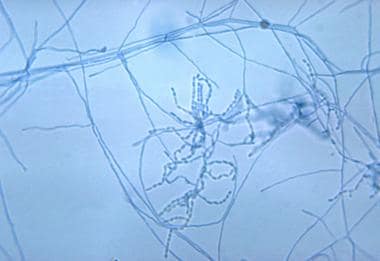
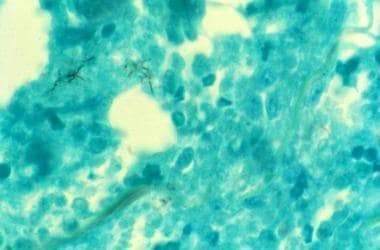
When observed microscopically, either in Gram stains of clinical specimens or cultures or when demonstrated histopathologically in tissues, Nocardia are branching, beaded, filamentous, gram-positive bacteria with a characteristic morphology to a trained observer. Nocardia usually are weakly acid-fast.
The cutaneous, lymphocutaneous, and subcutaneous forms of nocardiosis arise from local traumatic inoculation. Pleuropulmonary disease presumably arises from inhalation exposure. Disseminated infection results from hematogenous dissemination, usually from a pulmonary focus. Most patients with disseminated nocardiosis have underlying immunocompromising disease or are receiving immunosuppressive therapy.

Nocardiosis produces suppurative necrosis with frequent abscess formation at sites of infection.
Frequency

United States

Incidence is 0.4 cases per 100,000 population. An estimated 500-1000 cases occur per year in the United States.

International

No reliable estimates are available.

Mortality/Morbidity

Prognosis in nocardiosis depends on the site of infection, extent of infection, and underlying host factors.

  • Cure rates with appropriate therapy are approximately 100% in skin and soft-tissue infections.
  • In pleuropulmonary infections, cure rates of 90% can be achieved with appropriate therapy.
  • With disseminated infection, cure rates fall to 63%. Cure rates with brain abscess are only 50%.

Race

No racial predilection is evident for nocardiosis.

Sex

Nocardiosis occurs in males more frequently than in females, in a ratio of 3:1. This is thought to be related to an exposure frequency difference rather than a sex difference in susceptibility to infection.

Age

All ages are susceptible. The mean age at diagnosis is in the fourth decade of life.


History

Clinical manifestations of nocardiosis depend on the site of infection.

  • Primary cutaneous nocardiosis may present as cutaneous infection, lymphocutaneous infection, or subcutaneous infection.
    • Patients with cutaneous nocardiosis generally present with either cellulitis or, more typically, single or multiple nontender erythematous nodule(s) at the site of traumatic inoculation. Occasionally, these may drain purulent material.
    • Patients with lymphocutaneous nocardiosis have similar lesions accompanied by ascending regional lymphadenopathy. The lymphadenopathy also may occasionally drain purulent material.
    • Nocardial species can cause mycetoma, a chronic, swollen, purulence-draining, subcutaneous infection of the extremities, typically encountered in tropical areas of the world.
  • Postoperative wound infections due to Nocardia occur rarely.
  • Traumatic inoculation nocardial arthritis also has occurred (rarely). This presents as a subacute or chronic monarthritis, typically involving the knee.
  • Traumatic inoculation nocardial endophthalmitis also rarely occurs.
  • Pulmonary disease is the predominant clinical finding in most patients with nocardiosis.
    • The presentation may be acute, subacute, or chronic.
    • Clinical manifestations include inflammatory endobronchial masses or localized or diffuse pneumonias, which may be accompanied by cavitation, abscess formation, pleural effusions, or empyemas.
    • Symptoms in patients with nocardiosis are indistinguishable from those in patients with similar pulmonary infections of other microbial etiology. Cough with sputum production and fever are the dominant symptoms.
    • At least 40% of patients with disseminated nocardial infection have pulmonary infection; therefore, the clinical presentation may be dominated by the pulmonary symptoms.
  • Patients with nocardial infection may present with deep abscess at any site, but most typically, this is seen in the lower extremities or the CNS. In extra-CNS abscesses, fever and local symptoms predominate.
    • Up to 25% of nocardial disease other than mycetoma involves the CNS. When occurring in isolation, CNS nocardiosis presents as a slowly progressive mass lesion, with a host of specific neurologic findings recorded as related to the specific location of the abscess.
    • CNS nocardiosis is detected in 20-40% of disseminated nocardial infections. Two thirds of patients present with clinical findings indicating abscess with or without meningitis, including fever, headache, stiff neck, or altered mental status.

Physical

Physical findings also vary with the site of infection with Nocardia.

  • Patients with primary cutaneous nocardiosis present with cellulitis, cutaneous nodules, nodules with ascending lymphadenopathy, or with a mycetoma that is clinically indistinguishable from similar infections due to other pathogens.
  • Patients with pulmonary nocardiosis present with findings of pulmonary consolidation with or without evidence of pleural effusions.
  • The presentation of patients with disseminated nocardiosis depends on sites of infection.
    • Pulmonary findings frequently predominate.
    • Local findings associated with metastatic abscesses may be present at essentially any site, but typically they are in the lower extremities. The combination of pneumonia and lower-extremity abscess is particularly suggestive of nocardiosis, although this is not seen exclusively in nocardiosis.
    • Patients with brain abscess may present with altered mental status, personality changes, or a variety of localizing neurologic findings.
    • Patients with meningitis present with fever, altered consciousness, and meningismus.

Causes

Pulmonary and disseminated nocardiosis are clearly associated with immunocompromising conditions, with approximately 60% of cases of nocardiosis other than mycetoma occurring in individuals with some compromise of host defense systems. Conditions associated with an increased risk of pulmonary and disseminated nocardiosis include the following:

  • Chronic pulmonary disease: Although nocardial pulmonary disease has been described in a variety of chronic pulmonary diseases, patients with pulmonary alveolar proteinosis are at particular risk.
  • Alcoholism
  • Cirrhosis
  • Lymphoreticular malignancy
  • Solid organ transplantation
  • Bone marrow or stem cell transplantation
  • Chronic corticosteroid use or Cushing syndrome
  • Systemic lupus erythematosus
  • Systemic vasculitis
  • Ulcerative colitis
  • Sarcoidosis
  • Renal failure
  • Whipple disease
  • Hypogammaglobulinemia
  • Treatment with anti–tumor necrosis factor antibody
  • Human immunodeficiency virus infection and the acquired immunodeficiency syndrome: Nocardial infection in individuals infected with HIV usually presents as a relentlessly progressive infiltrative pulmonary infection in individuals with advanced disease. The median CD4 count in patients with nocardiosis is approximately 50 cells/mL.


Actinomycosis
Aspergillosis
Cellulitis
Empyema, Pleuropulmonary
Glioblastoma Multiforme
Histoplasmosis
Kaposi Sarcoma
Lung Abscess
Lymphoma, Non-Hodgkin
Mycobacterium Avium-Intracellulare
Pneumocystis Carinii Pneumonia
Pneumonia, Bacterial
Pneumonia, Community-Acquired
Pneumonia, Fungal
Pneumonia, Viral
Sporotrichosis
Tuberculosis


Lab Studies

  • The diagnosis of nocardiosis is established by culture of the causative organism from the site(s) of infection. Because nocardiae grow more slowly than common bacteria, the microbiology laboratory always should be notified when nocardiosis is clinically suspected. This particularly is true when sputum is the submitted specimen.
    • Respiratory secretions, skin biopsies, or aspirates from abscesses are the most common specimens from which Nocardia species are identified. Direct smears of these specimens can be highly suspicious, as noted above. Isolation of Nocardia species usually can be achieved in 3-5 days.
    • The appearance of Nocardia species in histological stains of biopsy specimens is very suggestive, but this finding always should be supported by culture confirmation.
  • Blood cultures are positive in a minority of patients, but they always should be obtained when pulmonary or disseminated nocardiosis is suspected.
  • Immunodominant antigens of Nocardia species have been identified and used in serological assays. However, no serologic technique or molecular technique is available yet for routine clinical use.

Imaging Studies

  • Plain chest radiographs and often CT chest scans are useful in evaluating patients with pulmonary nocardiosis and in following the course of the infection. However, no characteristic radiographic findings are described. Radiographic findings include irregular nodules (which may cavitate), reticulonodular or diffuse alveolar pulmonary infiltrates, lung abscess formation, and pleural effusion.
  • All patients with nocardiosis, except those with mycetoma, should have brain imaging by either CT scan or MRI (likely preferred). Intracranial abscess is the most common abnormal finding. Spread of intracranial abscesses to contiguous structures is particularly suggestive of nocardiosis.
  • Localized symptoms other than pulmonary or CNS should be imaged appropriately for that site.

Other Tests

  • Patients suspected of having meningitis should have cerebral spinal fluid (CSF) obtained for analysis unless this is contraindicated by mass effect on brain imaging. Those with nocardial meningitis typically have findings of bacterial meningitis, ie, neutrophilic pleocytosis, hypoglycorrhachia, and a mildly elevated CSF protein.

Procedures

  • Biopsy of skin lesions or aspiration of deep abscesses may be required for diagnosis.
  • Similarly, in patients with pulmonary nocardiosis, bronchoalveolar lavage and/or transbronchial lung biopsy may be required if the microbial etiology is not definitively established by examination and culture of expectorated sputum.

Histologic Findings

Suppurative infection with organisms of characteristic morphology and staining attributes is the typical histopathologic finding in nocardiosis. Granulomatous infection is encountered occasionally.


Medical Care

  • Protracted specific antimicrobial therapy is the mainstay of medical care for nocardiosis. Therapy generally is recommended for at least 6 months.
  • In patients requiring immunosuppressive therapy, such therapy generally can be continued while appropriate specific therapy for nocardiosis is administered.

Surgical Care

  • For lesions outside the CNS, surgical management is the same as standard recommendations for other infections; that is, localized abscesses generally require prompt surgical therapy.
  • In patients with nocardial brain abscesses, surgery should be performed when lesions are large, readily accessible, or if lesions progress beyond 2 weeks of initiation of antimicrobial therapy.

Consultations

Expertise in infectious diseases is recommended for management of protracted antimicrobial therapy. Depending on the site(s) of infection, a pulmonary and/or thoracic surgeon and/or neurosurgeon consultation may be appropriate.

Diet

No specific dietary recommendations are warranted.

Activity

Activity can be as tolerated by the patient.


Sulfonamides are first-line antimicrobial therapy for nocardiosis. Among the sulfonamides, sulfadiazine generally is preferred because of its CNS and CSF penetration. Trimethoprim and sulfamethoxazole (TMP-SMX) are considered by most as acceptable alternatives to sulfadiazine. The addition of trimethoprim has not been shown convincingly to enhance the efficacy of the sulfonamide. Therefore, this drug must be dosed to provide a dose of sulfamethoxazole equivalent to that given with sulfadiazine alone. TMP-SMX may be the preferred therapy when parenteral therapy is required, due to issues of availability.

For patients unable to take sulfonamides, therapy may be guided by in vitro susceptibility testing, although such testing for Nocardia is difficult technically, poorly standardized, and not fully correlated with in vivo results of therapy. No data exist from comparative clinical trials to guide the choice among alternative therapies.

Alternative parenteral therapies include the carbapenem meropenem, third-generation cephalosporins (cefotaxime or ceftriaxone), and amikacin, alone or in combination. Meropenem plus amikacin may be the preferred regimen. Linezolid efficacy has been reported in a single case of nocardiosis.

Alternative oral therapies include minocycline and amoxicillin/clavulanate. These may be used initially in mild to moderately severe disease or as sequential therapy after an induction course of parenteral therapy. Modern fluoroquinolones often have demonstrable in vitro activity against Nocardia but have therapeutically failed.

Drug Category: Antibiotics

Empiric antimicrobial therapy must be comprehensive and should cover all likely pathogens in the context of the clinical setting.

Drug NameSulfadiazine (Microsulfon)
DescriptionExerts its bacteriostatic action by competitive antagonism of paraaminobenzoic acid (PABA). Microorganisms that require exogenous folic acid and do not synthesize folic acid are not susceptible to the action of sulfonamides. In difficult cases, may be important to document peak serum levels (2 h after PO dose are 100-150 mg/L).
Adult Dose6-12 g/d PO divided q4-6h
Pediatric Dose<2 months: 100 mg/kg/d PO divided q6h
>2 months: 75 mg/kg loading dose PO followed by maintenance dose of 120-150 mg/kg/d PO divided q4-6h
ContraindicationsDocumented hypersensitivity
InteractionsIncreases effect of oral anticoagulants and oral hypoglycemic agents; sulfadiazine effects are decreased when administered concurrently with PABA or PABA metabolites of drugs such as proparacaine, tetracaine, sunscreens, and procaine
PregnancyC - Safety for use during pregnancy has not been established.
PrecautionsCaution in impaired renal or hepatic function or G-6-PD deficiency; dose should be adjusted in renal insufficiency; maintain adequate intravascular fluid volume to reduce the risk of crystalluria

Drug NameTrimethoprim-sulfamethoxazole (Bactrim, Septra)
DescriptionInhibits bacterial growth by inhibiting synthesis of dihydrofolic acid.
Adult Dose10-15 mg/kg/d TMP and 50-75 mg/kg/d SMX PO/IV divided bid/qid
Pediatric Dose<2 months: Do not administer
>2 months: Not established
ContraindicationsDocumented hypersensitivity; megaloblastic anemia due to folate deficiency
InteractionsMay increase PT when used with warfarin (perform coagulation tests and adjust dose accordingly); coadministration with dapsone may increase blood levels of both drugs; coadministration of diuretics increases incidence of thrombocytopenia purpura in elderly; phenytoin levels may increase with coadministration; may potentiate effects of methotrexate in bone marrow depression; hypoglycemic response to sulfonylureas may increase with coadministration; may increase levels of zidovudine
PregnancyC - Safety for use during pregnancy has not been established.
PrecautionsDiscontinue at first appearance of skin rash or sign of adverse reaction; obtain CBCs frequently; discontinue therapy if significant hematologic changes occur; goiter, diuresis, and hypoglycemia may occur with sulfonamides; prolonged IV infusions or high doses may cause bone marrow depression (if signs occur, give 5-15 mg/d leucovorin); caution in folate deficiency (eg, chronic alcoholism, elderly, anticonvulsant therapy, malabsorption syndrome); hemolysis may occur in G-6-PD deficient individuals; patients with AIDS may not tolerate or respond to TMP-SMX; caution in renal or hepatic impairment (perform urinalyses and renal function tests during therapy); give fluids to prevent crystalluria and stone formation

Drug NameMeropenem (Merrem IV)
DescriptionBactericidal broad-spectrum carbapenem antibiotic that inhibits cell-wall synthesis. Effective against most gram-positive and gram-negative bacteria. Has slightly increased activity against gram-negative organisms and slightly decreased activity against staphylococci and streptococci compared to imipenem.
Adult Dose1 g IV q8h
Pediatric Dose40 mg/kg IV q8h
ContraindicationsDocumented hypersensitivity
InteractionsProbenecid may increase serum levels
PregnancyB - Usually safe but benefits must outweigh the risks.
PrecautionsPseudomembranous colitis and thrombocytopenia may occur, requiring immediate discontinuation of medication

Drug NameCefotaxime (Claforan)
DescriptionThird-generation cephalosporin with gram-negative spectrum. Lower efficacy against gram-positive organisms. Arrests bacterial cell wall synthesis, which in turn inhibits bacterial growth.
Adult DoseModerate to severe infections: 1-2 g IM/IV q6-8h
Life-threatening infections: 1-2 g IM/IV q4h
Pediatric Dose<12 years: Not established
>12 years: Administer as in adults
ContraindicationsDocumented hypersensitivity
InteractionsProbenecid may increase levels; coadministration with furosemide and aminoglycosides may increase nephrotoxicity
PregnancyB - Usually safe but benefits must outweigh the risks.
PrecautionsAdjust dose in severe renal impairment; associated with severe colitis

Drug NameCeftriaxone (Rocephin)
DescriptionThird-generation cephalosporin with broad-spectrum, gram-negative activity; lower efficacy against gram-positive organisms; higher efficacy against resistant organisms. Arrests bacterial growth by binding to one or more penicillin-binding proteins.
Adult Dose1-2 g IV qd or divided bid; not to exceed 4 g/d
Pediatric Dose>7 days: 25-50 mg/kg/d IV; not to exceed 125 mg/d
Infants and children: 50-75 mg/kg/d IV divided q12h; not to exceed 2 g/d
ContraindicationsDocumented hypersensitivity
InteractionsProbenecid may increase levels; coadministration with ethacrynic acid, furosemide, and aminoglycosides may increase nephrotoxicity
PregnancyB - Usually safe but benefits must outweigh the risks.
PrecautionsAdjust dose in renal impairment; caution in women who are breastfeeding and in people allergic to penicillin

Drug NameAmikacin (Amikin)
DescriptionFor gram-negative bacterial coverage of infections resistant to gentamicin and tobramycin. Effective against Pseudomonas aeruginosa.
Irreversibly binds to 30S subunit of bacterial ribosomes and blocks recognition step in protein synthesis, which causes growth inhibition. Use patient's IBW for dosage calculation.
Adult Dose10-15 mg/kg/d IV/IM divided bid
Pediatric DoseAdminister as in adults
ContraindicationsDocumented hypersensitivity
InteractionsCoadministration with other aminoglycosides, penicillins, cephalosporins, and amphotericin B increases nephrotoxicity; enhances effects of neuromuscular blocking agents; causes respiratory depression; irreversible hearing loss may occur with coadministration of loop diuretics
PregnancyC - Safety for use during pregnancy has not been established.
PrecautionsNot intended for long-term therapy; caution in patients with renal failure (not on dialysis), hypocalcemia, myasthenia gravis, and conditions that depress neuromuscular transmission

Drug NameMinocycline (Minocin)
DescriptionTreats infections caused by susceptible gram-negative and gram-positive organisms, in addition to infections caused by susceptible Chlamydia, Rickettsia, and Mycoplasma.
Adult Dose100 mg PO bid
Pediatric Dose<8 years: Not recommended
>8 years: 4 mg/kg PO initially, followed with 2 mg/kg q12h
ContraindicationsDocumented hypersensitivity; severe hepatic dysfunction
InteractionsBioavailability decreases minimally with antacids containing aluminum, calcium, magnesium, iron, or bismuth subsalicylate
PregnancyD - Unsafe in pregnancy
PrecautionsPhotosensitivity may occur rarely; last one half of pregnancy through age 8 y can cause permanent discoloration of teeth; blue/black discoloration of the skin may occur with prolonged use

Drug NameAmoxicillin and clavulanate (Augmentin)
DescriptionDrug combination treats bacteria resistant to beta-lactam antibiotics. Children > 3 months, base dosing protocol on amoxicillin content. Due to different amoxicillin/clavulanic acid ratios in 250-mg tab (250/125) vs 250-mg chewable-tab (250/62.5), do not use 250-mg tab until child weighs >40 kg.
Adult Dose500-875 mg PO q8-12h
Pediatric Dose<40 kg: 20-40 mg/kg/d PO divided bid
>40 kg: Administer as in adults
ContraindicationsDocumented hypersensitivity
InteractionsCoadministration with warfarin or heparin increases risk of bleeding
PregnancyB - Usually safe but benefits must outweigh the risks.
PrecautionsGive for a minimum of 10 d to eliminate organism and prevent sequelae (endocarditis, rheumatic fever); following treatment, perform cultures to confirm eradication of streptococci

Drug Namelinezolid (Zyvox)
DescriptionPrevents formation of functional 70S initiation complex, which is essential for bacterial translation process. Bacteriostatic against enterococci and staphylococci and bactericidal against most strains of streptococci. Used as alternative in patients allergic to vancomycin and for treatment of vancomycin-resistant enterococci.
Adult Dose600 mg PO/IV q12h
Pediatric DosePreterm neonate <7 days: 10 mg/kg PO/IV q12h
Term neonates-12 years: 10 mg/kg PO/IV q8h
>12 years: Administer as in adults
ContraindicationsDocumented hypersensitivity
InteractionsMay cause hypertension when used concomitantly with adrenergic agents including pseudoephedrine, sympathomimetic agents, vasopressor or dopaminergic agents (reduce dose of dopamine or epinephrine if concurrent use required); serotonin syndrome may occur if used concomitantly with serotonergic agents including tricyclic antidepressants, meperidine, dextromethorphan, trazodone, venlafaxine, and selective serotonin reuptake; may cause myelosuppression or pseudomembranous colitis inhibitors
Pregnancy
PrecautionsHas mild MAO inhibitor properties and has potential to have same interactions as other MAO inhibitors; caution in uncontrolled hypertension, pheochromocytoma, carcinoid syndrome, or untreated hyperthyroidism, and patients who are at increased risk for bleeding, have preexisting thrombocytopenia, receive concomitant medications that may decrease platelet count or function, or who may require > 2 wk of therapy (monitor platelet counts); unnecessary use may lead to development of resistance to drug; may cause peripheral or optic neuropathy


In/Out Patient Meds:

  • Antimicrobial therapy for pulmonary or disseminated nocardiosis should be continued for 6-12 months and at least 1 month past resolution of all evidence of infection.

Deterrence/Prevention:

  • Although not clearly established, prophylactic therapy with trimethoprim-sulfamethoxazole for patients with AIDS and CD4 counts less than 200 cells/mL likely decreases the incidence of nocardiosis.

Patient Education:

  • Patients must be educated about the need for protracted antimicrobial therapy.


Media file 1:  High-power microscopic appearance of Nocardia. Image courtesy of CDC.
Click to see larger pictureClick to see detailView Full Size Image
Media type:  Photo


  • Boiron P, Locci R, Goodfellow M, et al. Nocardia, nocardiosis and mycetoma. Med Mycol. 1998;36 Suppl 1:26-37. [Medline].
  • Castro JG, Espinoza L. Nocardia species infections in a large county hospital in Miami: 6 years experience. J Infect. Sep 14 2006.
  • Filice GA. Nocardiosis in persons with human immunodeficiency virus infection, transplant recipients, and large, geographically defined populations. J Lab Clin Med. Mar 2005;145(3):156-62. [Medline].
  • Hui CH, Au VW, Rowland K, et al. Pulmonary nocardiosis re-visited: experience of 35 patients at diagnosis. Respir Med. Jun 2003;97(6):709-17. [Medline].
  • Kilincer C, Hamamcioglu MK, Simsek O, et al. Nocardial brain abscess: review of clinical management. J Clin Neurosci. May 2006;13(4):481-5.
  • Kiris A, Karlidag T, Kocakoc E, et al. Paranasal sinus computed tomography findings in patients treated for lepromatous leprosy. J Laryngol Otol. Jul 31 2006;1-4.
  • Lederman ER, Crum NF. A case series and focused review of nocardiosis: clinical and microbiologic aspects. Medicine (Baltimore). Sep 2004;83(5):300-13. [Medline].
  • Lerner PI. Nocardiosis. Clin Infect Dis. Jun 1996;22(6):891-903; quiz 904-5. [Medline].
  • Matulionyte R, Rohner P, Uckay I, et al. Secular trends of nocardia infection over 15 years in a tertiary care hospital. J Clin Pathol. Aug 2004;57(8):807-12. [Medline].
  • Pintado V, Gomez-Mampaso E, Cobo J, et al. Nocardial infection in patients infected with the human immunodeficiency virus. Clin Microbiol Infect. Jul 2003;9(7):716-20. [Medline].
  • Saubolle MA, Sussland D. Nocardiosis: review of clinical and laboratory experience. J Clin Microbiol. Oct 2003;41(10):4497-501. [Medline].

Nocardiosis excerpt

Article Last Updated: Jan 8, 2007
