Continually Updated Clinical Reference
 
 
  All Sources     eMedicine     Medscape     Drug Reference     MEDLINE
 
eMedicine - Riedel Thyroiditis : Article by

Quick Find
Authors & Editors
Introduction
Clinical
Differentials
Workup
Treatment
Medication
Follow-up
Miscellaneous
Multimedia
References

Related Articles
De Quervain Thyroiditis

Goiter

Hashimoto Thyroiditis

Thyroid Lymphoma

Thyroid Nodule

Thyroid, Anaplastic Carcinoma

Thyroiditis, Subacute


Patient Education
Click here for patient education.


Author: John Boone, MD, Consulting Staff, Department of Otolaryngology, Naval Hospital Oak Harbor

John Boone is a member of the following medical societies: American Academy of Otolaryngology-Head and Neck Surgery

Coauthor(s): Chris K Guerin, MD, FACE, Director, Diabetes Education Services, Chief, Division of Endocrinology, Tri-City Medical Center

Editors: Stephanie L Lee, MD, PhD, FACE, Director of Thyroid Disease Center, Associate Professor, Department of Medicine, Boston Medical Center, Boston University School of Medicine; Francisco Talavera, PharmD, PhD, Senior Pharmacy Editor, eMedicine; Kent Wehmeier, MD, Professor, Department of Internal Medicine, Division of Endocrinology, Diabetes, and Metabolism, St Louis University School of Medicine; Mark Cooper, MBBS, PhD, FRACP, Head, Diabetes & Metabolism Division, Baker Heart Research Institute, Professor of Medicine, Monash University; George T Griffing, MD, Professor of Medicine, St Louis University School of Medicine

Author and Editor Disclosure

Synonyms and related keywords: Riedel thyroiditis, Riedel's thyroiditis, thyroiditis, thyroid problems, thyroid disease, hypothyroid, hypothyroidism, Hashimoto's thyroiditis, Hashimoto thyroiditis, chronic sclerosing thyroiditis, chronic fibrous thyroiditis, invasive fibrous thyroiditis, Riedel's disease, Riedel's struma, Riedel disease, Riedel struma, ligneous thyroiditis, ligneous struma, multifocal fibrosclerosis, tracheal compression, thyroid mass, thyroidectomy, corticosteroid therapy

Background

Riedel thyroiditis, or Riedel's thyroiditis (RT), is a rare, chronic inflammatory disease of the thyroid gland characterized by a dense fibrosis that replaces normal thyroid parenchyma. The fibrotic process invades adjacent structures of the neck and extends beyond the thyroid capsule. This feature differentiates RT from other inflammatory or fibrotic disorders of the thyroid. Because of the encroachment beyond the thyroid capsule, other problems can be associated with RT, including hypoparathyroidism, hoarseness (due to recurrent laryngeal involvement), and stridor (due to tracheal compression). Some experts feel that RT is not primarily a thyroid disease but rather that it is a manifestation of the systemic disorder multifocal fibrosclerosis. Approximately one third of RT cases are associated with clinical findings of multifocal fibrosclerosis at the time of diagnosis.

In 1883, Professor Bernhard Riedel first recognized the disease. He published a description of 2 cases in 1896 and of a third case in 1897.1 Riedel used the term eisenharte struma to describe the stone-hard consistency of the thyroid gland and its fixation to adjacent structures. He noted the presence of chronic inflammation with fibrosis and the absence of malignancy on microscopic examination. Simple wedge resection of the thyroid isthmus was used to alleviate tracheal obstruction and is still the preferred surgical therapy for RT.

Related eMedicine topics:
Thyroid Disease
Thyroiditis

Related Medscape topic:
Resource Center Thyroid Disease

Pathophysiology

The etiology of Riedel's thyroiditis (RT) is unknown. One theory of pathogenesis postulates that RT results from an autoimmune process. A second theory holds RT to be a primary fibrotic disorder.

The following evidence supports an autoimmune pathogenesis for RT:

  • The presence of antithyroid antibodies in a significant percentage of patients with RT (67% of 178 cases reviewed in one study)2
  • The pathological features of cellular infiltration, including lymphocytes, plasma cells, and histiocytes
  • The frequent presence of focal vasculitis on pathologic examination
  • The favorable response of a subset of patients with RT to treatment with systemic corticosteroids

However, the presence of normal lymphocyte subpopulations and normal serum complement levels weighs against an autoimmune mechanism. Additionally, elevated levels of antithyroid antibodies may merely reflect the immune system's exposure to sequestered antigens released by the destruction of thyroid parenchyma from a primary fibrotic disorder.

The theory that RT is a primary fibrotic disorder is supported by its association with multifocal fibrosclerosis. This uncommon idiopathic syndrome is characterized by fibrosis involving multiple organ systems. The extracervical manifestations of multifocal fibrosclerosis can include retroperitoneal fibrosis, mediastinal fibrosis, orbital pseudotumor, pulmonary fibrosis, sclerosing cholangitis, lacrimal gland fibrosis, and fibrous parotitis. RT may be but 1 manifestation of this multifocal disease.

The histopathologic changes of RT closely resemble those observed in multifocal fibrosclerosis. Additionally, one third of published RT cases have demonstrated at least 1 manifestation of extracervical fibrosclerosis. The ability of systemic corticosteroids and tamoxifen to inhibit fibrogenesis accounts for the favorable effect of such treatment in both conditions.

Frequency

United States

Riedel's thyroiditis (RT) is a very rare condition. At the Mayo Clinic, 37 cases of RT were diagnosed in a series of 57,000 thyroidectomies performed between 1920-1984, for an incidence of 0.06%. The overall incidence among outpatients was 1.6 cases per 100,000 population. Based on large databases in referral centers, it appears that over the previous decades, the incidence of RT has been decreasing.

Mortality/Morbidity

In Riedel's thyroiditis (RT), morbidity is most frequently related to local compressive symptoms, such as dysphagia, dyspnea, hoarseness, and cough. Hypothyroidism is present in 30% of cases. Fibrotic invasion of adjacent anatomic structures may infrequently result in symptoms related to recurrent laryngeal nerve paralysis or hypoparathyroidism. Death due to airway compromise is very rare in treated patients.

A third of RT patients ultimately develop at least 1 extracervical manifestation of multifocal fibrosclerosis (eg, retroperitoneal fibrosis, mediastinal fibrosis, sclerosing cholangitis).3 In such patients, morbidity and mortality are largely related to the extracervical fibrosclerosis.

Related eMedicine topics:
Hypothyroidism [Endocrinology]
Hypothyroidism [Pediatrics: General Medicine]

Race

Although predominantly reported in whites, Riedel's thyroiditis has been described in all races.

Sex

Riedel's thyroiditis (RT) is most often seen in women. In a review of 178 patients with RT, 83% were women.2

Age

In the above-mentioned series of 178 patients, the mean age at diagnosis of Riedel's thyroiditis was 47.8 years (range, 23-77 y).2


History

  • Riedel's thyroiditis (RT) is characterized by the replacement of normal thyroid parenchyma with dense fibrotic tissue and by the extension of this fibrosis to adjacent structures of the neck.
  • Patients typically present with a hard, fixed, painless goiter. The character of the thyroid gland is often described as stony or woody. The onset of the goiter may be sudden, but it is usually gradual.
  • Involvement may be unilateral or bilobar.
  • Thyroid function depends on the extent to which the normal thyroid gland has been replaced by fibrotic tissue. Most patients are euthyroid. Hypothyroidism is noted in approximately 30% of cases. Rarely, hyperthyroidism can occur, but this is probably secondary to a coexisting condition.
  • Local compressive symptoms, such as neck tightness or pressure, dyspnea, dysphagia, hoarseness, choking, and cough, are frequent. Such symptoms are the result of the increasing thyroid mass or are due to the extension of the fibrotic process to adjacent neck structures (eg, strap muscles, trachea, esophagus, recurrent laryngeal nerve).
  • Hypoparathyroidism is rare and presumably reflects fibrotic involvement of the parathyroid glands. Recurrent laryngeal nerve paralysis is also uncommon, but it can be observed in extensive disease.
  • Occasionally, spontaneous remission has been reported. Patients can also relapse.

Physical

See History.

  • Clinical features of Riedel's thyroiditis (RT) closely resemble those of anaplastic carcinoma of the thyroid. Patients note a nonpainful, rapidly growing thyroid mass. One distinguishing feature of RT is the absence of associated cervical adenopathy. However, accurate diagnosis requires open biopsy.4 RT and anaplastic carcinoma of the thyroid can be distinguished by immunohistochemistry.
  • Approximately one third of patients with RT have an associated extracervical manifestation of multifocal fibrosclerosis (eg, retroperitoneal fibrosis, mediastinal fibrosis, orbital pseudotumor, pulmonary fibrosis, sclerosing cholangitis, lacrimal gland fibrosis, fibrosing parotitis).3

Causes

The etiology of Riedel's thyroiditis is unknown.


De Quervain Thyroiditis
Goiter
Hashimoto Thyroiditis
Thyroid Lymphoma
Thyroid Nodule
Thyroid, Anaplastic Carcinoma
Thyroiditis, Subacute


Lab Studies

  • The laboratory findings of Riedel's thyroiditis (RT) are nonspecific.
  • The erythrocyte sedimentation rate (ESR) is generally elevated.
  • Most patients remain euthyroid. Approximately 30% of patients become hypothyroid. Rarely, patients are hyperthyroid.2
  • In one review, antithyroid antibody levels (TG-Ab and TPO-Ab) were found to be elevated in 67% of 178 cases.2 However, it is not certain whether such autoantibodies are pathogenic or whether their presence merely reflects exposure of the immune system to sequestered antigens released by the fibrotic destruction of normal thyroid parenchyma.

Imaging Studies

  • In cases of Riedel's thyroiditis (RT), imaging studies may suggest the diagnosis, but findings can be nonspecific.
  • Enlargement of the affected thyroid gland and compression or invasion of adjacent structures, such as the strap muscles, trachea, esophagus, or carotids, may be observed on computed tomography (CT) or magnetic resonance imaging (MRI) scans. However, these studies cannot reliably distinguish between RT and invasive thyroid malignancy.
    • CT scanning shows affected areas of the thyroid to be hypodense. The area is usually isodense with the neck muscles. The use of iodinated contrast has occasionally been reported as causing increased enhancement, but usually it is decreased, especially if extensive fibrosis is present.
    • On MRI scans, the affected thyroid gland is typically hypointense on T1- and T2-weighted images. Decreased enhancement has usually been reported with gadolinium contrast use, but occasionally, increased enhancement has been reported.
  • Nuclear thyroid scans generally demonstrate a cold area of uptake at the site of the affected thyroid gland.
  • Thyroid ultrasonography has been reported to be homogeneously hypoechoic, with loss of clear demarcation of the gland when fibrotic invasion of adjacent anatomic structures exists.
  • The role of positron emission tomography (PET) scanning in the diagnosis of RT, although promising, has not yet been established. Fluorodeoxyglucose (FDG) labeled with the radioactive tracer isotope fluorine-18 (18F) is concentrated in areas of increased glucose metabolism. In RT, such increased glucose metabolism results from stimulated inflammatory cells.

    Drieskens and colleagues,5 as well as Kotilainen and coauthors,6 showed in a patient with RT an increased uptake of FDG in the involved thyroid and a decrease in activity in response to successful corticosteroid therapy. Additionally, whole-body FDG-PET can be used to identify other sites involved by multifocal sclerosis, such as retroperitoneal fibrosis. However, increased uptake of FDG on PET is not specific to RT, and the role of PET in the diagnosis and treatment of RT remains to be elucidated.

Procedures

  • The diagnosis of Riedel's thyroiditis (RT) requires histologic confirmation through open surgical biopsy.
  • Fine-needle biopsy in patients with RT demonstrates fibrotic changes in the thyroid gland; however, these cannot be reliably distinguished from the fibrotic changes that are often associated with anaplastic thyroid carcinoma. The fibrotic changes and the paucity of thyroid follicular cells usually result in an inadequate fine-needle aspiration biopsy. For this reason, an open surgical biopsy is essential in order to establish the correct diagnosis. This is most often performed in the course of a wedge resection of the thyroid isthmus designed to simultaneously alleviate compressive symptoms.

Histologic Findings

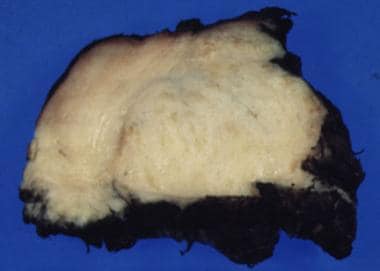
The involved portion of the thyroid gland in patients with Riedel's thyroiditis (RT) is typically described as stony or woody. Involvement is most often unilateral but may also be bilateral. The thyroid mass is generally well circumscribed but not encapsulated. Extension of the fibrotic process to adjacent structures of the neck results in fixation of the thyroid mass and loss of tissue planes. Fibrosis may invade the strap muscles, trachea, esophagus, carotids, parathyroid glands, and laryngeal nerves. When incised, the involved tissue is relatively avascular, "cuts like cartilage," and is often white or pale gray. RT cannot be distinguished from anaplastic carcinoma based on gross pathologic findings.

In 1957, Beahrs and colleagues established the microscopic criteria for the diagnosis of RT. These criteria, since modified, include the following7:

  • A fibroinflammatory process that involves all or a portion of the thyroid gland
  • The presence of gross or microscopic extension of the fibrosis beyond the thyroid capsule into adjacent anatomic structures
  • Infiltrates of inflammatory cells without giant cells, lymphoid follicles, oncocytes, or granulomas
  • Evidence of occlusive vasculitis
  • Absence of neoplasm

Collagen-laden, fibrous bands infiltrate the involved portion of the thyroid gland. Ultimately, the thyroid acini are reduced or obliterated. A cellular infiltrate of lymphocytes, plasma cells, and eosinophils accompanies the fibrosis. Inflammatory cells within the walls of small arteries and veins may produce a local vasculitis. Invasion of the fibroinflammatory process beyond the thyroid capsule erases normal anatomic planes.


Medical Care

The rarity of Riedel's thyroiditis (RT) makes controlled studies of RT therapy impractical. Recommendations for medical treatment have been largely based on empirical experience.

  • Currently, corticosteroid therapy is the medical treatment of choice for patients with RT.8
    • Most studies note a reduction in goiter size and the relief of local compressive symptoms, although some patients show no benefit.
    • Some investigators believe that a favorable response is more likely early in the course of the disease. Improvement is less likely to occur in patients with advanced RT when the affected portions of the thyroid gland have been completely replaced by fibrotic tissue.
    • Corticosteroids are believed to act by reducing inflammation and by inhibiting the actions of fibrinogenic cytokines.
    • No consensus has been reached on the corticosteroid dosing regimen. However, all studies advocate an initially high dose to alleviate compressive symptoms, followed by gradual tapering over months to a lower maintenance dose.
    • The effectiveness of therapy can be judged by symptomatic improvement and by following the reduction of the ESR and the thyroid autoantibody levels. Many patients can be weaned from therapy, but others require more prolonged treatment.
  • Tamoxifen has been used in RT patients as a first-line therapy, but it has also been employed after the failure of corticosteroid treatment. The usual dose that has been found to be effective is 20 mg taken orally twice a day.4 Patients who respond can be tapered to 20 mg once each day or to 10 mg twice a day. Because of the relatively infrequent occurrence of RT, comparison studies with tamoxifen and steroid therapy have not been undertaken. Few and colleagues initially advocated tamoxifen in a study of 4 patients with progressive RT who were not responsive to corticosteroids or surgical decompression.9 Each patient had a decrease of 50% or more in the size of the thyroid mass, with one patient having total resolution. Since then, additional reports have described successful treatment of RT with tamoxifen.10, 11, 12
    • An oral dose of 20 mg twice a day provided each patient with symptomatic improvement, as well as a reduction in the size of the involved tissue as measured on CT scan.
    • Estrogen receptors have not been demonstrated in RT tissue. Therefore, the mechanism of action was not proposed to be tamoxifen's antiestrogen activity but rather its induction of transforming growth factor beta, a potent inhibitor of fibroblast proliferation.9
  • Use levothyroxine therapy to correct hypothyroidism associated with RT.13 Many authorities advocate not only thyroid replacement but also suppression of thyroid-stimulating hormone (TSH) in all patients with RT, regardless of thyroid function. However, the degree to which TSH stimulates the fibroinflammatory processes of RT, if at all, is unknown. As such, recommendations for TSH suppression must be regarded as empirical.

Surgical Care

Surgery for patients with Riedel's thyroiditis (RT) serves the dual purpose of establishing the diagnosis and relieving tracheal compression. A wedge resection of the thyroid isthmus remains the preferred method for accomplishing these ends. Surgery is indicated when tissue is needed for diagnosis, medical treatment shows no benefit, or compressive symptoms are very severe.14

  • Open surgical biopsy is essential to the definitive establishment of the diagnosis of RT and to the exclusion of carcinoma.
  • A wedge resection of the isthmus relieves tracheal compression. Grossly, the affected tissue is stony and hard and is white or pale gray. It has a similar feel to cartilage when incised.
  • More extensive thyroid surgery is generally discouraged because extrathyroid fibrosclerosis alters the anatomy and obliterates surgical planes. The trachea, esophagus, carotids, recurrent laryngeal nerves, or parathyroid glands may be encased by fibrotic tissue and are at increased risk for iatrogenic surgical damage.

Consultations

An endocrinologist should be consulted in the management of Riedel's thyroiditis (RT). Surgical consultation is necessary for a diagnostic open biopsy.


The goals of pharmacotherapy are to reduce morbidity and prevent complications.

Drug Category: Corticosteroids

Have anti-inflammatory properties and cause profound and varied metabolic effects. Corticosteroids modify the body's immune response to diverse stimuli.

Drug NamePrednisone (Deltasone, Meticorten, Orasone, Sterapred)
DescriptionImmunosuppressant for the treatment of autoimmune disorders. Prednisone may decrease inflammation by reversing increased capillary permeability and suppressing PMN activity. The drug stabilizes lysosomal membranes and suppresses lymphocytes and antibody production.
Adult Dose40-80 mg PO qd or divided bid, usually 1 mg/kg; taper as symptoms resolve
Pediatric DoseNot established
ContraindicationsDocumented hypersensitivity; viral infection; peptic ulcer disease; hepatic dysfunction; connective-tissue infections; fungal or tubercular skin infections; GI tract disease
InteractionsCoadministration with estrogens may decrease clearance; concurrent use with digoxin may cause digitalis toxicity secondary to hypokalemia; phenobarbital, phenytoin, and rifampin may increase metabolism of glucocorticoids (consider increasing maintenance dose); monitor for hypokalemia with coadministration of diuretics
PregnancyB - Fetal risk not confirmed in studies in humans but has been shown in some studies in animals
PrecautionsHyperglycemia, edema, osteonecrosis, myopathy, peptic ulcer disease, hypokalemia, osteoporosis, euphoria, psychosis, myasthenia gravis, growth suppression, and infections may occur; abrupt discontinuation may cause adrenal crisis

Drug Category: Antineoplastic agents

For progressive Riedel's thyroiditis that is not responsive to corticosteroids or surgical decompression, or for patients with contraindications to corticosteroid therapy. Antineoplastic agents provide symptomatic improvement, as well as size reduction of the involved tissue as measured on CT scans.

Drug NameTamoxifen (Nolvadex)
DescriptionProposed mechanism of action is not antiestrogen activity but rather the induction of transforming growth factor beta (a potent inhibitor of fibroblast proliferation).
Adult Dose20 mg PO bid
Pediatric DoseNot established
ContraindicationsDocumented hypersensitivity
InteractionsMay exacerbate hepatotoxic effects of allopurinol; may increase cyclosporine serum levels; increases anticoagulant effects of warfarin; aminoglutethimide reduces serum concentration of tamoxifen; cyclophosphamide, methotrexate, and 5-FU increase thrombotic risk of tamoxifen
PregnancyD - Fetal risk shown in humans; use only if benefits outweigh risk to fetus
PrecautionsCaution in leukopenia, thrombocytopenia, and hyperlipidemia; decreased visual acuity, corneal changes, and retinopathy may occur with >1 y of use; may induce ovulation

Drug Category: Thyroid hormones

Used to correct hypothyroidism associated with Riedel's thyroiditis.

Drug NameLevothyroxine (Levothroid, Levoxyl, Synthroid, Unithroid)
DescriptionRapidly inhibits the release of thyroid hormones via a direct effect on the thyroid gland; it also inhibits the synthesis of thyroid hormones. Iodide also appears to attenuate cAMP-mediated effects of TSH. In active form, levothyroxine influences the growth and maturation of tissues. It is involved in normal growth, metabolism, and development.
Adult DoseUsual dose 50-150 mcg/d PO; in hypothyroid patients with possible cardiovascular disease, start with 25-50 mcg/d PO and increase by 25-50 mcg/d q2-4wk until TSH level normalizes; dose usually not to exceed 150-200 mcg/d
Pediatric DoseNot established
ContraindicationsDocumented hypersensitivity; uncorrected adrenal insufficiency
InteractionsCholestyramine may decrease absorption; estrogens may decrease response to thyroid hormone therapy in patients with nonfunctioning thyroid glands; effect of anticoagulants increased when coadministered; activity of some beta blockers may decrease when a patient who is hypothyroid is converted to euthyroid state
PregnancyA - Fetal risk not revealed in controlled studies in humans
PrecautionsCaution in angina pectoris or cardiovascular disease; monitor thyroid status periodically


Further Inpatient Care

  • The patient with Riedel's thyroiditis should be followed for progression of the disease and for the development of multifocal fibrosclerosis. Repeat imaging of the neck by CT scanning or MRI should be performed at intervals defined by the rate of progression.
  • The patient's TSH level should be routinely checked and maintained in the reference range, with levothyroxine administered as necessary.13

Complications

  • Airway obstruction
  • Dysphonia
  • Hoarseness
  • Hypothyroidism
  • Hypoparathyroidism
  • Dysphagia

Prognosis

  • Riedel's thyroiditis (RT) is generally a self-limited disease with a favorable prognosis. Death due to airway compromise is very rare.
  • One third of patients with RT ultimately develop at least 1 extracervical manifestation of multifocal fibrosclerosis (such as retroperitoneal fibrosis, mediastinal fibrosis, or sclerosing cholangitis).3 In such patients, the prognosis essentially becomes that of extracervical fibrosclerosis. Therefore, when RT is diagnosed, it is essential to perform abdominal and chest imaging studies to exclude concomitant, extracervical entities from multifocal fibrosclerosis.


Medical/Legal Pitfalls

  • Failure to correctly distinguish Riedel's thyroiditis (RT) from anaplastic thyroid carcinoma or sclerosing variant of papillary carcinoma15
    • Fine-needle biopsy cannot be relied upon to distinguish these entities because each may demonstrate fibrotic changes. An open surgical biopsy is essential to establish the correct diagnosis and to relieve tracheal compression, if present.
  • Failure to distinguish between fibrotic Hashimoto's thyroiditis and RT
    • Fibrosclerosis of the surrounding tissue by RT can lead to serious morbidity and death.


Media file 1:  Riedel's (fibrosing) thyroiditis. The atrophic thyroid follicles are surrounded by a dense, inflammatory infiltrate composed of lymphocytes, plasma cells, and eosinophils and accompanied by dense fibrosis. The wide bands of keloid-type collagen located between the individual follicles and surrounding clusters are a common feature of this condition.
Click to see larger pictureClick to see detailView Full Size Image
Media type:  Image

Media file 2:  Riedel's (fibrosing) thyroiditis. This vein shows infiltration of its wall by a heavy, inflammatory infiltrate.
Click to see larger pictureClick to see detailView Full Size Image
Media type:  Image

Media file 3:  Riedel's (fibrosing) thyroiditis. The inflammatory infiltrate and dense, pink bands of fibrosis can obliterate thyroid follicles. Image courtesy of SL Lee.
Click to see larger pictureClick to see detailView Full Size Image
Media type:  Image

Media file 4:  Gross pathology of Riedel's (fibrosing) thyroiditis. The cut edge is avascular, with a characteristic white color. Image courtesy of SL Lee.
Click to see larger pictureClick to see detailView Full Size Image
Media type:  Photo


  1. Riedel BM. Die chronische, zur Bildung eisenharter Tumoren fuhrende Entzundung der Schilddruse. Verh Dtsch Ges Chir. 1896;25:101-5.
  2. Schwaegerle SM, Bauer TW, Esselstyn CB Jr. Riedel's thyroiditis. Am J Clin Pathol. Dec 1988;90(6):715-22. [Medline].
  3. Oguz KK, Kiratli H, Oguz O, et al. Multifocal fibrosclerosis: a new case report and review of the literature. Eur Radiol. May 2002;12(5):1134-8. [Medline].
  4. Perimenis P, Marcelli S, Leteurtre E, et al. [Riedel's thyroiditis: current aspects]. Presse Med. Jun 2008;37(6 Pt 2):1015-21. [Medline].
  5. Drieskens O, Blockmans D, Van den Bruel A, et al. Riedel's thyroiditis and retroperitoneal fibrosis in multifocal fibrosclerosis: positron emission tomographic findings. Clin Nucl Med. Jun 2002;27(6):413-5. [Medline].
  6. Kotilainen P, Airas L, Kojo T, et al. Positron emission tomography as an aid in the diagnosis and follow-up of Riedel's thyroiditis. Eur J Intern Med. 2004;15:186-9.
  7. Beahrs OH, McConahey WM, Woolner LB. Invasive fibrous thyroiditis (Riedel's struma). J Clin Endocrinol Metab. Feb 1957;17(2):201-20. [Medline].
  8. Vaidya B, Harris PE, Barrett P, et al. Corticosteroid therapy in Riedel's thyroiditis. Postgrad Med J. Dec 1997;73(866):817-9. [Medline].
  9. Few J, Thompson NW, Angelos P, et al. Riedel's thyroiditis: treatment with tamoxifen. Surgery. Dec 1996;120(6):993-8; discussion 998-9. [Medline].
  10. De M, Jaap A, Dempster J. Tamoxifen therapy in steroid resistant Reidel's thyroiditis. Scott Med J. Apr 2001;46(2):56-7. [Medline].
  11. Jung YJ, Schaub CR, Rhoades R, et al. A case of Riedel's thyroiditis treated with tamoxifen: another successful outcome. Endocr Pract. 2004;10(6):483-6.
  12. Pritchyk K, Newkirk K, Garlich P, et al. Tamoxifen therapy for Riedel's thyroiditis. Laryngoscope. Oct 2004;114(10):1758-60. [Medline].
  13. Lo JC, Loh KC, Rubin AL, et al. Riedel's thyroiditis presenting with hypothyroidism and hypoparathyroidism: dramatic response to glucocorticoid and thyroxine therapy. Clin Endocrinol (Oxf). Jun 1998;48(6):815-8. [Medline].
  14. Lorenz K, Gimm O, Holzhausen HJ, et al. Riedel's thyroiditis: impact and strategy of a challenging surgery. Langenbecks Arch Surg. Jul 2007;392(4):405-12. [Medline].
  15. Cho MH, Kim CS, Park JS, et al. Riedel's thyroiditis in a patient with recurrent subacute thyroiditis: a case report and review of the literature. Endocr J. Aug 2007;54(4):559-62. [Medline][Full Text].
  16. Casoli P, Tumiati B. Hypoparathyroidism secondary to Riedel's thyroiditis. A case report and a review of the literature. Ann Ital Med Int. Jan-Mar 1999;14(1):54-7. [Medline].
  17. Fontaine S, Gaches F, Lamant L, et al. An unusual form of Riedel's thyroiditis: a case report and review of the literature. Thyroid. Jan 2005;15(1):85-8. [Medline].
  18. Geissler B, Wagner T, Dorn R, et al. Extensive sterile abscess in an invasive fibrous thyroiditis (Riedel's thyroiditis) caused by an occlusive vasculitis. J Endocrinol Invest. Feb 2001;24(2):111-5. [Medline].
  19. Hao SP, Chen JF, Yen KC. Riedel's thyroiditis associated with follicular carcinoma. Eur Arch Otorhinolaryngol. 1999;256(9):470-2. [Medline].
  20. Hay ID. Thyroiditis: a clinical update. Mayo Clin Proc. Dec 1985;60(12):836-43. [Medline].
  21. Kabalak T, Ozgen AG, Gunel O, et al. Occurrence of Riedel's thyroiditis in the course of sub-acute thyroiditis. J Endocrinol Invest. Jun 2000;23(6):399-401. [Medline].
  22. Malotte MJ, Chonkich GD, Zuppan CW. Riedel's thyroiditis. Arch Otolaryngol Head Neck Surg. Feb 1991;117(2):214-7. [Medline].
  23. Ozgen A, Cila A. Riedel's thyroiditis in multifocal fibrosclerosis: CT and MR imaging findings. AJNR Am J Neuroradiol. Feb 2000;21(2):320-1. [Medline][Full Text].
  24. Papi G, LiVolsi VA. Current concepts on Riedel thyroiditis. Am J Clin Pathol. 2004;121(Suppl 1):S50-S63. [Medline].
  25. Tutuncu NB, Erbas T, Bayraktar M, et al. Multifocal idiopathic fibrosclerosis manifesting with Riedel's thyroiditis. Endocr Pract. Nov-Dec 2000;6(6):447-9. [Medline].
  26. Wan SK, Chan JK, Tang SK. Paucicellular variant of anaplastic thyroid carcinoma. A mimic of Reidel's thyroiditis. Am J Clin Pathol. Apr 1996;105(4):388-93. [Medline].
  27. Zelmanovitz F, Zelmanovitz T, Beck M, et al. Riedel's thyroiditis associated with high titers of antimicrosomal and antithyroglobulin antibodies and hypothyroidism. J Endocrinol Invest. Oct 1994;17(9):733-7. [Medline].

Riedel Thyroiditis excerpt

Article Last Updated: Sep 5, 2008