Continually Updated Clinical Reference
 
 
  All Sources     eMedicine     Medscape     Drug Reference     MEDLINE
 
eMedicine - Candidiasis : Article by

Quick Find
Authors & Editors
Introduction
Clinical
Differentials
Workup
Treatment
Medication
Follow-up
Miscellaneous
Multimedia
References

Related Articles
Abdominal Abscess

Aspergillosis

Cryptococcosis

Sepsis, Bacterial

Septic Shock


Patient Education
Yeast and Fungal Infections Center

Yeast Infection Overview

Yeast Infection Causes

Yeast Infection Symptoms

Yeast Infection Treatment


Author: Jose A Hidalgo, MD, Assistant Professor, Universidad de San Marcos Medical School; Attending Physician, Department of Internal Medicine, Division of Infectious Diseases, Guillermo Almenara Hospital

Jose A Hidalgo is a member of the following medical societies: American College of Physicians-American Society of Internal Medicine, American Medical Association, American Society of Tropical Medicine and Hygiene, and Infectious Diseases Society of America

Coauthor(s): Jose A Vazquez, MD, FACP, FIDSA, Consulting Staff, Division of Infectious Diseases, Henry Ford Hospital; Professor, Department of Internal Medicine, Wayne State University School of Medicine

Editors: David Hall Shepp, MD, Program Director, Fellowship in Infectious Diseases, Department of Medicine, North Shore University Hospital; Associate Professor, New York University School of Medicine; Francisco Talavera, PharmD, PhD, Senior Pharmacy Editor, eMedicine; Ronald A Greenfield, MD, Professor, Chief, Department of Internal Medicine, Section of Infectious Diseases, University of Oklahoma College of Medicine; Eleftherios Mylonakis, MD, Clinical and Research Fellow, Department of Internal Medicine, Division of Infectious Diseases, Massachusetts General Hospital; Burke A Cunha, MD, Professor of Medicine, State University of New York School of Medicine at Stony Brook; Chief, Infectious Disease Division, Winthrop-University Hospital

Author and Editor Disclosure

Synonyms and related keywords: candidosis, candidal infection, fungal infection, fungus infection, Candida, mucocutaneous candidiasis, candidemia, disseminated candidiasis, candidal colonization, candidiasis syndromes, intertrigo, paronychia, onychomycosis, oral thrush, fungi, fungal pathogens, mucosal candidiasis, systemic candidiasis, hepatosplenic candidiasis, Candida peritonitis, fungemia, life-threatening invasive candidiasis, opportunistic nosocomial fungal infections, yeastlike fungi, granulocytopenia, bone-marrow transplantation, solid-organ transplantation, parenteral hyperalimentation, hematologic malignancies, Foley catheters, solid neoplasms, recent chemotherapy, recent radiation therapy, corticosteroids, broad-spectrum antibiotics, burns, prolonged hospitalization, severe trauma, recent bacterial infection, recent surgery, gastrointestinal tract surgery, central intravascular access devices, premature birth, hemodialysis, oropharyngeal candidiasis,OPC,indwellingvascular devices, collagen-vascular disease, esophageal candidiasis, Candida esophagitis, vulvovaginal candidiasis, VVC, cutaneous candidiasis syndromes, Candida folliculitis, diabetes mellitus, chronic mucocutaneous candidiasis, hypoparathyroidism, Addisondisease, hypothyroidism, thymomas, dental dysplasia, polyglandular autoimmune disease, antibodies to melanin-producing cells, vitiligo, membranous candidiasis, erythematous candidiasis, chronic atrophic candidiasis, denture stomatitis, angular cheilitis, dysphagia,odynophagia, nonesophageal gastrointestinal candidiasis, respiratory tract candidiasis, laryngeal candidiasis, Candida tracheobronchitis, Candida pneumonia, genitourinary tract candidiasis, Candida balanitis, Candida cystitis, fungal balls, candidal endophthalmitis, intravascular catheter-related candidiasis, fungal endocarditis, Candida parapsilosis, renal candidiasis, fungalmeningitis, granulomatous vasculitis,diffuse cerebritis with microabscesses, mycotic aneurysms, Candida arthritis, Candida osteomyelitis, Candida costochondritis, Candida myositis, Candida myocarditis-pericarditis, Candida splenic abscess, Candida hypersplenism, Candida cholecystitis, Candida albicans, C albicans, Candida glabrata, C glabrata, Candida tropicalis, C tropicalis, Candida krusei, C krusei, Candida kefyr, C kefyr, Candida dubliniensis, C dubliniensis, Candida guilliermondi, C guilliermondi, Candida lusitaniae, C lusitaniae

Background

Candida species are ubiquitous fungi and are the most common fungal pathogens that affect humans. The growing problem of mucosal and systemic candidiasis reflects the enormous increase in the pool of patients at risk and the increased opportunity that exists for Candida species to invade tissues normally resistant to invasion. Candida species are true opportunistic pathogens that exploit recent technological advances to gain access to the circulation and deep tissues.

The increased prevalence of local and systemic disease caused by Candida species has resulted in numerous new clinical syndromes, the expression of which is primarily dependent on the immune status of the host. Candida species produce a wide spectrum of diseases, ranging from superficial mucocutaneous disease to invasive illnesses, such as hepatosplenic candidiasis, Candida peritonitis, and systemic candidiasis. Management of serious and life-threatening invasive candidiasis remains severely hampered by delays in diagnosis and the lack of reliable diagnostic methods that allow detection of both fungemia and tissue invasion by Candida species.

Advances in medical technology, chemotherapeutics, cancer therapy, and organ transplantation have had a major impact on reducing the morbidity and mortality of life-threatening disease. Patients who are critically ill and in medical and surgical ICUs have been the prime targets for opportunistic nosocomial fungal infections, primarily due to Candida species. Studies suggest that the problem is not under control and, in fact, show it is worsening. On a daily basis, virtually all physicians are confronted with a positive Candida isolate obtained from one or more various anatomical sites. High-risk areas for Candida infection include neonatal, pediatric, and adult ICUs, both medical and surgical. Candida infections can involve any anatomical structure.

Pathophysiology

Candida species are yeastlike fungi that can form true hyphae and pseudohyphae. For the most part, Candida species are confined to human and animal reservoirs; however, they are frequently recovered from the hospital environment, including on foods, counter tops, air-conditioning vents, floors, respirators, and medical personnel. They are also normal commensals of diseased skin and mucosal membranes of the GI, genitourinary, and respiratory tracts.

Candida species also contain their own set of well-recognized virulence factors. Although not well characterized, several virulence factors may contribute to their ability to cause infection. The main virulence factors are surface molecules that permit adherence of the organism to other structures (eg, human cells, extracellular matrix, prosthetic devices), acid proteases, and the ability to convert to a hyphal form.

As with most fungal infections, host defects also play a significant role in the development of candidal infections. Numerous host defects are associated with candidal infections.

Host defense mechanisms against Candida infection and their associated defects that allow infection are as follows:

  • Intact mucocutaneous barriers - Wounds, intravenous catheters, burns, ulcerations
  • Phagocytic cells - Granulocytopenia
  • Polymorphonuclear leukocytes - Chronic granulomatous disease
  • Monocytic cells - Myeloperoxidase deficiency
  • Complement - Hypocomplementemia
  • Immunoglobulins - Hypogammaglobulinemia
  • Cell-mediated immunity - Chronic mucocutaneous candidiasis, diabetes mellitus, cyclosporin A, corticosteroids, HIV infection
  • Mucocutaneous protective bacterial florae - Broad-spectrum antibiotics

Risk factors associated with candidiasis include the following:

  • Granulocytopenia
  • Bone marrow transplantation
  • Solid organ transplantation (liver, kidney)
  • Parenteral hyperalimentation
  • Hematologic malignancies
  • Foley catheters
  • Solid neoplasms
  • Recent chemotherapy or radiation therapy
  • Corticosteroids
  • Broad-spectrum antibiotics
  • Burns
  • Prolonged hospitalization
  • Severe trauma
  • Recent bacterial infection
  • Recent surgery
  • GI tract surgery
  • Central intravascular access devices
  • Premature birth
  • Hemodialysis

The first step in the development of a candidal infection is colonization of the mucocutaneous surfaces. The factors outlined above are all associated with increased colonization rates. The routes of candidal invasion are (1) disruption of a colonized surface (skin or mucosa), allowing the organisms access to the bloodstream, and (2) persorption via the GI wall, which may occur following massive colonization with large numbers of organisms that pass directly into the bloodstream.

Frequency

United States

Candida species are the most common cause of fungal infection affecting immunocompromised patients. Oropharyngeal colonization is found in 30-55% of healthy young adults, and Candida species may be detected in 40-65% of normal fecal florae.

Three of every 4 women have at least 1 bout of vulvovaginal candidiasis (VVC) during their lifetime.

In HIV-positive persons who are not receiving highly active antiretroviral therapy (HAART), more than 90% experience oropharyngeal candidiasis (OPC) and 10% have at least 1 episode of esophageal candidiasis.

In persons with systemic infections, Candida species are now the fourth most commonly isolated pathogens from blood cultures.

Clinical and autopsy studies have confirmed the marked increase in the incidence of disseminated candidiasis, reflecting a parallel increase in the frequency of candidemia. This increase is multifactorial in origin and reflects increased recognition of the fungus, a growing population of patients at risk (ie, patients undergoing complex surgical procedures, patients with indwelling vascular devices), and the improved survival of patients with underlying neoplasms or collagen-vascular disease and patients who are immunosuppressed.

International

Similar rates of mucocutaneous and systemic candidiasis have been observed worldwide. In fact, throughout the world, Candida species have replaced Cryptococcus species as the most common fungal pathogens affecting immunocompromised hosts.

Mortality/Morbidity

  • Mucocutaneous candidiasis: Most candidal infections are mucocutaneous and, as such, do not cause mortality. However, in patients with advanced immunodeficiency due to HIV infection, these mucosal infections can become refractory to antifungal therapy and may lead to severe oropharyngeal and esophageal candidiasis that initiates a vicious cycle of poor oral intake, malnutrition, wasting, and early death.
  • Candidemia and disseminated candidiasis: Mortality rates for these infections have not improved markedly over the past few years and remain in the range of 30-40%. Systemic candidiasis is the cause of more case fatalities than any other systemic mycosis. More than a decade ago, investigators reported the enormous economic impact of systemic candidiasis in hospitalized patients. Candidemia is associated with considerable prolongation of length of stay in the hospital (70 vs 40 d in patients who are comparable, matched, and nonfungemic). Although mucocutaneous fungal infections, such as oral thrush and Candida esophagitis, are extremely common in patients with AIDS, candidemia and disseminated candidiasis are uncommon.

Sex

Colonization with Candida species occurs in equal numbers of males and females; however, in women, VVC is the second most common cause of vaginitis.

Age

Candidal colonization is at the highest levels during the extremes of ages, in neonates and in people older than 65 years. In addition, mucocutaneous candidiasis is also more prevalent in neonates and older adults.


History

Infections due to Candida species can manifest in a wide spectrum of clinical syndromes as described below. The clinical presentation can vary depending on the type of infection and the degree of immunosuppression. Clinical syndromes associated with Candida infection are the following:

Cutaneous candidiasis syndromes

  • Generalized cutaneous candidiasis: This is an unusual form of cutaneous candidiasis that manifests as a diffuse eruption over the trunk, thorax, and extremities. The patient has a history of generalized pruritus, with increased severity in the genitocrural folds, anal region, axillae, hands, and feet. Physical examination reveals a widespread rash that begins as individual vesicles that spread into large confluent areas.
  • Intertrigo: The patient has a history of intertrigo affecting any site where the skin surfaces are in close proximity, providing a warm and moist environment. Pruritic red rash occurs. Physical examination reveals a rash that begins with vesiculopustules, which enlarge and rupture, causing maceration and fissuring. The area involved has a scalloped border with a white rim consisting of necrotic epidermis that surrounds the erythematous macerated base. Satellite lesions are frequently found and may coalesce and extend into larger lesions.
  • Metastatic skin lesions: Characteristic skin lesions occur in approximately 10% of patients with disseminated candidiasis and candidemia. The lesions may be numerous or few. Lesions are generally described as erythematous, firm, nontender macronodular lesions with discrete borders. Biopsy specimens of these lesions demonstrate yeast cells, hyphae, or pseudohyphae, and cultures are positive for Candida species approximately 50% of the time.
  • Candida folliculitis: The infection is found predominantly in the hair follicles and, rarely, can become extensive.
  • Paronychia and onychomycosis: Frequently, paronychia and onychomycosis are associated with immersion of the hands in water and with diabetes mellitus. The patient has a history of a painful and erythematous area around and underneath the nail and nail bed. Physical examination reveals an area of inflammation that becomes warm, glistening, tense, and erythematous and may extend extensively under the nail. It is associated with secondary nail thickening, ridging, discoloration, and occasional nail loss.

Chronic mucocutaneous candidiasis

Chronic mucocutaneous candidiasis describes a group of Candida infections of the skin, hair, nails, and mucous membranes that tends to have a protracted and persistent course.

  • History: Most infections begin in infancy or the first 2 decades of life; onset in people older than 30 years is rare.
    • Most patients survive for prolonged periods and rarely experience disseminated fungal infections. The most common cause of death is bacterial sepsis.
    • Chronic mucocutaneous candidiasis is frequently associated with endocrinopathies, such as the following:
      • Hypoparathyroidism
      • Addison disease
      • Hypothyroidism
      • Diabetes mellitus
      • Autoimmune antibodies to adrenal, thyroid, and gastric tissues (approximately 50%)
      • Thymomas
      • Dental dysplasia
      • Polyglandular autoimmune disease
      • Antibodies to melanin-producing cells
  • Physical examination: Findings reveal disfiguring lesions of the face, scalp, hands, and nails. This is occasionally associated with oral thrush and vitiligo.

GI tract candidiasis

  • Oropharyngeal candidiasis
    • The patient has a history of HIV infection, denture wear, diabetes mellitus, or frequent use of broad-spectrum antibiotics or inhaled steroids. Patients may be asymptomatic, but variable symptoms may include the following:
      • Sore and painful mouth
      • Burning mouth or tongue
      • Dysphagia
      • Whitish, thick patches on the oral mucosa
    • Physical examination reveals a diffuse erythema and white patches that appear on the surfaces of the buccal mucosa, throat, tongue, and gums. The following are the 5 types of OPC:
      • Membranous candidiasis: This is one of the most common types and is characterized by creamy-white curdlike patches on the mucosal surfaces.
      • Erythematous candidiasis: This is associated with an erythematous patch on the hard and soft palates.
      • Chronic atrophic candidiasis (denture stomatitis): This type is also thought to be one of the most common forms of the disease. The presenting signs and symptoms include chronic erythema and edema of the portion of the palate that comes into contact with dentures.
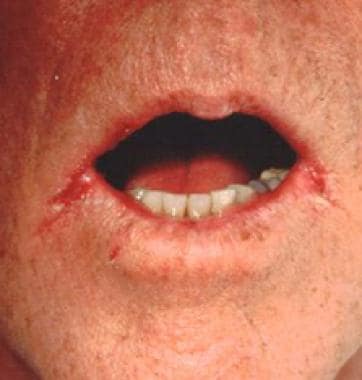
      • Angular cheilitis: An inflammatory reaction, this type is characterized by soreness, erythema, and fissuring at the corners of the mouth.
      • Mixed: A combination of any of the above types is possible.
  • Esophageal candidiasis
    • The patient's history usually includes chemotherapy, the use of broad-spectrum antibiotics or inhaled steroids, or the presence of HIV infection or hematologic or solid organ malignancy. Patients may be asymptomatic, but variable symptoms may include the following:
      • No oral disease (>50% of patients)
      • Dysphagia
      • Odynophagia
      • Retrosternal pain
      • Epigastric pain
      • Nausea and vomiting
    • Upon physical examination, oral candidiasis is nearly always present.
  • Nonesophageal GI candidiasis
    • Most commonly, the patient's history includes an association with neoplastic disease of the GI tract. The stomach is found to be the second most commonly infected site after the esophagus. With less frequency, patients may have chronic gastric ulcerations, gastric perforations, or malignant gastric ulcers with concomitant candidal infection. The third most common site of infection (20%) is the small bowel. The frequency of candidal infection in the small bowel is the same as in the large bowel. Approximately 15% of patients develop systemic candidiasis.
    • Physical examination findings are variable and depend on the site of infection. The diagnosis, however, cannot be made solely on culture results because approximately 20-25% of the population is colonized by Candida. The following symptoms may be present:
      • Epigastric pain
      • Nausea and vomiting
      • Abdominal pain
      • Fever and chills
      • Occasionally, abdominal mass

Respiratory tract candidiasis

The respiratory tract is frequently colonized with Candida species, especially in hospitalized patients. In ambulatory patients, 20-25% of the population is colonized by Candida species.

  • Laryngeal candidiasis: This is very unusual but may be a source for disseminated candidiasis. Laryngeal candidiasis is primarily observed in patients with hematologic malignancies. The patient may present with a sore throat and hoarseness. Physical examination findings generally are unremarkable, and the diagnosis is made by direct or indirect laryngoscopy.
  • Candida tracheobronchitis: This is a rare form of candidiasis. Most patients with Candida tracheobronchitis are seropositive for HIV or are severely immunocompromised, reporting fever, productive cough, and shortness of breath. Physical examination reveals dyspnea and scattered rhonchi. The diagnosis is generally made after bronchoscopy.
  • Candida pneumonia: It does not exist alone and occurs only rarely as part of disseminated candidiasis. The most common form is multiple abscesses due to hematogenous dissemination of Candida species. The high degree of colonization and isolation of Candida species from the respiratory tract makes diagnosing this entity difficult. The patient's history reveals similar risk factors for disseminated candidiasis, and patients report shortness of breath, cough, and respiratory distress. Physical examination reveals fever, dyspnea, and variable breath sounds, from clear to rhonchi to scattered rales.

Genitourinary tract candidiasis

  • Vulvovaginal candidiasis: This is the second most common cause of vaginitis. The patient's history includes vulvar pruritus, vaginal discharge, dysuria, and dyspareunia. Approximately 10% of women experience repeated attacks of VVC without precipitating risk factors. Physical examination findings include a vagina and labia that are usually erythematous, a thick curdlike discharge, and a normal cervix upon speculum examination.
  • Candida balanitis: Patients report itchiness of the penis. Lesions and whitish patches are present. Candida balanitis is acquired through sexual intercourse with a partner who has VVC. Physical examination reveals vesicles on the penis that develop later into patches resembling thrush. The rash may spread to the thighs, gluteal folds, buttocks, and scrotum.
  • Candida cystitis: Many patients frequently are asymptomatic. However, bladder invasion may result in frequency, urgency, dysuria, hematuria, and suprapubic pain. Candida cystitis may or may not be associated with the use of a Foley catheter. Physical examination may reveal suprapubic pain; otherwise, examination findings are unremarkable.
  • Asymptomatic candiduria: Most catheterized patients with persistent candiduria are asymptomatic, similar to noncatheterized patients. Most patients with candiduria have easily identifiable risk factors for Candida colonization. Thus, the distinction between invasive disease and colonization cannot be made solely on culture results because approximately 5-10% of all urine cultures are positive for Candida.
  • Ascending pyelonephritis: The use of stents and indwelling devices, along with the presence of diabetes, is the major risk factor predisposing patients to ascending infection. The patient frequently has a history of flank pain, abdominal cramps, nausea, vomiting, fever, chills, and hematuria, Physical examination reveals abdominal pain, costovertebral-angle tenderness, and fever.
  • Fungal balls: This is due to the accumulation of fungal material in the renal pelvis. The condition may produce intermittent urinary tract obstruction with subsequent anuria and ensuing renal insufficiency.

Hepatosplenic candidiasis

A variety of systemic candidiasis patients have an underlying hematologic malignancy and are in the recovery phase of a prolonged episode of neutropenia. The patient's history includes the following:

  • Fever unresponsive to broad-spectrum antimicrobials
  • Right upper quadrant pain
  • Abdominal pain and distension
  • Jaundice (rarely)

Physical examination findings include right upper quadrant tenderness and hepatosplenomegaly (<40%).

Systemic candidiasis

Systemic candidiasis can be divided into 2 major categories, which are candidemia and disseminated candidiasis (organ infection by Candida species). Deep organ infections due to Candida species are generally observed as part of the disseminated candidiasis syndromes, which may be associated with either single or multiorgan involvement.

  • Candidemia
    • Candida species currently are the fourth most commonly isolated organism in blood cultures, and Candida infection generally is considered a nosocomially acquired infection. The patient's history commonly reveals the following:
      • Several days of fever that is unresponsive to broad-spectrum antimicrobials; frequently the only marker of infection
      • Prolonged intravenous catheterization
      • A history of several key risk factors (see Pathophysiology)
      • Possibly associated with multiorgan infection
    • Physical examination is remarkable for the following:
      • Fever
      • Macronodular skin lesions (approximately 10%)
      • Candidal endophthalmitis (approximately 10-28%)
      • Occasionally, septic shock (hypotension, tachycardia, tachypnea)
    • Other causes of candidemia without invasive disease include the following:
      • Intravascular catheter-related candidiasis: This entity usually responds promptly to catheter removal and antifungal treatment.
      • Suppurative thrombophlebitis: For the most part, this is observed secondary to prolonged central venous catheterization. Suppurative thrombophlebitis manifests as fever and candidemia, which persist despite antifungal therapy and catheter removal. Sepsis also may be present.
      • Endocarditis: The frequency of endocarditis has increased in the past few years. Endocarditis is the most common cause of fungal endocarditis and is primarily due to Candida albicans (>60% of cases). The most common valves involved are the aortic and mitral. The 2 different forms of endocarditis are exogenous, which is secondary to direct infection during surgery, and endogenous, which is due to secondary spread during candidemia and disseminated candidiasis. Endocarditis is frequently associated with 4 main risk factors. These are (1) intravenous heroin use, which is frequently associated with infection due to Candida parapsilosis; (2) chemotherapy; (3) prosthetic valves (approximately 50%); and (4) prolonged use of central venous catheters.

        The physical examination in patients with endocarditis reveals a broad range of manifestations, which include fever unresponsive to antimicrobials, hypotension, shock, new or changing murmurs, and large septic emboli to major organs, a characteristic of fungal endocarditis.

  • Disseminated candidiasis: This is frequently associated with multiple deep organ infections or may involve single organ infection. Unfortunately, of patients with disseminated candidiasis, as many as 40-60% may have blood culture results negative for Candida species. The history of a patient with presumptive disseminated candidiasis reveals a fever unresponsive to broad-spectrum antimicrobials and negative results from blood culture. Physical examination reveals fever (may be the only symptom) with an unknown source and sepsis and septic shock.
  • Candida endophthalmitis: The 2 forms of Candida endophthalmitis are the exogenous form and the endogenous form. Exogenous endophthalmitis is associated with either accidental or iatrogenic (postoperative) injury of the eye and inoculation of the organism from the environment. Endogenous endophthalmitis results from hematogenous seeding of the eye. It is found in 10-28% of patients with candidemia. The use of hematogenous candidal endophthalmitis as a marker of widespread disseminated candidiasis is important.
    • The patient's history reveals a broad range of manifestations.
      • Eye injury
      • Ophthalmic surgery
      • Underlying risk factors for candidemia
      • Asymptomatic and detected upon physical examination
      • Ocular pain
      • Photophobia
      • Scotomas
      • Floaters
    • Physical examination reveals fever.
    • Upon funduscopic examination, early lesions are the size of a pinhead, are off-white in color, and are found in the posterior vitreous with distinct margins and minimal vitreous haze. Classic lesions are large and off-white, similar to a cotton-ball, with indistinct borders covered by an underlying haze. Lesions are 3-dimensional and extend into the vitreous off the chorioretinal surface. They may be single or multiple.
  • Renal candidiasis
    • This most frequently is a consequence of candidemia and disseminated candidiasis. Patient history includes fever that is unresponsive to broad-spectrum antimicrobials. Frequently, patients are asymptomatic and lack symptoms referable to the kidney.
    • Physical examination generally is unremarkable, and renal candidiasis is diagnosed after urinalysis and renal biopsy. Otherwise, this condition is commonly diagnosed at autopsy.
  • CNS infections due to Candida species
    • CNS infections due to Candida species are rare and difficult to diagnose. The 2 primary forms are exogenous infection and endogenous infection. Exogenous infection results from postoperative infection, trauma, lumbar puncture, or shunt placement. Endogenous infection results from candidemia, thus involving the brain parenchyma and multiple small abscesses (eg, disseminated candidiasis).
    • As with other organ infections due to Candida species, patients usually have underlying risk factors for disseminated candidiasis. CNS infections due to Candida species are frequently found in patients hospitalized for long periods in ICUs. The spectrum of this disease includes the following:
      • Meningitis
      • Granulomatous vasculitis
      • Diffuse cerebritis with microabscesses
      • Mycotic aneurysms
      • Fever unresponsive to broad-spectrum antimicrobials
      • Mental status changes
    • Physical examination reveals the following:
      • Fever
      • Nuchal rigidity
      • Confusion
      • Coma
  • Candida arthritis, osteomyelitis, costochondritis, and myositis
    • In the past, musculoskeletal infections were rare; currently, they are more common, due to the increased frequency of candidemia and disseminated candidiasis. The most common sites of involvement are the knee and vertebral column. The pattern of involvement is similar to the pattern observed in bacterial infections. The infection may be exogenous or endogenous. The exogenous infection is frequently due to direct inoculation of the organisms, such as postoperative infection or trauma. Affected sites include the following:
      • Ribs and leg bones (<20 y)
      • Vertebral column and paraspinal abscess (adulthood)
      • Flat bones (any age group)
      • Sternum - Generally observed postoperatively after cardiac surgery
    • The patient frequently is asymptomatic, and the patient's history reveals underlying risk factors of disseminated candidiasis and localized pain over the affected site. The physical examination frequently is unremarkable; otherwise, it may reveal tenderness over the involved area, erythema, and bone deformity, occasionally with a draining sinus.
      • Arthritis: Generally, arthritis is a complication of disseminated candidiasis, but it may be caused by trauma or direct inoculation due to surgery or steroid injections. Most cases are acute and begin as a suppurative synovitis. A high percentage of cases progress to osteomyelitis. In addition, developing Candida arthritis after joint replacement is not uncommon.
      • Osteomyelitis: The 2 forms of osteomyelitis are exogenous infection and endogenous infection. The exogenous infection is frequently due to either direct inoculation of the organisms, such as through postoperative infection, trauma, or steroid injections. The endogenous form of osteomyelitis generally is a complication of disseminated candidiasis. Most cases due to hematogenous seeding infect the vertebral disks and progress to diskitis with extension into the vertebrae from contiguous spread. Other bones affected include the wrist, femur, scapula, and proximal humerus.
      • Costochondritis: This is rare and usually has 2 forms. Costochondritis usually results from either hematogenous spread or direct inoculation during surgery (median sternotomy). Frequently, costochondritis is associated with localized pain over the involved area.
      • Myositis: This occurs infrequently, and an association with disseminated candidiasis is common. Most patients are neutropenic. People with myositis have a history of muscular pain.
  • Myocarditis-pericarditis: This is due to hematogenous spread in association with disseminated disease and is rarely due to direct extension from the sternum or esophagus. Myocarditis-pericarditis occurs as diffuse abscesses scattered throughout the myocardium with normal cardiac tissue. In persons with disseminated candidiasis, the rate has been documented to be as high as 50%. The patient history reveals serious complications in 10-20% of cases without valve disease and fever and chills. Physical examination reveals fever, hypotension, shock, tachycardia, and new murmurs or rubs (changes in previously detected murmurs).
  • Candida peritonitis
    • The patient history frequently reveals an association with GI tract surgery, viscous perforation, or peritoneal dialysis. Candida peritonitis tends to remain localized, and only in 15% of cases does the infection disseminate into the blood stream. The range of manifestations is broad and includes fever and chills, abdominal pain and cramping, nausea and vomiting, and constipation.
    • Physical examination is significant for the following:
      • Fever
      • Abdominal distention
      • Abdominal pain
      • Absent bowel sounds
      • Rebound tenderness
      • Localized mass
  • Candida splenic abscess and hypersplenism: Both are manifestations of disseminated candidiasis and are usually simultaneously associated with liver involvement. Manifestations of hypersplenism are common (see Hepatosplenic candidiasis).
  • Candida cholecystitis: This is rare and generally is associated with bacterial cholangitis and ascending cholangitis. Most commonly, Candida cholecystitis is diagnosed at the time of surgery when a culture is obtained.

Physical

See History for physical examination findings paired with clinical syndromes.

Causes

More than 100 species of Candida exist in nature; only a few species are recognized causes of disease in humans.

  • The medically significant Candida species include the following:
    • C albicans, the most common species identified (50-60%)
    • Candida glabrata (15-20%)
    • C parapsilosis (10-20%)
    • Candida tropicalis (6-12%)
    • Candida krusei (1-3%)
    • Candida kefyr (<5%)
    • Candida guilliermondi (<5%)
    • Candida lusitaniae (<5%)
    • Candida dubliniensis, primarily recovered from patients who are positive for HIV
  • C glabrata and C albicans account for approximately 70-80% of yeast isolated from patients with invasive candidiasis. C glabrata has recently become important because of its increasing incidence worldwide, and it is intrinsically less susceptible to azoles and amphotericin B.
  • C krusei is important because of its intrinsic resistance to ketoconazole and fluconazole (Diflucan); additionally, it is also less susceptible to all other antifungals, including itraconazole (Sporanox) and amphotericin B.
  • Another important Candida species is C lusitaniae; although not as common as some Candida species, it is of clinical significance because it is frequently resistant to amphotericin B, although it remains susceptible to azoles and echinocandins.
  • C parapsilosis is an important species to consider in hospitalized patients with vascular catheters.
  • C tropicalis has been considered an important cause of candidemia in patients with cancer (leukemia) and in those who have undergone bone marrow transplantation.


Abdominal Abscess
Aspergillosis
Cryptococcosis
Sepsis, Bacterial
Septic Shock

Other Problems to be Considered

Cutaneous candidiasis - Dermatitis (contact, allergic), folliculitis
GI tract candidiasis - Esophagitis due to herpes simplex, herpes zoster, induced by radiation, or gastroesophageal reflux disease
Respiratory candidiasis - Bacterial pneumonia, viral pneumonia, tracheitis, Aspergillus pneumonia
Genitourinary tract candidiasis - Bacterial cystitis or pyelonephritis
Candidemia - Bacterial sepsis, bacterial endocarditis
Disseminated candidiasis - Bacterial meningitis, bacterial sepsis, bacterial endocarditis, tuberculosis
Chronic mucocutaneous candidiasis - HIV-seropositive state, chronic granulomatous disease
Hepatosplenic candidiasis - Hepatic abscess, cholelithiasis, cholecystitis, acalculous cholecystitis, ascending cholangitis, graft versus host disease, granulomatous hepatitis, relapsed malignancy


Lab Studies

  • Unfortunately, findings from the laboratory studies are often nonspecific. Clinicians are required to act definitively and early based on a high index of suspicion. In the past, many patients with life-threatening candidiasis died without receiving antifungal therapy. Patients who remain febrile despite broad-spectrum antibiotic therapy, with either persistent neutropenia or other risk factors and persistent leukocytosis, should be suspected of having systemic candidiasis. To be effective, therapy should be provided early and empirically in such patients.
  • Cultures of nonsterile sites, although not useful for establishing a diagnosis, may demonstrate high degrees of candidal colonization. Always consider positive culture results from sterile sites to be significant and evidence of infection.
  • Mucocutaneous candidiasis
    • For a wet mount, scrapings or smears obtained from skin, nails, oral mucosa, or vaginal mucosa are examined under the microscope for hyphae, pseudohyphae, or budding yeast cells.
    • With a potassium hydroxide smear, the Gram stain methylene blue is useful to directly demonstrate fungal cells.
    • Cultures of affected nails are helpful to diagnose onychomycosis versus noninfectious causes.
  • Candidemia and disseminated candidiasis
    • Blood cultures are helpful but are positive in only 50-60% of cases of disseminated disease.
    • Urinalysis may be helpful, and results may be indicative of either colonization or renal candidiasis.
    • The serum 1-3 D-glucan detection assay (Glucatell, Fungitell) is a nonculture test, which was approved for use in the United States in May 2004. This assay measures the level of beta-glucan (a fungal cell wall component). In a large multicenter study, the assay had a high specificity and positive predictive value with highly reproducible results.
    • Cultures of nonsterile sites, although not useful for establishing a diagnosis, may be useful for initiating antifungal therapy in patients with fever that is unresponsive to broad-spectrum antimicrobials. Therefore, appropriate interpretation is required. Positive results from blood cultures and cultures from other sterile sites imply the presence of invasive disease. Always consider positive results from these sites to be significant and to be evidence of infection.
    • GI, respiratory, and urinary tract culture results positive for Candida may not represent invasive disease; however, consider the GI, respiratory, and urinary tracts sites of colonization.
  • Cutaneous candidiasis: Use a wet mount. Scrapings or smears obtained from skin or nails are examined under the microscope for hyphae, pseudohyphae, or budding yeast cells. Potassium hydroxide smears are also useful.
  • Genitourinary candidiasis: Perform a urinalysis. Evidence of WBCs, RBCs, protein, and yeast cells can be found. Additionally, urine fungal cultures are useful.
  • Respiratory tract candidiasis
    • Sputum Gram stain demonstrates WBCs and yeast cells.
    • Sputum culture demonstrates Candida species.
    • Lung biopsy is mandatory to definitively establish the diagnosis of respiratory tract candidiasis because the respiratory tract is frequently colonized with yeast.
  • GI candidiasis: Endoscopy with or without biopsy is necessary to establish the diagnosis.
  • Focal hepatosplenic candidiasis: Elevation of the serum alkaline phosphatase level is common.
  • Species identification
    • C albicans, C dubliniensis, and Candida stellatoidea can be identified morphologically by germ-tube formation (hyphae are produced from yeast cells after 2-3 h of incubation) or biochemical assays.
    • CHROMagar Candida allows for the presumptive identification of several Candida species by using color reactions in specialized media that demonstrate different colony colors, depending on the species of Candida.
    • API20C and API 32C are biochemical assays that allow the identification of the different Candida species with more precision. These assays evaluate the assimilation of a number of carbon substrates and generate profiles used in the identification of different fungal species.
  • Antifungal susceptibility testing
    • In vitro susceptibility testing for Candida species is now standardized, using the National Committee for Clinical Laboratory Standards (NCCLS) microbroth dilution methodology (NCCLS M27-A2).
    • Although not used as a standard of care, this method may be helpful in guiding difficult therapeutic decisions. Most of the difficult decisions are observed in antifungal, refractory, oral, or esophageal candidiasis in patients with advanced HIV disease.
  • Nonculture Candida detection assays
    • The Candida mannan assay has a sensitivity of 31-90% (less for non-albicans Candida species).
    • The Candida heat labile antigen assay has a sensitivity of 10-71%.
    • The D-arabinitol assay has a sensitivity of 50% but is not useful for infection with C krusei or C glabrata.
    • The enolase assay has a sensitivity of 55-75%, which improves with serial testing.
    • The 1-3 beta-D-glucan assay is an amebocyte lysis assay with a sensitivity of 75-100% and a specificity of 88-100% (broad-spectrum assay that detects Aspergillus, Candida, Fusarium, Acremonium, and Saccharomyces species). Beta-D-glucan is a component of the cell wall of a wide variety of fungi and can be detected by its ability to activate factor G of the horseshoe crab coagulation cascade. The Fungitell assay is used in the evaluation of invasive fungal infections caused by the species mentioned above to guide diagnosis. It does not detect infections caused by Cryptococcus neoformans and Zygomycetes.
    • Molecular assays such as polymerase chain reaction tests and DNA probes are still under development and in the early investigational phases, but they appear promising.

Imaging Studies

  • Imaging studies are not required or useful in the diagnosis of cutaneous candidiasis, OPC, or VVC.
  • Chest radiography may be useful in differentiating a bacterial pneumonia as the cause of fever in patients who are hospitalized. Patients with bronchopneumonia due to hematogenous candidiasis usually have multilobar involvement.
  • Esophagography/upper GI studies may be useful for detecting abnormalities in the esophagus and stomach. Unfortunately, this study is not helpful for determining the microbiologic origin of the disease entity.
  • Ultrasonography may be useful for diagnosing a hepatosplenic abscess. The classic bull's eye, or target, lesions are observed in the liver and spleen.
    • Echogenic foci with degrees of shadowing
    • Intra-abdominal abscess formation
    • Cholelithiasis
    • Renal abscess
    • Renal fungus balls
  • CT scanning with contrast enhancement may be useful for diagnosing the following:
    • Hepatosplenic candidiasis
    • Intra-abdominal abscess or peritonitis
    • Renal abscess
    • Pyelonephritis
  • Echocardiography may be useful for excluding or including Candida endocarditis as the diagnosis. It is extremely useful because fungal endocarditis is frequently associated with large vegetations that are easily observed using standard echocardiography.

Procedures

  • For candidemia and disseminated candidiasis, obtaining a tissue biopsy sample of the involved areas is frequently helpful for establishing the presence of Candida infection and invasion.
  • Bronchoscopy with bronchoalveolar lavage and transbronchial biopsy provide adequate tissue to make the diagnosis of pulmonary candidiasis.
  • Endoscopy provides direct examination of the esophagus and stomach, one of the organ systems most commonly infected with Candida species. In addition, it is necessary for excluding other causes of esophagitis.
  • Echocardiography may be useful for excluding or including Candida endocarditis as the diagnosis. It is extremely useful because fungal endocarditis is frequently associated with large vegetations that are easily observed using standard echocardiography.

Histologic Findings

Fixed tissues can be stained with hematoxylin and eosin. In addition, fungal hyphae may be demonstrated with Grocott silver-methenamine, methylene blue, or periodic acid-Schiff staining. The classic appearance demonstrates the Candida species as either round or ovoid yeast cells, hyphae, or pseudohyphae.


Medical Care

Treatment of Candida infections varies substantially and is based on the anatomic location of the infection, the patients' underlying disease and immune status, the patients' risk factors for infection, the specific species of Candida responsible for infection, and, in some cases, the susceptibility of the strain to antifungal drugs. In January 2004, the Infectious Disease Society of America published updated practice guidelines for the treatment of candidiasis. These latest recommendations include newer antifungal agents, such as caspofungin and voriconazole, in several specific indications. The therapeutic options for the management of invasive candidiasis and candidemia continue to increase with the addition of newer echinocandins.

  • Cutaneous candidiasis: Most localized cutaneous candidiasis infections may be treated with any number of topical antifungal agents (eg, clotrimazole, econazole, ciclopirox, miconazole, ketoconazole, nystatin). If the infection is a paronychia, the most important aspect of therapy is drainage of the abscess, followed by oral antifungal therapy with either fluconazole or itraconazole. In cases of extensive cutaneous infections, infections in immunocompromised patients, folliculitis, or onychomycosis, systemic antifungal therapy is recommended. For Candida onychomycosis, oral itraconazole (Sporanox) appears to be the most efficacious. Two treatment regimens are available, the single daily dose of itraconazole taken for 3-6 months or the pulsed-dose regimen that requires a slightly higher dose daily for 7 days, followed by 3 weeks off therapy. The cycle is repeated every month for 3-6 months.
  • GI candidiasis
    • OPC may be treated with either topical antifungal agents (eg, nystatin, clotrimazole, amphotericin B oral suspension) or systemic oral azoles (fluconazole, itraconazole). In HIV-positive patients, the infections tend to be slower to respond, and approximately 60% of patients experience a recurrence within 6 months of the initial episode. Approximately 3-5% of patients with advanced HIV (CD4 cell counts <50/µL) may experience refractory OPC. In these situations, besides attempting to correct the immune dysfunction with HAART, use higher dosages of fluconazole (as high as 800 mg/d) or itraconazole (as high as 600 mg/d) prior to using parenteral amphotericin B. If amphotericin B is used, low doses (0.3-0.7 mg/kg) have been shown to be effective.
    • Candida esophagitis requires systemic therapy, usually with fluconazole or itraconazole for at least 14-21 days. Parenteral therapy with fluconazole may be required initially if the patient is unable to take oral medications. Daily suppressive antifungal therapy with fluconazole at 100-200 mg/d is effective for preventing recurrent episodes, but it should only be used if the recurrences become frequent or are associated with malnutrition due to poor oral intake and wasting syndrome. The US Food and Drug Administration (FDA) recently approved voriconazole and micafungin for esophageal candidiasis treatment.
  • Genitourinary tract candidiasis
    • VVC can be managed with either topical antifungal agents or single-dose oral fluconazole. Recently, the FDA approved single-dose oral fluconazole for acute episodes of VVC; this has been shown to have clinical and microbiological efficacy as good as or better than topical antifungal agents. A small percentage (<5%) of women experience chronic recurrent VVC infections, which often require long-term or prophylactic oral azole therapy for control. In women who experience recurrent attacks, the standard recommended regimen includes fluconazole at 150 mg every other day for 3 doses, followed by weekly fluconazole at 150-200 mg for 6 months. Using this regimen, more than 80% of women do not experience recurrent VVC infections.
    • For asymptomatic candiduria, therapy generally depends on the presence or absence of an indwelling Foley catheter. The candiduria frequently resolves with changing of the Foley catheter (20-25% of patients). Thus, when candiduria is associated with a Foley catheter, most clinicians believe that it should not be treated most of the time. However, eradicating candiduria prior to any form of instrumentation or urological manipulation is prudent.
    • Candida cystitis in noncatheterized patients should be treated with fluconazole at 200 mg/d orally for at least 10-14 days.
    • For Candida cystitis in catheterized patients, the first step is always to remove the nidus of infection. Thus, the Foley catheter should be discontinued or replaced prior to initiating antifungal therapy. If the candiduria persists after the catheter change, then patients can be treated with 200 mg/d of fluconazole orally for 14 days. Alternative therapy includes amphotericin B bladder irrigation. However, its use for the treatment of funguria is significantly limited, primarily because of the required maintenance of a urinary catheter; lack of adequate studies to define the dose, duration, and method of administration; restriction of its use to uncomplicated lower urinary tract infections; and availability of more convenient treatment options (eg, oral fluconazole therapy). The use of amphotericin B bladder irrigation is a strategy rarely needed. Administering intravenous amphotericin B to treat candiduria is rarely necessary.
  • Renal candidiasis: Regardless of the route of infection, whether it involves hematogenous dissemination to the kidney or ascending infection (pyelonephritis), systemic antifungal therapy is required. The most recent comparative studies indicate that fluconazole at 400-800 mg/d intravenously or orally is as effective as amphotericin B without the toxicities normally associated with amphotericin B. For amphotericin B, the daily dose is 0.5-0.7 mg/kg intravenously for a total dose of 1-2 g administered over a 4- to 6-week period.
  • Candidemia: This requires treatment in all patient populations. For most situations, fluconazole has been the drug of choice in the management of candidemia and disseminated candidiasis. Studies conducted by the Mycosis Study Group have demonstrated that fluconazole at a dose of 400 mg/d is as efficacious as amphotericin B. In addition, fluconazole has several advantages, including lower nephrotoxicity rates (<2%) and ease of use because of the high degree of bioavailability and the long half-life of the drug. Thus, once the GI tract is functional, the parenteral dose may be switched to the oral formulation, with the same efficacy. Alternative options listed below need to be considered depending on history of previous exposure to antifungals, the probability of fluconazole resistance, the presence of comorbid conditions, and the clinical status of the patient.
    • The standard recommended dose for most Candida infections is fluconazole at 800 mg as the loading dose, followed by fluconazole at a dose of 400 mg/d for at least 2 weeks of therapy after a demonstrated negative blood culture result or clinical signs of improvement. This treatment regimen can be used for infections due to C albicans, C tropicalis, C parapsilosis, C kefyr, C dubliniensis, C lusitaniae, and C guilliermondi.
    • A critical component in the management of candidemia and disseminated candidiasis is the removal of the focus of infection, such as intravenous and Foley catheters.
    • Alternative options for candidemia include the following:
      • Amphotericin B can be administered at 0.7 mg/kg/d intravenously for a total dose of 1-2 g over a 4- to 6-week period
      • Liposomal preparations of amphotericin B also may be options if (1) a patient is refractory to fluconazole or at least 500 mg of standard amphotericin B, (2) a patient has severe infusion-related toxicity, or (3) a patient develops renal insufficiency while on amphotericin B (generally with an increase in creatinine level >2.5 mg/dL).
      • Caspofungin acetate (Cancidas) as a 70-mg loading dose is followed by 50 mg/d intravenously for a minimum of 2 weeks after improvement or after blood cultures have cleared. Caspofungin is a semisynthetic echinocandin also approved for Aspergillus infections. It is an effective alternative for severe mucosal infections and systemic infections due to Candida, especially those due to non-albicans Candida species.
      • Anidulafungin and micafungin also have comparable activity against Candida organisms and have been studied in clinical trials for invasive candidiasis and candidemia.
      • Voriconazole has been recently approved for use in candidemia in non-neutropenic patients based on the findings of a clinical trial.
  • Chronic mucocutaneous candidiasis: Generally, chronic mucocutaneous candidiasis is treated with oral azoles, either fluconazole at a dose of 100-400 mg/d or itraconazole at a dose of 200-600 mg/d until the patient improves. Generally, the initial therapy is always followed by maintenance therapy with the same azoles for life.
  • Hepatosplenic candidiasis: Induction therapy generally is started with amphotericin B for at least 2 weeks, followed by consolidation therapy with fluconazole at a dose of 400 mg/d for an additional 4-12 weeks, depending on the response.
  • Respiratory tract candidiasis: If the diagnosis is established on the basis of biopsy findings, then the infection is treated as disseminated candidiasis.
  • Disseminated candidiasis and organ infection: Disseminated candidiasis with end organ involvement requires an individualized approach. Thus, the manifestation of invasive candidiasis involving localized structures, such as in Candida osteomyelitis, arthritis, endocarditis, pericarditis, and meningitis, requires prolonged antifungal therapy for at least 4-6 weeks. The optimum dosage and duration of therapy for various types of deep candidal infection have not been definitively determined.
    • The standard recommended dose for most Candida infections is fluconazole at 800 mg as the loading dose, followed by fluconazole at a dose of 400 mg/d either intravenously or orally for at least 2 weeks of therapy after a demonstrated negative blood culture result or clinical signs of improvement.
    • Amphotericin B has become an alternative to fluconazole, although, amphotericin B has been the criterion standard in systemic fungal infections for the past 30 years. The dose for amphotericin B is 0.7-1 mg/kg/d intravenously to achieve a minimum of 1- to 2-g total dose.
    • Liposomal preparations of amphotericin B also may be options if (1) a patient is refractory to fluconazole or at least 500 mg of standard amphotericin B, (2) a patient has severe infusion-related toxicity, or (3) a patient develops renal insufficiency while on amphotericin B (generally with an increase in creatinine level >2.5 mg/dL).
    • Caspofungin acetate (Cancidas) at a 70-mg loading dose is followed by 50 mg/d intravenously for a minimum of 2 weeks after clinical improvement or after blood culture results have cleared.
    • The role of the newer antifungals in the management of invasive candidiasis needs to be defined.
  • Special situations involving antifungal resistance: Several of the Candida species require special mention because of their known intrinsic resistance to antifungals.
    • Because C glabrata has lower susceptibility to antifungals, these infections require (1) higher daily doses (800 mg/d) of fluconazole, (2) caspofungin at 70 mg intravenously as a loading dose followed by 50 mg/d, (3) conventional amphotericin B (1 mg/kg/d), and (4) lipid preparations of amphotericin B at 3-5 mg/kg/d.
    • Infections due to C krusei necessitate the use an agent other than fluconazole because this organism is intrinsically resistant to fluconazole and less susceptible to itraconazole, ketoconazole, and amphotericin B. Thus, the preferred regimen includes (1) caspofungin at 70 mg intravenously as a loading dose or 50 mg/d intravenously, (2) voriconazole at 4 mg/kg intravenously twice daily or 200 mg orally twice daily, and (3) amphotericin B at 1 mg/kg/d. Infections due to C lusitaniae or C guilliermondi necessitate the use of fluconazole, voriconazole, or caspofungin because these isolates are frequently intrinsically resistant to amphotericin B or develop resistance to amphotericin B while the patient is on therapy.
  • Alternative antifungal regimens
    • Alternative regimens may be considered if patients are either intolerant to the treatment regimens or the infection is refractory to the antifungal regimen. The combination of amphotericin B and flucytosine has been recommended in several special situations. For instance, this combination has been used in immunocompromised patients with Candida endophthalmitis and Candida meningitis. Flucytosine appears to interact synergistically with amphotericin B in animal models.
    • The role of other combinations of antifungals to treat complicated Candida infections needs to be evaluated.
    • A human recombinant monoclonal antibody against heat shock protein 90 was recently reported to significantly improve outcomes in patients treated with lipid-associated amphotericin B for confirmed invasive candidiasis.

Surgical Care

  • Major organ infections associated with abscess formation may require surgical drainage procedures along with the appropriate antifungal therapy.
  • Prosthetic joint infection with Candida species requires removal of the prosthesis.
  • Surgical debridement generally is necessary for sternal infections and possibly for vertebral osteomyelitis.
  • Splenic abscesses may mandate splenectomy.
  • Valve replacement surgery is indicated in cases of endocarditis.

Consultations

In some forms of candidiasis, involving physicians of different specialties for some of the specific infections may be necessary. Some examples of these situations are endocarditis, endophthalmitis, peritonitis, osteomyelitis, and other forms of invasive candidiasis that may require surgical drainage and debridement.

  • Ophthalmologist
  • General surgeon
  • Cardiothoracic surgeon
  • Gastroenterologist
  • Infectious disease specialist
  • Orthopedic surgeon


Successful therapy for serious systemic Candida infections requires starting antifungal therapy as early as possible. Treatment should be initiated as soon as adequate cultures are obtained. Four groups of antifungals can be used to manage candidal infections. Azoles have become the mainstay of therapy over the past few years. These include topical and systemic agents. Polyenes include amphotericin B, liposomal amphotericin B formulations, and topical nystatin. Allylamines include terbinafine, which is formulated in a topical preparation and an oral tablet. The newest are triazoles that include posaconazole.

Drug Category: Antifungals, triazole

These agents inhibit fungal ergosterol synthesis. They are structurally similar to azoles but possess a single isomer and are not as extensively metabolized by CYP450 enzymes.

Drug NamePosaconazole (Noxafil)
DescriptionTriazole antifungal agent. Blocks ergosterol synthesis by inhibiting the enzyme lanosterol 14-alpha-demethylase and sterol precursor accumulation. This action results in cell membrane disruption. Available as oral susp (200 mg/5 mL). Indicated for prophylaxis of invasive Aspergillus and Candida infections in patients at high risk because of severe immunosuppression.
Adult Dose200 mg (5 mL) PO tid with food or liquid nutritional supplement to enhance absorption
Pediatric Dose<13 years: Not established
>13 years: Administer as in adults
ContraindicationsDocumented hypersensitivity; coadministration with ergot alkaloids; coadministration with CYP3A4 substrates (eg, terfenadine, astemizole, cisapride, pimozide, halofantrine, quinidine) likely to result in serious toxicities
InteractionsMetabolized via UDP glucuronidation; P-gp efflux substrate; CYP3A4 inhibitor UDP-G inducers (eg, rifabutin, phenytoin) and drugs that increase gastric pH (eg, cimetidine) decrease serum levels (avoid concomitant use unless benefit outweighs risk); inhibits CYP3A4 and may elevate serum levels of cyclosporine, tacrolimus, sirolimus, rifabutin, midazolam, phenytoin, calcium channel blockers (eg, nifedipine, bepridil), HMG-CoA reductase inhibitors (eg, lovastatin, pravastatin), ergot alkaloids, terfenadine, astemizole, cisapride, pimozide, halofantrine, quinidine, or vinca alkaloids (eg, vincristine, vinblastine)
PregnancyC - Fetal risk revealed in studies in animals but not established or not studied in humans; may use if benefits outweigh risk to fetus
PrecautionsCommon adverse effects include nausea, vomiting, diarrhea, rash, hypokalemia, thrombocytopenia, and elevated liver enzyme levels; closely monitor patients with severe diarrhea or vomiting for breakthrough fungal infections; rare adverse events include arrhythmias caused by QTc prolongation, bilirubinemia, or liver function impairment; caution with preexisting cardiac risk factors (eg, history of arrhythmia, hypokalemia, hypomagnesemia); food improves absorption and provides optimal serum concentration; shake well before use; administer with measuring spoon provided in package; avoid if breastfeeding

Drug Category: Antifungals, azole

These agents are synthetic compounds that include 2 groups, imidazoles and triazoles. Triazoles have 3 atoms of nitrogen in the azole ring. Imidazoles have only 2. The primary mechanism of action is inhibition of lanosterol 14-alpha-demethylase, an enzyme required for the synthesis of ergosterol, the main component of fungal cell membranes. Imidazole agents include miconazole, ketoconazole, and clotrimazole. Triazole agents, which are now the most commonly used azoles, include fluconazole, itraconazole, econazole, terconazole, butoconazole, and tioconazole. Newer azoles (ie, voriconazole, posaconazole, ravuconazole) are active against fluconazole-resistant strains of Candida. Voriconazole and posaconazole have shown high efficacy against candidiasis in recent clinical trials.

Topical agents are used to manage local forms of candidiasis such as cutaneous candidiasis, OPC, and VVC. These preparations are available as a cream for topical use, as troches for OPC, and as a vaginal suppositories or tablets for vaginitis.

Drug NameVoriconazole (Vfend)
DescriptionAvailable in both oral and parenteral preparations. As active as fluconazole against esophageal candidiasis and is FDA approved for esophageal candidiasis and candidemia. In Europe, it has been approved for "treatment of fluconazole-resistant serious invasive Candida infections (including C krusei)."
Adult DoseLoading dose: 6 mg/kg IV q12h infused over 2 h for 2 doses
Maintenance: 4 mg/kg IV q12h infused over 2 h; switch to 200 mg PO q12h when able to tolerate; may increase to 300 mg PO q12h if inadequate response
<40 kg: Average maintenance dose is 100 mg PO q12h (may increase to 150 mg PO q12h)
Pediatric DoseNot established
ContraindicationsDocumented hypersensitivity; CrCl <50 mL/min (decreased excretion of IV vehicle) if administering IV; coadministration with rifampin, rifabutin, carbamazepine, barbiturates, sirolimus, pimozide, quinidine, cisapride, or ergot alkaloids
InteractionsCYP450 2C19 (highest affinity), 2C9, and 3A4 (minor) substrate and inhibitor; CYP450 inducers (eg, rifampin) have shown to decrease steady-state peak plasma levels by up to 93%; may increase serum levels of drugs metabolized by CYP450 2C19 or 2C9, of which some are contraindicated (eg, sirolimus, pimozide, quinidine, cisapride, ergot alkaloids) and others may mandate more frequent monitoring (eg, cyclosporine, tacrolimus, warfarin, HMG-CoA inhibitors, benzodiazepines, calcium channel blockers)
PregnancyC - Safety for use during pregnancy has not been established.
PrecautionsDecrease maintenance dose in hepatic dysfunction; common adverse effects include visual disturbances, fever, rash, vomiting, nausea, diarrhea, headache, sepsis, peripheral edema, abdominal pain, rash (including Stevens-Johnson syndrome and phototoxicity), and respiratory disorders; rare cases of severe hepatotoxicity reported; administer PO dose 1 h ac or pc

Drug NameFluconazole (Diflucan)
DescriptionTriazole with less effect on human sterol metabolism. Does not decrease cortisol and testosterone levels, as occurs with ketoconazole. Has fewer adverse effects and better tissue distribution than older systemic imidazoles. Available PO/IV and has demonstrated efficacy in topical and invasive forms of candidiasis. Available in 50-, 100-, 150-, and 200-mg tabs.
Daily dose varies with indication.
Adult DoseOropharyngeal and esophageal disease
100 mg/d PO/IV for 7-14 d
Candidemia and invasive candidiasis
800-mg loading dose, followed by 400 mg/d PO/IV; if C glabrata, dose should be 800 mg/d
Renal insufficiency
CrCl 25-49 mL/min: Decrease dose by 50%
CrCl <25 mL/min: Decrease dose by additional 75%
Hemodialysis
Usual daily dose after each dialysis
Bone marrow transplantation
200-400 mg/d PO/IV starting at time of bone marrow ablation and continuing until neutropenia resolves; recent studies seem to indicate continuing therapy for longer periods may decrease mortality in transplant recipients
Pediatric Dose<2 weeks: Administer q72h IV
>4 weeks: 3 mg/kg/d PO/IV for superficial infections and 6-12 mg/kg/d for systemic infections
ContraindicationsDocumented hypersensitivity
InteractionsInhibits cytochrome P450 hepatic enzymes to cause increased levels of atovaquone, AZT, benzodiazepines, clarithromycin, cyclosporine, oral hypoglycemics, phenytoin, rifabutin, saquinavir, tacrolimus, theophylline, terfenadine, and warfarin; levels may increase with hydrochlorothiazide; levels may decrease with long-term coadministration of rifampin, rifabutin, and phenytoin
PregnancyC - Safety for use during pregnancy has not been established.
PrecautionsNausea, vomiting, diarrhea, and allergic reactions are most common adverse effects; adjust dose for renal insufficiency; monitor closely if rash develops and discontinue drug if lesions progress; may cause clinical hepatitis, cholestasis, and fulminant hepatic failure (including death) with underlying medical conditions (eg, AIDS, malignancy) and while taking multiple concomitant medications; not recommended during breastfeeding

Drug NameItraconazole (Sporanox)
DescriptionHas fungistatic activity. Synthetic triazole antifungal agent that slows fungal cell growth by inhibiting cytochrome P450-dependent synthesis of ergosterol, a vital component of fungal cell membranes. Effective against broad range of fungi, including Candida species, and is indicated for treatment of cutaneous, oral, esophageal, and disseminated candidiasis.
Available IV, 100-mg caps, and oral solution at 10 mg/mL.
Caps require gastric acidity for absorption and should be taken with food to increase absorption. Liquid formulation increases bioavailability and decreases need for acidity for proper absorption.
Use of solution has been recommended in mucosal and invasive candidiasis, while caps can be used in onychomycosis and dermatophyte infections.
Adult DoseCutaneous candidiasis and onychomycosis: 200 mg PO/IV bid for 7 d/mo for 3-6 mo
OPC and esophageal candidiasis: 200 mg/d PO/IV for 7-14 d
Candidemia and invasive candidiasis: 200 mg tid for 3 d, followed by 200 mg PO/IV bid for 14-21 d
Pediatric DoseCutaneous candidiasis: 3-5 mg/kg/d PO/IV for 30 d
ContraindicationsDocumented hypersensitivity
InteractionsAntacids may reduce absorption of itraconazole; edema may occur with coadministration of calcium channel blockers (eg, amlodipine, nifedipine); rhabdomyolysis may occur with coadministration of HMG-CoA reductase inhibitors (lovastatin or simvastatin); inhibits cytochrome P450 hepatic enzymes to cause increased levels of atovaquone, AZT, benzodiazepines, clarithromycin, cyclosporine, digoxin, oral hypoglycemics, midazolam phenytoin, rifabutin, saquinavir, tacrolimus, theophylline, triazolam, and warfarin
Levels may decrease with long-term coadministration of rifampin, rifabutin, phenytoin, phenobarbital, carbamazepine, and isoniazid; increases levels of indinavir, saquinavir, and ritonavir; indinavir, ritonavir, and fixed-dose combination of lopinavir/ritonavir increase levels
PregnancyC - Safety for use during pregnancy has not been established.
PrecautionsCaution in hepatic insufficiencies; nausea, vomiting, diarrhea, and abdominal discomfort may occur; high doses may produce hypertension, hypokalemia, or edema; may have negative inotropic effect; exacerbations of congestive heart failure reported, especially with IV administration

Drug Category: Antifungals, polyenes

These are broad-spectrum, fungicidal agents. Mechanism of action is by insertion into fungal cytoplasmic membrane, causing increases in permeability. Membrane channel activity is increased at lower doses, and pores are formed at higher concentrations.

Drug NameAmphotericin B (Fungizone, Amphocin)
DescriptionOne of the oldest antifungals, in use for more than 40 y, and the criterion standard of antifungal therapy.
In recent years, lipid formulations have been developed. Total dose must be adjusted depending on type of candidal infection being treated. Most patients receive total dose of 0.5-1.5 g.
Adult Dose0.3-1.5 mg/kg/d IV infused in 5% dextrose over 2-4 h; 10-mg lozenges or 1 mL of a 100-mg/mL solution PO qid
Candiduria: Continuous bladder irrigation at concentrations of 50 mg/L for 3 consecutive days
Pediatric DoseAdminister as in adults
ContraindicationsDocumented hypersensitivity
InteractionsConcomitant administration of nephrotoxic antibiotics, cyclosporine, other nephrotoxic immunosuppressants, or parenteral pentamidine may lead to an increased risk of nephrotoxicity; may enhance effects of neuromuscular-blocking drugs; may increase toxicity of digitalis glycosides
PregnancyB - Usually safe but benefits must outweigh the risks.
PrecautionsInfusion-related toxicity includes acute reactions occurring approximately 30-45 min after beginning infusion; typically, patients have chills, fever, and tachypnea; premedication with acetaminophen or addition of hydrocortisone (25-50 mg) to infusion can diminish reactions; meperidine can shorten rigor; nephrotoxicity (approximately 30-40%); monitor patients receiving any parenteral form of amphotericin B for changes in renal function (BUN, serum creatinine), liver function, and serum electrolytes (eg, serum potassium, magnesium); nephrotoxicity may be decreased by administering 0.5-1 L of 0.9% NS 1-2 h prior to each infusion; normocytic normochromic anemia may develop, usually after 7-10 d of therapy; monitor CBC count with differential 3 times/wk

Drug NameAmphotericin B, lipid formulations (Amphotec, Abelcet, AmBisome)
DescriptionNovel lipid formulations of amphotericin B that deliver higher concentrations of drug with a theoretical increase in therapeutic potential and decreased nephrotoxicity.
Formulation types include amphotericin B lipid complex (ABLC, Abelcet), amphotericin B colloidal dispersion (ABCD, Amphotec), and liposomal amphotericin B (L-AMB, AmBisome).
ABLC and ABCD approved for treating adults and children intolerant of conventional amphotericin B or with fungal infections refractory to conventional amphotericin B. L-AMB is approved for aspergillosis, candidiasis, cryptococcosis, and neutropenic patients with persistent fever on broad-spectrum antibiotics.
Adult DoseABLC: 5 mg/kg/d IV; duration of infusion 1-2 h
ABCD: 3-6 mg/kg/d IV; duration of infusion 1-2 h
L-AMB: 1-7 mg/kg/d IV; duration of infusion 1-2 h
Pediatric DoseAdminister as in adults
ContraindicationsDocumented hypersensitivity
InteractionsAntineoplastic agents may enhance potential for renal toxicity, bronchospasm, and hypotension; corticosteroids, digoxin, and thiazides may potentiate hypokalemia; risk of renal toxicity increased with cyclosporine
PregnancyB - Usually safe but benefits must outweigh the risks.
PrecautionsNephrotoxicity can occur with amphotericin B (approximately 30-50%), ABLC (approximately 25%), ABCD (approximately 20%), or L-AMB (approximately 20%); monitor BUN, serum creatinine, potassium, and magnesium levels daily; infusion-related toxicity can occur with amphotericin B (>50%), ABLC (approximately 30-50%), ABCD (>50%), and L-AMB (approximately 15-30%); manifestations include fever, chills, rigors, nausea, vomiting, hypertension, tachycardia, and hypoxia; elevations in hepatic transaminases, alkaline phosphatases, and serum bilirubin may occur

Drug NameNystatin (Mycostatin)
DescriptionFungicidal and fungistatic antibiotic obtained from Streptomyces noursei. Effective against various yeasts and yeastlike fungi. Changes permeability of fungal cell membrane after binding to cell membrane sterols, causing cellular contents to leak. Membrane channel activity is increased at lower doses, and pores are formed at higher concentrations.
Adult DoseVaginal candidiasis: 100,000 U vaginal tab; dissolve 1 tab hs for 14 d
OPC: 200,000 U pastille; dissolve 1-2 pastilles qid for 7-14 d; 100,000 U susp; 5 mL swish and swallow qid for 7-14 d
Pediatric DoseAdminister as in adults
ContraindicationsDocumented hypersensitivity
InteractionsNone reported
PregnancyA - Safe in pregnancy
PrecautionsDo not use to treat systemic mycoses; adverse GI effects include nausea, vomiting, and diarrhea

Drug Category: Antimetabolite

Flucytosine is an antimetabolite originally developed for the treatment of leukemia.

Drug NameFlucytosine (Ancobon)
DescriptionIt is deaminated to 5-fluorouracil in the fungal cell by an enz