| Patient Education |
|
Click here for patient education.
|
|
You are in: eMedicine Specialties >
Neurology > Pediatric Neurology
Moyamoya Disease
Article Last Updated: Nov 2, 2006
AUTHOR AND EDITOR INFORMATION
Section 1 of 10
Author: Roy Sucholeiki, MD, Director, Comprehensive Seizure and Epilepsy Program, The Neurosciences Institute at Central DuPage Hospital
Roy Sucholeiki is a member of the following medical societies: American Academy of Neurology, American Epilepsy Society, and American Neuropsychiatric Association
Coauthor(s):
Jasvinder Chawla, MD, Assistant Professor of Neurology, Director of Neurology Residency Training Program, Assistant Director of Neurology Clerkship Program, Department of Neurology, Loyola University of Chicago Stritch School of Medicine
Editors: Robert Rust Jr, MD, Thomas E Worrell Jr Professor of Epileptology and Neurology, Co-Director of FE Dreifuss Child Neurology and Epilepsy Clinics, University of Virginia School; Clinical and Residency Training, Child Neurology, University of Virginia Hospital and Clinics; Francisco Talavera, PharmD, PhD, Senior Pharmacy Editor, eMedicine; Kenneth J Mack, MD, PhD, Senior Associate Consultant, Department of Child and Adolescent Neurology, Mayo Clinic; Matthew J Baker, MD, Consulting Staff, Collier Neurologic Specialists, Naples Community Hospital; Nicholas Y Lorenzo, MD, Chief Editor, eMedicine Neurology; Consulting Staff, Neurology Specialists and Consultants
Author and Editor Disclosure
Synonyms and related keywords:
MMD, arterial occlusive disease, primary cerebral, puff of smoke, Graves disease, thyrotoxicosis, leptospirosis, tuberculosis, aplastic anemia, Fanconi anemia, sickle cell anemia, lupus anticoagulant, Apert syndrome, Down syndrome, Marfan syndrome, tuberous sclerosis, Turner syndrome, von Recklinghausen disease, Hirschsprung disease, atherosclerotic disease, coarctation of the aorta and fibromuscular dysplasia, cranial trauma, radiation injury, parasellar tumors, hypertension
Background
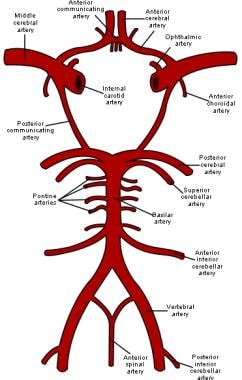
Moyamoya disease (MMD) is a progressive occlusive disease of the cerebral vasculature with particular involvement of the circle of Willis and the arteries that feed it. Moyamoya (ie, Japanese for "puff of smoke") characterizes the appearance on angiography of abnormal vascular collateral networks that develop adjacent to the stenotic vessels. The steno-occlusive areas are usually bilateral, but unilateral involvement does not exclude the diagnosis.
Pathophysiology
Pathologically, MMD is characterized by intimal thickening in the walls of the terminal portions of the internal carotid vessels bilaterally. The proliferating intima may contain lipid deposits. The anterior, middle, and posterior cerebral arteries that emanate from the circle of Willis may show varying degrees of stenosis or occlusion. This is associated with fibrocellular thickening of the intima, waving of the internal elastic lamina, and thinning of the media. Numerous small vascular channels can be seen around the circle of Willis. These are perforators and anastomotic branches. The pia mater also may have reticular conglomerates of small vessels.
The exact etiology of MMD is unknown. Some genetic predisposition is apparent because it is familial 10% of the time. The disease may be hereditary and multifactorial. A recent Japanese study demonstrated that familial MMD is autosomal dominant with reduced penetrance.
It may occur by itself in a previously healthy individual. However, many disease states have been reported in association with MMD, which may be coincidental, but can complicate management, including the following:
- Immunological - Graves disease/thyrotoxicosis
- Infections - Leptospirosis and tuberculosis
- Hematologic disorders - Aplastic anemia, Fanconi anemia, sickle cell anemia, and lupus anticoagulant
- Congenital syndromes - Apert syndrome, Down syndrome, Marfan syndrome, tuberous sclerosis, Turner syndrome, von Recklinghausen disease, and Hirschsprung disease
- Vascular diseases - Atherosclerotic disease, coarctation of the aorta and fibromuscular dysplasia, cranial trauma, radiation injury, parasellar tumors, and hypertension
Frequency
United States
The incidence of MMD is highest in Japan (see Internationally, below). However, a recent study indicated that the prevalence of MMD in California and Washington was 0.086 case per 100,000 population. In this study, the breakdown based on ethnicity as ratio to whites was 4.6 for Asian Americans, 2.2 for African Americans, and 0.5 for Hispanics.
International
The prevalence and incidence in Japan has been reported to be 3.16 cases and 0.35 case per 100,000 people, respectively. With regard to sex, the female-to-male ratio is 1.8:1. A bimodal peak of incidence is noted, with symptoms occurring either in the first decade or in the third and fourth decades of life.
Mortality/Morbidity
Mortality rates are approximately 10% in adults and 4.3% in children. Death is usually from hemorrhage. About 50-60% of affected individuals experience a gradual deterioration of cognitive function, presumably from recurrent strokes.
Race
MMD occurs primarily in Asians, but it also can occur (with varying degrees of severity) in whites, African Americans, Haitians, and Hispanics.
Sex
The female-to-male ratio is 1.8:1.
Age
Ages range from 6 months to 67 years, with the highest peak in the first decade and smaller peaks in the third and fourth decades.
History
Children and adults may have different clinical presentations. The symptoms and clinical course vary widely from asymptomatic to transient events to severe neurologic deficits. Adults experience hemorrhage more commonly; cerebral ischemic events are more common in children.
- Children may have hemiparesis, monoparesis, sensory impairment, involuntary movements, headaches, dizziness, or seizures. Mental retardation or persistent neurologic deficits may be present.
- Adults may have symptoms and signs similar to those in children, but intraventricular, subarachnoid, or intracerebral hemorrhage of sudden onset is more common in adults.
Physical
Examination findings depend on the location and severity of hemorrhage or ischemic insult.
Causes
The cause of MMD is not known. The disease is believed to be hereditary; Fukui (1977) reported a family history in 10% of patients with MMD. Genetically, susceptibility loci have been found on 3p, 6p, 17q, and band 8q23.
Anterior Circulation Stroke
Basilar Artery Thrombosis
Blood Dyscrasias and Stroke
Cavernous Sinus Syndromes
Cerebral Aneurysms
Craniopharyngioma
Dissection Syndromes
Fibromuscular Dysplasia
Intracranial Hemorrhage
Metabolic Disease & Stroke: Fabry Disease
Metabolic Disease & Stroke: Homocystinuria/Homocysteinemia
Metabolic Disease & Stroke: Hyperglycemia/Hypoglycemia
Metabolic Disease & Stroke: MELAS
Metabolic Disease & Stroke: Methylmalonic Acidemia
Metabolic Disease & Stroke: Propionic Acidemia
Neurofibromatosis, Type 1
Neurofibromatosis, Type 2
Pituitary Tumors
Polyarteritis Nodosa
Posterior Cerebral Artery Stroke
Subarachnoid Hemorrhage
Temporal/Giant Cell Arteritis
Tolosa-Hunt Syndrome
Other Problems to be Considered
Apert syndrome
Aplastic anemia
Brainstem syndromes
Cranial trauma
Coarctation of the aorta
Fanconi anemia
Irradiation injury
Leptospirosis
Marfan syndrome
Mitochondrial cytopathies
Parasellar tumors
Sickle cell disease
Tuberculosis
Turner syndrome
Vasculitis
Carotid disease and stroke
Lab Studies
- In a patient with stroke of unclear etiology, a hypercoagulability profile may be helpful. Significant abnormality in any of these is a risk factor for ischemic stroke.
- Protein C
- Protein S
- Antithrombin III
- Homocysteine
- Factor V Leiden
- Erythrocyte sedimentation rate (ESR) can be obtained as part of the initial workup of a possible vasculitis. However, a normal ESR does not rule out vasculitis.
Imaging Studies
- Cerebral angiography is the criterion standard for diagnosis. The following findings support the diagnosis:
- Stenosis or occlusion at the terminal portion of the internal carotid artery or the proximal portion of the anterior or middle cerebral arteries
- Abnormal vascular networks in the vicinity of the occlusive or stenotic areas
- Bilaterality of the described findings
- Magnetic resonance angiography (MRA) can be performed. Any of these findings on MRA may preclude the need for conventional angiography.
Histologic Findings
See Pathophysiology.
Medical Care
Pharmacologic therapy for MMD is disappointing. Therapy is directed primarily at complications of the disease.
- If intracerebral hemorrhage has occurred, then management of hypertension (if present) is imperative.
- In cases of severe stroke, ICU monitoring is indicated until the patient's condition stabilizes.
- If the patient has had an ischemic stroke, consider anticoagulation or antiplatelet agents.
- The rationale behind anticoagulation and antiplatelet agents is to prevent further strokes, especially in stenotic vessels where further infarction can occur if occlusion progresses.
- These medications are not approved by the Food and Drug Administration (FDA) specifically for use in MMD, so the decision to treat with anticoagulants, ie, heparin (and in some cases, warfarin for long-term anticoagulation), or antiplatelet agents (eg, aspirin) rests on the following: angiogram findings, severity of stroke, and risk/benefit analysis by physicians who are experienced in stroke treatment.
- Consultation with an experienced neurologist helps guide appropriate care.
- Angiogram can determine the extent of occlusion or stenosis.
Surgical Care
Patients who present for treatment while symptoms are evolving have a better prognosis than those who present with static symptoms (which probably indicate a completed stroke).
- Various surgical procedures have been used: superficial temporal artery–middle cerebral artery (STA-MCA) anastomosis, encephaloduroarteriosynangiosis (EDAS), encephaloduroarteriomyosynangiosis (EDAMS), pial synangiosis, and omental transplantation.
- These procedures can be divided into 2 groups depending on whether they involve direct or indirect anastomosis. Which of these is most effective remains controversial. Sufficient evidence suggests that surgical revascularization procedures result in some symptomatic benefits along with demonstration of improved blood flow. Direct and/or combined procedures provide improved vascularization. However, data proving sustained or improved long-term outcomes is insufficient.
- STA-MCA anastomosis is very difficult in children younger than 2 years because of the small diameter of the STA. In these cases, EDAS may be more suitable. This procedure sometimes has failed because of poor revascularization. Hoffman (1997) suggested that this is due to the presence of atrophy and a layer of spinal fluid between the pia and arachnoid tissue. Division of this arachnoid membrane and placement of the STA directly on the pial membrane helps to avoid the problem.
- In cases of EDAS failure, EDAMS can be considered.
Consultations
- Initial neurologic consultation is imperative. A neurologist can document neurological deficits, consider the differential diagnosis, conduct testing to validate suspected etiologies, and commence medical management as indicated.
- Neuroradiology consultation is needed to help determine the extent of radiologic testing needed (ie, MRA vs conventional angiography). On the basis of the results of these tests, a neurosurgeon can decide if surgical intervention would be helpful.
Activity
Rehabilitation with physical therapy, occupational therapy, and speech therapy should be considered depending on the neurologic impairment.
- The extent of therapy can range from bedside to full comprehensive inpatient care.
- The condition of the patient and the state of concurrent evaluation and treatment dictate involvement in rehabilitation therapy.
Drug therapy depends on the particular manifestations of the disease.
For hemorrhage, therapy revolves around management of hypertension (if present).
For ischemic stroke, anticoagulation with heparin or warfarin may be considered. Safety and efficacy have not been fully established with these drugs, and careful analysis of risk and benefits is needed. These drugs could be useful if thrombosis of vessels is present, but they do not alter the natural history of the disease and they considerably increase the risk of hemorrhage with large strokes.
The same considerations are true for aspirin and other antiplatelet agents.
Treatment with anticoagulation or antiplatelet agents should be pursued only after consultation with a neurologist who is experienced in stroke management.
Drug Category: Anticoagulants
These agents are given for prevention of further thrombosis and potential infarction of the brain. CAUTION: Anticoagulation is of unproven benefit in ischemic stroke associated with MMD. This therapy therefore is considered empirical.
| Drug Name | Heparin |
| Description | Administered IV, and frequently given with initial bolus in cardiac situations. In stroke, bolus not recommended. Target dose aimed at maintaining aPTT 1.5-2 times control. CT scan of brain must be done prior to any anticoagulant use to rule out preexisting intracranial hemorrhage. |
| Adult Dose | 50 U/kg/h IV initially, followed by continuous infusion of 15-25 U/kg/h; increase dose by 5 U/kg/h q4h prn using aPTT results |
| Pediatric Dose | Not established |
| Contraindications | Documented hypersensitivity; conditions that predispose to bleeding; evidence of active bleeding such as severe strokes, presence of intracranial hemorrhage, positive stool blood test findings, or suspected bleeding elsewhere |
| Interactions | Digoxin, nicotine, tetracycline, and antihistamines may decrease effects; NSAIDs, aspirin, dextran, dipyridamole, and hydroxychloroquine may increase toxicity |
| Pregnancy | C - Safety for use during pregnancy has not been established.
|
| Precautions | In neonates, preservative-free heparin recommended to avoid possible toxicity (ie, gasping syndrome) of benzyl alcohol, which is used as preservative; caution in severe hypotension and shock; patients should be monitored closely by providers with experience in managing anticoagulation |
| Drug Name | Warfarin (Coumadin) |
| Description | Administered orally and used if long-term anticoagulation needed. INR followed with target range of 2-3. CT scan of brain must be done prior to any anticoagulant use to rule out preexisting intracranial hemorrhage. |
| Adult Dose | 5-15 mg/d PO qd for 2-5 d; adjust dose according to desired INR |
| Pediatric Dose | Not established |
| Contraindications | Documented hypersensitivity, severe liver or kidney disease, open wounds or GI ulcers, conditions that predispose to bleeding |
| Interactions | Drugs that may decrease anticoagulant effects include griseofulvin, carbamazepine, glutethimide, estrogens, nafcillin, phenytoin, rifampin, barbiturates, cholestyramine, colestipol, vitamin K, spironolactone, oral contraceptives, and sucralfate Medications that may increase anticoagulant effects include oral antibiotics, phenylbutazone, salicylates, sulfonamides, chloral hydrate, clofibrate, diazoxide, anabolic steroids, ketoconazole, ethacrynic acid, miconazole, nalidixic acid, sulfonylureas, allopurinol, chloramphenicol, cimetidine, disulfiram, metronidazole, phenylbutazone, phenytoin, propoxyphene, sulfonamides, gemfibrozil, acetaminophen, and sulindac |
| Pregnancy | D - Unsafe in pregnancy
|
| Precautions | Do not switch brands after achieving therapeutic response; caution in active TB or diabetes; patients with protein C or S deficiency are at risk of developing skin necrosis; patients need careful periodic monitoring by personnel who are experienced in using anticoagulants |
Drug Category: Antiplatelet agents
These agents can be considered to help prevent future ischemic strokes. As with anticoagulation, aspirin is of unproven benefit in MMD; its use is considered empirical.
| Drug Name | Aspirin (Anacin, Ascriptin, Bayer Aspirin) |
| Description | Efficacy in preventing stroke relies on its inhibitory effect on platelet function. This presumably would help prevent thrombus formation and propagation. |
| Adult Dose | 81-650 mg PO qd |
| Pediatric Dose | Not established |
| Contraindications | Documented hypersensitivity; liver damage; hypoprothrombinemia; vitamin K deficiency; other coagulation or bleeding disorders; concurrent anticoagulants; severe anemia; asthma; preexisting gastric ulcer disease; positive test for stool blood; due to association with Reye syndrome, do not use in children ( <16 y) with flu |
| Interactions | Effects may decrease with antacids and urinary alkalinizers; corticosteroids decrease salicylate serum levels; additive hypoprothrombinemic effects and increased bleeding time may occur with coadministration of anticoagulants; may antagonize uricosuric effects of probenecid and increase toxicity of phenytoin and valproic acid; doses > 2 g/d may potentiate glucose-lowering effect of sulfonylurea drugs |
| Pregnancy | D - Unsafe in pregnancy
|
| Precautions | May cause transient decrease in renal function and aggravate chronic kidney disease |
Prognosis
- Outcome depends on severity and nature of hemorrhage; prognosis, on recurrent attacks.
Medical/Legal Pitfalls
- Misdiagnosis and delayed diagnosis are particular pitfalls in MMD. Misdiagnosis can occur easily if the physician does not incorporate MMD in the differential diagnosis of any patient presenting with stroke. How high MMD is ranked in the differential will depend on presence of atypical features such as young age and absence of obvious risk factors for stroke. If MMD is not considered seriously, then appropriate diagnostic tests may not be performed and a delay in diagnosis could result. Since definitive treatment may be surgery, any delay could allow unnecessary progression of disease.
- If an ischemic stroke that is being treated with antiplatelet agents or anticoagulants does not respond to therapy, then MMD should be suspected as a possible etiology. This is especially true if results of a hypercoagulability profile are unremarkable.
- Physicians practicing in the community who encounter atypical stroke presentations should not hesitate to seek consultation with a stroke specialist or even to transfer a patient to a facility equipped to care for complex cases.
- Ajimi Y, Uchida K, Kawase T, Toya S. [A case of Turner's syndrome associated with moyamoya disease]. No Shinkei Geka. Sep 1992;20(9):1021-4. [Medline].
- Baltaxe HA, Bloch S, Mooring PK. Coarctation of the thoracic aorta associated with cerebral arterial occlusive disease. AJR Am J Roentgenol. Dec 1982;139(6):1226-9. [Medline].
- Cheng MK. A review of cerebrovascular surgery in the People''s Republic of China. Stroke. Mar-Apr 1982;13(2):249-55. [Medline].
- Cohen N, Berant M, Simon J. Moyamoya and Fanconi''s anemia. Pediatrics. Apr 1980;65(4):804-5. [Medline].
- Ellison PH, Largent JA, Popp AJ. Moya-moya disease associated with renal artery stenosis. Arch Neurol. Jul 1981;38(7):467. [Medline].
- Fernandez-Alvarez E, Pineda M, Royo C, Manzanares R. "Moya-moya'' disease caused by cranial trauma. Brain Dev. 1979;1(2):133-8. [Medline].
- Fukuyama Y, Osawa M, Kanai N. Moyamoya disease (syndrome) and the Down syndrome [comment]. Brain Dev. Jul 1992;14(4):254-6. [Medline].
- Fung LW, Thompson D, Ganesan V. Revascularisation surgery for paediatric moyamoya: a review of the literature. Childs Nerv Syst. May 2005;21(5):358-64. [Medline].
- Gosalakkal JA. Moyamoya disease: a review. Neurol India. Mar 2002;50(1):6-10. [Medline].
- Hamada J, Gotoh F, Fukuchi Y. Cerebral infarction with a lupus anticoagulant. A case report. Neurol Med. 1987;26:169-74.
- Hart RG, Miller VT, Coull BM, Bril V. Cerebral infarction associated with lupus anticoagulants--preliminary report. Stroke. Jan-Feb 1984;15(1):114-8. [Medline].
- Hilal SK, Solomon GE, Gold AP, Carter S. Primary cerebral arterial occlusive disease in children. II. Neurocutaneous syndromes. Radiology. Apr 1971;99(1):87-94. [Medline].
- Hoffman HJ. Moyamoya disease and syndrome. Clin Neurol Neurosurg. Oct 1997;99 Suppl 2:S39-44. [Medline].
- Im SH, Oh CW, Kwon OK, et al. Moyamoya disease associated with Graves disease: special considerations regarding clinical significance and management. J Neurosurg. Jun 2005;102(6):1013-7. [Medline].
- Imaizumi M, Nukada T, Yoneda S, et al. Tuberous sclerosis with moyamoya disease. Case report. Med J Osaka Univ. Mar 1978;28(3-4):345-53. [Medline].
- Karasawa J, Touho H, Ohnishi H, et al. Cerebral revascularization using omental transplantation for childhood moyamoya disease. J Neurosurg. Aug 1993;79(2):192-6. [Medline].
- Karasawa J, Kikuchi H, Furuse S, et al. Treatment of moyamoya disease with STA-MCA anastomosis. A anastomosis. Nov 1978;49(5):679-88. [Medline].
- Kestle JR, Hoffman HJ, Mock AR. Moyamoya phenomenon after radiation for optic glioma. J Neurosurg. Jul 1993;79(1):32-5. [Medline].
- Kinugasa K, Mandai S, Kamata I, et al. Surgical treatment of moyamoya disease: operative technique for encephalo-duro-arterio-myo-synangiosis, its follow-up, clinical results, and angiograms. Neurosurgery. Apr 1993;32(4):527-31. [Medline].
- Kitahara T, Ariga N, Yamaura A, et al. Familial occurrence of moya-moya disease: report of three Japanese families. J Neurol Neurosurg Psychiatry. Mar 1979;42(3):208-14. [Medline].
- Kitamura K, Fukui M, Oka K. Moyamoya disease. In: Handbook of Clinical Neurology. Vol 2. Amsterdam: Elsevier; 1989:. 293-306.
- Lamas E, Diez Lobato R, Cabello A, Abad JM. Multiple intracranial arterial occlusions (moyamoya disease) in patients with neurofibromatosis. One case report with autopsy. Acta Neurochir (Wien). 1978;45(1-2):133-45. [Medline].
- Landi G, Calloni MV, Grazia Sabbadini M, et al. Recurrent ischemic attacks in two young adults with lupus anticoagulant. Stroke. May-Jun 1983;14(3):377-9. [Medline].
- Mathew NT, Abraham J, Chandy J. Cerebral angiographic features in tuberculous meningitis. Neurology. Oct 1970;20(10):1015-23. [Medline].
- Matsushima Y, Inaba Y. Moyamoya disease in children and its surgical treatment. Introduction of a new surgical procedure and its follow-up angiograms. Childs Brain. 1984;11(3):155-70. [Medline].
- Merkel KH, Ginsberg PL, Parker JC Jr, Post MJ. Cerebrovascular disease in sickle cell anemia: a clinical, pathological and radiological correlation. Stroke. Jan-Feb 1978;9(1):45-52. [Medline].
- Mineharu Y, Takenaka K, Yamakawa H, et al. Inheritance pattern of familial moyamoya disease: autosomal dominant mode and genomic imprinting. J Neurol Neurosurg Psychiatry. Sep 2006;77(9):1025-9. [Medline].
- Momose KJ, New PF. Non-atheromatous stenosis and occlusion of the internal carotid artery and its main branches. Am J Roentgenol Radium Ther Nucl Med. Jul 1973;118(3):550-66. [Medline].
- Nakashima H, Meguro T, Kawada S, et al. Long-term results of surgically treated moyamoya disease. Clin Neurol Neurosurg. Oct 1997;99 Suppl 2:S156-61. [Medline].
- Numaguchi Y, Gonzalez CF, Davis PC, et al. Moyamoya disease in the United States. Clin Neurol Neurosurg. Oct 1997;99 Suppl 2:S26-30. [Medline].
- Pearson E, Lenn NJ, Cail WS. Moyamoya and other causes of stroke in patients with Down syndrome. Pediatr Neurol. May-Jun 1985;1(3):174-9. [Medline].
- Saito N, Nakagawara J, Nakamura H, Teramoto A. Assessment of cerebral hemodynamics in childhood moyamoya disease using a quantitative and a semiquantitative IMP-SPECT study. Ann Nucl Med. Jun 2004;18(4):323-31. [Medline].
- Sakurai K, Horiuchi Y, Ikeda H, et al. A novel susceptibility locus for moyamoya disease on chromosome 8q23. J Hum Genet. 2004;49(5):278-81. [Medline].
- Satoh S, Shibuya H, Matsushima Y, Suzuki S. Analysis of the angiographic findings in cases of childhood moyamoya disease. Neuroradiology. 1988;30(2):111-9. [Medline].
- Scott RM, Smith JL, Robertson RL, et al. Long-term outcome in children with moyamoya syndrome after cranial revascularization by pial synangiosis. J Neurosurg. Feb 2004;100(2 Suppl Pediatrics):142-9. [Medline].
- Seeler RA, Royal JE, Powe L, Goldberg HR. Moyamoya in children with sickle cell anemia and cerebrovascular occlusion. J Pediatr. Nov 1978;93(5):808-10. [Medline].
- Servo A, Puranen M. Moyamoya syndrome as a complication of radiation therapy. Case report. J Neurosurg. Jun 1978;48(6):1026-9. [Medline].
- Sogaard I, Jorgensen J. Familial occurrence of bilateral intracranial occlusion of the internal carotid arteries (Moya Moya). Acta Neurochir (Wien). 1975;31(3-4):245-52. [Medline].
- Steinke W, Tatemichi TK, Mohr JP, et al. Caudate hemorrhage with moyamoya-like vasculopathy from atherosclerotic disease. Stroke. Sep 1992;23(9):1360-3. [Medline].
- Suzuki J, Kodama N. Moyamoya disease: The disorder and surgical treatment. Mayo Clin Proc. 1983;69:749-57.
- Takanashi J, Sugita K, Ishii M, et al. Moyamoya syndrome in young children: MR comparison with adult onset. AJNR Am J Neuroradiol. Sep-Oct 1993;14(5):1139-43. [Medline].
- Tomura N, Inugami A, Higano S, et al. [Cases similar to cerebrovascular moyamoya disease--investigation by angiography and computed tomography]. No To Shinkei. Oct 1988;40(10):905-12. [Medline].
- Uchino K, Johnson A, Claiborne S, Tirschwell DL. Moyamoya disease in Washington State and California. Neurology. 2005;65:956-958. [Medline].
- Umezu R, Fujiu M, Abe T. [Two cases of von Recklinghausen''s disease with juxta-basal telangiactasia]. Rinsho Shinkeigaku. Jan 1973;13(1):11-6. [Medline].
- Wen HL, Mehal ZD, Kwok JCK. Moyamoya disease in Hong Kong. Adv Surg Cerebral Stroke. 1988;115-21.
- Wetjen NM, Garell C, Stence NV. Moyamoya disease in the midwestern United States. Neurosurg Focus. 1998;5.
- Yamada H, Nakamura S, Kageyama N. Moyamoya disease in monovular twins: case report. J Neurosurg. Jul 1980;53(1):109-12. [Medline].
- Yamada I, Suzuki S, Matsushima Y. Moyamoya disease: comparison of assessment with MR angiography and MR imaging versus conventional angiography. Radiology. Jul 1995;196(1):211-8. [Medline].
- Yamashita M, Tanaka K, Kishikawa T, Yokota K. Moyamoya disease associated with renovascular hypertension. Hum Pathol. Feb 1984;15(2):191-3. [Medline].
Moyamoya Disease excerpt Article Last Updated: Nov 2, 2006
|