| Patient Education |
|
Click here for patient education.
|
|
You are in: eMedicine Specialties >
Ophthalmology > DERMATOLOGIC DISORDERS
Ichthyosis
Article Last Updated: Dec 12, 2007
AUTHOR AND EDITOR INFORMATION
Section 1 of 11
Author: Kenneth M Goins, MD, Professor of Clinical Ophthalmology, Director of Cornea and External Diseases and Refractive Surgery, Department of Ophthalmology, University of Iowa Hospitals and Clinics; Medical Director of Iowa Lions Eye Bank
Kenneth M Goins is a member of the following medical societies: American Academy of Ophthalmology, American Medical Association, American Society of Cataract and Refractive Surgery, Eye Bank Association of America, International Society of Refractive Surgery, and Iowa Medical Society
Coauthor(s):
Seth Adam Anderson, BS, Des Moines University College of Osteopathic Medicine
Editors: Andrew A Dahl, MD, Residency Director, Ophthalmology, Kingston Hospital, Department of Ophthalmology, Assistant Professor of Surgery (Ophthalmology), Mid Hudson Family Practice Institute; Francisco Talavera, PharmD, PhD, Senior Pharmacy Editor, eMedicine; Mark T Duffy, MD, PhD, Consulting Staff, Division of Oculoplastic, Orbito-facial, Lacrimal, and Reconstructive Surgery, Green Bay Eye Clinic, BayCare Clinic; Lance L Brown, OD, MD, Ophthalmologist, Affiliated With Freeman Hospital and St John's Hospital, Regional Eye Center, Joplin, Missouri; Hampton Roy Sr, MD, Associate Clinical Professor, Department of Ophthalmology, University of Arkansas for Medical Sciences
Author and Editor Disclosure
Synonyms and related keywords:
ichthyosis vulgaris, lamellar ichthyosis, epidermolytic hyperkeratosis, X-linked ichthyosis, acquired ichthyosis
Background
Ichthyosis refers to a relatively uncommon group of skin disorders characterized by the presence of excessive amounts of dry surface scales. It is regarded as a disorder of keratinization or cornification, and it is due to abnormal epidermal differentiation or metabolism. The ichthyosiform dermatoses may be classified according to clinical manifestations, genetic presentation, and histologic findings. Inherited and acquired forms of ichthyosis have been described, and ocular alterations may occur in specific subtypes. Five distinct types of inherited ichthyosis exist, as follows: ichthyosis vulgaris, lamellar ichthyosis, epidermolytic hyperkeratosis, congenital ichthyosiform erythroderma, and X-linked ichthyosis.
Pathophysiology
In ichthyosis vulgaris, dry skin and follicular accentuation (keratosis pilaris) usually appear at puberty. Scaling is most prominent over the trunk, abdomen, buttocks, and legs. The flexural areas, such as the antecubital fossa, are spared. An association may be present between ichthyosis vulgaris and atopic diseases because one third to one half of patients show features of atopic disease and a similar proportion have relatives with atopic disease. A reported 11.5% association exists between atopic dermatitis and primary hereditary ichthyosis. Ichthyosis vulgaris typically produces no significant ocular findings; however, scaling may be present on the eyelid skin, which could lead to punctate epithelial keratitis and recurrent corneal erosion. Linkage analysis has identified an ichthyosis vulgaris locus on band 1q22. Two loss-of-function mutations in the coding of the filaggrin gene have been identified in both ichthyosis vulgaris and atopic dermatitis. Keratohyalin synthesis is affected because of the filaggrin mutation. Filaggrin is an epidermal protein that normally functions as a barrier molecule against environmental allergens, water loss, and infection. In epidermolytic hyperkeratosis, the skin is moist, red, and tender at birth. Bullae formation may occur, which may become infected and give rise to a foul skin odor. Thick, generalized, verrucous scaling occurs within a few days. Localized scaling may be seen, especially in the flexural creases. A mutation in the keratin genes (ie, KRT1, KRT10) is the cause of this autosomal dominant disorder. Lamellar ichthyosis is a rare, autosomal recessive, genetically heterogeneous skin disease caused by mutations involving multiple genetic loci. Type 1 maps to band 14q11.2 and is caused by mutations in the gene for keratinocyte transglutaminase 1, an enzyme responsible for the assembly of the keratinized envelope. Type 2, which is clinically indistinguishable from type 1, maps to band 2q33-q35. In classic lamellar ichthyosis, children with the disease are referred to as collodion babies and are covered at birth by a thickened membrane that subsequently is shed. The scaling of the skin involves the whole body with no sparing of the flexural creases. Approximately one third of children affected with this disorder develop bilateral ectropion of the cicatricial type that appears to result from excessive dryness of the skin and subsequent contracture. Secondary corneal ulceration may occur secondary to long-term exposure. In X-linked ichthyosis, generalized scaling is present at or shortly after birth. This scaling is most prominent over the extremities, neck, trunk, and buttocks. The flexural creases, palms, and soles are spared. Irregular stromal corneal opacities that are located anterior to the Descemet membrane are found in 16-50% of male patients, and this finding may be used to distinguish this form of ichthyosis from all other forms. Approximately 25% of female carriers have minor corneal opacities. The corneal opacities are not known to affect visual acuity.
Previous studies have shown a deficiency of steroid sulfatase (STS) in skin fibroblasts and a marked elevation of plasma cholesterol sulfate in patients with X-linked ichthyosis. In most cases, STS deficiency is caused by a partial or complete deletion of the STS gene mapped on band Xp22.3. Deletions of the STS gene have systemic effects, such as corneal opacities, cryptorchidism, and failed progression during labor. Deletions to flank regions of the STS gene have been linked with mental retardation. These deletions involve portions of the VCXA and VCXB1 genes. Congenital ichthyosiform erythroderma (CIE) is a milder form of the disease that is autosomal recessive in inheritance. CIE has been found to be caused by mutations in the genes coding for transglutaminase 1, 12R-lipoxygenase, and/or lipoxygenase 3. The lipoxygenase genes play a role in the epidermal permeability layer. As with lamellar ichthyosis, neonates with CIE are referred to as collodion babies, but, as children and adults, they show generalized red skin with thin, white scaling. Other manifestations include persistent ectropion and scarring alopecia. Multiple congenital ectodermal dysplastic syndromes are associated with scaling and other system defects. The keratitis, ichthyosis, and deafness (KID) syndrome is a congenital disorder of ectoderm that affects not only the epidermis but also other ectodermal tissues, such as the corneal epithelium and the inner ear. KID syndrome may present with the Hutchinson triad (the combination of notched, widely spaced peg teeth, interstitial keratitis, and deafness). KID syndrome has been linked to mutations in the connexin 26 gene (GJB2) on band 13q11-q12.
The colobomas of the eye, heart defects, ichthyosiform dermatosis, mental retardation, and ear defects (CHIME) syndrome comprise a rare neuroectodermal disorder.
Netherton syndrome is an autosomal recessive condition that consists of an ichthyosiform dermatosis with variable erythroderma, hair shaft defects, and atopic features. Netherton syndrome has been linked to a mutation on band 5q32, specifically encoding for LEKTI (lymphoepithelial Kazal-type—related inhibitor), a serine protease inhibitor.
Sjögren-Larsson syndrome is an autosomal recessive condition that comprises ichthyosis, spastic diplegia, pigmentary retinopathy, and mental retardation. Congenital hemidysplasia with ichthyosiform nevus and limb defects (CHILD) syndrome is a rare X-linked dominant malformation syndrome characterized by unilaterally distributed ichthyosiform nevi, often sharply delimited at the midline, and ipsilateral limb defects. This syndrome is caused by a loss-of-function mutation of NSDHL (NAD(P)H steroid dehydrogenase-like protein) at band Xq28. Darier-White disease or keratosis follicularis is an autosomal dominant disorder in which there is a loss of adhesion between epidermal keratinocytes and abnormal keratinization. It is caused by mutations in genes coding for the endoplasmic reticulum Ca(+2)-ATPase (ATP2A2). Exposure to UVB light can exacerbate the skin lesions found in Darier-White disease. Acquired ichthyosis usually occurs in adults and manifests as small, white, fishlike scales that frequently are concentrated on the extremities but may be seen in a generalized distribution. This form of ichthyosis may be associated with internal neoplasia (eg, Hodgkin lymphoma, leukemia), systemic illness (eg, sarcoidosis, HIV infection, hypothyroidism, chronic hepatitis, malabsorption), bone marrow transplantation, or the intake of certain medications that interfere with sterol synthesis in epidermal cells (eg, nicotinic acid). Newborns with type 2 Gaucher disease (glucosyl cerebroside lipidosis) may present with ichthyotic skin at birth prior to neurologic manifestations, which could be mistaken for a congenital form of ichthyosis.
Frequency
United States
Ichthyosis vulgaris is the most common form and is an autosomal dominant trait with an incidence of 1 in 300. Epidermolytic hyperkeratosis is an autosomal dominant disorder with an incidence of 1 in 300,000 in the general population. Lamellar ichthyosis, a more severe form of dermatosis, is an autosomal recessive trait with an incidence of 1 in 300,000. X-linked recessive ichthyosis has an incidence of 1 in 6000 in male patients.
International
Studies show that a higher prevalence of X-linked ichthyosis as compared to ichthyosis vulgaris may exist in Mexico, which is markedly different from the experience in the United States. In the United Kingdom, the incidence of ichthyosis vulgaris was reported to be 1 in 250, in a study population of 6501 healthy school children. Similarly, in another large epidemiological study, the incidence of X-linked recessive ichthyosis was 1 in 6190 males. In a Danish population study, the predicted incidence of X-linked recessive ichthyosis was 1 in 2000 males. In southern coastal Italy, the frequency of X-linked recessive ichthyosis was estimated at 1.98 in 10,000 males. In China, ichthyosis vulgaris has a prevalence of 2.29%.
Mortality/Morbidity
- An increased risk of testicular cancer in men with ichthyosis vulgaris has been suggested.
- In addition, an increased incidence of testicular maldescent, cryptorchidism, abnormalities of the sperm count or motility leading to infertility, and testicular cancer has been reported in patients with X-linked recessive ichthyosis.
Race
In general, all races may be affected in the inherited and acquired forms of ichthyosis.
Sex
X-linked recessive ichthyosis is much more prevalent in males. It is caused by a deficiency of STS. Because this enzyme plays an important role in androgen metabolism, it is hypothesized that men with this ailment do not show androgenetic alopecia or develop only mild forms of this common type of hair loss.
History
See Pathophysiology.
Physical
Ocular and periocular manifestations that may be seen in the ichthyosiform syndromes include the following: - Conjunctiva - Keratinization and thickening secondary to ectropion
- Cornea
- Exposure keratitis secondary to ectropion
- Unilateral megalocornea (lamellar ichthyosis)
- Pre-Descemet membrane opacities (X-linked ichthyosis)
- Recurrent corneal erosion
- Band keratopathy
- Salzmann nodules (ichthyosis vulgaris)
- Microphthalmos (rare)
- Anterior chamber cleavage syndrome (rare)
- Enlarged corneal nerves (common to all forms)
- Stromal vascularization
- Limbal stem cell deficiency (KID syndrome [common])
- Eyelids
- Ectropion (lamellar ichthyosis)
- Blepharitis
- Meibomian gland absence (rare)
- Trichiasis
- Madarosis
- Lacrimal puncta absence
- Retina
- Coloboma (CHIME syndrome)
- Retinitis pigmentosa (Refsum disease)
- Maculopathy (Sjögren-Larsson syndrome)
- Tortuous vessels (carrier state in ichthyosis follicularis-alopecia-photophobia [IFAP] syndrome)
Causes
See Pathophysiology.
Acrodermatitis Enteropathica
Acute Retinal Necrosis
Dermatitis, Atopic
Herpes Zoster
HIV
Kaposi Sarcoma
Leukemias
Ocular Manifestations of Syphilis
Psoriasis
Retinitis Pigmentosa
Sarcoidosis
Thyroid Ophthalmopathy
Other Problems to be Considered
Tuberculosis
Lab Studies
- In some congenital ichthyosiform disorders, routine histopathology, electron microscopy, and frozen sections of skin biopsy specimens may be required to determine the specific classification of disease. Tests that may be required to diagnose the type of ichthyosis may include the following:
- Ichthyosis vulgaris - Skin biopsy
- X-linked recessive ichthyosis – STS activity or levels of cholesterol sulfate and genetic testing of amniotic fluid for partial or complete deletion of the STS gene mapped on band Xp22.3
- Epidermolytic hyperkeratosis - Skin biopsy and keratin gene studies
- Lamellar ichthyosis – Genetic analysis for mutations in the gene for transglutaminase 1, leading to greatly reduced skin transglutaminase activity by radiometric assay
- CHILD syndrome - Radiographic and molecular genetic studies for mutations in an essential enzyme of cholesterol biosynthesis, NAD(P)H steroid dehydrogenase
- KID syndrome - Skin biopsy and molecular genetic analysis for mutations in the GJB2 gene, coding for connexin 26, a component of gap junctions in epithelial cells
- Neutral lipid storage disease - Blood smear for vacuoles and skin biopsy
- Refsum disease - Plasma phytanic levels
- Netherton syndrome - Hair shaft examination
- Sjögren-Larsson syndrome - Fatty alcohol:NAD oxidoreductase assay
- Acquired ichthyosis may be a marker of various autoimmune disorders or malignancy. Acquired ichthyosis may also be a marker of concomitant infection with HIV in intravenous drug users and occurs after profound helper T-cell depletion. Important laboratory tests to consider in addition to HIV testing are as follows:
- CBC with differential and bone marrow aspirate (ie, leukemia, myelodysplastic syndromes)
- Thyroid function tests (ie, hypothyroidism)
- Serum angiotensin converting enzyme and lysozyme (ie, sarcoidosis)
- Chest x-ray (ie, sarcoidosis, lymphoma, HIV, tuberculosis)
- Serum antinuclear antibody (ANA), anti-double stranded DNA (dsDNA) antibody, anticentromere antibody (ACA), and anti-Scl-70 antibody (ie, systemic lupus erythematosus [SLE], systemic sclerosis)
Imaging Studies
- In congenital ichthyosis syndromes, excessive intra-amniotic debris and polyhydramnios on ultrasound scanning in utero may be the first indication of disease.
- Using ultrasound scanning in utero, fetal foot length may be an important and probably the first marker, seen in the second trimester, for the diagnosis of harlequin ichthyosis.
- Other echographic findings may include a persistently open mouth, dense amniotic fluid, and fixed flexion of the extremities.
Other Tests
- Studies have shown that a low maternal serum unconjugated estriol during pregnancy screening may be a good indication of placental STS deficiency and X-linked recessive ichthyosis.
- Microdeletion of the STS gene can be confirmed by fluorescence in situ hybridization (FISH) analysis of cultured amniotic fluid in X-linked ichthyosis.
- Prenatal diagnosis of lamellar ichthyosis can be made by direct mutational analysis of the keratinocyte transglutaminase gene.
Procedures
- Fetal skin biopsy that examines keratinized hair canals and amniotic fluid at approximately 19 weeks estimated gestation age may provide an early diagnosis of certain forms of ichthyosis (ie, Harlequin type, which is extremely severe and usually fatal).
Histologic Findings
In ichthyosis vulgaris, the affected skin displays mild hyperkeratosis and a diminished granular layer in the epidermis, while the dermis has normal features. Affected skin in X-linked ichthyosis shows an expanded stratum corneum without parakeratosis or acanthosis. In contrast to ichthyosis vulgaris, the granular cell layer may be normal. However, in some cases, it may be absent, which makes histologic differentiation from ichthyosis vulgaris very difficult. Lamellar ichthyosis displays massive, compact orthohyperkeratosis with variable degrees of parakeratosis and a markedly thick stratum corneum. The granular layer is either normal or increased. In epidermolytic hyperkeratosis, the skin biopsy specimen shows epidermal acanthosis and hyperkeratosis. Bullous formation may be manifested by intercellular and intracellular spaces as a result of suprabasal cytolysis within the granular layer. The skin biopsy specimen from patients with CIE shows incomplete thickening of the cornified cell envelope and abnormal lipid droplets in the cells.
Medical Care
- Systemic
- Oral retinoids display an impressive antikeratinizing action in ichthyosiform dermatoses. Etretinate (1 mg/kg/d) and isotretinoin (2 mg/kg/d) have been shown to reduce scaling, discomfort, and disfigurement. However, when these drugs are discontinued, the ichthyotic skin recurs, thereby necessitating long-term use. Similarly, liarozole (150 mg bid), an imidazole derivative, inhibits the cytochrome P450-dependent 4-hydroxylation of retinoic acid, resulting in increased tissue levels of retinoic acid and a reduction in epidermal proliferation and scaling.
- Patients with epidermolytic hyperkeratosis may develop chronic bacterial infections of the skin necessitating long-term antibiotic therapy. In these cases, benzathine penicillin G 1.2 million U IM is given every 2-3 weeks until the skin infection subsides. Oral erythromycin ethyl succinate 800 mg 4 times daily may be substituted in penicillin-allergic patients.
- Patients with Sjögren-Larsson syndrome have a deficiency of fatty aldehyde dehydrogenase (FALDH). Data suggest that bezafibrate, a hypolipidemic drug, induces the activity of FALDH in patients with some residual enzyme activity.
- Ocular
- In chronic ocular surface disorders associated with ichthyosis, nonpreserved artificial tears (carboxymethylcellulose sodium 0.5-1.0%) and ointment (white petrolatum 56.8%, mineral oil 41.5%) are preferred to prevent complications from dryness and exposure.
- Preservative-free lubricants may be used as often as needed while decreasing the incidence of preservative-related allergies.
- In cases where poor corneal epithelial adhesion is present, bandage contact lenses and temporary collagen shields may decrease symptoms and promote surface healing.
- Topical
- Topical cyclosporine A 2% given 3 times daily has been shown to be beneficial in the treatment of deep stromal keratitis associated with KID syndrome.
- To prevent cicatricial ectropion in lamellar ichthyosis, a humidified atmosphere combined with the use of topical moisturizing agents is beneficial. Petrolatum ointment and 10% urea cream applied to the eyelid skin several times daily helps to prevent skin contracture. Salicylic acid 2% and retinoic acid 0.1% ointments also are effective, but local irritation may limit their frequency of use. In the hyperproliferative variants of ichthyosis, calcipotriene ointment has been shown to be beneficial. However, the use of calcipotriene in treating congenital hyperproliferative disorders is limited by the theoretical risk of hypercalcemia from absorption of the drug from the skin.
- In addition to systemic broad-spectrum penicillins, pimecrolimus cream 1% has been shown to be effective in patients with Netherton syndrome. The immunomodulating effects are similar to tacrolimus but without evidence of lipophilic adverse effects.
Surgical Care
When cicatricial ectropion develops in patients with lamellar ichthyosis despite room humidification and vigorous skin lubrication, the danger of corneal breakdown and perforation exists. Full-thickness skin grafts from the forearm, postauricular, and groin areas may be used to successfully repair the abnormalities. In addition, Apligraf (Organogenesis Inc, Canton, Mass), a human skin equivalent, may facilitate the repair of cicatricial ectropion in severe cases when autologous donor graft tissue is not available. A concomitant medial and/or lateral lid tarsorrhaphy is recommended in severe cases. The incidence of ectropion recurrence may be decreased if surgery can be postponed until suitable nonscaly patches of skin can be clearly identified to serve as graft donor sites. - For a persistent corneal epithelial defect, an amniotic membrane transplantation may be necessary to promote epithelial wound healing.
- For diffuse limbal stem cell deficiency, keratolimbal allografting with chronic systemic immunosuppression may be necessary, although the success rate has been poor.
Consultations
Because ichthyosis is primarily a skin disorder, periodic evaluation by a dermatologist is recommended. The ophthalmologist may be helpful in the treatment of ocular manifestations and in the identification of the specific type of ichthyosis, particularly, lamellar and X-linked forms.
Diet
In patients with Refsum disease (ichthyosis and pigmentary retinopathy), chlorophyll in the diet should be excluded (ie, green vegetables [phytanic acid], animal fat [phytol]). Because rapid weight loss mobilizes tissue phytanic acid, this should be avoided.
Oral retinoids display an impressive antikeratinizing action in ichthyosiform dermatoses. Isotretinoin (2 mg/kg/d) has been shown to reduce scaling, discomfort, and disfigurement. However, when these drugs are discontinued, the ichthyotic skin recurs, thereby necessitating long-term use. Liarozole (150 mg bid), an imidazole derivative, inhibits the cytochrome P450-dependent 4-hydroxylation of retinoic acid, resulting in increased tissue levels of retinoic acid and a reduction in epidermal proliferation and scaling. Patients with epidermolytic hyperkeratosis may develop chronic bacterial infections of the skin necessitating long-term antibiotic therapy. In these cases, benzathine penicillin G 1.2 million U IM is given every 2-3 weeks until skin infection subsides. Oral erythromycin ethylsuccinate 800 mg qid may be substituted in penicillin-allergic patients. N-acetylcysteine 10% emulsion, a nontoxic and hypoallergenic amino acid derivative, can be safely and efficaciously used in the topical treatment of neonatal ichthyosis.
Drug Category: Retinoids
Decrease cohesiveness of abnormal hyperproliferative keratinocytes and may reduce potential for malignant degeneration. They modulate keratinocyte differentiation and have been shown to reduce risk of skin cancer formation in renal transplant patients.
| Drug Name | Isotretinoin (Accutane) |
| Description | The synthetic 13-cis isomer of the naturally occurring tretinoin (trans-retinoic acid). Both agents are structurally related to vitamin A. |
| Adult Dose | 2 mg/kg/d PO |
| Pediatric Dose | Not recommended due to bone metabolism defects |
| Contraindications | Documented hypersensitivity |
| Interactions | Toxicity may occur with vitamin A coadministration; pseudotumor cerebri or papilledema may occur when coadministered with tetracyclines; isotretinoin may reduce plasma levels of carbamazepine |
| Pregnancy | X - Contraindicated; benefit does not outweigh risk
|
| Precautions | May decrease night vision; inflammatory bowel disease may occur; may be associated with development of hepatitis; occasional exaggerated healing response of acne lesions; excessive granulation with crusting may occur; diabetic patients may experience problems in controlling their blood sugar while on isotretinoin; avoid exposure to UV light or sunlight until tolerance achieved; discontinue treatment if rectal bleeding, abdominal pain, or severe diarrhea occur; long-term vitamin A therapy in children can induce cortical hyperostosis, premature closure of the epiphyses of the long bones, periosteal calcification, and demineralization of the long bones and spine |
Drug Category: Imidazole derivatives
Inhibit the cytochrome P450-dependent 4-hydroxylation of retinoic acid, resulting in increased tissue levels of retinoic acid and a reduction in epidermal proliferation and scaling.
| Drug Name | Liarozole |
| Description | Imidazole broad-spectrum antifungal agent; inhibits cytochrome P450 metabolic pathways, increasing levels of cytochrome P450 metabolized drugs. The US FDA has not approved this medication for use. |
| Adult Dose | 150 mg PO bid |
| Pediatric Dose | Not established |
| Contraindications | Documented hypersensitivity |
| Interactions | Not established |
| Pregnancy | X - Contraindicated; benefit does not outweigh risk
|
| Precautions | Not established |
Drug Category: Antibiotics
Patients with epidermolytic hyperkeratosis may develop chronic bacterial infections of the skin necessitating long-term antibiotic therapy.
| Drug Name | Penicillin G benzathine (Bicillin LA) |
| Description | Interferes with synthesis of cell wall mucopeptides during active multiplication, which results in bactericidal activity. |
| Adult Dose | 1.2 million U IM q2-3wk until skin infection subsides |
| Pediatric Dose | <27.3 kg: 300,000-600,000 U IM >27.3 kg: Administer as in adults |
| Contraindications | Documented hypersensitivity |
| Interactions | Probenecid can increase penicillin effectiveness by decreasing clearance; coadministration with tetracyclines can decrease effectiveness of penicillin |
| Pregnancy | C - Fetal risk revealed in studies in animals but not established or not studied in humans; may use if benefits outweigh risk to fetus
|
| Precautions | Caution in impaired renal function |
| Drug Name | Erythromycin (EES, E-Mycin, Ery-Tab) |
| Description | This is for patients with epidermolytic hyperkeratosis who develop chronic bacterial infections of the skin necessitating long-term antibiotic therapy and are allergic to penicillin. |
| Adult Dose | 800 mg PO qid |
| Pediatric Dose | 40-50 mg/kg/d PO in divided doses |
| Contraindications | Documented hypersensitivity; hepatic impairment; coadministration with astemizole (withdrawn from US market) |
| Interactions | Coadministration may increase toxicity of theophylline, digoxin, carbamazepine, and cyclosporine; may potentiate anticoagulant effects of warfarin; coadministration with lovastatin and simvastatin, increases risk of rhabdomyolysis |
| Pregnancy | B - Fetal risk not confirmed in studies in humans but has been shown in some studies in animals
|
| Precautions | Caution in liver disease; estolate formulation may cause cholestatic jaundice; GI adverse effects are common (give doses pc); discontinue use if nausea, vomiting, malaise, abdominal colic, or fever occur |
Drug Category: Keratolytic agents
To prevent cicatricial ectropion in lamellar ichthyosis, a humidified atmosphere combined with the use of topical moisturizing agents is beneficial. Petrolatum ointment and 10% urea cream applied to the eyelid skin several times daily helps to prevent skin contracture. Salicylic acid 2% and retinoic acid 0.1% ointments also are effective, but local irritation may limit their frequency of use.
| Drug Name | Urea (Ureacin, Ureaphil, Carmol) |
| Description | Promotes hydration and removal of excess keratin in conditions of hyperkeratosis. |
| Adult Dose | Topical cream (2%, 10%, and 20%) or lotion (2% and 10%) can be applied to affected skin areas tid |
| Pediatric Dose | Apply as in adults |
| Contraindications | Documented hypersensitivity; viral skin disease |
| Interactions | None reported |
| Pregnancy | B - Fetal risk not confirmed in studies in humans but has been shown in some studies in animals
|
| Precautions | Do not use near eyes; caution if applied to broken or swollen skin |
Drug Category: Lubricants
In chronic ocular surface disorders associated with ichthyosis, nonpreserved artificial tears (carboxymethylcellulose sodium 0.5-1.0%) and ointment (white petrolatum 56.8%, mineral oil 41.5%) are preferred to prevent complications from dryness and exposure. Preservative-free lubricants may be used as often as needed while decreasing the incidence of preservative-related allergies. In cases where poor corneal epithelial adhesion is present, bandage contact lenses and temporary collagen shields may decrease symptoms and promote surface healing.
| Drug Name | Carboxymethylcellulose 0.5 to 1% (Celluvisc) |
| Description | Lubricates and relieves dry eyes and eye irritation associated with deficient tear production. |
| Adult Dose | 1 gtt to affected eye(s) q1h or qid prn |
| Pediatric Dose | Administer as in adults |
| Contraindications | Documented hypersensitivity |
| Interactions | None reported |
| Pregnancy | B - Fetal risk not confirmed in studies in humans but has been shown in some studies in animals
|
| Precautions | Do not use with contact lenses; discontinue use if eye pain, irritation, continued redness, or vision changes occur |
Further Outpatient Care
- The mainstay of ichthyosis therapy includes frequent bathing with tar soap, removal of surface scales, and application of a water barrier.
- In disabling cases, oral retinoids may reduce cosmetic disfigurement, depression, and social isolation.
Complications
- Because skeletal hyperostosis and arthralgia may occur with long-term oral etretinate and isotretinoin use, this form of treatment is reserved only for those patients with very severe scaling and cosmetic deformity. The clinical adverse effects of oral liarozole are reminiscent of those with oral retinoids; therefore, precaution is warranted with long-term use. Topical dermatologic retinoid preparations are irritating to the conjunctival fornices; therefore, it should not be applied directly to the eye. Topical tazarotene 0.1% gel may be an effective alternative to oral retinoids, with a decreased risk of systemic complications.
- In the hyperproliferative variants of ichthyosis, topical calcipotriene ointment has been shown to be beneficial. However, the use of calcipotriene in treating congenital hyperproliferative disorders is limited by the theoretical risk of hypercalcemia from absorption of the drug from the skin.
Prognosis
- Chronic skin and eye disorder: The dryness of the eyes can be treated with artificial tears, ointments, bandage contact lenses, punctal occlusion, and possibly surgery, depending on the presence of abnormal lid closure or limbal stem cell deficiency.
Patient Education
- Patients must realize that this condition is chronic, and they will need long-term therapy. Without long-term therapy, the defective permeability barrier associated with ichthyosis can result in a chronic loss of water and calories, which may impair growth in children.
Medical/Legal Pitfalls
- Patient must be aware that this is a chronic condition, and it requires long-term therapy.
| Media file 1:
This direct illumination slit lamp photograph discloses a reticular central corneal haze that is seen bilaterally. Visual acuity is 20/20 in both eyes. The patient's chief complaint is photophobia and dry scaly skin. |
 | View Full Size Image | |
Media type: Photo
|
| Media file 2:
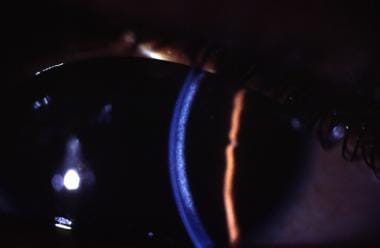
This slit beam illumination photograph of the cornea localizes the corneal opacity to the posterior stroma and the pre-Descemet membrane region. This type of corneal opacity is commonly present in X-linked recessive ichthyosis. |

 | View Full Size Image | |
Media type: Photo
|
| Media file 3:
An orbital mass is shown on CT scan in a 38-year-old male with human immunodeficiency virus (HIV) who presented with a late onset generalized ichthyotic rash and proptosis. |
 | View Full Size Image | |
Media type: CT
|
- Akiyama M, Suzumori K, Shimizu H. Prenatal diagnosis of harlequin ichthyosis by the examination of keratinized hair canals and amniotic fluid cells at 19 weeks' estimated gestational age. Prenat Diagn. Feb 1999;19(2):167-71. [Medline].
- Al-Akloby OM. Association of atopic dermatitis with primary hereditary ichthyoses. Saudi Med J. Aug 2004;25(8):1097-9. [Medline].
- Baden HP, Imber M. Ichthyosis with an unusual constellation of ectodermal dysplasias. Clin Genet. Jun 1989;35(6):455-61. [Medline].
- Bale SJ, DiGiovanna JJ. Genetic approaches to understanding the keratinopathies. Adv Dermatol. 1997;12:99-113; discussion 114. [Medline].
- Banse-Kupin L, Pelachyk JM. Ichthyosiform sarcoidosis. Report of two cases and a review of the literature. J Am Acad Dermatol. Oct 1987;17(4):616-20. [Medline].
- Bitoun E, Chavanas S, Irvine AD, Lonie L, Bodemer C, Paradisi M. Netherton syndrome: disease expression and spectrum of SPINK5 mutations in 21 families. J Invest Dermatol. Feb 2002;118(2):352-61. [Medline].
- Caceres-Rios H, Tamayo-Sanchez L, Duran-Mckinster C, de la Luz Orozco M, Ruiz-Maldonado R. Keratitis, ichthyosis, and deafness (KID syndrome): review of the literature and proposal of a new terminology. Pediatr Dermatol. Mar-Apr 1996;13(2):105-13. [Medline].
- Casaroli Marano RP, Ortiz Stradtmann MA, Uxo M, Iglesias E. Ocular findings associated with congenital X-linked ichthyosis. Ann Ophthalmol. May 1991;23(5):167-72. [Medline].
- Chiaretti A, Schembri Wismayer D, Tortorolo L, Piastra M, Polidori G. Salicylate intoxication using a skin ointment. Acta Paediatr. Mar 1997;86(3):330-1. [Medline].
- Costagliola C, Fabbrocini G, Illiano GM, Scibelli G, Delfino M. Ocular findings in X-linked ichthyosis: a survey on 38 cases. Ophthalmologica. 1991;202(3):152-5. [Medline].
- Cuevas-Covarrubias SA, Diaz-Zagoya JC, Rivera-Vega MR, Beirana A, Carrasco E, Orozco E, et al. Higher prevalence of X-linked ichthyosis vs. ichthyosis vulgaris in Mexico. Int J Dermatol. Jul 1999;38(7):555-6. [Medline].
- Culican SM, Custer PL. Repair of cicatricial ectropion in an infant with harlequin ichthyosis using engineered human skin. Am J Ophthalmol. Sep 2002;134(3):442-3. [Medline].
- Derse M, Wannke E, Payer H, Rohrbach JM, Zierhut M. [Successful topical cyclosporin A in the therapy of progressive vascularising keratitis in keratitis-ichthyosis-deafness (KID) syndrome (Senter syndrome)]. Klin Monatsbl Augenheilkd. May 2002;219(5):383-6. [Medline].
- Dilek I, Demirer T, Ustün C, Arat M, Koç H, Beksac M, et al. Acquired ichthyosis associated with chronic graft-versus-host disease following allogeneic peripheral blood stem cell transplantation in a patient with chronic myelogenous leukemia. Bone Marrow Transplant. Jun 1998;21(11):1159-61. [Medline].
- Gicquel JJ, Lami MC, Catier A, Balayre S, Dighiero P. [Limbal stem cell deficiency associated with KID syndrome, about a case]. J Fr Ophtalmol. Dec 2002;25(10):1061-4. [Medline].
- Gloerich J, Ijlst L, Wanders RJ, Ferdinandusse S. Bezafibrate induces FALDH in human fibroblasts; implications for Sjögren-Larsson syndrome. Mol Genet Metab. Sep-Oct 2006;89(1-2):111-5. [Medline].
- Happle R, Hoffmann R. Absence of male-pattern baldness in men with X-linked recessive ichthyosis? A hypothesis to be challenged. Dermatology. 1999;198(3):231-2. [Medline].
- Hazan C, Orlow SJ, Schaffer JV. X-linked recessive ichthyosis. Dermatol Online J. 2005;11(4):12. [Medline].
- Hoffjan S, Stemmler S. On the role of the epidermal differentiation complex in ichthyosis vulgaris, atopic dermatitis and psoriasis. Br J Dermatol. Sep 2007;157(3):441-9. [Medline].
- Hosomi N, Oiso N, Fukai K, Hanada K, Fujita H, Ishii M. Deletion of distal promoter of VCXA in a patient with X-linked ichthyosis associated with borderline mental retardation. J Dermatol Sci. Jan 2007;45(1):31-6. [Medline].
- Hummel M, Cunningham D, Mullett CJ, Kelley RI, Herman GE. Left-sided CHILD syndrome caused by a nonsense mutation in the NSDHL gene. Am J Med Genet A. Oct 15 2003;122(3):246-51. [Medline].
- Ingordo V, D'Andria G, Gentile C, Decuzzi M, Mascia E, Naldi L. Frequency of X-linked ichthyosis in coastal southern Italy: a study on a representative sample of a young male population. Dermatology. 2003;207(2):148-50. [Medline].
- Kaplan MH, Sadick NS, McNutt NS, Talmor M, Coronesi M, Hall WW. Acquired ichthyosis in concomitant HIV-1 and HTLV-II infection: a new association with intravenous drug abuse. J Am Acad Dermatol. Nov 1993;29(5 Pt 1):701-8. [Medline].
- Kawashima J, Akiyama M, Takizawa Y, Takahashi S, Matsuo I, Shimizu H. Structural, enzymatic and molecular studies in a series of nonbullous congenital ichthyosiform erythroderma patients. Clin Exp Dermatol. Jul 2005;30(4):429-31. [Medline].
- König A, Happle R, Bornholdt D, Engel H, Grzeschik KH. Mutations in the NSDHL gene, encoding a 3beta-hydroxysteroid dehydrogenase, cause CHILD syndrome. Am J Med Genet. Feb 14 2000;90(4):339-46. [Medline].
- Küster W, Bohnsack K, Rippke F, Upmeyer HJ, Groll S, Traupe H, et al. Efficacy of urea therapy in children with ichthyosis. A multicenter randomized, placebo-controlled, double-blind, semilateral study. Dermatology. 1998;196(2):217-22. [Medline].
- Lacz NL, Schwartz RA, Kihiczak G. Epidermolytic hyperkeratosis: a keratin 1 or 10 mutational event. Int J Dermatol. Jan 2005;44(1):1-6. [Medline].
- Lee HW, Ahn SJ, Choi JC, Chang SE, Choi JH, Moon KC, et al. Acquired ichthyosis associated with an overlap syndrome of systemic sclerosis and systemic lupus erythematosus. J Dermatol. Jan 2006;33(1):52-4. [Medline].
- Leung PC, Ma GF. Ectropion of all four eyelids associated with severe ichthyosis congenita: a case report. Br J Plast Surg. Jul 1981;34(3):302-4. [Medline].
- Lucker GP, Heremans AM, Boegheim PJ, van de Kerkhof PC, Steijlen PM. Oral treatment of ichthyosis by the cytochrome P-450 inhibitor liarozole. Br J Dermatol. Jan 1997;136(1):71-5. [Medline].
- Marulli GC, Campione E, Chimenti MS, Terrinoni A, Melino G, Bianchi L. Type I lamellar ichthyosis improved by tazarotene 0.1% gel. Clin Exp Dermatol. Jul 2003;28(4):391-3. [Medline].
- Mayuzumi N, Ikeda S, Kawada H, Ogawa H. Effects of drugs and anticytokine antibodies on expression of ATP2A2 and ATP2C1 in cultured normal human keratinocytes. Br J Dermatol. May 2005;152(5):920-4. [Medline].
- Messmer EM, Kenyon KR, Rittinger O, Janecke AR, Kampik A. Ocular manifestations of keratitis-ichthyosis-deafness (KID) syndrome. Ophthalmology. Feb 2005;112(2):e1-6. [Medline].
- Montague I, Fox R, Mann R. Intra-amniotic debris identified at ultrasound scanning: a feature of congenital ichthyosis. Ultrasound Obstet Gynecol. May 1997;9(5):350-1. [Medline].
- Moran JL, Qiu H, Turbe-Doan A, Yun Y, Boeglin WE, Brash AR, et al. A mouse mutation in the 12R-lipoxygenase, Alox12b, disrupts formation of the epidermal permeability barrier. J Invest Dermatol. Aug 2007;127(8):1893-7. [Medline].
- Moskowitz DG, Fowler AJ, Heyman MB, Cohen SP, Crumrine D, Elias PM, et al. Pathophysiologic basis for growth failure in children with ichthyosis: an evaluation of cutaneous ultrastructure, epidermal permeability barrier function, and energy expenditure. J Pediatr. Jul 2004;145(1):82-92. [Medline].
- Oji V, Beljan G, Beier K, Traupe H, Luger TA. Topical pimecrolimus: a novel therapeutic option for Netherton syndrome. Br J Dermatol. Nov 2005;153(5):1067-8. [Medline].
- Orth DH, Fretzin DF, Abramson V. Collodion baby with transient bilateral upper lid ectropion. Review of ocular manifestations in ichthyosis. Arch Ophthalmol. Mar 1974;91(3):206-7. [Medline].
- Pagliaro JA, White SI. Specific skin lesions occurring in a patient with Hodgkin's lymphoma. Australas J Dermatol. Feb 1999;40(1):41-3. [Medline].
- Patel N, Spencer LA, English JC 3rd, Zirwas MJ. Acquired ichthyosis. J Am Acad Dermatol. Oct 2006;55(4):647-56. [Medline].
- Richard G, Rouan F, Willoughby CE, Brown N, Chung P, Ryynanen M, et al. Missense mutations in GJB2 encoding connexin-26 cause the ectodermal dysplasia keratitis-ichthyosis-deafness syndrome. Am J Hum Genet. May 2002;70(5):1341-8. [Medline].
- Sarici SU, Sahin M, Yurdakök M. Topical N-acetylcysteine treatment in neonatal ichthyosis. Turk J Pediatr. Jul-Sep 2003;45(3):245-7. [Medline].
- Schnur RE, Greenbaum BH, Heymann WR, Christensen K, Buck AS, Reid CS, et al. Acute lymphoblastic leukemia in a child with the CHIME neuroectodermal dysplasia syndrome. Am J Med Genet. Oct 3 1997;72(1):24-9. [Medline].
- Schorderet DF, Huber M, Laurini RN, Von Moos G, Gianadda B, Deleze G, et al. Prenatal diagnosis of lamellar ichthyosis by direct mutational analysis of the keratinocyte transglutaminase gene. Prenat Diagn. May 1997;17(5):483-6. [Medline].
- Shwayder T. Disorders of keratinization: diagnosis and management. Am J Clin Dermatol. 2004;5(1):17-29. [Medline].
- Sun JD, Linden KG. Netherton syndrome: a case report and review of the literature. Int J Dermatol. Jun 2006;45(6):693-7. [Medline].
- Suresh S, Vijayalakshmi R, Indrani S, Lata M. Short foot length: a diagnostic pointer for harlequin ichthyosis. J Ultrasound Med. Dec 2004;23(12):1653-7. [Medline].
- Takechi K, Sekiguchi K, Goto S. [A case of keratitis, ichthyosis, and deafness syndrome with Hutchinson's triad-like symptoms]. Nippon Ganka Gakkai Zasshi. Apr 1999;103(4):322-6. [Medline].
- Thiers BH. The use of topical calcipotriene/calcipotriol in conditions other than plaque-type psoriasis. J Am Acad Dermatol. Sep 1997;37(3 Pt 2):S69-71. [Medline].
- Traboulsi E, Waked N, Megarbane H. Ocular findings in ichthyosis follicularis-alopecia-photophobia (IFAP) syndrome. Ophthalmic Genet. Jun 2004;25(2):153-6. [Medline].
- Tsochatzis E, Vassilopoulos D, Deutsch M, Asvesti C, Sevastos N, Archimandritis AJ. Myelodysplastic syndrome presenting as acquired ichthyosis. Eur J Intern Med. Aug 2006;17(5):368-9. [Medline].
- Zhong W, Cui B, Zhang Y, Jiang H, Wei S, Bu L, et al. Linkage analysis suggests a locus of ichthyosis vulgaris on 1q22. J Hum Genet. 2003;48(7):390-2. [Medline].
Ichthyosis excerpt Article Last Updated: Dec 12, 2007
|