Continually Updated Clinical Reference
 
 
  All Sources     eMedicine     Medscape     Drug Reference     MEDLINE
 
eMedicine - Keratitis, Fungal : Article by

Quick Find
Authors & Editors
Introduction
Clinical
Differentials
Workup
Treatment
Medication
Follow-up
Miscellaneous
Acknowledgments
Multimedia
References

Related Articles
Keratitis, Bacterial

Keratitis, Herpes Simplex

Keratitis, Interstitial

Keratopathy, Neurotrophic


Patient Education
Click here for patient education.


Author: Daljit Singh, MBBS, MS, DSc, Professor Emeritis, Department of Ophthalmology, Guru Nanak Dev University, Amritsar, India; Director, Daljit Singh Eye Hospital

Daljit Singh is a member of the following medical societies: All India Ophthalmological Society, American Society of Cataract and Refractive Surgery, Indian Medical Association, International Intraocular Implant Club, and Intraocular Implant and Refractive Society, India

Coauthor(s): Arun Verma, MD, Senior Consultant, Department of Ophthalmology, Dr Daljit Singh Eye Hospital, India

Editors: Anastasios J Kanellopoulos, MD, Assistant Program Director, Clinical Associate Professor, Department of Ophthalmology, Manhattan Eye, Ear, and Throat Hospital, New York University; Francisco Talavera, PharmD, PhD, Senior Pharmacy Editor, eMedicine; Christopher J Rapuano, MD, Professor, Department of Ophthalmology, Jefferson Medical College of Thomas Jefferson University; Co-Chairman of the Cornea Service, Co-Chairman of Refractive Surgery Department, Wills Eye Institute; Lance L Brown, OD, MD, Ophthalmologist, Affiliated With Freeman Hospital and St John's Hospital, Regional Eye Center, Joplin, Missouri; Hampton Roy Sr, MD, Associate Clinical Professor, Department of Ophthalmology, University of Arkansas for Medical Sciences

Author and Editor Disclosure

Synonyms and related keywords: fungal keratitis, fungal ulcer, infectious corneal infiltrate, corneal ulcer, fungal endophthalmitis, Fusarium keratitis, keratomycosis 


Background

Fungal keratitis was first described by Leber in 1879. This entity is not a common cause of corneal infection, but it represents one of the major causes of infectious keratitis in tropical areas of the world. Considering fungus as a possible cause of infectious keratitis is important because devastating ocular damage can result if it is not diagnosed and treated promptly and effectively.

Fungal keratitis is a general term meaning any inflammation of the cornea. Fungi can infect (and therefore inflame) the cornea. The term fungal keratitis refers to a corneal infection caused by fungi. One type of fungus that can infect the cornea is Fusarium. When Fusarium infects the cornea, the eye disease is referred to as Fusarium keratitis.

Fungal keratitis remains a diagnostic and therapeutic challenge to the ophthalmologist. Difficulties are related to establishing a clinical diagnosis, isolating the etiologic fungal organism in the laboratory, and treating the keratitis effectively with topical antifungal agents. Unfortunately, delayed diagnosis is common, primarily because of lack of suspicion; even if the diagnosis is made accurately, management remains a challenge because of the poor corneal penetration and the limited commercial availability of antifungal agents.  

Moreover, the incidence of fungal keratitis has increased over the past 30 years. This increased occurrence of fungal keratitis is a result of the frequent use of topical corticosteroids and antibacterial agents in treating patients with keratitis, the rise in the number of patients who are immunocompromised, and better laboratory diagnostic techniques that aid in its diagnosis.

Classification

Of the 70 different fungi that have been implicated as causing fungal keratitis, the 2 medically important groups responsible for corneal infection are yeast and filamentous fungi (septate and nonseptate).

Yeast produces characteristic creamy, opaque, pasty colonies on the surface of culture media. Candida is the most representative pathogen in this group, primarily affecting those corneas already compromised by topical steroids, surface pathology, or both.

A feathery or powdery growth on the surface of culture media is produced by septate filamentary fungi, which are the most common cause of fungal keratitis.

Pathophysiology

Many fungal organisms associated with ocular infections are ubiquitous, saprophytic organisms and have been reported as causes of infection only in the ophthalmic literature. Fungal isolates have been classified into the following groups: Moniliaceae (nonpigmented filamentary fungi, including Fusarium and Aspergillus species), Dematiaceae (pigmented filamentary fungi, including Curvularia and Lasiodiplodia species), and yeasts (including Candida species).

Fungi gain access into the corneal stroma through a defect in the epithelium, then multiply and cause tissue necrosis and an inflammatory reaction. The epithelial defect usually results from trauma (eg, contact lens wear, foreign material, prior corneal surgery). The organisms can penetrate an intact Descemet membrane and gain access into the anterior chamber or the posterior segment. Mycotoxins and proteolytic enzymes augment the tissue damage.

Fungal keratitis also has been described to occur secondary to fungal endophthalmitis. In these cases, fungal organisms extend from the posterior segment through the Descemet membrane and into the corneal stroma.

Fungi are not a common cause of microbial keratitis. Fungi cannot penetrate the intact corneal epithelium and do not enter the cornea from episcleral limbal vessels. They need a penetrating injury or a previous epithelial defect to enter the cornea. Once within the cornea, however, they are able to proliferate.

Organisms that infect preexisting epithelial defects belong to the normal microflora of the conjunctiva and adnexa. The most common pathogen that invades a preexisting epithelial defect is Candida. Filamentous fungi are the principal causes of posttraumatic infection. The intrinsic virulence of fungi depends on the fungal substances produced and the host response generated.

Filamentous fungi proliferate within the corneal stroma without release of chemotactic substances, thereby delaying the host immune/inflammatory response. In contrast, Candida albicans produces phospholipase A and lysophospholipase on the surface of blastospores, facilitating the entrance to the tissue. Fusarium solani, which is a virulent fungus, is able (as are other filamentous fungi), to spread within the corneal stroma and penetrate the Descemet membrane.

Corneal trauma is the most frequent and major risk factor for fungal keratitis. In fact, the physician should have a high level of suspicion in a patient with a history of corneal trauma, particularly with plant or soil matter.

The trauma that accompanies contact lens wear is miniscule; contact lenses are not a common risk factor of fungal keratitis. Candida is the principal cause of keratitis associated with therapeutic contact lenses, and filamentous fungi are associated with refractive contact lens wear.

Topical steroid use has definitively been implicated as a cause of increased incidence, development, and worsening of fungal keratitis. Other risk factors to consider are foreign bodies, corneal surgery, chronic keratitis, and immunosuppressive diseases.

Frequency

United States

  • The incidence of fungal keratitis varies according to geographical location and ranges from 2% of keratitis cases in New York to 35% in Florida. Fusarium species are the most common cause of fungal corneal infection in the southern United States (45-76% of fungal keratitis), while Candida and Aspergillus species are more common in northern states.
  • In a large series of fungal keratitis from south Florida, Rosa et al reported that Fusarium oxysporum was the most common isolate (37%), followed by, in order of decreasing frequency, Fusarium solani (24%), Candida, Curvularia, and Aspergillus species.1
  • Fusarium species are commonly found in soil, in water, and on plants throughout the world, particularly in warmer climates. Past studies of Fusarium keratitis have found that most incidences of Fusarium keratitis have been caused by an eye injury with vegetative matter (eg, being hit in the eye with a palm branch).
  • An estimated 30 million persons in the United States wear soft contact lenses. The annual incidence of microbial keratitis is estimated to be 4-21 per 10,000 soft contact lens users, depending on whether users wear lenses overnight.
  • A number of individuals have contracted Fusarium keratitis from contact lens wear, especially through the use of the Bausch & Lomb ReNu with Moisture Lock contact lens solution. This number is generally very small, particularly in the northern part of the United States.
    • On March 8, 2006, the Centers for Disease Control and Prevention (CDC) received a report from an ophthalmologist in New Jersey regarding 3 patients with contact lens-associated Fusarium keratitis during recent months. Initial contact with several corneal disease specialty centers in the United States revealed that other centers also had seen recent increases in Fusarium keratitis.
    • The CDC began an investigation of the Fusarium keratitis outbreak. There were 130 confirmed cases of Fusarium keratitis. Over 60% of people with confirmed Fusarium keratitis had used Bausch & Lomb ReNu with Moisture Lock contact lens solution, and 37 of these cases resulted in cornea transplant surgery.
    • The US Food and Drug Administration (FDA) recalled Bausch & Lomb ReNu with Moisture Lock contact lens solution.
    • According to Bausch & Lomb, "unique characteristics of the formulation of the ReNu with Moisture Lock product in certain unusual circumstances can increase the risk of Fusarium infection."

International

  • Aspergillus species is the most common isolate in fungal keratitis worldwide. Large series of fungal keratitis from India report that Aspergillus species is the most common isolate (27-64%), followed by Fusarium (6-32%) and Penicillium (2-29%) species.

Mortality/Morbidity

Fungal organisms can extend from the cornea into the sclera and intraocular structures. Fungi can cause severe infections, such as scleritis, endophthalmitis, or panophthalmitis. These infections are usually very difficult to treat and may result in severe visual loss or even loss of the eye.

Sex

Fungal keratitis is more common in males than in females and often occurs in patients with a history of outdoor ocular trauma.


History

  • A history of outdoor eye trauma often is reported.
  • In patients presenting with possible fungal keratitis, inquire about possible risk factors (see Causes).
  • Symptoms include the following:   
    • Foreign body sensation
    • Increasing eye pain or discomfort
    • Sudden blurry vision
    • Unusual redness of the eye
    • Excessive tearing and discharge from the eye
    • Increased light sensitivity

Physical

The clinical diagnosis of fungal keratitis is based on risk factor analysis and characteristic corneal features.

  • The most common signs on slit lamp examination are nonspecific and include the following:  
    • Conjunctival injection
    • Epithelial defect
    • Suppuration
    • Stromal infiltration
    • Anterior chamber reaction
    • Hypopyon
  • Presenting clinical features that are specific to fungal keratitis include an infiltrate with feathery margins, elevated edges, rough texture, gray-brown pigmentation, satellite lesions, hypopyon, and endothelial plaque.
    • Fine or coarse granular infiltrate within the epithelium and anterior stroma
    • Gray-white color, dry, and rough corneal surface that may appear elevated
    • Typical irregular feathery-edged infiltrate
    • White ring in the cornea and satellite lesions near the edge of the primary focus of the infection
    • In advanced cases, suppurative stromal keratitis associated with conjunctival hyperemia, anterior chamber inflammation, hypopyon, iritis, endothelial plaque, or possible corneal perforation
  • Although these highly characteristic signs may be present, obtaining a sample of the lesion by scraping or corneal biopsy is important before initiating treatment with antifungal therapy (see Procedures). Several unfortunate cases have been reported in which antifungal therapy had been initiated before fungi were seen or isolated, with resultant misdiagnosis and progression of the process.
  • A deep stromal infiltrate with an intact epithelium also may be present. However, many fungal ulcers demonstrate no striking morphologic pattern, and it often is not possible to differentiate clinically between fungal keratitis and bacterial keratitis.
  • Advanced severe filamentous fungal and yeast keratitis are indistinguishable and resemble keratitis caused by virulent bacteria, such as Staphylococcus aureus and Pseudomonas aeruginosa.

Causes

  • Aspergillus is the most common cause of fungal keratitis worldwide. However, the epidemiology of fungal keratitis is climate specific. In the southern United States, Fusarium species are the most common cause of fungal keratitis, with an especially high incidence in Florida. In contrast, Candida and Aspergillus species are the most common pathogens in the northern United States.
  • Common risk factors for the development of fungal keratitis include the following:  
    • Trauma (eg, contact lenses, foreign body); in a study of fungal keratitis from south Florida, trauma with vegetable matter was the major risk factor in 44% of patients.
    • Topical corticosteroid use
    • Corneal surgery such as penetrating keratoplasty, clear cornea (sutureless) cataract surgery, or laser in situ keratomileusis (LASIK)
    • Chronic keratitis due to herpes simplex, herpes zoster, or vernal keratoconjunctivitis
    • Young males
    • Healthy
    • No significant ocular disease
    • Previous history of trauma (vegetable matter)
    • Agricultural occupations
  • Risk factors for Candida keratitis are as follows:
    • Older patients
    • Preexisting ocular disease
    • Exposure keratopathy
    • Chronic keratitis
    • Long-term steroid use
    • Immunosuppressive disease


Keratitis, Bacterial
Keratitis, Herpes Simplex
Keratitis, Interstitial
Keratopathy, Neurotrophic

Other Problems to be Considered

Acanthamoeba keratitis


Lab Studies

  • The diagnosis of fungal keratitis continues to be problematic. Many clinical characteristics are not specific to fungal ulcers; therefore, antifungal therapy should be withheld until a diagnosis is confirmed by laboratory studies.
  • The most important step in the initial management of suspected fungal keratitis is to obtain corneal material for directed smears and inoculation of media. Smears are used to obtain rapid information about the pathogen. Gram stain identifies yeast, and Giemsa stain is useful in detecting fungal elements. However, if fluorescein microscopy is available, acridine orange and calcofluor white are the stains of choice. The primary isolation cultures for fungus are Sabouraud and blood agar at room temperature.  
  • In all patients with suspected fungal keratitis, initial corneal smears and cultures should be performed. Culture media for suspected fungal keratitis should include the same media used for a general infectious-keratitis workup.  
    • Corneal scrapings are obtained using a platinum spatula, surgical blade, or calcium alginate swab inoculated on Sabouraud agar plates, and then maintained at 25°C to enhance fungal growth.
    • Brain-heart infusion broth is another medium that can be used.
    • Cycloheximide should not be present in the medium because it inhibits fungal growth.
    • Corneal scrapings provide for initial debridement of organisms and epithelium, which may be a barrier to antifungal penetration.
    • Gram and Giemsa stains of corneal scrapings have sensitivities of about 50% in establishing a diagnosis. Calcofluor white stain (requires a fluorescent microscope) also can identify fungal organisms.
    • Initial growth in culture occurs within 72 hours in 83% of cultures and within 1 week in 97% of cultures.
    • A waiting period of 2 weeks is usually necessary for confirmation of no growth in culture.
    • Culture has been used as the criterion standard to aid ophthalmologists in the diagnosis of fungal keratitis; therefore, the true sensitivity of culture techniques is unknown.

Imaging Studies

  • If clinical evidence or suspicion of posterior segment involvement exists, ophthalmic B-scan ultrasound may be necessary to rule out concurrent fungal endophthalmitis.

Other Tests

  • The laboratory diagnosis of fungal keratitis may be problematic because of the very small sample obtained by scraping the corneal ulcer. Therefore, recent methods for the identification of fungi have been under study and include the following:
    • Immunofluorescence staining
    • Electron microscopy
    • Confocal microscopy
    • The polymerase chain reaction (PCR) technique holds promise as an effective method of diagnosing fungal keratitis because it offers increased sensitivity and significant reduction in the time required to establish a diagnosis.

Procedures

  • If corneal smears and cultures are negative at 48-72 hours in a patient who is strongly suspected of having a fungal infection and who is not improving on the initial, broad-spectrum antibacterial therapy, the authors recommend proceeding to a corneal biopsy to establish a diagnosis.
  • The corneal biopsy specimen should be submitted to the laboratory. A substantial portion also should be submitted for histopathologic examination. The pathologist should be alerted regarding the suspected diagnosis and especially that the specimen is a small piece of cornea.
  • A negative biopsy result indicates that the destructive corneal process is progressing, and hypopyon exists; therefore, anterior chamber paracentesis or excisional biopsy (keratoplasty) should be performed.

Histologic Findings

Histopathologic examination of corneal buttons can reveal the presence of fungal elements in 75% of patients. Fungal hyphae usually lie parallel to the corneal surface and lamellae. The presence of vertical oriented fungal elements in regard to stromal lamellae depicts high virulence of the organism and usually is associated with more aggressive infection. The Descemet membrane may serve as a partial barrier for invasion of fungal organisms. Penetration of the Descemet membrane by the fungal elements depicts an aggressive organism and a higher risk for contamination of the globe.


Medical Care

Antifungal agents are classified into the following groups:

  • Polyenes include natamycin, nystatin, and amphotericin B.  
    • Polyenes disrupt the cell by binding to fungal cell wall ergosterol and are effective against both filamentous and yeast forms.
    • Amphotericin B is the drug of choice to treat patients with fungal keratitis caused by yeasts.
    • Although polyenes penetrate ocular tissue poorly, amphotericin B is the drug of choice for treatment of fungal keratitis caused by Candida. In addition, it has efficacy against many filamentous fungi. Administration is every 30 minutes for the first 24 hours, every hour for the second 24 hours, and then is slowly tapered according to the clinical response.
    • Natamycin has a broad-spectrum of activity against filamentous organisms. The penetration of topically applied amphotericin B is found to be less than that of topically applied natamycin through the intact corneal epithelium.
    • Natamycin is the only commercially available topical ophthalmic antifungal preparation. It is effective against filamentous fungi, particularly for infections caused by Fusarium. However, because of poor ocular penetration, it has primarily been useful in cases with superficial corneal infection.
  • Azoles (imidazoles and triazoles) include ketoconazole, miconazole, fluconazole, itraconazole, econazole, and clotrimazole.  
    • Azoles inhibit ergosterol synthesis at low concentrations, and, at higher concentrations, they appear to cause direct damage to cell walls.
    • Oral fluconazole and ketoconazole are absorbed systemically with good levels in the anterior chamber and the cornea; therefore, they should be considered in the management of deep fungal keratitis. 
    • Imidazoles and triazoles are synthetic chemical antifungal agents. High cornea levels of ketoconazole and fluconazole have been demonstrated in animal studies. Because of excellent penetration in ocular tissue, these medications, given systemically, are the preferred treatment of keratitis caused by filamentous fungi and yeast.
    • The adult dose of ketoconazole is 200-400 mg/d, which can be increased to 800 mg/d. However, because of the secondary effects, increasing the dose should be done carefully. Gynecomastia, oligospermia, and decreased libido have been reported in 5-15% of patients who have been taking 400 mg/d for a long period.
    • The potential role of itraconazole in treatment of fungal keratitis is still unclear. However, it may be a helpful adjunctive agent in fungal keratitis.
  • Fluorinated pyrimidines, such as flucytosine, are other antifungal agents. Flucytosine is converted into a thymidine analog that blocks fungal thymidine synthesis. It usually is administered in combination with an azole or amphotericin B; it is synergistic with these medications. Otherwise, if flucytosine is the only drug used in therapy for candidal infections, emergence of resistance rapidly develops. Therefore, flucytosine should never be used alone.
  • Treatment should be instituted promptly with topical fortified antifungal drops, initially every hour during the day and every 2 hours over night.
  • Subconjunctival injections may be used in patients with severe keratitis or keratoscleritis. They also can be used when poor patient compliance exists.
  • An oral antifungal (eg, ketoconazole, fluconazole) should be considered for patients with deep stromal infection. Antifungal therapy usually is maintained for 12 weeks, and patients are monitored closely.
  • Fluconazole has been shown to penetrate better into the cornea after systemic administration compared to other azoles and may be associated with fewer adverse effects.
  • In vitro antifungal sensitivities often are performed to assess resistance patterns of the fungal isolate. However, in vitro susceptibility testing may not correspond with in vivo clinical response because of host factors, corneal penetration of the antifungal, and difficulty in standardization of antifungal sensitivities. Therefore, they should be performed in a standardized method at a reference laboratory.
  • The promotion of fungal growth by corticosteroid treatment is well recognized; therefore, corticosteroid drops should not be used in the treatment of fungal keratitis until after 2 weeks of antifungal treatment and clear clinical evidence of infection control. Steroids should only be used when the active inflammation is believed to be causing significant damage to the structure of the cornea and/or vision. The steroid is always used in conjunction with the topical antifungal. 

Therapy may be modified.

  • Decisions about alternate therapy must be based on the biomicroscopic signs and on the tolerance of the topical medications. Improvement in clinical signs may be difficult to detect during the initial days of antifungal therapy. However, some of the biomicroscopic signs that may be helpful to evaluate efficacy are as follows:
    • Blunting of the perimeters of the infiltrate
    • Reduction of the density of the suppuration
    • Reduction in cellular infiltrate and edema in the surrounding stroma
    • Reduction in anterior chamber inflammation
    • Progressive reepithelization
    • Loss of the feathery perimeter of the stromal inflammation
  • Successful antifungal therapy for fungal keratitis requires frequent drug administration for prolonged periods (ie, at least 12 wk). Some corneal manifestations of toxicity are as follows:
    • Protracted epithelial ulceration
    • Punctuate corneal epithelial erosion
    • Diffuse stromal haze

Surgical Care

Patients who do not respond to medical treatment of topical and oral antifungal medications usually require surgical intervention, including corneal transplantation. Approximately 15-27% of patients require surgical intervention. In some cases, though, even corneal surgery will not restore vision, and patients will be blind or otherwise visually impaired. Therefore, early diagnosis coupled with appropriate treatment is critical to recovery from fungal keratitis. 

  • Frequent corneal debridement with a spatula is helpful; it debulks fungal organisms and epithelium and enhances penetration of the topical antifungal agent.
  • Approximately one third of fungal infections fail to respond to medical treatment and may result in corneal perforation. In these cases, a therapeutic penetrating keratoplasty is necessary.  
    • Penetrating keratoplasty generally should be performed within 4 weeks of presentation. A small number of patients have been treated successfully with a conjunctival flap.
    • The main goals of surgery are to control the infection and to maintain the integrity of the globe. Topical antifungal therapy, in addition to systemic fluconazole or ketoconazole, should be continued following penetrating keratoplasty.
    • The use of topical corticosteroids in the postoperative period remains controversial.


The antifungal agents used include polyenes (eg, natamycin, amphotericin B), azoles (eg, ketoconazole, miconazole, fluconazole, itraconazole), and fluorinated pyrimidines (eg, flucytosine). Amphotericin B is the drug of choice in fungal keratitis caused by yeasts. Natamycin has a broad-spectrum of activity against filamentous organisms. Oral fluconazole and ketoconazole should be considered in the management of deep fungal keratitis.

Drug Category: Antifungal agents

Their mechanism of action may involve an alteration of RNA and DNA metabolism or an intracellular accumulation of peroxide that is toxic to the fungal cell.

Drug NameNatamycin (Natacyn)
DescriptionInitial drug of choice in Fusarium keratitis. Predominantly fungicidal tetraene polyene antibiotic, derived from Streptomyces natalensis that possesses in vitro activity against a variety of yeast and filamentous fungi, including Candida, Aspergillus, Cephalosporium, Fusarium, and Penicillium species. Binds fungal cell membrane forming a polyenesterol complex that alters membrane permeability, depleting essential cellular constituents. Activity against fungi is dose-related but not effective, in vitro, against gram-negative or gram-positive bacteria.
Generally, therapy should be continued for 14-21 d or until the fungal keratitis has resolved. In many cases, may help to reduce dosage gradually at 4- to 7-day intervals to ensure elimination of the organism.
Adult Dose1 gtt into conjunctival sac q1-2h initially; may reduce frequency to 1 gtt 6-8 times/d after first 3-4 d
Pediatric DoseAdminister as in adults
ContraindicationsDocumented hypersensitivity
InteractionsNone reported
PregnancyC - Fetal risk revealed in studies in animals but not established or not studies in humans; may use if benefits outweigh risk to fetus
PrecautionsFailure of keratitis to improve following 7-10 d of administration suggests that a microorganism, not susceptible to natamycin, may have caused infection; adherence of suspension to areas of epithelial ulceration or retention in fornices can occur; discontinue use if possible drug toxicity

Drug NameAmphotericin B 0.1-0.25% (Amphocin, Fungizone)
DescriptionPolyene antibiotic produced by a strain of Streptomyces nodosus; can be fungistatic or fungicidal. Binds to sterols (eg, ergosterol) in the fungal cell membrane, causing intracellular components to leak with subsequent fungal cell death. First agent of choice in corneal infections due to yeasts, such as Candida species.
Adult Dose1 gtt q1-2h
Pediatric DoseAdminister as in adults
ContraindicationsDocumented hypersensitivity
InteractionsAntineoplastic agents may enhance the potential of amphotericin B for renal toxicity, bronchospasm, and hypotension; corticosteroids, digitalis, and thiazides may potentiate hypokalemia; the risk of renal toxicity is increased with cyclosporine
PregnancyC - Fetal risk revealed in studies in animals but not established or not studies in humans; may use if benefits outweigh risk to fetus
PrecautionsTopical applications may cause punctate epithelial erosions and occasionally a greenish discoloration of the cornea; remains unclear whether frequent topical use of amphotericin B results in elevated systemic levels and worsening renal function in patients with preexisting nephrotoxicity

Drug NameKetoconazole (Nizoral)
DescriptionFungistatic activity. Imidazole broad-spectrum antifungal agent; inhibits synthesis of ergosterol, causing cellular components to leak, resulting in fungal cell death.
Often used systemically in the treatment of deep fungal infections. Studies have confirmed intraocular penetration in keratitis due to Fusarium, Aspergillus, Curvularia, and Candida species.
Adult Dose200 mg PO bid/qid
Pediatric DoseNot established
ContraindicationsDocumented hypersensitivity; fungal meningitis
InteractionsIsoniazid may decrease bioavailability of ketoconazole; coadministration decreases effects of either rifampin or ketoconazole; may increase effect of anticoagulants; may increase toxicity of corticosteroids and cyclosporine (cyclosporine dosage can be adjusted); may decrease theophylline levels
PregnancyC - Fetal risk revealed in studies in animals but not established or not studies in humans; may use if benefits outweigh risk to fetus
PrecautionsHepatotoxicity may occur; may reversibly decrease corticosteroid serum levels (adverse effects avoided with dose of 200-400 mg/d); administer antacid, anticholinergics, or H2 blockers at least 2 h after taking ketoconazole; adverse effects include impotence, decreased libido, and gynecomastia

Drug NameFluconazole (Diflucan)
DescriptionAlternative drug to ketoconazole in the treatment of deep fungal keratitis caused by a variety of fungi. Fungistatic activity. Synthetic oral antifungal (broad-spectrum bistriazole) that selectively inhibits fungal cytochrome P-450 and sterol C-14 alpha-demethylation, which prevents conversion of lanosterol to ergosterol, thereby disrupting cellular membranes.
Adult Dose100-200 mg PO qd/bid
Pediatric DoseNot established
ContraindicationsDocumented hypersensitivity
InteractionsLevels may increase with hydrochlorothiazides; fluconazole levels may decrease with chronic coadministration of rifampin; coadministration of fluconazole may decrease phenytoin concentrations; may increase concentrations of theophylline, tolbutamide, glyburide, and glipizide; effects of anticoagulants may increase with fluconazole coadministration; increases in cyclosporine concentrations may occur when administered concurrently
PregnancyC - Fetal risk revealed in studies in animals but not established or not studies in humans; may use if benefits outweigh risk to fetus
PrecautionsAdjust dose for renal insufficiency; monitor closely if rashes develop, and discontinue drug if lesions progress; may cause clinical hepatitis, cholestasis, and fulminant hepatic failure (including death), with underlying medical conditions (eg, AIDS, malignancy) and while taking multiple concomitant medications; not recommended in breastfeeding; convenience and efficacy of single dose regimen for treatment of vaginal yeast infections should be weighed against difficulties resulting from higher incidence of adverse reactions reported with oral fluconazole versus intravaginal agents

Drug NameFlucytosine 1% (Ancobon)
DescriptionConverted to fluorouracil after penetrating fungal cells. Inhibits RNA and protein synthesis. Active against Candida and Cryptococcus and generally used in combination with amphotericin B. High incidence of acquired resistance has occurred; therefore, combined treatment with other agents is recommended.
In the treatment of fungal keratitis, polyenes and imidazoles have mostly replaced flucytosine.
Adult Dose1 gtt q1-2h
Pediatric DoseNot established
ContraindicationsDocumented hypersensitivity
InteractionsAmphotericin B may increase toxicity of flucytosine; cytosine may inactivate flucytosine
PregnancyC - Fetal risk revealed in studies in animals but not established or not studies in humans; may use if benefits outweigh risk to fetus
PrecautionsCaution in bone marrow suppression; adjust dose in renal impairment


Further Inpatient Care

  • Indications for inpatient care include clinical evidence of an impending corneal perforation or if the patient is unable to administer frequent eye drops. In such cases, inpatient care includes topical fortified antifungal therapy administered every hour around the clock with frequent monitoring for any signs of corneal perforation.

Further Outpatient Care

  • Most patients with fungal keratitis are treated on an outpatient basis.
  • Antifungal therapy generally should be maintained for 12 weeks with routine follow-up examinations.

In/Out Patient Meds

  • The medications prescribed depend on the specific etiologic agent identified in cultures.
    • In general, amphotericin B should be prescribed to a patient presenting with a fungal ulcer suggestive of yeast infection (Candida species), and natamycin should be prescribed when a high suspicion exists for a filamentous fungus (eg, Fusarium species). Candida species are frequently more common in sick corneas, while Fusarium species are often more common after trauma.
    • Fluconazole or ketoconazole should be used in patients with deep stromal infection.

Complications

  • Fungal keratitis can lead to severe ocular infections involving any intraocular structure and can result in severe visual loss or even loss of the eye.
  • Corneal perforation is not unusual, and secondary endophthalmitis has been reported.

Prognosis

  • Prognosis depends on several factors, including the extent of corneal involvement upon presentation, the patient's health status (eg, immunocompromised), and the timing of establishing a clinical diagnosis confirmed by culture in the laboratory.
  • Patients with mild infections and an early microbiologic diagnosis have a good prognosis; however, controlling or eradicating an infection that spreads into the sclera or the intraocular structures is very difficult.
  • Approximately one third of fungal infections result in either medical treatment failure or corneal perforation.

Patient Education

  • Patients who wear contact lenses should consult their eye care professional concerning use of an appropriate cleaning/disinfecting product. (Patients should discontinue use of Bausch & Lomb ReNu with Moisture Lock contact lens solution.)
  • Patients should consider performing a “rub and rinse” lens cleaning method, rather than a no rub method, regardless of which cleaning/disinfecting solution used, in order to minimize the number of germs and to reduce the chances of infection.
  • Patients should continue to follow proper lens care practices.
    • Wash their hands with soap and water and dry (lint-free method) them before handling lenses.
    • Wear and replace lenses according to the schedule prescribed by their eye care professional.
    • Follow the specific lens cleaning and storage guidelines from their eye care professional and the solution manufacturer.
    • Keep the contact lens case clean and replace every 3-6 months.
  • Patients should remove the lenses and consult their eye care professional immediately if they experience symptoms, such as redness, pain, tearing, increased light sensitivity, blurry vision, discharge, or swelling.


Medical/Legal Pitfalls

  • Corticosteroid drops should not be used in the treatment of fungal keratitis until after 2 weeks of antifungal treatment and clear clinical evidence of infection control. The steroid should be used in conjunction with the topical antifungal agent.
  • If clinical evidence or suspicion of posterior segment involvement exists, ophthalmic B-scan ultrasound may be necessary to rule out concurrent fungal endophthalmitis.
  • Cultures should be performed in a patient with clinical evidence of a possible fungal corneal infection, and antifungal therapy should be directed to the specific etiologic agent.
  • Topical cyclosporin A may have an anti-inflammatory effect, a potential cornea allograft tolerance effect, and direct fungicidal activity.

Special Concerns

  • Differentiating bacterial keratitis from fungal keratitis on clinical judgment alone, especially in advanced cases, is practically impossible.
  • A history of injury with vegetative matter is not necessary for a patient to develop fungal keratitis. Immunosuppression can play a strong role in the development of candidal infections.


The authors and editors of eMedicine gratefully acknowledge the contributions of previous author, George Alexandrakis, MD, to the development and writing of this article.


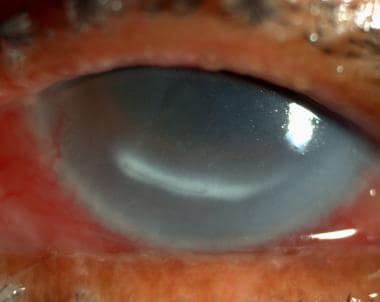
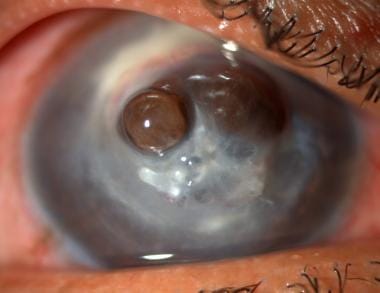
Media file 1:  Perforated fungal ulcer.
Click to see larger pictureClick to see detailView Full Size Image
Media type:  Photo

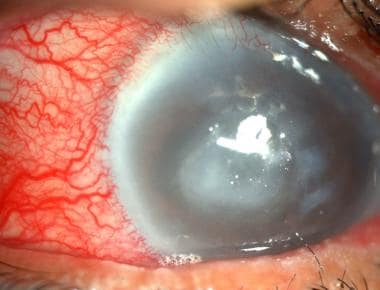
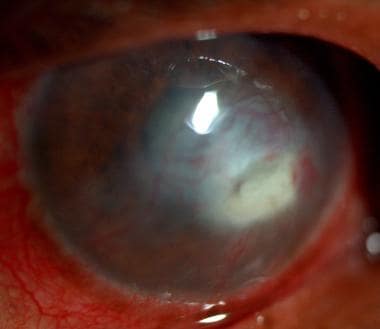
Media file 2:  Fungal infection under treatment.
Click to see larger pictureClick to see detailView Full Size Image
Media type:  Photo

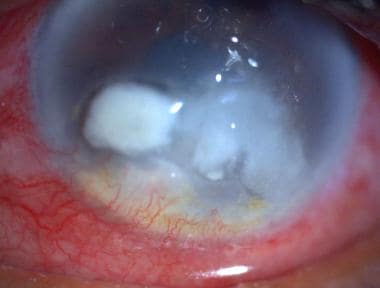
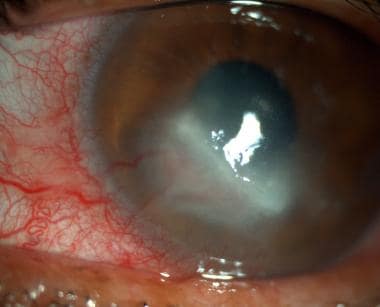
Media file 3:  Fungal corneal ulcer.
Click to see larger pictureClick to see detailView Full Size Image
Media type:  Photo

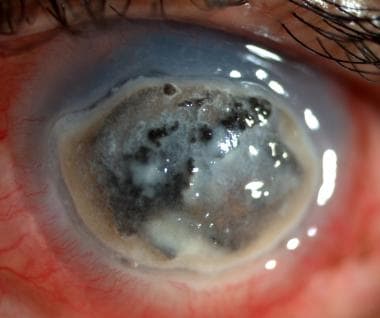
Media file 4:  Perforated fungal corneal ulcer.
Click to see larger pictureClick to see detailView Full Size Image
Media type:  Photo

Media file 5:  Fungal ulcer in an elderly woman.
Click to see larger pictureClick to see detailView Full Size Image
Media type:  Photo

Media file 6:  Fungal ulcer.
Click to see larger pictureClick to see detailView Full Size Image
Media type:  Photo

Media file 7:  Fungal corneal ulcer, with excessive vascularization.
Click to see larger pictureClick to see detailView Full Size Image
Media type:  Photo

Media file 8:  Marginal ulcer, fungus positive.
Click to see larger pictureClick to see detailView Full Size Image
Media type:  Photo

Media file 9:  Healed fungal ulcer.
Click to see larger pictureClick to see detailView Full Size Image
Media type:  Photo

Media file 10:  Fungal keratitis.
Click to see larger pictureClick to see detailView Full Size Image
Media type:  Photo

Media file 11:  Corneal perforation, blocked by a crystalline lens and being covered by epithelium.
Click to see larger pictureClick to see detailView Full Size Image
Media type:  Photo

Media file 12:  Fungal keratitis, being controlled.
Click to see larger pictureClick to see detailView Full Size Image
Media type:  Photo

Media file 13:  Fungal infection.
Click to see larger pictureClick to see detailView Full Size Image
Media type:  Photo

Media file 14:  Fungal infection.
Click to see larger pictureClick to see detailView Full Size Image
Media type:  Photo

Media file 15:  Fungal abscess.
Click to see larger pictureClick to see detailView Full Size Image
Media type:  Photo

Media file 16:  Fungal corneal abscess/ulcer. A proven case of fungal infection, 5 days' duration. Intense infiltration around the abscess.
Click to see larger pictureClick to see detailView Full Size Image
Media type:  Photo


  1. Haynes KA, Westerneng TJ, Fell JW, Moens W. Rapid detection and identification of pathogenic fungi by polymerase chain reaction amplification of large subunit ribosomal DNA. J Med Vet Mycol. Sep-Oct 1995;33(5):319-25. [Medline].
  2. Accensi F J, Cano L, Figuera, ML Abarca and FJ. Cabañes. New PCR methods to differentiate species in the Aspergillus niger aggregate. FEMS Microbiol. Lett. 1999;180:191-196.
  3. Alexandrakis G, Jalali S, Gloor P. Diagnosis of Fusarium keratitis in an animal model using the polymerase chain reaction. Br J Ophthalmol. Mar 1998;82(3):306-11. [Medline].
  4. Avunduk AM, Beuerman RW, Varnell ED, Kaufman HE. Confocal microscopy of Aspergillus fumigatus keratitis. Br J Ophthalmol. Apr 2003;87(4):409-10. [Medline].
  5. Borne MJ, Elliott JH, O'Day DM. Ocular fluconazole treatment of Candida parapsilosis endophthalmitis after failed intravitreal amphotericin B. Arch Ophthalmol. Oct 1993;111(10):1326-7. [Medline].
  6. Chen YC, Eisner JD, Kattar MM, Rassoulian-Barrett SL, LaFe K, Yarfitz SL, et al. Identification of medically important yeasts using PCR-based detection of DNA sequence polymorphisms in the internal transcribed spacer 2 region of the rRNA genes. J Clin Microbiol. Jun 2000;38(6):2302-10. [Medline].
  7. Chowdhary A, Singh K. Spectrum of fungal keratitis in North India. Cornea. Jan 2005;24(1):8-15. [Medline].
  8. Donnenfeld ED, Perry HD, Snyder RW, Moadel R, Elsky M, Jones H. Intracorneal, aqueous humor, and vitreous humor penetration of topical and oral ofloxacin. Arch Ophthalmol. Feb 1997;115(2):173-6. [Medline].
  9. Driebe WT Jr, Mandelbaum S, Forster RK, Schwartz LK, Culbertson WW. Pseudophakic endophthalmitis. Diagnosis and management. Ophthalmology. Apr 1986;93(4):442-8. [Medline].
  10. Dunlop AA, Wright ED, Howlader SA, Nazrul I, Husain R, McClellan K. Suppurative corneal ulceration in Bangladesh. A study of 142 cases examining the microbiological diagnosis, clinical and epidemiological features of bacterial and fungal keratitis. Aust N Z J Ophthalmol. May 1994;22(2):105-10. [Medline].
  11. Einsele H, Hebart H, Roller G, Löffler J, Rothenhofer I, Muller CA. Detection and identification of fungal pathogens in blood by using molecular probes. J Clin Microbiol. Jun 1997;35(6):1353-60. [Medline].
  12. Esteve-Zarzoso B, Belloch C, Uruburu F, Querol A. Identification of yeasts by RFLP analysis of the 5.8S rRNA gene and the two ribosomal internal transcribed spacers. Int J Syst Bacteriol. Jan 1999;49 Pt 1:329-37. [Medline].
  13. Ferrer C S, Frases F, Colom, J L Alio, J L Abad, and M E. Mulet. Molecular diagnosis of fungal ocular infections in an animal model. Rev. Iberoam. Micol. 2000;17:S134.
  14. Florakis GJ, Moazami G, Schubert H, Koester CJ, Auran JD. Scanning slit confocal microscopy of fungal keratitis. Arch Ophthalmol. Nov 1997;115(11):1461-3. [Medline].
  15. Forster RK, Abbott RL, Gelender H. Management of infectious endophthalmitis. Ophthalmology. Apr 1980;87(4):313-9. [Medline].
  16. Garg P, Mahesh S, Bansal AK, Gopinathan U, Rao GN. Fungal infection of sutureless self-sealing incision for cataract surgery. Ophthalmology. Nov 2003;110(11):2173-7. [Medline].
  17. Guzek JP, Roosenberg JM, Gano DL, Wessels IF. The effect of vehicle on corneal penetration of triturated ketoconazole and itraconazole. Ophthalmic Surg Lasers. Nov 1998;29(11):926-9. [Medline].
  18. Hidalgo JA, Alangaden GJ, Eliott D, Akins RA, Puklin J, Abrams G. Fungal endophthalmitis diagnosis by detection of Candida albicans DNA in intraocular fluid by use of a species-specific polymerase chain reaction assay. J Infect Dis. Mar 2000;181(3):1198-201. [Medline].
  19. Jaeger EE, Carroll NM, Choudhury S, Dunlop AA, Towler HM, Matheson MM, et al. Rapid detection and identification of Candida, Aspergillus, and Fusarium species in ocular samples using nested PCR. J Clin Microbiol. Aug 2000;38(8):2902-8. [Medline].
  20. Jordan JA. PCR identification of four medically important Candida species by using a single primer pair. J Clin Microbiol. Dec 1994;32(12):2962-7. [Medline].
  21. Kauffman CA, Bradley SF, Vine AK. Candida endophthalmitis associated with intraocular lens implantation: efficacy of fluconazole therapy. Mycoses. Jan-Feb 1993;36(1-2):13-7. [Medline].
  22. Keyhani K, Seedor JA, Shah MK, Terraciano AJ, Ritterband DC. The incidence of fungal keratitis and endophthalmitis following penetrating keratoplasty. Cornea. Apr 2005;24(3):288-91. [Medline].
  23. Knox CM, Cevellos V, Dean D. 16S ribosomal DNA typing for identification of pathogens in patients with bacterial keratitis. J Clin Microbiol. Dec 1998;36(12):3492-6. [Medline].
  24. Kumar M, Shukla PK. Use of PCR targeting of internal transcribed spacer regions and single-stranded conformation polymorphism analysis of sequence variation in different regions of rrna genes in fungi for rapid diagnosis of mycotic keratitis. J Clin Microbiol. Feb 2005;43(2):662-8. [Medline].
  25. Lott TJ, Kuykendall RJ, Reiss E. Nucleotide sequence analysis of the 5.8S rDNA and adjacent ITS2 region of Candida albicans and related species. Yeast. Nov 1993;9(11):1199-206. [Medline].
  26. Mabon M. Fungal keratitis. Int Ophthalmol Clin. 1998;38(4):115-23. [Medline].
  27. Makimura K, Murayama SY, Yamaguchi H. Detection of a wide range of medically important fungi by the polymerase chain reaction. J Med Microbiol. May 1994;40(5):358-64. [Medline].
  28. Miyakawa Y, Mabuchi T, Kagaya K, Fukazawa Y. Isolation and characterization of a species-specific DNA fragment for detection of Candida albicans by polymerase chain reaction. J Clin Microbiol. Apr 1992;30(4):894-900. [Medline].
  29. Okhravi N, Adamson P, Mant R, Matheson MM, Midgley G, Towler HM. Polymerase chain reaction and restriction fragment length polymorphism mediated detection and speciation of Candida spp causing intraocular infection. Invest Ophthalmol Vis Sci. May 1998;39(6):859-66. [Medline].
  30. Panda A, Sharma N, Das G, Kumar N, Satpathy G. Mycotic keratitis in children: epidemiologic and microbiologic evaluation. Cornea. May 1997;16(3):295-9. [Medline].
  31. Prajna NV, John RK, Nirmalan PK, Lalitha P, Srinivasan M. A randomised clinical trial comparing 2% econazole and 5% natamycin for the treatment of fungal keratitis. Br J Ophthalmol. Oct 2003;87(10):1235-7. [Medline].
  32. Prajna NV, Nirmalan PK, Mahalakshmi R, Lalitha P, Srinivasan M. Concurrent use of 5% natamycin and 2% econazole for the management of fungal keratitis. Cornea. Nov 2004;23(8):793-6. [Medline].
  33. Reiss E, Tanaka K, Bruker G, Chazalet V, Coleman D, Debeaupuis JP. Molecular diagnosis and epidemiology of fungal infections. Med Mycol. 1998;36 Suppl 1:249-57. [Medline].
  34. Riggsby WS, Torres-Bauza LJ, Wills JW, Townes TM. DNA content, kinetic complexity, and the ploidy question in Candida albicans. Mol Cell Biol. Jul 1982;2(7):853-62. [Medline].
  35. Rosa RH Jr, Miller D, Alfonso EC. The changing spectrum of fungal keratitis in south Florida. Ophthalmology. Jun 1994;101(6):1005-13. [Medline].
  36. Srinivasan M. Fungal keratitis. Curr Opin Ophthalmol. Aug 2004;15(4):321-7. [Medline].
  37. Tang CM, Holden DW, Aufauvre-Brown A, Cohen J. The detection of Aspergillus spp. by the polymerase chain reaction and its evaluation in bronchoalveolar lavage fluid. Am Rev Respir Dis. Nov 1993;148(5):1313-7. [Medline].
  38. Thomas PA. Fungal infections of the cornea. Eye. Nov 2003;17(8):852-62. [Medline].
  39. Upadhyay MP, Karmacharya PC, Koirala S, Tuladhar NR, Bryan LE, Smolin G. Epidemiologic characteristics, predisposing factors, and etiologic diagnosis of corneal ulceration in Nepal. Am J Ophthalmol. Jan 15 1991;111(1):92-9. [Medline].
  40. Weissgold DJ, Orlin SE, Sulewski ME, Frayer WC, Eagle RC Jr. Delayed-onset fungal keratitis after endophthalmitis. Ophthalmology. Feb 1998;105(2):258-62. [Medline].
  41. White TJ, Bruns T, Lee S, Tailor S. Amplification and direct sequencing of fungal ribosomal RNA genes for phylogenetics. In: Innins MA, Gelfand DH, Sninsky JJ, White TJ, eds. PCR Protocols. A Guide to Methods and Applications. San Diego, CA: Academic Press, Inc; 1990:315-22.

Keratitis, Fungal excerpt

Article Last Updated: Jun 12, 2008