Practice Essentials
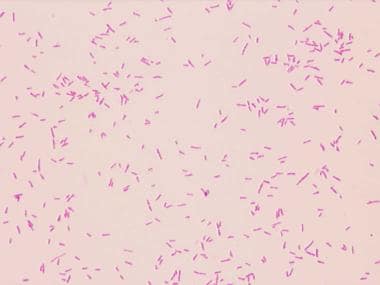
Yersinia enterocolitica (see the image below) is a bacterial species in the family Enterobacterales that causes enterocolitis, acute diarrhea, terminal ileitis, mesenteric lymphadenitis, and pseudoappendicitis but, if it spreads systemically, can also result in fatal sepsis. [1]
Signs and symptoms
Symptoms of Y enterocolitica infection typically include the following:
-
Diarrhea - The most common clinical manifestation of this infection; diarrhea may be bloody in severe cases
-
Low-grade fever
-
Abdominal pain - May localize to the right lower quadrant
-
Vomiting - Present in approximately 15-40% of cases
The patient may also develop erythema nodosum, which manifests as painful, raised red or purple lesions, mainly on the patient’s legs and trunk. Lesions appear 2-20 days after the onset of fever and abdominal pain and resolve spontaneously in most cases in about a month.
See Clinical Presentation for more detail.
Diagnosis
The following tests can be used in the diagnosis of Y enterocolitica infection:
-
Stool culture - This is the best way to confirm a diagnosis of Y enterocolitica [2, 3] ; the culture result usually is positive within 2 weeks of onset of disease. If Yersinia infection is suspected, the clinical laboratory should be notified and instructed to culture on cefsulodin-irgasan-novobiocin (CIN) agar or other agar specific for growing it. This organism is non-lactose fermenting and oxidase negative.
-
Diagnosis is made by isolating the organism from stool, blood, bile, wound, throat swab, mesenteric lymph node, cerebrospinal fluid, or peritoneal fluid.
-
Yersinia is included as a target on 3 commercial, FDA-cleared, multiplex assays for the detection of gastrointestinal pathogens ie, Verigene EP, FilmArray GI, and xTAG GPP. [4]
-
Enzyme-linked immunosorbent assays and radioimmunoassays for antibodies detection.
-
Imaging studies - Ultrasonography or computed tomography (CT) scanning may be useful in delineating true appendicitis from pseudoappendicitis.
-
Colonoscopy - Findings may vary and are relatively nonspecific.
-
In case of Yersinia- associated post infectious reactive arthropathy, joint aspirate would be non-purulent.
See Workup for more detail.
Management
Care in patients with Y enterocolitica infection primarily is supportive, with good nutrition and hydration being mainstays of treatment. [5]
Most infections are self-limited. Antibiotics should be given for severe cases. Y enterocolitica isolates usually are susceptible to trimethoprim-sulfamethoxazole, aminoglycosides, third-generation cephalosporins, fluoroquinolones, and tetracyclines; they are typically resistant to first-generation cephalosporins and most penicillins. Antimicrobial therapy has no effect on postinfectious sequelae. [6]
See Treatment and Medication for more detail.

Background
Yersinia enterocolitica is a pleomorphic, gram-negative cocobacillus that belongs to the family Enterobacteriales. As a human pathogen, Y enterocolitica most frequently is associated with enterocolitis, acute diarrhea, terminal ileitis, mesenteric lymphadenitis, and pseudoappendicitis, [1] with the spectrum of disease ranging from asymptomatic to life-threatening sepsis, especially in infants. The bacterium was first reported by Mclver and Picke, in 1934. [7] Schleifstein and Coleman provided the first recognized description of 5 human isolates of Y enterocolitica, in 1939. (See Prognosis and Clinical Presentation.) [8]
In several countries, Y enterocolitica has eclipsed Shigella species and approaches Salmonella and Campylobacter species as the predominant cause of acute bacterial gastroenteritis. Y enterocolitica most commonly affects young individuals (approximately 75% of patients with Y enterocolitica infection are aged 5-15 years), but whether this represents an increased susceptibility or a greater likelihood of developing symptomatic illness is unclear. Most cases of Y enterocolitica infection are sporadic, but reports have documented large outbreaks centered on a single contaminated source. (See Epidemiology.)
Human yersiniosis is attributed to contaminated pork, milk, water, and tofu consumption, as well as to blood transfusion. Infected individuals may shed Y enterocolitica in stools for up to 90 days after the symptom resolution, suggesting that early detection of Y enterocolitica from diarrheal stool samples is critical in preventing its transmission and an eventual outbreak. (See Pathophysiology, Etiology, Clinical Presentation, and Workup.) [9, 10]
Classification
Y enterocolitica is classified according to various distinct biochemical and serologic reactions. Based on biochemical characteristics, 6 biotypes of the bacterium have been described. Biotypes 2, 3, and 4 are most common in humans. The serotyping is based on O and H antigens. More than 60 serotypes of Y enterocolitica have been described. The serotypes most clearly pathogenic to humans include O:3, O:5,27, O:8, O:9, and O:13.
H-antigen typing can be a valuable supplement to O-antigen typing and biochemical characterization in epidemiologic investigations. Accurate identification of pathogenic strains requires consideration of both the biotype and the serotype because some strains can contain multiple cross-reacting O antigens.
Metabolism
Y enterocolitica is non–lactose-fermenting, glucose-fermenting, and oxidase-negative facultative anaerobe that is motile at 25°C and nonmotile at 37°C. Most, but not all, Y enterocolitica isolates reduce nitrates. The presence of bile salts in the medium prevents the organism from fermenting lactose. Colonies of Y enterocolitica do not produce hydrogen sulfide in triple sugar iron medium, but the organism is urease positive.
Patient education
Educate patients and individuals at risk for infection about appropriate hygiene methods and signs or symptoms of infection. Encourage public awareness of outbreaks, modes of transmission, and ways to prevent transmission.
Pathophysiology
As with other members of the genus Yersinia, Y enterocolitica is an invasive organism that appears to cause disease by tissue destruction. Researchers have elucidated several potential pathogenic properties, including chromosomally mediated effects (eg, attachment to tissue culture, production of enterotoxin) and plasmid-mediated mechanisms (eg, production of Vw antigens, calcium dependency for growth, autoagglutination).
Invasion and colonization
Invasion of human epithelial cells and penetration of the mucosa occurs in the ileum, followed by multiplication in Peyer patches. A 103-kd protein, known as invasin and determined by the INV gene, mediates bacterial invasion. The best-defined pathway is through the action of invasin. [11]
As a foodborne pathogen, Y enterocolitica can efficiently colonize and induce disease in the small intestine. Following ingestion, the bacteria colonize the lumen and invade the epithelial lining of the small intestine, resulting in the colonization of the underlying lymphoid tissues known as Peyer patches. A direct lymphatic link between the Peyer patches and mesenteric lymph nodes may result in bacterial dissemination to these sites, resulting in mesenteric lymphadenitis or systemic infection.
Dissemination to extraintestinal sites, such as the spleen, is hypothesized to occur via 2 main mechanisms: (1) colonization of the Peyer patches, which then can be used as a staging ground for spread into the blood and/or lymph, ultimately resulting in the appearance of bacteria in other tissues, and (2) bypass of the Peyer patches, with Y enterocolitica going straight to systemic colonization. The possibilities of additional avenues for dissemination have yet to be excluded.
Y enterocolitica colonization of the intestinal lymphoid tissues requires transmigration of the bacteria from the intestinal lumen across an epithelial tissue barrier. Antigen-sampling intestinal epithelial cells known as M cells are thought to be critical for this transmigratory process. The epithelium overlying the Peyer patches has a high concentration of M cells (although these cells also have been identified throughout the non–Peyer patch areas of the small intestine).
Y enterocolitica and the related pathogen Y pseudotuberculosis produce at least 3 invasion proteins, Ail, YadA, and the aforementioned invasin, which potentially could promote adherence to and invasion of M cells. Invasin, the principle invasion factor of Y enterocolitica and Y pseudotuberculosis, binds to ß1 -chain integrin receptors with high affinity, promoting internalization. These receptors are found at high levels on the luminal side of M cells but not on the luminal side of enterocytes. [12]
Enterotoxicity
The enterotoxin produced by Y enterocolitica is similar to that produced by the heat-stable Escherichia coli; however, it likely plays a minor role in causing disease, as diarrheal syndromes have been observed in the absence of enterotoxin production. In addition, the toxin does not appear to be produced at temperatures higher than 30°C. The plasmid-mediated outer membrane antigens are associated with bacterial resistance to opsonization and neutrophil phagocytosis.
Iron and pathogenicity
One unique property of Y enterocolitica is its inability to chelate iron, which is an essential growth factor for most bacteria and is obtained through the production of chelators known as siderophores. Y enterocolitica does not produce siderophores but can utilize siderophores produced by other bacteria (eg, desferrioxamine E produced by Streptomyces pilosus).
Iron overload substantially increases the pathogenicity of Y enterocolitica, perhaps through attenuation of the bactericidal activity of the serum. Researchers observe differences in the iron requirements of different serotypes of the organism; such differences may explain, in part, the varying degrees of virulence among serotypes.
Complications
After an incubation period of 4-7 days, infection may result in mucosal ulceration (usually in the terminal ileum and rarely in the ascending colon), necrotic lesions in Peyer patches, and mesenteric lymph node enlargement. See the image below.
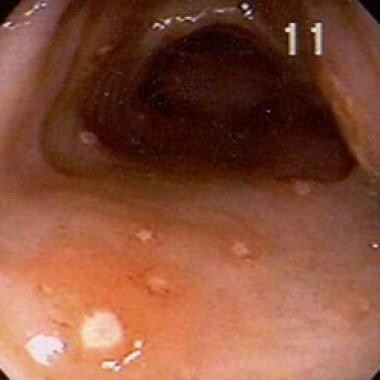 Yersinia enterocolitis in a 45-year-old white woman who presented with chronic diarrhea.
In severe cases, bowel necrosis may occur, as a result of mesenteric vessel thrombosis. [13] Focal abscesses may occur. In persons with human leukocyte antigen (HLA)–B27, reactive arthritis is not uncommon, possibly because of the molecular similarity between HLA-B27 antigen and Yersinia antigens. The pathogenesis of Yersinia -associated erythema nodosum is unknown. [14, 15]
Etiology
Human clinical Y enterocolitica infections ensue after ingestion of the microorganisms in contaminated food or water or by direct inoculation through blood transfusion.
Y enterocolitica potentially is transmitted by contaminated unpasteurized milk and milk products, raw pork, tofu, meats, oysters, and fish. [16, 17] Outbreaks have been associated with raw vegetables; the surface of vegetables can become contaminated with pathogenic microorganisms through contact with soil, irrigation water, fertilizers, equipment, humans, and animals.
Pasteurized milk and dairy products also can cause outbreaks because Yersinia can proliferate at refrigerated temperatures. [18, 19]
Animal reservoirs of Y enterocolitica include swine (principle reservoir), dogs, cats, cows, sheep, goats, rodents, foxes, porcupines, and birds.
Reports of person-to-person spread are conflicting and generally are not observed in large outbreaks. Transmission via blood products has occurred, however, and infection can be transmitted from mother to newborn infant. Fecal-oral transmission among humans has not been proven. [20, 21]
Underlying hemochromatosis or hemoglobinopathies are associated with relative risk of Y enterocolitica infection. [6]
Epidemiology
Occurrence in the United States
As of an October 26, 2016 review CDC estimates Y enterocolitica causes almost 117,000 illnesses, 640 hospitalizations, and 35 deaths in the United States every year.
The incidence of yersiniosis in FoodNet sites in 2014 was 0.28 cases per 100,000 population.
For 2010, the CDC’s Foodborne Diseases Active Surveillance Network (FoodNet), using surveillance data from 10 US sites, preliminarily identified a total of 19,089 laboratory-confirmed cases of infection caused by bacterial pathogens that are commonly transmitted through food. Cases and incidence per 100,000 population were reported as follows [22] :
-
Salmonella (8256; 17.6)
-
Campylobacter (6365; 13.6)
-
Shigella (1780; 3.8)
-
Shiga toxin-producing E coli (STEC) non-O157 (451; 1.0)
-
STEC O157 (442; 0.9)
-
Vibrio (193; 0.4)
-
Yersinia (159; 0.3)
-
Listeria (125; 0.3)
In the United States, Yersinia enterocolitica accounts for approximately 5% of bacterial enteric infections among children younger than 5 years, according to a 2012 study by Scallan et al. The investigators found this to be a greater incidence than that for the enterohemorrhagic E coli strain O157 (3%), but a lower incidence than those for nontyphoidal Salmonella (42%), Campylobacter (28%), and Shigella (21%). [23]
Scallan et al estimated that the 5 pathogens together cause more than 290,000 illnesses annually in children under 5 years.
Y enterocolitica infection is more common in cooler climates, and its prevalence peaks from November to January. [24]
International statistics
Y enterocolitica has been isolated in patients in many countries worldwide, but the infection appears to occur predominantly in cooler climates, being much more common in northern Europe, Scandinavia, and Japan. Most isolates reported from Canada and Europe are O:3 and O:9 serotypes. [25] The O:3 serotype also is common in Japan. Isolation of Y enterocolitica in developing countries is uncommon. [26]
Race- and age-related demographics
Higher incidence of Y enterocolitica infection has been observed among Black infants in the United States. [27]
Reports document symptomatic Y enterocolitica infection most commonly in younger age groups. A sample collection from 1988-1991 showed that 77.6% of infections occurred in children aged 12 months and younger, making Y enterocolitica the second most common cause of bacterial gastrointestinal infection in children. [23, 28, 29]
Clinical manifestations of Y enterocolitica infection exhibit some age-dependent predilections, with reactive arthritis and erythema nodosum being more common in older patients. Older patients with more debility are more likely to develop bacteremia than are younger, healthier patients.
Prognosis
Yersiniosis usually is either self-limited or is responsive to therapy; however, reinfection is possible. Most patients with Y enterocolitica infection are symptomatic; however, asymptomatic carriage may occur. Death is uncommon, but patients with significant comorbidities are at risk for Y enterocolitica bacteremia, which carries a case fatality rate of 34-50%.
A national, registry-based study of 52,121 patients in Denmark reported estimates for the risk for severe, hospitalization-requiring complications and long-term sequelae up to 1 year after infection with 5 common bacterial gastrointestinal pathogens. Of the 3922 cases of Y enterocolitica infection reported, 368 required hospitalization. [30]
A report from the CDC stated that in 2010 (preliminary data), of 159 Yersinia infections in the United States, 52 required hospitalization and 1 resulted in death. [22]
Various manifestations of Y enterocolitica infection have been reported, including the following [31, 32, 33, 34, 35, 36, 37, 38, 39, 40, 41, 42, 43] :
-
Enterocolitis
-
Pseudoappendicitis
-
Mesenteric adenitis
-
Reactive arthritis - Can last 1-4 months
-
Erythema nodosum
-
Septicemia
-
Pharyngitis
-
Dermatitis
-
Myocarditis
-
Glomerulonephritis
-
Hemolytic anemia
-
Intestinal perforation
Iron is an essential growth factor for the organism, and iron overload (eg, chronic hemolysis, hereditary hemochromatosis) is associated with an increased risk of systemic disease. Deferoxamine therapy also increases susceptibility to Y enterocolitica disease.
-
Yersinia enterocolitis in a 45-year-old white woman who presented with chronic diarrhea.
-
Gram stain of Yersinia enterocolitica.
Tables

What would you like to print?
- Diarrhea in Cancer Therapies — Part 1: Chemotherapeutics
- Bausch Wins US Appeal to Block Alvogen Generic Of Diarrhea Drug
- Merck to Discontinue Drug for Bacterial Infection
-
 How to Identify and Treat Hypomagnesemia
-
Shared Decision-Making in Sequencing ADCs for HER2-Low Breast Cancer
-
Gout: Diagnosis and Management in Primary Care