You are in: eMedicine Specialties >
Pediatrics: Cardiac Disease and Critical Care Medicine > Cardiology
Atrioventricular Septal Defect, Complete
Article Last Updated: Oct 3, 2007
AUTHOR AND EDITOR INFORMATION
Section 1 of 11
Author: Michael McConnell, MD, Department of Pediatrics, Division of Cardiology, Clinical Associate Professor of Pediatrics, Clinical Assistant Professor, Children's Healthcare of Atlanta and Emory University
Michael McConnell is a member of the following medical societies: American Academy of Pediatrics and American College of Cardiology
Coauthor(s):
John Scheitler, MD, Consulting Staff, Piedmont Adult and Pediatric Medicine Associates, PA
Editors: Paul M Seib, MD, Associate Professor of Pediatrics, University of Arkansas for Medical Sciences; Medical Director, Cardiac Catheterization Laboratory, Co-Medical Director, Cardiovascular Intensive Care Unit, Arkansas Children's Hospital; Mary L Windle, PharmD, Adjunct Assistant Professor, University of Nebraska Medical Center College of Pharmacy, Pharmacy Editor, eMedicine.com, Inc; Alvin J Chin, MD, Professor of Pediatrics, Division of Cardiology, The Children's Hospital of Philadelphia, University of Pennsylvania School of Medicine; Gilbert Herzberg, MD, Assistant Professor, Department of Pediatrics, Section of Pediatric Cardiology, New York Medical College; Steven Neish, MD, Director of Pediatric Cardiology Fellowship Program, Department of Pediatrics, Baylor College of Medicine; Clinical Director of Pediatric Cardiology, Texas Children's Heart Center; Director, Brown Foundation Heart Clinic, Texas Children's Hospital
Author and Editor Disclosure
Synonyms and related keywords:
complete atrioventricular septal defect, AVSD, endocardial cushion defect, ECD, common AV canal defect, AVC defect, CAVC, ostium primum atrial septal defect, posterior ventricular septal defect, VSD, congestive heart failure, CHF, Eisenmenger syndrome, tachypnea, Down syndrome, Dandy-Walker malformation, Joubert syndrome, Ritscher-Schintal syndrome
Background
The terms endocardial cushion defect (ECD), atrioventricular (AV) septal defect (AVSD), and common AV canal (CAVC) defect are interchangeable in describing defects in the formation of the AV valves, the anterior portion of the atrial septum, and the posterior portion of the ventricular septum. Endocardial cushions are masses of mesenchymal tissue that form components of the AV valves, atrial septum, and ventricular septum. Defects range from incomplete, which is also called partial (eg, ostium primum atrial septal defect with cleft mitral valve), to transitional (eg, large ostium primum defect and small inlet or posterior ventricular septal defect [VSD]) to complete (eg, large ostium primum atrial septal defect, large-inlet VSD, common AV valve). Depending on the size of the ventricular septal communication and the competence of the AV valve or AV valves, patients with AV canal (AVC) defects may become symptomatic early in life or may remain relatively asymptomatic until young adulthood. This article focuses on the most severe end of the spectrum, or the CAVC defect. Abnormal proliferation or migration of the 4 endocardial cushions (ie, superior, inferior, right lateral, left lateral) is thought to cause the defect during embryologic development. Lateral cushions may normally contribute to the posterior mitral-valve leaflet and the posterior (diaphragmatic) tricuspid valve leaflet. The complete form of CAVC is characterized by a lack of fusion between the superior and inferior cushions, leading to a cleft appearance in the anterior mitral leaflet and in the anterior and septal tricuspid leaflets and also preventing complete septation of the atria and ventricles. The most common arrangement of valve leaflets (Rastelli type A) includes abnormal superior (anterior) and inferior (posterior) bridging leaflets that cross the atrial and VSDs. The superior bridging leaflet is attached at its leftmost extent to the anteromedial papillary muscle of the left ventricle (LV) and at its rightmost extent to the papillary muscle of the conus in the right ventricle (RV). A left lateral leaflet is found in the LV, and 2 more leaflets, a right superior and right lateral, are found in the RV (see Media file 1). In the alignment of the common AV valve vis-à-vis the septum primum is such that each atrium is situated over approximately 50% of the common AV orifice. The alignment of the common AV valve vis-à-vis the trabecular ventricular septum results in approximately 50% of the common AV orifice being situated over each ventricle (ie, balanced form).
Pathophysiology
The pathophysiology of the complete form of CAVC depends on the magnitude of blood flow through the VSD and the amount of AV-valve regurgitation. Patients with little AV-valve regurgitation and high pulmonary vascular resistance (PVR) are asymptomatic early in life, and their condition may be difficult to diagnose. These patients occasionally remain relatively asymptomatic until their second or third decade, when they develop increasing cyanosis from advanced pulmonary vascular disease. If the PVR decreases normally in the first 6 weeks of life, patients develop a large left-to-right shunt through both the atrial and ventricular defects, resulting in congestive heart failure (CHF). Patients with clinically significant AV-valve regurgitation may also have signs of CHF, such as tachypnea, excessive sweating, and failure to appropriately gain weight.
Frequency
United States
AVC defects are relatively common. Fetal echocardiographers report that 17% of children with cardiac defects identified in utero have some form of AVC defect. The occurrence of any form of AVC defect is estimated to be 0.19 case per 1000 live births. The complete form of CAVC is more common than the incomplete (partial) or transitional forms. Freeman et al (1998) reported a prevalence of 9.6 cases of Down syndrome per 10,000 live births.1 Congenital heart disease is present in 44% of affected infants, and AVC defects are present in 45% of infants with Down syndrome and congenital heart disease. Familial clustering may occur with AVC defects. About 14% of women with CAVC pass on congenital heart disease to their children. This rate is higher than that reported for other defects and typically manifests as complete CAVC or tetralogy of Fallot (TOF). In a pedigree analysis, 11.7% of probands had a family history of congenital heart disease. When related to a syndrome such as Down syndrome, AVC defects are usually of the complete type. As with many forms of congenital heart disease, the complete form of AVC appears to have a multifactorial inheritance pattern. Mutation of the CRELD1 gene increases the risk that the offspring will have an AVSD. However, by itself, this mutation is not sufficient to cause the defect; this observation indicates that AVSD is multigenic.
Mortality/Morbidity
Patients with the complete form of CAVC typically develop tachypnea and failure to thrive in the first few months of life. Tachypnea hampers normal feeding. In addition, respiratory tract infections, such as those due to respiratory syncytial virus (RSV), are poorly tolerated. Patients may survive past the first few years of life without surgical intervention if the PVR remains elevated, though they may develop irreversible pulmonary vascular obstructive disease (PVOD) at a rapid rate. Surgical morbidity and mortality rates associated with this defect have dramatically improved over the years. Some centers report a surgical survival rate of 94% and an overall survival rate of 91% in patients with the balanced form of complete CAVC repaired by 4-6 months of age. About 3% of patients with a surgical heart block require a pacemaker, and about 7% may require repeat operation for residual defects or surgically induced mitral insufficiency. Actuarial survival at 13 years is 81%.
- In patients with a nonrestrictive VSD component, pulmonary vascular disease (Eisenmenger syndrome) eventually occurs unless the VSD component is surgically closed. Rare cases have occurred even when surgical repair is successfully accomplished in infants younger than 6 months. Cyanosis occurs when patients develop some degree of right-to-left shunt at either atrial or ventricular levels. Although patients' quality of life may be impaired at this point, their life expectancy may be 20-50 years.
- In most patients with CAVC, the common AV valve is equally shared between the ventricles. However, in some cases, the common AV valve is not equally shared; in a subset of these unbalanced cases, the LV may be too small to support the systemic arterial circulation. In this situation, the surgical risk is increased, and septation of the heart into 2 independent ventricles may not be possible. Converting the patient's anatomy to single-ventricle circulation, in which all of the systemic venous blood is directed to the lungs with a Fontan operation, may be necessary. Long-term morbidity and mortality rates for patients receiving a palliative Fontan operation are worse than those of patients with 2-ventricle circulation.
- Treatment for the complete form of AVC is primarily surgical. Operative morbidity and mortality for this procedure has dramatically improved over the past 20 years. Tweddell et al (1996) identified risk factors for surgical and late mortality and morbidity; these are the era of operation, patient's age at operation, severity of left AV-valve regurgitation, magnitude of preoperative heart failure, presence of accessory AV-valve orifices, other congenital heart disease, and Down syndrome.2
- In infants, the published mortality rate for CAVC repair is 3.6% with minimal long-term morbidity; the 10-year survival rate is 81%. Bando et al (1995) found similar results while identifying risk factors for early death and the need for repeat operation.3 Risk factors included postoperative pulmonary hypertensive crisis, immediate postoperative severe left AV-valve regurgitation, and a double-orifice left AV valve. McElhinney et al (1998) describe an occasional anomalous attachment or tissue of the AV valve, which may complicate operative repair.4
Race
The occurrence does not appear to vary on the basis of race. Advanced maternal age is a risk factor for Down syndrome, and because at least two thirds of patients with the uncomplicated complete form of AVC have trisomy 21, ethnic groups in which advanced maternal age is common may have an increased incidence of the complete form of AVC.
Sex
The male-to-female ratio for the complete form of AVC is 1:1.
Age
Patients with the complete form of CAVC often present with symptoms early in life. CHF usually develops by 6 weeks as PVR decreases and pulmonary blood flow increases. A rare case of survival to the eighth decade with untreated complete CAVC was reported. In some patients, PVR never decreases, and symptoms of CHF do not develop. In these rare cases, patients may remain asymptomatic as their pulmonary vascular obstructive changes worsen until cyanosis develops because of a right-to-left shunt.
History
Tachypnea, repeated respiratory infections, poor feeding, and failure to thrive are frequent symptoms in patients with the complete form of AVC and large left-to-right shunts. These symptoms are usually present by 6-8 weeks and due to blood flow through the large interventricular communication with or without incompetence of the common AV valve. Pulmonary vascular disease results from damage caused by excessive pulmonary flow and elevated pulmonary artery pressure due to the large VSD. Irreversible pulmonary vascular disease may be present by age 2 years or, in rare cases, earlier.
Physical
- General physical examination may show signs of Down syndrome (Brushfield spots, simian crease, epicanthal folds, clinodactyly). Inspection may show pallor or Harrison grooves (horizontal depression along lower border of chest at diaphragm insertion site due to chronic tachypnea). Failure to thrive because of excessive metabolic cardiovascular requirements and poor caloric intake due to tachypnea is common.
- Cardiovascular examination may reveal a prominent and active precordium because of volume and pressure overload. Small arterial pulsations are often present. A holosystolic AV-valve regurgitation murmur may obscure the closure sound of the common AV valve (first heart sound [S1]). Because of the large VSD, pulmonary arterial pressure is elevated, resulting in a single loud second heart sound (S2). A systolic flow–type crescendo-decrescendo murmur caused by excessive blood flow across the pulmonary outflow tract may also be audible. If the patient has a large left-to-right shunt, a low-frequency diastolic sound caused by a large amount of blood crossing the AV valve in diastole is heard at the lower left sternal border.
- When PVR is elevated, the systolic murmur may not be prominent, and the diastolic rumble may disappear, reflecting less left-to-right shunt. This finding can occur in the infant in whom PVR has never fallen or in the older child with developing PVOD, for whom the improvement in CHF symptoms is an ominous finding.
- With advanced PVOD, the left parasternal impulse is prominent, S2 may be palpable, and the systolic murmur may be soft and short. A high-pitched decrescendo diastolic murmur of pulmonary insufficiency (Graham Steell murmur) may be detected at the left upper sternal border, reflecting severely elevated PVR.
- Factors that can influence hemodynamics in Down syndrome include chronic nasopharyngeal obstruction, relative hypoventilation, carbon dioxide retention, and sleep apnea. Nonspecific CHF signs that may be seen include hepatosplenomegaly, pulmonary rales, and tachypnea. Skull erosion and striations have been noted from venous distension and increased blood volume.
Causes
- Retinoic acid pathways have been implicated as a possible cause of AVC defects. When one form of retinoic acid is applied to the avian embryo during the primitive streak stage, formation of AV cushions is disturbed. Absence of the RXR-alpha gene can predispose to ECDs. Decreased growth of RV myocardium and increased growth of AV cushions change the hemodynamics and resultant cardiac development. The homozygous null FOG2 mouse has the complete form of AVC severely malaligned toward the LV. Low birth weight for gestational age may be causally related to ECDs, even after the data are adjusted for other maternal, gestational, and infant factors.
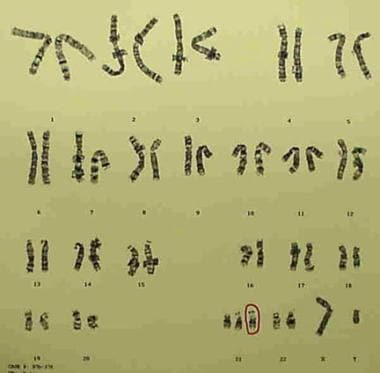
- Trisomy 21 (Down syndrome) is the most frequently associated genetic abnormality with common AV canal (CAVC), although it may also occur in association with trisomy 13 and trisomy 18. In patients without trisomy 21 who have CAVC defects, a genetic locus on chromosome 1 can account for the disorder in some families.
- Interstitial deletion on chromosome 16 can be associated with ECDs. Endocardial cushion tissue seems to function as an adhesive for myocardial structures. Fibroblasts of endocardial cushions in trisomy 21 tend to be more adhesive, possibly leading to cardiac malformations. ECDs may be seen with other less common syndromes, such as Dandy-Walker malformation, Joubert syndrome, and Ritscher-Schintal (craniocerebellocardiac) syndrome. An orocardiodigital syndrome consisting of tongue hamartomas, polysyndactyly, and CAVC has been described.
- CAVC defect is one of several cardiac abnormalities commonly seen with heterotaxy syndromes (asplenia and occasionally with polysplenia). Other rare combinations include CAVC with total anomalous pulmonary venous return and CAVC with Ebstein anomaly. Uncommon associations with CAVC are DiGeorge syndrome and coloboma of the eye, heart defects, atresia of the choanae, renal anomalies and retardation of growth and/or development, genital anomalies in males such as micropenis or cryptorchidism, and ear abnormalities or deafness (CHARGE) syndrome.
- Recently, the presence of vascular endothelial growth factor (VEGF) gene mutations has been associated with endocardial cushion defects.5 The prevalence of the VEGF +405C allele was higher in patients with CHD than in control subjects (0.42 vs 0.21, P <.05). The presence of VEGF +405C presented increased risk for CHD (odds ratio [OR], 1.72, 95% CI 1.32–2.26).
- Familial clustering may occur with AVC defects. As with many forms of congenital heart disease, the complete form of AVC appears to have a multifactorial inheritance pattern.
- Advanced maternal age is a risk factor for Down syndrome, and at least two thirds of patients with the uncomplicated complete form of AVC have trisomy 21.
Atrial Septal Defect, Ostium Primum
Heart Failure, Congestive
Ventricular Septal Defect, General Concepts
Other Problems to be Considered
Pulmonary hypertension Congenital heart disease
Lab Studies
- Although basic chemistry panels and the CBC count may aid in overall care, common AV canal (CAVC) requires no specific laboratory tests.
- If Down syndrome or another chromosomal abnormality is suspected, chromosome studies are indicated.
Imaging Studies
- Chest radiography frequently shows cardiomegaly, mostly right atrial and RV enlargement from volume and pressure overload. It can be the first sign of congenital heart disease in the adult.
- In addition, an increase in pulmonary vascular markings from increased pulmonary flow may be appreciated, along with a prominent pulmonary artery.
- Evidence of hyperaeration, flattened diaphragms, and airtrapping also may be present, particularly in children with Down syndrome.
- Echocardiography reveals defects of the atrial and ventricular septae.
- The subcostal 4-chamber and long axial oblique (modified left oblique) views reveal many important aspects of CAVC: the size of the atrial and ventricular defects, the nature of the AV-valve attachments, the distribution of AV-valve tissue, and the LV outflow tract (LVOT).
- Other anatomic features, such as ventricular size, AV-valve insufficiency, aortic arch anatomy, and a patent ductus arteriosus (PDA), may be accurately assessed with echocardiography, especially in the infant.
- Echocardiography also can reveal a single LV papillary muscle, which may influence the success of mitral reconstruction.
- In some centers, 3-dimensional (3D) reconstructions of echocardiographic images are used to evaluate AV-valve morphology, and proponents claim increased diagnostic accuracy with this technique compared with transthoracic echocardiography.
- Abnormal AV-valve leaflets may be classified into the following 3 types:
- Rastelli type A involves minimal bridging of the superior cushion-derived leaflet and attachment of the leftward component of the anterior bridging leaflet to the crest of the interventricular septum.
- Rastelli type B is rare and involves chordal support of the anterior bridging leaflet attaching to the body of the RV.
- Rastelli type C valve has a free-floating anterior bridging leaflet that is attached at its rightmost extent to the anterior papillary muscle of the RV.
- Doppler echocardiography can reveal common AV-valve regurgitation as well as the flow through the atrial and VSDs.
- Hemodynamic information, such estimated RV and pulmonary artery pressure, may be obtained.
- Many clinicians believe that a preoperative echocardiogram with Doppler and color flow mapping provides sufficient anatomic and functional information for young infants undergoing repair and that cardiac catheterization may yield little additional information.
- Cardiac catheterization for LV angiography is used to rule out coexisting muscular VSDs. However, angiography is only slightly better than Doppler color-flow mapping in identifying such VSDs in the presence of a large (nonrestrictive) VSD, such as that seen in the complete form of AVC.
- Other diagnostic tools are occasionally used to diagnose AVC defects.
- The complete form of AVC can be diagnosed prenatally by performing fetal echocardiography. Because two thirds of neonates with CAVC also have trisomy 21, the finding of CAVC by fetal echocardiography should prompt a search for associated chromosomal abnormalities, especially Down syndrome. Fetuses with CAVC may develop hydrops fetalis if insufficiency of the common AV valve is severe.
- Transesophageal echocardiography (TEE) is extremely valuable in the large child or adult patient in whom transthoracic echocardiographic windows are limited. It is also ideal for intraoperative evaluation at the time of repair in infancy. TEE provides detailed anatomic information regarding the AV valves, ventricular function, residual shunts, LVOT obstruction, and AV-valve insufficiency or stenosis.
- MRI has been used to identify the complete form of AVC.
Other Tests
- An ECG may reveal several important findings.
- First is a superior frontal-plane QRS axis, with moderate-to-severe left axis deviation to -180°.
- A prolonged PR interval is sometimes seen.
- Atrial enlargement is sometimes present.
- RV hypertrophy suggests that the AVC defect is the complete form rather than the incomplete or partial form.
- Although sinus rhythm is the norm, first-degree AV block may be coexistent.
- Third-degree AV block is occasionally seen, especially when the CAVC is associated with polysplenia.
- A right bundle-branch pattern, rsR', in the right precordial leads (V1 and V2) may be seen.
- Complete right bundle-branch block is a common finding after surgical repair.
Procedures
- Cardiac catheterization and surgical correction are the main procedures to manage CAVC.
- Catheterization is no longer routine for anatomic delineation in many centers. However, when used, it is performed to verify whether the VSD component is nonrestrictive, to determine if additional VSDs are present, to calculate the PVR, and, to determine if the pulmonary vascular bed is responsive to pulmonary vasodilators.
- The most frequent use of catheterization in CAVC is to accurately measure the PVR and, if it is elevated, to evaluate its response to vasodilators, such as oxygen, sodium nitroprusside, calcium-channel blockers, or inhaled nitric oxide.
- PVR is calculated as the mean pulmonary artery pressure minus the mean left atrial pressure, divided by the pulmonary blood flow.
- Response in the PVR (with oxygen, nitric oxide, or other pulmonary vasodilators) may suggest that a child with high PVR may still benefit from surgery to close atrial and ventricular communications, as outlined above.
- Patients with a calculated PVR of 10 Wood units/m2 or greater that does not fall below 5-7 Wood units/m2 in response to vasodilators are at increased risk for death after surgical repair.
- In patients younger than 1 year, irreversible PVOD is rare; hence, PVR data are often ignored.
- The second most frequent use for cardiac catheterization is LV angiography to rule out coexisting muscular VSDs.
Histologic Findings
CAVC defects are associated with high flow at systemic pressure, which leads to severe hypertrophy of the media of the small arteries of the lung. Intimal fibrosis may also be seen. Acute fibrous proliferation and atrophy of the peripheral pulmonary arterial media are associated with aging and Down syndrome, which, in addition, reduces the total cross sectional area of the pulmonary vascular bed. Chronic hypoxemia, upper airway obstruction, and Down syndrome may hasten these vascular changes. Except in rare cases, surgery within 6 months prevents irreversible PVOD.
Medical Care
Although their effectiveness has been questioned, diuretics, digoxin, and angiotensin-converting enzyme (ACE) inhibitors have all been used to alleviate tachypnea and failure to thrive. In many medical centers, the surgical mortality rate at age 2-3 months is 5% or less. Therefore, unless symptoms are dramatically relived, medical treatment for children with symptoms of CHF is not pursued for more than a few weeks before definitive repair.
Surgical Care
Treatment for a complete AVC defect is surgical.
- Single-stage complete repair is currently preferred, but occasional cases of refractory CHF in a low-birth-weight infant may be palliated with the placement of a pulmonary artery band.
- Some patients with common AV canal (CAVC) have several additional muscular VSDs, banding of the pulmonary artery may alleviate their CHF for 6-12 months, during which time the VSDs may spontaneously close and thus simplify eventual CAVC surgery.
- The surgical mortality rate should be low. In the most recently published review of surgical outcomes of 363 patients with AVSDs who were treated between 1982 and 1995, the early mortality rate was 10.3%, and the 10-year survival rate was 83%.6
- A pulmonary-artery band, placed on the main pulmonary artery by means of a small lateral or anterior thoracotomy incision, obviates cardiopulmonary bypass in a premature neonate or small infant. However, it has the risks of distorting the origins of the branch pulmonary arteries if it migrates and of complicating eventual CAVC surgery if it erodes through the media and intima. Pulmonary-artery banding is best used, when deemed necessary, for only a few months in a patient who then will undergo complete intracardiac repair and pulmonary-artery band takedown.
- A major aspect of CAVC repair involves creating a competent mitral valve. A pericardial patch can be used for this augmentation and for tricuspid valve repair. Repair is occasionally done with 2 patches: a pericardial patch for the atrial septal defect and a polytetrafluoroethylene patch (Gore-Tex patch; W.L. Gore & Associates, Inc, Newark, DE) for the VSD with routine closure of the mitral valve cleft. The 2-patch technique with routine cleft closure and atrial septal incision may lower the incidence of residual mitral regurgitation.
- Ten Harkel et al (2005) recently reported intermediate follow-up results in patients who underwent surgical repair of AVSDs.7 During a mean follow-up of 66 months, 19% had severe mitral-valve regurgitation, and 9% required reoperation. Of note, 13% of patients with severe mitral-valve regurgitation in the immediate postoperative period had significantly improved mitral-valve function. For this reason, the authors cautioned against reoperation in the early postoperative period unless it is absolutely necessary.
- Additional aspects of complete repair of CAVC may include relief of associated LVOT obstruction, PDA ligation, removal of a previously placed pulmonary artery band, repair of stenosis of a pulmonary arterial branch, or relief of aortic-arch obstruction. Recent data suggest that children with AVSDs and Down syndrome have a prognosis better than that of children with the same cardiac lesion but not Down syndrome.
- Residual AV-valve insufficiency or stenosis is a major determinant of long-term outcome.
- Total circular annuloplasty is a simple procedure to help reduce AV-valve regurgitation, although most patients with severe AV-valve insufficiency or stenosis require more complex mitral valvuloplasty techniques. The need for mitral-valve replacement is not rare over the course of long-term follow-up, but it is ideally delayed until an adult-size prosthetic valve can be implanted.
- CAVC may be associated with other surgical conditions, including subaortic stenosis, coarctation of the aorta (CoA), TOF, and total anomalous pulmonary venous return. Each associated lesion may complicate complete repair and make it difficult to achieve a good hemodynamic result. In addition, these defects may add potential risk over follow-up (eg, recoarctation after CoA repair or pulmonary insufficiency after repair of TOF).
- Surgically induced AV block is a known complication of CAVC repair. Permanent pacing is required if AV conduction does not return postoperatively.
- For complex cardiac lesions involving an unbalanced CAVC, total cavopulmonary connection, otherwise known as a Fontan operation, may be indicated.
- In the presence of TOF, an aortic monocusp is used to compensate for deficient right AV-valve tissue. Right-dominant, unbalanced biventricular repair can be successfully completed in patients with mild LV hypoplasia. However, careful preoperative evaluation of the adequacy of the LV to support the systemic circulation is imperative.
- De Oliveira et al (2005) reported their experience with 2-ventricular repair of patients with unbalanced AVSDs and small RVs.8 Patients with a small RV had a high mortality rate, with an 87% 10-year survival, compared with a 100% survival rate in surgical patients with balanced AVSDs. Although a median sternotomy is the usual surgical approach, the thoracotomy approach was safely used for CAVC repair in some centers.
Consultations
Given the complexity of CAVC, a multidisciplinary team is usually required. This could include pediatricians, neonatologists, pediatric cardiologists, pediatric cardiothoracic surgeons, and pediatric intensivists, as well as a nurse coordinator and supportive ancillary staff. Additional consultants might include a geneticist for genetic counseling and a nutritionist.
Diet
A high-energy diet is needed because cardiac shunting results in high metabolic demands. Even at 125 kcal/kg/d, children still may not appropriately gain weight. Some children have such high metabolic demands that extraordinary energy intake, exceeding 150 kcal/kg/d, is necessary for growth. Pulmonary edema can lead to tachypnea that makes oral intake of nourishment too difficult. A nasogastric tube may be needed in severe cases of CHF with failure to thrive.
Activity
After the patient recovers from surgery, normal daily activities should be allowed.
Medical treatment is similar to treatment of any cardiac defect with volume overload. Digoxin is frequently used to decrease the heart rate and to increase inotropy, although little evidence (if any) suggests that it is effective in patients with CHF due to left-to-right shunt lesions. Diuretics may decrease preload and ACE inhibitors decrease afterload. Care must be taken when administering ACE inhibitors to reproductive-age females, given their teratogenic effects. More recent, but limited, data suggest that the use of beta blockers in patients with left-to-right shunts who have CHF improves symptoms.9 The daily dosage of digoxin is approximately 5-10 mcg/kg/d. The diuretic used most frequently in the author's institution is furosemide 1-2 mg/kg/d. In children with clinical signs of CHF, 58% improved with enalapril. The mean maximal dose was 0.3 mg/kg/d. The most significant adverse effect observed was renal failure, particularly in young infants with large left-to-right shunts. Most of the older patients in the author's institution who need ACE inhibitors are treated with lisinopril because of its lower cost and long half-life. The dose generally is 0.5 mg/kg/d, but is individualized for each patient. Data about the efficacy of beta-blockers in patients with large left-to-right shunts is sparse. In small studies, beta-blockers appear to decrease renin levels and heart rates in infants with CHF due to left-to-right shunts. Antibiotics for endocarditis prophylaxis are no longer recommended for most patients with congenital heart disease. Some significant exceptions are noted, including patients who have previously had endocarditis or patients within 6 months of their surgical repair. Current American Heart Association guidelines also recommend subacute bacterial endocarditis (SBE) prophylaxis for patients who have a complete repair and those who have a jet lesion aimed at a patch to impair the growth of endothelial cells on the patch.10 This situation may occur in patients with atrioventricular septal defects and can only be discovered by the use of imaging modalities such as echocardiography. For more information, see Antibiotic Prophylactic Regimens for Endocarditis.
Drug Category: Inotropic agents
The agents provide symptomatic improvement for CHF. Positive inotropic agents increase the force of contraction of the myocardium and are used to treat acute and chronic CHF. Positive or negative chronotropic agents may also increase or decrease the heart rate, provide vasodilatation, or improve myocardial relaxation. These additional properties influence the choice of drug for specific circumstances.
| Drug Name | Digoxin (Lanoxicaps, Lanoxin) |
| Description | Acts directly on cardiac muscle, increasing myocardial systolic contractions. Indirect actions increase carotid sinus nerve activity and enhance sympathetic withdrawal for any given increase in mean arterial pressure. |
| Adult Dose | 0.125-0.5 mg PO qd |
| Pediatric Dose | Infants: 6-8 mcg/kg/d PO divided bid 2-5 years: 10-15 mcg/kg/d PO divided bid 5-10 years: 7-10 mcg/kg/d PO divided bid >10 years: 3-5 mcg/kg PO qd |
| Contraindications | Documented hypersensitivity; beriberi heart disease; idiopathic hypertrophic subaortic stenosis; constrictive pericarditis; carotid sinus syndrome. |
| Interactions | Alprazolam, benzodiazepines, bepridil, captopril, cyclosporine, propafenone, propantheline, quinidine, diltiazem, aminoglycosides, oral amiodarone, anticholinergics, diphenoxylate, erythromycin, felodipine, flecainide, hydroxychloroquine, itraconazole, nifedipine, omeprazole, quinine, ibuprofen, indomethacin, esmolol, tetracycline, tolbutamide, and verapamil may increase levels Aminoglutethimide, antihistamines, cholestyramine, neomycin, penicillamine, aminoglycosides, oral colestipol, hydantoins, hypoglycemic agents, antineoplastic treatment combinations (including carmustine, bleomycin, methotrexate, cytarabine, doxorubicin, cyclophosphamide, vincristine, procarbazine), aluminum or magnesium antacids, rifampin, sucralfate, sulfasalazine, barbiturates, kaolin/pectin, and aminosalicylic acid may decrease levels |
| Pregnancy | C - Fetal risk revealed in studies in animals but not established or not studied in humans; may use if benefits outweigh risk to fetus
|
| Precautions | Hypokalemia may reduce positive inotropic effect of digitalis; IV calcium may produce arrhythmias; hypercalcemia predisposes patient to digitalis toxicity, and hypocalcemia can make digoxin ineffective until serum calcium levels are normal; to prevent digitalis toxicity, start magnesium replacement therapy in hypomagnesemia; incomplete AV block may progress to complete block; caution in hypothyroidism, hypoxia, and acute myocarditis |
Drug Category: Diuretic agents
These agents provide symptomatic improvement for CHF and promote the excretion of water and electrolytes by the kidneys. They are indicated to treat heart failure or hepatic, renal, or pulmonary disease when sodium and water retention has resulted in edema or ascites.
| Drug Name | Furosemide (Lasix) |
| Description | Increases excretion of water by interfering with chloride-binding cotransport system, which inhibits sodium and chloride reabsorption in ascending loop of Henle and distal renal tubule. |
| Adult Dose | 20-80 mg/d PO/IV/IM; titrate up to 600 mg/d for severe edematous states |
| Pediatric Dose | 1-2 mg/kg/dose PO; not to exceed 6 mg/kg/dose; do not administer more frequently than q6h Alternatively, 1 mg/kg IV/IM slowly under close supervision; not to exceed 6 mg/kg |
| Contraindications | Documented hypersensitivity; hepatic coma; anuria; severe electrolyte depletion |
| Interactions | Metformin decreases concentrations; interferes with hypoglycemic effect of antidiabetic agents and antagonizes muscle-relaxing effect of tubocurarine; auditory toxicity appears to be increased with coadministration of aminoglycosides and furosemide; hearing loss of varying degrees may occur; anticoagulant activity of warfarin may be enhanced when taken concurrently; increased plasma lithium levels and toxicity possible when taken concurrently |
| Pregnancy | C - Fetal risk revealed in studies in animals but not established or not studied in humans; may use if benefits outweigh risk to fetus
|
| Precautions | Hypokalemia after long-term use |
Drug Category: ACE inhibitors
These drugs are indicated for treatment of symptomatic CHF. ACE inhibitors are beneficial in all stages of chronic heart failure. Pharmacologic effects result in a decrease in systemic vascular resistance, reducing blood pressure, preload, and afterload.
| Drug Name | Captopril (Capoten) |
| Description | Short-acting ACE inhibitor. Predominant action is suppressing the renin-angiotensin aldosterone system. Prevents conversion of angiotensin I to angiotensin II (potent vasoconstrictor), increasing levels of plasma renin and reducing aldosterone secretion. |
| Adult Dose | 6.25-12.5 mg PO tid; not to exceed 150 mg tid |
| Pediatric Dose | 0.1-2 mg/kg/d PO divided tid/qid; increase dose as tolerated |
| Contraindications | Documented hypersensitivity; renal impairment |
| Interactions | Nonsteroidal anti-inflammatory drugs (NSAIDs) may reduce hypotensive effects; may increase digoxin, lithium, and allopurinol levels; rifampin decreases levels; probenecid may increase captopril levels; concurrent diuretics may enhance hypotensive effects |
| Pregnancy | C - Fetal risk revealed in studies in animals but not established or not studied in humans; may use if benefits outweigh risk to fetus D - Fetal risk shown in humans; use only if benefits outweigh risk to fetus
|
| Precautions | Pregnancy category D in second and third trimester; caution in renal impairment, valvular stenosis, or severe CHF |
| Drug Name | Enalapril (Vasotec) |
| Description | Competitive ACE inhibitor. Reduces angiotensin II levels, decreasing aldosterone secretion. |
| Adult Dose | 2.5-5 mg/d PO; increase prn Dosing range: 10-40 mg/d PO qd or divided bid Alternative: 1.25 mg/dose IV over 5 min q6h |
| Pediatric Dose | 0.1-0.3 mg/kg/d PO qd or divided bid |
| Contraindications | Documented hypersensitivity; renal impairment |
| Interactions | NSAIDs may reduce hypotensive effects; ACE inhibitors may increase digoxin, lithium, and allopurinol levels; rifampin decreases levels; probenecid may increase levels; concurrent diuretics may enhance hypotensive effects |
| Pregnancy | C - Fetal risk revealed in studies in animals but not established or not studied in humans; may use if benefits outweigh risk to fetus D - Fetal risk shown in humans; use only if benefits outweigh risk to fetus
|
| Precautions | Pregnancy category D in second and third trimester; caution in renal impairment, valvular stenosis, or severe CHF |
| Drug Name | Lisinopril (Prinivil, Zestril) |
| Description | Prevents conversion of angiotensin I to angiotensin II (potent vasoconstrictor), reducing aldosterone secretion. |
| Adult Dose | 10 mg/d PO; increase 5-10 mg/d q1-2wk; not to exceed 40 mg |
| Pediatric Dose | Not established, limited data for 0.2 mg/kg PO qd initially; increase as BP and symptoms (eg, dizziness, light-headedness) |
| Contraindications | Documented hypersensitivity |
| Interactions | May increase digoxin, lithium, and allopurinol levels; probenecid may increase levels; coadministration with diuretics, increases hypotensive effects; concurrent diuretics and NSAIDs may enhance hypotensive effects |
| Pregnancy | C - Fetal risk revealed in studies in animals but not established or not studied in humans; may use if benefits outweigh risk to fetus D - Fetal risk shown in humans; use only if benefits outweigh risk to fetus
|
| Precautions | Pregnancy category D in second and third trimester; caution in renal impairment, valvular stenosis, or severe CHF |
Further Inpatient Care
- Some children who have survived surgical repair of common AV canal (CAVC) require prolonged hospitalization.
- Causes are multifactorial but may include sepsis, pulmonary hypertension, residual left-to-right shunts through VSDs, or significant AV-valve insufficiency.
- Associated noncardiac problems, including feeding difficulties, renal insufficiency, or pulmonary insufficiency, may require ongoing management and delayed discharge.
Further Outpatient Care
- As needed, outpatient care for nonsurgical patients with AVSD should focus on providing adequate nutrition and medications to lessen CHF symptoms.
- Outpatient care should prepare the child for surgical intervention at the age appropriate for the institution where the operation will be performed.
- Postoperative outpatient care depends on any clinically significant residual problems.
In/Out Patient Meds
- Postoperative medications range from none to many of the medications used to treat CHF discussed in the Medication section.
- Almost every child who has survived surgical repair of CAVC has some abnormality of an AV valve.
- Antibiotic prophylaxis is recommended for all patients who have undergone CAVC repair and who are at risk for endocarditis.
Transfer
- Patients with CAVC should be transferred to an institution skilled in successfully treating patients with CAVC.
Complications
- Postoperative complications include arrhythmias, low cardiac output, pulmonary hypertension, AV-valve stenosis, and mitral insufficiency. Arrhythmias include heart block and junctional tachycardia; the latter usually subsides within 3-7 days after surgery. Postoperative LV dysfunction may result in low cardiac output and even renal insufficiency. Inotropic drugs may be needed for several days after surgery.
- In patients with pulmonary hypertension, sedation, paralysis, and mild hyperventilation with 100% oxygen may be required to prevent pulmonary hypertensive crisis and decreased RV afterload. For pulmonary hypertension refractory to these measures, nitric oxide may be used to achieve pulmonary vasodilatation.
- On occasion, patients may require long-term therapy, which might include phenoxybenzamine or calcium-channel–blocking drugs to manage an elevated PVR.
- Severe mitral regurgitation may occur postoperatively and is ideally recognized on intraoperative TEE. Such insufficiency may improve or may require reoperation for mitral-valve repair or even replacement.
- Anomalous attachment of AV-valve tissue occasionally causes LVOT obstruction, in addition to the known tendency for patients with CAVC to have a small LVOT. Such anomalous attachments may prevent complete relief of subaortic obstruction without mitral-valve replacement. Resection of some discrete obstructing tissue or, in some patients, a modified Konno procedure for tunnel-like LVOT obstruction or for obstruction caused by anomalous attachments of the mitral-valve apparatus may be performed. This procedure may complicate outflow-tract reconstruction and has had varied results.
- A rare complication of the complete AVC is subacute bacterial endocarditis. Successful repair during active endocarditis is reported.
Prognosis
- Without surgery, the prognosis is dismal. The mortality rate is 80% for children not operated on by age 2 years. Only 15% of children who survive to age 1 year without surgery survive to age 5 years.
- Risk factors for surgical and late mortality and morbidity are identified. Preoperative risk factors for mortality include small size, unbalanced ventricular size, New York Heart Association class IV, and severe AV-valve insufficiency. The era of operation (before 1987), patient age at operation, presence of accessory AV-valve orifices, and other congenital heart diseases also increase the surgical mortality risk. Down syndrome is surprisingly not an independent risk factor for morbidity and mortality and therefore should not limit intervention.
- Infants can successfully undergo surgery, with a published mortality rate of 3.6% and with minimal long-term morbidity. Late survival is approximately 96%, and the reoperation rate is approximately 11%.
- Published 10-year survival rates are 81-91%. Risk factors strongly associated with early death or the need for repeat operation include operation before 1987, postoperative pulmonary hypertensive crisis, immediate postoperative severe left AV-valve regurgitation, and double-orifice left AV valve. In the past, death was significantly most common when a CAVC with RV outflow-tract obstruction was corrected in children younger than 5 years or weighing less than 15 kg. In the current era, most centers operate by age 6 months.
Patient Education
Medical/Legal Pitfalls
- Failure to recognize common AV canal (CAVC) early in life is the primary medicolegal pitfall.
- CAVC is often recognized early in the life of the patient, especially in an infant with Down syndrome, only because of abnormal precordial activity, a loud, single S2, or both.
- Because data from most studies suggest that approximately 50% of children with Down syndrome have congenital heart disease and because the physical findings are often subtle, early referral of a patient with Down syndrome to a pediatric cardiologist is recommended.
Special Concerns
- Women who undergo successful repair of CAVC should be able to tolerate pregnancy well if they are asymptomatic. If the patient has clinically significant residual AV-valve insufficiency, a clinically significant residual VSD, or poor ventricular function, the risks to both the mother and the fetus rise. The risk of a fetal congenital heart disease may be as high as 14% (range, 10-15%).
- Data from some studies suggest that patients with congenital heart disease have substantially more stress in their lives than patients without chronic diseases. Even if this is true, findings suggest that children who have congenital heart disease have educational and occupational rates higher than those of age-matched control patients. Children with Down syndrome or other syndromes that affect cognitive function perform less well than other children.
- CAVC defect is an endocardial cushion malformation resulting in an atrial septal defect, a VSD, and a common AV valve. Causes are multifactorial. Although the natural history is somewhat ominous, technologic advances over the past 20 years have greatly aided diagnosis and surgical correction of this complex malformation, yielding promising results.
Media file 1:
Atrioventricular (A-V) valve leaflets viewed from the cardiac apex in normal valves (A) and in the Rastelli type A complete form of common A-V canal (B).
In A, the normal tricuspid valve (TV) has anterior (AL), septal (SL), and posterior (PL) leaflets. A normal mitral valve (MV) has ALs and PLs.
In B, the superior cushionderived leaflet bridges the ventricular septum and attaches to the papillary muscle of the conus at its rightmost extent.
A right superior leaflet (RSL) typically attaches to the papillary muscle of the conus and to the anterior papillary muscle of the right ventricle (RV), and a right lateral leaflet (RLL) attaches to the anterior papillary muscle of the RV and to the posterior papillary muscle of the RV. The inferior cushionderived bridging leaflet is usually cleft, giving the appearance of a right inferior leaflet (RIL) and a left inferior leaflet (LIL). |
 | View Full Size Image | |
Media type: Image
|
| Media file 2:
Subcostal 2-dimensional echocardiogram (nearlong-axis oblique view) of a Rastelli type A complete common atrioventricular canal shows 3 of the leaflets: right superior (R sup), left superior (L sup), and left inferior (L inf). The first 2 attach to the papillary muscle of the conus of the RV; the left superior leaflet also attaches to the crest of the ventricular septum. ao = ascending aorta. |
 | View Full Size Image | |
Media type: Image
|
- Freeman SB, Taft LF, Dooley KJ, et al. Population-based study of congenital heart defects in Down syndrome. Am J Med Genet. Nov 16 1998;80(3):213-7. [Medline].
- Tweddell JS, Litwin SB, Berger S, et al. Twenty-year experience with repair of complete atrioventricular septal defects. Ann Thorac Surg. Aug 1996;62(2):419-24. [Medline].
- Bando K, Turrentine MW, Sun K, et al. Surgical management of complete atrioventricular septal defects. A twenty-year experience. J Thorac Cardiovasc Surg. Nov 1995;110(5):1543-52; discussion 1552-4. [Medline].
- McElhinney DB, Reddy VM, Silverman NH, Hanley FL. Accessory and anomalous atrioventricular valvar tissue causing outflow tract obstruction: surgical implications of a heterogeneous and complex problem. J Am Coll Cardiol. Nov 15 1998;32(6):1741-8. [Medline].
- Vannay A, Vasarhelyi B, Kornyei M, et al. Single-nucleotide polymorphisms of VEGF gene are associated with risk of congenital valvuloseptal heart defects. Am Heart J. Apr 2006;151(4):878-81. [Medline]. [Full Text].
- Najm HK, Coles JG, Endo M, et al. Complete atrioventricular septal defects: results of repair, risk factors, and freedom from reoperation. Circulation. Nov 4 1997;96(9 Suppl):II-311-5. [Medline].
- Ten Harkel AD, Cromme-Dijkhuis AH, Heinerman BC, et al. Development of left atrioventricular valve regurgitation after correction of atrioventricular septal defect. Ann Thorac Surg. Feb 2005;79(2):607-12. [Medline].
- De Oliveira NC, Sittiwangkul R, McCrindle BW, et al. Biventricular repair in children with atrioventricular septal defects and a small right ventricle: anatomic and surgical considerations. J Thorac Cardiovasc Surg. Aug 2005;130(2):250-7. [Medline].
- Buchhorn R, Hulpke-Wette M, Ruschewski W, et al. Effects of therapeutic beta blockade on myocardial function and cardiac remodelling in congenital cardiac disease. Cardiol Young. Feb 2003;13(1):36-43. [Medline].
- Wilson W, Taubert KA, Gewitz M, et al. Prevention of Infective Endocarditis. Guidelines From the American Heart Association. A Guideline From the American Heart Association Rheumatic Fever, Endocarditis, and Kawasaki Disease Committee, Council on Cardiovascular Disease in the Young, and the Council on Clinical Cardiology, Council on Cardiovascular Surgery and Anesthesia, and the Quality of Care and Outcomes Research Interdisciplinary Working Group. Circulation. Apr 19 2007;[Medline].
- Abbattista AD, Marino B, Iorio FS, Marcelletti C. Complete atrioventricular canal and total anomalous pulmonary venous drainage: a rare association. J Thorac Cardiovasc Surg. Jun 1994;107(6):1536-8. [Medline].
- Alexi-Meskishvili V, Ishino K, Dahnert I, et al. Correction of complete atrioventricular septal defects with the double-patch technique and cleft closure. Ann Thorac Surg. Aug 1996;62(2):519-24; discussion 524-5. [Medline].
- Allen HD, Emmanouilides GC, Riemenschneider TA, Gutgesell HP. Clinical Synopsis of Moss and Adams' Heart Disease in Infants, Children, and Adolescents. 5th ed. Baltimore, MD: Lippincott, Williams & Wilkins; 1998:253-64.
- Backer CL, Mavroudis C, Alboliras ET, Zales VR. Repair of complete atrioventricular canal defects: results with the two- patch technique. Ann Thorac Surg. Sep 1995;60(3):530-7. [Medline].
- Bouman HG, Broekhuizen LA, Baasten AM, et al. Stereological study of stage 34 chicken hearts with looping disturbances after retinoic acid treatment: disturbed growth of myocardium and atrioventricular cushion tissue. Anat Rec. Jun 1997;248(2):242-50. [Medline].
- Bourdeau A, Dumont DJ, Letarte M. A murine model of hereditary hemorrhagic telangiectasia. J Clin Invest. Nov 1999;104(10):1343-51. [Medline]. [Full Text].
- Bove EL, Kavey RE, Sondheimer HM, Parker FB Jr. Subacute bacterial endocarditis and complete endocardial cushion defect. Ann Thorac Surg. Oct 1982;34(4):466-70. [Medline].
- Browdie DA, Norberg W, Devig P, et al. Surgical management in interrupted aortic arch and atrioventricular canal. J Thorac Cardiovasc Surg. Nov 1984;88(5 Pt 1):764-9. [Medline].
- Cabrera A, Pastor E, Galdeano JM, et al. Cross-sectional echocardiography in the diagnosis of atrioventricular septal defect. Int J Cardiol. Jul 1990;28(1):19-23. [Medline].
- Capouya ER, Laks H, Drinkwater DC Jr, et al. Management of the left atrioventricular valve in the repair of complete atrioventricular septal defects. J Thorac Cardiovasc Surg. Jul 1992;104(1):196-201; discussion 201-3. [Medline].
- Cherian KM, Pannu HS, Sankar NM, et al. Thoracotomy approach for congenital and acquired heart defects: its possible applications in the current era. J Card Surg. Jan-Feb 1996;11(1):37-45. [Medline].
- Chin AJ, Bierman FZ, Sanders SP, et al. Subxyphoid 2-dimensional echocardiographic identification of left ventricular papillary muscle anomalies in complete common atrioventricular canal. Am J Cardiol. Jun 1983;51(10):1695-9. [Medline].
- Christoffels VM, Keijser AG, Houweling AC, et al. Patterning the embryonic heart: identification of five mouse Iroquois homeobox genes in the developing heart. Dev Biol. Aug 15 2000;224(2):263-74. [Medline].
- Cousineua AJ, Lauer RM, Pierpont ME, et al. Linkage analysis of autosomal dominant atrioventricular canal defects: exclusion of chromosome 21. Human Genetics. 1994;93(2):103-8. [Medline].
- DeLeon SY, Ilbawi MN, Wilson WR Jr, et al. Surgical options in subaortic stenosis associated with endocardial cushion defects. Ann Thorac Surg. Nov 1991;52(5):1076-82; discussion 1082-3. [Medline].
- Digilio MC, Marino B, Cicini MP, et al. Risk of congenital heart defects in relatives of patients with atrioventricular canal. Am J Dis Child. Dec 1993;147(12):1295-7. [Medline].
- Digilio MC, Marino B, Giannotti A, Dallapiccola B. Orocardiodigital syndrome: an oral-facial-digital type II variant associatedwith atrioventricular canal. J Med Genet. May 1996;33(5):416-8. [Medline].
- Eisenberg LM, Markwald RR. Molecular regulation of atrioventricular valvuloseptal morphogenesis. Circ Res. Jul 1995;77(1):1-6. [Medline].
- Formigari R, Di Donato RM, Gargiulo G, et al. Better surgical prognosis for patients with complete atrioventricular septal defect and Down's syndrome. Ann Thorac Surg. Aug 2004;78(2):666-72; discussion 672. [Medline].
- Gembruch U, Knopfle G, Chatterjee et al. Prenatal diagnosis of atrioventricular canal malformations with up-to-date echocardiographic technology: report of 14 cases. Am Heart J. May 1991;121(5):1489-97. [Medline].
- Gessner IH, Victorica BE. Pediatric Cardiology: A Problem Oriented Approach. Philadelphia, PA: WB Saunders; 1993:260-1.
- Green CE. Plain chest radiography of congenital heart disease in adults. Cardiol Clin. Nov 1983;1(4):685-709. [Medline].
- Gruber PJ, Kubalak SW, Pexieder T, et al. RXR alpha deficiency confers genetic susceptibility for aortic sac, conotruncal, atrioventricular cushion, and ventricular muscle defects in mice. J Clin Invest. Sep 15 1996;98(6):1332-43. [Medline].
- Hanley FL, Fenton KN, Jonas RA, et al. Surgical repair of complete atrioventricular canal defects in infancy. Twenty-year trends. J Thorac Cardiovasc Surg. Sep 1993;106(3):387-94; discussion 394-7. [Medline].
- Hegde HR, Tyrrell MJ, Wilson DR, Leung AK. Skull erosion and bony changes in a child with endocardial cushion defect. Clin Pediatr (Phila). Jan 1988;27(1):46-50. [Medline].
- Hoffmeister HE, Apitz J, Fischbach H, Hoffmeister HM. [Hemodynamics and histology of lung blood vessels in 191 patients with atrioventricular canal]. Klin Padiatr. Mar-Apr 1988;200(2):96-101. [Medline].
- Jacobstein MD, Fletcher BD, Goldstein S, Riemenschneider TA. Evaluation of atrioventricular septal defect by magnetic resonance imaging. Am J Cardiol. Apr 15 1985;55(9):1158-61. [Medline].
- Kosaki K, Curry CJ, Roeder E, Jones KL. Ritscher-Schinzel (3C) syndrome: documentation of the phenotype. Am J Med Genet. Feb 11 1997;68(4):421-7. [Medline].
- Kumar N, Prabhakar G, Wilson N, et al. Total correction of transposition of great arteries with atrioventricular septal defect. Ann Thorac Surg. Nov 1992;54(5):989-90. [Medline].
- Kurnit DM, Aldridge JF, Matsuoka R, Matthysse S. Increased adhesiveness of trisomy 21 cells and atrioventricular canal malformations in Down syndrome: a stochastic model. Am J Med Genet. Feb 1985;20(2):385-99. [Medline].
- Lange A, Mankad P, Walayat M, et al. Transthoracic three-dimensional echocardiography in the preoperative assessment of atrioventricular septal defect morphology. Am J Cardiol. Mar 1 2000;85(5):630-5. [Medline].
- LeBlanc JG, Williams WG, Freedom RM, Trusler GA. Results of total correction in complete atrioventricular septal defects with congenital or surgically induced right ventricular outflow tract obstruction. Ann Thorac Surg. Apr 1986;41(4):387-91. [Medline].
- Leversha AM, Wilson NJ, Clarkson PM, et al. Efficacy and dosage of enalapril in congenital and acquired heart disease. Arch Dis Child. Jan 1994;70(1):35-9. [Medline].
- Lin CC, Lowry RB, Snyder FF. Interstitial deletion for a region in the long arm of chromosome 16. Hum Genet. 1983;65(2):134-8. [Medline].
- Marino B, Marcelletti C, Giannotti A, Dallapiccola B. Di George anomaly with atrioventricular canal. Chest. Jan 1991;99(1):242-3. [Medline].
- Maslen CL. Molecular genetics of atrioventricular septal defects. Curr Opin Cardiol. May 2004;19(3):205-10. [Medline].
- Miyamura H, Eguchi S, Watanabe H, et al. Total circular annuloplasty with absorbable suture for the repair of left atrioventricular valve regurgitation in atrioventricular septal defect. J Thorac Cardiovasc Surg. Jun 1994;107(6):1428-31. [Medline].
- Monro JL, Alexiou C, Salmon AP, Keeton BR. Reoperations and survival after primary repair of congenital heart defectsin children. J Thorac Cardiovasc Surg. Aug 2003;126(2):511-20. [Medline].
- Perloff JK. The Clinical Recognition of Congenital Heart Disease. Philadelphia, PA: WB Saunders; 1987:322-38.
- Reeder GS, Danielson GK, Seward JB, et al. Fixed subaortic stenosis in atrioventricular canal defect: a Doppler echocardiographic study. J Am Coll Cardiol. Aug 1992;20(2):386-94. [Medline].
- Rizzoli G, Mazzucco A, Maizza F, et al. Does Down syndrome affect prognosis of surgically managed atrioventricular canal defects?. J Thorac Cardiovasc Surg. Oct 1992;104(4):945-53. [Medline].
- Roach RM, Tandon R, Moller JH, Edwards JE. Ebstein's anomaly of the tricuspid valve in persistent common atrioventricular canal. Am J Cardiol. Feb 1 1984;53(4):640-2. [Medline].
- Rosenthal GL, Wilson PD, Permutt T, et al. Birth weight and cardiovascular malformations: a population-based study. The Baltimore-Washington Infant Study. Am J Epidemiol. Jun 15 1991;133(12):1273-81. [Medline].
- Ross DA, Nanton M, Gillis DA, Murphy DA. Atrioventricular canal defects: results of repair in the current era. J Card Surg. Sep 1991;6(3):367-72. [Medline].
- Sakamoto K, Galletti L, Touchot A, et al. Two-stage correction of transposition of great arteries with complete atrioventricular canal. Ann Thorac Surg. Jan 1998;65(1):250-2. [Medline].
- Sheffield VC, Pierpont ME, Nishimura D, et al. Identification of a complex congenital heart defect susceptibility locus by using DNA pooling and shared segment analysis. Hum Mol Genet. Jan 1997;6(1):117-21. [Medline].
- Sigfusson G, Ettedgui JA, Silverman NH, Anderson RH. Is a cleft in the anterior leaflet of an otherwise normal mitral valve an atrioventricular canal malformation?. J Am Coll Cardiol. Aug 1995;26(2):508-15. [Medline].
- Silverman NH, Zuberbuhler JR, Anderson RH. Atrioventricular septal defects: cross-sectional echocardiographic and morphologic comparisons. Int J Cardiol. Dec 1986;13(3):309-31. [Medline].
- Sim EK, Black MD, Smallhorn J, et al. Surgical repair of complete atrioventricular septal canal defects with absent posterior leaflet. Ann Thorac Surg. Nov 1995;60(5):1399-400. [Medline].
- Snir E, Raanani E, Birk E, et al. Total cavopulmonary connection (TCPC) for complicated congenital heart malformations. J Cardiovasc Surg (Torino). Dec 1994;35(6 Suppl 1):141-4. [Medline].
- Tanaka M, Wechsler SB, Lee IW, et al. Complex modular cis-acting elements regulate expression of the cardiac specifying homeobox gene Csx/Nkx2.5. Development. Apr 1999;126(7):1439-50. [Medline].
- Tedziagolska M. Two-patch repair of atrioventricular canal. Ann Thorac Surg. May 1996;61(5):1589-90. [Medline].
- Tennant SN, Hammon JW Jr, Bender HW Jr, et al. Familial clustering of atrioventricular canal defects. Am Heart J. Jul 1984;108(1):175-7. [Medline].
- Tevosian SG, Deconinck AE, Tanaka M, et al. FOG-2, a cofactor for GATA transcription factors, is essential for heart morphogenesis and development of coronary vessels from epicardium. Cell. Jun 23 2000;101(7):729-39. [Medline].
- Torfs CP, Christianson RE. Anomalies in Down syndrome individuals in a large population-based registry. Am J Med Genet. Jun 5 1998;77(5):431-8. [Medline].
- van Son JA, Kinzel P, Mohr FW. Repair of Ebstein's anomaly associated with partial atrioventricular canal. J Card Surg. Nov-Dec 199
|