You are in: eMedicine Specialties >
Pediatrics: General Medicine > Infectious Disease
Respiratory Syncytial Virus (RSV) Infection
Article Last Updated: Feb 17, 2006
AUTHOR AND EDITOR INFORMATION
Section 1 of 10
Author: Leonard R Krilov, MD, Chief of Pediatric Infectious Diseases, Vice Chair, Department of Pediatrics, Professor of Pediatrics, Winthrop University Hospital
Leonard R Krilov is a member of the following medical societies: American Academy of Pediatrics, American Pediatric Society, Infectious Diseases Society of America, Pediatric Infectious Diseases Society, and Society for Pediatric Research
Editors: Ashir Kumar, MBBS, MD, FAAP, Professor, Department of Pediatrics and Human Development, College of Human Medicine, Michigan State University; Consulting Staff, Department of Pediatrics, EW Sparrow Hospital; Mary L Windle, PharmD, Adjunct Assistant Professor, University of Nebraska Medical Center College of Pharmacy, Pharmacy Editor, eMedicine.com, Inc; Larry I Lutwick, MD, Professor of Medicine, State University of New York, Downstate Medical School; Director, Infectious Diseases, Veterans Aaffairs New York Harbor Health Care System, Brooklyn Campus; Robert W Tolan Jr, MD, Chief of Allergy, Immunology and Infectious Diseases, The Children's Hospital at Saint Peter's University Hospital; Clinical Associate Professor of Pediatrics, Drexel University College of Medicine; Russell W Steele, MD, Professor and Vice Chairman, Department of Pediatrics, Head, Division of Infectious Diseases, Louisiana State University Health Sciences Center
Author and Editor Disclosure
Synonyms and related keywords:
respiratory syncytial virus infection, RSV, bronchiolitis, viral pneumonia, lower respiratory tract infection, LRT infection, upper respiratory tract infection, URT infection, chimpanzee coryza agent, Rs virus
Background
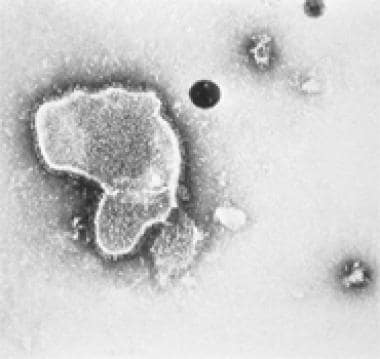
Respiratory syncytial virus (RSV) infection, which manifests primarily as bronchiolitis1 and/or viral pneumonia, is the leading cause of lower respiratory tract (LRT) infection in infants and young children. The clinical entity of bronchiolitis was described at least 100 years ago. In 1956, Morris and colleagues initially isolated RSV from chimpanzees with upper respiratory tract (URT) infections as the causative agent of most epidemic bronchiolitis cases. Subsequently, Channock et al associated this agent with bronchiolitis and LRT infection in infants. Since then, multiple epidemiologic studies have confirmed the role of this virus as the leading cause of LRT infection in infants and young children. Peak incidence of occurrence is observed at age 2-8 months. Overall, 4-5 million children younger than 4 years acquire an RSV infection, and more than 125,000 children are hospitalized annually in the United States because of this infection. This translates to 3-9 per 1000 children younger than 1 year who are hospitalized annually for this condition. Virtually all children have had at least one RSV infection by their third birthday. The World Health Organization has targeted RSV for vaccine development, which is not surprising, given the prevalence and potential severity of this condition. This article reviews aspects of the virology, epidemiology, spectrum of clinical illness, diagnosis, treatment, and prevention of RSV-related illness.
Pathophysiology
RSV infection is limited to the respiratory tract. Initial infection in young infants or children frequently involves the LRT and most often manifests as the clinical entity of bronchiolitis. This clinical syndrome has been recognized for at least 100 years. Inoculation of the virus occurs in the URT in respiratory epithelial cells. Spread of the virus down the respiratory tract occurs by cell-to-cell transfer of the virus along intracytoplasmic bridges (syncytia) from the URT to the LRT. The illness may begin with URT symptoms and progress rapidly over 1-2 days to the development of diffuse small airway disease characterized by cough, coryza, wheezing and rales, low-grade fever (<101°F), and decreased oral intake. A family history of asthma and/or atopy is frequently obtained. In more advanced disease, retractions and cyanosis may be noted, and up to 20% of patients may develop higher temperatures. The incidence of concomitant or secondary serious bacterial infection in association with RSV infection appears to be quite low (<1%), except for otitis media, which may occur in up to 40% of cases. In very young infants, apnea out of proportion to respiratory signs and symptoms may be present, and, in infants younger than 6 weeks, a more nonspecific sepsislike picture has been described.2 Reinfection with RSV occurs at all ages; however, with recurrent infection and increasing age, RSV infections are more limited to the URT. RSV URT infection is more severe than the common cold, as evidenced by the 7- to 10-day duration of illness and by the finding in one study of adults with RSV that the mean absence from work is 6 days.
Frequency
United States
RSV LRT infection develops annually in 4-5 million children, and more than 125,000 children are admitted per year for RSV-related illness. Reinfection occurs throughout life, with the disease becoming limited to the URT in persons older than 3 years. Severe RSV disease has been reported in older children and adults with severe underlying immunodeficiency disorders (eg, bone marrow transplantation), and RSV LRT disease has been reported in elderly persons.
International
RSV infection is prevalent worldwide, with similar clinical manifestations and young age of RSV LRT infection.
Mortality/Morbidity
Even in children hospitalized with RSV infection, the mortality rate is less than 1%. However, in select groups of high-risk patients, appreciable mortality and increased morbidity still may occur from this infection.3, 4
- Infants with chronic lung disease of infancy (ie, bronchopulmonary dysplasia), congenital heart disease, or marked prematurity when hospitalized for this disease still may have a 3-5% mortality rate. Additionally, such infants and patients with immunodeficient states have been shown to spend, on average, twice as long in the hospital as other patients with RSV infection (7-8 d vs 3-4 d in normal full-term infants).
- Additionally, children hospitalized for RSV disease during infancy have been shown to have abnormal pulmonary function tests and/or increased episodes of wheezing up to 10 years later. Whether RSV itself plays an active role in this or is just a marker for children at risk for reactive airway disease remains controversial.
Race
All races appear susceptible to RSV, with similar disease patterns.
Sex
Although boys and girls are affected equally by milder RSV disease, the frequency of hospitalization for RSV disease is higher in males, with a male-female-ratio of approximately 2:1.
Age
Severe RSV disease is primarily a disease of young infants and children, with a peak occurrence at age 2-8 months. Reinfection with RSV occurs throughout life, with disease becoming more limited to the URT, as discussed above.
History
Patients with respiratory syncytial virus (RSV) may present with the following symptoms:
- Fever (typically low-grade)
- Cough
- Tachypnea
- Cyanosis
- Retractions
- Wheezing
- Rales
Physical
Physical examination of the infant with RSV LRT reveals evidence of diffuse small airway disease. Up to 40% of children have an associated otitis media, which may be viral and/or bacterial. Additionally, assessment of the infant's hydration status (eg, skin turgor, capillary refill, mucous membranes) is an important part of the physical examination of the infant with bronchiolitis.
Causes
- In the community setting, a number of factors have been associated with increased risk of acquiring RSV disease, including the following:
- Childcare attendance
- Older siblings in preschool or school
- Exposure to environmental pollutants (eg, cigarette smoke)
- Multiple birth sets (especially triplets or greater)
- Minimal breastfeeding
- In assessing an infant with RSV infection, several factors have been correlated with more severe disease and the need for hospitalization. Although infants in these groups (outlined below) are at increased risk for severe RSV disease compared to normal full-term infants based on percentage, many more children in the normal full-term group are admitted; thus, most admissions for RSV disease occur in otherwise normal infants. Family history of asthma and genetic factors also correlate with more severe RSV disease, although the exact relationship and mechanisms have not been elucidated.
- Prematurity, especially birth at less than 35 weeks' gestation5
- Age younger than 3 months at time of infection
- Chronic lung disease
- Congenital heart disease
- Toxic appearance at time of presentation
- Respiratory rate more than 70 per minute in room air
- Atelectasis and/or pneumonitis on chest radiography
- Oxygen less than 95% on room air
Asthma
Bronchiolitis
Bronchitis, Acute and Chronic
Croup
Influenza
Neonatal Sepsis
Pneumonia
Other Problems to be Considered
Reactive airway disease
Lab Studies
- Laboratory studies frequently are not indicated in the infant with bronchiolitis who is comfortable in room air, well hydrated, and feeding adequately.
- Nonspecific laboratory studies may include CBC count, serum electrolytes, urinalysis, and oxygen saturation measurement. The CBC count may reveal a normal or mildly elevated WBC count and an elevated percentage of band forms. Blood cultures, although obtained frequently, are rarely, if ever, positive for pathogenic bacteria.
- An arterial blood gas may be indicated if carbon dioxide retention is a concern.
- Specific diagnostic tests for confirmation of respiratory syncytial virus (RSV) infection are readily available. These tests can be performed on samples of secretions obtained by washing, suctioning, or swabbing the nasopharynx. Secretions can be analyzed for virus in the laboratory by culture and/or antigen revealing techniques. Newer molecular probes for revealing RSV in clinical specimens are being developed and may be more sensitive than the above assays, although they are not routinely available at this time.
- The antigen revealing methods offer the potential for diagnosis within hours and may be obtained reliably in the absence of a sophisticated virology laboratory. However, monitoring of test performance is critical in maintaining appropriate sensitivity and specificity. Specific tests for RSV may be indicated for making decisions regarding therapy, isolation of patients, and in educating parents and staff about the nature of RSV disease.
Imaging Studies
- Chest radiography is frequently obtained in children with severe RSV infection. Chest radiographs typically reveal hyperinflated lung fields with a diffuse increase in interstitial markings. In 20-25% of cases, focal areas of atelectasis and/or pulmonary infiltrate are also noted. Generally, these findings are neither specific to RSV infection nor predictive of the course or outcome, except for the observation that infants who have the additional findings of atelectasis and/or pneumonia may have a more severe course with their illness.
Histologic Findings
In infants who have died from RSV bronchiolitis, lung tissue demonstrates mononuclear cell infiltration of the peribronchiolar areas, necrosis of the small airway epithelium, plugging of the lumens with exudate and edema, and atelectasis and hyperinflation.
Medical Care
- Supportive care is the mainstay of therapy for respiratory syncytial virus (RSV) infection. If the child can take in fluids by mouth and tolerate room air, outpatient management, with close physician contact as needed, is reasonable, especially in the absence of significant underlying risk factors. Although bronchodilators have been used, no convincing data as to their efficacy in this setting exist.
- For children who require hospitalization for RSV infection, supportive therapy is still the mainstay of care. Supportive care may include administration of supplemental oxygen (guided by respiratory rates, oxygen saturation, and arterial blood gases, as indicated), mechanical ventilation, and fluid replacement, as necessary. Additionally, bronchodilator therapy with beta-agonists frequently is used, although data on their benefit in this condition are conflicting. At least a subset of patients with RSV-related LRT appears to benefit from such therapy, and a trial with monitoring for effect on respiratory rate, pulse, and oxygenation may be reasonable. Alpha agonists (eg, vaporized epinephrine) have also been used during acute bronchiolitis episodes, although, again, available data do not clearly demonstrate efficacy.
- In 1986, the US Food and Drug Administration licensed ribavirin, a broad-spectrum antiviral agent in vitro, for the aerosolized treatment of children with severe RSV disease. The recommended dose is 6 g of drug in 300 mL of distilled water via a small-particle aerosol generator (SPAG unit) over 12-20 hours per day for 3-7 days based on clinical response. Subsequent studies have suggested equivalent efficacy with a higher concentration of drug (6 g/100 mL distilled water) given over three 2-hour periods per day. Use of ribavirin has been limited because of its high acquisition and lack of demonstrated benefit in decreasing hospitalization or mortality.
- Secondary toxicity to health care workers from exposure to aerosolized drug was a theoretical concern in the past, although such risk is unproved. For these reasons, ribavirin primarily is reserved for patients with significant underlying risk factors and severe acute RSV disease. Several recent reports suggest that older children and adults with symptomatic RSV infection after bone marrow transplantation may benefit from ribavirin therapy. If preliminary studies suggesting a long-term benefit (see Complications) are confirmed, broader indications for ribavirin therapy may become a consideration.
Consultations
The primary caretaker, on an outpatient basis, manages most cases of RSV. Even in the hospitalized child with RSV disease, consultation with a subspecialist generally is not necessary.
- Pediatric intensivist: Consultation with an intensivist is advised if the child requires mechanical ventilation or, even before intubation, if the child has marked respiratory distress and a high supplemental oxygen requirement. An intensivist may also be of assistance if difficult issues in fluid management (eg, congenital heart disease, bronchopulmonary dysplasia) occur in which assessment of hydration status and optimal fluid management may be complex.
- Pediatric infectious disease specialist: An infectious diseases evaluation may be indicated if ribavirin therapy is being considered or if the viral origin of the infant's acute respiratory illness is uncertain. Infectious disease specialists often also play a role in addressing epidemiological concerns regarding patient isolation, nosocomial transmission,6 and infection control.
- Pediatric pulmonologist: A pediatric pulmonologist may be consulted if the infant has underlying lung disease (eg, bronchopulmonary dysplasia)7 in conjunction with the acute RSV infection or to assist in decisions regarding bronchodilator therapy.
Diet
Most infants who are hospitalized with RSV infection are unable to tolerate milk or feedings well and frequently vomit or spit up. A brief course of intravenous fluids generally is administered in this setting, with resumption of normal feeding as the child recovers over 2-3 days.
Medications to treat respiratory syncytial virus (RSV) include the antiviral drug ribavirin, which can be used in severe high-risk cases and bronchodilators. Although efficacy in RSV still has not been proven for beta-agonists or alpha-agonists, vaporized epinephrine has shown promise in several recent studies.
Drug Category: Antiviral agents
Antiviral therapy for severe RSV disease is indicated in high-risk patients. Treatment must be initiated promptly at the onset of the infection to inhibit the replicating virus effectively.
| Drug Name | Ribavirin (Virazole) |
| Description | Analog of the nucleic acid guanosine. Ribavirin inhibits viral replication by an unknown mechanism. |
| Adult Dose | Reconstitute 6 g in 300 mL of distilled water to a concentration of 20 mg/mL Administer as aerosol for 12-20 h/d for 3-7 d based on clinical response Alternatively, 6 g in 100 mL of distilled water aerosol in 2-h pulses tid has been suggested as equally effective in small studies |
| Pediatric Dose | Administer as in adults |
| Contraindications | Documented hypersensitivity; pregnancy; women who may become pregnant during drug course |
| Interactions | Zidovudine effects are decreased when administered concurrently with ribavirin |
| Pregnancy | X - Contraindicated; benefit does not outweigh risk
|
| Precautions | Caution with mechanical ventilation; pay strict attention to minimization of drug precipitation, which may interfere with ventilator function and cause increased pulmonary pressures; affected parts include heated wire tubing, filters in the expiratory limb of the ventilator circuit, and water column pressure release valves Ribavirin has demonstrated teratogenic effects in rodents and rabbits; the amount of drug that one would be exposed to in caring for a child receiving aerosolized ribavirin is likely to be minimal, and teratogenesis has not been reported in offspring of mothers exposed to aerosolized ribavirin during pregnancy; however, avoiding unnecessary exposure to the drug is advisable (this can be accomplished by turning off the SPAG unit administering the drug for 5-10 min before prolonged patient contact, use of a ribavirin scavenger device, and administration in a room with adequate ventilation) |
Drug Category: Bronchodilators
These act to decrease muscle tone in the small and large airways in the lungs, thereby increasing ventilation. Beta2-adrenergic and alpha-adrenergic agents frequently are used (via inhalation) in an attempt to treat the bronchospasm observed in bronchiolitis.
| Drug Name | Albuterol (Salbutamol, Proventil, Ventolin) |
| Description | As a selective beta2-agonist, this agent produces bronchial smooth muscle relaxation. Efficacy in older children with reactive airway disease is well established, but the benefits in acute bronchiolitis are less well established. Available in inhalation and PO preparations. |
| Adult Dose | Not applicable in adults |
| Pediatric Dose | Acute bronchiolitis: 0.01-0.05 mL/kg inhaled (via nebulization of 5 mg/mL of solution) q4-6h Outpatient: 2-4 mg/dose PO (syrup) tid/qid sometimes is used in young children |
| Contraindications | Documented hypersensitivity |
| Interactions | Beta-blockers may block pulmonary effects and induce severe bronchospasm; possible potentiation of effects on vascular system with concomitant MAOIs and tricyclic antidepressants; possible decreased digoxin levels; possible worsening of hypokalemia if coadministered with non–potassium-sparing diuretics |
| Pregnancy | C - Fetal risk revealed in studies in animals but not established or not studied in humans; may use if benefits outweigh risk to fetus
|
| Precautions | Caution in hyperthyroidism, diabetes mellitus, and cardiovascular disorders |
| Drug Name | Racemic epinephrine (microNefrin, Nephron, S-2) |
| Description | This drug is 1-1.125% of epinephrine base solution given by aerosol. Recent studies suggest it may be superior to beta2-agonists in RSV LRTI. |
| Adult Dose | Not applicable in adults |
| Pediatric Dose | Bronchiolitis: 0.1 mL/kg/dose (diluted with 0.9% NaCl to final volume of 3 mL) inhaled via nebulizer q3-4h |
| Contraindications | Documented hypersensitivity; cardiac arrhythmias; angle-closure glaucoma |
| Interactions | Coadministration with of beta- and alpha-blocking agents may result in hypertension; coadministration with halogenated inhalational anesthetics may result in ventricular arrhythmias |
| Pregnancy | C - Fetal risk revealed in studies in animals but not established or not studied in humans; may use if benefits outweigh risk to fetus
|
| Precautions | Monitor for tachycardia and hypertension |
Drug Category: Antiviral immunoglobulins
Specific immunoglobulin products with anti-RSV activity have been developed for the prophylaxis of high-risk patients against RSV infection.
| Drug Name | Palivizumab (Synagis) |
| Description | A humanized monoclonal antibody directed against the F (fusion) protein of RSV. Administered monthly through the RSV season, it has been demonstrated to decrease the chances of RSV hospitalization in premature babies who are at increased risk for severe RSV-related illness. |
| Adult Dose | Not applicable; not approved for adults |
| Pediatric Dose | 15 mg/kg/dose IM every mo through RSV season |
| Contraindications | Documented hypersensitivity |
| Interactions | None reported |
| Pregnancy | C - Fetal risk revealed in studies in animals but not established or not studied in humans; may use if benefits outweigh risk to fetus
|
| Precautions | Thrombocytopenia or coagulation disorder, as with any IM injection |
Deterrence/Prevention
- Respiratory syncytial virus (RSV) transmission appears to occur via contact with infected secretions through hand-to-hand spread and/or fomites and respiratory droplets with an incubation period of 3-5 days.8 Aerosolized secretions appear to be less important in RSV transmission. Thus, attention to hand washing and cleaning of environmental surfaces likely are important in preventing RSV transmission. In the hospital setting, isolation of patients infected with RSV as a group and wearing of mask and gown during close contact with infected children are important in controlling nosocomial spread. Transmission of RSV on pediatric units has been shown to be a significant problem.
- Despite good environmental hygiene, RSV infection is likely to occur with significant frequency.
- Immunoglobulin products with high anti-RSV antibody titers have proved beneficial when given monthly for prophylaxis in select groups of high-risk infants. Presently, this is accomplished with monthly administration of palivizumab (Synagis), a humanized monoclonal antibody.9
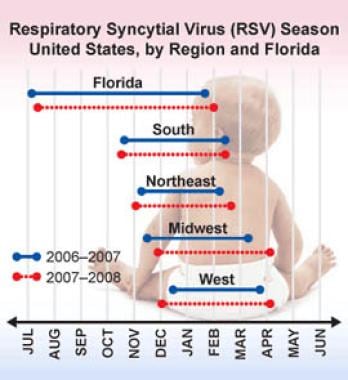
- RSV-IGIV (RespiGam; MED Immune; Gaithersburg, MD) is a pooled polyclonal human immunoglobulin product prepared from donors with high titers of RSV antibodies. When administered to high-risk infants with prematurity and/or chronic lung disease, a significant decrease in RSV-related hospitalization was noted. Additionally, treated infants had less severe hospital courses if admitted with RSV disease, fewer other respiratory infection hospitalizations, and fewer cases of otitis media than placebo recipients. This product requires intravenous administration at a dose of 750 mg/kg monthly during RSV season (typically, November through May or April in temperate climates). Given the need for monthly intravenous infusion and fluid volume load, the number of children who can be protected in this manner was limited, and, with the licensure of palivizumab (Synagis), this agent is no longer being manufactured.
- Presently, passive protection against RSV is achieved successfully through monthly intramuscular injection of the humanized monoclonal anti-RSV antibody palivizumab (Synagis; MED Immune; Gaithersburg, Md) at a dose of 15 mg/kg IM per month. This product demonstrated a 55% reduction in RSV hospitalization in premature infants born at less than 35 weeks' gestation who were younger than 6 months chronological age and in infants who had bronchopulmonary dysplasia and were younger than 24 months chronological age;10 this reduction led to US Food and Drug Administration approval in 1998. Subsequent postmarketing studies have continued to demonstrate efficacy. In November 2005, a stable liquid preparation of the drug became available, replacing the lyophilized form used previously. The dosing and concentration of the liquid preparation have not changed.
- Immunoglobulin products are expensive to administer (approximately $5,000-6,000 per child per year), leading to debate regarding which children should receive such prophylaxis.
- Palivizumab (Synagis) is approved for prophylaxis of children at high risk for severe RSV disease. Clinical trials have demonstrated efficacy and safety in premature infants younger than 6 months and those with chronic lung disease of infancy and congenital heart disease younger than 2 years at the start of the RSV season. Infants with immunodeficiency or severe neuromuscular disease have not been studied in conjunction with these products because of limitations in the numbers of such patients.
- The American Academy of Pediatrics (AAP) guidelines for RSV prophylaxis (see below) attempt to address these issues by grading the indications for preventive therapy by degree of prematurity and/or risk factor. Pending further follow-up and economic impact studies, the AAP recommendations, last revised in 2003, provide a rational approach to selecting candidates for RSV prophylaxis.
- The AAP Committee on Infectious Diseases guidelines for candidates for palivizumab (Synagis) prophylaxis are as follows:11
- Infants younger than 24 months who have hemodynamically significant congenital heart disease (cyanotic or acyanotic lesions) or chronic lung disease and are off oxygen and/or pulmonary medications for less than 6 months at the start of RSV season
- Premature infants born at less than 28 weeks' gestational age who are younger than 1 year chronological age at the start of RSV season
- Premature infants born at 29-32 weeks' gestational age who are younger than 6 months chronological age at the start of RSV season
- Infants born at 33-35 weeks' gestational age who are younger than 6 months chronological age and have at least 2 additional risk factors at the start of RSV season12
- The AAP guidelines highlight childcare attendance, school-aged siblings, exposure to environmental pollutants, congenital anomalies of the airway, and severe neuromuscular disorders as the primary additional risk factors for these patients.
- Attempts to develop a vaccine against RSV (as opposed to the passive protection discussed above) have been unsuccessful to date.13 A formalin-inactivated RSV vaccine was developed in the 1960s. Although initial serological responses to this vaccine appeared promising, children who received this vaccine developed more severe disease, with a number of deaths, when exposed to natural RSV infection. The development of a successful RSV vaccine must address this issue and achieve protection of very young children if it is to have an impact on severe RSV disease. Recent progress in this area has included development of stable, live-attenuated RSV vaccines that can be administered as nasal spray. Despite progress in this area, a vaccine that is ready for use in clinical practice is still likely 5-10 years away.
- Another approach to RSV vaccine development involves the use of cloned RSV surface proteins as potential subunit vaccines. RSV fusion (F) and glycoprotein (G) can induce neutralizing and protective antibodies and are the components in development. These are being evaluated for potential immunization of young children and also for administration to pregnant women during the last trimester to boost anti-RSV antibody levels transferred to the infant.
Complications
- Infants hospitalized for RSV LRT in infancy have a higher risk for subsequent wheezing and abnormal pulmonary function tests up to 10 years later than age-matched control subjects who did not have such an admission. RSV's role in causing subsequent reactive airway disease remains controversial. Several small studies have suggested that infants who are hospitalized with RSV infection and treated with ribavirin have better pulmonary function on follow-up than children who do not receive such therapy. If this finding is confirmed, it offers better understanding of the link between RSV LRT in infancy and subsequent reactive airway disease. Similarly, analyses of recipients of RSV prophylaxis compared with control subjects may help answer this clinically important question.
Patient Education
Medical/Legal Pitfalls
- The primary medical/legal pitfall relating to respiratory syncytial virus (RSV) disease is failure to recognize the severity of lung disease and degree of hypoxemia in a particular child. Careful history, physical examination, and, if indicated, oxygen saturation measurement should be adequate for revealing severe illness children.
- The author is not aware of any related legal issues to date, but it has been suggested that failure to offer prophylactic therapy (eg, palivizumab) to a high-risk neonate who subsequently develops severe RSV disease might pose a medicolegal concern. Numerous law suits for high-risk infants who have acquired nosocomial RSV infection have been filed.
Special Concerns
- High-risk groups for severe RSV infection include the following:
- Premature infants in their first year of life (the younger the child is [gestational and chronological age] at the start of RSV season, the greater the risk)
- Infants with chronic lung disease (eg, bronchopulmonary dysplasia, cystic fibrosis) during their first 2 years of life
- Children with congenital heart disease, especially with increased pulmonary blood flow
- Immunodeficient states, including symptomatic HIV infection
- Children with metabolic and neuromuscular disorders
- Children of multiple births
- Shay DK, Holman RC, Newman RD, et al. Bronchiolitis-associated hospitalizations among US children, 1980-1996. JAMA. Oct 20 1999;282(15):1440-6. [Medline].
- Oray-Schrom P, Phoenix C, St Martin D, Amoateng-Adjepong Y. Sepsis workup in febrile infants 0-90 days of age with respiratory syncytial virus infection. Pediatr Emerg Care. Oct 2003;19(5):314-9. [Medline].
- Leader S, Kohlhase K. Recent trends in severe respiratory syncytial virus (RSV) among US infants, 1997 to 2000. J Pediatr. Nov 2003;143(5 Suppl):S127-32. [Medline].
- Thompson WW, Shay DK, Weintraub E, et al. Mortality associated with influenza and respiratory syncytial virus in the United States. JAMA. Jan 8 2003;289(2):179-86. [Medline].
- Figueras-Aloy J, Carbonell-Estrany X, Quero J, IRIS Study Group. Case-control study of the risk factors linked to respiratory syncytial virus infection requiring hospitalization in premature infants born at a gestational age of 33-35 weeks in Spain. Pediatr Infect Dis J. Sep 2004;23(9):815-20. [Medline].
- Hall CB, Dougla RG, Geiman JM, Messner MK. Nosocomial respiratory syncytial virus infections. N Engl J Med. 1975;293:1343-6. [Medline].
- Boyce TG, Mellen BG, Mitchel EF, et al. Rates of hospitalization for respiratory syncytial virus infection among children in medicaid. J Pediatr. Dec 2000;137(6):865-70. [Medline].
- Hall CB, Douglas RG Jr. Modes of transmission of respiratory syncytial virus. J Pediatr. Jul 1981;99(1):100-3. [Medline].
- Feltes TF, Cabalka AK, Meissner HC, et al. Palivizumab prophylaxis reduces hospitalization due to respiratory syncytialvirus in young children with hemodynamically significant congenital heart disease. J Pediatr. Oct 2003;143(4):532-40. [Medline].
- Impact-RSV Study Group. Palivizumab, a humanized respiratory syncytial virus monoclonal antibody, reduces hospitalization from respiratory syncytial virus infection in high-risk infants. Pediatrics. Sep 1998;102(3 Pt 1):531-7. [Medline].
- Committee on Infectious Diseases; American Academy of Pediatrics. Respiratory syncytial virus. In: Pickering LK, ed. 2003 Red Book: Report of the Committee on Infectious Diseases. 2003. 523-528.
- Law BJ, Langley JM, Allen U, et al. The Pediatric Investigators Collaborative Network on Infections in Canada study of predictors of hospitalization for respiratory syncytial virus infection for infants born at 33 through 35 completed weeks of gestation. Pediatr Infect Dis J. Sep 2004;23(9):806-14. [Medline].
- Dudas RA, Karron RA. Respiratory syncytial virus vaccines. Clin Microbiol Rev. Jul 1998;11(3):430-9. [Medline].
- Collins PL, McIntosh K, Chanock RM. Respiratory syncytial virus. In: Fields' Virology. 3rd ed. 1996:1313-51.
- Malhotra A, Krilov LR. Influenza and respiratory syncytial virus. Update on infection, management, and prevention. Pediatr Clin North Am. Apr 2000;47(2):353-72, vi-vii. [Medline].
- McCarthy CA, Hall CB. Recent approaches to the management and prevention of respiratory syncytial virus infection. Curr Clin Top Infect Dis. 1998;18:1-18. [Medline].
- Sigurs N, Gustafsson PM, Bjarnason R, et al. Severe respiratory syncytial virus bronchiolitis in infancy and asthma and allergy at age 13. Am J Respir Crit Care Med. Jan 15 2005;171(2):137-41. [Medline].
- Stein RT, Sherrill D, Morgan WJ, et al. Respiratory syncytial virus in early life and risk of wheeze and allergy by age 13 years. Lancet. Aug 14 1999;354(9178):541-5. [Medline].
- Welliver RC. Bronchiolitis and infectious asthma. In: Feigin RD, Cherry JD, eds. Textbook of Pediatric Infectious Diseases. 4th ed. 1998:249-73.
Respiratory Syncytial Virus (RSV) Infection excerpt Article Last Updated: Feb 17, 2006
|