| Patient Education |
|
Click here for patient education.
|
|
You are in: eMedicine Specialties >
Pediatrics: General Medicine > Infectious Disease
Bronchiolitis
Article Last Updated: Dec 11, 2006
AUTHOR AND EDITOR INFORMATION
Section 1 of 10
Author: Lucian Kenneth DeNicola, MS, MD, FCCM, Professor, Department of Pediatrics, Division of Pediatric Critical Care Medicine, University of Florida Health Science Center-Jacksonville
Lucian Kenneth DeNicola is a member of the following medical societies: Society of Critical Care Medicine
Coauthor(s):
Michael Gayle, MBBS, FRCPC, FAAP, FCCM, Director of Critical Care Fellowship, Associate Professor, Department of Pediatrics, University of Florida at Jacksonville Health Science Center
Editors: David Jaimovich, MD, Chief Medical Officer, Joint Commission International and Joint Commission Resources; Mary L Windle, PharmD, Adjunct Assistant Professor, University of Nebraska Medical Center College of Pharmacy, Pharmacy Editor, eMedicine.com, Inc; Mark R Schleiss, MD, American Legion Chair of Pediatrics, Professor of Pediatrics, Division Director, Division of Infectious Diseases and Immunology, Department of Pediatrics, University of Minnesota School of Medicine; Robert W Tolan Jr, MD, Chief of Allergy, Immunology and Infectious Diseases, The Children's Hospital at Saint Peter's University Hospital; Clinical Associate Professor of Pediatrics, Drexel University College of Medicine; Russell W Steele, MD, Head, Division of Pediatric Infectious Diseases, Ochsner Children's Health Center; Clinical Professor, Department of Pediatrics, Tulane University School of Medicine
Author and Editor Disclosure
Synonyms and related keywords:
bronchiolitis, wheezy bronchitis, RSV, respiratory syncytial virus infection, lower respiratory tract infection, respiratory syncytial virus, wheeze, wheezing, parainfluenza virus, adenovirus, influenza, Mycoplasma pneumoniae, M pneumoniae, human metapneumovirus
Background
Bronchiolitis is an acute, infectious, inflammatory disease of the upper and lower respiratory tract that results in obstruction of the small airways. Although it may occur in all age groups, the larger airways of older children and adults better accommodate mucosal edema; severe respiratory symptoms are usually limited to young infants.
Pathophysiology
Necrosis of the respiratory epithelium is one of the earliest lesions in bronchiolitis. Proliferation of goblet cells results in excessive mucus production, while epithelial regeneration with nonciliated cells impairs elimination of secretions. Lymphocytic infiltration may result in submucosal edema. Cytokines and chemokines, released by infected respiratory epithelial cells, amplify the immune response by increasing cellular recruitment into infected airways. Interferon and interleukin-4, -8, and -9 are found in high concentrations in respiratory secretions of infected patients.
The pathology results in obstruction of bronchioles from inflammation, edema, and debris, leading to hyperinflation, increased airway resistance, atelectasis, and ventilation-perfusion mismatching. Bronchoconstriction has not been described.
Infants are affected most often because of their small airways, high closing volumes, and insufficient collateral ventilation. Recovery begins with regeneration of bronchiolar epithelium after 3-4 days, but cilia do not appear for up to 2 weeks. Macrophages remove mucus plugs. Risk factors include the following:
- Low birth weight, particularly premature infants
- Lower socioeconomic group
- Crowded living conditions, daycare, or both
- Parental smoking
- Chronic lung disease, particularly bronchopulmonary dysplasia
- Severe congenital or acquired neurologic disease
- Congenital heart disease with pulmonary hypertension
- Congenital or acquired immune deficiency diseases
Virtually all children experience respiratory syncytial virus (RSV) infection within the first 3 years of life, but previous infection does not convey complete immunity. Reinfection is common, but significant antibody titers ameliorate severity of symptoms.
Frequency
United States
Twenty-five percent of children younger than 12 months and 13% of children aged 1-2 years have respiratory infections. Of these 25%, one-half have wheezing-associated respiratory disease. RSV can be cultured from one third of these outpatients and from 80% of hospitalized children younger than 6 months. Nearly 100% of children experience an RSV infection within 2 RSV seasons, and 1% are hospitalized. Among healthy full-term infants, 80% of hospitalizations occur in the first year, and 50% of hospitalizations occur in children aged 1-3 months.
- From 1980-1995, admissions associated with bronchiolitis totalled 1.65 million. The hospitalization rate for children younger than 1 year doubled from 12.9 to 31.2 per 1000 population, and the number of hospitalized children diagnosed with bronchiolitis tripled from 5.4% to 16.4%. From 2003-2004, the morbidity and mortality rates of bronchiolitis were unchanged. However, an estimated 51,000-82,000 patients were hospitalized annually for bronchiolitis. The increase in hospitalizations is not due to increased pediatrician risk aversion, but rather is attributable to physicians' desire to treat the condition with bronchodilators. The cost of hospitalization for bronchiolitis in children younger than 1 year is estimated to be more than $700 million per year.
- Fewer than 5% of hospitalizations occur in the first 30 days of life, presumably because of transplacental transfer of maternal antibody.
- In the temperate climates of the northern hemisphere, RSV epidemics generally occur annually in winter and late spring, while Parainfluenzae outbreaks usually occur in the fall. Conversely, in the southern hemisphere, wintertime epidemics occur from May to September. Evidence indicates that RSV is endemic throughout the year in the subtropical areas of the southeastern United States, with peaks from October to February and subsidence only from March through July.
- Secondary infections occur in 46% of family members, 98% of other children in daycare, 42% of hospital staff, and 45% of previously uninfected hospitalized infants. Infection is spread through self-inoculation of fomites via direct contact and environmental surfaces to nasopharyngeal or ocular mucous membranes. RSV can survive for several hours on hands and surfaces; therefore, hand washing and using disposable gloves and gowns may reduce nosocomial spread.
International
Bronchiolitis is a significant cause of respiratory disease worldwide. Its incidence in developed countries appears similar to that in the United States. Epidemiologic data from underdeveloped countries are incomplete. Worldwide, RSV is responsible for 3-5 million deaths annually.
Mortality/Morbidity
RSV bronchiolitis accounts for more than 90,000 pediatric hospitalizations and as many as 4,500 deaths annually. Overall, the mortality rate in children hospitalized for bronchiolitis in different series is 0.2-7%. This large variability is based on investigations of different cohorts with different risk factors and different points in time relative to modern intensive care. Recent studies in pediatric ICUs (PICUs) of children with RSV bronchiolitis without comorbidities show a 2-3% death rate, regardless of whether the children had congenital heart disease with pulmonary hypertension.
Sex
Boys are affected 1.7 times more often than girls; the male-to-female ratio of hospitalization among these children is 1.5:1.
Age
Although RSV bronchiolitis is clearly a significant disease of the young child, no lifelong immunity occurs; mildly symptomatic or asymptomatic adults can be infected and act as carriers. With the increasing use of treatment modalities that compromise cellular immunity, RSV infection may be life threatening to older children and adults undergoing organ and bone marrow transplantation.
History
Because this disease primarily affects young infants, clinical manifestations are initially subtle. Infants may become increasingly fussy and have difficulty feeding during the 2- to 5-day incubation period. A low-grade fever, usually less than 101.5°F, and increasing coryza and congestion usually follow the incubation period. Sixty percent of primary RSV infections are confined to the upper airway. During a period of 2-5 days, this may progress to lower respiratory tract involvement with the development of cough, dyspnea, wheezing, and feeding difficulties. When the patient is brought to medical attention, the fever has usually resolved. Infants younger than 1 month may present as hypothermic. Severe cases progress to respiratory distress with tachypnea, nasal flaring, retractions and irritability, and, possibly, cyanosis.
Physical
- Examination often reveals the following:
- Otitis media
- Tachypnea
- Tachycardia
- Fever (38-39°C)
- Retractions
- Fine rales (47%)
- Diffuse, fine wheezing
- Diagnosis is made based on age and seasonal occurrence, tachypnea, and the presence of profuse coryza and fine rales, wheezes, or both upon auscultation of the lungs.
- Hypoxia is the best predictor of severe illness and correlates best with the degree of tachypnea (>50 breaths per min). The degree of wheezing or retractions correlates poorly with hypoxia.
- First-time infections are usually most severe. Subsequent attacks generally are milder, particularly in older children.
- Nonrespiratory manifestations of RSV infections include otitis media, myocarditis, supraventricular and ventricular dysrhythmias, and inappropriate secretion of antidiuretic hormone.
- Apnea develops in 18-20% of young infants hospitalized with RSV bronchiolitis. Frequency of apnea increases among premature infants whose gestation was less than 32 weeks, infants who have not yet reached age 44 weeks from conception, and especially among those who have neonatal apnea.
- Apnea occurs early in the course of the disease and may be the presenting symptom.
- Nonobstructive central apnea occurs during quiet sleep and is associated with increases in the apnea index (percentage of time the baby spends apneic), apnea attack rate (the number of episodes of apnea per unit time), and apnea percentage (the distribution of episodes of apnea while in a given sleep state).
- Apnea rarely lasts longer than a few days; however, approximately 10% of these patients require intubation and mechanical ventilation. Because very few cases of sudden infant death syndrome are attributable to bronchiolitis, most infants with apnea apparently spontaneously recover.
Causes
RSV is the most commonly isolated agent in 75% of children younger than 2 years who are hospitalized for bronchiolitis. RSV is an enveloped RNA virus that belongs to the Paramyxoviridae family within the Pneumovirus genus.
- Agents that cause wheezing-associated respiratory infections include the following:
- RSV causes 20-40% of all cases and 44% of cases that involve children younger than 2 years.
- Two RSV subtypes, A and B, have been identified based on the structural variations in the G protein. Subtype A causes the most severe infections. One subtype usually predominates during a given season; thus, RSV disease has "good" and "bad" years.
- The disease is highly contagious. Viral shedding in nasal secretions continues for 6-21 days after symptoms develop. The incubation period is 2-5 days.
- Parainfluenza virus causes 10-30% of all bronchiolitis cases.
- Adenovirus accounts for 5-10% of bronchiolitis cases.
- Influenza virus accounts for 10-20% of bronchiolitis cases.
- Mycoplasma pneumoniae infection accounts for 5-15% of bronchiolitis cases, particularly among older children and adults.
- A newly discovered virus, human metapneumovirus (hMPV), has been increasingly implicated as an etiologic agent in bronchiolitis. First identified in Holland in 2001, it is a paramyxovirus.
- Serologic studies indicated that, by age 5 years, all Dutch children had seroconverted and that the virus had been prevalent in the population for at least 50 years.
- In a retrospective examination of nasal washings obtained between 1976 and 2001 from 2009 children with acute respiratory tract illness, 248 had identifiable viruses. Of these, 20% were identified as hMPV, accounting for 12% of all viral lower respiratory illness in children younger than 2 years.
- The mean age in the hMPV group was 11.6 months, with a male-to-female ratio of 1.8:1. They most often had illnesses between December and April, and 2% were hospitalized. The virus was associated with bronchiolitis in 59% of patients.
- Subsequent studies have shown that hMPV accounts for 5-50% of bronchiolitis cases, seems to occur later in the bronchiolitis season, occurs with higher fevers, affects somewhat older children, and causes more wheezing but less oxygen requirement (possibly because the children are older and have less atelectasis).
- Recent observations note that dual infections with both hMPV and RSV are strongly associated with severe bronchiolitis, with a 10-fold increase in PICU admission.
- Abundant evidence reveals that complex immunologic mechanisms play a role in the pathogenesis of RSV bronchiolitis. Type I allergic reactions mediated by the immunoglobulin E (IgE) antibody may account for clinically significant bronchiolitis. Breastfed babies, who receive colostrum rich in immunoglobulin A (IgA), appear relatively protected from bronchiolitis.
Asthma
Pertussis
Pneumonia
Other Problems to be Considered
Foreign body aspiration Congenital structural anomaly Bronchomalacia Congenital lobar emphysema Tracheal ring Bronchial cleft cyst Sepsis Congenital heart disease
Lab Studies
- Few laboratory studies are necessary when age, season, and physical examination are consistent with the expected diagnosis.
- Some authors suggest that a dry nose excludes RSV infection.
- WBC counts are usually 8000-15,000/mL and may be left-shifted due to stress. Children with RSV infections have shown a lower risk of serious bacterial infections or secondary bacterial superinfection than controls (0 vs 2.7% for bacteremia and 2% vs 14% for urinary tract infection [UTI]).
- Confine etiologic testing to more severely affected patients, such as children with comorbidities and those who are hospitalized, to determine appropriate isolation measures. Because no definitive treatment for the specific virus exists, therapy is directed toward symptomatic relief and maintenance of hydration and oxygenation. Viral testing only adds to cost and mistakenly leads to hospitalization. Severely ill children may have dual viral infections.
- Screening tests: Although viral culture for RSV is available and must be considered the criterion standard in making a definitive diagnosis, several immunologic tests are more convenient, more rapid, and less costly.
- Commercially available tests detect the RSV antigen in epithelial cells from nasopharyngeal secretions, bronchoalveolar lavage, or lung tissue. These tests are performed using either direct immunofluorescent antibody (IFA) staining or an enzyme-linked immunosorbent assay (ELISA).
- Reliability of the tests highly depends on sampling techniques. The antigen is attached to mucosal epithelial cells. Simply sampling the mucus from a nasal swab is clearly less traumatic but not nearly as reliable as a swab of the nasopharyngeal area or, preferably, a nasal washing. One third of nasal swab sample results are negative compared with results obtained with more aggressive techniques.
- Although ELISA is somewhat quicker and easier to interpret because of a more objective endpoint, the IFA technique may be preferable because the number of epithelial cells recovered can be determined, thus verifying the adequacy of the sample.
- With adequate sampling, IFA requires 2-6 hours for processing and is 90% sensitive and specific.
- ELISA requires 30 minutes for processing and is 85-90% sensitive compared with viral culture.
- Reliability of rapid diagnostic tests in adults is questionable.
Imaging Studies
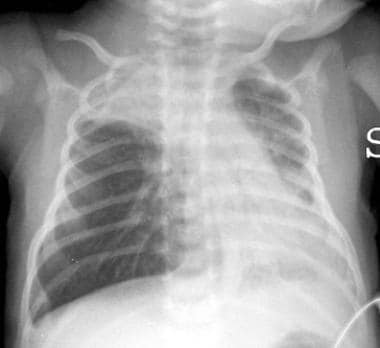
- Chest radiographs are most useful in excluding unexpected congenital anomalies or other conditions. Chest radiographs usually reveal hyperinflation, and 20-30% show lobar infiltrates, atelectasis, or both.
- Confine neck radiographs or contrast studies to children whose diagnosis is unclear or who have histories consistent with structural anomalies.
- Atelectasis is common and contributes to arterial desaturation. Because ciliated bronchial epithelium does not regenerate for 9-15 days, atelectasis may be persistent and shifting.
Other Tests
- Measurement of transcutaneous oxygen saturation is a good indicator of severity. It correlates best with tachypnea; however, it correlates poorly with wheezing and retractions. Patients with persistent resting oxygen saturations in room air below 92% require a period of observation and possible hospitalization. Administration of beta-agonist aerosol may increase cardiac output without improving ventilation, causing relative desaturation.
- Reserve ECG studies or echocardiography for those few children who display arrhythmias or cardiomegaly.
Procedures
- In rare situations, such as severe immunodeficiency or a strong history of possible foreign body aspiration, bronchoscopy may be indicated for diagnostic bronchoalveolar lavage or actual foreign body removal.
Medical Care
Despite the prominent role that inflammation plays in the pathogenesis of airway obstruction, corticosteroids have not proven beneficial in improving clinical status in a large, controlled multi-institutional study. Beta-agonists and ipratropium bromide, an aerosolized anticholinergic agent, have not shown effectiveness in the management of infants with RSV and wheezing.
Although a number of medications and interventions have been used to treat bronchiolitis, at present, only oxygen appreciably improves the condition of young children with bronchiolitis. Medical therapies used to treat bronchiolitis in infants and young children are controversial. Efficacy in infants is difficult to determine because it can be a function of the pharmacologic agent, the route of administration, the clinical status of the patient, or the adequacy of the outcome measure used to demonstrate an effect.
Bronchodilators
A meta-analysis reviewed 15 randomized placebo-controlled trials of inhaled albuterol treatment in bronchiolitis. It concluded that albuterol produces only modest short-term improvement in clinical features of mild or moderately severe bronchiolitis, primarily through making the child more alert.
A more recent meta-analysis of 9 clinical trials noted that conclusive analysis for the efficacy of beta2-agonist therapy for bronchiolitis remains unavailable, and that the routine use of beta2-agonist therapy for bronchiolitis is not supported.
A recent study compared nebulized albuterol with normal saline in an age-matched and severity-matched trial of 52 infants over 72 hours of treatment. Nebulized albuterol did not improve recovery or attenuate severity, as indicated by improvement in oxygen saturation, length of stay, or clinical score. Two recent randomized studies using albuterol, ipratropium, and both medications combined versus normal saline found no improvement with medications.
Only a single nonrandomized study of 25 ventilated young infants (13 of whom had preexisting cardiopulmonary disease) with RSV bronchiolitis demonstrated a statistically significant increase in maximum volume functional residual capacity (Vmax FRC); however, in 3 of these infants, respiratory function worsened.
Although initial evidence suggested that nebulized racemic epinephrine reduced symptoms and length of hospital stay, subsequent studies have not supported the use of aerosol epinephrine. A randomized, double-blind, placebo-controlled study of 62 somewhat older children (aged 6 wk to 2 y, mean age 6.4 mo) compared aerosolized racemic epinephrine with salbutamol. Racemic epinephrine resulted in significant improvement in wheezing and respiratory distress score on day 2 but did not shorten hospitalization or total duration of illness. However, in a randomized placebo-controlled trial of albuterol and epinephrine in equipotent doses, neither drug reduced the need for oxygen nor reduced length of stay. Additionally, neither drug reduced the quantity of oxygen required nor reduced clinical respiratory scores.
In an editorial, Mary Ellen Wohl and Victor Chernick, both highly respected experts on bronchiolitis, speculated that inhaled epinephrine may relieve symptoms by acting as a nasal decongestant, and similar nose drops may help to relieve symptoms. A follow-up letter to the editor asks for a controlled study to end the speculation. Multiple authors have recommended instillation of saline nose drops prior to feeding. Instillation of the lowest concentration of nasal decongestant drops 2-3 times a day for no more than 3 days in hospitalized infants could be evaluated for its benefits.
Because using bronchodilators in bronchiolitis lacks efficacy, administering a beta-agonist on a trial basis to older patients with bronchiolitis and a personal or family history of asthma and assessing the clinical response in 10-15 minutes is reasonable. If improvement in retractions, respiratory rate, and wheezing is noted, scheduled aerosol treatments may be continued, with additional treatments administered as needed. If little or no sustained response is noted, cease bronchodilator therapy, as it contributes to agitation and ventilation-perfusion ratio (V/Q) mismatching.
Anti-inflammatory agents
The belief that corticosteroids can prevent or reduce the major pathology of inflammation and edema of the bronchiolar mucosa is tempting. However, 13 trials of 1198 children aged 0-30 months failed to demonstrate improvement in length of stay, clinical score, hospital admission rates, or readmission rates for either systemic or inhaled corticosteroids administered in hospital or in the emergency department.
Similarly, the mast cell inhibitor, cromoglycate, had no beneficial effects. One study suggested that montelukast, a Cys-LT receptor antagonist, may reduce postbronchiolitis reactive airway disease, but this intervention cannot be recommended at this time.
Chest physiotherapy
Medicinal therapy seems to be disappointing for bronchiolitis, but chest physiotherapy cannot be recommended either. Three clinical trials of unventilated hospitalized infants compared vibration and percussion techniques in postural drainage positions with no intervention. No differences were reported in length of hospital stay, oxygen requirements, or improvement in the severity of clinical score in infants with bronchiolitis.
Despite all of the evidence-based lack of support for medicinal interventions for the treatment of bronchiolitis, admission rates and the way bronchiolitis is treated greatly differ, particularly in emergency departments. In a Canadian study, children evaluated in general emergency departments were admitted twice as often as those observed in pediatric emergency departments, controlling for age, gender, estimated family income, medical comorbidity, and clinical severity.
A survey of members of the Emergency Medicine section of the American Academy of Pediatrics (AAP) found that 96% recommended bronchodilators and 8% recommended steroids. Twice as many pediatric emergency physicians would admit a child with an oxygen saturation of 92% versus 94%, as measured with pulse oximetry (SpO2), although a respiratory rate of 50 breaths per minute versus 65 breaths per minute made little difference in admission rate. A study of 30 large children's hospitals in the United States found that 45% of patients received steroids and 25% received systemic antibiotics. Factors that contributed to longer stays included use of antibiotics, steroids, and bronchodilators. Undergoing chest radiography was a significant predictor of antibiotic administration.
These differences from recommendations and between practices have led to a call for national guidelines for the treatment of bronchiolitis. In 2006, the AAP, in conjunction with the American Academy of Family Physicians, the American College of Chest Physicians, and the American Thoracic Society, published the "Diagnosis and management of bronchiolitis" in Pediatrics. The recommendations were as follows:
- Diagnosis and severity should be based on history and physical findings and not on laboratory and radiologic findings. Risk factors should be assessed when making decisions about evaluation and management.
- Bronchodilators should not be routinely used. If a trial of an alpha- or beta-adrenergic medication is an option, they should be continued only if a positive (and continued) response is documented.
- Corticosteroids should not routinely be used.
- Ribavirin should not be used.
- Antibacterials should be used only upon proven coexistence of bacterial infection.
- Assess hydration and the ability to take oral fluids.
- Supplemental oxygen should be supplied for SpO2 less than 90%; saturation measurement is otherwise unnecessary.
- Palivizumab prophylaxis should be administered to selective children.
- Hand decontamination prevents nosocomial spread.
- Infants should not be exposed to secondary smoking, and breastfeeding is recommended.
- Clinicians should inquire about use of complementary and alternative medicine (CAM) therapies.
Cincinnati Children's Hospital found that bronchiolitis admissions were increasing so that patients could receive bronchodilator therapy. In 1997, the hospital instituted evidence-based point-of-care algorithms and rules based on guideline recommendations on the overuse of therapies for bronchiolitis and reviewed them in 2001 and 2002. Their guidelines discouraged etiologic testing because the treatment is directed at the syndrome rather than the etiologic cause, reduced the use of chest radiography (since opacities [atelectasis] are unlikely to change for 7-9 d and are not influenced by antibiotics or chest physiotherapy), and discouraged the use of steroids and bronchodilators unless clear and sustained improvement was noted 20 minutes after aerosol administration.
After introduction of the guidelines, decreases were seen in admissions (29%), length of stay (17%), nasopharyngeal washings for RSV antigen (52%), chest radiography (20%), all respiratory therapies (30%), beta-agonist administrations (51%), cost of all services (37%), and cost of respiratory therapy services (77%). Research shows these changes continued in the 3- and 4-year follow-up investigations.
- Indications for hospital admission include the following:
- Persistent resting SpO2 below 92% in room air
- Inability to maintain oral hydration in patients younger than 6 months
- Markedly elevated respiratory rate (>70 breaths per min)
- History of chronic cardiorespiratory disease including significant asthma
- Dyspnea and intercostal retractions, indicating respiratory distress
- Desaturation in 40% oxygen (3-4 L/min oxygen), cyanosis
- Extra pulmonary symptoms
- Parent unable to care for child at home
- Apnea and acidosis are indicators for PICU referral.
- Hospital care
- Administer supplemental humidified oxygen to maintain transcutaneous saturation above 92%.
- Fluid replacement: These infants are mildly dehydrated because of decreased fluid intake and increased fluid losses from fever and tachypnea. Goal of fluid therapy is to replace deficits and to provide maintenance requirements. Avoid excessive fluid administration, because this may promote interstitial edema formation, particularly if a component of inappropriate antidiuretic hormone release is present.
- Perform nasal and oral suctioning.
- Carefully monitor the patient for apnea.
- Pay attention to temperature regulation in small infants.
- Mechanical ventilation
- Infants with bronchiolitis and recurrent apnea or increased work of breathing with respiratory failure occasionally require mechanical ventilation. Treat these patients supportively, providing adequate oxygen, ventilation, and hydration.
- Continuous positive airway pressure (CPAP) and intermittent mandatory ventilation (IMV) with positive end-expiratory pressure (PEEP) have been used to successfully treat these infants.
- Negative pressure ventilation has been used successfully, with reduced need for endotracheal intubation and shortened lengths of stay.
- Typical approach in patients who require ventilation using IMV and PEEP is to ventilate at rates slow enough to allow adequate emptying during exhalation. In addition, a short inspiratory time optimizes ventilation to more compliant lung units without overdistending more obstructed ones.
- Aggressive weaning over the first 2 or 3 days is not warranted and is usually unsuccessful. Once the illness subsides, weaning can proceed quickly.
- Infants with progressive hypoxemia unresponsive to conventional ventilation may respond to high-frequency ventilation or extracorporeal membrane oxygenation. Current experimental therapies for infants with pulmonary insufficiency caused by bronchiolitis include surfactant and nitric oxide.
Consultations
When a healthy infant presents with a history, physical examination findings, and course consistent with uncomplicated bronchiolitis, no consultations are necessary; however, refer infants with comorbidities, atypical histories, or critical conditions to a pediatrician, preferably at a center that can provide a spectrum of pediatric subspecialists in critical care, pulmonology, and infectious disease.
Diet
Although young infants have the unique ability to breathe and swallow simultaneously, risk of aspiration is significant when the respiratory rate is above 60 breaths per minute. Fever and hyperpnea may contribute to excessive fluid losses. For these reasons, infants who are hospitalized with bronchiolitis require careful fluid monitoring and provision of nasogastric or intravenous fluids when hyperpnea precludes safe oral feeding.
Drug Category: Oxygen
Oxygen decreases the work of breathing, thus delaying the onset of respiratory muscle fatigue, allowing other therapies to work.
| Drug Name | Humidified oxygen |
| Description | Administered by nasal cannula, mask, head box, or tent to maintain transcutaneous oxygen saturations >92%. Nasal cannula is preferred because it is effective and minimally intrusive and allows full access to child. |
| Pediatric Dose | Administer humidified oxygen through a regulator or oxygen mixer at rates of 0.25-5 L/min or up to 60%; higher requirements signal severe disease, leading to subspecialty consultation or referral |
| Contraindications | None reported |
| Interactions | None reported |
| Pregnancy | A - Safe in pregnancy
|
| Precautions | Inspired oxygen concentrations of 50-100% carry substantial risk of lung damage; children with chronic lung disease or congenital heart disease may worsen with oxygen administration; children with these conditions should undergo cardiopulmonary monitoring while receiving judicious oxygen administration; chronic lung disease may remove the hypercapnic drive and drive ventilation with relative hypoxia; oxygen administration can lead to hypoventilation or apnea; right-to-left intracardiac shunts produce excessive pulmonary blood flow; oxygen administration can reduce pulmonary resistance and increase pulmonary blood flow, leading to pulmonary edema |
Drug Category: Bronchodilators
These agents act by decreasing muscle tone in both small and large airways in the lungs, thus increasing ventilation.
| Drug Name | Racemic epinephrine 2.25% (MicroNefrin, S-2) |
| Description | Stimulates alpha-, beta1-, and beta2-adrenergic receptors, resulting in bronchodilatation, increased peripheral vascular resistance, hypertension, increased chronotropic cardiac activity, and positive inotropic effects. Nebulized epinephrine (0.1 mL/kg) is more efficacious than beta-agonist salbutamol in infants with acute bronchiolitis. Randomized controlled trials comparing nebulized racemic epinephrine with placebo found more improvement in the epinephrine-treated group in oxygenation and clinical signs, presumably because of reduction in airway and perhaps nasal mucosal edema. Morbidity and length of stay did not improve. |
| Adult Dose | 0.5 mL diluted in 3 mL 0.9% NaCl inhaled via nebulizer over 15 min q1-2h |
| Pediatric Dose | Administer as in adults |
| Contraindications | Hypertension; tachycardia >200 beats/min; hypokalemia; arrhythmias; myocarditis |
| Interactions | Increases toxicity of other beta- and alpha-blocking agents; concomitant use of loop diuretics requires careful electrolyte monitoring |
| Pregnancy | C - Safety for use during pregnancy has not been established.
|
| Precautions | Monitor HR, ECG, BP, and serum potassium |
Drug Category: Immunoglobulins
Specific immunoglobulin products with anti-RSV activity have been developed for prophylaxis of high-risk patients against RSV infection.
| Drug Name | Palivizumab (Synagis) |
| Description | Humanized monoclonal antibody directed against the F (fusion) protein of RSV. Given monthly through the RSV season, it has been demonstrated to decrease chances of RSV hospitalization in premature babies who are at increased risk for severe RSV-related illness. |
| Pediatric Dose | 15 mg/kg/dose IM every mo through RSV season |
| Contraindications | Documented hypersensitivity |
| Interactions | None reported |
| Pregnancy | C - Safety for use during pregnancy has not been established.
|
| Precautions | As with all IM injections, caution with thrombocytopenia or coagulation disorder |
Drug Category: Antibiotics
Viruses are the primary etiologic agents in bronchiolitis; therefore, routine administration of antibiotics has not been shown to influence the course of this disease. Although rapid diagnostic techniques are available to identify RSV as a causative agent in bronchiolitis, they are not readily available for other viruses. In small, acutely ill infants, clinically excluding the existence of secondary bacterial invasion may be difficult. Administration of broad-spectrum antibiotics in critically ill infants is often justified until culture results prove to be negative.
Bacterial superinfection: At least 2 prospective studies of 1680 previously healthy febrile infants found lower rates of serious bacterial infections in those with bronchiolitis than in matched controls.
Co-infections: A positive test result for RSV does not exclude co-infection with other respiratory pathogens. Co-infection with parainfluenza, influenza, measles, adenovirus, hMPV, pertussis, Legionella, and Pneumocystis are all possible. Severe cases and those that do not follow typical courses for RSV bronchiolitis may benefit from investigation for co-infections.
| Drug Name | Ampicillin (Principen, Omnipen, Marcillin) |
| Description | Bactericidal activity against susceptible organisms. Alternative to amoxicillin when unable to take medication orally. |
| Pediatric Dose | 50-100 mg/kg/d PO divided q6h |
| Contraindications | Documented hypersensitivity |
| Interactions | Probenecid and disulfiram elevate ampicillin levels; allopurinol decreases ampicillin effects and has additive effects on ampicillin rash; may decrease effects of oral contraceptives |
| Pregnancy | B - Usually safe but benefits must outweigh the risks.
|
| Precautions | May produce bile sludging in neonates |
| Drug Name | Cefotaxime (Claforan) |
| Description | Safe and effective third-generation cephalosporin used for initial antimicrobial coverage of critically ill infants until culture results are known. Covers a wide range of gram-positive and gram-negative organisms but is not a first-line drug for Staphylococcus or Pseudomonas species. Does not cover for Listeria, an important pathogen of infants <6 wk. (For this age group, add ampicillin.) |
| Pediatric Dose | <1 week: 50 mg/kg/dose IV/IM q12h 1-4 weeks: 50 mg/kg/dose IV/IM q8h 1 month to 12 years: 50-180 mg/kg/d IV/IM divided q6-8h |
| Contraindications | Documented hypersensitivity |
| Interactions | Probenecid may increase cefotaxime levels; coadministration with furosemide and aminoglycosides may increase nephrotoxicity |
| Pregnancy | B - Usually safe but benefits must outweigh the risks.
|
| Precautions | Adjust dose in severe renal insufficiency (high doses may cause CNS toxicity); superinfections and promotion of nonsusceptible organisms may occur with prolonged use or repeated therapy; has been associated with severe colitis |
| Drug Name | Ceftriaxone (Rocephin) |
| Description | Safe and effective third-generation cephalosporin used for initial antimicrobial coverage of the ill infant until culture results are known. Covers a wide range of gram-positive and gram-negative organisms but is not first-line drug for Staphylococcus or Pseudomonas species. Does not cover for Listeria, an important pathogen of infants <6 wk. (For this age group, add ampicillin.) |
| Pediatric Dose | 50-100 mg/kg/d IV/IM qd or divided bid |
| Contraindications | Documented hypersensitivity |
| Interactions | Probenecid may increase ceftriaxone levels; coadministration with ethacrynic acid, furosemide, and aminoglycosides may increase nephrotoxicity |
| Pregnancy | B - Usually safe but benefits must outweigh the risks.
|
| Precautions | May produce bile sludging in neonates; adjust dose in severe renal insufficiency (high doses may cause CNS toxicity); superinfections and infections with nonsusceptible organisms may occur with prolonged use or repeated therapy; caution in breastfeeding; rare acute hemolytic anemia has been reported |
Drug Category: Antiviral agents
Ribavirin (1-beta-D-ribofuranosyl-1,2,4-triazole-3-carboxamide) is a synthetic nucleoside analog that resembles guanosine and inosine. It appears to interfere with the expression of messenger RNA and inhibit viral protein synthesis. Ribavirin has a broad spectrum of antiviral activity in vitro, inhibiting replication of RSV, influenza, parainfluenza, adenovirus, measles, Lassa fever, and Hantaan viruses.
| Drug Name | Ribavirin (Virazole) |
| Description | Appears to be safe but expensive. Efficiency and effectiveness have not been demonstrated clearly in large, randomized, placebo-controlled trials. Routine use at this time cannot be recommended. In adults, ribavirin can be used for the treatment of other infections, including hepatitis C. |
| Adult Dose | Because symptomatic bronchiolitis caused by RSV is rarely a problem for adults, no specific dosing is recommended |
| Pediatric Dose | 20 mg/mL solution using continuous aerosol administration for 12-18 h/d for 3-7 d |
| Contraindications | Documented hypersensitivity; pregnancy; women who may become pregnant during drug course |
| Interactions | Zidovudine effects are decreased when coadministered |
| Pregnancy | X - Contraindicated in pregnancy
|
| Precautions | Caregivers must not be pregnant; fertile women must wear adequate mask protection to reduce aerosol exposure; may produce considerable bronchial irritation, coughing, and wheezing; administration through mechanical ventilators may produce mechanical dysfunction; only experienced practitioners should attempt administration |
Further Inpatient Care
- A systemic review of 3 randomized clinical trials concluded that chest physiotherapy does not improve clinical score, oxygen requirements, or hospital length of stay and may increase distress and irritability in infants.
- For patients who are hospitalized, follow-up appointment with a primary care physician 1-2 days after discharge is indicated to recheck room air saturation and for parental reassurance.
- No further laboratory testing is necessary unless the patient must test RSV negative for return to an environment where high-risk patients are present, such as at medical daycare centers or group homes. Secretions may remain positive for RSV for as long as 21 days after the onset of symptoms.
In/Out Patient Meds
- For children who required inpatient antibiotics for intercurrent infections, continue the same antibiotics to complete the suggested course.
- An older child with reactive airway disease may require continued treatment with bronchodilators.
Transfer
- Transfer to a facility that has an intensivist-managed critical care unit is indicated for patients with the following characteristics:
- High risk
- Requiring more than 40% oxygen
- Extrapulmonary symptoms
- Acidosis
- Apnea
- Unclear etiology of their symptoms
Deterrence/Prevention
- RSV is transmitted via direct contact with secretions of infected patients. Droplets and fomites do not play as important a role. Meticulous attention to hand washing between patient contacts should reduce the likelihood of hospital staff acquiring RSV infection from patients and of spreading infection by carrying RSV on their hands. Morbidity and death from RSV occur predominately in children younger than 2 years. Other high-risk infants and children include premature infants younger than 6 months, infants and children with underlying pulmonary or cardiac disease, and those with immunodeficiencies.
- Attempts to develop a safe and effective RSV vaccine have thus far been unsuccessful. A 1967 study of a formalin-inactivated RSV vaccine resulted in a 15-fold increase in hospitalization and mortality when immunized patients were subsequently reinfected. An adequate explanation for this exaggerated pulmonary response has not been elucidated. Active prophylaxis using RSV immunoglobulin intravenously (RSV-IGIV) at high doses (500-750 mg/kg) has been shown to prevent RSV in high-risk patients.
- Presently, the parenteral administration of human polyclonal RSV-specific immunoglobulin antibodies to infants has a number of disadvantages. These include intravenous administration monthly over 2-4 hours, the need to administer it in a clinic or hospital, and the potential for excessive fluid load.
- A more convenient RSV-specific monoclonal antibody preparation is available. Palivizumab can be administered intramuscularly at a dose of 15 mg/kg every 30 days from October through February or according to the local RSV season.
- In a multi-institutional, randomized, placebo-controlled study of 1502 high-risk, preterm infants in 139 centers in the United States and Canada during the 1996-1997 RSV season, hospitalizations were decreased by 55%. Hospital length of stay, days on oxygen, and ICU admissions were all reduced. Adverse effects were uncommon.
- A 2005 study of PICU admissions for bronchiolitis did not demonstrate a decrease in admissions or need for ventilation before and after palivizumab was licensed. Eighty-three percent of the infants admitted to the PICU did not meet criteria of the AAP for RSV prophylaxis.
- Unfortunately, while cost effective, per-patient cost is approximately $3000, thus restricting availability to only high-risk patients.
Complications
- As with any disease, complications are possible, including those caused by therapy. In most cases, the disease is mild and self-limiting. In infants who are immunosuppressed and those with preexisting heart or lung disease, RSV bronchiolitis can result in any of the following:
- Acute respiratory distress syndrome (ARDS)
- Bronchiolitis obliterans
- Congestive heart failure
- Secondary infection
- Myocarditis
- Arrhythmias
- Chronic lung disease
- Complications of therapy include the following:
- Ventilator-induced barotrauma
- Nosocomial infection
- Beta-agonist–induced arrhythmias
- Nutritional and metabolic abnormalities
- Strict attention to fluid and nutritional therapy, avoidance of unnecessary invasive monitoring, infection control, and judicious ventilator management (including the use of high-frequency oscillatory ventilation to avoid volutrauma, barotrauma, or both), may preclude many of these complications.
- Possible association with asthma
- RSV infections have been associated with the development of asthma, with an odds ratio of 4.3 in children as old as 11 years. However, because virtually all children encounter an RSV infection during the first 2-3 years of life, this association may reflect a multifactorial etiology or genetic predisposition.
- Genetic variation in the interleukin-8 promotor region has been associated with susceptibility to severe bronchiolitis. Family-based association revealed that the interleukin-8 variant was transmitted significantly more often than expected in children who wheezed after the episode of bronchiolitis. This effect was not observed in a group of children who had bronchiolitis but did not develop wheezing. This association was significantly more frequent in patients with postbronchiolitis wheeze than in the general population. Thus, a genetic predisposition to wheeze following severe RSV bronchiolitis is suggested.
- As many as 1% of previously healthy children and 3% of developmentally impaired children with bronchiolitis experience neurologic complications. These include seizures, encephalopathy with hypotonia, irritability, and abnormal tone. The long-term prognosis for these children is still unknown.
Prognosis
- RSV does evoke IgE elaboration. Recent studies suggest that IgE levels can be used as a marker of acute disease severity. Multiple small studies suggest that children who have been hospitalized with RSV bronchiolitis have a higher incidence of reactive airway disease and more abnormalities in pulmonary function than children never hospitalized for RSV. These abnormalities may persist for as long as 5 years, eventually normalizing. Conflicting small studies have failed to prove whether early treatment of acute RSV bronchiolitis with ribavirin reduces the persistence of pulmonary dysfunction.
Patient Education
- Importance of RSV prophylaxis for high-risk patients
- Importance of avoiding RSV exposure in the first 2-3 months of life
- Natural history of bronchiolitis
Medical/Legal Pitfalls
- Failure to recognize severity based on tachypnea and desaturation
- Failure to recognize apnea in young infants with bronchiolitis
- Failure to recognize myocarditis
- Overtreatment with beta-agonists
- AAP. Reassessment of the indications for ribavirin therapy in respiratory syncytial virus infections. American Academy of Pediatrics Committee on Infectious Diseases. Pediatrics. Jan 1996;97(1):137-40. [Medline].
- AAP. Diagnosis and management of bronchiolitis. Pediatrics. Oct 2006;118(4):1774-93. [Medline].
- Abreu e Silva FA, Brezinova V, Simpson H. Sleep apnea in acute bronchiolitis. Arch Dis Child. Jun 1982;57(6):467-72. [Medline].
- Al-balkhi A, Klonin H, Marinaki K, et al. Review of treatment of bronchiolitis related apnoea in two centres. Arch Dis Child. Mar 2005;90(3):288-91. [Medline].
- Arensman RM, Statter MB, Bastawrous AL, Madonna MB. Modern treatment modalities for neonatal and pediatric respiratory failure. Am J Surg. Jul 1996;172(1):41-7. [Medline].
- Arnold JH, Hanson JH, Toro-Figuero LO, et al. Prospective, randomized comparison of high-frequency oscillatory ventilation and conventional mechanical ventilation in pediatric respiratory failure. Crit Care Med. Oct 1994;22(10):1530-9. [Medline].
- Baldwin RL, Green JW, Shaw JL, et al. Physician risk attitudes and hospitalization of infants with bronchiolitis. Acad Emerg Med. Feb 2005;12(2):142-6. [Medline].
- Baltimore RS. Bronchiolitis. Pediatr Infect Dis. 2003;784-8.
- Beasley JM, Jones SE. Continuous positive airway pressure in bronchiolitis. Br Med J (Clin Res Ed). Dec 5 1981;283(6305):1506-8. [Medline].
- Bisgaard H. A randomized trial of montelukast in respiratory syncytial virus postbronchiolitis. Am J Respir Crit Care Med. Feb 1 2003;167(3):379-83. [Medline].
- Bosis S, Esposito S, Niesters HG, et al. Impact of human metapneumovirus in childhood: comparison with respiratory syncytial virus and influenza viruses. J Med Virol. Jan 2005;75(1):101-4. [Medline].
- Centers for Disease Control and Prevention. Respiratory syncytial virus activity--United States, 2003-2004. MMWR Morb Mortal Wkly Rep. Dec 17 2004;53(49):1159-60. [Medline].
- Chavez-Bueno S, Mejias A, Jafri HS, Ramilo O. Respiratory syncytial virus: old challenges and new approaches. Pediatr Ann. Jan 2005;34(1):62-8. [Medline].
- Chowdhury D, al Howasi M, Khalil M, et al. The role of bronchodilators in the management of bronchiolitis: a clinical trial. Ann Trop Paediatr. 1995;15(1):77-84. [Medline].
- Christakis DA, Cowan CA, Garrison MM, et al. Variation in inpatient diagnostic testing and management of bronchiolitis. Pediatrics. Apr 2005;115(4):878-84.
- Church NR, Anas NG, Hall CB, Brooks JG. Respiratory syncytial virus-related apnea in infants. Demographics and outcome. Am J Dis Child. Mar 1984;138(3):247-50. [Medline].
- Daugbjerg P, Brenoe E, Forchhammer H, et al. A comparison between nebulized terbutaline, nebulized corticosteroid and systemic corticosteroid for acute wheezing in children up to 18 months of age. Acta Paediatr. Jun-Jul 1993;82(6-7):547-51. [Medline].
- Davison C, Ventre KM, Luchetti M, et al. Efficacy of interventions for bronchiolitis in critically ill infants: a systematic review and meta-analysis. Pediatr Crit Care Med. Sep 2004;5(5):482-9. [Medline].
- De Boeck K, Van der Aa N, Van Lierde S, et al. Respiratory syncytial virus bronchiolitis: a double-blind dexamethasone efficacy study. J Pediatr. Dec 1997;131(6):919-21. [Medline].
- Denny FW, Clyde WA Jr. Acute lower respiratory tract infections in nonhospitalized children. J Pediatr. May 1986;108(5 Pt 1):635-46. [Medline].
- Derish M, Hodge G, Dunn C, Ariagno R. Aerosolized albuterol improves airway reactivity in infants with acute respiratory failure from respiratory syncytial virus. Pediatr Pulmonol. Jul 1998;26(1):12-20. [Medline].
- Dobson JV, Stephens-Groff SM, McMahon SR, et al. The use of albuterol in hospitalized infants with bronchiolitis. Pediatrics. Mar 1998;101(3 Pt 1):361-8. [Medline].
- Dollner H, Risnes K, Radtke A, Nordbo SA. Outbreak of human metapneumovirus infection in norwegian children. Pediatr Infect Dis J. May 2004;23(5):436-40. [Medline].
- Downham MA, Scott R, Sims DG, et al. Breast-feeding protects against respiratory syncytial virus infections. Br Med J. Jul 31 1976;2(6030):274-6. [Medline].
- Everard ML, Bara A, Kurian M, et al. Anticholinergic drugs for wheeze in children under the age of two years. Cochrane Database Syst Rev. 2005;CD001279. [Medline].
- Falsey AR, McCann RM, Hall WJ, Criddle MM. Evaluation of four methods for the diagnosis of respiratory syncytial virus infection in older adults. J Am Geriatr Soc. Jan 1996;44(1):71-3. [Medline].
- Field CM, Connolly JH, Murtagh G, et al. Antibiotic treatment of epidemic bronchiolitis--a double-blind trial. Br Med J. Jan 8 1966;5479:83-5. [Medline].
- Flores G, Horwitz RI. Efficacy of beta2-agonists in bronchiolitis: a reappraisal and meta- analysis. Pediatrics. Aug 1997;100(2 Pt 1):233-9. [Medline].
- Garcia Garcia ML, Calvo Rey C, Martin del Valle F, et al. Respiratory infections due to metapneumovirus in hospitalized infants. An Pediatr (Barc). Sep 2004;61(3):213-8. [Medline].
- Gavin R, Anderson B, Percival T. Management of severe bronchiolitis: indications for ventilator support. N Z Med J. Apr 26 1996;109(1020):137-9. [Medline].
- Glezen WP, Paredes A, Allison JE, et al. Risk of respiratory syncytial virus infection for infants from low- income families in relationship to age, sex, ethnic group, and maternal antibody level. J Pediatr. May 1981;98(5):708-15. [Medline].
- Goetghebuer T, Isles K, Moore C, et al. Genetic predisposition to wheeze following respiratory syncytial virus bronchiolitis. Clin Exp Allergy. May 2004;34(5):801-3. [Medline].
- Goh A, Chay OM, Foo AL, Ong EK. Efficacy of bronchodilators in the treatment of bronchiolitis. Singapore Med J. Aug 1997;38(8):326-8. [Medline].
- Greenes DS, Harper MB. Low risk of bacteremia in febrile children with recognizable viral syndromes. Pediatr Infect Dis J. Mar 1999;18(3):258-61. [Medline].
- Hall CB, Walsh EE, Schnabel KC, et al. Occurrence of groups A and B of respiratory syncytial virus over 15 years: associated epidemiologic and clinical characteristics in hospitalized and ambulatory children. J Infect Dis. Dec 1990;162(6):1283-90. [Medline].
- Hall CB, Douglas RG Jr, Geiman JM, Messner MK. Nosocomial respiratory syncytial virus infections. N Engl J Med. Dec 25 1975;293(26):1343-6. [Medline].
- Hall CB, Douglas RG Jr, Geiman JM. Respiratory syncytial virus infections in infants: quantitation and duration of shedding. J Pediatr. Jul 1976;89(1):11-5. [Medline].
- Hall CB, Geiman JM, Biggar R, et al. Respiratory syncytial virus infections within families. N Engl J Med. Feb 19 1976;294(8):414-9. [Medline].
- Hall CB, Douglas RG Jr. Modes of transmission of respiratory syncytial virus. J Pediatr. Jul 1981;99(1):100-3. [Medline].
- Hall CB, Geiman JM, Douglas RG Jr, Meagher MP. Control of nosocomial respiratory syncytial viral infections. Pediatrics. Nov 1978;62(5):728-32. [Medline].
- Hall CB. Respiratory syncytial virus. In: Feigin RD, Cherry JD, eds. Textbook of Pediatric Infectious Diseases. Philadelphia, Pa: WB Saunders;1992: 1653-75.
- Hall CB. Get set for the yearly visitation of RSV. Contemp Pediatr. Jan 1986;22-34.
- Halstead DC, Jenkins SG. Continuous non-seasonal epidemic of respiratory syncytial virus infection in the southeast United States. South Med J. May 1998;91(5):433-6. [Medline].
- Hammer J, Numa A, Newth CJ. Albuterol responsiveness in infants with respiratory failure caused by respiratorysyncytial virus infection. J Pediatr. Sep 1995;127(3):485-90. [Medline].
- Henderson AJ, Arnott J, Young S, et al. The effect of inhaled adrenaline on lung function of recurrently wheezy infants less than 18 months old. Pediatr Pulmonol. Jul 1995;20(1):9-15. [Medline].
- Henderson FW, Clyde WA Jr, Collier AM, et al. The etiologic and epidemiologic spectrum of bronchiolitis in pediatric practice. J Pediatr. Aug 1979;95(2):183-90. [Medline].
- Henderson FW, Collier AM, Clyde WA Jr, Denny FW. Respiratory-syncytial-virus infections, reinfections and immunity. A prospective, longitudinal study in young children. N Engl J Med. Mar 8 1979;300(10):530-4. [Medline].
- Jhawar S. Severe bronchiolitis in children. Clin Rev Allergy Immunol. Dec 2003;25(3):249-57. [Medline].
- Johnson DW, Adair C, Brant R, et al. Differences in admission rates of children with bronchiolitis by pediatric and general emergency departments. Pediatrics. Oct 2002;110(4):e49. [Medline].
- Kellner JD, Ohlsson A, Gadomski AM, Wang EE. Efficacy of bronchodilator therapy in bronchiolitis. A meta-analysis. Arch Pediatr Adolesc Med. Nov 1996;150(11):1166-72. [Medline].
- Kellner JD, Ohlsson A, Gadomski AM, Wang EE. Bronchodilators for bronchiolitis. Cochrane Database Syst Rev. 2000;CD001266. [Medline].
- Khan JY, Kerr SJ, Tometzki A, et al. Role of ECMO in the treatment of respiratory syncytial virus bronchiolitis: a collaborative report. Arch Dis Child Fetal Neonatal Ed. Sep 1995;73(2):F91-4. [Medline].
- Krilov LR, Mandel FS, Barone SR, Fagin JC. Follow-up of children with respiratory syncytial virus bronchiolitis in 1986 and 1987: potential effect of ribavirin on long term pulmonary function. The Bronchiolitis Study Group. Pediatr Infect Dis J. Mar 1997;16(3):273-6. [Medline].
- Kristjansson S, Lodrup Carlsen KC, Wennergren G, et al. Nebulized racemic adrenaline in the treatment of acute bronchiolitis in infants and toddlers. Arch Dis Child. Dec 1993;69(6):650-4. [Medline].
- Kuppermann N, Bank DE, Walton EA, et al. Risks for bacteremia and urinary tract infections in young febrile children with bronchiolitis. Arch Pediatr Adolesc Med. Dec 1997;151(12):1207-14. [Medline].
- La Via WV, Marks MI, Stutman HR. Respiratory syncytial virus puzzle: clinical features, pathophysiology, treatment, and prevention. J Pediatr. Oct 1992;121(4):503-10. [Medline].
- Langley JM, LeBlanc JC, Wang EE, et al. Nosocomial respiratory syncytial virus infection in Canadian pediatric hospitals: a Pediatric Investigators Collaborative Network on Infections in Canada Study. Pediatrics. Dec 1997;100(6):943-6. [Medline].
- Langley JM, Smith MB, LeBlanc JC, et al. Racemic epinephrine compared to salbutamol in hospitalized young children with bronchiolitis; a randomized controlled clinical trial [ISRCTN46561076]. BMC Pediatr. 2005;5(1):7. [Medline].
- Leclerc F, Riou Y, Martinot A, et al. Inhaled nitric oxide for a severe respiratory syncytial virus infection in an infant with bronchopulmonary dysplasia. Intensive Care Med. Aug 1994;20(7):511-2. [Medline].
- Leer JA Jr, Green JL, Heimlich EM, et al. Corticosteroid treatment in bronchiolitis. A controlled, collaborative study in 297 infants and children. Am J Dis Child. May 1969;117(5):495-503. [Medline].
- Levine DA, Platt SL, Dayan PS, et al. Risk of serious bacterial infection in young febrile infants with respiratory syncytial virus infections. Pediatrics. Jun 2004;113(6):1728-34. [Medline].
- Lowell DI, Lister G, Von Koss H, McCarthy P. Wheezing in infants: the response to epinephrine. Pediatrics. Jun 1987;79(6):939-45. [Medline].
- Lugo RA, Nahata MC. Pathogenesis and treatment of bronchiolitis. Clin Pharm. Feb 1993;12(2):95-116. [Medline].
- Macfarlane P, Denham J, Assous J, Hughes C. RSV testing in bronchiolitis: which nasal sampling method is best?. Arch Dis Child. Jun 2005;90(6):634-5. [Medline].
- Maggon K, Barik S. New Drugs and treatment of respiratory syncytial virus. Rev Med Viral. 2001;322:62-63.
- Manthous CA, Morgan S, Pohlman A. Heliox in the treatment of airflow obstruction: a critical review of the literature. 1997;42:1034-42.
- McConnochie KM, Hall CB, Walsh EE, Roghmann KJ. Variation in severity of respiratory syncytial virus infections with subtype. J Pediatr. Jul 1990;117(1 Pt 1):52-62. [Medline].
- McNamara PS, Flanagan BF, Baldwin LM, et al. Interleukin 9 production in the lungs of infants with severe respiratory syncytial virus bronchiolitis. Lancet. Mar 27 2004;363(9414):1031-7. [Medline].
- McNamara PS, Flanagan BF, Hart CA, Smyth RL. Production of chemokines in the lungs of infants with severe respiratory syncytial virus bronchiolitis. J Infect Dis. Apr 15 2005;191(8):1225-32. [Medline].
- Menon K, Sutcliffe T, Klassen TP. A randomized trial comparing the efficacy of epinephrine with salbutamol in the treatment of acute bronchiolitis. J Pediatr. Jun 1995;126(6):1004-7. [Medline].
- Moller JC, Schaible TF, Reiss I, et al. Treatment of severe non-neonatal ARDS in children with surfactant and nitric oxide in a "pre-ECMO"-situation. Int J Artif Organs. Oct 1995;18(10):598-602. [Medline].
- Muething S, Schoettker PJ, Gerhardt WE, et al. Decreasing overuse of therapies in the treatment of bronchiolitis by incorporating evidence at the point of care. J Pediatr. Jun 2004;144(6):703-10. [Medline].
- Njoku DB, Kliegman RM. Atypical extrapulmonary presentations of severe respiratory syncytial virus infection requiring intensive care. Clin Pediatr (Phila). Aug 1993;32(8):455-60. [Medline].
- Openshaw PJ, Dean GS, Culley FJ. Links between respiratory syncytial virus bronchiolitis and childhood asthma: clinical and research approaches. Pediatr Infect Dis J. Feb 2003;22(2 Suppl):S58-64; discussion S64-5. [Medline].
- Papadopoulos NG, Gourgiotis D, Javadyan A, et al. Does respiratory syncytial virus subtype influences the severity of acute bronchiolitis in hospitalized infants?. Respir Med. Sep 2004;98(9):879-82. [Medline].
- Paret G, Dekel B, Vardi A, et al. Heliox in respiratory failure secondary to bronchiolitis: a new therapy. Pediatr Pulmonol. Nov 1996;22(5):322-3. [Medline].
- Patel H, Platt R, Lozano JM, et al. Glucocorticoids for acute viral bronchiolitis in infants and young children. Cochrane Database Syst Rev. 2004;CD004878. [Medline].
- Perlstein PH, Kotagal UR, Schoettker PJ, et al. Sustaining the implementation of an evidence-based guideline for bronchiolitis. Arch Pediatr Adolesc Med. Oct 2000;154(10):1001-7. [Medline].
- Perlstein PH, Kotagal UR, Bolling C, et al. Evaluation of an evidence-based guideline for bronchiolitis. Pediatrics. Dec 1999;104(6):1334-41. [Medline].
- Perrotta C, Ortiz Z, Roque M. Chest physiotherapy for acute bronchiolitis in paediatric patients between 0 and 24 months old. Cochrane Database Syst Rev. 2005;CD004873. [Medline].
- Prais D, Danino D, Schonfeld T, Amir J. Impact of palivizumab on admission to the ICU for respiratory syncytial virus bronchiolitis: a national survey. Chest. Oct 2005;128(4):2765-71. [Medline].
- Prendiville A, Green S, Silverman M. Ipratropium bromide and airways function in wheezy infants. Arch Dis Child. Apr 1987;62(4):397-400. [Medline].
- Purcell K, Fergie J. Concurrent serious bacterial infections in 2396 infants and children hospitalized with respiratory syncytial virus lower respiratory tract infections. Arch Pediatr Adolesc Med. Apr 2002;156(4):322-4. [Medline].
- Ralston S, Hartenberger C, Anaya T, et al. Randomized, placebo-controlled trial of albuterol and epinephrine at equipotent beta-2 agonist doses in acute bronchiolitis. Pediatr Pulmonol. Oct 2005;40(4):292-9. [Medline].
- Randolph AG, Wang EE. Ribavirin for respiratory syncytial virus lower respiratory tract infection. A systematic overview. Arch Pediatr Adolesc Med. Sep 1996;150(9):942-7. [Medline].
- Risnes KR, Radtke A, Nordbo SA, et al. Human metapneumovirus--occurrence and clinical significance. Tidsskr Nor Laegeforen. Oct 20 2005;125(20):2769-72. [Medline].
- Rivers RP, Forsling ML, Olver RP. Inappropriate secretion of antidiuretic hormone in infants with respiratory infections. Arch Dis Child. May 1981;56(5):358-63. [Medline].
- Sanchez I, De Koster J, Powell RE, et al. Effect of racemic epinephrine and salbutamol on clinical score and pulmonary mechanics in infants with bronchiolitis. J Pediatr. Jan 1993;122(1):145-51. [Medline].
- Schuh S, Johnson D, Canny G, et al. Efficacy of adding nebulized ipratropium bromide to nebulized albuterol therapy in acute bronchiolitis. Pediatrics. Dec 1992;90(6):920-3. [Medline].
- Semple MG, Cowell A, Dove W, et al. Dual infection of infants by human metapneumovirus and human respiratory syncytial virus is strongly associated with severe bronchiolitis. J Infect Dis. Feb 1 2005;191(3):382-6. [Medline].
- Serafino RL, Gurgel RQ, Dove W, et al. Respiratory syncytial virus and metapneumovirus in children over two seasons with a high incidence of respiratory infections in Brazil. Ann Trop Paediatr. Sep 2004;24(3):213-7. [Medline].
- Shaw KN, Bell LM, Sherman NH. Outpatient assessment of infants with bronchiolitis. Am J Dis Child. 1991;145:151-5.
|