| Patient Education |
|
Click here for patient education.
|
|
You are in: eMedicine Specialties >
Pediatrics: General Medicine > Allergy and Immunology
Bruton Agammaglobulinemia
Article Last Updated: Nov 30, 2006
AUTHOR AND EDITOR INFORMATION
Section 1 of 12
Author: Terry Chin, MD, PhD, Associate Professor of Pediatrics, Pediatric Allergy/Immunology/Pulmonology, Department of Pediatrics, University of California Irvine School of Medicine; Associate Director, Miller Children's Hospital at Long Beach Memorial Medical Center
Terry Chin is a member of the following medical societies: American Academy of Allergy Asthma and Immunology, American Association of Immunologists, American College of Allergy, Asthma and Immunology, American College of Chest Physicians, American Thoracic Society, California Thoracic Society, Clinical Immunology Society, and Western Society for Pediatric Research
Editors: James M Oleske, MD, MPH, François-Xavier Bagnoud Professor of Pediatrics, Director, Division of Pulmonary, Allergy, Immunology and Infectious Diseases, Department of Pediatrics, New Jersey Medical School; Mary L Windle, PharmD, Adjunct Assistant Professor, University of Nebraska Medical Center College of Pharmacy, Pharmacy Editor, eMedicine.com, Inc; John Wilson Georgitis, MD, Consulting Staff, Lafayette Allergy Services; David Pallares, MD, Clinical Assistant Professor, Department of Pediatrics, Division of Allergy and Immunology, University of Louisville; Javed Sheikh, MD, Assistant Professor of Medicine, Harvard Medical School; Clinical Director, Division of Allergy and Inflammation, Beth Israel Deaconess Medical Center; Clinical Director, Center for Eosinophilic Disorders, Beth Israel Deaconess Medical Center
Author and Editor Disclosure
Synonyms and related keywords:
Bruton agammaglobulinemia, Bruton's agammaglobulinemia, X-linked agammaglobulinemia, XLA, Bruton type agammaglobulinemia, X-linked hypogammaglobulinemia, X-linked infantile hypogammaglobulinemia, Bruton disease, Bruton's disease, congenital agammaglobulinemia, Glanzmann-Riniker syndrome, primary agammaglobulinemia
Background
Bruton agammaglobulinemia was the first primary immunodeficiency disease to be described. In 1952, Colonel Ogden Bruton noted the absence of immunoglobulins in a boy with a history of pneumonias and other bacterial sinopulmonary infections. Bruton was also the first physician to provide specific immunotherapy for this X-linked disorder by administering intramuscular injections of immunoglobulin G (IgG). The patient improved but succumbed to chronic pulmonary disease in his fourth decade of life. This disorder is now formally referred to as X-linked agammaglobulinemia (XLA), and the gene defect has been mapped to the gene that codes for Bruton tyrosine kinase (Btk) at band Xq21.3. The BTK gene is large and consists of 19 exons that encode the 659 amino acids that form the Btk cytosolic tyrosine kinase. Mutations can occur in any area of the gene. Btk is required for the proliferation and differentiation of B lymphocytes. In the absence of functional Btk, mature B cells that express surface immunoglobulin and the marker CD19 are few to absent. The absence of CD19 is readily detected with fluorocytometric assays, and this finding usually easily confirms the diagnosis of XLA in a male. As Bruton originally described, XLA manifests as pneumonias and other bacterial sinopulmonary infections in 80% of cases. Such infections that begin in male infants as maternal IgG antibodies, acquired transplacentally, are lost. Thus, XLA is most likely to be diagnosed when unusually severe or recurrent sinopulmonary infections occur in a male infant younger than 1 year. In some individuals, the diagnosis is delayed into adulthood. In some cases, this delay can be explained by the variable severity of XLA, even within families in which the same mutation is present. However, a significant contributing factor is the deceptively poor inflammatory response seen in the absence of antibodies. Delayed diagnosis puts patients at risk for chronic pulmonary disease and poor growth, leading to earlier mortality. Encapsulated bacteria, most commonly Streptococcus pneumoniae, followed by Haemophilus influenzae type b and staphylococcal species, are the typical pathogens.
Pathophysiology
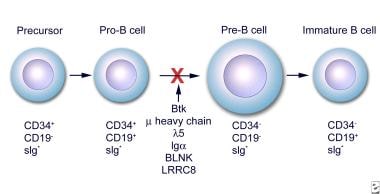
In the absence of mature B cells, patients lack lymphoid tissue and fail to develop plasma cells, the cells that manufacture antibodies. Germinal centers where B cells proliferate and differentiate are poorly developed in all lymphoid tissue, including the spleen. Tonsils, adenoids, peripheral lymph nodes, and Peyer patches in the intestines are all small or absent. The lungs and the lamina propria of the gut lack the normal pattern of lymphocyte distribution. However, biopsy of lymphoid tissue and bone marrow examination are not currently performed in the workup of most cases of XLA and other forms of hypogammaglobulinemia. Animal models of human BTK mutations are confined to mice at this time. Mouse models have milder disease than humans. However, murine models, including knockout and transgenic mice, have been useful in understanding the mechanisms of B-cell production, differentiation, and antibody formation. Murine gene mutations in human counterparts may be associated with a clinical illness different from the illness seen in mice. Although defects may occur in many steps in B-cell development and maturation, resulting in the lack of immunoglobulin production, the most common and well-described defect is the maturation of the pro–B cell to pre–B cell. In the fetal bone marrow, the first committed cell in B-cell development is the early pro–B cell, which is identified by its ability to proliferate in the presence of interleukin-7 (IL-7). These cells develop into late pro–B cells, in which rearrangement of the heavy chain occurs. This rearrangement process requires the recombination-activating genes RAG1 and RAG2, which are controlled by IL-7 and, perhaps, by other factors. When the heavy chain is produced, it is transported to the cell surface by immunoglobulin-a (CD79a) and immunoglobulin-b (CD82) heterodimers or by the surrogate light chain. Progression from this late pro–B-cell stage to the pre–B-cell stage involves the rearrangement and joining of the various segments of the heavy chain. The completion of light- and heavy-chain rearrangement and the presence of surface immunoglobulin M (IgM) results in an immature B cell, which then leaves the bone marrow. Increasing levels of immunoglobulin D (IgD) in the transitional cells finally results in the mature B cell, with both IgM and IgD expressed. The mature B cells circulate between secondary lymphoid organs and migrate into lymphoid follicles of the spleen and lymph nodes in response to further stimuli and various chemokines. T cells stimulate B cells to undergo further proliferation and immunoglobulin class switching, leading to the expression of the various isotypes IgG, immunoglobulin A (IgA), or immunoglobulin E (IgE). Activation of the B-cell receptor (BCR) induces the recruitment of Syk, which phosphorylates BLNK, a contributor to the activation of BTK that affects other intracellular signaling events. Murine B-cell proliferation and differentiation is under the control of BTK, as well as SYK; PAX5; and genes that code for l5, immunoglobulin-a, immunoglobulin-b, g receptor for interleukin-2 (IL-2Rg), lyn, and bcl-2. Mutations in these mouse genes and in the mouse gene for Btk lead to milder forms of B-cell deficiency compared with that of humans with BTK, heavy-chain µH, or l5 mutations. Mutations in the murine IL-7 receptor common g chain also cause mild B-cell deficiency in mice. In contrast, mutations in the human IL-7 common g chain cause X-linked severe combined immunodeficiency (SCID), with normal-to-high levels of B cells expressing CD19. These findings indicate that a defect in any of the steps in B-cell development may be clinically important. Approximately 85% of patients with defects in early B-cell development have XLA.
Frequency
United States
A prevalence of 1 case per 250,000 individuals has been estimated in the United States. However, this number was reviewed prior to the availability of mutational analysis and is generally considered to be an underestimate. New mutations are believed to cause 30-50% of XLA cases.
International
Geneticists believe that the prevalence of XLA is similar among most ethnic groups. Data from France have suggested a prevalence of 1 case per 70,000-90,000 population. The greater frequency in France may well be related to more accurate acquisition of statistics. Black, Japanese, and Malaysian populations have lower reported frequencies of clinical XLA, but whether these frequencies are accurate is debatable because of the genetic mechanisms that cause XLA.
Mortality/Morbidity
Recently identified patients who received intravenous IgG (IVIG) before age 5 years have lower morbidity and mortality rates than previously identified patients who could be treated only with fresh-frozen plasma and intramuscular immunoglobulin, which cannot achieve IgG levels near normal or even above 200 mg/dL. Patients who receive regular IVIG therapy may have a near-normal lifestyle. Men are known to survive into the fifth decade of life. Viral and pulmonary infections cause more than 90% of mortalities. Malignancies are unusual in XLA, although lymphoreticular malignancies associated with XLA were previously reported in tumor registries.
- Chronic enteroviral infections are the most common etiology for early morbidity. Even high-dose IVIG or immunoglobulin administered intrathecally has slowed, but not stopped, the progression of CNS deterioration. Dementia, ataxia, and paresthesias are the common clinical features of meningoencephalitis due to enteroviruses. Other viral causes of death are sporadic. Adenoviruses are well-recognized causes of morbidity and mortality in any patient with immunocompromise. Hepatitis viruses are also a risk; hepatitis C has been transmitted by IVIG preparations with inadequate viral inactivation processes. Overall, viral infections resulted in one half of the deaths that occurred in 3 series.
- Pulmonary infections, both acute and chronic, account for most other deaths. Recurrent pulmonary infections frequently lead to bronchiectasis. Common causative agents include S pneumoniae, H influenzae type b, and Staphylococcus aureus. Burkholderia cepacia and coagulase-negative staphylococci are other significant bacterial agents.
- If present, inflammatory bowel disease is usually chronic in XLA and leads to malnutrition and cachexia and further increases the risk of infection.
Race
Most investigators have studied northern European populations. Although black, Japanese, and Malaysian populations are reported to have lower risks for XLA, geneticists doubt the accuracy of these statistics.
Sex
XLA is a disorder that affects only males. No carrier female with any clinical illness related to the mutated allele has been identified. Girls with absent mature B cells may have autosomal recessive mutations that affect gene products other than those of BTK (see Agammaglobulinemia).
Age
Because XLA is a genetic disorder, male infants can be identified with prenatal diagnosis when the mother has been identified as a carrier. Chorionic villus sampling (CVS) can be performed early in pregnancy, and DNA analysis can be used when the family's exact mutation has been determined. Amniocentesis can be performed later in gestation. Collection of fetal lymphocytes through in utero umbilical cord sampling can be used to enumerate CD19+ B cells and mature T cells using fluorocytometric analysis, although this procedure places the fetus at some risk for mortality (ranging from <1-5%). At birth, cord blood can be sent for fluorocytometric analysis of lymphocyte populations. Quantitative IgG levels are not useful; cord and fetal levels largely measure maternal IgG transported across the placenta.
- Because of passive transplacental acquisition of maternal IgG, newborns have normal serum IgG levels and may not have problems until the IgG is catabolized. Because newborns cannot produce their own immunoglobulin, increased susceptibility to infections usually develops in infants older than about 6 months. Therefore, patients with XLA can clinically present when they are aged 3 months to 5 years. Most cases of XLA are now identified in patients younger than 1 year, depending on the rate of maternal IgG loss and occurrence of infections.
- Patients may also present in the second or third decade of life, although this is uncommon. The oldest age at diagnosis was 51 years. These patients may have milder disease related to the presence of mutated Btk protein rather than complete absence of the protein. Rarely, the individual has mild disease while others with the same mutation have more severe clinical illness.
History
All patients with X-linked agammaglobulinemia (XLA) are males. More than 90% of affected males present with unusually severe or recurrent sinopulmonary infections. Meningitis, osteomyelitis, sepsis, and gastrointestinal tract infectious (eg, gastroenteritis or diarrhea) are less common initial manifestations of XLA.
- Infants typically develop recurrent otitis media, pneumonia, and sinusitis before age 1 year. By mid childhood, chronic sinusitis becomes prevalent, and the prevalence of otitis media decreases.
- Infectious agents involved are usually S pneumonia or H influenzae type b. Both are extracellular encapsulated bacteria. As patients become older, encapsulated bacteria continue to be the most common sources of infection, although staphylococcal infections must also be considered. Neisseria meningitidis and Moraxella catarrhalis, which is not encapsulated, are other bacteria whose portal of entry is the respiratory tract.
- A chronic cough in a patient may indicate a risk for chronic pulmonary disease, which may be restrictive, obstructive, or both.
- Infections due to Mycoplasma and Ureaplasma species have been reported in both adolescents and adults.
- The infant may also have diarrhea that is not completely explained by frequent antibiotic use.
- Many patients have diarrhea caused by Giardia or Campylobacter species, and management of the diarrhea is difficult, even with appropriate therapy.
- Although patients with agammaglobulinemia are usually able to handle viral infections, they are susceptible to certain viruses that replicate in the gastrointestinal tract and then spread to the CNS. This indicates the importance of antibody production in limiting the spread of infections with enteroviruses such as poliovirus, echovirus, and coxsackievirus.
- Patients may present with vaccine-related poliomyelitis after immunization with the live poliovirus vaccine.
- Although prolonged secretions of a virus have been described (up to 637 days postvaccination), based on 3 separate studies, poliovirus carrier status among people with primary immune deficiency appears to be rare and may not manifest with disease. Conversely, enteroviral infections are potentially fatal, whether community-acquired or due to the attenuated vaccine strain of poliovirus.
- Katamura et al (2002) described nonprogressive viral myelitis in a patient and suggested that the prognosis of CNS infections in agammaglobulinemia is not based on the immunoglobulin level alone and that they are not always progressive or fatal.
- The use of intraventricular infusion of immunoglobulin has been well documented in these patients. However, the infusions have not been documented to prevent death due to chronic enteroviral infection of the CNS.
- Invasive fungal and other opportunistic infections remain rare, even in older patients with XLA and debilitating chronic lung or gastrointestinal disease.
- Autoimmune disorders may be associated with infections at the patient's initial presentation or may develop in older patients.
- Inflammatory bowel disease is particularly common.
- Other autoimmune disorders include cytopenias.
- Arthritis indistinguishable from juvenile rheumatoid arthritis (JRA) may be the presenting manifestation in patients with XLA.
- Evaluating for chronic infectious processes is essential. Mycoplasmal infection is a common cause of severe chronic erosive arthritis. Patients with mild cases rapidly respond to antimicrobial therapy, such as tetracycline. In more severe cases, arthritis may improve following treatment with IVIG.
- Interestingly, malignancies are rare and are not currently a significant cause of mortality.
- A family history of other affected males should be sought because approximately one third of affected patients have an affected family member. However, female carriers have no clinical manifestations related to their mutated allele.
Physical
Infants and older patients with XLA typically appear healthy. In healthy infants, lymphoid tissues such as tonsils and peripheral lymph nodes are poorly developed; therefore, the absence of these tissues is not noted until patients are toddlers. A poor local inflammatory response also compromises the usefulness of physical examination findings. For example, patients may have hypoplastic tonsils and lymph nodes that fail to undergo normal hypertrophy in response to infection. Therefore, physicians should suspect XLA in male infants who have unusually severe pneumonias associated with bacteremia or who have unusually frequent otitis media, chronic cough, or congestion. The last 2 symptoms typically respond to antibiotic therapy in a timely fashion but may soon recur.
- In a study by Sikora and Lee (2003), up to 48% of patients developed sinusitis. Upon examination, patients may have hypoplastic tonsils and lymph nodes that fail to undergo normal hypertrophy in response to infection.
- Staphylococcal conjunctivitis and skin infections are less common than sinopulmonary infections, but they may also be part of the initial presentation in patients with XLA. These staphylococcal infections are less useful for discriminating XLA from other illnesses because they are frequently present in immunocompetent individuals and in individuals with other primary immunodeficiencies such as hyperimmunoglobulin E (hyper-IgE) syndrome and other antibody deficiencies.
- Diarrhea caused by Giardia species is part of the classic presentation in any patient with antibody deficiency disease. Patients with XLA have an increased risk for other infectious etiologies of diarrhea, including Campylobacter jejuni, Shigella species, and Salmonella species. Infections due to these organisms seem to respond less well to medical therapy and also seem to become chronic more often in patients with antibody deficiency diseases than in others.
- Rarely, patients with XLA also have a short stature caused by a deficiency in growth hormone. A newly discovered mutation in myeloid elf-1–like factor may be responsible for the disease (Stewart, 2005). These patients must be distinguished from patients with XLA who have poor growth secondary to malnutrition.
Causes
As discussed in Pathophysiology, the disease is caused by impaired function of Btk. The exact mutation of BTK is detected with mutational analysis using single-strand conformation polymorphism (SSCP), chemical cleavage of mismatch (CCM), denaturing gradient gel electrophoresis (DGGE), reverse transcriptase polymerase chain reaction (RT-PCR), or direct DNA analysis. DNA analysis has the advantage of easier transport of purified DNA from the patient and can be used to detect splice defects in addition to the more common missense and nonsense mutations, deletions, or insertions. If a mutation in BTK cannot be found, the absence of BTK RNA or protein is considered the criterion standard for validating a diagnosis of XLA. Mutations in BTK are found in all areas of the gene. The pleckstrin homology region, the tyrosine kinase region, and areas referred to as Src homology domains (SH1, SH2, and SH3) are all important for gene function. Defects in these exons are most common. Splice defects that involve introns account for fewer than 20% of the abnormalities. Rare mutations in the promoter upstream region have been described. In some milder cases of XLA, the Btk protein is still present, although in a mutated form and in lesser amounts. However, no genotype-phenotype correlation has been found. Mutations of BTK account for 85-90% of patients with early onset agammaglobulinemia and an absence of B cells.
Agammaglobulinemia
Common Variable Immunodeficiency
Growth Hormone Deficiency
IgA and IgG Subclass Deficiencies
Lymphoproliferative Disorders
Severe Combined Immunodeficiency
T-Cell Disorders
Transient Hypogammaglobulinemia of Infancy
X-linked Immunodeficiency With Hyper IgM
Other Problems to be Considered
Diagnosing X-linked agammaglobulinemia (XLA) in male infants initially requires the exclusion of combined T- and B-lymphocyte deficiency. Diagnoses of SCID forms that involve T cells require immediate intervention to allow stem cell transplantation or even gene therapy. Fluorocytometric measurement of T- and B-lymphocyte populations and T-cell function assays are essential to rule out a broader defect of cell-mediated immunity.
In patients with no other affected family members, autosomal forms of agammaglobulinemia must be considered when the CD19 expression on B cells is less than 19% in a male patient (although 30-50% of XLA cases are believed to arise from new mutations). Currently, mutations in the genes for the IGHM, immunoglobulin-a, or lambda-5 (IGLL1) are unusual etiologies for agammaglobulinemia with absent CD19+ B cells. Mutations in other genes are predicted based on genetic defects in mice. In addition to BTK, murine B-cell proliferation and differentiation are under the control of SYK; PAX5; and genes that code for IL-7, l5, immunoglobulin-b, IL-2Rg, lyn, and bcl-2. Therefore, mutations in the human genes for these proteins may be found in the future as etiologies for agammaglobulinemia.
Other primary immunodeficiency diseases occasionally need to be considered, but assessment of B- and T-lymphocyte markers almost always allows the distinction of XLA from these other disorders. Patients with X-linked hyper-IgM or common variable immunodeficiency (CVID) may appear clinically similar to patients with XLA. Growth hormone deficiency associated with absent B cells is rare. Mutations in BTK may or may not be found in these patients. Another rare syndrome of absent B cells is associated with intrauterine growth retardation, microcephaly, and progressive pancytopenia. No mutation in BTK or several other genes needed for B-cell proliferation has been detected in this syndrome.
Lab Studies
- Measurement of IgG using quantitative techniques such as nephelometry supports the diagnosis of X-linked agammaglobulinemia (XLA) when the IgG level is less than 100 mg/dL. Confirmation of XLA requires low ( <1%) or absent expression of CD19+ lymphocytes, low or absent expression of the heavy-chain µ on the surface, and the presence of normal-to-increased numbers of mature T lymphocytes.
- Quantitative measurements of IgG, IgM, IgA, and IgE are readily available and inexpensive and require little blood.
- IgG levels are less than 100 mg/dL in most patients with XLA who are aged 6 months or older. However, in some patients with XLA, IgG levels may be as high as 200-300 mg/dL.
- Unlike IVIG, intramuscular immunoglobulin administration does not significantly affect this level.
- IgM and IgA are usually undetectable in patients of any age. In patients with XLA, levels are usually far below age-related reference ranges; however, in mild cases of XLA and in other antibody deficiencies, immunoglobulin levels must be carefully compared with age-related reference ranges.
- IgG subclass levels are not usually required because the total IgG is severely deficient. Determination of functional antibody levels as noted below is more appropriate in the rare case in which the total IgG level is indeterminate.
- Fluorocytometric analysis (ie, flow cytometry) of B- and T-lymphocyte markers must be performed to confirm XLA diagnosis.
- Absent or low ( <1%) CD19+ B cells confirm the diagnosis of XLA in male patients. Numbers of CD4+ and CD8+ T cells are often increased or sometimes normal, but they are rarely low. Low T-cell percentages suggest a diagnosis of SCID or another T-cell disorder. In an infant or child, the presence of low absolute T-cell numbers suggests a form of SCID, not XLA. An inverted CD4/CD8 T-cell ratio occurs in some types of SCID and in human immunodeficiency virus (HIV) infection.
- Markers for surface immunoglobulin expression are also customarily obtained using fluorocytometric analysis. Antibodies directed against the heavy-chain constant region of IgG, IgA, IgM, and IgD are used to detect these isotypes. The first 2 are expected to be absent, although some expression of IgM and IgD may be present. Cells that express IgM alone, without IgD, are considered less differentiated and, therefore, are more likely to be present.
- Specific IgG antibody responses to T-cell–dependent and T-cell–independent antigens should also be measured.
- Because the serum IgG level is contaminated from the presence of maternal antibody (due to transplacental transmission) in young infants ( <6 mo), the physician cannot rely on immunoglobulin level determinations. However, obtaining specific serum diphtheria and tetanus antibody levels before and after (3-4 wk) a diphtheria, pertussis, and tetanus vaccine is administered is helpful. If specific diphtheria and tetanus levels are increased, the infant is able to produce antigen-specific antibodies, and XLA is unlikely.
- Tetanus, diphtheria, and the conjugated H influenzae type b antigens require T-cell–dependent IgG antibody responses.
- Unconjugated 23-valent pneumococcal vaccine elicits a T-cell–independent IgG antibody response.
- IgM antibody function is assessed by measuring isohemagglutinin titers, antibodies directed against blood group A and B antigens. These antibody levels are age-related.
Imaging Studies
- Plain radiographic studies may contribute to the diagnosis of XLA but are not an essential part of the workup.
- Plain radiographs of the head may reveal the absence of tonsillar and adenoid tissues.
- Chest radiographs may be used to diagnose more extensive infection or a chronic infection that is not clinically apparent.
- Imaging studies are primarily used to assess chronic sinopulmonary disease.
- CT scanning of the sinuses and the lungs is more effective than plain radiography in documenting disease progression in these locations. One study found bronchial lesions in 58% of patients with primary humoral immunodeficiency; bronchial wall thickening or bronchiectasis was observed in approximately 40% of patients (Gharagozlou, 2006).
- Some physicians advocate using brain MRI in patients with agammaglobulinemia or hypogammaglobulinemia who develop unexplained neurological symptoms and signs of meningeal inflammation despite extensive investigation of cerebral spinal fluid (CSF), including polymerase chain reaction (PCR) analyses.
Other Tests
- The slowly progressive nature of chronic lung disease makes pulmonary function tests (PFTs) essential in XLA. These tests include spirometry, diffusion capacity tests, and lung volume tests. They are recommended annually. Children younger than 5 years may not be able to reliably undergo these tests.
- PFT findings are evaluated upon diagnosis because the literature suggests that decreased parameters upon diagnosis of hypogammaglobulinemia correlate with chronic and progressive pulmonary disease.
- Both restrictive and obstructive patterns of chronic lung disease may occur in antibody deficiency diseases.
Procedures
- Bronchoscopy is an important adjunct for diagnosing pulmonary infections because it obviates most contamination with mouth flora and because it can be used to procure sputum from infants and others who are unable to voluntarily cough it out.
- Examination of the gastrointestinal tract using endoscopy and colonoscopy is necessary to assess the extent of inflammatory bowel disease. The biopsy results, videotapes, and photographs obtained from these procedures can be used to delineate the disease.
Histologic Findings
Inflammatory responses are the most common findings in tissue biopsy samples obtained to evaluate infection. Inflammation is usually nonspecific and is not helpful in distinguishing specific infectious agents. The presence of pleocytosis in the spinal fluid is a special circumstance in which inflammation is associated with specific infection by an enterovirus. Lymphoid tissues lack germinal centers, and plasma cells are absent in bone marrow and the lamina propria of the gut.
Medical Care
The mainstay therapy for X-linked agammaglobulinemia (XLA) and other primary antibody deficiencies is IVIG administration, which has supplanted intramuscular immunoglobulin injections in most instances. Subcutaneous IgG (SCIG) administration is also possible and offers the advantage of providing IgG levels that are relatively constant compared with the peaks and troughs observed with monthly intravenous (IV) therapy. Numerous studies have shown that IVIG and SCIG given in equal doses provide equal infection prevention in patients with primary antibody deficiency syndromes (Chinen, 2004). A major advantage is that SCIG can be administered at home. However, subcutaneous administration causes frequent local discomfort in various sites in the abdomen, thighs, upper arms, and/or lateral hips. In addition, whether home health care is appropriate for each patient must be evaluated. Not only is compliance an issue, but the lack of close medical observation is also a concern because these patients no longer need to come to the hospital for monthly infusions.
- Fresh frozen plasma has been used in the past but has the obvious disadvantage of the potential transmission of infectious agents, both known and unknown, despite extensive screening in blood banks.
- IVIG doses are usually 400-600 mg/kg/mo or more. The administration interval is usually every 3-4 weeks, based on the average IgG half-life of 21-28 days. The dose and interval are chosen based on the clinical response. Maintaining a trough serum IgG level of approximately 500-800 mg/dL is necessary.
- Clinical situations in which higher IVIG doses are given include, but are not limited to, chronic pulmonary infection and chronic enteroviral infection. Therefore, patients with bronchiectasis may need higher doses (eg, 600 mg/kg).
- Antibiotics are frequently required to manage the infectious complications of antibody deficiencies. Obtain appropriate cultures to identify causative microorganisms and to establish sensitivities; these results allow for optimal antibiotic therapy.
- Because most infections are sinopulmonary and involve encapsulated bacterial agents, first-line oral antibiotics include amoxicillin, amoxicillin/clavulanate, and cefuroxime axetil. Intravenous ceftriaxone may be required for chronic pulmonary infection, acute severe pneumonia, or sepsis.
- As with other patient populations, the risk for penicillin-resistance among S pneumoniae is an increasing concern; ceftriaxone, cefotaxime, and vancomycin are used to treat penicillin-resistant organisms.
- Less frequent, but significant, infectious agents include Mycoplasma and Ureaplasma species; these organisms are best treated with clarithromycin, which is generally better tolerated than erythromycin in terms of adverse gastrointestinal effects. Clarithromycin is more effective than azithromycin.
- Antibiotic therapy for antibody deficiencies is in the high end of the dose range for immunocompetent individuals, and the duration is the same or longer. Some clinicians advocate rotating the use of antibiotics in select patients with bronchiectasis and frequent exacerbations.
- Opportunistic organisms are uncommon in XLA, but the risk of infection is increased, particularly in the presence of chronic debilitating pulmonary disease or (more rarely) chronic colitis. Pneumocystis carinii and B cepacia can be etiologic agents in these settings. Trimethoprim-sulfamethoxazole is the first-line drug for both.
- Recently released antibiotics such as linezolid for penicillin-resistant pneumococci are presumably effective, although results in primary immunodeficiency diseases are not yet published.
- Many infections require interventions in addition to antibiotics.
- Recurrent or chronic pulmonary infections require annual PFTs. Children older than 5 years should be able to undergo these tests.
- Bronchodilators, inhaled corticosteroids, and leukotriene modifiers are integral in the therapy of many patients.
- Sinusitis is typically chronic in older patients and requires therapy with nasal steroids, saline sprays, and surgical intervention in some cases.
- Chronic eczema is treated with moisturizing creams and topical steroids, as in immunocompetent patients. Uncontrolled atopic dermatitis is associated with a greater risk for superinfection than that of topical steroid use.
- Nutritional intervention or supplementation and the use of multivitamin and mineral preparations are usually unnecessary in XLA, although some patients with autoimmune colitis occasionally require such therapy. Determining the etiology of the diarrhea (often infectious) is more important.
- Liver function tests are recommended annually because autoimmune hepatitis and hepatitis C may progress subclinically.
Surgical Care
- Patients with chronic sinusitis who may benefit from surgical drainage procedures usually require a consultation with an otolaryngologist, as do children with recurrent otitis media who may improve with the placement of tympanostomy tubes.
- Surgical interventions for pulmonary infections include diagnostic and therapeutic thoracentesis, lung biopsy, and care for lung abscesses and bronchopleural fistulas.
- Gastrointestinal disorders usually do not require surgical intervention and are managed by a gastroenterologist.
Consultations
A pulmonologist, allergist/immunologist, infectious disease specialist, gastroenterologist, and/or hematologist may be consulted to manage specific complications.
- Pulmonologists are particularly valuable in evaluating radiological findings, assisting with bronchodilator therapy, and interpreting detailed PFT results.
- Allergy/immunology specialists are trained in the diagnosis and management of primary immunodeficiency disorders and are particularly valuable in diagnosing XLA and guiding IVIG therapy.
- Infectious disease specialists are often consulted to determine the infectious etiologies, and they can recommend first-line antibiotics.
- Gastroenterologists are essential in the diagnosis and management of inflammatory bowel disease.
- Hematologists and clinical immunologists must collaborate to treat autoimmune cytopenias because immunosuppressive therapies for these hematologic disorders further compromise immune function in patients with XLA.
Diet
Most children and adults with XLA should maintain a normal and nutritious diet.
- Patients with inflammatory bowel disease may require a low-fat diet and vitamin supplementation.
- Nutritional supplementation with products such as PediaSure, Ensure, or Vivonex is necessary for some patients with persistent malabsorption and malnutrition.
Activity
Encourage patients with XLA to exercise actively, attend school, and maintain employment. Discourage patients from smoking, exposing themselves to smoke, and using illegal drugs. Instruct them to avoid unnecessary exposure to infectious agents. However, patients may generally benefit from outdoor activities. Considering the relatively good prognosis of XLA, the physician should encourage patients with this immunodeficiency disease to have a positive mental attitude.
Drug Category: Immune globulin The overall consensus among clinical immunologists regarding replacement therapy with IVIG in patients with primary immune deficiencies is that an IVIG dose of 400-600 mg/kg/mo or a dose that maintains trough serum IgG levels greater than 500 mg/dL is desirable. The number and severity of infectious complications is inversely correlated with the dose of IVIG administered. A recent consensus statement suggests that maintaining trough IgG levels greater than 800 mg/dL prevents serious bacterial illness and enteroviral meningoencephalitis (Orange, 2006). Patients with X-linked agammaglobulinemia (XLA) and meningoencephalitis require higher doses (1 g/kg) and, perhaps, intrathecal therapy. SCIG administration is also possible. The recommended dose is 100-200 mg/kg SC every week. The initial weekly SC dose can be calculated by multiplying the previous IVIG dose by 1.37 and then dividing that dose into weekly doses, based on the patient's previous IVIG treatment interval. For example, if IVIG dosage is 200 mg/kg every 3 weeks, multiply 200 mg/kg by 1.37 and then divide by 3 to get a calculated dose of 91 mg/kg SC every week. The calculated SCIG dose provides systemic exposure similar to that of the previous IVIG dose. SCIG dose should be initiated 1 week after the last IVIG dose. For SCIG administration, do not exceed 15 mL (3200 mg) per injection site, and the administration rate is not to exceed 20 mL/h per injection site. Preinfusion (trough) serum IgG levels are measured every 3 months until a steady state is achieved and then every 6 months if the patient is stable. These measurements may be helpful in adjusting the dose of IVIG or SCIG to achieve adequate serum levels. For persons in whom the catabolism of infused IgG is high, more frequent (eg, every 2-3 wk) IV infusions of smaller doses may maintain the serum level within the reference range. The rate of elimination of IgG may be higher during a period of active infection. Therefore, serum IgG levels may need to be measured more frequently, doses may need to be increased, or shorter intervals may be required. For replacement therapy in patients with primary immune deficiency, all brands of IVIG are probably equivalent, although viral inactivation processes (eg, solvent detergent vs pasteurization and liquid vs lyophilized) differ. The choice of brand may depend on the hospital or home care formulary and on local availability and cost. In addition, whether home SCIG administration is appropriate must be determined. In patients who have IV access problems or who develop adverse effects with IVIG administration (eg, headache, myalgias), SCIG is an alternative. Questions regarding compliance need to be answered. The requirement of weekly infusions and local reactions at the site of infusions are disadvantages. In addition, contraindications include patients with thrombocytopenia or other bleeding disorders and patients who are receiving anticoagulant therapy. SCIG was shown to be equal in efficacy to the same dose administered IV. The dose, manufacturer, and lot number should be recorded for each infusion to facilitate review for adverse events or other consequences. Recording of all adverse effects that occur during the infusion is crucial. Periodic liver and renal function testing, approximately 3-4 times yearly, is also recommended. The US Food and Drug Administration (FDA) advises that, in patients at risk for renal failure, the recommended doses should not be exceeded and that infusion rates and concentrations should be at the practicable minimum levels. Examples of patients at risk for renal failure include patients older than 65 years; patients who use nephrotoxic drugs; and patients with preexisting renal insufficiency, diabetes mellitus, volume depletion, sepsis, or paraproteinemia. The initial treatment should be administered under the close supervision of experienced personnel. The risk of adverse reactions in the initial treatments is high, especially in patients with infections and in those in whom immune complexes form. In patients with active infection, infusion rates may need to be slower, and the dose may need to be halved (ie, to 200-300 mg/kg). The remaining half should be administered the next day to achieve a full dose. Treatment should not be discontinued. After normal serum IgG levels are achieved, adverse reactions are uncommon unless patients have active infections. With the new generation of IVIG products, adverse effects are reduced. Adverse effects include tachycardia, chest tightness, back pain, arthralgia, myalgia, hypertension or hypotension, headache, pruritus, rash, and low-grade fever. More serious reactions include dyspnea, nausea, vomiting, circulatory collapse, and loss of consciousness. Patients with more profound immunodeficiency and patients with active infections have more severe reactions. The activation of complement due to IgG aggregates in the IVIG and the formation of immune complexes are thought to be related to the adverse reactions. The formation of oligomeric or polymeric IgG complexes that interact with crystallizable fragment (Fc) receptors and that trigger the release of inflammatory mediators is a cause. Most adverse reactions are rate related. Slowing the infusion rate or discontinuing therapy until symptoms subside may diminish the reaction. Pretreatment with ibuprofen (5-10 mg/kg every 6-8 h), acetaminophen (15 mg/kg/dose; not to exceed 1000 mg/dose or 2.6 g/24 h if age <12 y), diphenhydramine (1 mg/kg/dose; not to exceed 50 mg/dose), and/or hydrocortisone (6 mg/kg/dose; not to exceed 100 mg/dose) 1 hour before the infusion may prevent adverse reactions. In some patients with a history of severe adverse effects, therapy with analgesics and antihistamines may be repeated. Acute renal failure is a rare but significant complication of IVIG treatment. Reports suggest that IVIG products with sucrose as a stabilizer may be associated with a greater risk for this renal complication. Acute tubular necrosis, vacuolar degeneration, and osmotic nephrosis suggest osmotic injury to the proximal renal tubules. The infusion rate for sucrose-containing IVIG should not exceed 3 mg/kg/min based on the amount of sucrose. Risk factors for this adverse reaction include preexisting renal insufficiency, diabetes mellitus, dehydration, age older than 65 years, sepsis, paraproteinemia, and concomitant use of nephrotoxic agents. For patients at increased risk, monitoring the BUN and creatinine levels before starting the treatment and prior to each infusion is necessary. If the patient's renal function deteriorates, the treatment should be discontinued. IgE antibodies to IgA have rarely been reported to cause severe transfusion reactions in patients with IgA deficiency. A few cases of true anaphylaxis have been reported in patients with selective IgA deficiency and CVID who developed IgE antibodies to IgA after treatment with immunoglobulin. However, this is rare in actual experience. In addition, this is not a problem in patients with XLA or in patients with SCID. Caution should be exercised in patients with IgA deficiency ( <7 mg/dL) who need IVIG. (IgA levels can be low in patients with selective IgA deficiency, in patients with CVID, and in some patients with IgG-subclass deficiencies.) IVIG preparations with low concentrations of contaminating IgA are advised in these situations (see the Table below). Table 1. Immune Globulin, Intravenous
| Brand(Manufacturer) | Manufacturing Process | pH | Additives* | Parenteral Form and Final Concentrations | IgA Content mcg/mL | Carimune NF (ZLB Behring) | Kistler-Nitschmann fractionation; pH 4.0, nanofiltration | 6.4-6.8 | 6% solution: 10% sucrose, <20 mg NaCl/g protein | Lyophilized powder 3, 6, 9, 12% | Trace | Flebogamma (Grifols USA) | Cohn-Oncley fractionation, PEG precipitation, ion-exchange chromatography, pasteurization | 5.1-6.0 | Sucrose free, contains 5% D-sorbitol | Liquid 5% | <50 | Gammagard Liquid 10% (Baxter Bioscience) | Cohn-Oncleycold ethanolfractionation,cation and anion exchange chromatography,solvent detergent treated, nanofiltration, low pH incubation | 4.6-5.1 | 0.25 M glycine | Ready-for-use liquid 10% | 37 | Gammar-P IV (ZLB Behring) | Cohn-Oncley fraction II/III;ultrafiltration; pasteurization | 6.4-7.2 | 5% solution: 5% sucrose, 3% albumin, 0.5% NaCl | Lyophilized powder 5% | <20 | Gamunex (Talecris Biotherapeutics) | Cohn-Oncley fractionation, caprylate-chromatography purification, cloth and depth filtration, low pH incubation | 4.0-4.5 | Contains no sugar, contains glycine | Liquid 10% | 46 | Iveegam EN (Baxter Bioscience) | Cohn-Oncley fraction II/III; ultrafiltration; pasteurization | 6.4-7.2 | 5% solution: 5% glucose, 0.3% NaCl | Lyophilized powder 5% | <10 | Polygam S/D Gammagard S/D (Baxter Bioscience for the American Red Cross) | Cohn-Oncley cold ethanol fractionation,followed by ultracentrafiltration and ion exchangechromatography; solvent detergent treated | 6.4-7.2 | 5% solution: 0.3% albumin, 2.25% glycine, 2% glucose | Lyophilized powder 5%, 10% | <1.6 (5% solution) | Octagam (Octapharma USA) | Cohn-Oncley fraction II/III;ultrafiltration; low pH incubation; S/D treatment pasteurization | 5.1-6.0 | 10% maltose | Liquid 5% | 200 | Panglobulin (Swiss Red Cross for the American Red Cross) | Kistler-Nitschmann fractionation; pH 4.0, trace pepsin, nanofiltration | 6.6 | Per gram of IgG: 1.67 g sucrose, <20 mg NaCl | Lyophilized powder 3, 6, 9, 12% | 720 |
*IVIG products containing sucrose are more often associated with renal dysfunction, acute renal failure, and osmotic nephrosis, particularly with preexisting risk factors (eg, history of renal insufficiency, diabetes mellitus, age >65 y, dehydration, sepsis, paraproteinemia, nephrotoxic drugs). Contents of table are adapted from the following sources:
- Manufacturers' literature.
- Siegel J. The Product: All intravenous immunoglobulins are not equivalent. Pharmacotherapy. 2005; 25(11 Pt 2):78S-84S.
- Shah S. Pharmacy consideration for the use of IGIV therapy. Am J Health-Syst Pharm. 2005; 62(Suppl 3):S5-11.
Table 2. Immune Globulin, Subcutaneous
| Brand(Manufacturer) | Manufacturing Process | pH | Additives | ParenteralForm and FinalConcentrations | IgA Content mcg/mL | Vivaglobin (ZLB Behring) | Cold ethanol fractionation; pasteurization | 6.4-7.2 | 2.25% glycine, 0.3% NaCl | Liquid 16% (160 mg/mL) | <50 mcg/mL |
Drug Category: Antibiotics
Antibiotics are most commonly used to treat sinopulmonary infections caused by polysaccharide-encapsulated bacteria (S pneumoniae, H influenzae type b).
Amoxicillin, amoxicillin/clavulanate, and cefuroxime axetil are the drugs of choice for the common extracellular bacteria that cause sinopulmonary infections. Ceftriaxone is used in patients with more severe sinopulmonary infections, in patients who respond poorly to oral antibiotics, and in patients with significant bronchiectasis. Ceftriaxone is also used for penicillin-resistant pneumococcal infections. Clarithromycin covers mycoplasmal infections and many bacterial sinopulmonary infections. Vancomycin is chosen in patients who are allergic to cephalosporins and when the isolate is resistant to penicillin. Fluoroquinolones are valuable for respiratory pathogens, including staphylococci, and in patients with multiple antibiotic allergies.
| Drug Name | Amoxicillin (Trimox, Amoxil, Biomox) |
| Description | Interferes with synthesis of cell wall mucopeptides during active multiplication, resulting in bactericidal activity against susceptible bacteria. |
| Adult Dose | 500 mg PO tid |
| Pediatric Dose | 50-80 mg/kg/d PO divided bid/tid; not to exceed 2 g/d |
| Contraindications | Documented hypersensitivity |
| Interactions | Reduces the efficacy of oral contraceptives |
| Pregnancy | B - Usually safe but benefits must outweigh the risks.
|
| Precautions | Adjust dose in renal impairment; may enhance chance of candidiasis |
| Drug Name | Amoxicillin/clavulanate (Augmentin) |
| Description | Drug combination treats bacteria resistant to beta-lactam antibiotics. In children > 3 mo, base dose on amoxicillin content. Because of different amoxicillin-clavulanic acid ratios in 250-mg tab (250:125) and in 250-mg chewable tab (250:62.5), do not use 250-mg tab until child weighs >40 kg |
| Adult Dose | 875 mg PO bid |
| Pediatric Dose | <40 kg: 20-40 mg/kg/d PO divided bid >40 kg: Administer as in adults |
| Contraindications | Documented hypersensitivity |
| Interactions | Coadministration with warfarin or heparin increases risk of bleeding |
| Pregnancy | B - Usually safe but benefits must outweigh the risks.
|
| Precautions | Adjust dose in renal impairment; may enhance risk of candidiasis |
| Drug Name | Cefuroxime axetil (Ceftin) |
| Description | Second-generation cephalosporin that maintains gram-positive activity of first-generation cephalosporins; adds activity against Proteus mirabilis, H influenzae, Escherichia coli, Klebsiella pneumoniae, and M catarrhalis.
|
| Adult Dose | 500 mg PO bid |
| Pediatric Dose | Suspension: 30 mg/kg/d PO divided bid; not to exceed 500 mg/d Tablets: 250 mg PO q12h |
| Contraindications | Documented hypersensitivity |
| Interactions | Disulfiramlike reactions may occur when alcohol is consumed within 72 h of dose; may increase hypoprothrombinemic effects of anticoagulants; may increase nephrotoxicity in patient receiving potent diuretics such as loop diuretics; coadministration with aminoglycosides increases nephrotoxic potential |
| Pregnancy | C - Safety for use during pregnancy has not been established.
|
| Precautions | Administer half dose if CrCl is 10-30 mL/min and one-quarter dose if <10 mL/min |
| Drug Name | Ceftriaxone (Rocephin) |
| Description | Third-generation cephalosporin with broad-spectrum activity; efficacy against resistant organisms. Arrests bacterial growth by binding to >1 penicillin-binding proteins. |
| Adult Dose | 2 g IV q12h |
| Pediatric Dose | 100-150 mg/kg/d IV divided q12h |
| Contraindications | Documented hypersensitivity |
| Interactions | Probenecid may increase levels; coadministration with ethacrynic acid, furosemide, and aminoglycosides may increase nephrotoxicity |
| Pregnancy | B - Usually safe but benefits must outweigh the risks.
|
| Precautions | Adjust dose in renal impairment; caution in breastfeeding women, patients <2 mo, and those with allergy to penicillin |
| Drug Name | Clarithromycin (Biaxin) |
| Description | Inhibits bacterial growth, possibly by blocking dissociation of peptidyl tRNA from ribosomes, causing RNA-dependent protein synthesis to arrest. |
| Adult Dose | 500 mg PO bid |
| Pediatric Dose | 15 mg/kg/d PO divided bid |
| Contraindications | Documented hypersensitivity; coadministration of pimozide |
| Interactions | Toxicity increases with coadministration of fluconazole and pimozide; coadministration with rifabutin or rifampin decreases effects and may increase adverse effects; may increase toxicity of anticoagulants, cyclosporine, tacrolimus, digoxin, omeprazole, carbamazepine, ergot alkaloids, triazolam, HMG CoA–reductase inhibitors; plasma levels of certain benzodiazepines may increase, prolonging CNS depression; arrhythmias and increase in QTc intervals occur with disopyramide; coadministration with omeprazole may increase plasma levels of both agents |
| Pregnancy | C - Safety for use during pregnancy has not been established.
|
| Precautions | Coadministration with ranitidine or bismuth citrate not recommended with CrCl <25 mL/min; give half dose or increase dosing interval if CrCl <30 mL/min; diarrhea may be sign of pseudomembranous colitis; superinfections may occur with prolonged or repeated antibiotic therapies |
| Drug Name | Vancomycin (Lyphocin, Vancocin, Vancoled) |
| Description | Potent antibiotic directed against gram-positive organisms and active against enterococcal species. Indicated for patients who cannot receive penicillins and cephalosporins, in patients in whom these failed, or in those with infections due to resistant staphylococci. To prevent toxicity, current recommendation is to assay vancomycin trough levels after third dose with sample drawn 0.5 h before next dose. Use CrCl to adjust dose in renal impairment. |
| Adult Dose | 500 mg to 2 g/d IV divided tid/qid |
| Pediatric Dose | 40 mg/kg/d IV divided tid/qid |
| Contraindications | Documented hypersensitivity |
| Interactions | Erythema, histaminelike flushing, and anaphylactic reactions may occur when administered with anesthetic agents; taken concurrently with aminoglycosides, risk of nephrotoxicity may increase above that with aminoglycoside monotherapy; effects in neuromuscular blockade may be enhanced when coadministered with nondepolarizing muscle relaxants |
| Pregnancy | C - Safety for use during pregnancy has not been established.
|
| Precautions | Caution in renal failure and neutropenia; red man syndrome caused by too-rapid IV infusion (dose given over a few min) but rare when dose given as 2-h administration or as PO or IP; red man syndrome is not an allergic reaction |
Drug Category: Bronchodilators
Inhaler bronchodilator therapy is the mainstay of pulmonary care in most patients with XLA. A combination of a beta2-agonist (eg, albuterol, salmeterol) with a high-potency steroid (eg, budesonide, fluticasone) is conventional care.
Inhalers are used to relieve bronchoconstriction and decrease the inflammatory response in the respiratory tree. Both pulmonary and nasal inhalers may be needed. Inhaler use is hampered in young children and in others who cannot understand the technique of administration and in older individuals who are unable to achieve forceful inhalation. Adding a spacer is customary to improve coordination in children. If patients cannot reliably use a metered-dose inhaler, a nebulizer may be an option. Steroid inhalation is followed by rinsing the mouth to prevent thrush.
| Drug Name | Albuterol (Proventil, Ventolin) |
| Description | Relaxes bronchial smooth muscle by action on beta2-receptors with little effect on cardiac muscle contractility. Is also available as a solution for nebulization. |
| Adult Dose | 2 inhalations q4-6h; not to exceed 12 inhalations/d |
| Pediatric Dose | MDI: <12 years: 1-2 inhalations qid with tube spacer >12 years: Administer as in adults Nebulizer: <5 years: Dilute 0.25-0.5 mL (1.25-2.5 mg) of 0.5% inhalation solution in 1-2.5 mL 0.9% NaCl and administer via nebulizers q4-6h >5 years: Administer as in adults |
| Contraindications | Documented hypersensitivity |
| Interactions | Beta-adrenergic blockers antagonize effects; inhaled ipratropium may increase duration of bronchodilatation due to albuterol; cardiovascular effects may increase with MAOIs, inhaled anesthetics, tricyclic antidepressants, and sympathomimetic agents |
| Pregnancy | C - Safety for use during pregnancy has not been established.
|
| Precautions | Caution in hyperthyroidism, diabetes mellitus, and cardiovascular disorders |
| Drug Name | Salmeterol (Serevent Diskus) |
| Description | Can relieve bronchospasms by relaxing the smooth muscles of the bronchioles. Effect may also facilitate expectoration. Each actuation delivers 50 mcg. |
| Adult Dose | 1 inhalation bid at least 12 h apart |
| Pediatric Dose | <4 years: Not established >4 years: Administer as in adults |
| Contraindications | Documented hypersensitivity; angina, tachycardia, and cardiac arrhythmias associated with tachycardia |
| Interactions | Concomitant use of beta-blockers may decrease bronchodilating and vasodilating effects of beta agonists such as salmeterol; concurrent administration with methyldopa may increase pressor response; coadministration with oxytocic drugs may result in severe hypotension; coadministration with diuretics may produce ECG changes and worsen hypokalemia |
| Pregnancy | C - Safety for use during pregnancy has not been established.
|
| Precautions | Not indicated to treat acute symptoms; black box FDA warning states chronic use may result in increased asthma morbidity and mortality, use only as additional therapy for patients not adequately controlled with other asthma-controller medications (eg, low- to medium-dose inhaled corticosteroids) or patients whose disease severity clearly warrants initiation of treatment with 2 maintenance therapies, including salmeterol |
| Drug Name | Formoterol (Foradil) |
| Description | Can relieve bronchospasms by relaxing smooth muscles of bronchioles in conditions associated with bronchitis, emphysema, asthma, or bronchiectasis. Effect may also facilitate expectoration. Shown to improve symptoms and morning peak flows. Incidence of side effects higher when administered at more frequent doses than recommended. Bronchodilating effect lasts >12 h. Use in addition to regular use of anticholinergic agents. Useful in cases in which bronchodilators are used frequently. Available as PO inhalant powder cap and administered via Aerolizer inhaler. |
| Adult Dose | 12 mcg inhaled (12 mcg/actuation) bid at least 12 h apart |
| Pediatric Dose | <5 years: Not established >5 years: Administer as in adults |
| Contraindications | Documented hypersensitivity; angina; acutely deteriorating asthma; cardiac arrhythmias associated with tachycardia |
| Interactions | Concomitant use of beta-blockers may decrease bronchodilating and vasodilating effects of beta agonists; concurrent administration with methyldopa may increase pressor response; coadministration with oxytocic drugs may result in severe hypotension; ECG changes and hypokalemia resulting from diuretics, corticosteroids, or theophylline derivatives may worsen; drugs that widen QTc interval (eg, quinidine, procainamide, pimozide, moxifloxacin, sparfloxacin, gatifloxacin, sotalol, thioridazine, amiodarone) may potentiate cardiovascular side effects; concomitant use with other beta-adrenergic agonists may result in additive effects |
| Pregnancy | C - Safety for use during pregnancy has not been established.
|
| Precautions | Not indicated to treat acute asthmatic symptoms; not a substitute for inhaled corticosteroids; adverse effects include paroxysmal bronchospasm, tremors, nervousness, and tachycardia; caution in coronary insufficiency, arrhythmias, hypertension, diabetes mellitus, hyperthyroidism; higher incidence of cardiovascular risks with doses >12 mcg bid; black box FDA warning states chronic use of long-acting beta2-adrenergic inhalers may result in increased asthma morbidity and mortality, use only as additional therapy for patients not adequately controlled on other asthma-controller medications (eg, low- to medium-dose inhaled corticosteroids) or patients whose disease severity clearly warrants initiation of treatment with 2 maintenance therapies, including formoterol |
Drug Category: Corticosteroids, inhaled
These agents are used to prevent and decrease inflammatory reaction within airway.
| Drug Name | Beclomethasone (Qvar) |
| Description | Inhibits bronchoconstriction mechanisms, produces direct smooth muscle relaxation, and may decrease number and activity of inflammatory cells, decreasing airway hyperresponsiveness. Some patients may require higher doses of inhaled beclomethasone. Qvar available as 40 mcg or 80 mcg per actuation. |
| Adult Dose | 2 inhalations (160 mcg) qd/bid for Qvar (80 mcg/actuation) |
| Pediatric Dose | <6 years: Not established 6-12 years: 2 inhalations (80 mcg) qd/bid for Qvar (40 mcg/actuation) |
| Contraindications | Documented hypersensitivity; bronchospasm; status asthmaticus; other types of acute episodes of asthma |
| Interactions | Coadministration with ketoconazole may increase plasma levels but do not appear to be clinically significant |
| Pregnancy | C - Safety for use during pregnancy has not been established.
|
| Precautions | Suppression of hypothalamic-pituitary-adrenocortical (HPA) axis, linear growth, or Cushing syndrome may occur; caution with untreated systemic infections, ocular herpes simplex infection, or respiratory tuberculosis; patient should rinse mouth after use to reduce likelihood of oral candidiasis; use with spacer |
| Drug Name | Fluticasone (Flovent HFA, Flovent Rotadisk or Diskus) |
| Description | Has extremely potent vasoconstrictive and anti-inflammatory activity. Has weak HPA-axis inhibitory potency when applied topically. Some patients may require higher doses. Various inhalant devices deliver different dosages per actuation. |
| Adult Dose | HFA: 2-6 inhalations/d (44 mcg/actuation) or 2 inhalations/d (110 mcg/actuation) |
| Pediatric Dose | HFA: 2-4 inhalations/d (44 mcg/actuation) |
| Contraindications | Documented hypersensitivity; viral, fungal, and bacterial skin infections |
| Interactions | Drugs metabolized by CYP3A4 isoenzyme (eg, ketoconazole) may increase concentrations |
| Pregnancy | C - Safety for use during pregnancy has not been established.
|
| Precautions | Suppression of HPA axis, linear growth, or Cushing syndrome may occur; caution with untreated systemic infections, ocular herpes simplex, or respiratory tuberculosis; patient should rinse mouth after use to reduce likelihood of oral candidiasis; use with spacer |
| Drug Name | Flunisolide (AeroBid, AeroSpan) |
| Description | Has extremely potent vasoconstrictive and anti-inflammatory activity. Has weak HPA-axis inhibitory potency when applied topically. Some patients may require higher doses. AeroBid (flunisolide CFC) delivers about 250 mcg/actuation. AeroSpan (flunisolide HFA) delivers about 80 mcg/actuation. |
| Adult Dose | AeroSpan (HFA): 2 inhalations (160 mcg/2 actuations) bid; not to exceed 4 inhalations bid AeroBid (CFC): 2 inhalations (500 mcg/2 actuations) bid; not to exceed 4 inhalations bid (2 mg/d) |
| Pediatric Dose | <6 years: Not established HFA product: 6-11 years: 1 inhalation (80 mcg) bid; not to exceed 2 inhalations bid >12 years: Administer as in adults CFC product: 6-16 years: 2 inhalations (500 mcg/2 actuations) bid; not to exceed 1 mg/d |
| Contraindications | Documented hypersensitivity; viral, fungal, and bacterial skin infections |
| Interactions | None reported |
| Pregnancy | C - Safety for use during pregnancy has not been established.
|
| Precautions | Suppression of HPA axis, linear growth, or Cushing syndrome may occur; caution with untreated systemic infections, ocular herpes simplex, or respiratory tuberculosis; patient should rinse mouth after use to reduce likelihood of oral candidiasis; use with spacer |
| Drug Name | Budesonide (Pulmicort Turbuhaler, Pulmicort Respules) |
| Description | Inhibits bronchoconstriction mechanisms, produces direct smooth muscle relaxation, and may decrease number and activity of inflammatory cells, decreasing airway hyperresponsiveness. Available in various inhaled products. Pulmicort Turbuhaler delivers a powder that is inhaled (200 mcg/actuation). Pulmicort Respules is an inhalation susp administered via nebulization (available in 2 strengths: 0.25 mg/2 mL, 0.5 mg/2 mL). |
| Adult Dose | 1-2 inhalation qd/bid (200 mcg/actuation) |
| Pediatric Dose | Turbuhaler: 1-2 inhalations qd or 1 vial Pulmicort Respules (0.5 mg or 0.25 mg): Administer via nebulization qd or bid |
| Contraindications | Documented hypersensitivity; viral, fungal, and bacterial skin infections |
| Interactions | None reported |
| Pregnancy | C - Safety for use during pregnancy has not been established.
|
| Precautions | May cause HPA axis suppression, decreased linear growth, or Cushing syndrome; caution with untreated systemic infections, ocular herpes simplex, or respiratory tuberculosis; patient should rinse mouth after use to reduce likelihood of oral candidiasis; use with spacer; not for acute asthma |
Further Inpatient Care
- Hospitalization has become unusual for patients with X-linked agammaglobulinemia (XLA) because home health organizations can provide intravenous antibiotics, pulmonary care, and nutritional interventions on an outpatient basis. IVIG can be administered in outpatient clinics or at home to minimize interruptions of daily living.
- The rationale for hospitalizing patients with XLA who are receiving IVIG replacement is usually to provide an adequate workup of a puzzling infection, to manage severe gastrointestinal issues, to address acute pulmonary decompensation in the presence of chronic pulmonary disease, or to assess and treat severe autoimmune disorders.
- Compared with others, patients who are treated have fewer acute overwhelming infections that require hospitalization.
- Successful cure has been reported using stem cells from either cord blood or bone marrow from histocompatibility leukocyte antigen (HLA)–matched siblings (Howard, 2003).
- Patients with newly diagnosed or suspected antibody deficiencies, including XLA, are commonly identified when they present with acute pneumonias or other overwhelming bacterial infections.
- These patients may have neutropenia, anemia, and/or thrombocytopenia at the time of severe infections.
- Search for autoantibodies with these hematologic abnormalities. Cytopenias should not be assumed to represent nonimmune complications of the infection. Autoimmune disorders may require specific intervention with steroids, although this may compromise the effectiveness of IgG transfusion therapy.
Further Outpatient Care
- New infections can usually be medically managed on an outpatient basis, and appropriate cultures, if indicated, can usually be obtained in the clinical setting.
- If indicated, blood samples should be obtained to detect viral RNA or DNA, and liver function tests should be performed to evaluate and to monitor hepatitis. Other infections require follow-up on an outpatient basis.
- Frequent monitoring of the patient's pulmonary status is important because the main long-term complication continues to be chronic lung disease. Pulmonary lung function should be assessed regularly, and high-resolution CT scans of the lungs should be performed. If end-stage lung disease develops, lung transplantation has been performed in patients with agammaglobulinemia using intensive IVIG administration (every 48 h during the first 10 d after transplant).
- The medical provider is responsible for withholding live viral vaccines. The administration of the live attenuated oral poliovirus vaccine can cause progressive and fatal meningoencephalitis, as can wild-type enteroviruses. Other live attenuated vaccines are also contraindicated, although they have not caused such devastating infection.
In/Out Patient Meds
Transfer
- Most clinical immunologists believe that they should usually manage clinical illnesses related to XLA and other primary immunodeficiency diseases because these illnesses are rare and their complications are rarer still.
- Generally, primary care physicians who treat patients with XLA and other primary immunodeficiency diseases must have a special interest in immunology and adequate experience in managing these complex problems.
Deterrence/Prevention
- Prenatal diagnosis in families known to carry a mutated gene may allow better preparation for the infant's care by the family and the physician.
- In families in which a male is diagnosed with XLA, females may wish to undergo evaluation to determine if they are carriers; if they are, genetic counseling regarding future pregnancies can be very beneficial.
- Certainly, assessment of B and T cells with flow cytometry is important for an infant at risk before infections develop.
- Gene therapy is not yet available for XLA. However, encouraging results using retroviral-mediated gene transfer have been recently reported in a murine model of XLA.
- Because patients continue to have improved outcomes, stem cell transplantation is not considered appropriate because of its risk and need for aggressive immunosuppression.
Complications
- Major complications are caused by frequent or recurrent infections that result in chronic pulmonary disease and/or chronic enteroviral infection of the CNS.
- Although most children with XLA develop recurrent bacterial respiratory tract infections during infancy, 20% are diagnosed in children aged 3-5 years, reflecting the widespread use of antibiotics. Unfortunately, permanent damage to the lungs with bronchiectasis may have already occurred (Buckley, 2004).
- Recurrent infections may eventually cause either obstructive disease or combined obstructive and restrictive lung disease. IVIG treatment, aerosol treatments with bronchodilators, and chest physiotherapy, such as postural drainage, may prevent further damage in these patients.
- Autoimmune diseases (eg, inflammatory bowel disease, atrophic gastritis, pernicious anemia) are also observed in patients with agammaglobulinemia or hypogammaglobulinemia.
- Of concern is the report by Ziegner et al (2002) that showed progressive neurodegeneration in patients with primary immunodeficiency receiving IVIG treatment. Extensive diagnostic tests including CSF analyses with PCR for viral genomes, neuroimaging, and electrophysiologic studies need to be pursued to evaluate for infectious or autoimmune complications.
- Other noninfectious complications that are particularly prevalent include autoimmune disorders such as arthritis, autoimmune hemolytic anemia, autoimmune thrombocytopenia, and autoimmune neutropenia.
- A dermatomyositis syndrome has been frequently reported in boys whose past treatments did not include IgG at the high doses currently administered.
- Atopy (atopic dermatitis, allergic rhinitis, asthma) is more frequent in these patients than in immunocompetent individuals.
- Patients with low or absent immunoglobulin levels have increased risk of malignancy, especially in the lymphoreticular and gastrointestinal organs, which may be the result of altered immune surveillance, especially at the gastrointestinal level.
- Attempts to correlate clinical outcome with severity of various mutations have not been successful (Lopez-Granados, 2005). Early diagnosis and treatment continue to result in the best outcome.
Prognosis
- IVIG treatment has increased the survival rates of patients with XLA. Interestingly, patients with XLA who receive early and adequate IgG replacement seem to do better than patients with other causes of hypogammaglobulinemia and CVID. Comparisons of XLA and CVID have shown that patients with XLA incur less severe chronic pulmonary disease, less devastating hepatitis C infection (acquired through intravenous immunoglobulin and other blood products), and little risk for malignancy. A study of 18 patients with XLA on IVIG showed that they had normal growth and a rate of infection of 4.8 per patient-year, compared with a control population of pediatric patients who had 5.6 infections per patient-year (Skull, 1996).
- Patients who begin IVIG replacement therapy when they are younger than 5 years have had prolonged survival and decreased morbidity and mortality rates.
- Men with XLA have survived into the fifth decade of life despite suboptimal immunoglobulin replacement because IVIG did not become available until the mid 1980s. The oldest reported patients with XLA are in the sixth decade of life (Morwood, 2005).
- Although patients continue to die from chronic pulmonary disease, some now survive into the fifth and sixth decades of life.
- Other causes of mortality include complications of colitis and liver disease.
- Predominant serious viral infections are enteroviral and may involve the attenuated vaccine strains of poliovirus. Chronic enteroviral CNS infection is the major factor in severe outcomes. Patients with XLA adequately manage other viruses such as measles and varicella. Herpes simplex infections are more likely to be recurrent, and the common wart can be difficult to control.
- A theoretical concern is that the frequency of malignancies may increase as the population of patients with XLA ages becaus
|