| Patient Education |
|
Click here for patient education.
|
|
You are in: eMedicine Specialties >
Pediatrics: General Medicine > Infectious Disease
Cytomegalovirus Infection
Article Last Updated: May 8, 2008
AUTHOR AND EDITOR INFORMATION
Section 1 of 11
Author: Mark R Schleiss, MD, American Legion Chair of Pediatrics, Professor of Pediatrics, Division Director, Division of Infectious Diseases and Immunology, Department of Pediatrics, University of Minnesota School of Medicine
Mark R Schleiss is a member of the following medical societies: American Pediatric Society, Infectious Diseases Society of America, Pediatric Infectious Diseases Society, and Society for Pediatric Research
Editors: David Jaimovich, MD, Chief Medical Officer, Joint Commission International and Joint Commission Resources; Mary L Windle, PharmD, Adjunct Assistant Professor, University of Nebraska Medical Center College of Pharmacy, Pharmacy Editor, eMedicine.com, Inc; Leslie L Barton, MD, Professor, Program Director, Department of Pediatrics, University of Arizona School of Medicine; Robert W Tolan Jr, MD, Chief, Division of Allergy, Immunology and Infectious Diseases, The Children's Hospital at Saint Peter's University Hospital; Clinical Associate Professor of Pediatrics, Drexel University College of Medicine; Russell W Steele, MD, Head, Division of Pediatric Infectious Diseases, Ochsner Children's Health Center; Clinical Professor, Department of Pediatrics, Tulane University School of Medicine
Author and Editor Disclosure
Synonyms and related keywords:
cytomegalovirus, CMV, CMV disease, human CMV, HCMV, cytomegalic inclusion disease, CID, cytomegalovirus disease, inclusion body disease, salivary gland virus, herpes, herpesvirus, human herpesvirus 5, HHV-5, Betaherpesvirinae, human immunodeficiency virus, HIV, mental retardation, cytomegalia, human herpesvirus, herpes simplex virus, hepatitis, toxoplasmosis, rubella, TORCH infection, congenital cytomegalovirus infection, congenital CMV infection intrauterine growth retardation, hepatosplenomegaly, thrombocytopenia, blueberry muffin baby, microcephaly, ventriculomegaly, cerebral atrophy, chorioretinitis, sensorineural hearing loss, intracerebral calcifications, lymphadenopathy, pneumonitis, CMV mononucleosis, Epstein-Barr virus, EBV, pharyngitis, retinitis, esophagitis, gastritis, gastroenteritis, pyloric obstruction, pancreatitis, colitis, cholecystitis, highly active antiretroviral therapy, HAART, Menetrier disease, atherosclerosis, immunosenescence
Background
Of all the human herpesviruses described to date, cytomegalovirus (CMV) arguably causes the most morbidity and mortality. Although primary infection with this agent generally does not produce symptoms in healthy adults, several high-risk groups, including immunocompromised organ transplant recipients and individuals infected with human immunodeficiency virus (HIV), are at risk of developing life-threatening and sight-threatening CMV disease. In addition, CMV has emerged in recent years as the most important cause of congenital infection in the developed world, commonly leading to mental retardation and developmental disability. In 1904, Ribbert first identified histopathological evidence of CMV, probably in tissues from a congenitally infected infant. Ribbert mistakenly assumed that the large inclusion-bearing cells he observed at autopsy were from protozoa (incorrectly named Entamoeba mortinatalium). In 1920, Goodpasture correctly postulated the viral etiology of these inclusions.1 Goodpasture used the term cytomegalia to refer to the enlarged, swollen nature of the infected cells. Human CMV (HCMV) was first isolated in tissue culture in 1956, and the propensity of this organism to infect the salivary gland led to its initial designation as a salivary gland virus. In 1960, Weller designated the virus cytomegalovirus;2 during the 1970s and 1980s, knowledge of the role of CMV as an important pathogen with diverse clinical manifestations increased steadily.3 Although enormous progress has recently been made in defining and characterizing the molecular biology, immunology, and antiviral therapeutic targets for CMV, considerable work remains in devising strategies for prevention of CMV infection and in understanding the role of specific viral genes in pathogenesis.
Furthermore, development of a vaccine against this virus is a major public health priority (reviewed below).4
Pathophysiology
CMV is a member of a family of 8 human herpesviruses, designated as human herpesvirus 5 (HHV-5). Taxonomically, CMV is referred to as a Betaherpesvirinae, based on its propensity to infect mononuclear cells and lymphocytes and on its molecular phylogenetic relationship to other herpesviruses. CMV is the largest member of the herpesvirus family, with a double-stranded DNA genome of more than 240 kbp, capable of encoding more than 200 potential protein products. The function of most of these proteins remains unclear. As with the other herpesviruses, the structure of the viral particle is that of an icosahedral capsid, surrounded by a lipid bilayer outer envelope. An understanding of the process of viral replication provides insights into molecular mechanisms of antiviral therapy and protective immunity. CMV replicates very slowly in cell culture, mirroring its very slow pattern of growth in vivo (in contrast to herpes simplex virus [HSV] infection, which progresses very rapidly). The replication cycle of CMV is temporally divided into the following 3 regulated classes: immediate early, early, and late. Immediate early gene transcription occurs in the first 4 hours following viral infection, when key regulatory proteins that allow the virus to take control of cellular machinery are made. The major immediate early promoter of this region of the CMV genome is one of the most powerful eucaryotic promoters described in nature; this has been exploited in modern biotechnology as a useful promoter for driving gene expression in gene therapy and vaccination studies. Following synthesis of immediate early genes, the early gene products are transcribed. Early gene products include DNA replication proteins and some structural proteins. Finally, the late gene products are made approximately 24 hours after infection, and these proteins are chiefly structural proteins that are involved in virion assembly and egress. Synthesis of late genes is highly dependent on viral DNA replication and can be blocked by inhibitors of viral DNA polymerase, such as ganciclovir. The lipid bilayer outer envelope contains the virally encoded glycoproteins, which are the major targets of host neutralizing antibody responses. These glycoproteins are candidates for human vaccine design. The proteinaceous layer between the envelope and the inner capsid, the viral tegument, contains proteins that are major targets of host cell–mediated immune responses. The most important of these tegument proteins is the so-called major tegument protein, UL83 (phosphoprotein 65 [pp65]). Another clinically important gene product, the UL97 gene product, is a phosphotransferase. Although the function of this protein in the viral life cycle is unknown, this gene is clinically important because a substrate of the kinase is the antiviral drug ganciclovir, which, once phosphorylated, becomes a highly effective CMV therapy.5 In clinical specimens, one of the classic hallmarks of CMV infection is the cytomegalic inclusion cell. These strikingly enlarged cells (the property of "cytomegaly," from which CMV acquires its name) contain intranuclear inclusions that have the histopathological appearance of owl's eyes. The presence of these cells indicates productive infection, although they may be absent even in actively infected tissues. In most cell lines, CMV is difficult to culture in the laboratory; however, in vivo infection seems to chiefly involve epithelial cells. In severe disseminated CMV disease, involvement can be observed in most organ systems. Little is known about the molecular mechanisms responsible for the pathogenesis of tissue damage caused by CMV, particularly for congenital CMV infection. Although the CNS is the major target organ for tissue damage in the developing fetus, culturing CMV from the cerebrospinal fluid of symptomatic infants with congenital infection is surprisingly difficult. Because CMV can infect endothelial cells, some authors have postulated that a viral angitis may be responsible for perfusion failure in the developing brain with resultant maldevelopment. Others have postulated a direct teratogenic effect of CMV on the developing fetus. Observation of CMV-induced alternations in the cell cycle and CMV-induced damage to chromosomes supports this speculation; however, this hypothesis has been difficult to experimentally verify. Immunity to CMV is complex and involves humoral and cell-mediated responses. Several CMV gene products are of particular importance in CMV immunity. The outer envelope of the virus, which is derived from the host cell nuclear membrane, contains multiple virally encoded glycoproteins. Glycoprotein B (gB) and glycoprotein H (gH) appear to be the major determinants of protective humoral immunity. Antibody to these proteins is capable of neutralizing virus, and gB and gH are targets of investigational CMV subunit vaccines; however, although humoral responses are important in control of severe disease, they are clearly inadequate in preventing transplacental infection, which can occur even in women who are CMV-seropositive. The generation of cytotoxic T-cell (CTL) responses against CMV may be a more important host immune response in control of infection. In general, these CTLs involve major histocompatibility complex (MHC) class I restricted CD8+ responses. Although many viral gene products are important in generating these responses, most CMV-specific CTLs target an abundant phosphoprotein in the viral tegument, pp65, the product of the CMV UL83 gene. In passive transfer experiments involving high-risk bone marrow transplant recipients, the value of these responses was dramatically demonstrated using adoptive transfer of CMV-specific CD8+ T cells that target the CMV UL83 gene, which was able to control CMV disease. Recent investigations into the molecular biology of CMV have revealed the presence of many viral gene products, which appear to modulate host inflammatory and immune responses. Several CMV genes interfere with normal antigen processing and generation of cell-mediated immune responses. To date, 3 viral gene products have been identified that inhibit MHC class I antigen presentation. One is the US11 gene product, which exports the class I heavy chain from the endoplasmic reticulum (ER) to the cytosol (rendering it nonfunctional). Another is the US3 gene product, which retains MHC molecules in the ER, preventing them from traveling to the plasma membrane. Finally, the US6 protein inhibits peptide translocation by transporters associated with antigen processing (TAP). Other viral gene products, the UL33, US27, and US28 genes, are functional homologs of cellular G-protein coupled receptors which may, via molecular mimicry, subvert normal inflammatory responses and, in the process, promote tissue dissemination of the virus and interfere with host immune response. The CMV genome also encodes a homolog of the cellular major histocompatibility class I gene, which appears to contribute to the ability of CMV to evade host defense. The UL144 open reading frame found in clinical isolates of CMV encodes a structural homolog of the tumor necrosis factor receptor superfamily, which may contribute to the ability of HCMV to escape immune clearance.
Other CMV genes interfere with natural killer (NK) cell responses, including the UL18 gene product. A better understanding of the impact of viral immune evasion genes on the development of protective immunity to CMV infection should enable the design of improved vaccines.
Frequency
United States
Every mammal appears to be infected with its own species-specific CMV, and no evidence suggests that infections cross species. Hence, humans are the only natural host for HCMV infection. Although most adults eventually become infected with CMV, the epidemiology of this infection is complex, and the age at which an individual acquires CMV greatly depends on geographic location, socioeconomic status, cultural factors, and child-rearing practices. In developing countries, most children acquire CMV infection early in life, with adult seroprevalence approaching 100% by early adulthood. In contrast, in developed countries, the seroprevalence of CMV approximates 50% in young adults of middle-upper socioeconomic status. This observation has important implications for congenital CMV epidemiology because women of childbearing age who are CMV seronegative are at major risk of giving birth to infants with symptomatic congenital infection if primary infection is acquired during pregnancy. Transmission of CMV infection may occur throughout life, chiefly via contact with infected secretions.6 Acquisition of CMV in the newborn period is common. Approximately 1% (range, 0.5-2.5%) of all newborns are congenitally infected with CMV. Most of these infections occur in infants born to mothers with preexisting immunity and are clinically asymptomatic at birth; however, long-term sequelae, including deafness, can occur (see History). The route of congenital infection is presumed to be transplacental. CMV may also be transmitted perinatally, both by aspiration of cervicovaginal secretions in the birth canal and by breastfeeding. More than 50% of infants fed with breast milk that contains infectious virus become infected with CMV.7 Infants who are not infected congenitally or perinatally with CMV are at high risk to acquire infection in daycare centers. According to some studies, the prevalence of CMV infection in children who attend daycare, particularly children younger than 2 years, approximates 80%. The virus may be readily transmitted to susceptible children via saliva, urine, and fomites; these children, in turn, may transmit infection to their parents. Such horizontal transmission of infection in daycare centers appears to play a major role in the epidemiology of many CMV infections in young parents. In adulthood, sexual activity is probably the most important route of acquisition of CMV,8 although the observation that virus is present in saliva, cervicovaginal secretions, and semen obscures which route or routes of transmission are primarily responsible for establishment of infection. Saliva alone appears to be sufficient for transmission of CMV, and this route of transmission may be responsible for those cases of heterophile-negative mononucleosis, which are attributable to CMV. Kissing appears to be a way in which CMV is transmitted from toddlers to seronegative parents. Recent work by the Centers for Disease Control and Prevention (CDC) has emphasized the need for greater public awareness of these risks and for educational interventions for young women of childbearing age. Other important routes of transmission include blood transfusion and solid organ transplantation. Before screening of blood products, transfusion-associated CMV was an important cause of morbidity and mortality in premature infants; however, the routine use in many neonatal intensive care units of CMV-negative blood products has largely eliminated this problem. Posttransfusion CMV is still a risk in CMV-seronegative trauma and in surgery patients, often manifesting as hepatitis.
International
The risk of congenital CMV infection is not well defined in the developing world. Because seroepidemiologic studies indicate that, in many developing countries, seroprevalence for CMV approaches 100% very early in childhood, little attention has been given to the question of potential morbidities in these populations.
Mortality/Morbidity
CMV is a substantial cause of morbidity in newborns. As the most common so-called toxoplasmosis, rubella, CMV, and herpes simplex (TORCH) infection in the developed world, CMV accounts for extensive neurodevelopmental morbidity, including sensorineural deafness in infants. CMV also accounts for substantial mortality in immunocompromised patients.
Race
The effects of race and genetics on clinical manifestations of CMV infection are not well understood. In some studies in the United States, prevalence of congenital CMV appears to be higher in infants born to black women.9 More work is required to understand the basis for the differences in the epidemiology of CMV infection in various ethnic groups in the United States.
Sex
Both sexes are equally susceptible to infection and morbidity from CMV, although only women are at risk for transplacental transmission of infection.
Age
The annual seroconversion rate for acquisition of CMV infection is approximately 1%. However, two age groups have higher rates of acquisition of infection: toddlers who attend group daycare and adolescents. Accordingly, these represent two potential groups in which to implement vaccination.
History
The history must be tailored to the specific clinical circumstances and disease category. Specific disease categories are considered as follows:
- Congenital cytomegalovirus (CMV) infection: Current estimates suggest that 30,000-40,000 infants are born with congenital CMV infection annually in the United States, making CMV by far the most common and important of all congenital infections. The likelihood of congenital infection and the extent of disease in the newborn depend on maternal immune status. If primary maternal infection occurs during pregnancy, the average rate of transmission to the fetus is 40%; approximately 65% of these infants have CMV disease at birth. With recurrent maternal infection (ie, CMV infection that occurs in the context of preconceptual immunity), the risk of transmission to the fetus is lower, ranging from 0.5-1.5%; most of these infants appear normal at birth (ie, silent infection). Hence, congenital infection may be classified as symptomatic or asymptomatic in nature (see Media file 1).
- Cytomegalic inclusion disease (CID)
- Approximately 10% of infants with congenital infection have clinical evidence of disease at birth. The most severe form of congenital CMV infection is referred to as CID.
- CID almost always occurs in women who have primary CMV infection during pregnancy, although rare cases are described in women with preexisting immunity who presumably have reactivation of infection during pregnancy.
- CID is characterized by intrauterine growth retardation, hepatosplenomegaly, hematological abnormalities (particularly thrombocytopenia), and various cutaneous manifestations, including petechiae and purpura (ie, blueberry muffin baby). However, the most significant manifestations of CID involve the CNS. Microcephaly, ventriculomegaly, cerebral atrophy, chorioretinitis, and sensorineural hearing loss are the most common neurological consequences of CID.
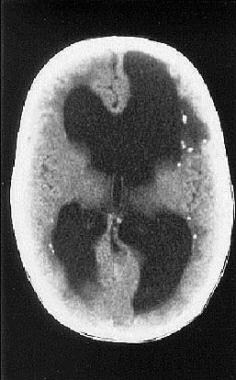
- Intracerebral calcifications typically demonstrate a periventricular distribution and are commonly encountered using CT scanning (see Media file 2). The finding of intracranial calcifications is predictive of cognitive and audiologic deficits in later life and predicts a poor neurodevelopmental prognosis.
- Most infants who survive symptomatic CID have significant long-term neurological and neurodevelopmental sequelae. Indeed, it has been estimated that congenital CMV may be second only to Down syndrome as an identifiable cause of mental retardation in children.
- Asymptomatic congenital CMV
- Most infants with congenital CMV infection are born to women who have preexisting immunity to CMV. These infants appear clinically healthy at birth; however, although infants with congenital CMV infection appear well, they may have subtle growth retardation compared to uninfected infants. Although asymptomatic at birth, these infants, nevertheless, are at risk for neurodevelopmental sequelae.
- The major consequence of inapparent congenital CMV infection is sensorineural hearing loss. Approximately 15% of these infants will have unilateral or bilateral deafness. Routine newborn audiologic screening may not detect cases of CMV-associated hearing loss because this deficit may develop months or even years after birth.10
- Acquired CMV infection: In contrast to congenital infection, acquired CMV infection occurs postnatally. Primary infection in this context is generally asymptomatic, although CMV disease may occur in certain risk groups as follows:
- Perinatal infection
- Perinatal acquisition of CMV usually occurs secondary to exposure to infected secretions in the birth canal or via breastfeeding. Most infections are asymptomatic. Indeed, in some reviews, CMV acquired through breast milk has been referred to as a form of natural immunization.
- Some infants who acquire CMV infection perinatally may have signs and symptoms of disease, including lymphadenopathy, hepatitis, and pneumonitis, which may be severe. Disease secondary to acquisition by breast milk is generally limited to premature infants with low birth weight. These infants may suffer considerable morbidity. Whether interventions, such as freezing or pasteurization, are warranted to decrease the risk of transmission to these high-risk infants is unclear. More studies of long-term neurodevelopmental outcomes of premature infants who acquire CMV infection perinatally from breast milk are needed.
- CMV mononucleosis
- Typical CMV mononucleosis is a disease found in young adults. Although CMV mononucleosis may be acquired by blood transfusion or organ transplantation, CMV mononucleosis is usually acquired via person-to-person transmission.
- The hallmark symptoms of CMV mononucleosis are fever and severe malaise. An atypical lymphocytosis and mild elevation of liver enzymes are present.
- Clinically differentiating CMV mononucleosis from Epstein-Barr virus (EBV)-induced mononucleosis may be difficult. CMV mononucleosis is typically associated with less pharyngitis and less splenomegaly. As with EBV mononucleosis, the use of b-lactam antibiotics in association with CMV mononucleosis may precipitate a generalized morbilliform rash.
- Transfusion-acquired CMV infection
- Posttransfusion CMV infection has a presentation similar to that of CMV mononucleosis. Incubation periods range from 20-60 days.
- The use of seronegative blood donors, frozen deglycerolized blood, or leukocyte-depleted blood can decrease the likelihood of transmission and is recommended for high-risk patients (eg, neonates, immunocompromised patients).
- CMV infections in immunocompromised patients: CMV causes various clinical syndromes in immunocompromised patients. Disease manifestations vary in severity depending on the degree of host immunosuppression. Infection may occur because of reactivation of latent viral infection or may be newly acquired via organ or bone marrow transplant from a seropositive donor. Infections may also be mixed in nature, with donor and recipient isolates both present. Viral dissemination leads to multiple organ system involvement, with the most important clinical manifestations consisting of pneumonitis, GI disease, and retinitis.
- CMV pneumonitis
- CMV is a major cause of pneumonitis in immunosuppressed children and adults. This disease may be observed in the setting of HIV infection, congenital immunodeficiency, malignancy, and solid organ or bone marrow transplant.
- The mortality rate is based on the degree of immunosuppression, with mortality rates of at least 90% reported in bone marrow transplant recipients. Solid organ transplant recipients are at risk of developing CMV pneumonitis also, although mortality rates are lower.
- The illness usually begins 1-3 months following transplantation and starts with symptoms of fever and dry, nonproductive cough. The illness progresses quickly with retractions, dyspnea, and hypoxia becoming prominent.
- The illness is an interstitial pneumonitis, with a radiographic appearance of diffuse bilateral interstitial infiltrates. Because the differential diagnosis of pneumonitis is extensive in immunocompromised patients, consider performing a bronchoalveolar lavage or open lung biopsy to confirm the diagnosis and direct appropriate therapy.
- CMV GI disease
- GI tract disease caused by CMV can include esophagitis, gastritis, gastroenteritis, pyloric obstruction, hepatitis, pancreatitis, colitis, and cholecystitis. Characteristic signs and symptoms may include nausea, vomiting, dysphagia, epigastric pain, icterus, and watery diarrhea.
- Stool may be hemoccult positive or frankly bloody. Endoscopy and biopsy are warranted, and characteristic cytomegalic inclusion cells may be observed in GI endothelium or epithelium.
- Although CMV enteritis does not carry the same ominous prognosis as CMV pneumonitis, antiviral therapy is warranted.
- Differentiating CMV hepatitis from chronic rejection in liver transplant patients may be difficult, even with biopsy.
- CMV retinitis
- Before the advent of highly active antiretroviral therapy (HAART) for HIV infection, CMV retinitis was the most common cause of blindness in adult patients with acquired immunodeficiency syndrome (AIDS), with an overall lifetime prevalence of more than 90%.
- HIV-associated CMV retinitis in children, in contrast to adults, has been relatively rare, probably reflecting overall differences in CMV seroprevalence between the populations. Retinitis is less common in transplant patients.
- CMV produces a necrotic rapidly progressing retinitis with characteristic white perivascular infiltrate with hemorrhage (brushfire retinitis).
- Peripheral lesions may be asymptomatic, and even advanced disease does not cause pain. In children, strabismus or failure to fix and follow objects may be important clues to the diagnosis.
- The disease can progress to total blindness and retinal detachment if left untreated. CMV chorioretinitis is also observed in symptomatic infants with congenital infection infants, although the disease does not usually progress to vision loss. The presence of chorioretinitis in an infant with congenital infection infant indicates a poor neurodevelopmental prognosis.
- Other CMV syndromes
- Various syndromes have been attributed to CMV infection, although cause and effect relationships are often difficult to establish.
- Menetrier disease is a rare disorder characterized by hyperplasia and hypertrophy of the gastric mucous glands, which results in massive enlargement of the gastric folds. Most cases appear to be CMV associated, although the pathogenesis is unknown.
- In children with congenital HIV infection, co-infection with CMV appears to accelerate the HIV disease progression and HIV-associated neurological disease. Accumulating evidence suggests that CMV infection may be a cofactor in the pathogenesis of atherosclerosis. In addition, the phenomena of posttransplant vascular sclerosis and postangioplasty restenosis appear to be CMV-induced lesions.
- The long-term health consequences of CMV infection may include atherosclerosis, immunosenescence, and an increased risk of malignancy. These associations require further study but provide a potential justification for universal vaccination of both sexes against CMV.
Physical
Physical examination findings depend on age, route of acquisition, and immune status of the patient. Findings are reviewed in a syndrome-specific fashion.
Causes
Risk factors for CMV-associated illness chiefly include age and immunodeficiency. These points are covered in case-by-case fashion in other sections of this article.
Enteroviral Infections
Herpes Simplex Virus Infection
Herpesvirus 6 Infection
Lymphocytic Choriomeningitis Virus
Rubella
Toxoplasmosis
Other Problems to be Considered
The differential diagnosis for CMV infection depends on the disease category, the age of the patient, and epidemiologic considerations.
In the neonate with congenital infection, the differential diagnosis includes any of the TORCH agents. Congenital toxoplasmosis may mimic congenital CMV infection but is much less common in the United States; however, in parts of Europe, particularly France and Belgium, congenital toxoplasmosis is a common and significant problem. In contrast to congenital CMV, the intracranial calcifications observed in congenital toxoplasmosis tend to be scattered diffusely throughout the brain and not in the classic periventricular distribution of CMV, which may be an important clue. Other congenital infections to be considered include lymphocytic choriomeningitis virus (LCMV) infection,11 HSV infection, syphilis, enteroviral disease, HIV infection, and rubella. In older patients, differentiating CMV infection from EBV infection may be clinically difficult. EBV is a more common cause of mononucleosis syndrome than CMV, and the heterophile antibody test results (ie, Monospot) are generally positive, allowing for ready differentiation of the diseases. In immunocompromised patients, disease syndromes that are caused by CMV may be difficult to differentiate from other opportunistic infections. For example, CMV pneumonitis following bone marrow transplantation must be differentiated from Pneumocystis carinii infection and other viral infections, such as adenovirus and human herpesvirus 6 (HHV-6) infection. Appropriate diagnostic specimens obtained by studies such as bronchoalveolar lavage are indicated.
Lab Studies
- Viral culture
- The most important diagnostic study in the evaluation of suspected cytomegalovirus (CMV) disease is the viral culture.
- CMV may be cultured from virtually any body fluid or organ system. Blood, urine, saliva, cervicovaginal secretions, cerebrospinal fluid, bronchoalveolar lavage fluid, and tissues from biopsy specimens are all appropriate specimens for culture.
- The specimen is inoculated onto human cells (usually human foreskin fibroblasts), and the cell culture is monitored for development of the characteristic CMV-associated cytopathic effect.
- Shell vial assay
- Although culture is highly sensitive, clinical isolates of CMV may grow slowly, requiring as long as 6 weeks of incubation in the virology laboratory. An adaptation of tissue culture that provides results more rapidly is the centrifugation enhancement monoclonal-antibody culture technique, which is referred to as the shell-vial assay.
- In this technique, the clinical specimen is centrifuged onto a cell monolayer (in effect, concentrating the specimen). Then, following incubation in tissue culture, cells are stained with a monoclonal antibody to a CMV-specific antigen, usually an immediate early gene product.
- A positive shell vial culture is presumptive evidence of active CMV infection, and the test is a useful adjunct to traditional viral culture.12
- Exercise caution when obtaining and interpreting CMV diagnostic studies. Take special care in interpretation of diagnostic studies in infants. By definition, the diagnosis of congenital CMV infection requires identification of the virus in a culture specimen acquired before age 3 weeks because perinatally acquired infections may also begin to manifest at this time. Hence, a positive viral culture obtained in infants older than age 3 weeks may simply represent perinatal or breast milk acquisition and may not be interpreted as evidence of congenital CMV infection.
- Although theoretically helpful, CMV immunoglobulin M (IgM) assays are unfortunately too nonspecific to reliably diagnose congenital CMV. False-positive results are common; therefore, making the diagnosis of congenital infection outside of the immediate perinatal period is very difficult.
- Universal screening for congenital CMV infection may be a reasonable future goal and could enable establishment of appropriate anticipatory neurodevelopmental and serial audiological screening programs.
- Outside of the neonatal period, the major caution regarding CMV diagnosis is to use diagnostic studies appropriately to differentiate between CMV infection and CMV disease.
- Infants and children infected with CMV may shed the virus for years, making a positive urine viral culture difficult to interpret.
- Immunocompromised patients often have reactivation of latent CMV with subsequent viral shedding, even in the absence of overt CMV disease. Thus, the identification of CMV by culture in urine or saliva may reflect such chronic shedding of virus and is difficult to interpret in the evaluation of patients with end-organ disease, such as pneumonitis or hepatitis.
- Lung biopsy or bronchoalveolar lavage may be necessary to confirm the diagnosis of CMV pneumonitis.
- Hepatitis may require liver biopsy for confirmation of the diagnosis, and CMV hepatitis and chronic rejection may be a difficult differential diagnosis in liver transplant recipients, even with a biopsy.
- Newer molecular diagnostic studies, including polymerase chain reaction (PCR)13 and CMV antigenemia studies, are also useful and predictive in monitoring CMV disease activity in immunocompromised patients. The magnitude of the viral load in blood as determined by quantitative PCR in infants with congenital infection may predict neurodevelopmental outcomes and may be useful in monitoring response to antiviral therapy.
Imaging Studies
- Congenital
- The most important study in the diagnostic evaluation of the congenitally infected infant with CMV is head CT scanning.
- A CT scan of the head is required for infants with microcephaly or when congenital CMV infection is suspected because abnormalities in this study, particularly the presence of calcifications, have a strong positive predictive value and can aid in identifying children who need ongoing neurodevelopmental evaluation and therapy.
- Recent evidence suggests that head ultrasonography may be of equal value to CT scanning in evaluation of potential intracranial pathology in the setting of congenital CMV.
- Infants with congenital CMV infection may also require abdominal imaging studies (eg, ultrasonography, CT scanning) for documentation and monitoring of organomegaly.
- Other CMV syndromes
- Depending on the patient population, radiographic studies are seldom of value in evaluation of CMV disease.
- Exceptions include the rare patient with severe mononucleosis caused by primary CMV infection who may require abdominal ultrasound for monitoring of splenomegaly or the immunocompromised patient who requires chest radiograph studies for the possibility of CMV pneumonitis.
Other Tests
- Other tests are indicated, based on the organ systems involved and manifestations of disease syndromes.
Procedures
- Procedures depend on the age of the patient and manifestations of disease syndromes.
- For infants, procedures may include lumbar puncture or liver biopsy.
- For immunocompromised transplant recipients, bronchoalveolar lavage, tissue or organ biopsy, and lumbar puncture may all be required to evaluate for extent of CMV-associated disease.
- For some patients with AIDS who have retinitis, placement of ganciclovir-impregnated intravitreal implants may be an important ancillary procedure.
Histologic Findings
- The classic tissue histological finding in cytomegalic disease is the inclusion cell; however, viral culture, serology, antigenemia, and nucleic acid detection systems (eg, PCR) generally have much better sensitivity for the diagnosis of CMV-associated diseases.
Medical Care
Medical care consists of good nutritional support, vigorous supportive care for end-organ syndromes (particularly pneumonia in immunocompromised patients), and specific antiviral therapy in select circumstances.
Surgical Care
Some children with congenital cytomegalovirus (CMV) require orthopedic interventions (cerebral palsy) and gastrostomy placement for enteral nutrition.
Consultations
Depending on the patient and associated risk factors, CMV disease is encountered by obstetricians, pediatricians, infectious disease specialists, oncologists, and critical care physicians. Appropriate consultations with surgeons, developmental specialists, pathologists, otolaryngologists, ophthalmologists, neurologists, and gastroenterologists may be necessary.
Experience with antiviral agents for cytomegalovirus (CMV) prophylaxis and CMV therapy is limited in children. Administer anti-CMV therapy only after consultation with an expert familiar with dosage and adverse effects. Antiviral agents may be administered therapeutically for established CMV disease or prophylactically (ie, preemptive therapy) when the risk of development of CMV disease is high (eg, in transplant recipients).
Drug Category: Antiviral agents
Nucleosides are the only true antiviral agents active against CMV, although immunoglobulins may provide some antiviral effect, particularly in combination with these agents. These agents share a common molecular target, namely, the viral DNA polymerase. Biochemically, ganciclovir is an acyclic nucleoside analog, whereas cidofovir is an acyclic nucleoside phosphonate. Each compound must be phosphorylated to a triphosphate form before it can inhibit the CMV polymerase. A viral gene product, the UL97 phosphotransferase, mediates the monophosphorylation step for ganciclovir. In contrast to these 2 agents, foscarnet is not a true nucleoside analog but can also directly inhibit the viral polymerase. Ganciclovir is commonly used as preemptive therapy in transplant recipients at high risk of developing disease (eg, a CMV-seronegative recipient of an organ transplant from a CMV-seropositive donor). Oral and intravenous acyclovir has also been used successfully as prophylaxis for solid organ transplantation (seronegative recipient); however, never use acyclovir for CMV therapy in active disease. An oral formulation is approved for use in adult patients infected with HIV who have CMV retinitis; however, the bioavailability is poor, and no data support use in children. Relatively little information concerning the use of ganciclovir in the setting of congenital CMV infection is available. Because some of the neurological sequelae of congenital CMV, particularly sensorineural hearing loss, progress postnatally, the presentation of results from a terminated nationwide collaborative trial are of interest. Intravenous ganciclovir led to improvement or stabilization of hearing in a significant number of 6-month-old infants. Case reports have suggested the efficacy of ganciclovir for acutely ill neonates with life-threatening CMV disease (eg, pneumonia). Alternatives to ganciclovir include trisodium phosphonoformate (PFA) and cidofovir. Pediatric experience with these agents is limited. Although potentially useful in the setting of ganciclovir resistance, the toxicities of these antivirals are significant. Use these agents only in pediatric patients in exceptional circumstances. Although they have only a modest level of activity against CMV, high-dose oral acyclovir and valacyclovir have been used for prophylaxis of CMV in high-risk individuals but are not suitable for therapy of active disease. Oral therapy with valganciclovir is considered to be investigational in children.
| Drug Name | Ganciclovir (Cytovene) |
| Description | First compound licensed for treatment of CMV infections. A synthetic acyclic nucleotide structurally similar to guanine. Its structure is similar to that of acyclovir; like acyclovir, it requires phosphorylation for antiviral activity. The enzyme responsible for phosphorylation is the product of the viral UL97 gene, a protein kinase. Resistance may occur with long-term use, generally because of mutations in UL97. Indicated in immunocompromised children (eg, HIV infection, posttransplant, other immunocompromised states) when clinical and virological evidence of specific end-organ disease (eg, pneumonitis, enteritis) is present. In infants, antiviral therapy with ganciclovir may be of benefit in reducing the prevalence of neurodevelopmental sequelae, in particular sensorineural hearing loss (Schleiss, 2004). A study sponsored by the National Institutes of Allergy and Infectious Diseases demonstrated improved hearing-related outcomes in infants with symptomatic congenital CMV treated with ganciclovir (Kimberlin, 2003). Therefore, therapy in newborns with documented infection should be considered; however, consult an expert. |
| Adult Dose | Induction: 5 mg/kg IV bid for 2-3 wk, followed by maintenance dose IV maintenance: 5 mg/kg IV qd for the duration of therapy; 2.5 mg/kg/dose IV q8h has been used in some patients with CMV pneumonitis PO maintenance: 1 g PO q8h limited to those with HIV who are need of long-term anti-CMV therapy for CMV retinitis PO prophylaxis in liver transplant recipients: 1 g PO q8h pc; typically administered through week 14 posttransplantation, depending on duration and degree of immunosuppression |
| Pediatric Dose | Newborns with congenital CMV infection: Consult specialist for investigational protocol; one example is 6 mg/kg IV q12h for 6 wk Life-long prophylaxis in children with history of CMV disease: 30 mg/kg PO q8h Bone marrow transplant: 5 mg/kg IV q12h; protocols vary for duration and maintenance treatment depending on recipient's risk and type of HSCT (ie, autologous vs allogeneic)
|
| Contraindications | Documented hypersensitivity |
| Interactions | Concomitant administration with cytotoxic drugs (eg, dapsone, vinblastine, doxorubicin, pentamidine, flucytosine, vincristine, amphotericin B, cotrimoxazole, other nucleoside analogs) may result in additive toxicity in bone marrow, spermatogonia, and germinal layers of skin and GI mucosa (coadminister only if potential benefits outweigh risks); coadministration with imipenem-cilastatin may cause generalized seizures (use only if potential benefits outweigh risks); serum creatinine may increase following concurrent use with either cyclosporine or amphotericin B; renal clearance is reduced when coadministered with probenecid; didanosine increases bioavailability when administered either 2 h before or simultaneously; bioavailability may decrease in presence of zidovudine, whereas bioavailability of zidovudine is increased in presence of ganciclovir |
| Pregnancy | C - Fetal risk revealed in studies in animals but not established or not studied in humans; may use if benefits outweigh risk to fetus
|
| Precautions | Myelosuppression (eg, granulocytopenia, anemia, thrombocytopenia) is often a dose-limiting toxicity in immunocompromised patients who often are on other myelosuppressive agents; PO administration associated with higher rate of CMV retinitis progression compared with IV formulation, use only when benefits outweigh risks (eg, advanced HIV disease); half-life and plasma/serum concentrations may increase as a result of reduced renal clearance; dosages >6 mg/kg IV may result in increased toxicity; rapid IV infusions may result in increased toxicity; initially, reconstituted IV solutions have a high pH (ie, 11), phlebitis or pain may occur at IV infusion site may occur despite further dilution in IV fluids; administration should be accompanied by adequate hydration; photosensitization (eg, photoallergy, phototoxicity) may occur |
| Drug Name | Cidofovir (Vistide) |
| Description | Nucleotide analog that selectively inhibits viral DNA production in CMV and other herpes viruses. |
| Adult Dose | Induction: 5 mg/kg IV infusion over 1 h qwk for 2 wk with probenecid (2 g PO 3 h before cidofovir, 1 g PO 2 h immediately after dose, and 1 g PO 8 h after dose) Maintenance: 5 mg/kg IV infusion over 1 h q2wk; give with probenecid (described above) Adequately hydrate by administering an IV infusion of 1 L 0.9% NaCl 1 h before HPMPC infusion |
| Pediatric Dose | Not established |
| Contraindications | Documented hypersensitivity; coadministration with other nephrotoxic agents; serum creatinine >1.5 mg/dL; a CrCl <55 mL/min; urine protein >100 mg/dL |
| Interactions | Coadministration of aminoglycosides, amphotericin B, IV pentamidine, or PFA may increase nephrotoxicity |
| Pregnancy | C - Fetal risk revealed in studies in animals but not established or not studied in humans; may use if benefits outweigh risk to fetus
|
| Precautions | Monitor neutrophil counts; IV prehydration with NS and coadministration of probenecid can minimize nephrotoxicity; monitor serum creatinine and urine protein 48 h before treatment (adjust dose accordingly) |
| Drug Name | Foscarnet (Foscavir) |
| Description | Organic analog of inorganic pyrophosphate that inhibits replication of known herpesviruses, including CMV, HSV-1, and HSV-2. Inhibits viral replication at pyrophosphate-binding site on virus-specific DNA polymerases. |
| Adult Dose | CMV retinitis: Induction: 90 mg/kg IV q12h infused over a minimum of 1.5-2 h for 14-21 d Maintenance: 90-120 mg/kg/d IV infused over 2 h |
| Pediatric Dose | <12 years: Not established >12 years: Administer as in adults |
| Contraindications | Documented hypersensitivity |
| Interactions | Coadministration with potentially nephrotoxic drugs (eg, aminoglycosides, amphotericin B, IV pentamidine) may increase nephrotoxicity (do not administer unless potential benefits outweigh risks); coadministration with IV pentamidine may cause hypocalcemia |
| Pregnancy | C - Fetal risk revealed in studies in animals but not established or not studied in humans; may use if benefits outweigh risk to fetus
|
| Precautions | May cause decline in renal function; for correct dosing, obtain 24-h serum creatinine at baseline and continue to monitor (discontinue if serum creatinine <0.4 mL/min/kg); hydration may reduce nephrotoxicity Carefully monitor electrolytes (eg, calcium, magnesium); assess for electrolyte and mineral level abnormalities if mild perioral numbness, paresthesias symptoms, or seizures; granulocytopenia and anemia may occur (regularly monitor CBC count) Infuse PFA solutions into veins with adequate blood flow to avoid local irritation; to avoid toxicity, do not administer by rapid or bolus IV injection |
Drug Category: Immunoglobulins
These agents are used as passive immunization for the prevention of symptomatic CMV disease. This strategy has been useful in the control of CMV disease in immunocompromised patients in the prenucleoside antiviral era. Evidence in pregnancy suggests that the infusion of CMV immune globulin in women with evidence of a primary CMV infection can prevent transmission and improve outcomes in newborns.
| Drug Name | Immune globulin intravenous (Carimune, Gamimune, Gammagard S/D, Gammar-P, Polygam S/D) |
| Description | The observation that random donor IVIG appears to be equal in efficacy to CMV hyperimmunoglobulin suggests that the benefit may be derived from an immunomodulatory effect unrelated to virus neutralization. |
| Adult Dose | 500 mg/kg IV qod for 10 doses in combination with ganciclovir, followed by 500 mg/kg IV 2 times per wk for 8 additional doses |
| Pediatric Dose | CDC recommendation in stem cell transplant recipients: 400 mg/kg IV qmo; increase dose or frequency to maintain IgG levels >400 mg/dL |
| Contraindications | Documented hypersensitivity; IgA deficiency; anti-IgE/IgG antibodies |
| Interactions | May decrease immune response to live virus vaccines |
| Pregnancy | C - Fetal risk revealed in studies in animals but not established or not studied in humans; may use if benefits outweigh risk to fetus
|
| Precautions | Check serum IgA before IVIG (use an IgA-depleted product [eg, Gammagard S/D]); infusions may increase serum viscosity and thromboembolic events; infusions may increase risk of migraine attacks, aseptic meningitis (10%), urticaria, pruritus, or petechiae (2-5 d postinfusion to 30 d) Increases risk of renal tubular necrosis in elderly patients and in patients with diabetes, volume depletion, and preexisting kidney disease; lab result changes associated with infusions include elevated antiviral or antibacterial antibody titers for 1 mo, 6-fold increase in ESR for 2-3 wk, and apparent hyponatremia |
| Drug Name | CMV-Ig (CytoGam) |
| Description | A CMV hyperimmunoglobulin has been shown to decrease prevalence of CMV disease when administered posttransplant to high-risk transplant recipients when administered alone or in combination with nucleoside antivirals. May be administered therapeutically for CMV disease in combination with ganciclovir. |
| Adult Dose | Prophylaxis posttransplantation: 100-150 mg/kg IV initiated within 3 d posttransplant, then repeated q2-4 wk for 4 mo |
| Pediatric Dose | Not established |
| Contraindications | Documented hypersensitivity; IgA deficiency |
| Interactions | May decrease the immune response to live virus vaccines. |
| Pregnancy | C - Fetal risk revealed in studies in animals but not established or not studied in humans; may use if benefits outweigh risk to fetus
|
| Precautions | Caution in renal dysfunction; may cause facial flushing, nausea, vomiting, muscle cramps, wheezing, diaphoresis, or aseptic meningitis; monitor blood pressure during infusion |
Deterrence/Prevention
- Ultimately, control of cytomegalovirus (CMV) infection, particularly the devastating sequelae of congenital CID, depends on immunization. The major target population for a CMV vaccine is women of childbearing age. Although immunization is unlikely to prevent all congenital infection, immunization will hopefully have a significant and major impact on the prevalence of CID.
- A vaccine can also be useful in controlling CMV disease in organ transplant recipients. A live attenuated vaccine, the Towne vaccine, showed promise for prevention of CMV disease in studies involving renal transplant recipients reported in the 1980s. However, the Towne strain of CMV is poorly immunogenic, probably because it has been overly attenuated during the process of tissue culture passage.
- Newer technologies using recombinant chimeric viruses that represent genetic hybrids between Towne virus and a low-passage clinical isolate, the Toledo strain, are currently under investigation as the next generation of live-virus CMV vaccines.
- Subunit vaccine approaches are also being explored. These use molecularly cloned eucaryotically expressed forms of the major immunogenic CMV envelope protein, gB, and are being actively investigated in clinical trials.
- A vectored vaccine approach in a genetically engineered poxvirus vector, canarypox, is also under evaluation. In addition to gB, this approach targets the major CTL target, the UL83 gene product.
- Until the goal of a CMV vaccine is realized, educating women of childbearing age about the risks of CMV and about how to avoid disease transmission are the only control strategies available.
- Seronegative women who regularly come in close contact with large numbers of young children, particularly in daycare environments, may be at particularly high risk.
- Behaviors known to be associated with transmission of infection, particularly kissing and sharing eating utensils, can be avoided, and careful handwashing after diaper changes can be stressed.
Patient Education
- Increased awareness of the complications of congenital CMV infection is needed. With a greater educational effort, women of childbearing age can be better prepared to anticipate risk factors for CMV transmission during pregnancy.14
- A national CMV registry provides education and support for families affected by congenital CMV infection. Contact the National Congenital CMV Disease Registry at Feigin Center, Suite 1150, 1102 Bates Street, MC 3-2371, Houston, TX, 77030-2399, (832) 824-4387, or visit the Web site at http://www.bcm.tmc.edu/pedi/infect/cmv/.
- Better education of the risks of CMV infection for young women is a must. The CDC is also an excellent educational resource.
- Other foundations provide education and resources for parents interested in learning more about congenital CMV, including the CMV Foundation.
Medical/Legal Pitfalls
- Neonatal infections
- Undertaking a complete evaluation for treatable entities in the evaluation of the newborn with stigmata suggestive of congenital infection is important. Thorough serologic evaluation for congenital HIV infection, syphilis, HSV infection, LCMV infection, toxoplasmosis, and congenital CMV infection is warranted in any infant with features of TORCH illness (eg, small for gestational age [SGA], microcephaly, unusual exanthemata, organomegaly, thrombocytopenia).
- The potential for development of sensorineural hearing loss or developmental disability is particularly important. Failure to identify infants who may benefit from early intervention programs or hearing aids could delay institution of useful interventions. If antiviral therapy (ganciclovir) for the neonate proves to be effective for prevention of hearing loss in infants with congenital infection, an indication for treatment of such infants could be forthcoming.
- Adult infections
- Relatively few pitfalls tend to be considered in adults with CMV infection because such illnesses virtually are always asymptomatic. However, a woman who is CMV seronegative and works in a health care or daycare environment presents a special problem. If such women are contemplating pregnancy, questions often arise about risks in the workplace and the responsibility of employers. Such decisions should be made on an institution-by-institution basis.
- Women who work in daycare centers have never been shown to be at a higher risk for acquisition of CMV infection than woman in the general population. Programs that attempt to identify patients with active CMV excretion in order to label such babies with precautions, such as "no pregnant caregiver," are not warranted.
- In every patient-care encounter, consider the possibility of transmission of CMV or other pathogens if universal blood and body fluids precautions are ignored.
- Simply following appropriate precautions is sufficient to protect caregivers. As a matter of policy, no work restrictions are recommended by most experts irrespective of pregnancy status.
Special Concerns
- Acquisition of primary CMV infection during pregnancy is a major concern. Women at high risk include those with extensive daycare contact, particularly individuals who work in large daycare facilities in which repeated exposures are common.15
- The added risk, if any, for nurses, physicians, or other health care providers is unclear because studies do not uniformly suggest an increased rate of acquisition of primary infection compared with that reported in the general population.
| Media file 1:
Epidemiology patterns of congenital cytomegalovirus infection. Approximately 10% of cases of congenital cytomegalovirus occur in women with primary infection during pregnancy, and 90% of these infants have neurological sequelae. Although preexisting immunity (eg, maternal recurrent infection) protects against severe disease, approximately 15% of these infants have sequelae, particularly sensorineural hearing loss. |
 | View Full Size Image | |
Media type: Graph
|
| Media file 2:
Cranial CT scan of infant born with symptomatic congenital cytomegalovirus infection. Neurological involvement is evident, manifest as ventriculomegaly and periventricular calcifications. |

 | View Full Size Image | |
Media type: CT
|
- Goodpasture EQ, Talbot FB. Concerning the nature of "protozoan-like" cells in certain lesions of infancy. Am J Dis Child. 1921;21:415.
- Weller TH, Hanshaw JB. Virological and clinical observation of cytomegalic inclusion disease. N Engl J Med. 1962;266:1233.
- Weller TH. The cytomegaloviruses: ubiquitous agents with protean clinical manifestations. I. N Engl J Med. Jul 22 1971;285(4):203-14. [Medline].
- Schleiss MR, McVoy MA. Overview of congenitally and perinatally acquired cytomegalovirus infections: recent advances in antiviral therapy. Expert Rev Anti Infect Ther. 2004;2 (3):389-403. [Medline].
- Kimberlin DW, Lin CY, Sanchez PJ. Effect of ganciclovir therapy on hearing in symptomatic congenital cytomegalovirus disease involving the central nervous system: a randomized, controlled trial. J Pediatr. 2003;143(1):16-25. [Medline].
- Ho M. Epidemiology of cytomegalovirus infections. Rev Infect Dis. Sep-Oct 1990;12 Suppl 7:S701-10. [Medline].
- Dworsky M, Yow M, Stagno S, et al. Cytomegalovirus infection of breast milk and transmission in infancy. Pediatrics. Sep 1983;72(3):295-9. [Medline].
- Fowler KB, Pass RF. Risk factors for congenital cytomegalovirus infection in the offspring of young women: exposure to young children and recent onset of sexual activity. Pediatrics. 2006;118:e286-92. [Medline].
- Colugnati FA, Staras SA, Dollard SC, Cannon MJ. Incidence of cytomegalovirus infection among the general population and pregnant women in the United States. BMC Infect Dis. 7:71. [Medline].
- Fowler KB, Dahle AJ, Boppana SB, Pass RF. Newborn hearing screening: will children with hearing loss caused by congenital cytomegalovirus infection be missed?. J Pediatr. Jul 1999;135(1):60-4. [Medline].
- Barton LL, Mets MB. Congenital lymphocytic choriomeningitis virus infection: decade of rediscovery. Clin Infect Dis. Aug 1 2001;33(3):370-4. [Medline].
- Gleaves CA, Smith TF, Shuster EA, Pearson GR. Comparison of standard tube and shell vial cell culture techniques for the detection of cytomegalovirus in clinical specimens. J Clin Microbiol. Feb 1985;21(2):217-21. [Medline].
- Demmler GJ, Buffone GJ, Schimbor CM, May RA. Detection of cytomegalovirus in urine from newborns by using polymerase chain reaction DNA amplification. J Infect Dis. Dec 1988;158(6):1177-84. [Medline].
- Boppana SB, Rivera LB, Fowler KB, Mach M, Britt WJ. Intrauterine transmission of cytomegalovirus to infants of women with preconceptional immunity. N Engl J Med. May 3 2001;344(18):1366-71. [Medline].
- Adler SP. Cytomegalovirus and child day care. Evidence for an increased infection rate among day-care workers. N Engl J Med. Nov 9 1989;321(19):1290-6. [Medline].
- Chou SW. Acquisition of donor strains of cytomegalovirus by renal-transplant recipients. N Engl J Med. May 29 1986;314(22):1418-23. [Medline].
- Demmler GJ. Congenital cytomegalovirus infection and disease. Adv Pediatr Infect Dis. 1996;11:135-62. [Medline].
- Demmler GJ. Congenital cytomegalovirus infection treatment. Pediatr Infect Dis J. Nov 2003;22(11):1005-6. [Medline].
- Kaplan JE, Masur H, Holmes KK. Guidelines for preventing opportunistic infections among HIV-infected persons--2002. Recommendations of the U.S. Public Health Service and the Infectious Diseases Society of America. MMWR Recomm Rep. Jun 14 2002;51(RR-8):1-52. [Medline]. [Full Text].
- Kovacs A, Schluchter M, Easley K, et al. Cytomegalovirus infection and HIV-1 disease progression in infants born to HIV-1-infected women. Pediatric Pulmonary and Cardiovascular Complications of Vertically Transmitted HIV Infection Study Group. N Engl J Med. Jul 8 1999;341(2):77-84. [Medline].
- Plotkin SA. Vaccination against cytomegalovirus, the changeling demon. Pediatr Infect Dis J. Apr 1999;18(4):313-25; quiz 326. [Medline].
- Schleiss M, Stanberry L. Herpesvirus infections of the neonatal CNS: Similarities and differences between HSV and CMV. Herpes. 1997;4:74.
- Schleiss, MR. Prospects for development and potential impact of a vaccine against congenital cytomegalovirus (CMV) infection. J. Pediatr. 151:564-70. [Medline].
- Stagno S, Pass RF, Dworsky ME, et al. Congenital cytomegalovirus infection: The relative importance of primary and recurrent maternal infection. N Engl J Med. Apr 22 1982;306(16):945-9. [Medline].
- Tabata T, McDonagh S, Kawakatsu H, Pereira L. Cytotrophoblasts infected with a pathogenic human cytomegalovirus strain dysregulate cell-matrix and cell-cell adhesion molecules: a quantitative analysis. Placenta. 2007;28:527-37. [Medline].
- Yow MD. Congenital cytomegalovirus disease: a NOW problem. J Infect Dis. Feb 1989;159(2):163-7. [Medline].
- Zhang C, Buchanan H, Andrews W, Evans A, Pass RF. Detection of cytomegalovirus infection during a vaccine clinical trial in healthy young women: seroconversion and viral shedding. J Clin Virol. Mar 2006;35(3):338-42. [Medline].
Cytomegalovirus Infection excerpt Article Last Updated: May 8, 2008
|