Continually Updated Clinical Reference
 
 
  All Sources     eMedicine     Medscape     Drug Reference     MEDLINE
 
eMedicine - Pneumothorax : Article by

Quick Find
Authors & Editors
Introduction
Differentials
Radiograph
CT SCAN
Intervention
Multimedia
References

Related Articles
[Lung, Trauma]

Abdominal Aortic Aneurysm, Rupture

Emphysema

Myocardial Infarct, Acute


Patient Education
Click here for patient education.


Author: Fahad M Alhameed, MD, AmBIM, FCCP, FRCPC, Deputy Chairman of Intensive Care Department, Consultant Critical Care and Pulmonary Medicine, Department of Intensive Care and Pulmonary Medicine, King Khalid National Guard Hospital, Jeddah, Saudi Arabia

Fahad M Alhameed is a member of the following medical societies: American College of Chest Physicians, American Thoracic Society, Canadian Medical Association, and Royal College of Physicians and Surgeons of Canada

Coauthor(s): Sat Sharma, MD, FRCP(C), FCCP, FACP, DABSM, Program Director, Associate Professor, Department of Internal Medicine, Divisions of Pulmonary and Critical Care Medicine, University of Manitoba; Site Director of Respiratory Medicine, St Boniface General Hospital; Bruce Maycher, MD, Director of Pulmonary Radiology, St Boniface General Hospital; Associate Professor, Department of Radiology, University of Manitoba; Sean Tsuyuki, MD, Assistant Professor, Department of Radiology, University of Manitoba at Winnipeg, St Boniface Hospital

Editors: Satinder P Singh, MD, Associate Professor of Radiology, Director of Cardiac CT, Director of Combined Cardiopulmonary and Abdominal Radiology, Department of Radiology, University of Alabama at Birmingham; Bernard D Coombs, MB, ChB, PhD, Consulting Staff, Department of Specialist Rehabilitation Services, Hutt Valley District Health Board, New Zealand; W Richard Webb, MD, Chief of Thoracic Imaging, Professor, Department of Radiology, University of California at San Francisco; Robert M Krasny, MD, Consulting Staff, Department of Radiology, The Angeles Clinic and Research Institute; Eugene C Lin, MD, Consulting Staff, Department of Radiology, Virginia Mason Medical Center

Author and Editor Disclosure

Synonyms and related keywords: spontaneous pneumothorax, primary spontaneous pneumothorax, secondary spontaneous pneumothorax, traumatic pneumothorax, iatrogenic pneumothorax, pneumomediastinum, catamenial pneumothorax, pneumothorax in AIDS

Background

Pneumothorax is the presence of air within the pleural space and is considered one of the most common forms of thoracic disease. It is classified as spontaneous (not caused by trauma), traumatic, or iatrogenic.

Spontaneous pneumothorax can be either primary (occurring in persons without clinically or radiologically apparent lung disease) or secondary (in which lung disease is present and apparent). Most individuals with primary spontaneous pneumothorax (PSP) have unrecognized lung disease, since many observations suggest that spontaneous pneumothorax often results from rupture of a subpleural bleb.

Traumatic pneumothorax is caused by penetrating or blunt trauma to the chest, with air entering the pleural space directly through the chest wall, through visceral pleural penetration, or through alveolar rupture resulting from sudden compression of the chest.

Iatrogenic pneumothorax results from a complication of a diagnostic or therapeutic intervention.

Pathophysiology

In PSP, subpleural bullae are found in 76-100% of patients during video-assisted thoracoscopic surgery and in virtually all patients during thoracotomy. CT of the chest reveals ipsilateral bullae in 89% of patients with PSP, compared to 20% of control subjects matched for age and smoking status, as reported by Mitlehner et al and Lesur et al.1, 2

The pathogenesis of subpleural bullae and PSP is probably related to airway inflammation resulting at least in part from cigarette smoking in many patients; however, the exact mechanism of bulla formation remains unclear.

Cigarette smoking increases the risk of PSP in men in a dose-dependent manner. In men who smoke, compared with men who do not smoke, the relative risk of a pneumothorax is 7 times higher in light smokers (1-12 cigarettes per day), 21 times higher in moderate smokers (13-22 cigarettes per day), and up to 102 times higher in heavy smokers (>22 cigarette per day). In women, the relative risk is 4, 14, and 68 times higher in light, moderate, and heavy smokers, respectively.

Familial cases have been reported. Two modes of inheritance have been suggested, including (1) an autosomal dominant gene with incomplete penetrance (50% in males; approximately 20% in females) and (2) more than 1 gene, with some cases inherited as an X-linked recessive disorder and others as an autosomal dominant trait with incomplete penetrance, according to Abolnik et al.3

Frequency

United States

In a study based in Olmsted County, Minnesota, and reported by Melton et al,4 318 patients developed pneumothorax from 1950-1974. The age-adjusted incidence of PSP in men was 7.4/100,000/y and in women 1.2/100,000/y (male-to-female ratio was 6.2:1). The incidence of secondary spontaneous pneumothorax (SSP) in men was 6.3/100,000/y and in women 2/100,000/y (male-to-female ratio was 3.2:1).

International

Worldwide frequency of pneumothorax is not known. In Stockholm, in one of the largest epidemiologic studies performed (reported by Bense et al5), the annual incidence of PSP in 15,204 individuals was somewhat higher than in the Minnesota study: 18 per 100,000 men and 6 per 100,000 women.

Mortality/Morbidity

SSP is associated with a higher mortality and morbidity than PSP. Patients with HIV with pneumothorax and Pneumocystis carinii pneumonia may have in-hospital mortality rates exceeding 25%, with a median survival rate of 3 months.

Pneumothorax is associated with the following complications:

  • In most reported series, the rate of recurrence of spontaneous pneumothorax on the same side is as much as 30% and on the contralateral side is approximately 10%.
  • Reexpansion pulmonary edema may occur.
  • Tension pneumothorax can occur after spontaneous pneumothorax but is more common after traumatic pneumothorax or with mechanical ventilation.
  • Bronchopleural fistula occurs in 3-5% of patients.
  • Pneumomediastinum and pneumopericardium may develop (see Images 7-8).

Race

From limited data, PSP appears to be more common in the Scandinavian population, although reasons for this are unknown.

Sex

Male-to-female ratio of PSP averages 4-5:1. This ratio may vary depending on where the study is done. The male-to-female ratio of SSP averages 2-3:1.

Age

PSP typically occurs in tall, thin males aged 10-30 years. PSP rarely occurs in persons older than 40 years.

SSP typically occurs later in life (60-65 years) when the peak incidence of chronic lung disease increases in the general population.

Clinical Details

Pneumothorax is classified into the following categories:

  • Spontaneous pneumothorax
    • Primary
    • Secondary
  • Traumatic pneumothorax
    • Resulting from direct (blunt) chest trauma
    • Resulting from penetrating chest trauma
  • Iatrogenic pneumothorax
    • Resulting from biopsy procedure
    • Resulting from therapeutic procedures
  • Catamenial pneumothorax
  • Pneumothorax in AIDS

Primary spontaneous pneumothorax

Most episodes (90%) of PSP occur while the patient is at rest. Chest pain and dyspnea, either alone or in combination, are the classic symptoms of spontaneous pneumothorax; pain was the sole complaint of 69% of 72 patients in 1 series reported by Lindskog and Halasz.6 Chest pain may be minimal or severe and usually is sharp and pleuritic. Symptoms usually resolve within 24 hours, even if the pneumothorax remains untreated and does not resolve.

The primary physical sign of pneumothorax is a decrease or absence of breath sounds despite normal or increased resonance on percussion. However, this may be difficult to detect, particularly in patients with a small pneumothorax or in those who have underlying emphysema. Patients with a small pneumothorax (involving <15% of hemithorax) may have a normal physical examination. Tachycardia is the most common physical finding.

A large pneumothorax can cause decreased movement of the chest wall, a hyperresonant percussion note, diminished tactile focal fremitus and resonance, and decreased or absent breath sounds on the affected side. Hemodynamic instability, which is indicated by tachycardia, hypotension, and cyanosis, suggests tension pneumothorax. Arterial blood gas may reveal acute respiratory alkalosis and an increased alveolar-arterial oxygen gradient.

Unusual clinical manifestations of pneumothorax include ptosis (as a result of extension of subcutaneous emphysema), pneumocephalus (secondary to tension pneumothorax associated with a comminuted fracture of the thoracic spine), and recurrent pneumopericardium (in association with pleuropericardial defect).

Secondary spontaneous pneumothorax

Because of impaired pulmonary reserve, SSP results in more severe dyspnea than that occurring in PSP. Typically, chest pain is less common but more severe than in PSP. Life-threatening hypoxemia or hypotension occurs in 15% of patients. Symptoms of SSP do not resolve spontaneously. Suspicion for pneumothorax should remain heightened in patients with chronic obstructive pulmonary disease (COPD) who develop dyspnea and unilateral chest pain.

Physical findings often are subtle and may be masked by underlying lung disease, particularly in patients with COPD. Hypercapnia often occurs, with the partial pressure of arterial carbon dioxide often exceeding 50 mm Hg. Significant hypoxemia is common.

SSP is caused by the following:

  • Diseases of the airways: COPD, cystic fibrosis, and status asthmaticus
  • Interstitial lung diseases: Langerhans cell histiocytosis, sarcoidosis, lymphangioleiomyomatosis, tuberous sclerosis, rheumatoid disease, idiopathic pulmonary fibrosis, and radiation fibrosis
  • Infectious diseases: Necrotizing Gram-negative pneumonia, anaerobic pneumonia, staphylococcal pneumonia, AIDS with P carinii pneumonia, and Mycobacterium tuberculosis
  • Malignancies: Sarcoma, lung cancer
  • Pneumoconiosis: Silicoproteinosis, berylliosis, and bauxite pneumoconiosis
  • Connective tissue diseases
  • Wegener granulomatosis
  • Drugs and toxins
  • Chemotherapy for malignancy
  • Paraquat poisoning
  • Hyperbaric oxygen therapy
  • Radiation therapy
  • Aerosolized pentamidine therapy in patients with AIDS

The above conditions (particularly AIDS, COPD, Langerhans cell granulomatosis, and lymphangioleiomyomatosis) can lead to unilateral or bilateral pneumothorax.

Traumatic pneumothorax

Trauma probably is the most common cause of pneumothorax. Traumatic pneumothorax can be caused by direct communication of the pleural space with the atmosphere through chest wall puncture or by disruption of the proximal tracheobronchial tree or the visceral pleura, as occurs in blunt chest trauma.

Iatrogenic pneumothorax

With the increasing use of invasive diagnostic procedures, iatrogenic pneumothorax likely will become more common, although most cases are of little clinical significance. In a review of 106 cases by Despars et al,7 35 cases (33%) were related to transthoracic needle aspiration biopsy, 30 cases (28%) to thoracentesis, 23 cases (22%) to subclavian vein catheterization, 7 cases (7%) to positive-pressure ventilation, and 11 cases (10%) to miscellaneous causes (see Images 5-6). In 2 of the 106 patients, the pneumothorax was fatal.

The incidence of iatrogenic pneumothorax in mechanically ventilated patients has been estimated at 0.5-15%, depending on the duration of ventilation and the nature of the underlying disease. Alveolar rupture more likely occurs when peak inspiratory pressure is high.

Catamenial pneumothorax

Catamenial pneumothorax refers to the development of pneumothorax at the time of menstruation. Catamenial pneumothorax represents 3-6% of cases of spontaneous pneumothorax in women. Typically, it occurs in women aged 30-40 years with a history of pelvic endometriosis (20-40%). It usually affects the right lung (90-95%) and occurs within 72 hours after the onset of menses. The recurrence rate in women receiving hormone treatment is 50% at 1 year.

Pneumothorax in AIDS

Spontaneous pneumothorax develops in 2-6% of HIV-infected patients and is associated with P carinii pneumonia in 80% of those patients. Pneumothorax is associated with a high mortality in patients with HIV infection with P carinii pneumonia. In-hospital mortality exceeds 25%, and median survival is approximately 3 months. Pathogenesis of the pneumothorax in this setting is the rupture of large subpleural cysts, which are associated with subpleural necrosis. Recurrent ipsilateral or contralateral pneumothorax also is common.

Valsalva maneuver and pneumothorax

The Valsalva maneuver is a common etiology of pneumomediastinum and pneumothorax. This can occur during emesis, during coughing, and, perhaps most commonly, during pregnancy and labor. Smoking of marijuana and cocaine, possibly associated with the use of a prolonged Valsalva maneuver to augment the "high," also has been associated with these complications in drug users. However, a more frequent mechanism for the production of pneumothorax in addicts is needle puncture while mainlining into neck veins.

Preferred Examination

Chest radiograph is the first investigation performed to assess pneumothorax because it is simple, inexpensive, rapid, and noninvasive; however, it is much less sensitive than chest CT in detecting a small pneumothorax, blebs, and bullae.

In erect patients, pleural gas collects over the apex, and the space between the lung and chest wall is most notable at that point. In the supine position, the juxtacardiac area, the lateral chest wall, and the subpulmonic region are the best areas to search for evidence of pneumothorax.

When a suggested pneumothorax is not definitively observed on an inspiratory film, an expiratory film may be helpful. At end expiration, the constant volume of the pneumothorax gas is accentuated by the reduction of the hemithorax, and the pneumothorax is recognized more easily. Similar accentuation can be obtained with lateral decubitus studies of the appropriate side (for a possible left pneumothorax, a right lateral decubitus film of the chest should be obtained, with the beam centered over the left lung).

Limitations of Techniques

CT of the chest reveals ipsilateral bullae in 89% of patients with PSP, as compared to 20% of control subjects matched for age and smoking status. In PSP, subpleural bullae are found in 76-100% of patients during video-assisted thoracoscopic surgery and in virtually all patients during thoracotomy.


[Lung, Trauma]
Abdominal Aortic Aneurysm, Rupture
Emphysema
Myocardial Infarct, Acute

Other Problems to Be Considered

Factors that may mimic pneumothorax (eg, skin fold, clothing, tubing, chest wall artifact, localized bulla, emphysema)


Findings

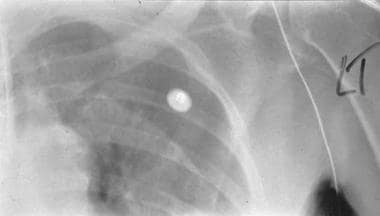
The diagnosis of pneumothorax is established by demonstrating the outer margin of the visceral pleura (and lung), known as the pleural line, separated from the parietal pleura (and chest wall) by a lucent gas space devoid of pulmonary vessels (see Image 2). The pleural line may be difficult to detect with a small pneumothorax unless high-quality posteroanterior and lateral chest films are obtained and viewed under a bright light. A skin fold may mimic the pleural line, but usually, the patient is asymptomatic (see Image 3).

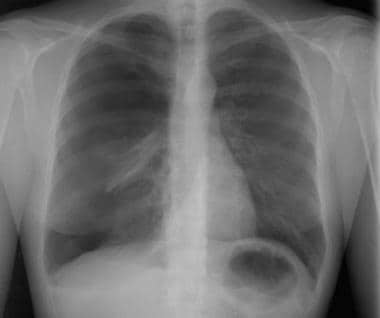
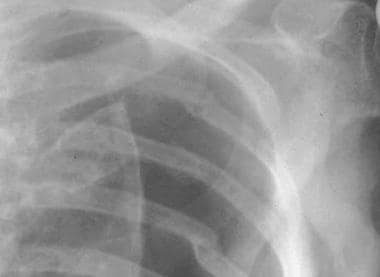
In erect patients, pleural gas collects over the apex, and the space between the lung and chest wall is most notable at that point (see Image 1).

In the supine position, the juxtacardiac area, the lateral chest wall, and the subpulmonic region are the best areas to search for evidence of pneumothorax (see Image 4). The presence of a deep costophrenic angle on a supine film may be the only sign of pneumothorax; this has been termed the deep sulcus sign.

When a suggested pneumothorax is not definitively observed on an inspiratory film, an expiratory film may be helpful. At end expiration, the constant volume of the pneumothorax gas is accentuated by the reduction of the hemithorax, and the pneumothorax is recognized more easily. Similar accentuation can be obtained with lateral decubitus studies of the appropriate side (for a possible left pneumothorax, a right lateral decubitus film of the chest should be obtained, with the beam centered over the left lung).

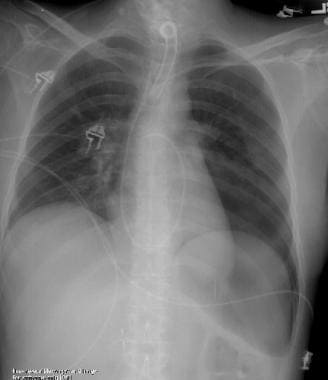
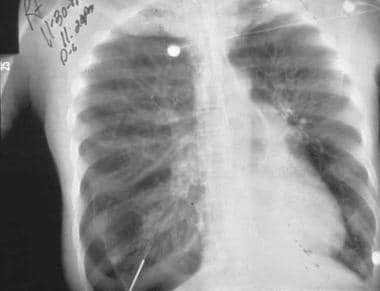
The most common radiographic manifestations of tension pneumothorax are mediastinal shift, diaphragmatic depression, and rib cage expansion (see Image 5). Any significant degree of displacement of the mediastinum from the midline position on maximum inspiration, as well as any depression of the diaphragm, should be taken as evidence of tension (see Image 6), although a definite diagnosis of tension pneumothorax is difficult to make on the basis of radiographic findings. The degree of lung collapse is an unreliable sign of tension, since underlying lung disease may prevent collapse even in the presence of tension.

Pleural effusions occur coincident with pneumothorax in 20-25% of patients, but they usually are quite small. Hemopneumothorax occurs in 2-3% of patients with spontaneous pneumothorax. Bleeding is believed to represent rupture or tearing of vascular adhesions between the visceral and parietal pleura as the lung collapses.

False Positives/Negatives

Differentiating the pleural line of a pneumothorax from that of a skin fold, clothing, tubing, or chest wall artifact is important. Careful inspection of the film may reveal that the artifact extends beyond the thorax or that lung markings are visible beyond the apparent pleural line. In the absence of underlying lung disease, the pleural line of a pneumothorax usually parallels the shape of the chest wall (see Images 2-3).

Artifactual densities usually do not parallel the course of the chest wall over their entire length. Avascular bullae or thin-walled cysts can be mistaken for a pneumothorax. The pleural line caused by a pneumothorax usually is bowed at the center toward the lateral chest wall. Unlike in pneumothorax, the inner margins of bullae or cysts usually are concave rather than convex and do not conform exactly to the contours of the costophrenic sulcus. A pneumothorax with a pleural adhesion also may simulate bullae or lung cysts.


Findings

CT of the chest is used with increasing frequency in patients with pneumothorax. CT may be necessary to diagnose pneumothorax in critically ill patients in whom upright or decubitus films are not possible. CT may prove helpful in predicting the rate of recurrence in patients with spontaneous pneumothorax. One study by Warner et al demonstrated that patients with larger or more numerous blebs demonstrated on thoracic CT are more likely to experience recurrences.8

CT demonstrates focal areas of emphysema in more than 80% of patients with spontaneous pneumothorax, even in lifelong nonsmokers. These areas are situated predominantly in the peripheral regions of the apex of the upper lobes. In patients in whom emphysema is not apparent on CT, it often is evident at surgery or on pathologic examination.

In one study by Jordan et al, in 116 consecutive patients who had undergone thoracotomy for recurrent or persistent PSP or SSP, emphysema with bulla formation was identified histologically in 93 patients (80%), emphysema without bulla formation in 13 patients (11%), isolated bullae in 2 patients (1.7%), blebs in 2 patients (1.7%), and other pulmonary or pleural abnormalities in 6 patients (5%).9

In another study, by Mitlehner et al, localized emphysema with or without bulla formation was identified on CT in 31 of 35 patients (89%) and on radiographs in 15 of 35 patients (43%). Abnormal findings were observed in the lung ipsilateral to the pneumothorax on 28 of 35 CTs (80%) and on 11 of 35 chest radiographs (31%) and were observed in the contralateral lung on 23 of 35 CTs (66%) and on 4 of 35 chest radiographs (11%). In most patients, the abnormal findings consisted of a few localized areas of emphysema (n <5) measuring less than 2 cm in diameter.1

The mechanism of cyst or bulla rupture in SSP probably also is multifactorial. Local airway obstruction caused by pneumonia, mucous plugs, or bronchoconstriction may be important. In a retrospective study by Wait and Estrera of 120 patients with spontaneous pneumothorax admitted from 1983-1991 to Parkland Memorial Hospital in Dallas, 31 patients (26%) had localized areas of emphysema, bullae, or blebs; 12 patients (10%) had COPD; 32 patients (27%) had AIDS; and 45 patients (37%) had other underlying lung diseases. Of those with AIDS, 25 patients (78%) had P carinii pneumonia, and the remaining 7 patients (22%) were infected with M tuberculosis or nontuberculous mycobacteria.10


Current available therapeutic interventions include simple observation, simple aspiration with a catheter, insertion of a chest tube, pleurodesis, video-assisted thoracoscopic surgery, and thoracotomy.

Selection of the interventional approach depends on the size of the pneumothorax, the severity of symptoms, whether a persistent air leak is present, and whether the pneumothorax is primary or secondary.

If the primary spontaneous pneumothorax is small (involving <15% of hemithorax) and patients have minimal symptoms, high-flow supplemental oxygen will accelerate reabsorption of air by the pleura.

Primary spontaneous pneumothoraces that are large (involving >15-20% of hemithorax) or progressive may be drained by simple aspiration with a plastic intravenous catheter, thoracentesis catheter, or small-bore (7-14F) catheter or by the insertion of a chest tube.

Percutaneous drainage of pneumothorax (simple aspiration) is successful in 65-70% of patients with moderate-sized primary spontaneous pneumothorax and in only approximately 35% of patients with secondary spontaneous pneumothorax. In a randomized study of needle aspiration versus tube thoracostomy, there was a higher immediate recurrence rate with the needle aspiration, although approximately 66% of patients experienced resolution of their pneumothorax. The recurrence rates at 3 months were similar to those for patients treated initially with tube thoracostomy.11

The procedure consists of insertion of a 10-18F plastic catheter under local analgesia using sterile technique. The recommended point of insertion is the second anterior intercostal space in the midclavicular line. The catheter is connected to a 3-way stopcock and a large-volume syringe. Aspiration is performed until no further gas can be withdrawn. The catheter is then connected to a Heimlich valve. Follow-up chest radiographs are performed; if residual pneumothorax is present after 12 hours, the catheter can be attached to wall suction or underwater seal. If these maneuvers do not succeed, a tube thoracostomy should be performed.

Medical/Legal Pitfalls

  • Diagnosis, causation, and degree of impairment are important considerations in pneumothorax
  • Failure to differentiate the pleural line of a pneumothorax from that of a skin fold, clothing, tubing, or chest wall artifact may result in an unnecessary interventional procedure
  • Failure to recognize a vascular bulla or thin-walled cyst may result in a misdiagnosis of pneumothorax
  • Failure to act promptly may result in hemodynamic instability, which is indicated by tachycardia, hypotension, and cyanosis (suggestive of tension pneumothorax) and may result in higher morbidity and mortality


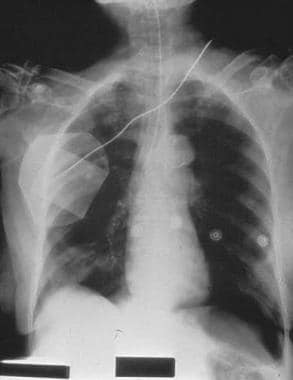
Media file 1:  A large right-sided pneumothorax has occurred from a rupture of a subpleural bleb.
Click to see larger pictureClick to see detailView Full Size Image
Media type:  X-RAY

Media file 2:  A true pneumothorax line. Note that the visceral pleural line is observed clearly, with the absence of vascular marking beyond the pleural line.
Click to see larger pictureClick to see detailView Full Size Image
Media type:  X-RAY

Media file 3:  Note that although a skin fold can mimic subtle pneumothorax, lung markings are visible beyond the skin fold.
Click to see larger pictureClick to see detailView Full Size Image
Media type:  X-RAY

Media file 4:  Deep sulcus sign in a supine patient in the ICU. The pneumothorax is subpulmonic.
Click to see larger pictureClick to see detailView Full Size Image
Media type:  X-RAY

Media file 5:  An older man admitted to ICU postoperatively. Note the right-sided pneumothorax induced by the incorrectly positioned small bowel feeding tube in the right-sided bronchial tree. Marked depression of the right hemidiaphragm is noted, and mediastinal shift is to the left side, suggestive of tension pneumothorax. The endotracheal tube is in a good position.
Click to see larger pictureClick to see detailView Full Size Image
Media type:  X-RAY

Media file 6:  Right main stem intubation resulting in left-sided tension pneumothorax, right mediastinal shift, deep sulcus sign, and subpulmonic pneumothorax
Click to see larger pictureClick to see detailView Full Size Image
Media type:  X-RAY

Media file 7:  Pneumomediastinum from barotrauma may result in tension pneumothorax and obstructive shock.
Click to see larger pictureClick to see detailView Full Size Image
Media type:  X-RAY

Media file 8:  A patient in ICU developed pneumopericardium as a manifestation of barotrauma.

Click to see larger pictureClick to see detailView Full Size Image
Media type:  X-RAY


  1. Mitlehner W, Friedrich M, Dissmann W. Value of computer tomography in the detection of bullae and blebs in patients with primary spontaneous pneumothorax. Respiration. 1992;59(4):221-7. [Medline].
  2. Lesur O, Delorme N, Fromaget JM, et al. Computed tomography in the etiologic assessment of idiopathic spontaneous pneumothorax. Chest. Aug 1990;98(2):341-7. [Medline].
  3. Abolnik IZ, Lossos IS, Zlotogora J, Brauer R. On the inheritance of primary spontaneous pneumothorax. Am J Med Genet. Aug 1 1991;40(2):155-8. [Medline].
  4. Melton U, Hepper NGG, Offord KP. Incidence of spontaneous pneumothorax in Olmsted County, Minnesota: 1950 to 1974. Am Rev Respir Dis. 1979;120:1379.
  5. Bense L, Eklund G, Wiman LG. Smoking and the increased risk of contracting spontaneous pneumothorax. Chest. Dec 1987;92(6):1009-12. [Medline].
  6. Lindskog GE, Halasz NA. Spontaneous pneumothorax: A consideration of pathogenesis and management with review of seventy-two hospitalized cases. Arch Surg. 1957;75:693.
  7. Despars JA, Sassoon CS, Light RW. Significance of iatrogenic pneumothoraces. Chest. Apr 1994;105(4):1147-50. [Medline].
  8. Warner BW, Bailey WW, Shipley RT. Value of computed tomography of the lung in the management of primary spontaneous pneumothorax. Am J Surg. Jul 1991;162(1):39-42. [Medline].
  9. Jordan KG, Kwong JS, Flint J, Muller NL. Surgically treated pneumothorax. Radiologic and pathologic findings. Chest. Feb 1997;111(2):280-5. [Medline].
  10. Wait MA, Estrera A. Changing clinical spectrum of spontaneous pneumothorax. Am J Surg. Nov 1992;164(5):528-31. [Medline].
  11. Andrivet P, Djedaini K, Teboul JL, et al. Spontaneous pneumothorax. Comparison of thoracic drainage vs immediate or delayed needle aspiration. Chest. Aug 1995;108(2):335-9. [Medline].
  12. Barnes TW, Morgenthaler TI, Olson EJ, Hesley GK, Decker PA, Ryu JH. Sonographically guided thoracentesis and rate of pneumothorax. J Clin Ultrasound. Dec 2005;33(9):442-6. [Medline].
  13. Bense L, Lewander R, Eklund G, et al. Nonsmoking, non-alpha 1-antitrypsin deficiency-induced emphysema in nonsmokers with healed spontaneous pneumothorax, identified by computed tomography of the lungs. Chest. Feb 1993;103(2):433-8. [Medline].
  14. Bense L, Wiman LG, Hedenstierna G. Onset of symptoms in spontaneous pneumothorax: correlations to physical activity. Eur J Respir Dis. Sep 1987;71(3):181-6. [Medline].
  15. Carter EJ, Ettensohn DB. Catamenial pneumothorax. Chest. Sep 1990;98(3):713-6. [Medline].
  16. Chung MJ, Goo JM, Im JG, Cho JM, Cho SB, Kim SJ. Value of high-resolution ultrasound in detecting a pneumothorax. Eur Radiol. May 2005;15(5):930-5. [Medline].
  17. Coker RJ, Moss F, Peters B, et al. Pneumothorax in patients with AIDS. Respir Med. Jan 1993;87(1):43-7. [Medline].
  18. Dines DE, Clagett OT, Payne WS. Spontaneous pneumothorax in emphysema. Mayo Clin Proc. Jul 1970;45(7):481-7. [Medline].
  19. Hamilton AAD, Archer GJ. Treatment of pneumothorax by single aspiration. Thorax. 1983;38:934-936.
  20. Hyde L. Benign spontaneous pneumothorax. Ann Intern Med. 1962;56:746.
  21. Light RW. Pleural Diseases. 3rd ed. Baltimore: Williams & Wilkins;1995.
  22. Melton LJ 3rd, Hepper NG, Offord KP. Influence of height on the risk of spontaneous pneumothorax. Mayo Clin Proc. Nov 1981;56(11):678-82. [Medline].
  23. Nakamura H, Konishiike J, Sugamura A, Takeno Y. Epidemiology of spontaneous pneumothorax in women. Chest. Mar 1986;89(3):378-82. [Medline].
  24. Primrose WR. Spontaneous pneumothorax: a retrospective review of aetiology, pathogenesis and management. Scott Med J. Jan 1984;29(1):15-20. [Medline].
  25. Reissig A, Kroegel C. Accuracy of transthoracic sonography in excluding post-interventional pneumothorax and hydropneumothorax. Comparison to chest radiography. Eur J Radiol. Mar 2005;53(3):463-70. [Medline].
  26. Sadikot RT, Greene T, Meadows K, Arnold AG. Recurrence of primary spontaneous pneumothorax. Thorax. Sep 1997;52(9):805-9. [Medline].
  27. Sahn SA, Heffner JE. Spontaneous pneumothorax. N Engl J Med. Mar 23 2000;342(12):868-74. [Medline].
  28. Sepkowitz KA, Telzak EE, Gold JW, et al. Pneumothorax in AIDS. Ann Intern Med. Mar 15 1991;114(6):455-9. [Medline].
  29. Slater A, Goodwin M, Anderson KE, Gleeson FV. COPD can mimic the appearance of pneumothorax on thoracic ultrasound. Chest. Mar 2006;129(3):545-50. [Medline].
  30. Sugiyama Y, Maeda H, Yotsumoto H, Takaku F. Familial spontaneous pneumothorax. Thorax. Dec 1986;41(12):969-70. [Medline].
  31. Tschopp JM, Rami-Porta R, Noppen M, Astoul P. Management of spontaneous pneumothorax: state of the art. Eur Respir J. Sep 2006;28(3):637-50. [Medline].

Pneumothorax excerpt

Article Last Updated: Sep 18, 2007